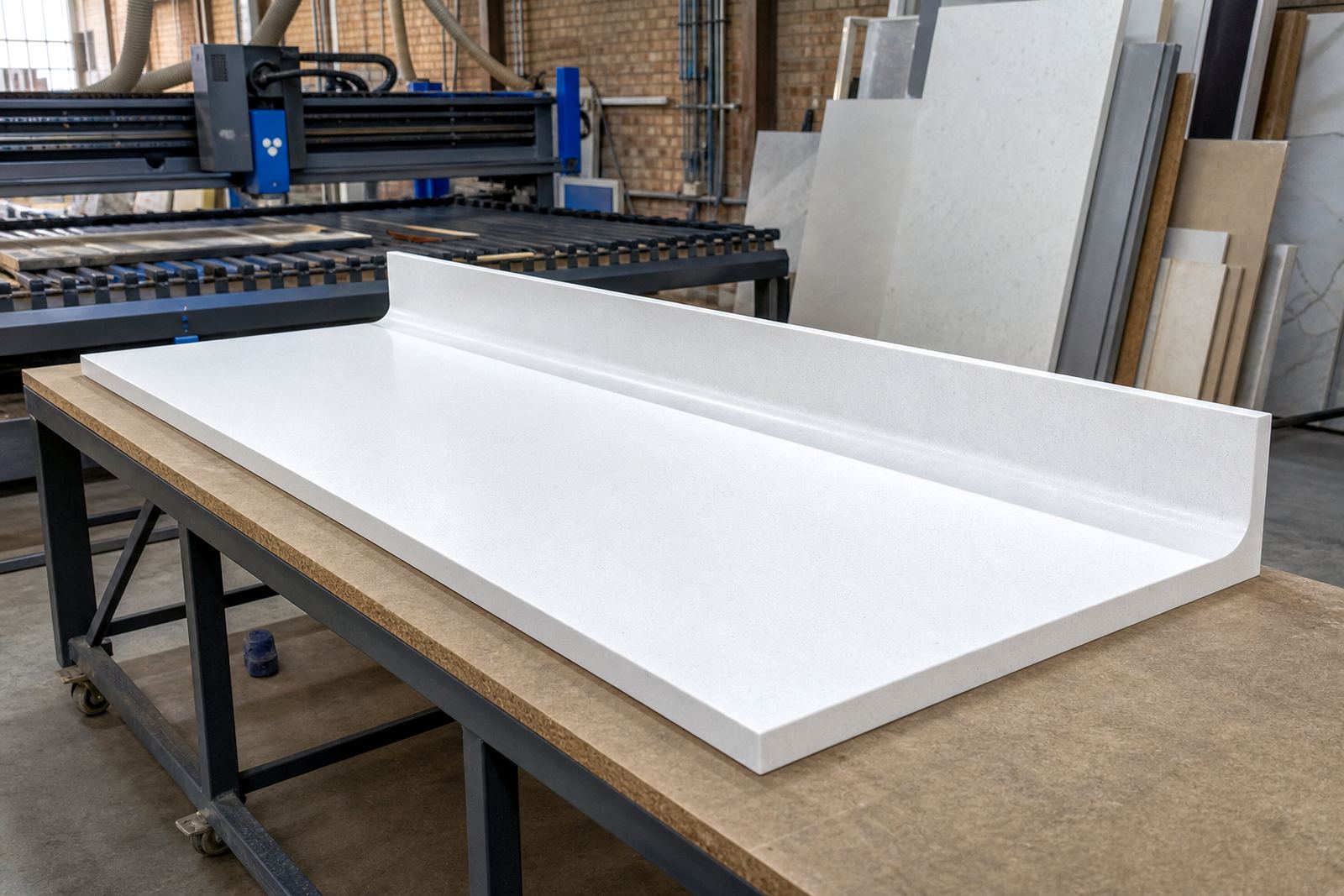
A coved edge where the wall meets the top
A coved upstand is a formed wall detail that rises from the countertop and curves into the top rather than meeting it with a hard 90 degree corner. On solid-surface work, that curve can be thermoformed or built up during fabrication so the junction looks neat and stays easier to wipe down. It is commonly used behind sinks, around prep areas and in rooms where a clean line matters more than a tiled finish.
For kitchens, vanities and wash stations, the coved section helps reduce grime gathering in the joint between the wall and the surface. It also gives a more finished appearance where walls are slightly uneven, which is common in busy residential and commercial sites around Johannesburg and Pretoria.
- Formed in the same colour as the top, or in a matched solid-surface sheet
- Usually used with 50 mm to 150 mm upstand heights, depending on the brief
- Can be fitted as a short run, full splash area, or only behind wet zones
- Suitable for straight runs and selected return corners
Sizes, thicknesses and the shape of the finish
Solid-surface coved upstands are normally paired with 12 mm to 20 mm sheet thicknesses, depending on the selected material and the detail required at the edge. The visible cove can be kept tight and understated, or given a more generous radius for easier wiping and a softer look. On longer runs, the line of the upstand should be planned with the slab layout so joints land where they will not stand out.
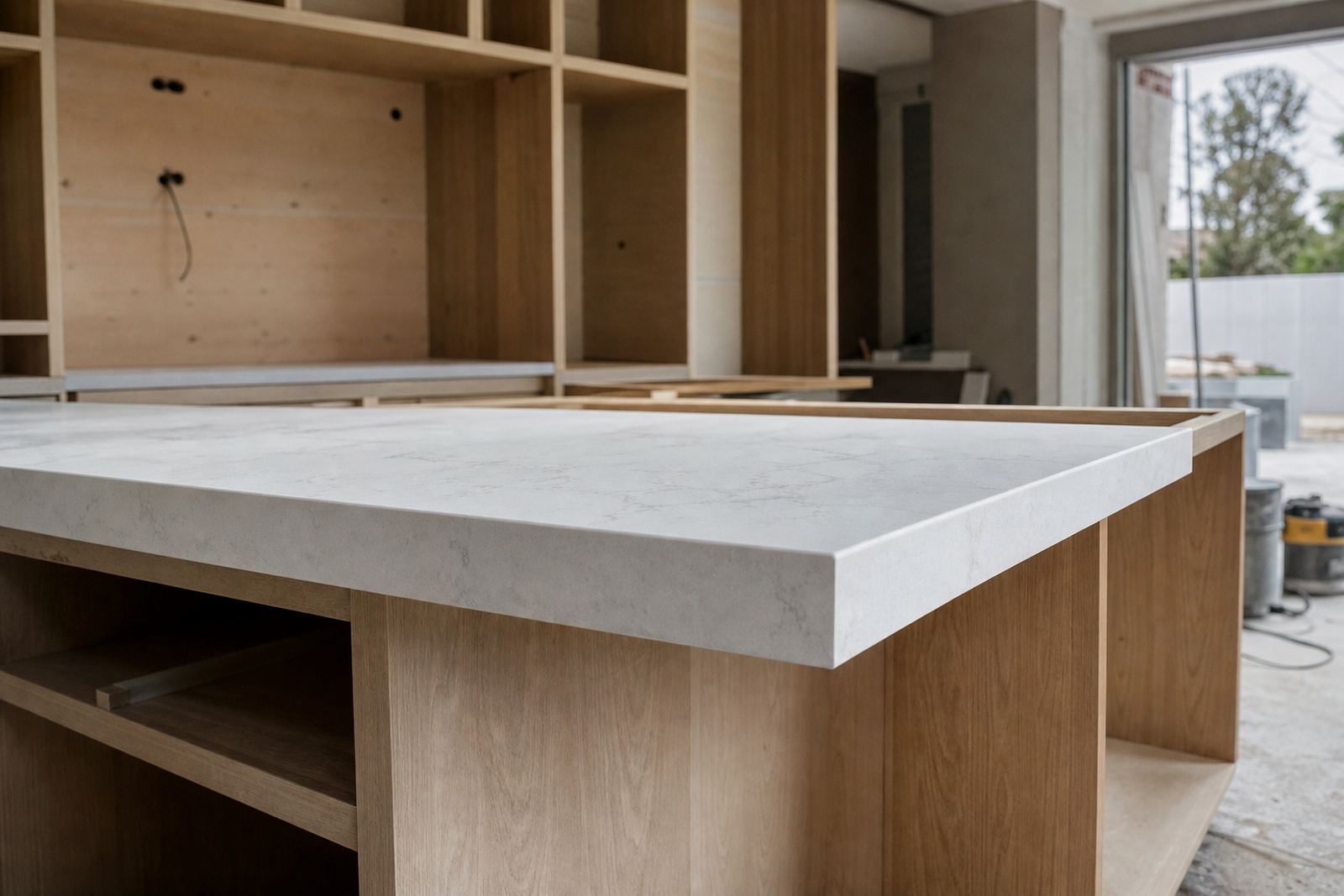
Edge profiling matters as much as the curve itself. A square edge on the main top can sit well with a coved back section, while a rounded front edge may be better in family kitchens and hospitality wash areas. Sink openings, tap escutcheons and hob zones need to be marked early so the upstand height and returns do not fight the layout.
- Common upstand heights: 50 mm, 75 mm, 100 mm and 150 mm
- Typical visible cove radius: neat small radius through to a broader sanitary-style curve
- Can be continuous along the wall or stopped neatly at ends and corners
- Seams are planned away from the most visible and wettest points where possible
Where coved upstands earn their keep
These details suit kitchens, vanity cabinets, tea stations, laundry counters and shopfit counter areas where wipe-down cleaning is part of the day. In coastal Gauteng projects or spaces with lots of steam and hand contact, the curved junction is helpful because moisture and grime have fewer places to settle. It also suits offices where the surface is cleaned often and the client wants a tidy finish without a tiled splashback.
They work well behind basins, along prep counters and beside wall-mounted taps. In a commercial fit-out, the coved line can help keep the finish consistent where staff may be wiping the surface many times a day. For homes, the result is practical and calm, especially in smaller kitchens where every line is visible.
- Kitchen splash zones behind sinks and prep areas
- Vanities with frequent water splash and cosmetic spill risk
- Office tea stations and reception pantry counters
- Shopfitting counters where the wall finish must stay tidy
How we template and fit the detail
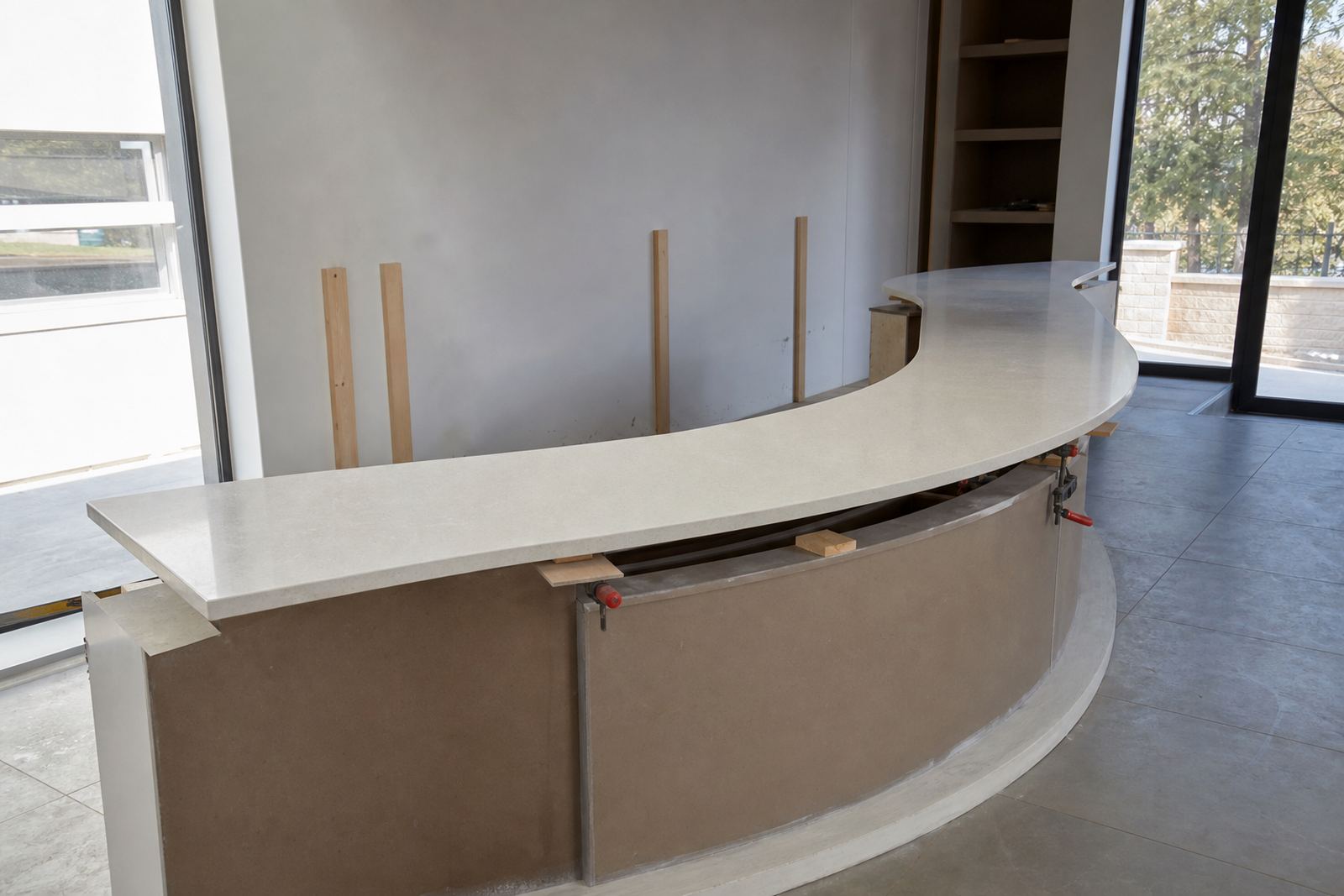
Good coved upstands begin with proper templating. Wall lines are checked, corners are measured, and any out-of-square sections are recorded before the material is cut. That matters because walls in real buildings are rarely perfectly straight, and a formed curve needs the correct allowance to sit neatly without gaps or forced joints.
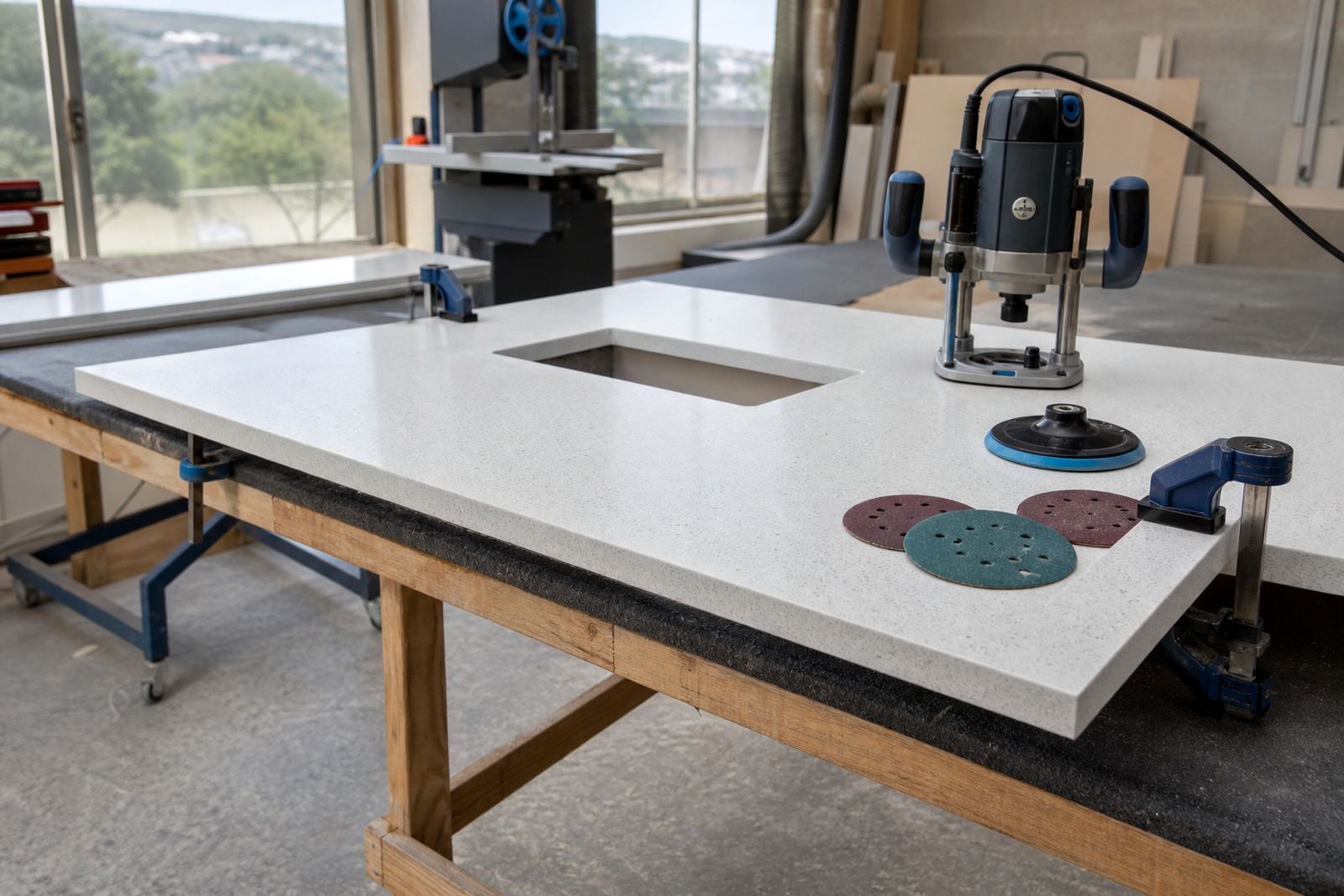
Our team in Strijdom Park handles digital measuring, slab layout planning, cutting and fabrication, then the fitting itself. On site, the installer checks the wall, the return corners, the sink cut-out and the finished height before bonding the upstand in place. Seams are colour-matched as closely as possible and arranged so the joint looks deliberate rather than awkward.
- Templates account for wall waviness, splash zone height and cabinet position
- Cut-outs for sinks and taps are coordinated with the coved section
- Seam joining is planned before fabrication starts, not after
- Installation can include full countertop and splashback coordination where needed
Care, cleaning and day-to-day use
Solid-surface coved upstands are made for regular cleaning with a soft cloth and a mild household cleaner. Because the wall junction is curved, crumbs and residue can be lifted more easily than from a sharp corner. Warm water, a non-abrasive sponge and routine wiping are usually enough for day-to-day care.
Heat still matters. Very hot pots, pans and appliances should not be placed directly against the surface or upstand, and sharp scrubbing pads can dull the finish. Staining from strong colourants, turmeric, dye or cosmetics should be wiped off reasonably soon, especially on lighter shades. If the surface needs more attention later on, light refinishing can often restore the look better than with many other finishes.
- Clean with mild detergents and a soft cloth, and avoid abrasive powders.
- Wipe spills from tea, coffee, wine and sauces without leaving them to dry in place
- Keep direct heat away from the coved section and the countertop edge
- Ask about aftercare advice for dull marks, scratches or stubborn residue
Details to confirm before fabrication starts
Before we cut the sheet, the job needs a clear brief. The height of the upstand, the length of each run and the positions of corners all affect the finished look. If there is a sink, hob or splashback return nearby, those openings and clearances must be checked so the curve does not clash with the rest of the layout.
It also helps to confirm the wall finish, cabinet line and any existing tiles or plaster edges. A coved upstand can meet a painted wall, tiled wall or other cladding, but the connection needs planning. On larger kitchen or vanity jobs across Gauteng, the same detail should be set out before cutting so the fabrication matches the room rather than forcing the room to match the sheet.
- Finished height of the coved upstand and any return pieces
- Countertop thickness, edge profile and overall run length
- Position of sink cut-outs, tap holes and hob openings
- Wall finish type, corner condition and any existing splash zone details
From Strijdom Park to sites across Gauteng
Plastone fabricates engineered quartz and solid-surface countertops, vanities and splashbacks from our Randburg base, with templating and installation across Johannesburg, Sandton, Pretoria, Midrand, Fourways, Centurion and Roodepoort. Coved upstands are part of that same trade flow, from measuring to fitting and the later care advice that keeps the finish looking clean.
Our team handles the moving parts that sit behind a neat result: site templating, digital measuring, slab layout planning, edge profiling, sink and hob cut-outs, seam joining, splashback fitting and countertop installation. For a coved upstand on a private kitchen, office pantry or shopfitter project, the main aim is a practical surface that wipes clean and sits well against the wall.
- Suitable for new work and replacement projects
- Works with solid-surface tops and selected matching splash details
- Can be coordinated with vanity installation and countertop installation
- Enquiries come through our contact form on our contact page
Key facts
| Product | Coved upstand in solid-surface material |
|---|---|
| Typical sheet thickness | 12 mm to 20 mm, project dependent |
| Visible upstand height | 50 mm to 150 mm |
| Finish | Matched colour with formed or built-up cove |
| Common use areas | Kitchens, vanities, tea stations and wash zones |
| Service area | Strijdom Park, Randburg and across Gauteng |