
A thicker quartz line for busy rooms
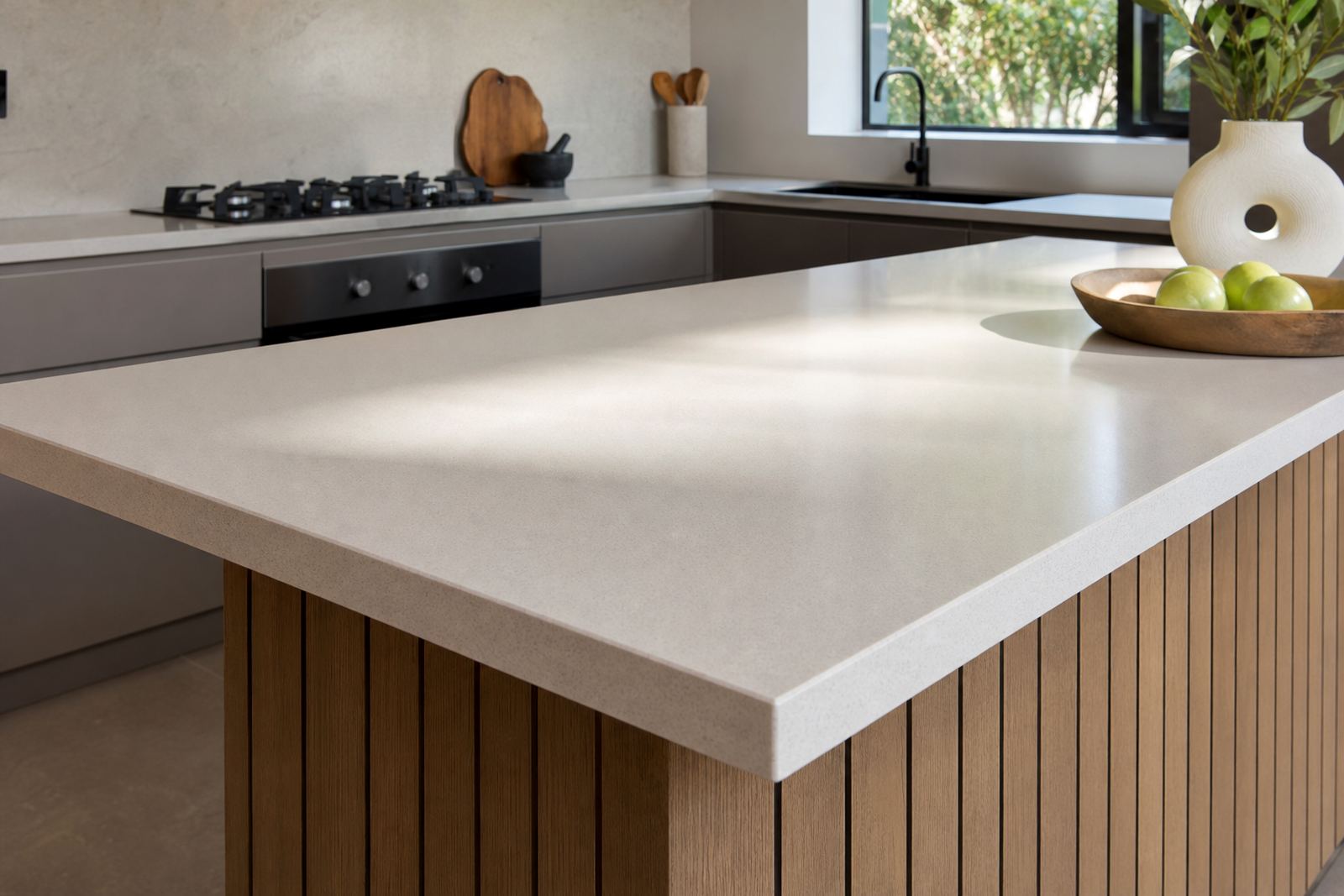
30mm quartz tops are chosen when the room needs a stronger edge profile and a more substantial slab feel. The material is an engineered stone surface made from quartz aggregates, resins and colour pigments, pressed into slab form and then cut to suit the job. In a kitchen or scullery the added thickness reads well on large islands, peninsulas and breakfast counters, while in reception areas it gives a clean, firm finish that carries the weight of the room.
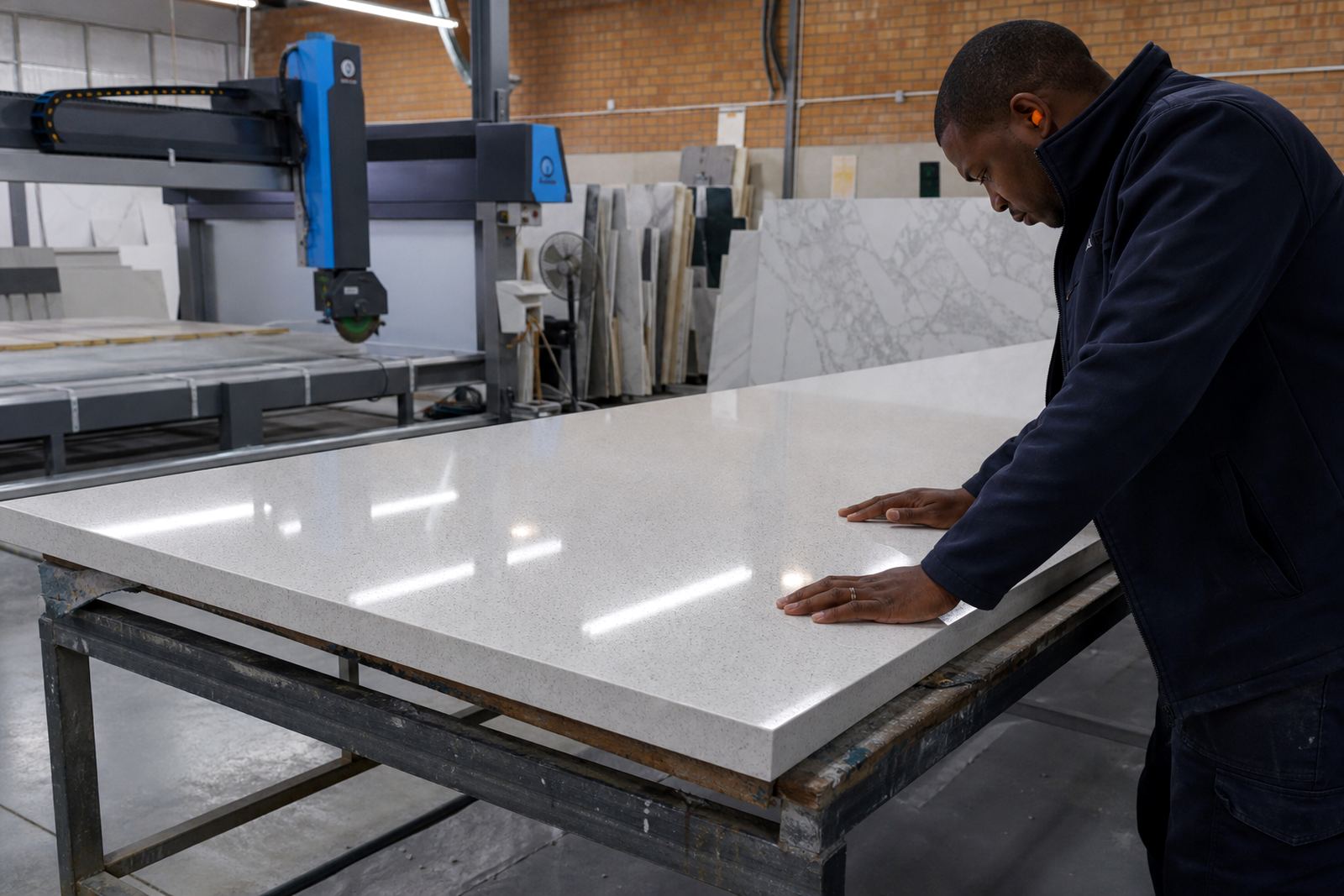
For this type of work, accurate templating matters just as much as the slab itself. We measure the site, note wall runs, check squareness, and plan the cuts around sinks, hobs and joining points before the slab is taken into the workshop. A 30mm top also changes the way the edge is seen from standing height, so the final profile must be set early and carried through the full run.
Sizes, slab handling and edge choices
Most 30mm quartz work starts with full slab planning. The sheet size available on the day of fabrication sets the join positions, seam placement and the way the grain or pattern lands across the island. Larger single pieces are preferred where access allows it, but some rooms need two or more sections joined on site for safe handling and neat fitting.
- Common slab thickness: 30mm finished thickness
- Typical work areas: islands, counters, vanities and splashbacks
- Edge profiles: square edge, softened square, eased edge and selected built-up looks
- Cut-outs: under-mount or top-mount sink openings, hob openings and tap holes
- Join options: straight seams, corner joins and matched seam placement where the slab layout allows it
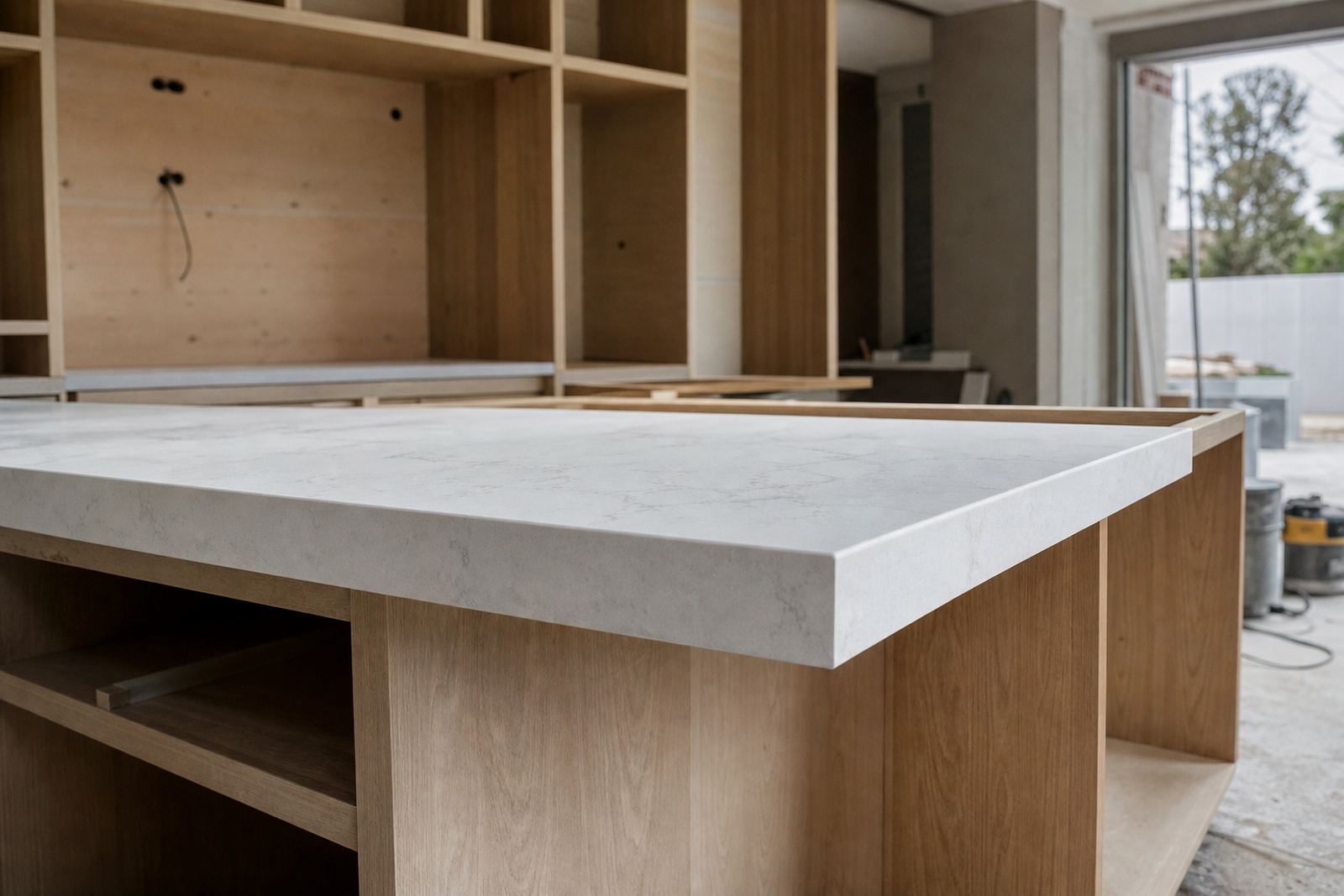
The edge profile affects both appearance and daily use. A square edge gives a crisp line, while a softened edge is friendlier in family kitchens and narrow walkways. If the design calls for a heavier front face, a built-up treatment can be considered, though the final method depends on the slab, the run length and the finish you want to see from the room side.
Where 30mm quartz works best
This thickness suits larger surfaces that need a strong visual anchor. It is often used on freestanding islands where the edge is seen from more than one side, on breakfast counters that run into open-plan living spaces, and on vanity tops where a compact room benefits from a more solid finish. In offices and shopfitting, it also works well on customer counters, server points and feature plinths that need to look tidy under regular use.
Because quartz is dense and finished at factory level, it holds a consistent look across the top surface and most day-to-day marks stay on the surface rather than working into the body. That makes it suitable for family kitchens, shared office tea points and retail counters where the surface is cleaned often and viewed at close range.
- Kitchen islands with overhangs for stools
- Breakfast counters and serving ledges
- Bathroom vanities and cloakroom tops
- Reception counters and office tea stations
- Shopfit counters where a thicker edge suits the design
Templating, fitting and site detail
For a 30mm installation, the site needs a proper set-out before fabrication starts. Our templating team checks cabinet lines, wall bows, appliance positions, overhangs and support points so the finished quartz lands correctly. Sink cut-outs, hob cut-outs and tap holes are planned from the template. That keeps the cut lines aligned with the carcasses and helps the fit sit neatly on the supports below.
Installation also needs enough access for moving the slab through the house, office or shop floor. Tight stairwells, narrow passageways and finished flooring all affect how the work is brought in and set down. Seams are joined with care, then the top is levelled, sealed where required at joints and checked around splashback lines and wall edges before handover.
- Digital measuring and site templating for accurate take-offs
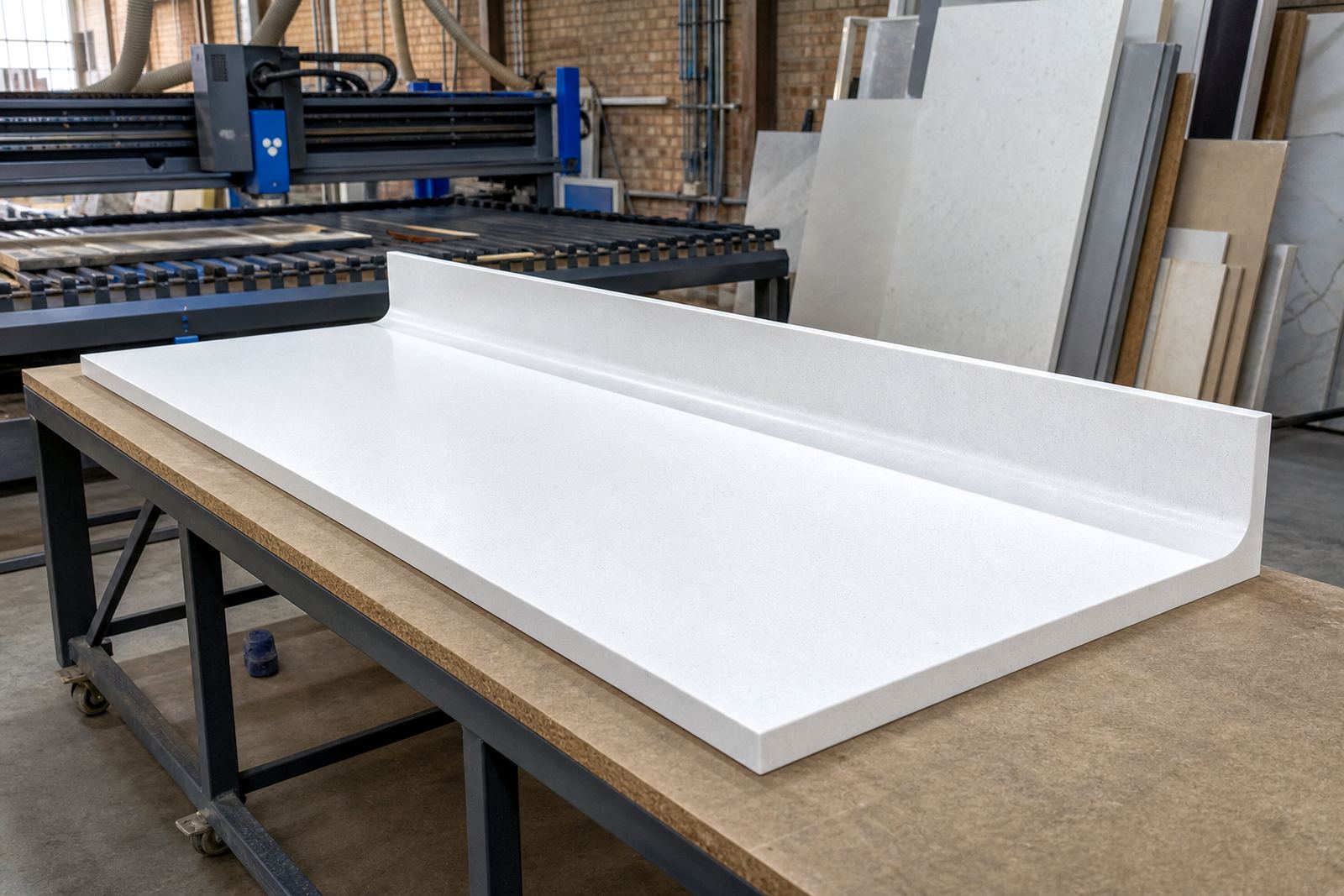
- Workshop cutting, polishing and edge finishing
- On-site seam joining and final set-out
- Splashback fitting where the wall line calls for it
- Vanity and countertop installation across Gauteng
Care that keeps the surface looking even
Engineered quartz is low maintenance, but it still benefits from a few practical habits. Wipe spills early, especially tea, coffee, wine and oil, so they do not sit on the surface for long. Use a mild cleaner with a soft cloth, and avoid harsh abrasives that can dull the finish over time. Hot pots should not be placed directly onto the slab, as concentrated heat can mark resin-rich surfaces, and chopping on the top is not ideal for the polish or the knives.
Stain care is mostly about timing and routine. Most everyday marks lift with normal cleaning, but cement dust, adhesives and silicone smears from other trades need to be removed carefully during and after installation. For bathrooms and wet areas, keep the splashback line dry at the joins and let the installed sealants settle properly before heavy use. In coastal homes around Gauteng free of course from salt air, the same clean habits still apply where steam and moisture are high.
Details to settle before fabrication
A 30mm quartz order should be set up from clear information so the workshop can cut once and fit once. The slab colour, finish, thickness and edge profile need to be confirmed together, because a change to one detail can affect the rest of the job. Sink type matters too, since an under-mount basin needs a different cut and support approach from a top-mount sink. If the design includes a hob opening, the appliance dimensions and clearance points must be checked against the cabinet line and the slab layout.
It also helps to confirm the overhangs, the number of seams, the splashback height and whether there are mitred faces or stepped returns. On vanities, the basin position, tap set-out and wall condition guide how the top is cut and fitted. Our contact form is used for these details, then the job is quoted and planned from the measurements and drawings supplied.
- Colour and finish of the quartz slab
- Finished thickness and chosen edge profile
- Sink type, hob type and tap positions
- Overhangs, seam locations and splashback height
- Access route, installation town and site contact details
Key facts
| Product | 30mm engineered quartz tops |
|---|---|
| Finished thickness | 30mm |
| Main uses | Kitchen islands, breakfast counters, vanities, reception counters |
| Fabrication | Site templating, digital measuring, cutting, edge profiling and seam joining |
| Cut-out options | Sink cut-outs, hob cut-outs and tap holes |
| Service area | Strijdom Park, Randburg with installations across Gauteng |