



From slab choice to final fit
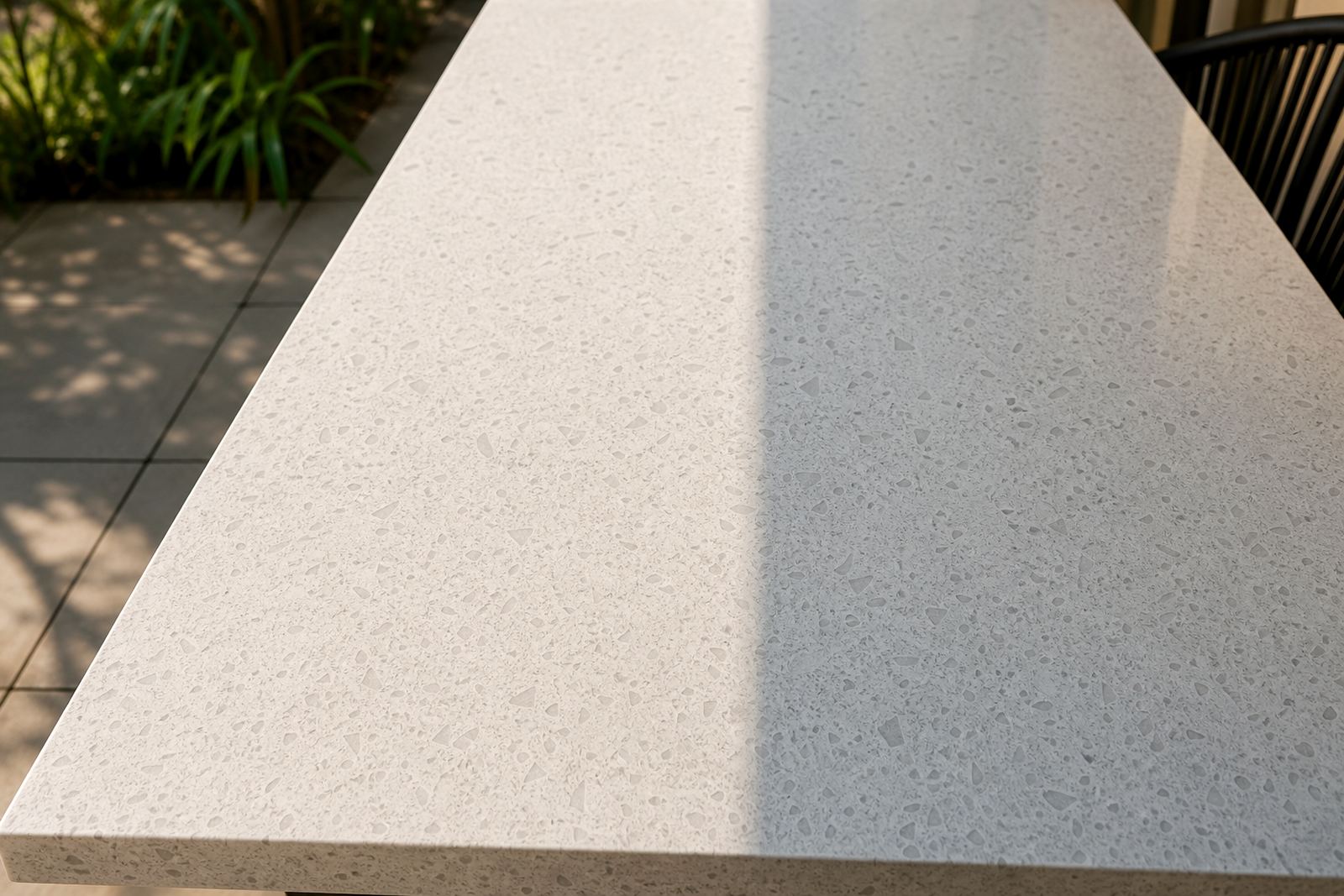
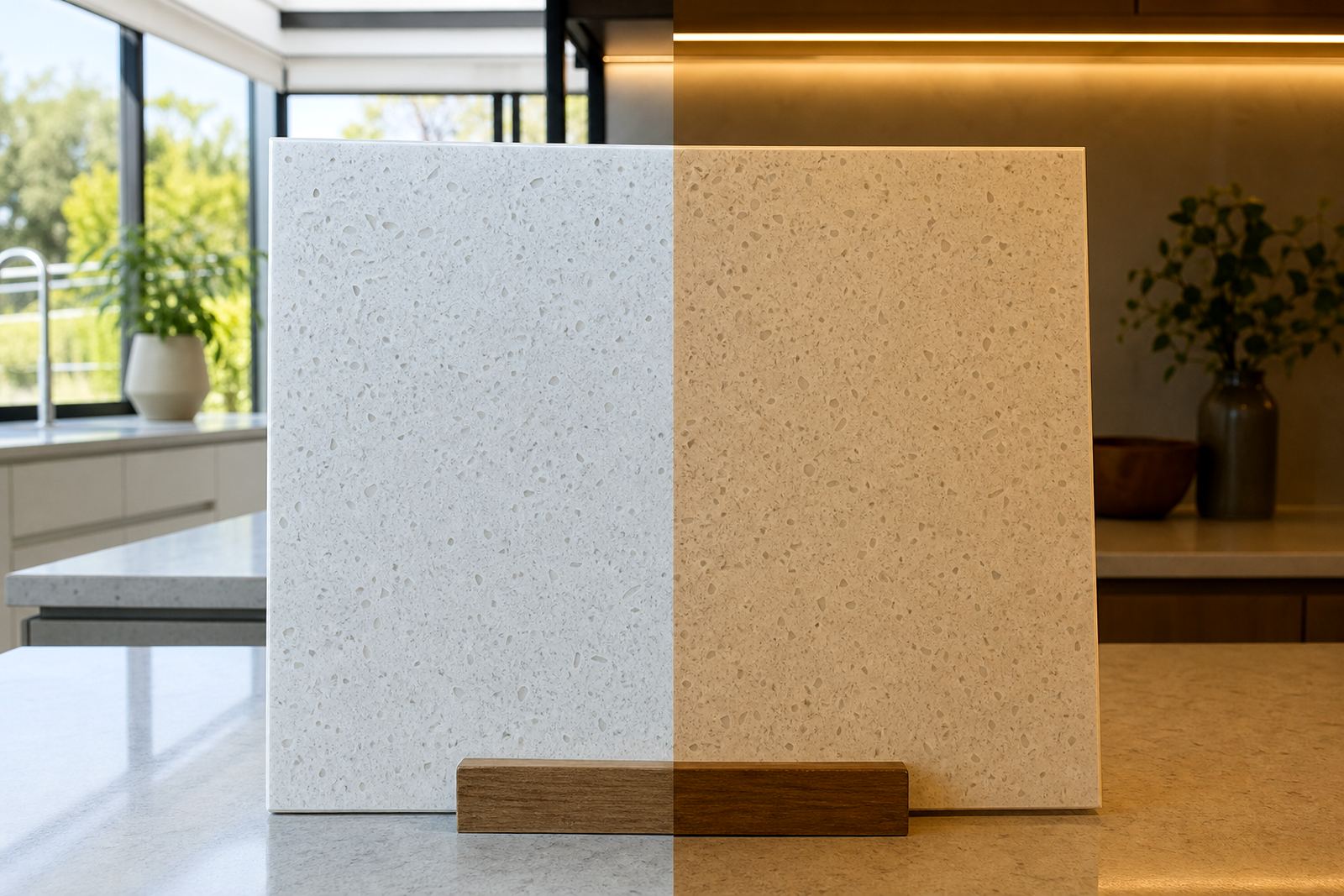
Engineered quartz and solid-surface tops are both made for measured work, but they behave differently on the bench. Quartz is denser and usually specified for harder-wearing kitchen and reception spaces, while solid-surface is easier to shape into curves, integrated bowls and more detailed junctions. In both cases, the first step is a clean site measure, followed by template checks against walls, cabinets and service points.
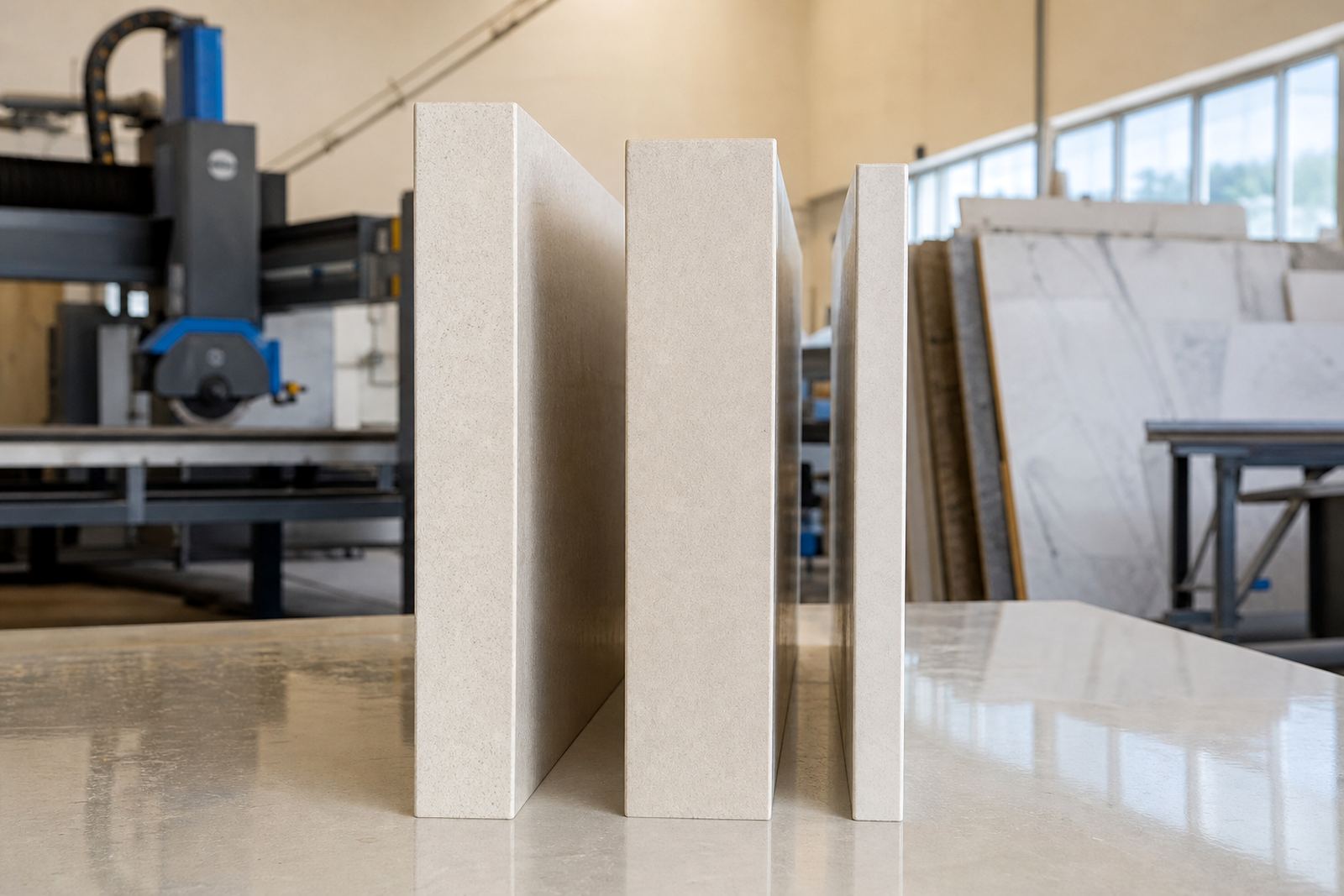
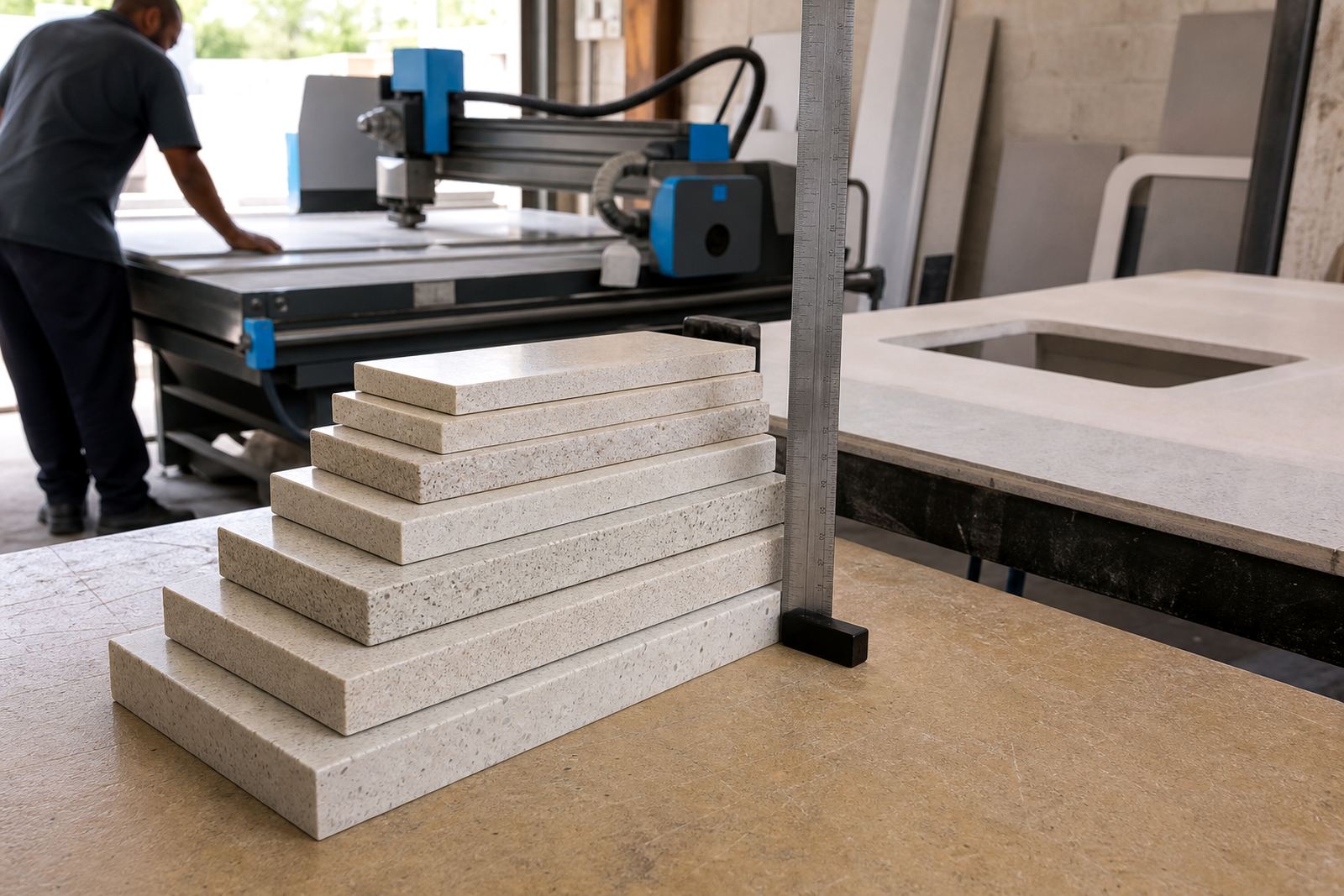
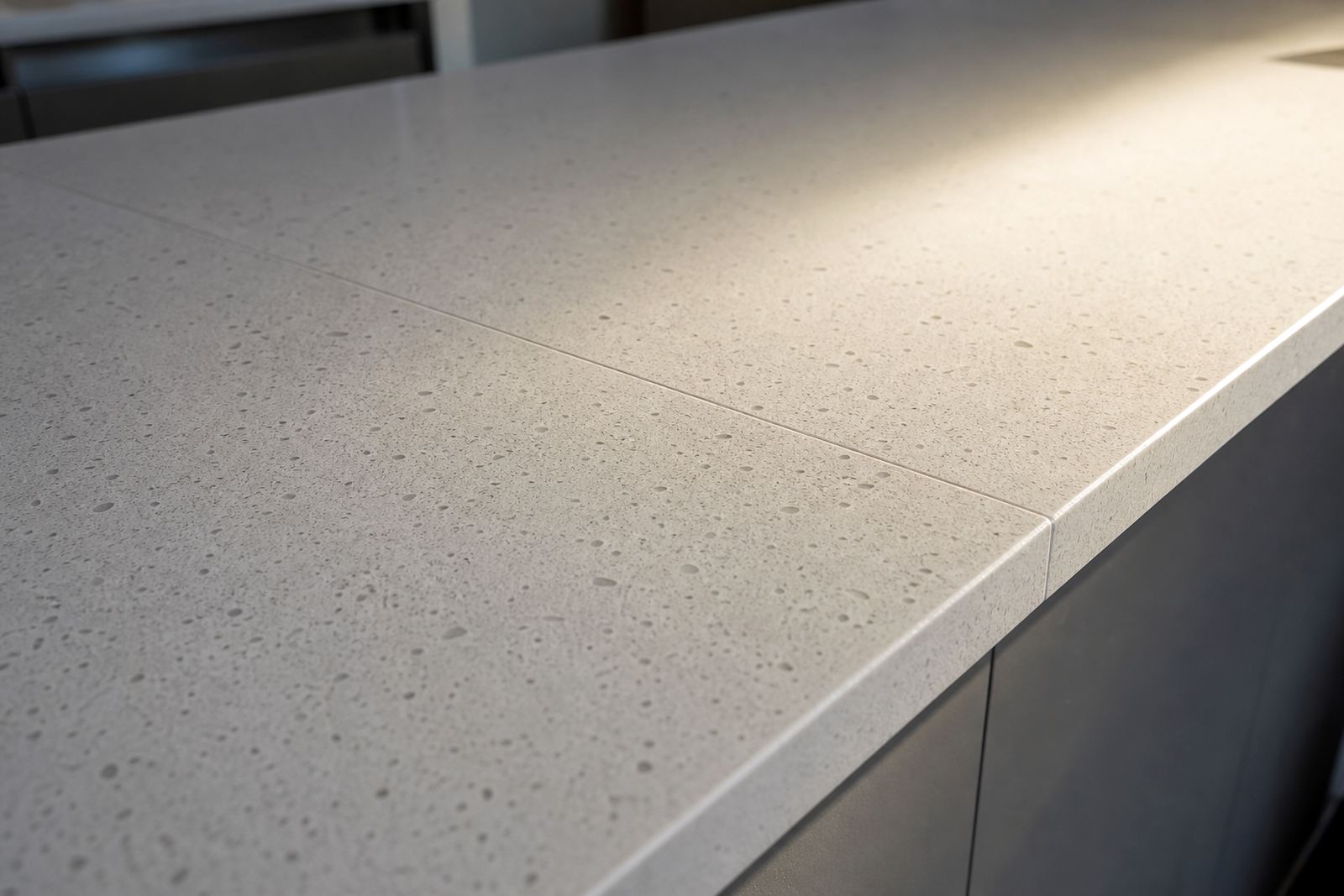
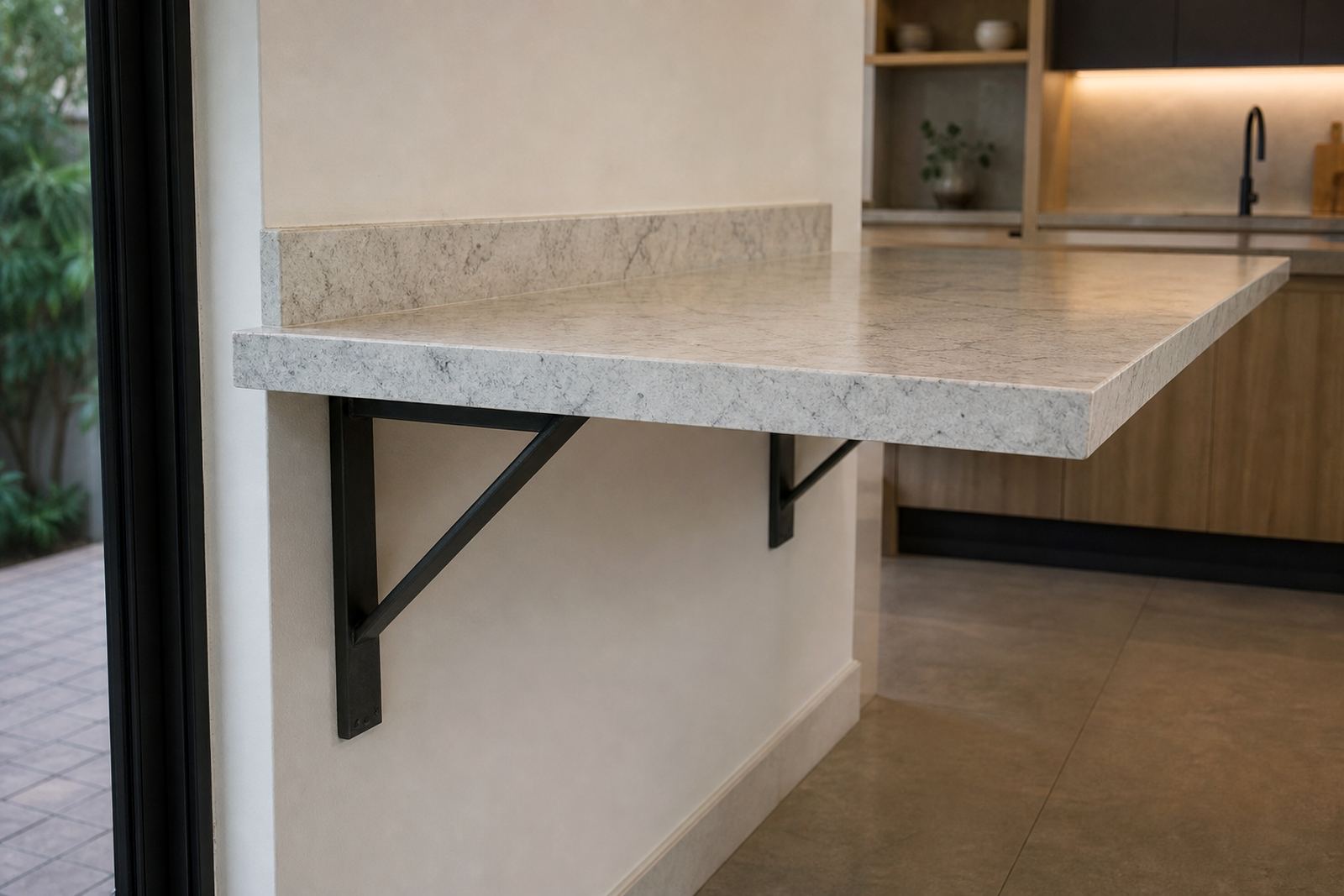
Thickness is set by the job and the look wanted. Common slab thicknesses are 12 mm, 20 mm and 30 mm, with thicker edges sometimes built up for a heavier profile. That decision affects the finished line at the front, the overhang on islands and the way mitres or straight returns are handled at corners.
Measuring rooms that are not perfectly square
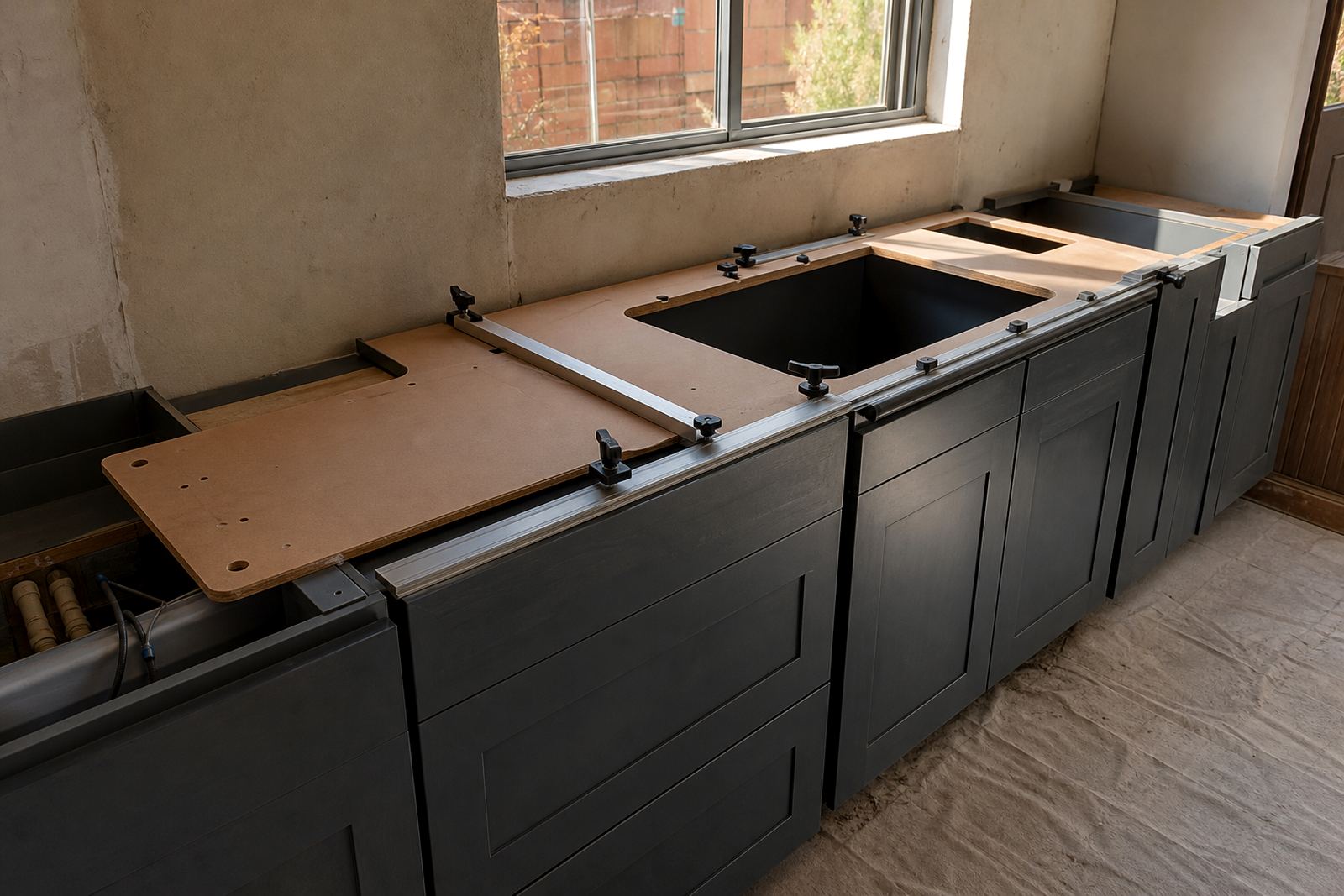
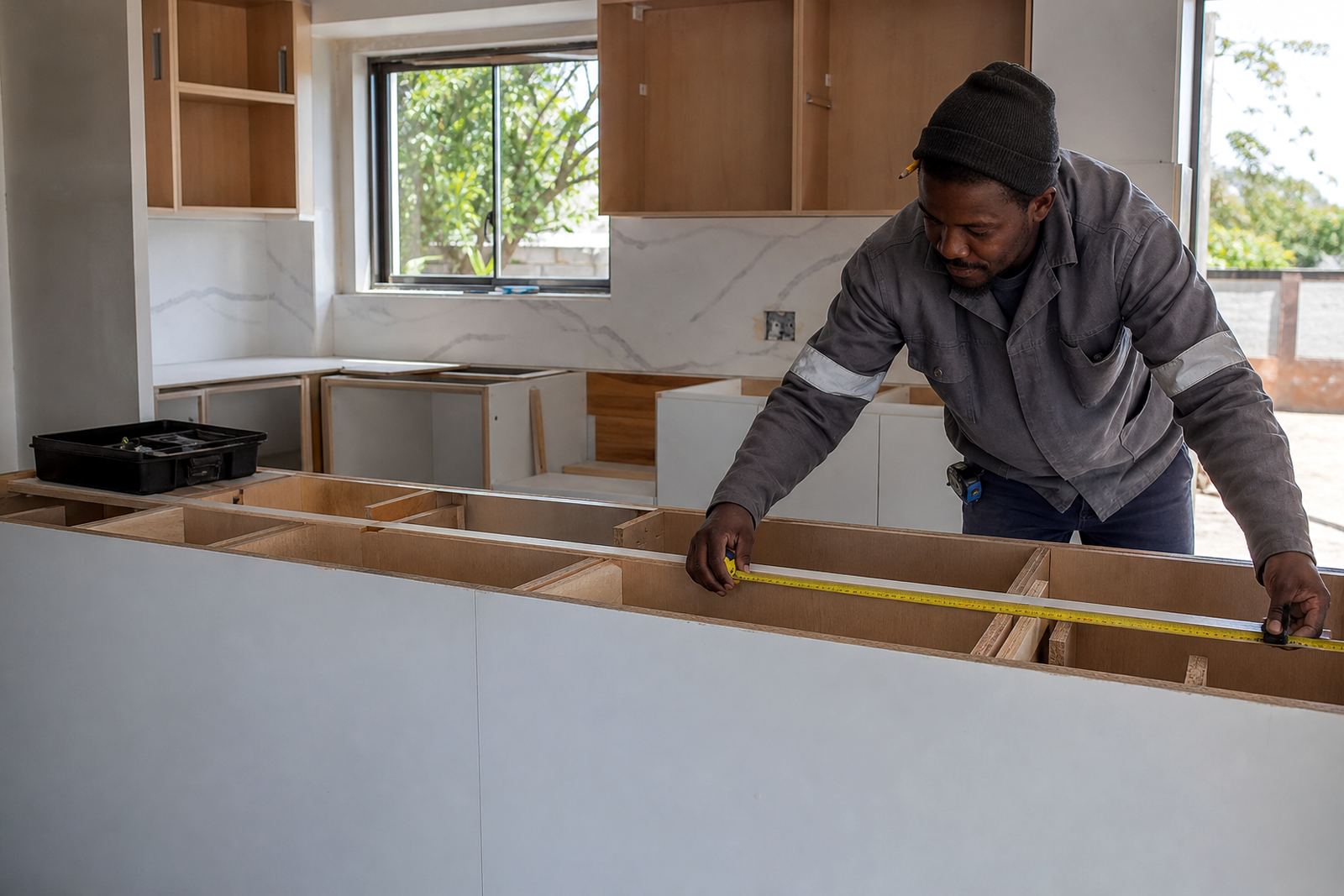
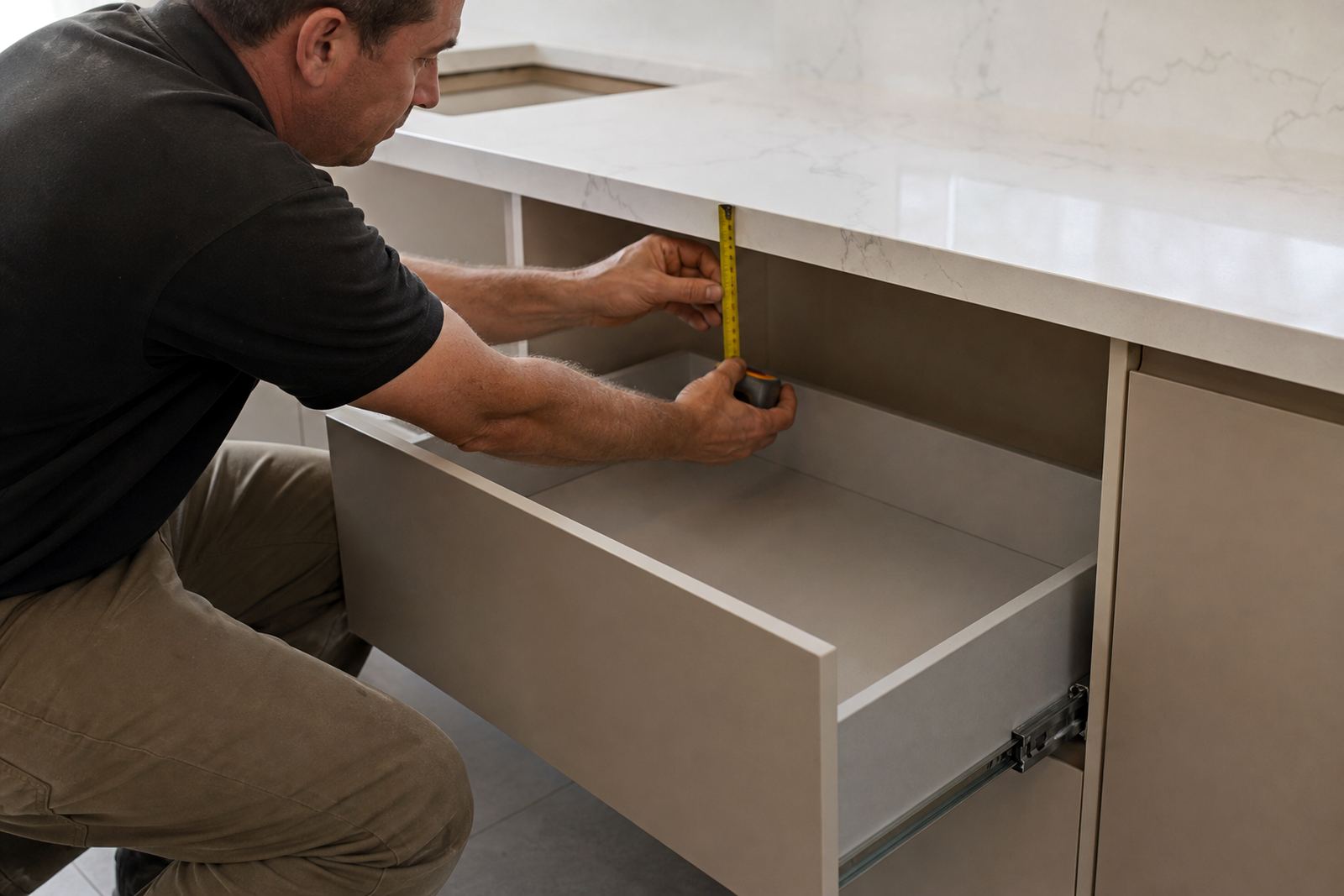
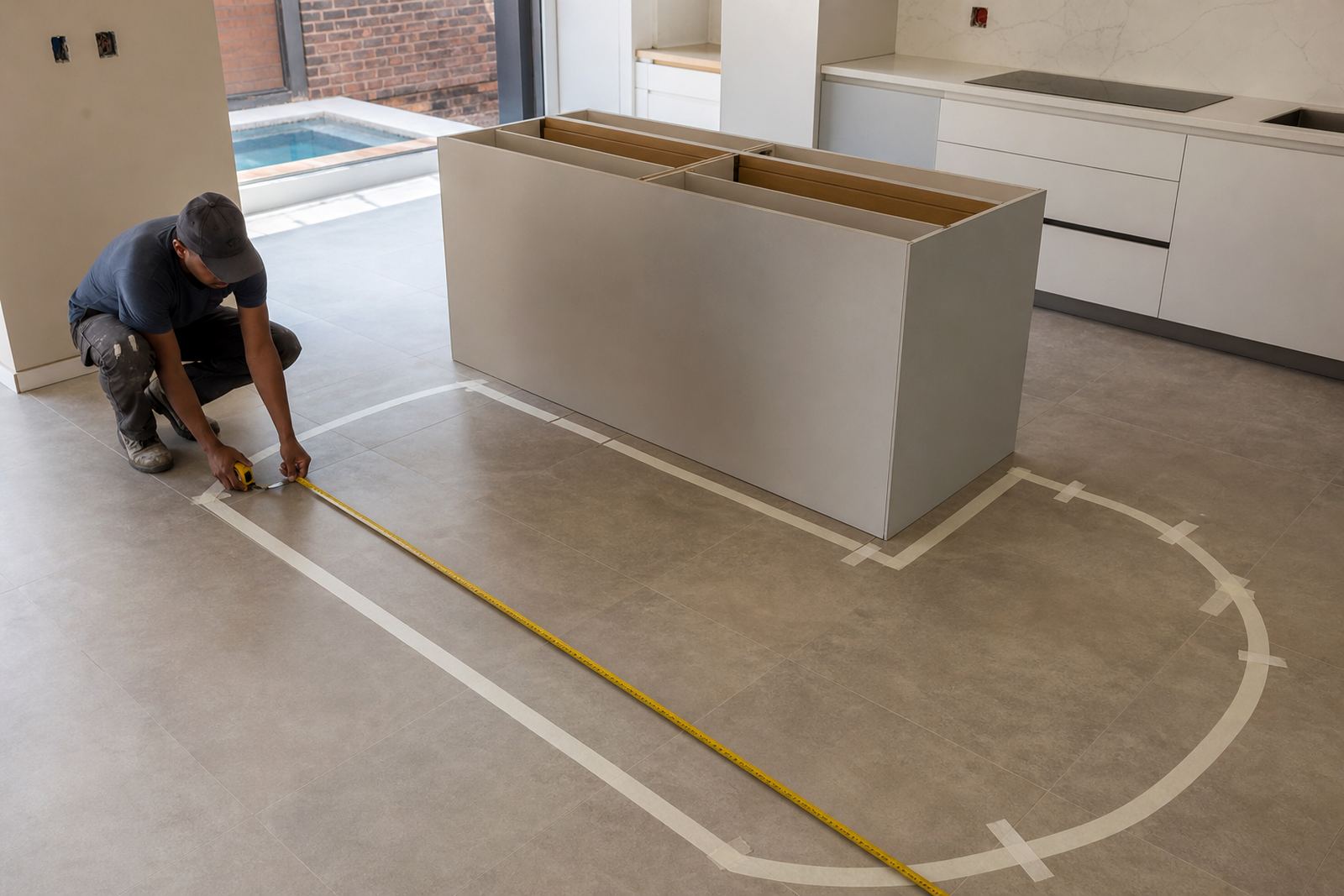
Very few rooms sit perfectly true, especially in older homes and busy commercial spaces. A good template captures wall bow, cabinet set-out, out-of-square corners and the exact position of sinks, taps and appliances. We also allow for tile lines, skirting changes and the little shifts that happen where floors are not level.
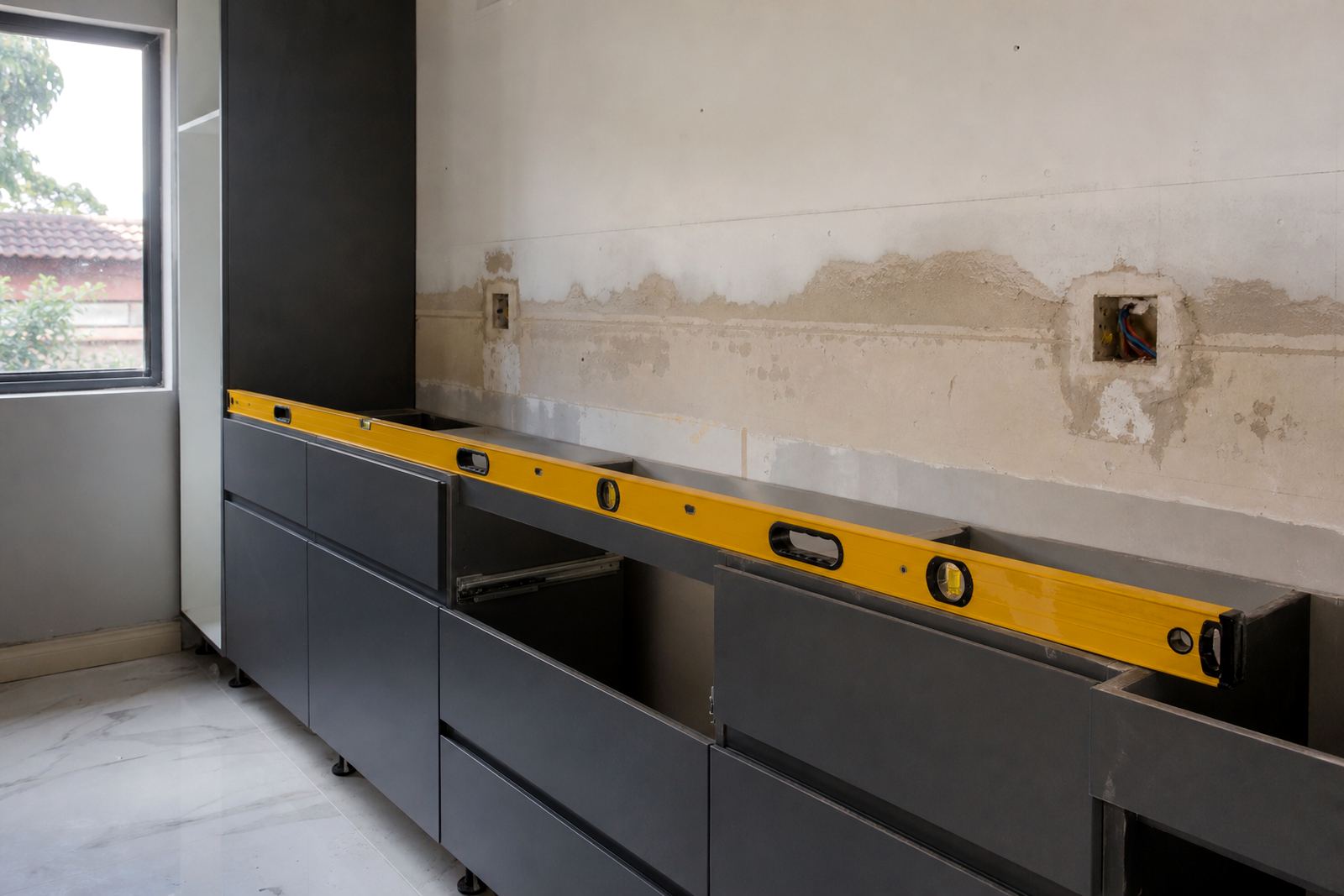
- Check the cabinet frame level before templating.
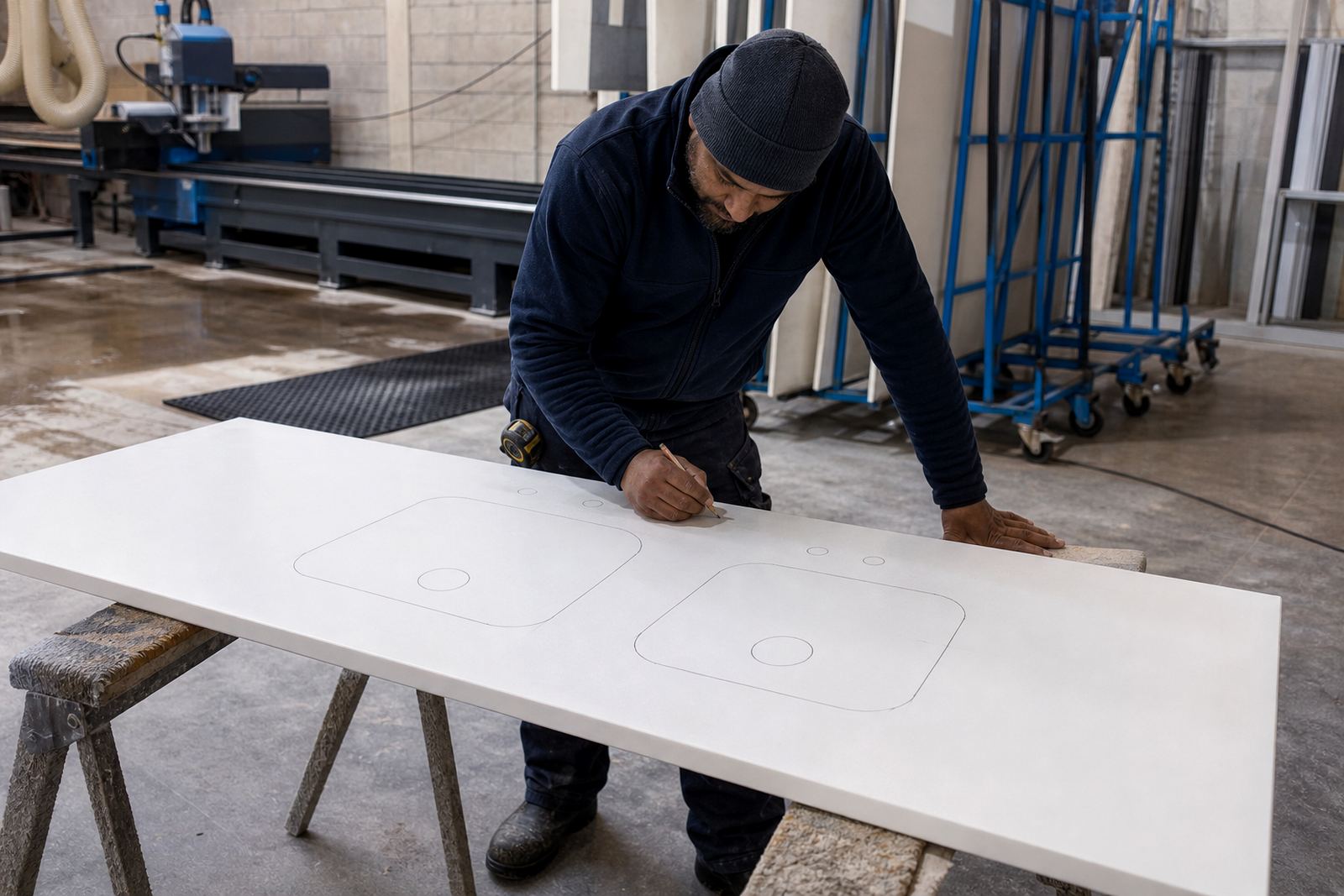
- Mark sink centres and hob cut-outs clearly.
- Note open ends, breakfast bars and overhangs.
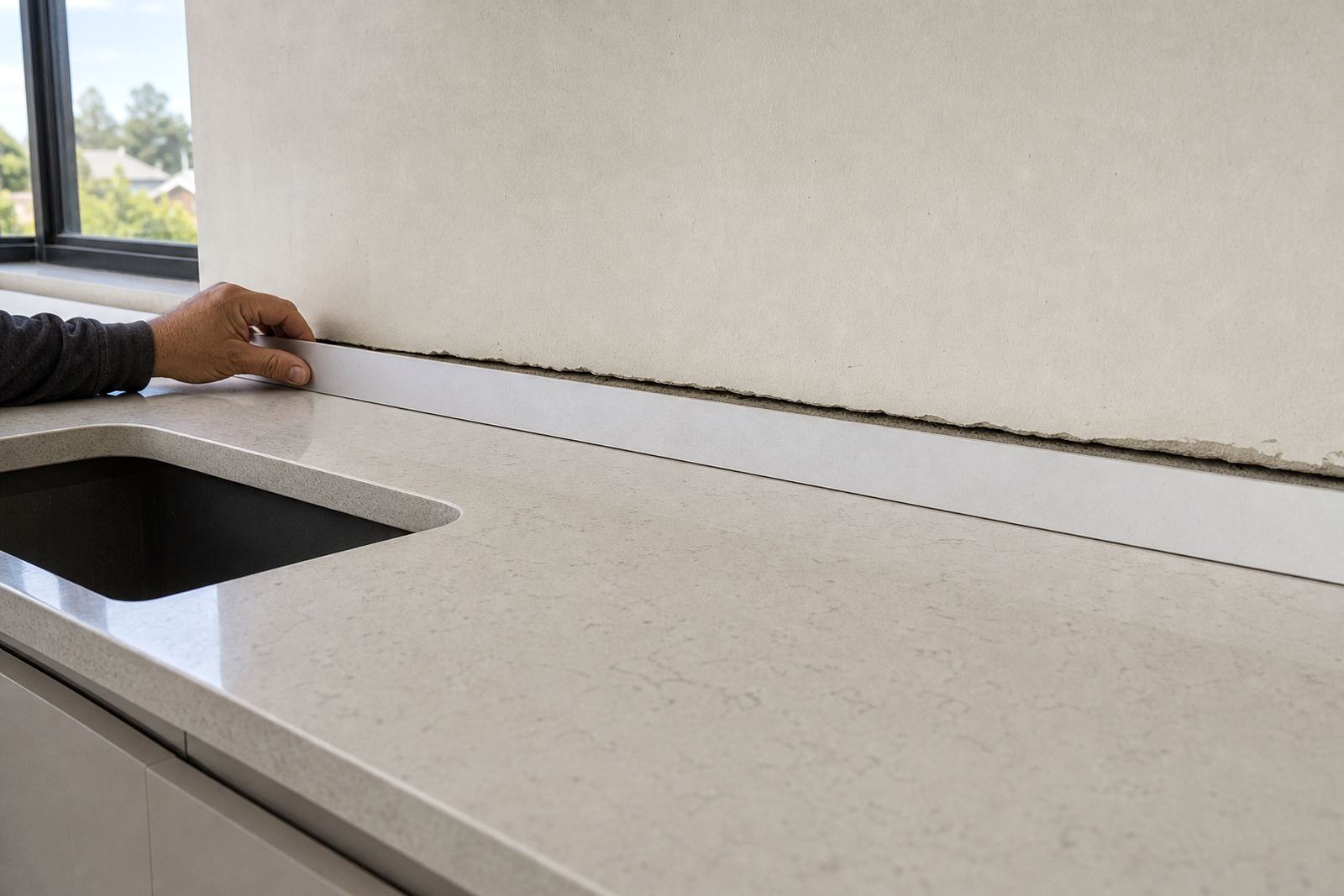
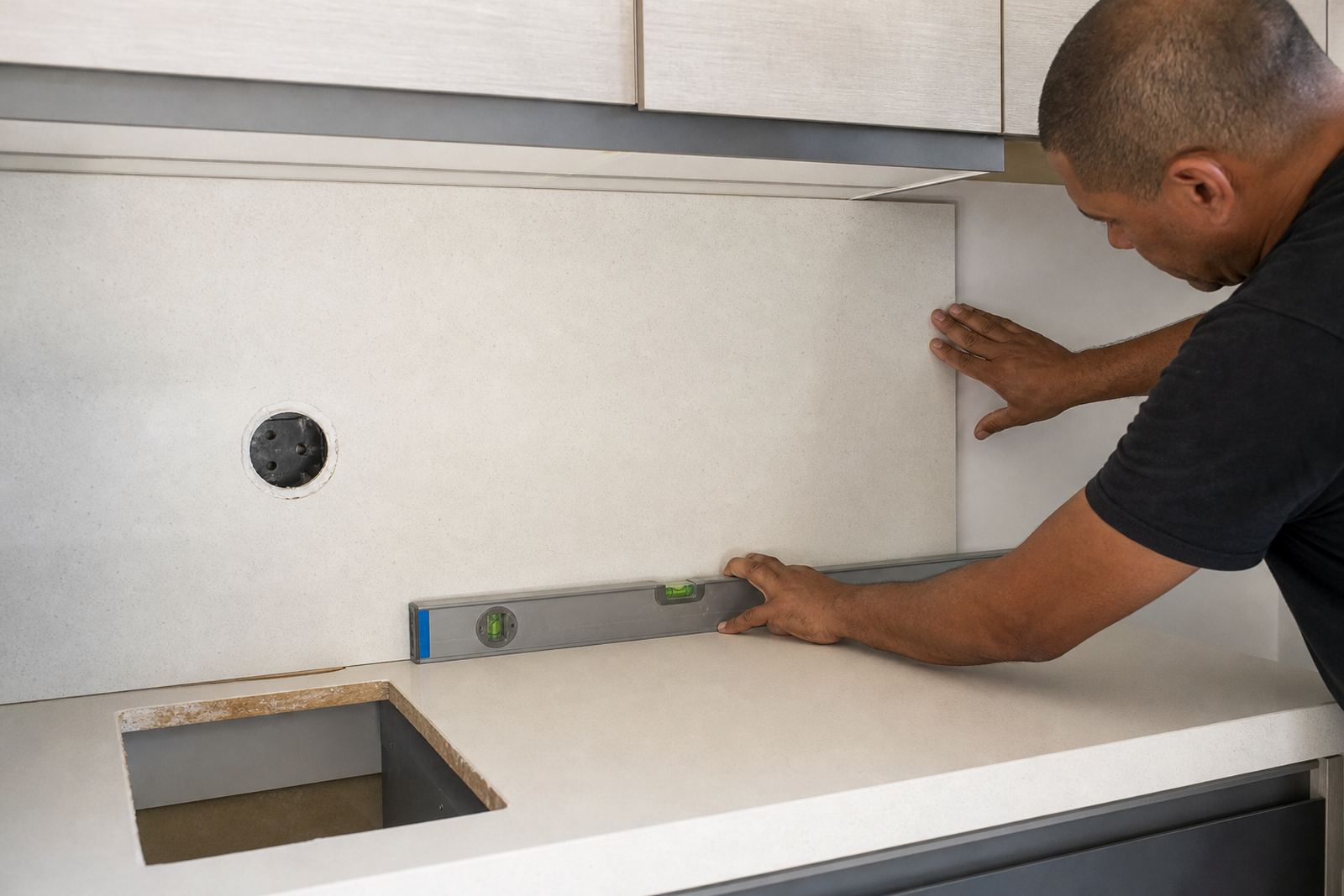
- Confirm splashback height against tiles or paint lines.
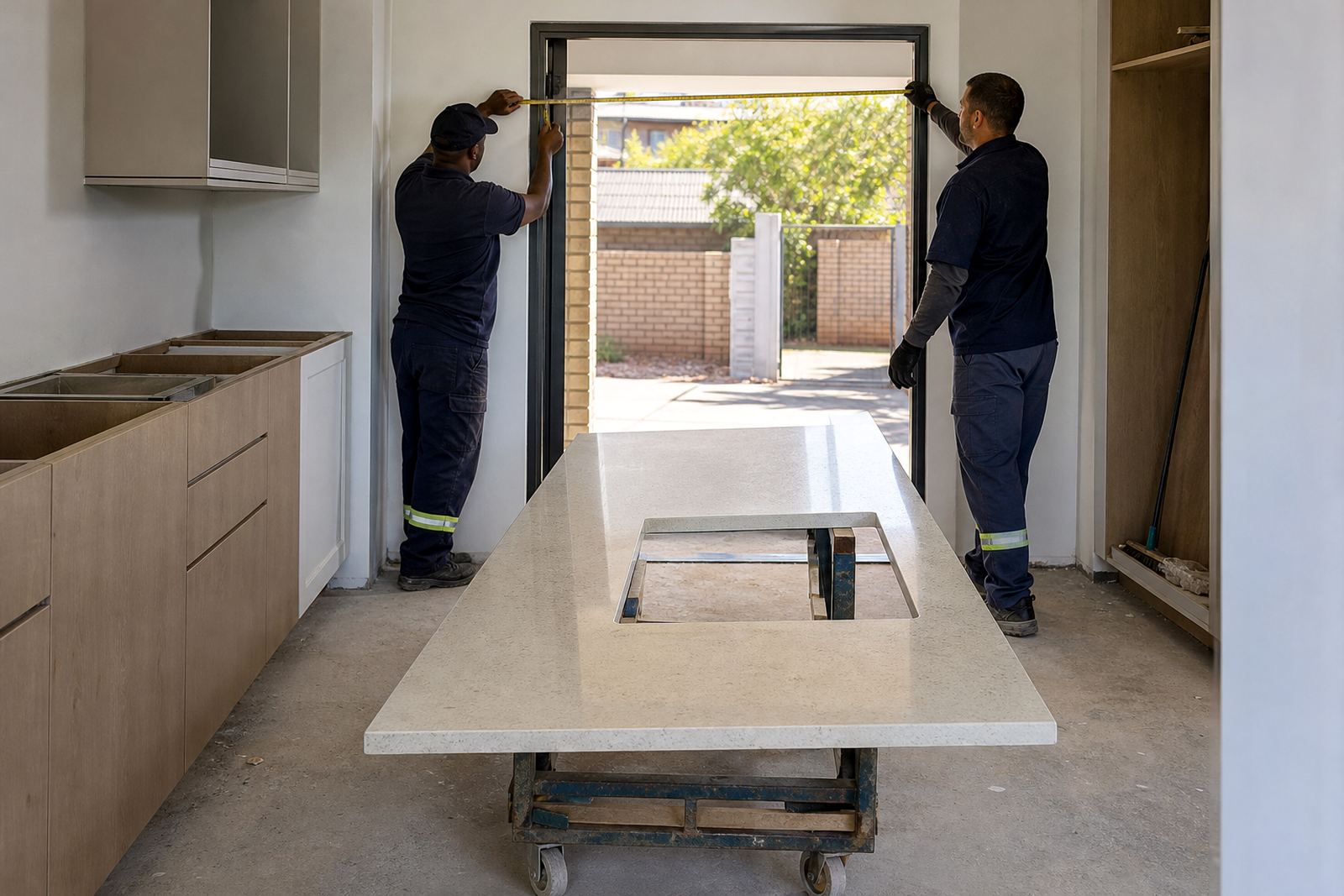
- Record access issues for stairwells, lifts and tight passages.
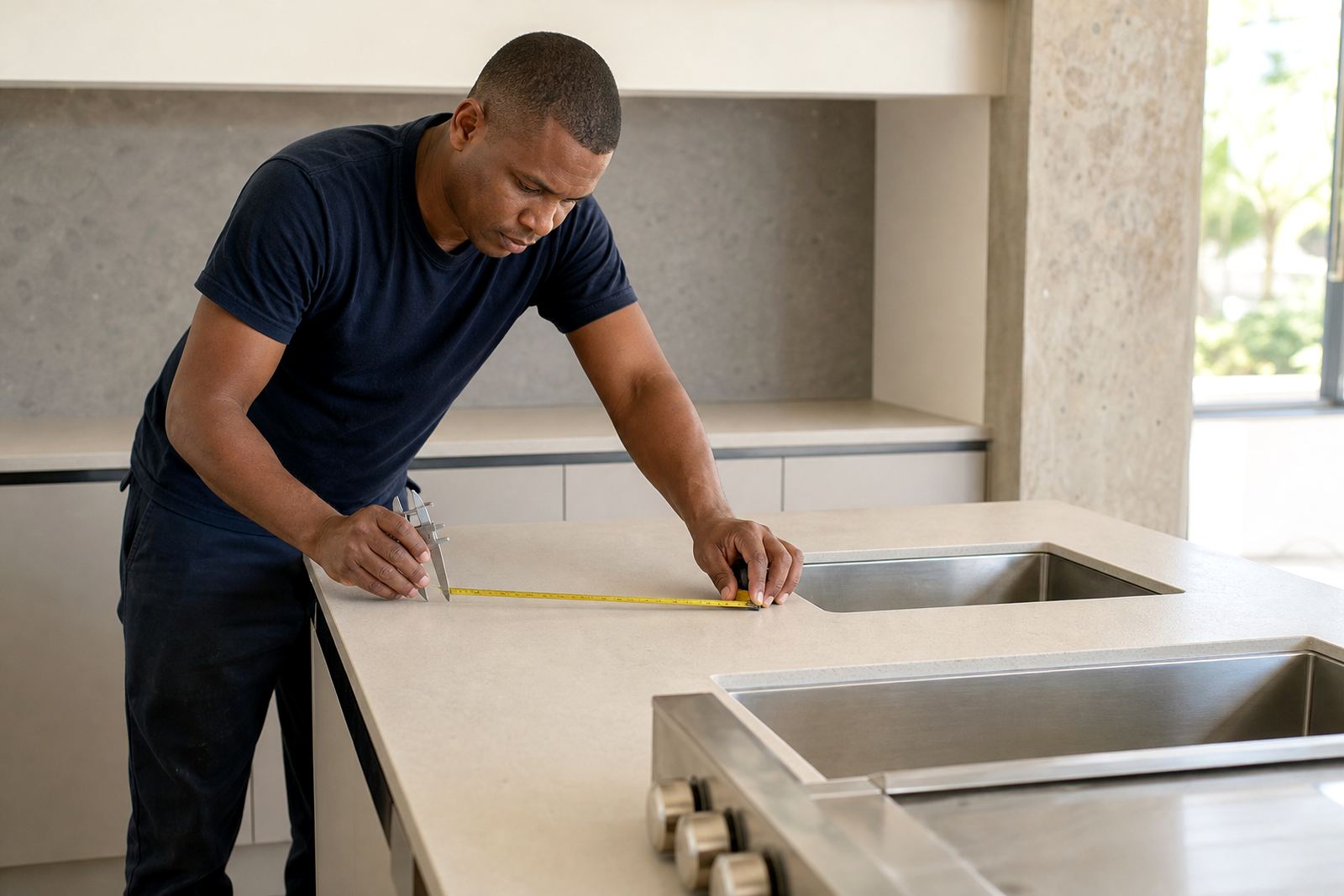
Digital measuring helps keep the drawing tidy, but a site visit still matters because a worktop that is 3 mm out can show the error along a long wall. Seams need space too, so the layout must be planned before anything is cut.
Cut-outs, seams and the parts people notice
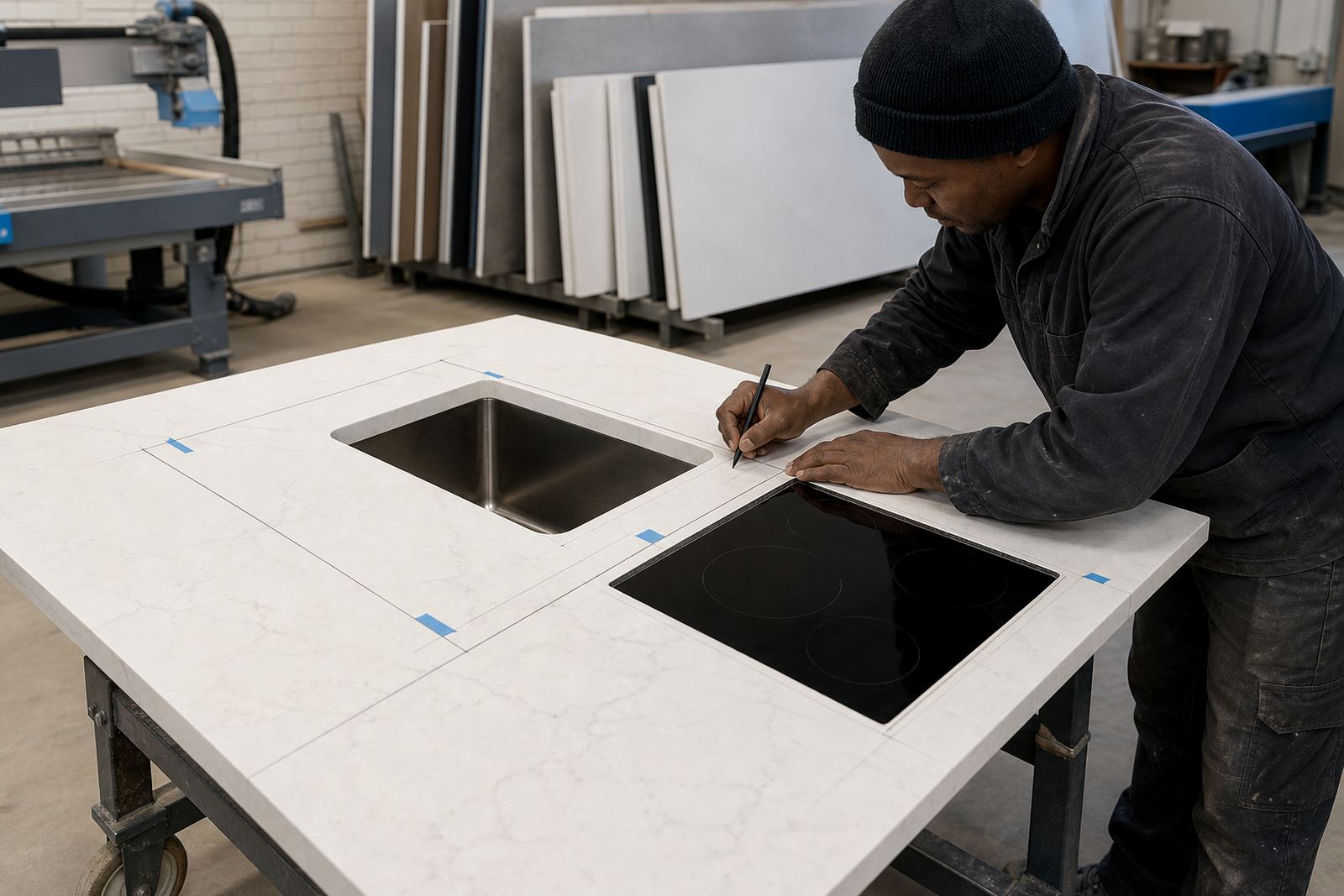
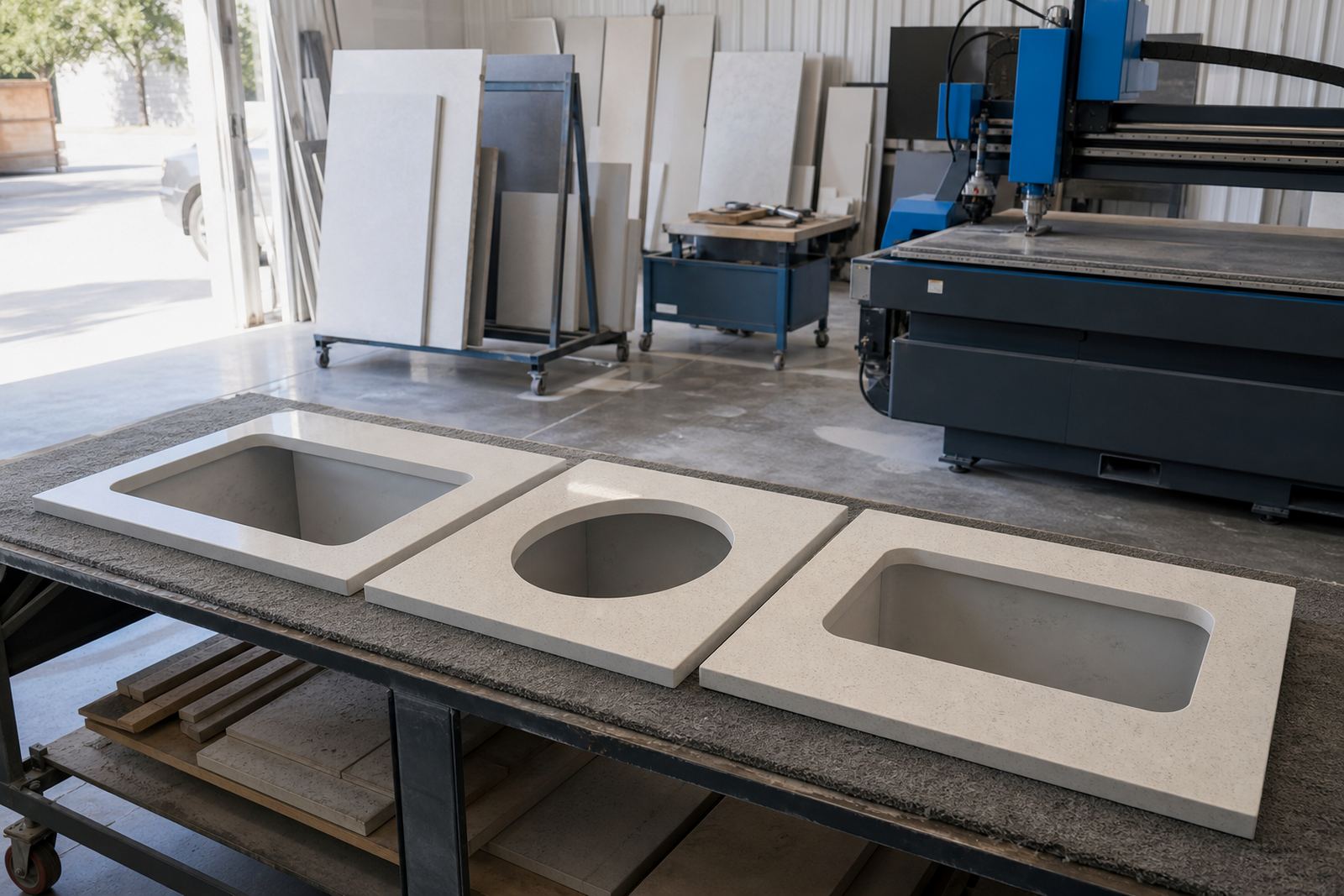
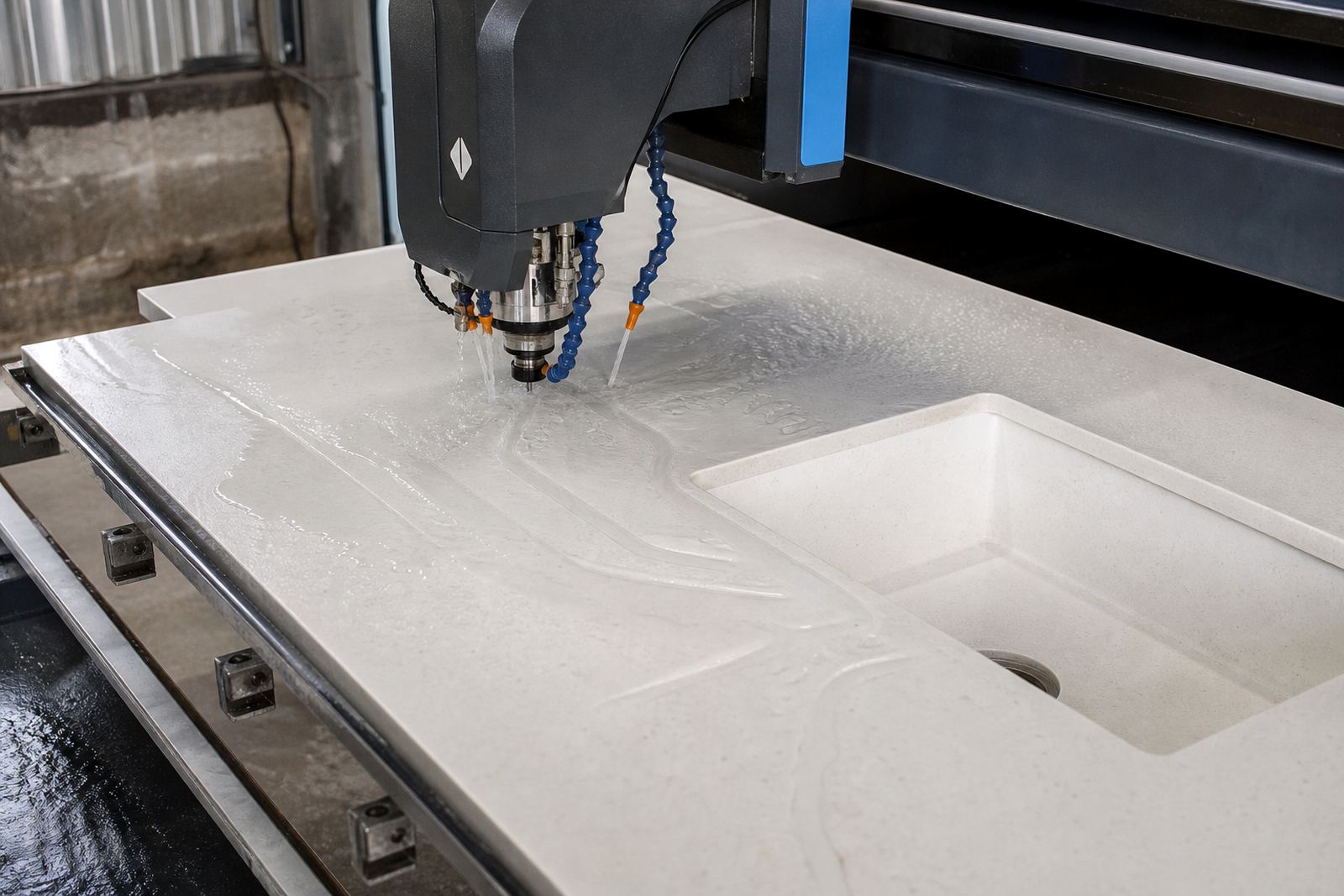
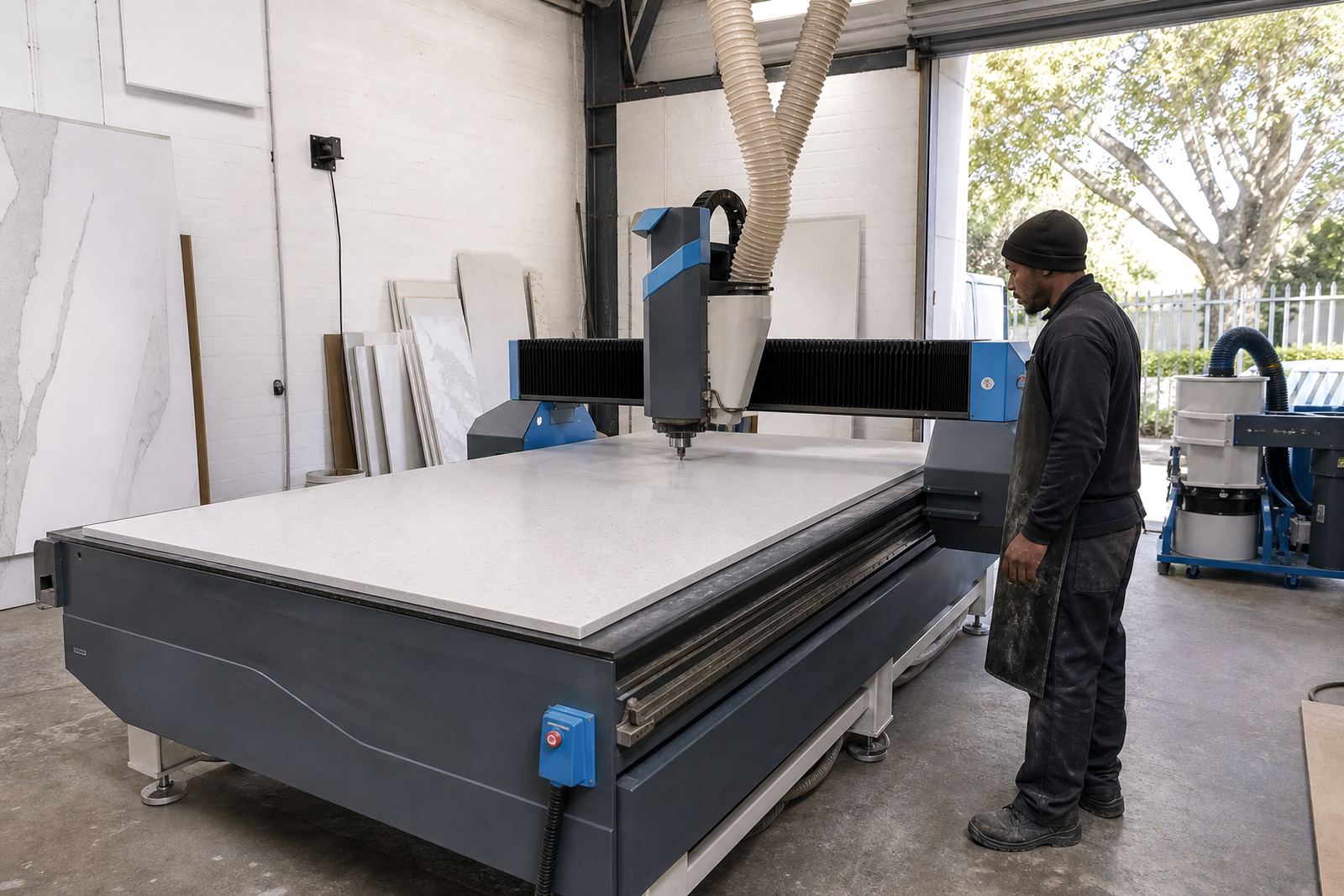
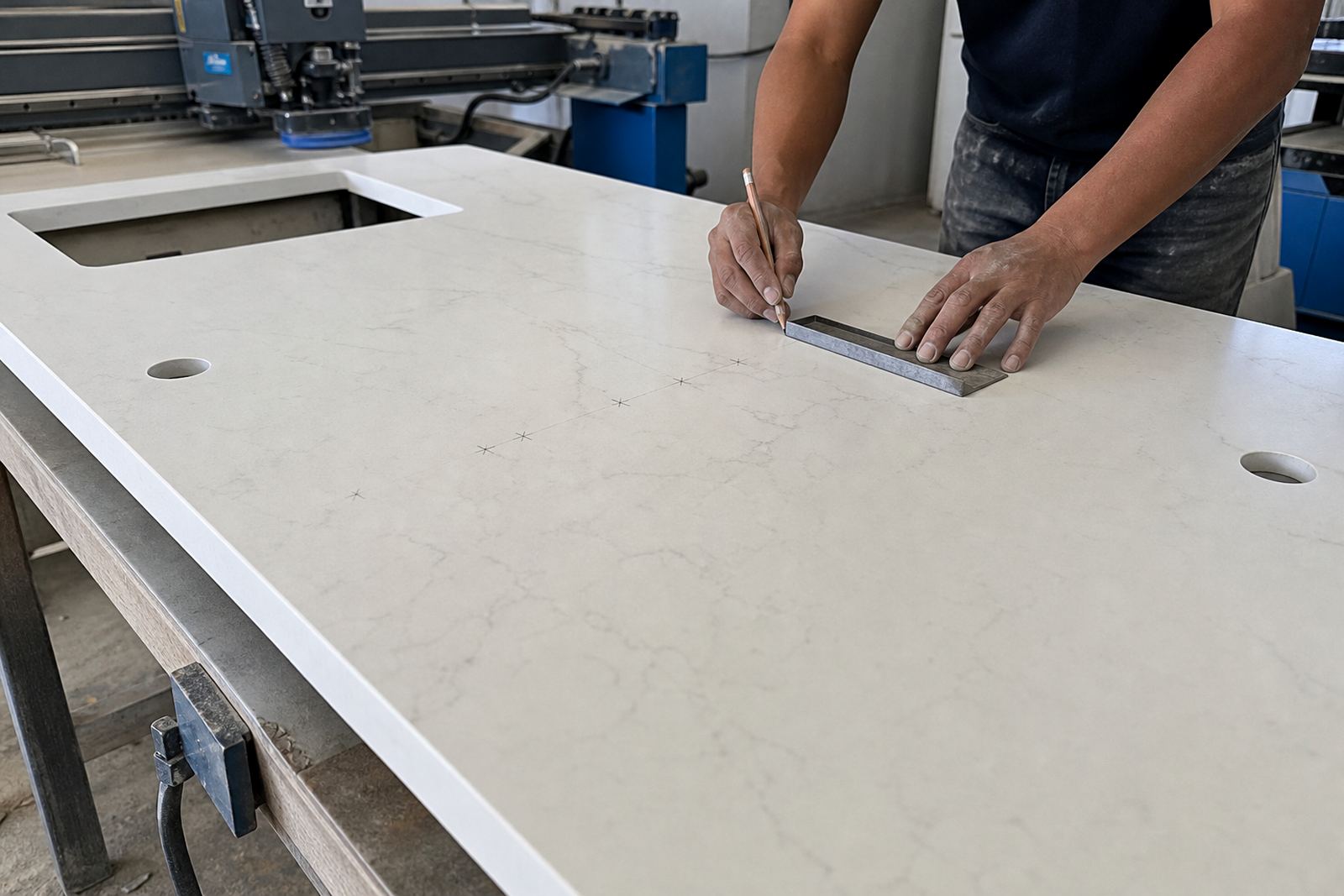
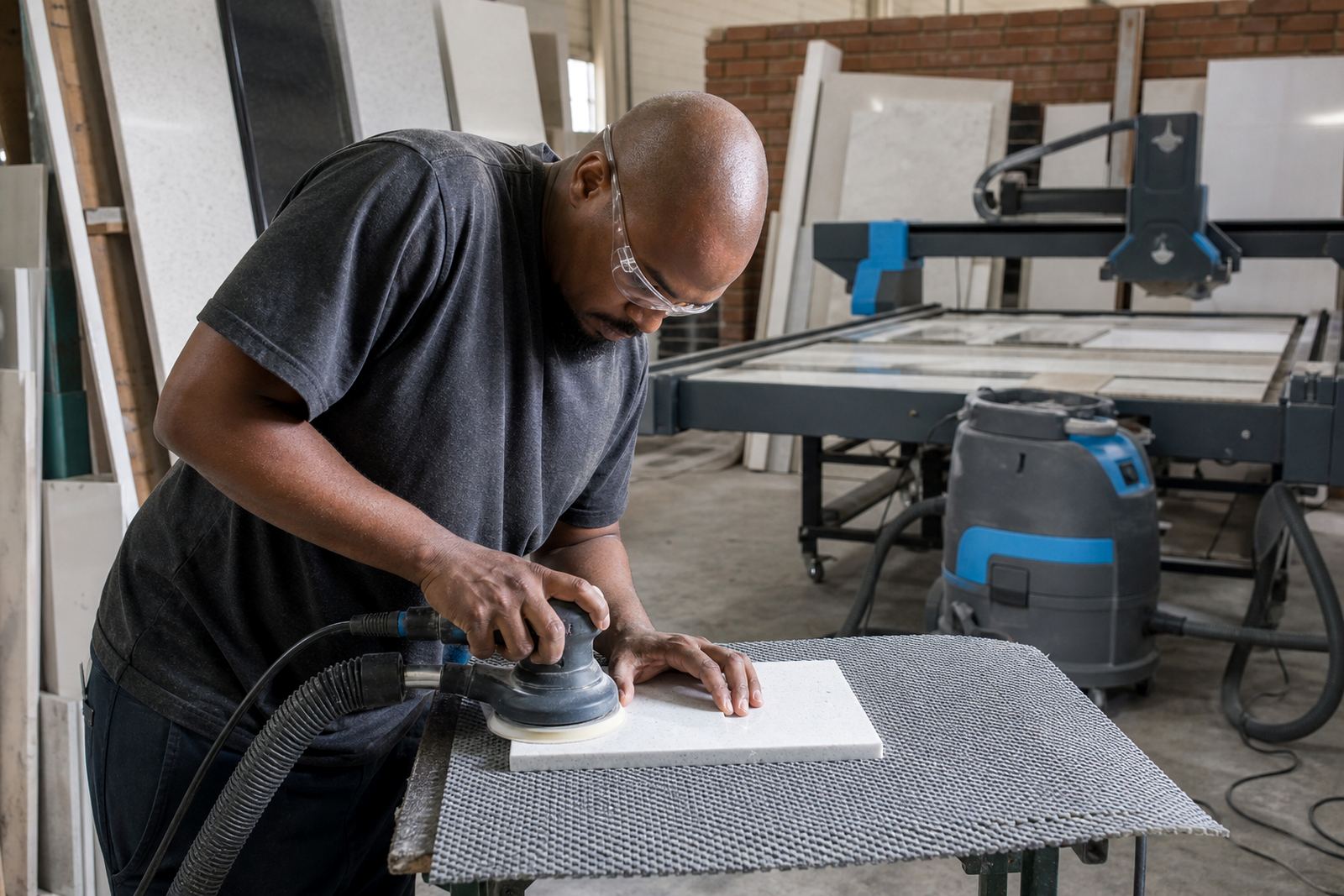
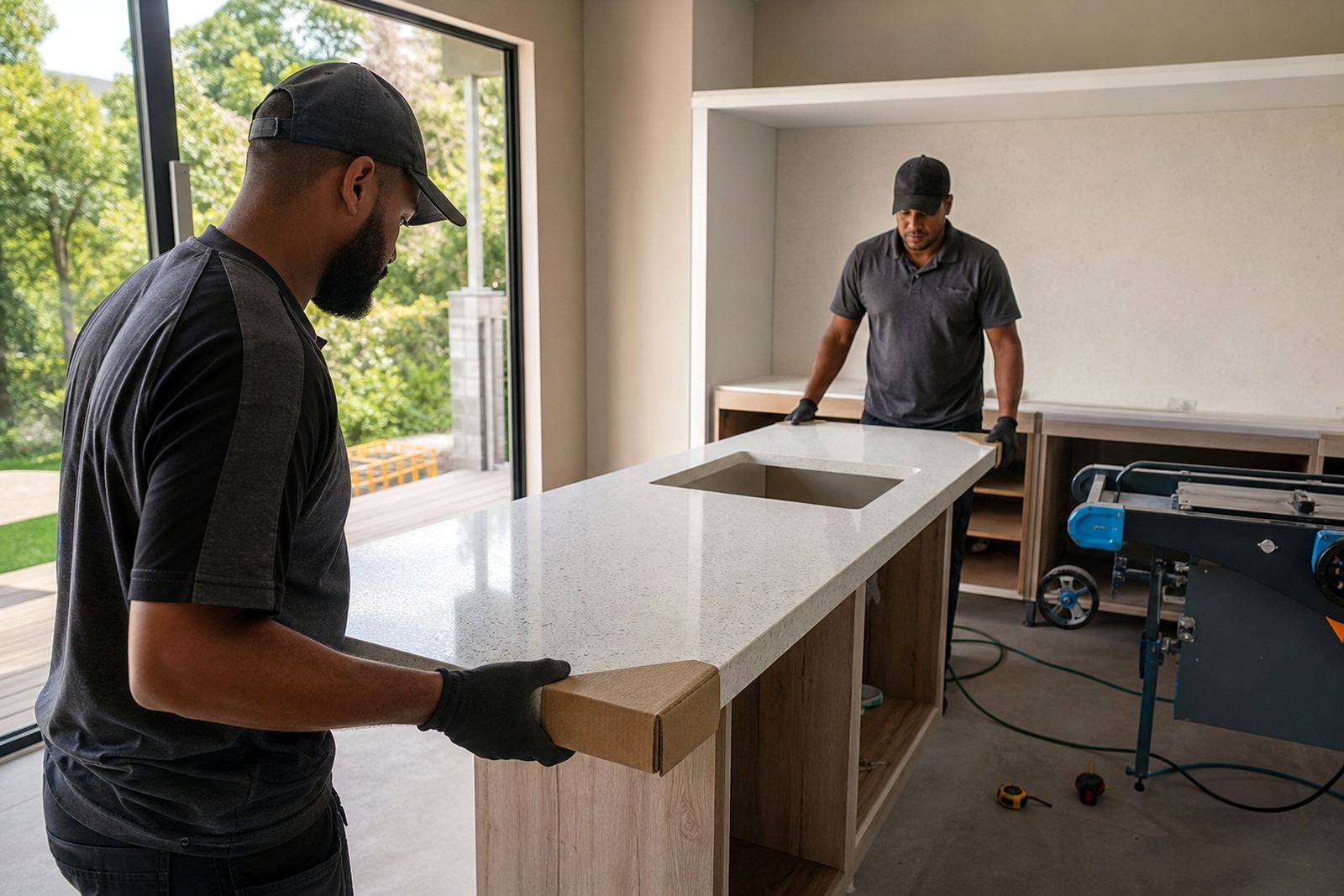
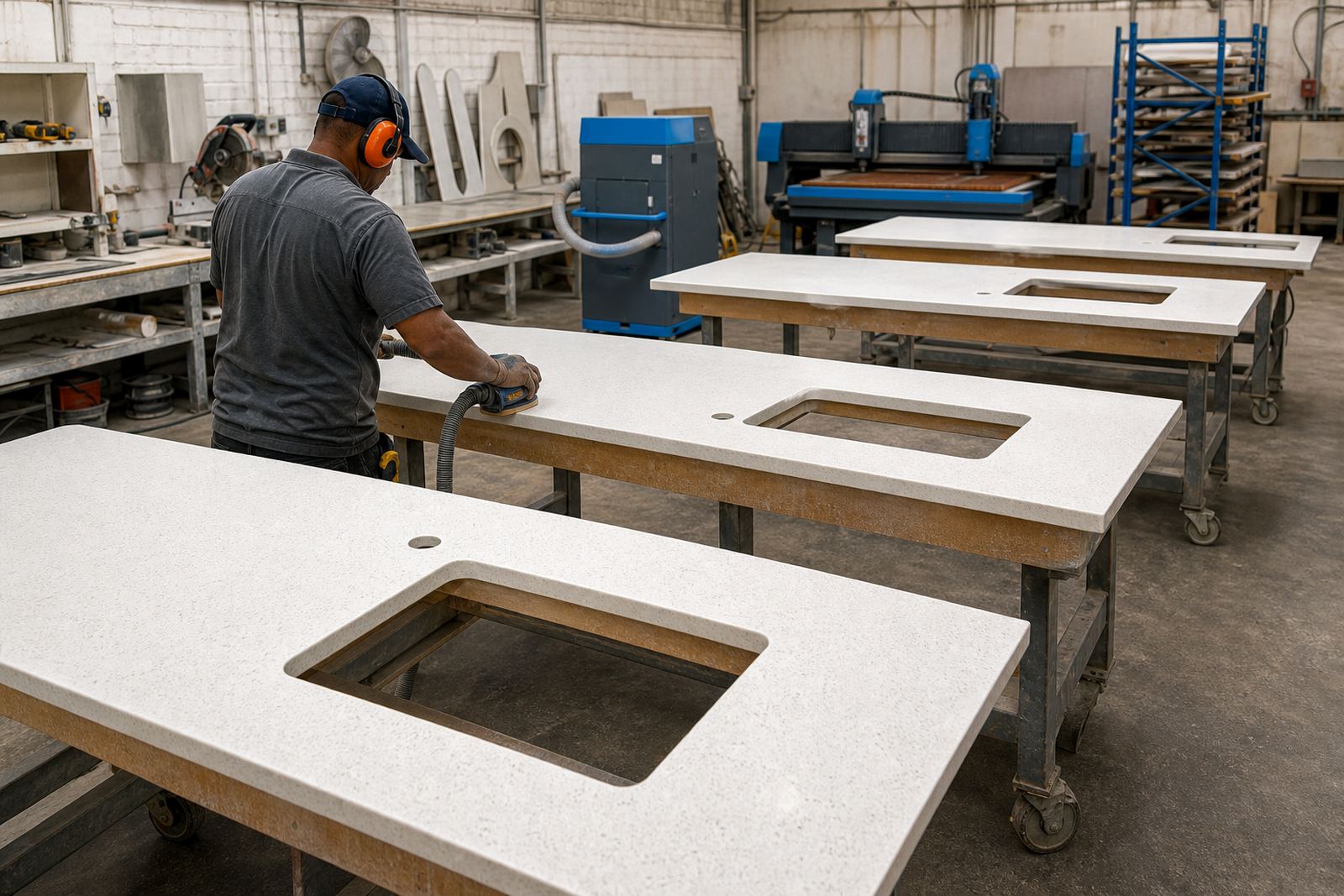
Sink cut-outs and hob cut-outs are made after the slab layout is planned, not as an afterthought. The material around each opening needs enough support, and reinforcement may be added where the underside is slim. Undermount bowls need accurate routing and a neat polish on the visible edge, while top-mounted units depend on a clean aperture and tidy seal line.
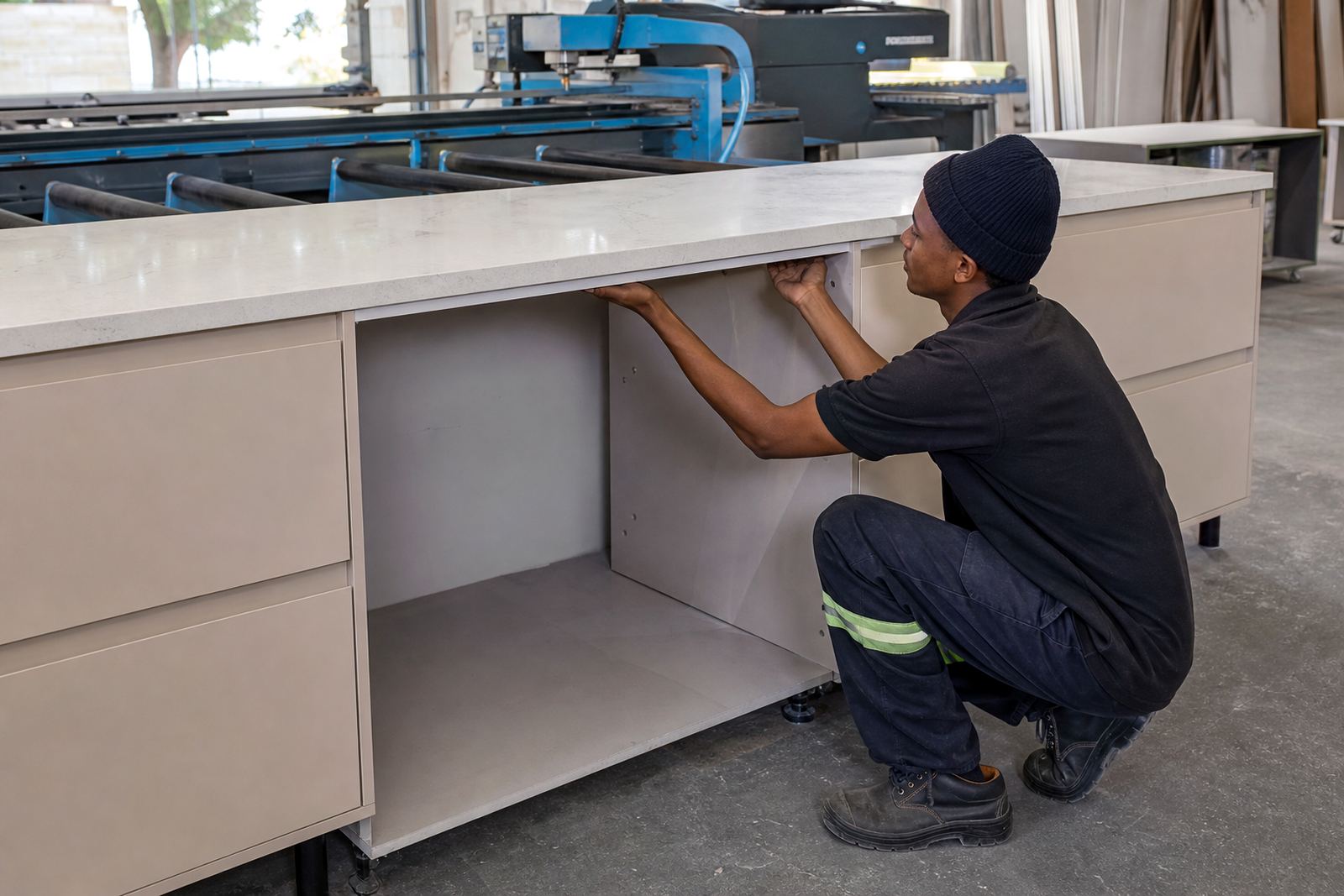
Seams are best kept where the eye does not land first, such as inside a corner or beside a change in run. A well-made seam is tight, level and colour-matched as far as the material allows. On long kitchen runs, island returns and L-shapes, seam placement can save a lot of trouble later, especially where transport or wall movement creates constraints.
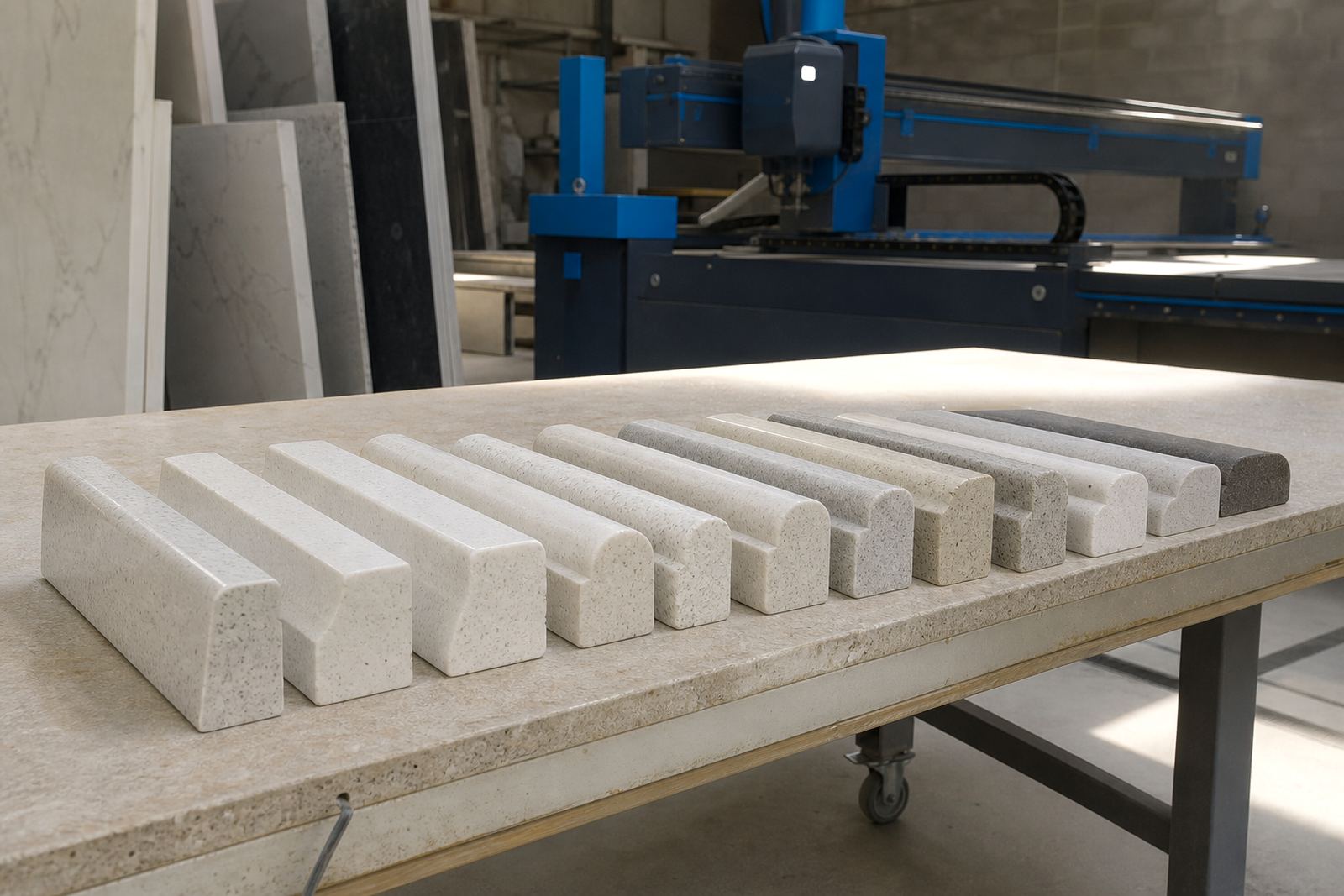
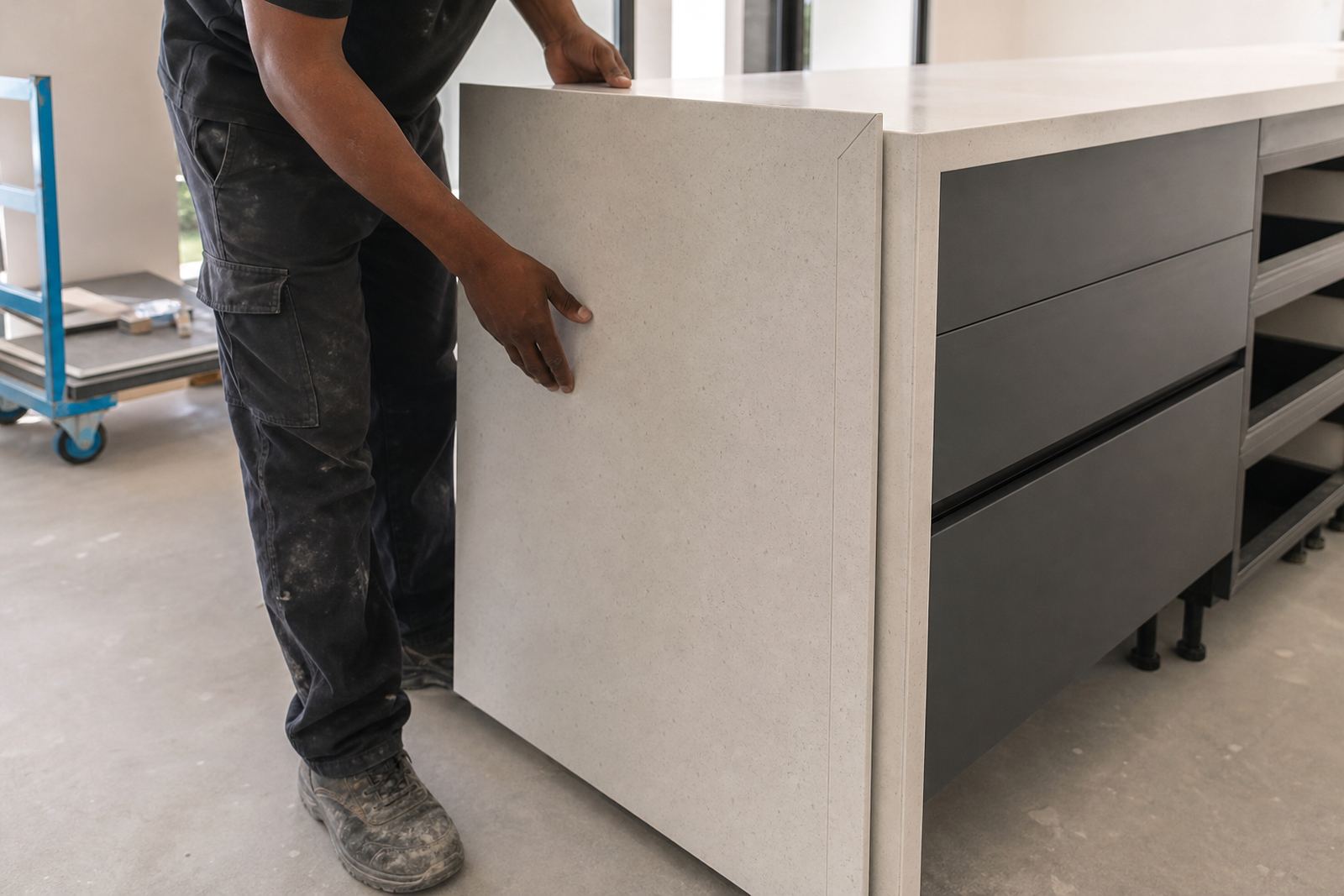
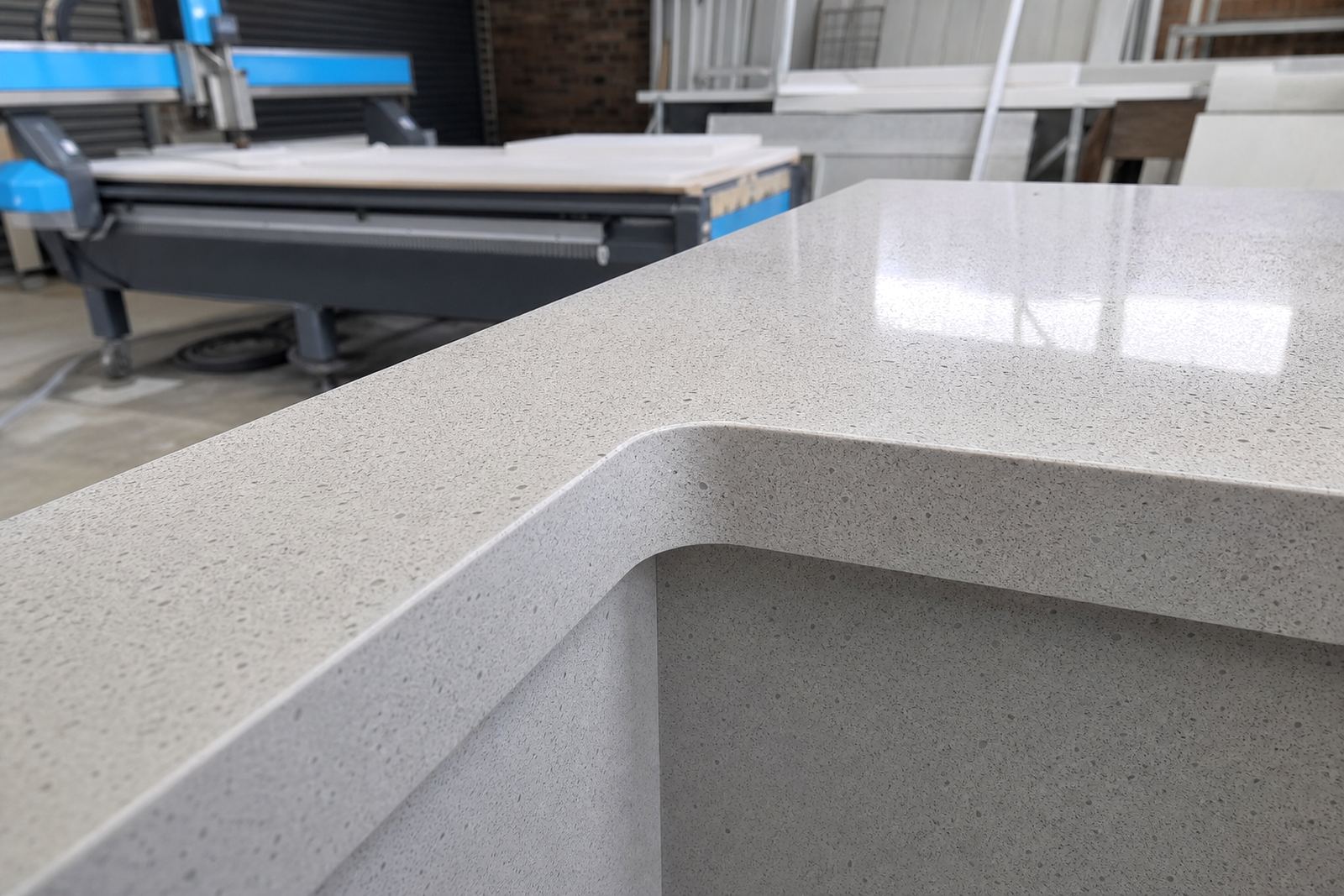
Edge profiles shape the final look more than many people expect. A square edge reads modern and plain, while a softened radius is kinder to hands and easier to keep clean. Waterfall returns, laminated edges and mitred fronts can all work, but each one changes the cutting sequence and the amount of finishing needed.
Splashbacks, vanities and shop counters
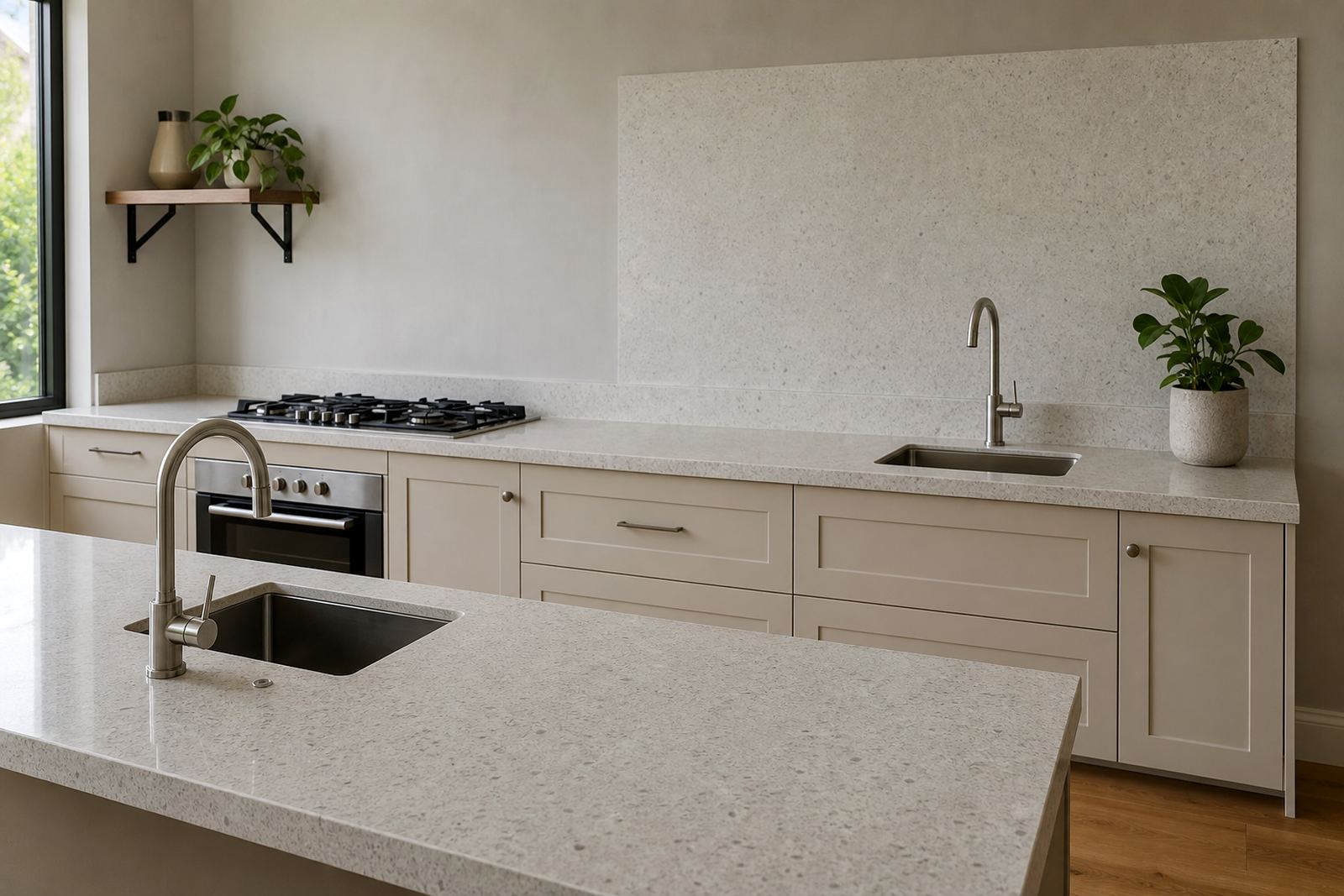
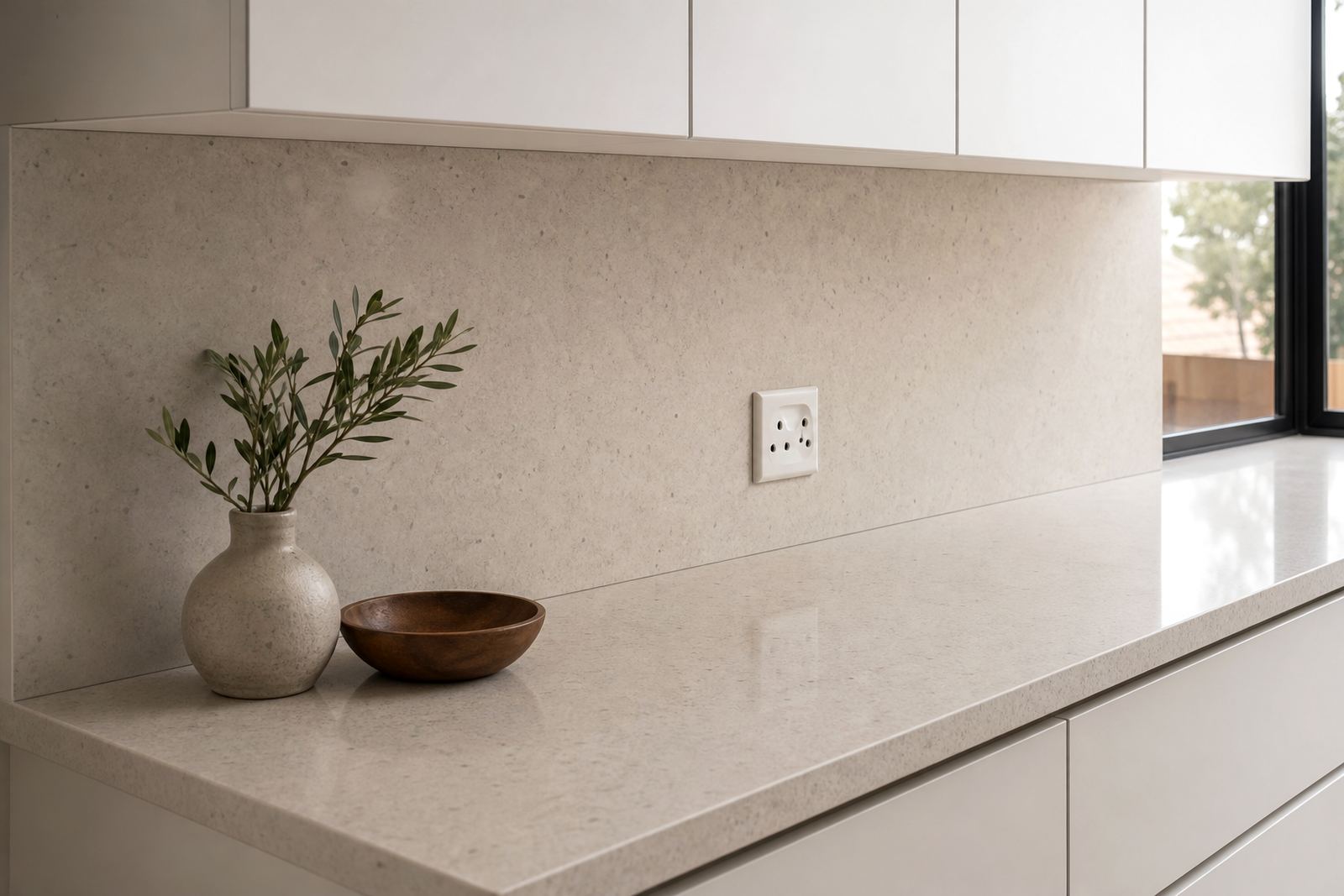
Splashbacks keep the wall line tidy and reduce staining behind sinks and prep areas. In kitchens they are usually run to a practical height, while in bathrooms they often sit with tighter junctions around mirrors, basins and shaving cupboards. Solid-surface is useful where a shaped upstand, integrated basin or continuous return is wanted.
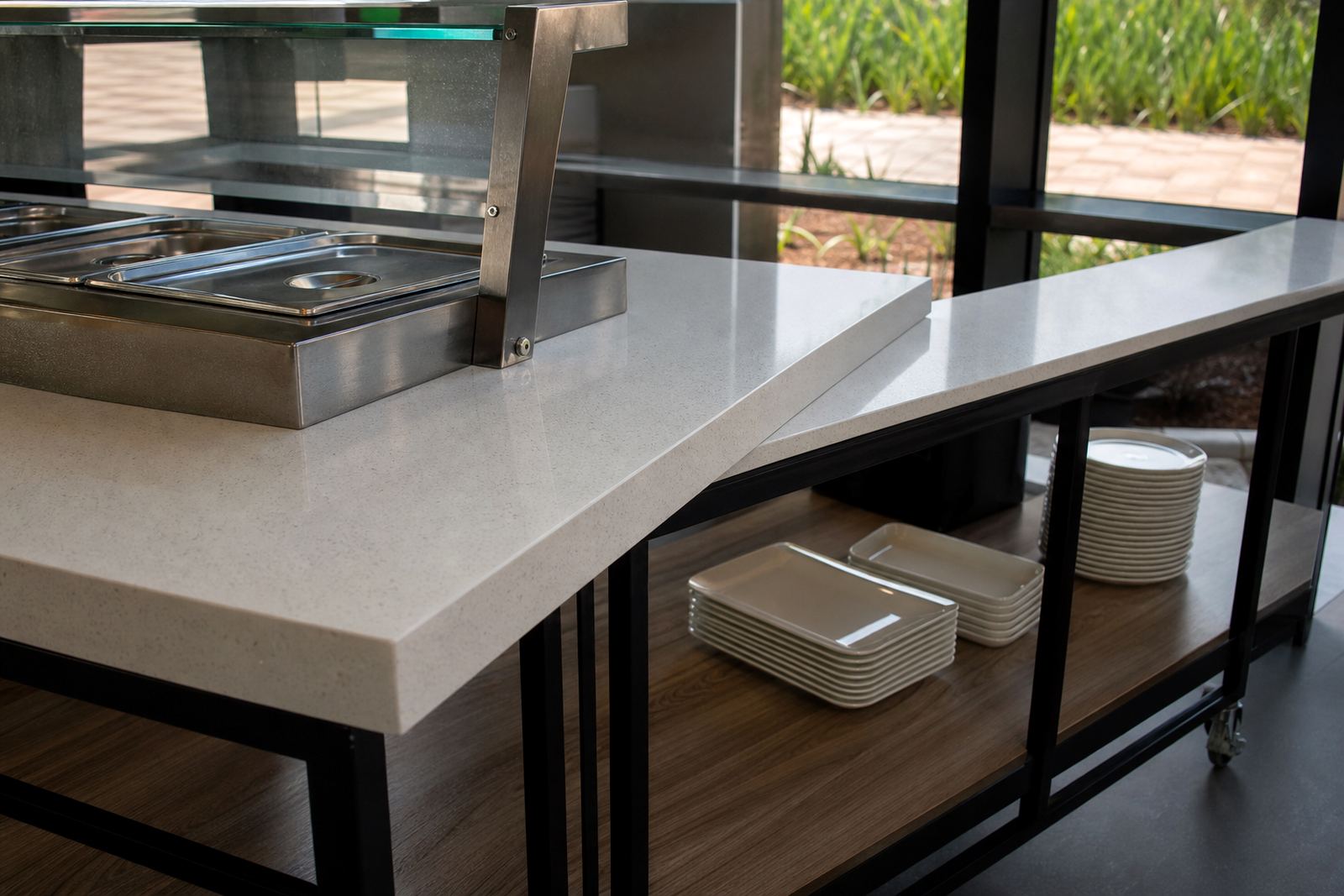
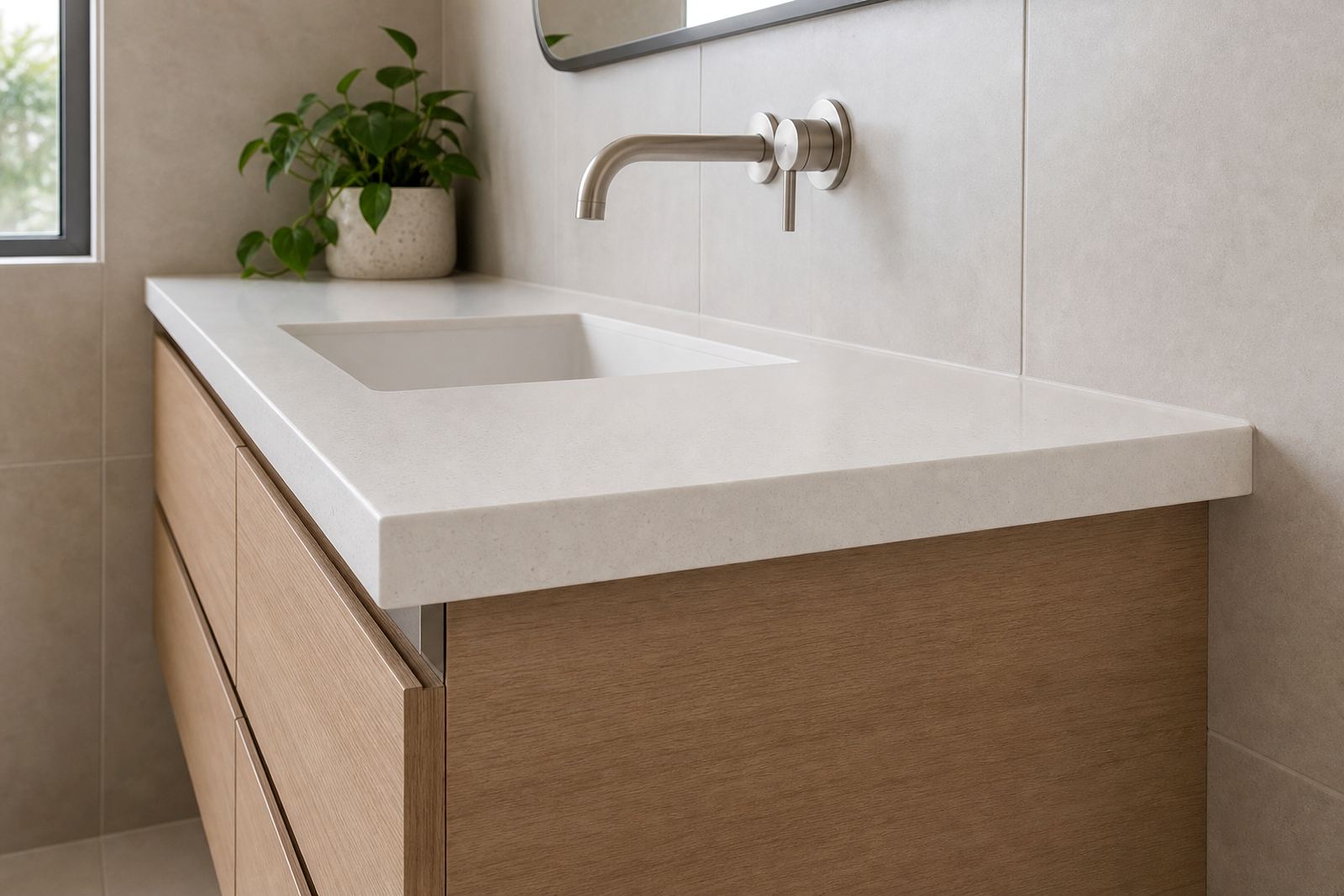
Vanity tops need exact tap spacing, solid basin support and control of splash, since moisture behaves differently in a bathroom than in a kitchen. Shopfitters usually want neat sight lines and the same detail across several counters, so templating and edging must stay consistent from piece to piece. Careful slab planning is where that effort pays off.
- Use full-height splashbacks where water marks are common.
- Allow for basin waste positions before fabrication.
- Keep service access in mind under vanity units.
- Match exposed edges where one counter meets another.
Heat, stains and everyday care
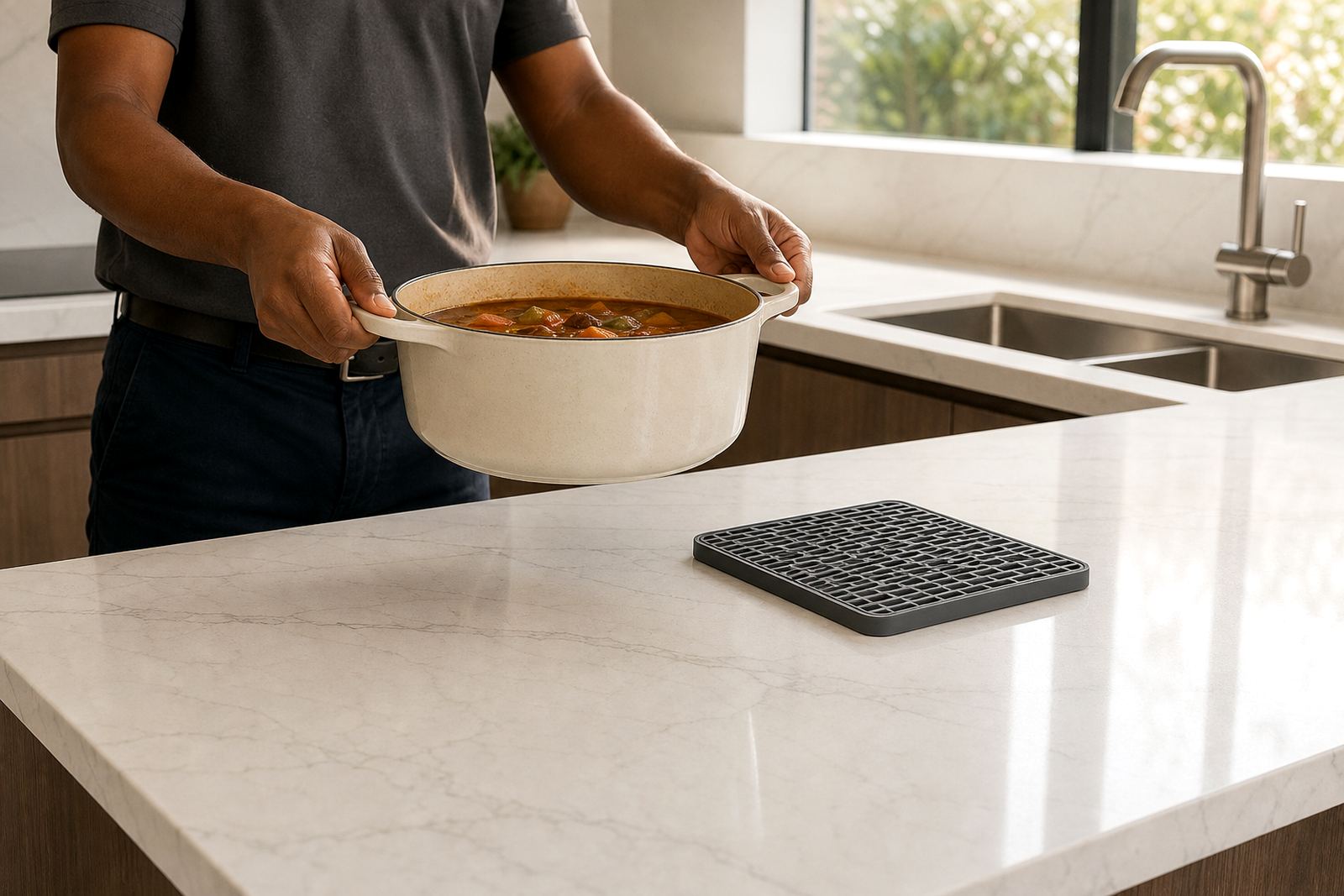
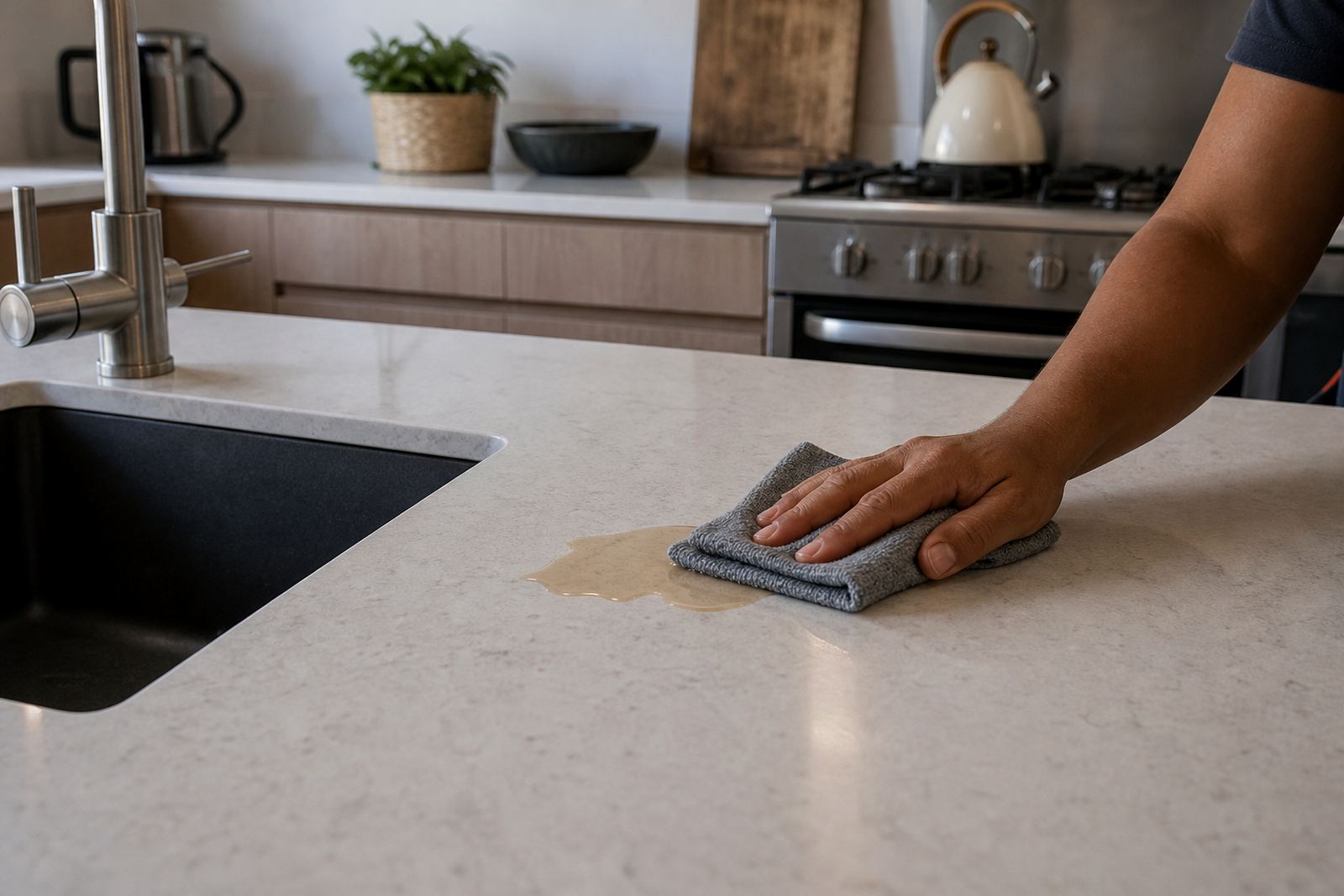
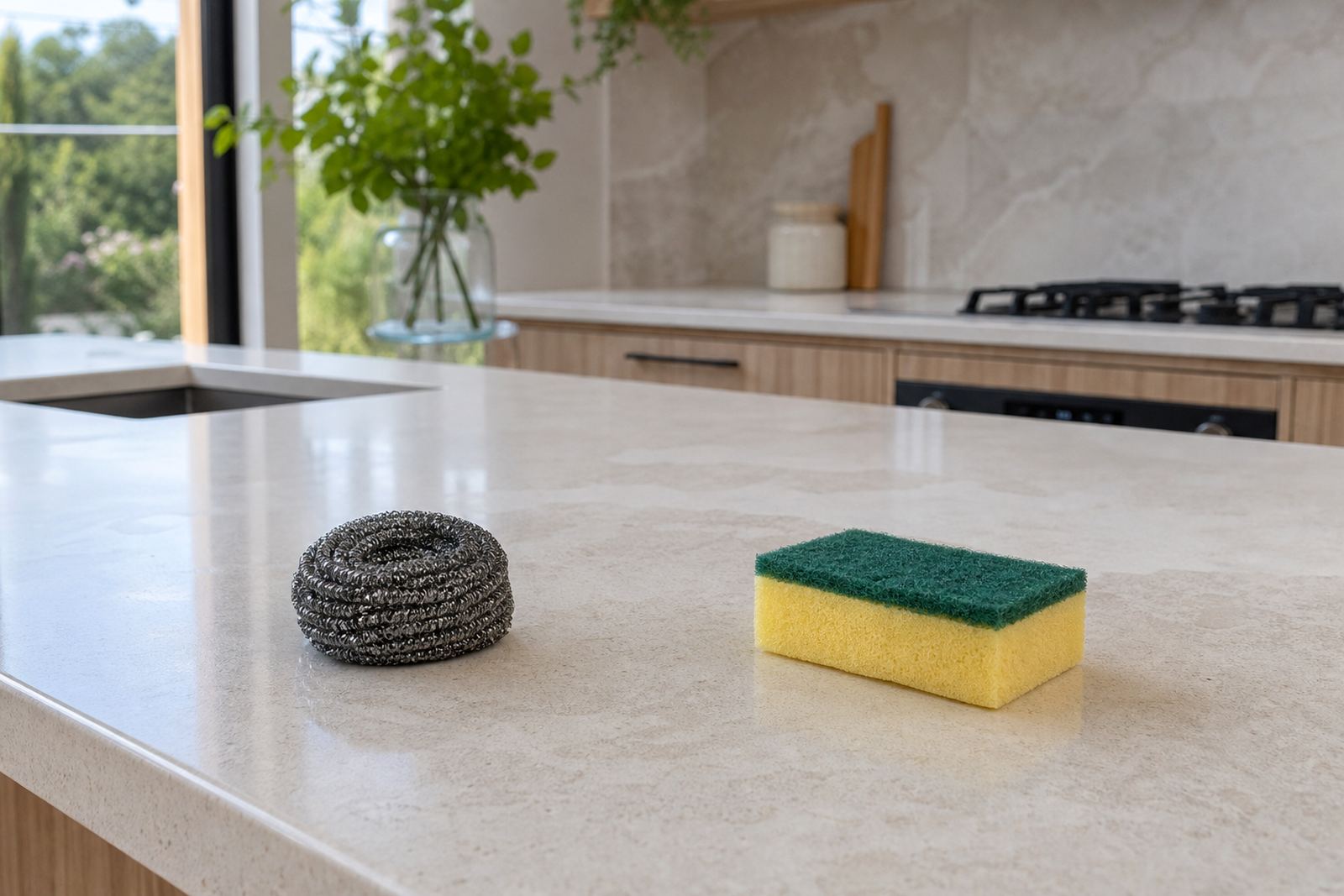
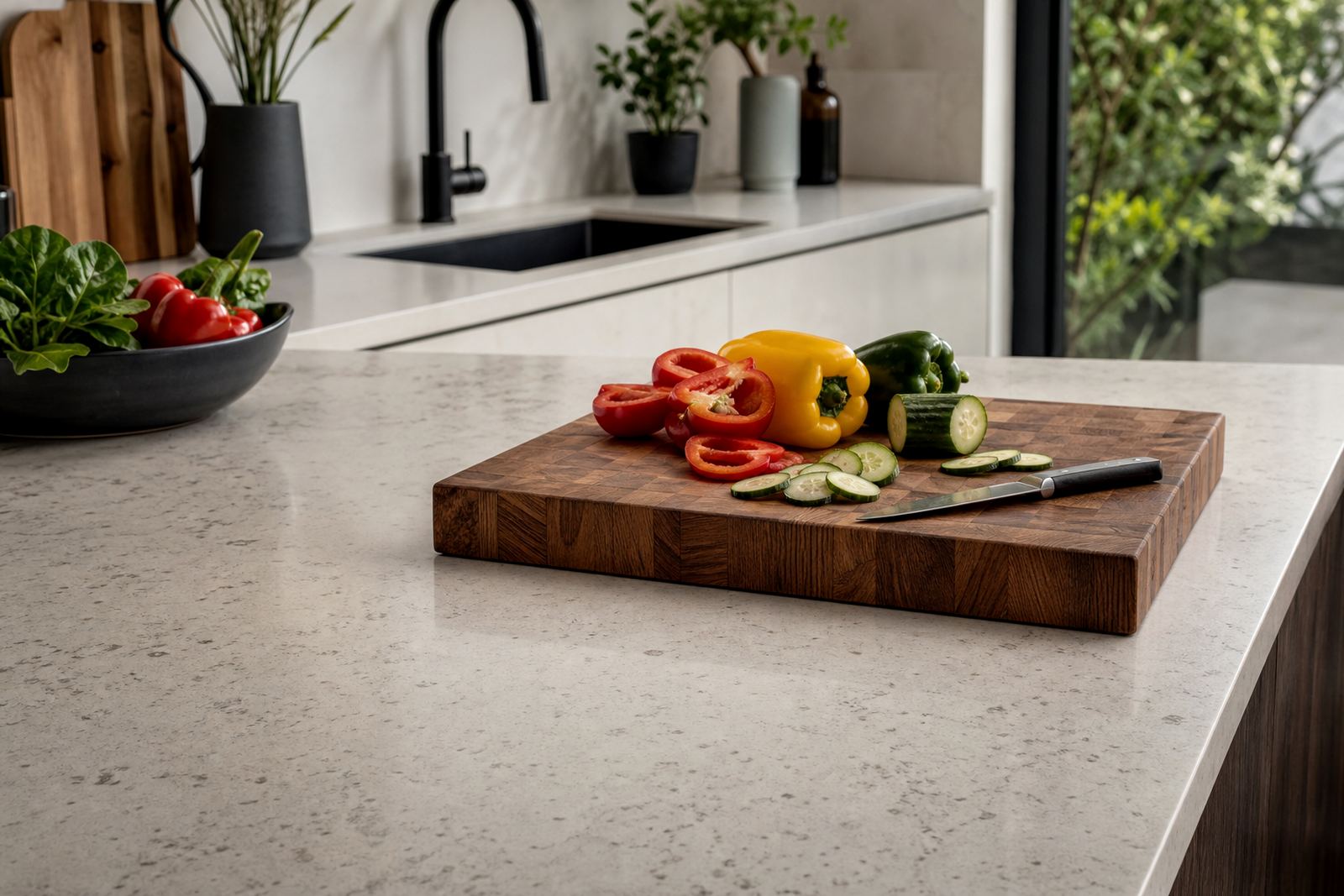
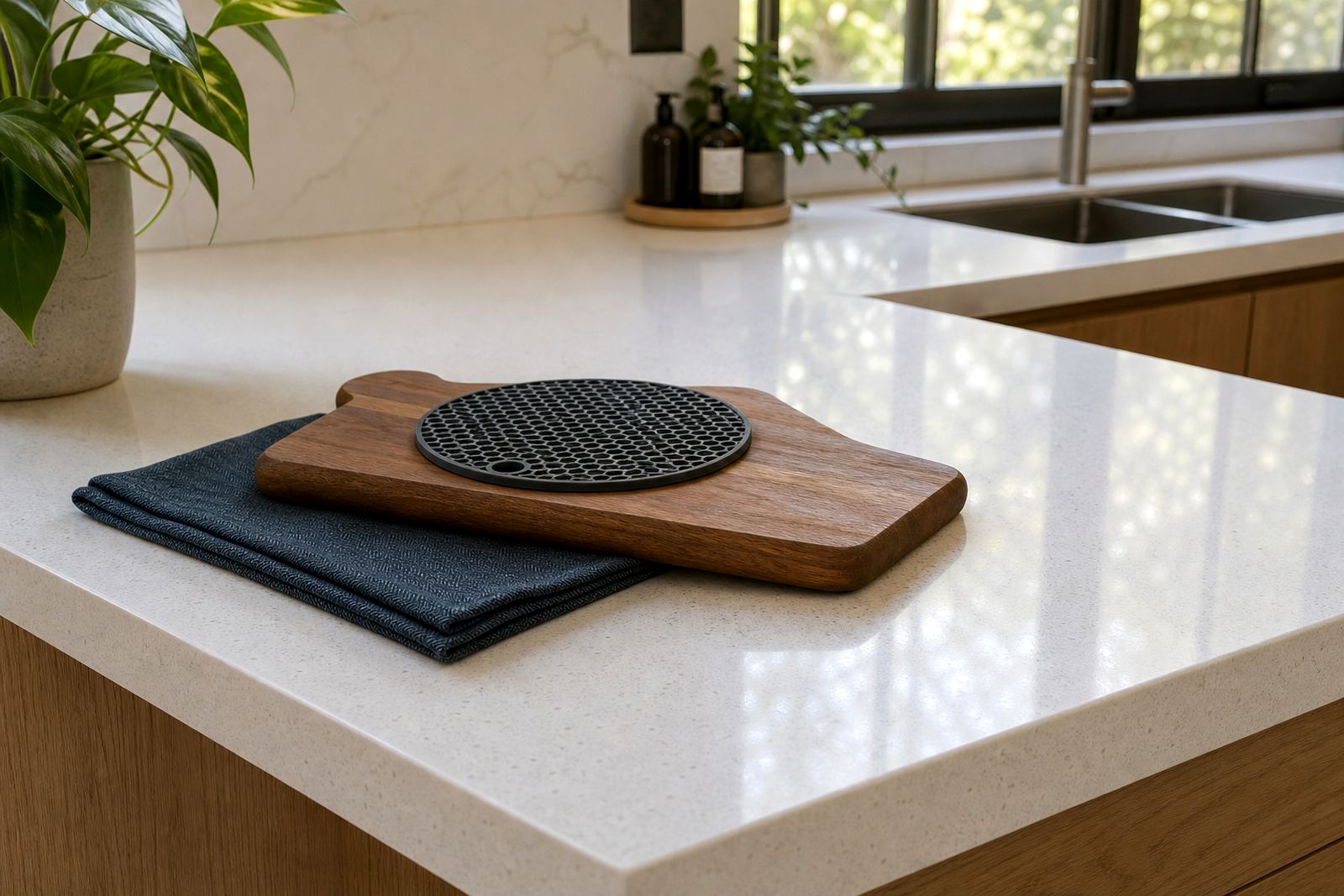
Quartz resists staining well, but it still needs sensible treatment. Wipe spills early, use cutting boards and keep hot pots on stands rather than directly on the surface. Strong solvents, abrasive pads and scouring powders can dull the finish. Solid-surface is more forgiving with light marks and can often be refreshed, though it still dislikes harsh heat and sharp abuse.
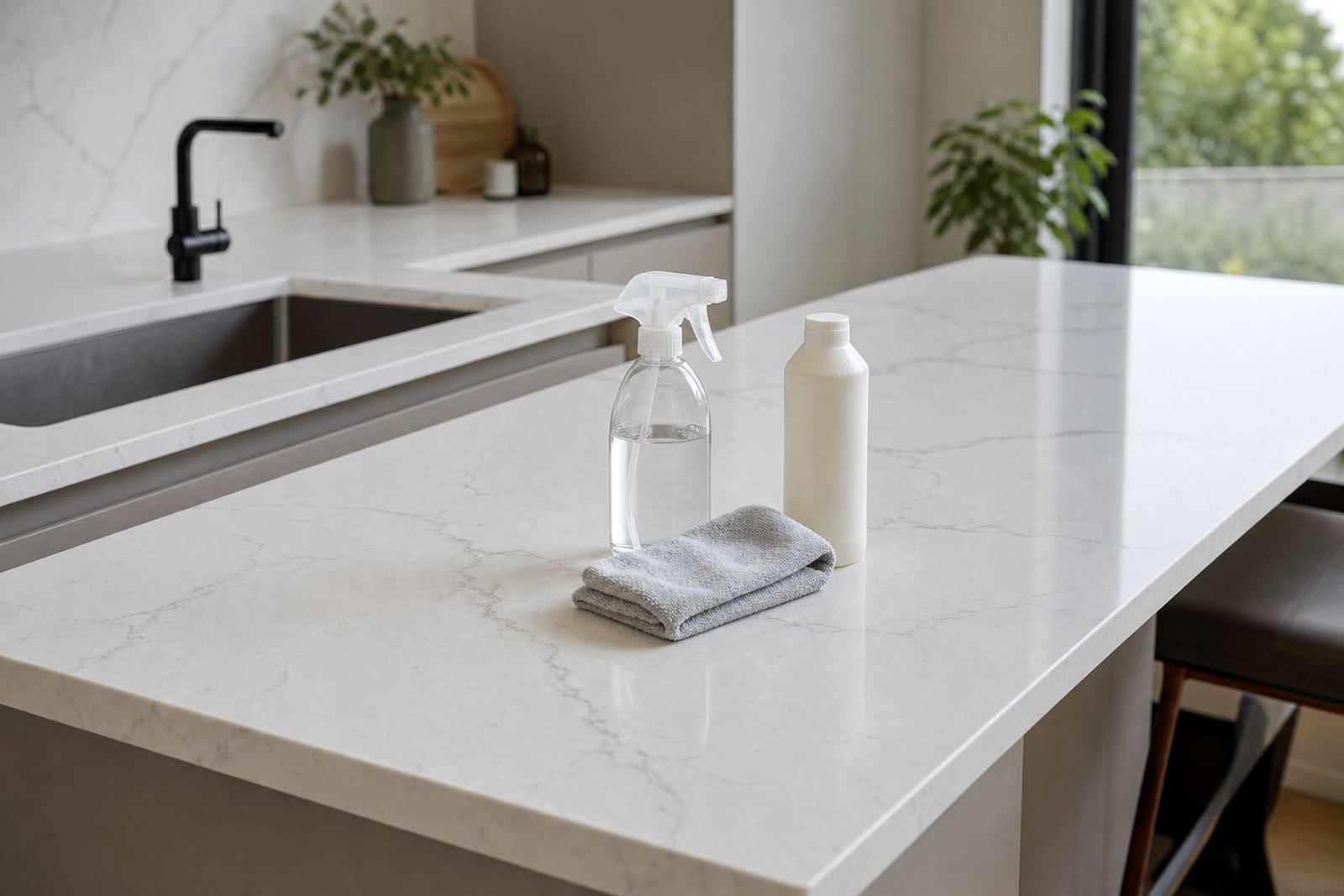
For daily care, a soft cloth, warm water and mild soap are usually enough. For stubborn residue, use a non-abrasive cleaner that suits the finish and rinse it clear. Avoid dragging heavy appliances across the top, and keep the seal lines around sinks intact so moisture does not work into the joints. A small nick or chip is better dealt with early than left to spread, thats where the finish starts looking tired.
Aftercare that keeps the edge neat
Good aftercare starts with knowing what was fitted. A quartz kitchen top, a bathroom vanity and a reception counter all live under different conditions, so the advice cannot be copied and pasted. We look at the installation type, the amount of splash, the places where people lean, and the areas that take hot cookware or cleaning chemicals.
If a seam opens slightly, a sealant edge lifts or a basin line starts to show moisture marks, the issue needs checking before it becomes bigger. Aftercare is mostly about maintenance rather than repair, and a practical note on cleaning products, heat protection and daily use often keeps the surface in proper shape for longer. Our contact form is used for the first job details and follow-up notes, while Thabo handles aftercare guidance on what was fitted.
- Keep bleach-heavy cleaners off exposed joints.
- Use trays under kettles, fryers and coffee equipment.
- Dry water around basin edges and splash zones.
- Report chips, lifting sealant or movement in seams.
Choosing the right top for the job
Homeowners, offices and shopfitters need to know how a top moves from measure to fabrication to fit. Some jobs suit quartz, others need shaped solid-surface, and some spaces use both.
Across Randburg, Johannesburg, Sandton, Midrand, Fourways, Pretoria, Centurion and Roodepoort, we match the surface to the room, use, measuring, cutting and installation details.