
The first minute matters more than the cleaner
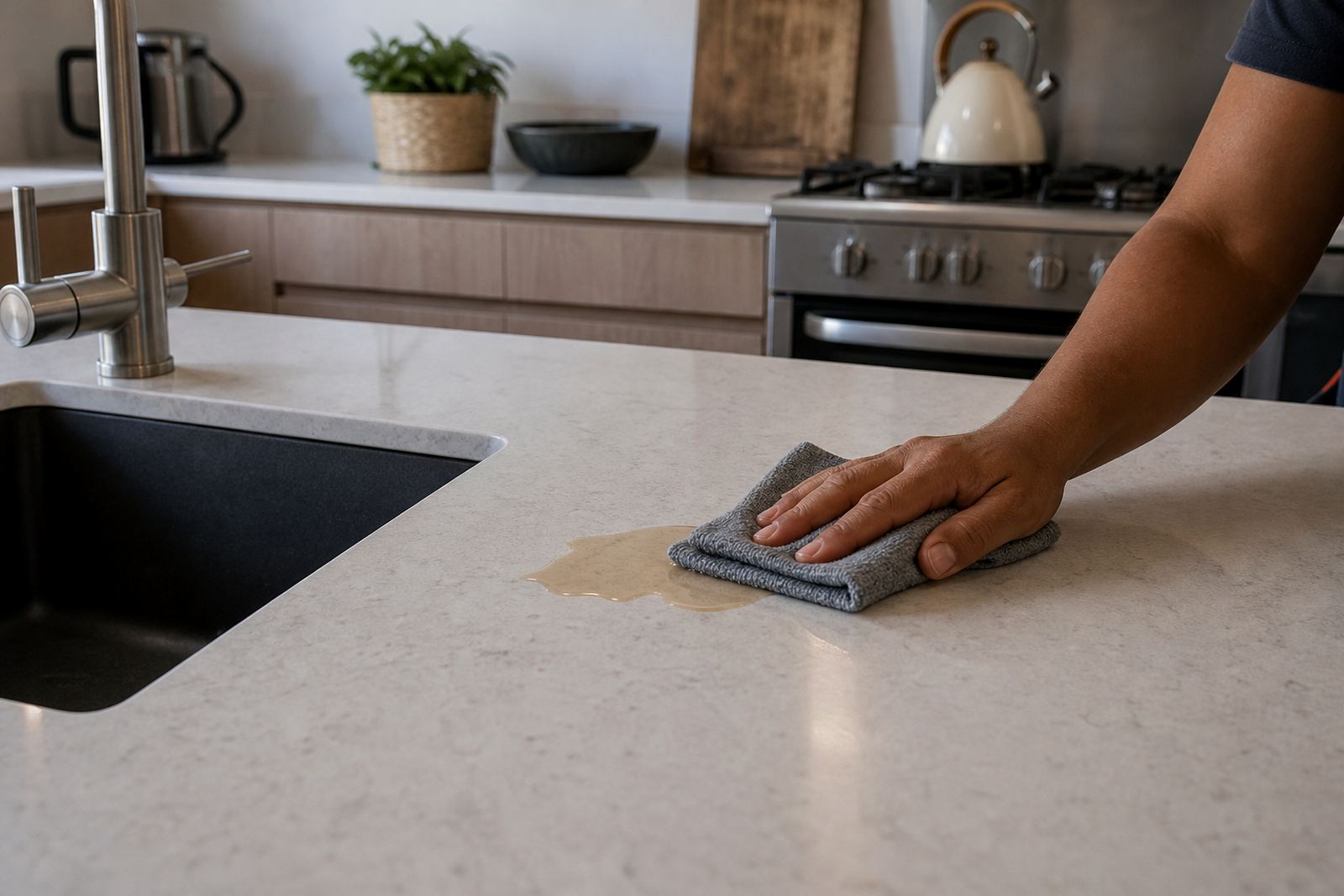
Start with a dry paper towel or soft cloth and lift the liquid off the surface, rather than dragging it wider. On engineered quartz and solid-surface tops, a spill that sits in one place can leave a ring, especially where dust, sugar or soap residue is already present.
For water-based spills such as tea, coffee, cordial or handwash, a damp microfibre cloth and a small amount of mild dishwashing liquid is usually enough. Wipe in straight passes, then rinse the cloth and remove the soap film. If the mark is still there, do not switch straight to a scouring pad. That is where a clean finish can turn patchy.
Stains behave differently on quartz and solid surface
Engineered quartz resists staining well, but it is not stain proof. Pigments from beetroot, curry, nail polish remover, red wine and certain sauces can sit on the surface if they are left too long. Solid-surface material is less porous and can often be restored more easily, though it can still dull if harsh chemicals are left behind.
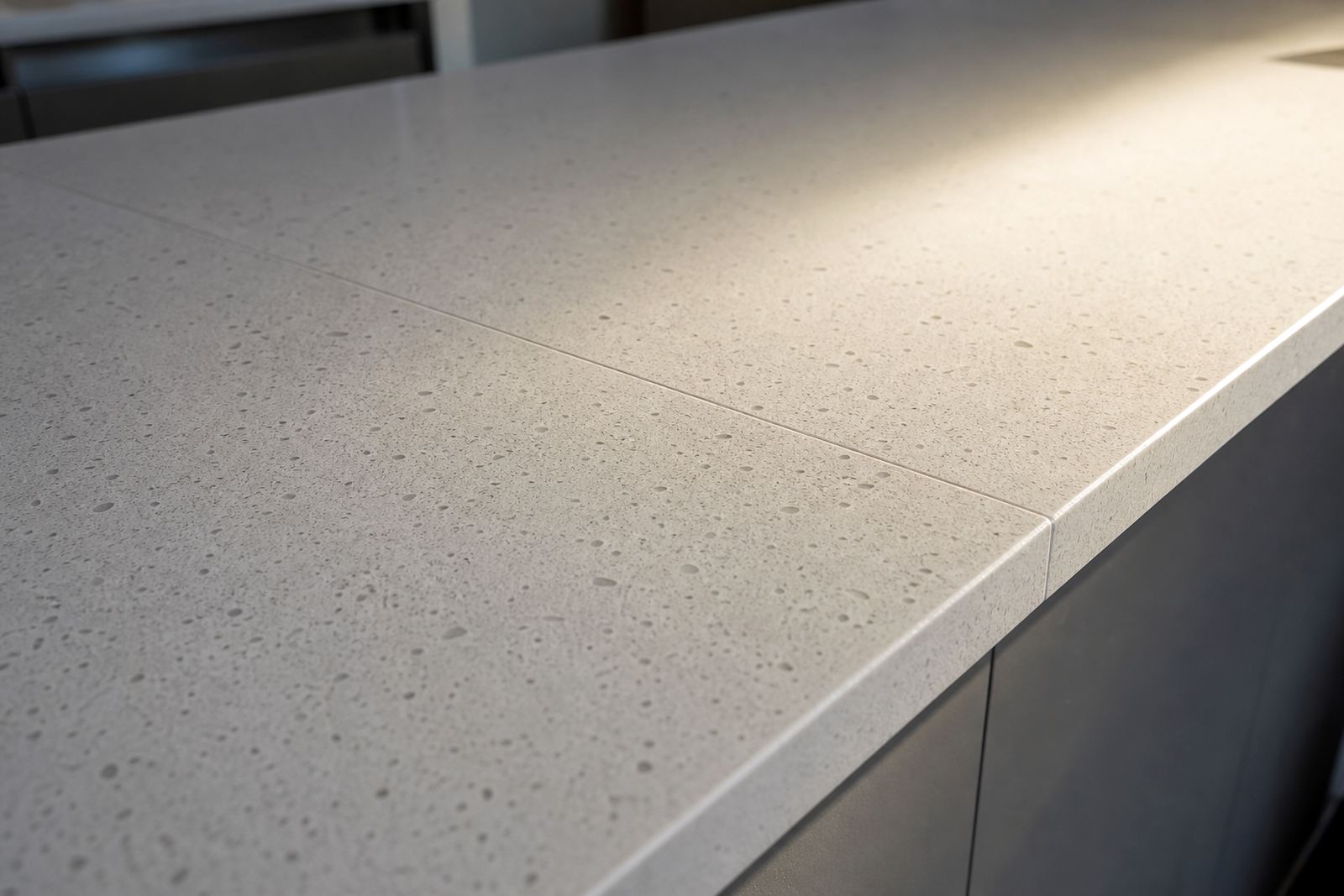
One useful rule is to identify whether the mark is sitting on the top or has worked into a seam, join or cut-out edge. A dry residue on the field of the top is one thing. A stain that creeps along a sink cut-out or a hob edge takes more patience, because those details collect moisture and fine debris.
- Blot first, wipe second, scrub last only if needed.
- Use cool or lukewarm water for most fresh spills.
- Keep bleach, oven spray and drain cleaner away from the surface.
- Dry the area after cleaning, especially near sinks and splashbacks.
Around sink cut-outs and seams, be slower
Cut-outs for sinks and hobs are the places most likely to show stubborn residue, because water and cleaning liquid gather at the edges. A neat seam can still hold grime if the joint is ignored after a spill. That is why wiping the top only is not enough when the splash happened near a bowl or mixer tap.
Use a soft toothbrush or folded cloth for the very edge of the cut-out, then rinse the area and dry it well. If a seam looks darker after cleaning, it may be a build-up of soap or food colour rather than damage. Do not try to lift it with a blade on our quartz or solid-surface tops. That can scratch the finish and leave the mark more visible.
Heat marks and stain marks are not the same thing
A hot pan mark and a tea spill do not need the same response. Heat can dull the sheen or shift the colour slightly, while a spill leaves residue on the surface. Quartz tops usually dislike direct heat, so a trivet or stand is the safer habit in kitchens where pots travel from the stove to the counter.
For stain care, mild soap and water are the first step. For heat, the goal is to stop further damage, then assess whether the finish has changed. A stained patch often cleans away. A heat-dulled patch may need professional attention, especially if it sits close to an edge profile or a sink return where the eye catches it quickly.
- Do not place hot trays straight onto quartz.
- Lift pots rather than sliding them across the top.
- Keep citrus, vinegar and strong solvents off the counter for long periods.
- Use a chopping board under oily foods and sauces.
A Randburg kitchen case that shows the point
In a Strijdom Park kitchen, a midday spill of rooibos tea ran toward the sink line and settled in the shallow groove beside the bowl. The homeowner wiped the middle of the counter, but the edge held the brown ring because the cloth never reached the cut-out. A second pass with mild soap, a damp cloth and careful drying cleared most of it.
The same kitchen had a small patch of curry near the splashback. That needed a little more patience, because spice residue clings to texture and grout lines around tiled returns. The lesson was plain: treat the whole spill path, not only the obvious centre of the mark. In homes across Johannesburg, Sandton and Randburg, that habit saves a lot of later scraping.
What installers and aftercare teams usually tell owners
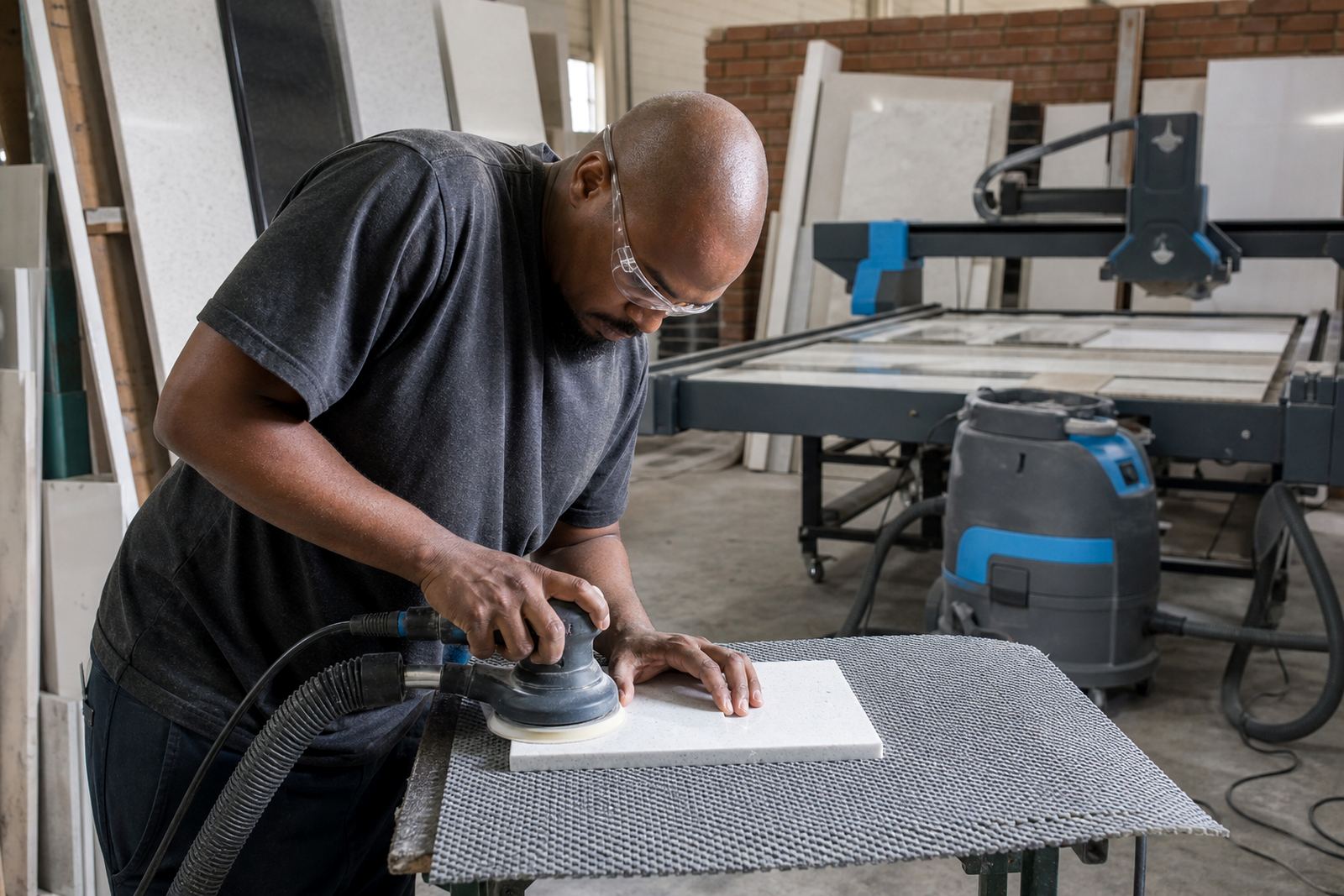
Good aftercare starts on installation day. A well-finished countertop, vanity or splashback still needs sensible habits once it is in use. Templated and cut accurately, the surface should have neat seams, clean sink openings and edge profiles that are easy to wipe. Even so, daily use brings soap, grease and food colour into the picture.
Our aftercare advice usually comes down to a few steady routines. Keep a soft cloth near the prep area, rinse sticky spills before they dry and check around splashbacks after cooking. In Gauteng homes and offices, where tea stations and shared kitchens stay busy, these small actions matter more than harsh products or hurried scrubbing.
- Wipe spills before they dry hard.
- Dry the area after every wash-down.
- Check the joint around the sink after heavy use.
- Use mild cleaners, not abrasive powders.
When a spill has already left a mark
If a stain has been left overnight, do not assume the top is permanently damaged. First check whether it is residue, a surface film or a true colour change. Sometimes a paste of mild cleaning liquid and warm water helps loosen the build-up. In other cases, the mark sits deeper and needs a careful inspection from someone who works with quartz and solid-surface fabrication every day.
For shopfitters, office kitchens and household tops, the useful habit is the same: act early, use gentle cleaning methods and avoid rough tools. A good finish can last far longer when the first response is tidy and measured. If the area includes a sink cut-out, hob opening or a long seam, the spill needs a slower touch, not a harder one.