
What the eye catches first at a joint
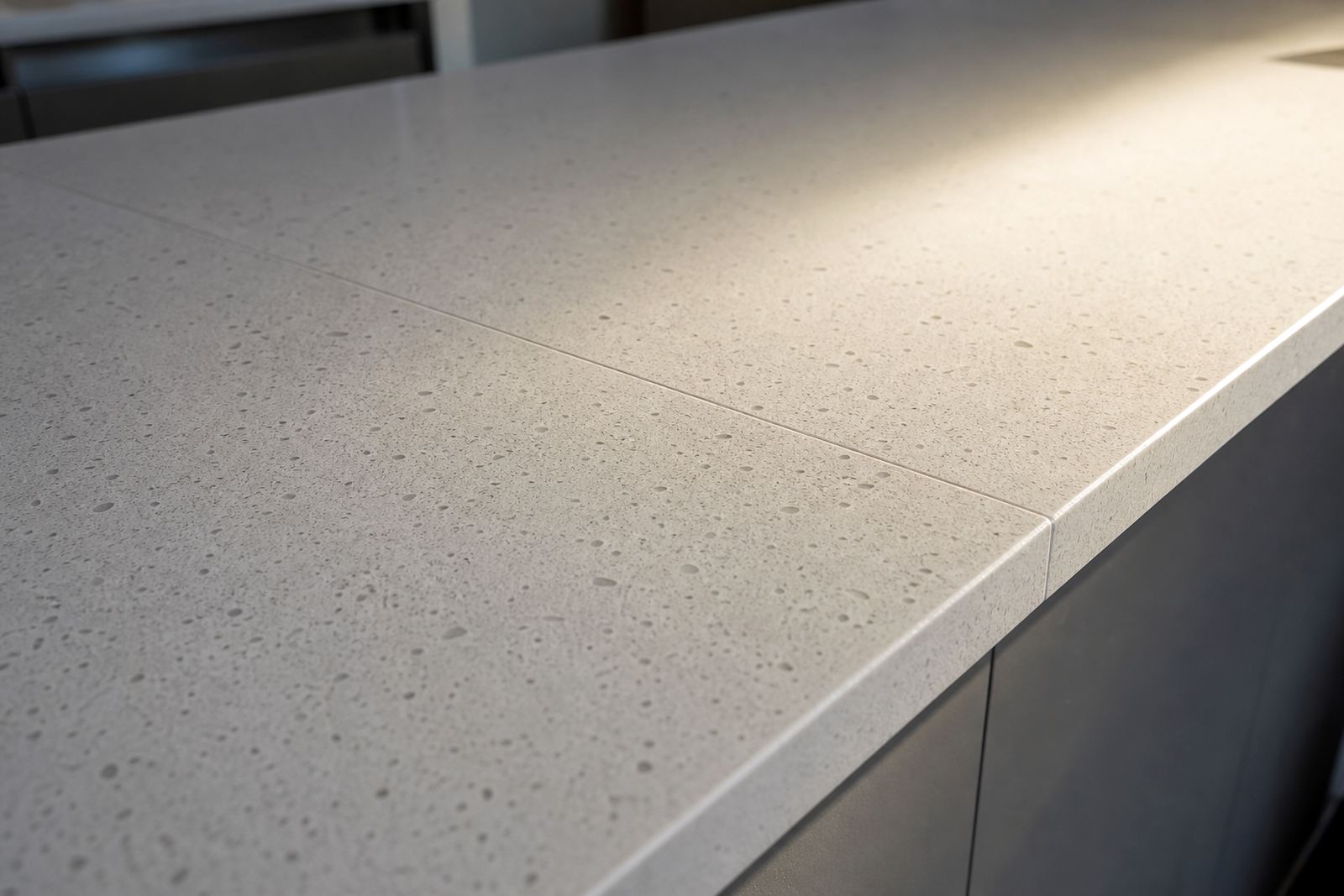
A seam is not judged only by how tightly two pieces are joined. People notice tone shift, line direction and whether the eye lands on the joint because of a nearby window or downlight. In engineered quartz, a busy fleck or vein can help the join sit quietly if the layout is planned well, while a plain colour may show a line more clearly under sharp light. Solid-surface material can be finished so the joint reads softer, but it still depends on colour match, grain direction and the skill used at fabrication and installation.
In homes across Randburg and Sandton, kitchen islands often catch light from more than one side. That is where a seam can look different at breakfast than it does in the evening. The join has not changed, the light has.
Pattern, movement and where the seam lands
Material pattern changes everything. A slab with strong veining asks for careful slab layout planning so the vein can cross the joint in a way that feels natural. If the seam lands right through a bold stripe or a large speckled area, the break is easier to see. When the layout lets the pattern carry across the cut, the joint can sit in the background.
- Busy patterns can hide a joint better than plain colours.
- Wide veining needs more time at slab layout stage.
- Plain white and pale stone looks show light more directly.
- Matte finishes usually reflect less glare than polished ones.
That does not mean plain colours are a poor choice. It only means the seam line needs more careful placement, especially on long runs or where an island wraps around a seating side.
Lighting changes what sits in plain sight
Room light has a habit of making small details louder. A seam below a pendant cluster, under-cabinet strip light or a large north-facing window can read differently from the same seam near a shaded wall. This is common in Pretoria kitchens where bright daylight pours in for much of the day, and in offices where overhead lights stay constant over a reception counter.
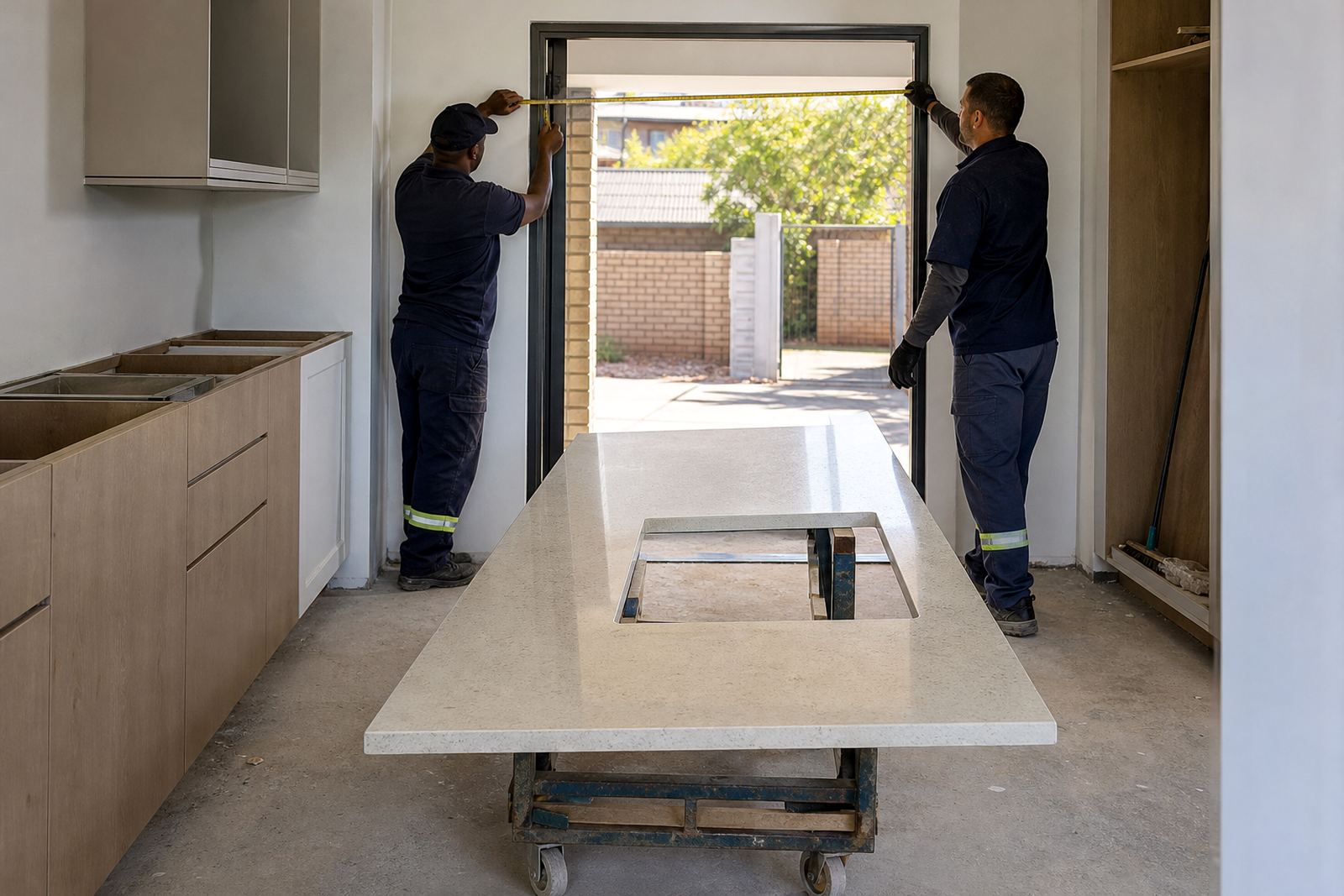
During templating, the team needs to look at the full room and not only the top itself. A joint that would be acceptable in a dim scullery may need a different position in a display kitchen, a boardroom drinks counter or a shopfitter’s cash wrap. The trick is not to chase invisibility at all costs, but to place the join where the room works with it.
Thickness, edge profile and the way joins read
Slab thickness and edge detail also affect seam visibility. A thicker-looking edge, built up with mitred pieces, can draw the eye if the grain or colour does not line through cleanly. A simple pencil edge may let the surface read as one plane more easily. On solid-surface work, the edge and the top can be blended in a way that softens the break, though the joint still needs patient finishing.
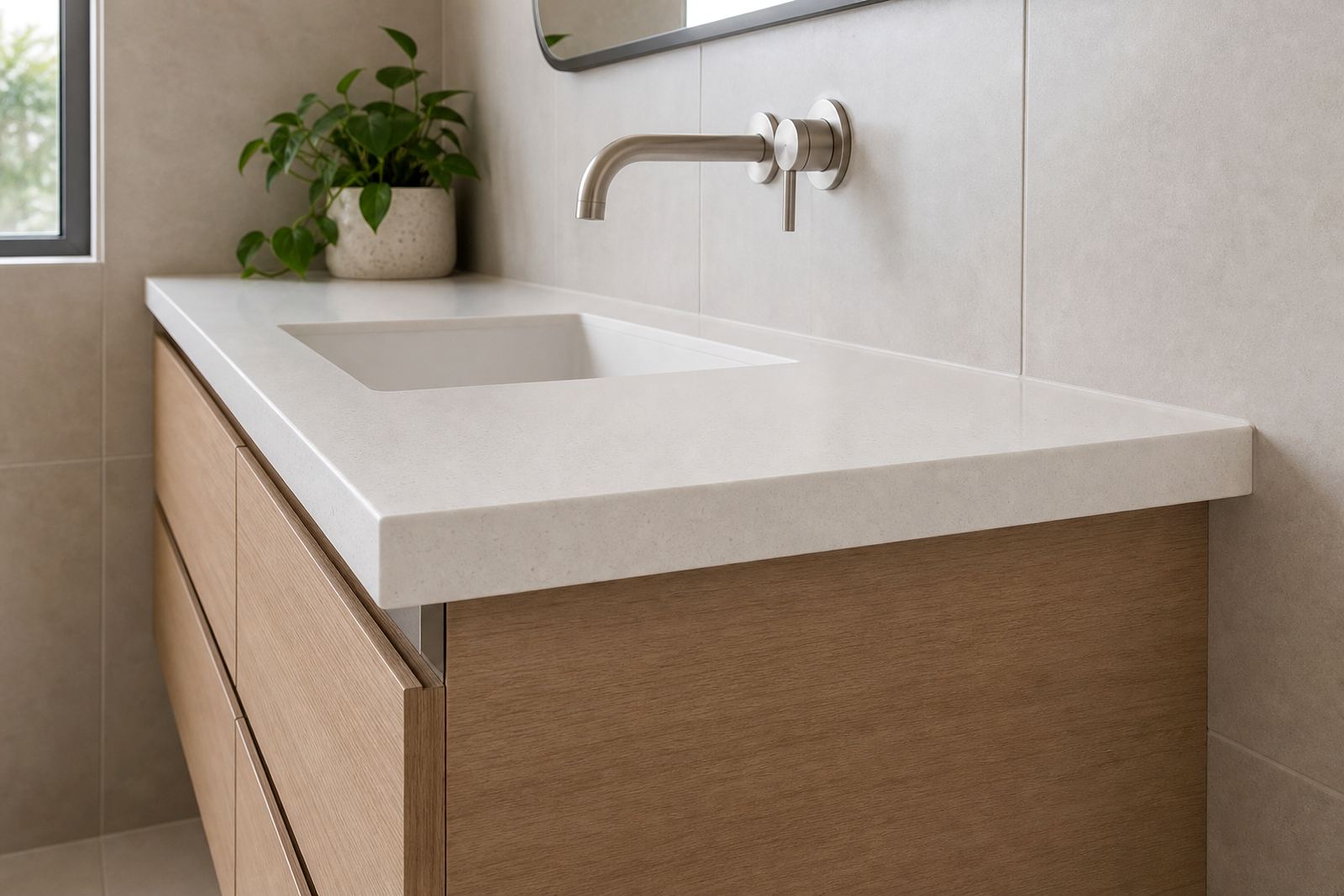
Edge profiles do more than shape the look. They change how shadow falls across the front edge, and that shadow can either disguise or expose a seam nearby. On vanity tops, the front and side returns must line up neatly around basin cut-outs so the join does not sit awkwardly beside the sink opening.
Cut-outs, corners and the places that ask for discipline
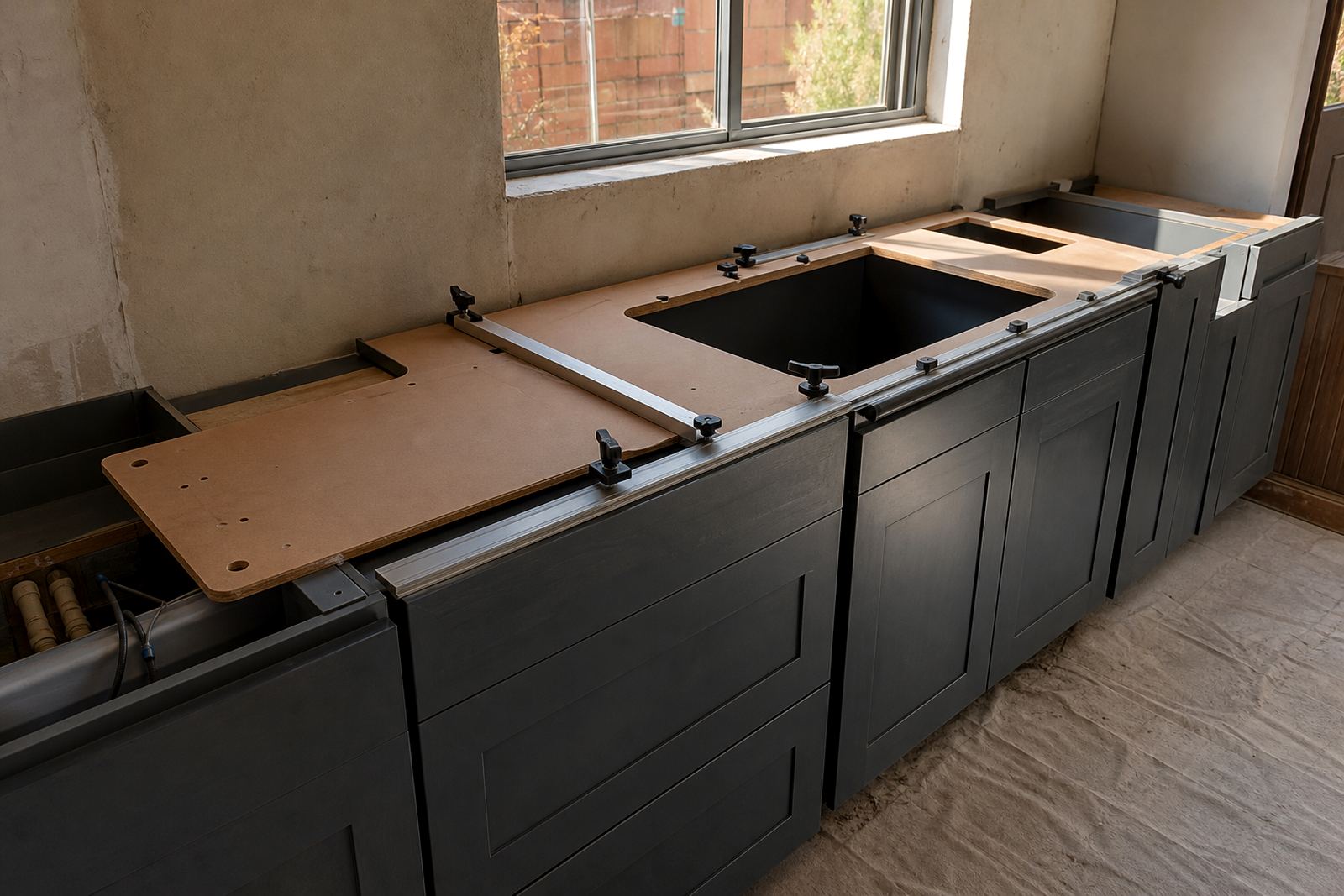
Sink cut-outs, hob cut-outs and tight corner returns are where seam placement becomes more technical. A seam too close to a cut-out can weaken the sense of continuity and complicate support. A seam placed with enough solid material around the opening usually reads cleaner and behaves better over time. That is one reason digital measuring and on-site templating matter before the workshop starts cutting.
- Keep joints clear of vulnerable cut-outs where possible.
- Allow enough material around sink rims and hob openings.
- Use seam positions that suit support and finish, not only appearance.
- Check overhangs carefully on islands and breakfast counters.
In a Fourways kitchen with a long island, the best seam position may sit behind the seating line, not in the middle of the visible run. The room then works with the layout instead of fighting it.
Aftercare that keeps the seam looking tidy
Once the top is installed, seam care is mostly about daily habits. Hot pans should not go straight onto quartz, and cutting directly on the surface will mark both the field and the joint area. Strong stain sources such as turmeric, red wine, beetroot and solvents should be wiped away promptly. Solid-surface tops are more forgiving in some respects, but they still need sensible use and regular cleaning.
The seam itself should stay free of built-up grime. Harsh scrubbers can dull the finish around the joint and make the line stand out more than it should. A gentle cloth, mild cleaner and steady habits usually keep the finish even. Where a customer notices movement, a gap or a line that has shifted after installation, aftercare advice helps separate normal visual variation from a detail that needs attention.
Randburg workshop planning to install
In Strijdom Park, a countertop job for a Randburg home may start with a long kitchen run, a return panel and a vanity top in the bathroom. The main kitchen slab could carry a soft vein, while the vanity is a cleaner colour. The team must plan the seam so the pattern lands neatly, the lighting above the island does not throw a hard line across the joint, and the sink cut-out stays clear of the weakest point.
That kind of job rewards clear coordination between the lead templater, the workshop and the installations planner. If the layout is handled early, the seam becomes part of the build rather than a surprise on install day. The aim is not perfect invisibility in every room, because some surfaces will always show a line under bright light. The aim is a join that makes sense in the room, matches the material and holds its place without drawing extra attention.