
A few extra millimetres can change the daily feel
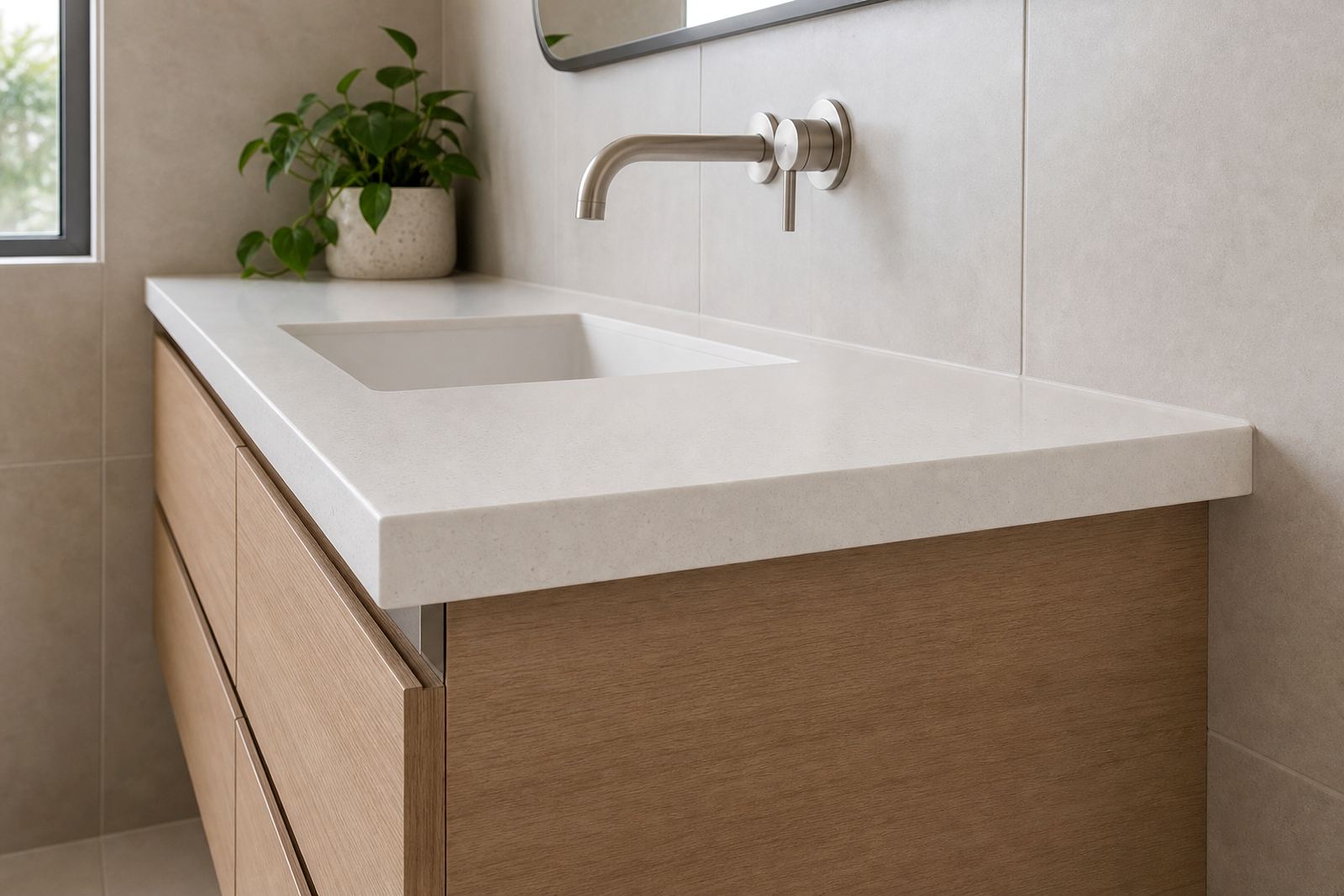
On a vanity, overhang is the amount the countertop projects past the cabinet face. A shallow overhang leaves knees close to the doors, while a deeper one gives more room to stand at the basin without feeling pinned against the carcass. In smaller Johannesburg bathrooms that difference is felt quickly, especially where the room also needs towel storage, drawer clearance and easy cleaning around the front edge.
Engineered quartz and solid-surface tops each behave a little differently, so the overhang should be matched to the material thickness and the support under it. A 20 mm quartz top with a neat square edge reads very differently from a 12 mm profile with a soft radius, and the support line below has to suit the span. On a wall-hung vanity the bracket layout matters just as much as the edge itself, because the front load must be carried without flex.
Comfort first, then the storage drawers
Most vanity mistakes happen when the top is cut to the cabinet and no one checks how the doors and drawers open once the basin is in place. A front overhang that is too deep can block a pull handle, but one that is too tight can make the basin feel cramped. The answer is not a fixed rule, it is a measured balance between the room, the cabinet line and how the bathroom is used.
- Check whether the basin is centred or offset before final templating.
- Allow enough front edge to sit comfortably at the sink without crowding the knees.
- Leave drawer fronts free from rubbing marks where hands and towels move past them.
- Make sure toe-kick space remains practical if the vanity stands on legs or a plinth.
In a family bathroom near Fourways, a deeper front edge can help when two people share the same basin area, but the extra depth must still leave enough passage in front of the vanity. In a guest cloakroom, a tighter overhang often works better because the room is used differently and every centimetre counts.
Support under the front edge is not optional
Vanity tops carry weight from basins, taps and daily use, so the underside must be planned before fabrication starts. Quartz is strong, yet a long unsupported front edge can still stress the top over time, especially if the cabinet has a wide opening or a cut-out that removes material close to the edge. Solid-surface can be shaped with more flexibility, but it still needs proper fixing points and sensible support lines.
We look at the span, the cabinet material and where the sink cut-out lands before deciding on the final overhang. Seams, if they are needed, should sit away from obvious stress points and away from places that will collect water. A good installation keeps the front line crisp, but also leaves enough structure hidden below to hold shape through years of cleaning and daily pressure.
- Use hidden brackets or solid packers where the cabinet opening runs wide.
- Keep cut-outs clear of the weakest part of the front edge.
- Place seams where they are least exposed to standing water and bumping.
- Check that the wall is level before the top is templated, not after.
Templates decide whether the overhang works on site
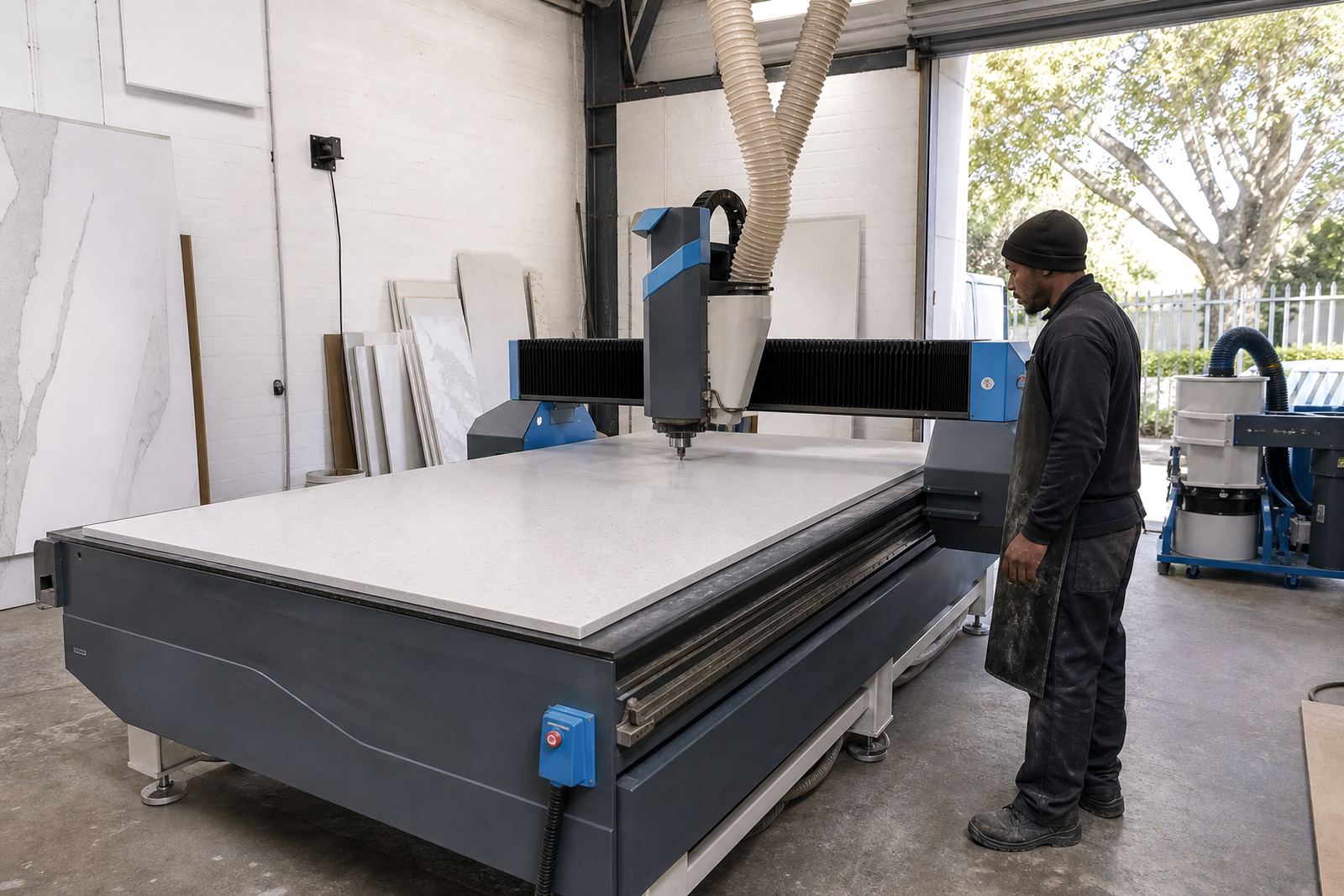
Digital measuring and site templating are where the real numbers get locked in. A vanity that looks square in the workshop can show a stubborn wall bow in Sandton or a tiled reveal that tapers by a few millimetres. If the top is templated without checking the wall, the overhang can finish unevenly, and the basin opening may land too close to the front or back edge.
Our templating process checks the cabinet, wall line and the exact position of taps, waste and basin cut-outs. That is where edge profile choice also comes in. A straight eased edge gives a sharper look and suits modern bathrooms, while a slight radius is kinder on hands and easier to keep clean where moisture and soap residue build up.
Small details matter on site: the front lip should read level from the room, the ends should not scrape painted walls, and the overhang should not force the installer to file away support that was needed in the first place. Once the top is cut, it is too late to discover that the cabinet depth was measured from the wrong face.
Moisture, heat and cleaning habits around the basin
Bathrooms are not kitchens, but they still put materials under steady stress. Steam from showers, splashed water and daily cleaning products all reach the vanity edge. Quartz is dense and handles staining well, but it should still be wiped dry around the basin and never left with standing water at the seam. Solid-surface can be renewed more easily if it picks up marks, yet it still benefits from care around hot tools, cosmetics and bleach-heavy cleaners.
Heat is usually less of a concern on a vanity than on a kitchen top, though some bathrooms do see hair tools left on the surface. A trivet or heat mat is safer than placing hot tools straight on the counter. Around Gauteng, where family bathrooms work hard through dry winter air and humid summer showers, the edge profile and silicone detailing need to be kept neat so moisture does not sit in tired joints.
A Randburg workshop view of a sensible overhang
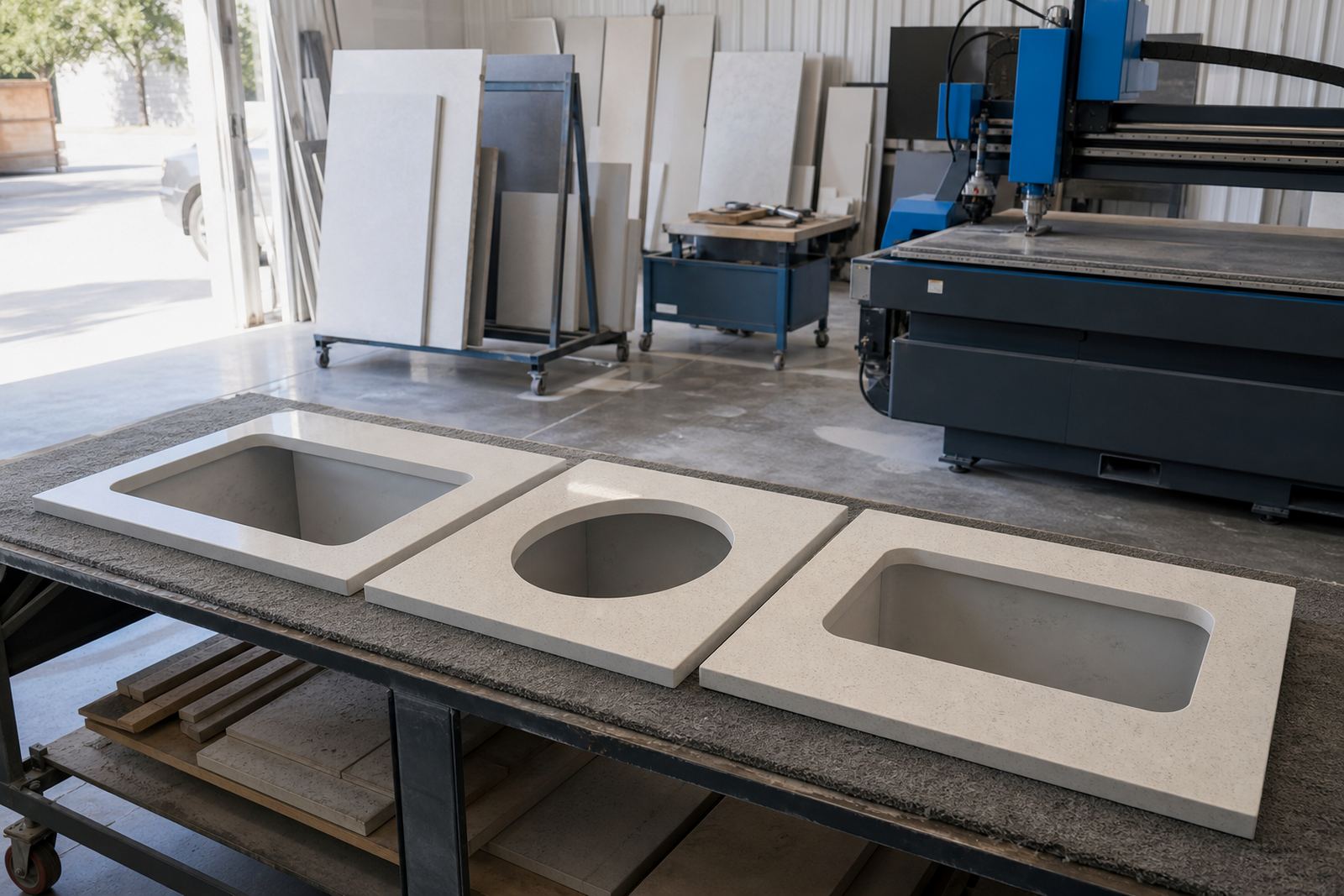
In Strijdom Park, Randburg, the workshop team often sees vanities for homes, offices and shopfitters where the cabinet maker and the stone top were planned separately. That is usually where the overhang gets awkward. The top might look good from the front, but the basin then clashes with a drawer front or the support under the lip ends too far back to be practical.
For a Pretoria bathroom with a wall-hung unit, a modest overhang can keep the room feeling open while still giving the basin enough landing space. In Midrand and Johannesburg apartments, a slimmer front projection often suits tighter rooms and makes cleaning easier. In larger family bathrooms across Sandton and Fourways, the design may allow a little more depth for comfort, but only if the underside is reinforced and the sink cut-out leaves enough material around it.
Good vanity work is not about making the top stick out as far as possible. It is about getting the overhang to serve the room, the cabinet and the people using it. When the depth, support and edge detail are lined up properly, the vanity feels settled and the basin area works without fuss.