
Three sink styles, three different jobs for the fabrication team
At Plastone, sink work starts long before the cutter touches the slab. The sink type changes the template, the cut-out size, the reinforcement around the opening and the way the finished edge meets the bowl. In engineered quartz and solid-surface tops, that detail matters because water, heat and cleaning habits all meet at the same point.
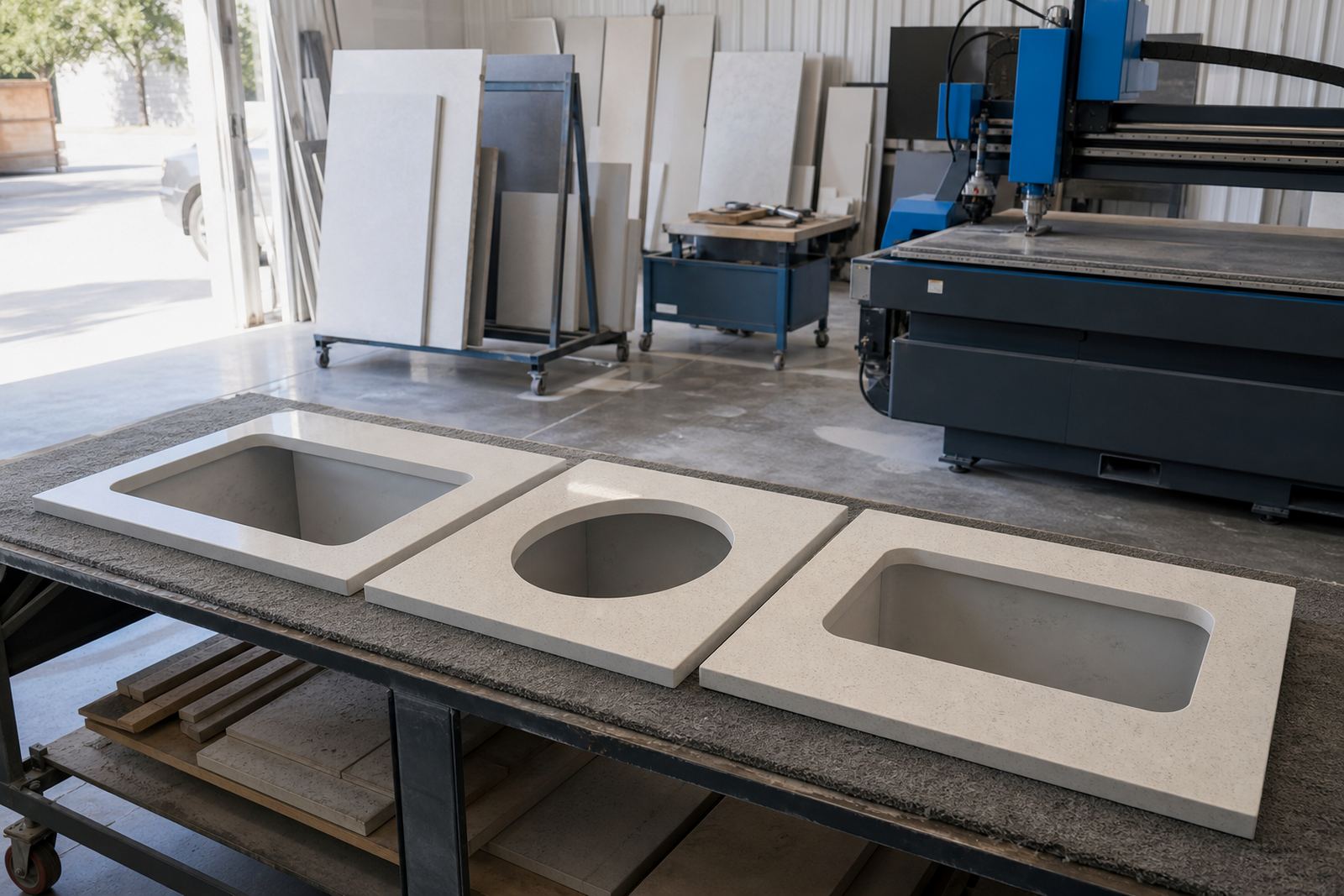
Undermount, top-mounted and integrated sinks each have a place. None is automatically better. The right call depends on the room, the slab thickness, the cabinet support and whether the top needs a crisp modern line or a more forgiving family-use finish.
- Undermount sinks sit below the worktop and keep the rim out of sight.
- Top-mounted sinks rest on the cut-out and give a visible lip around the opening.
- Integrated sinks are formed as one continuous unit with the counter in solid-surface work.
Undermount sinks for a cleaner line and easier wipe-downs
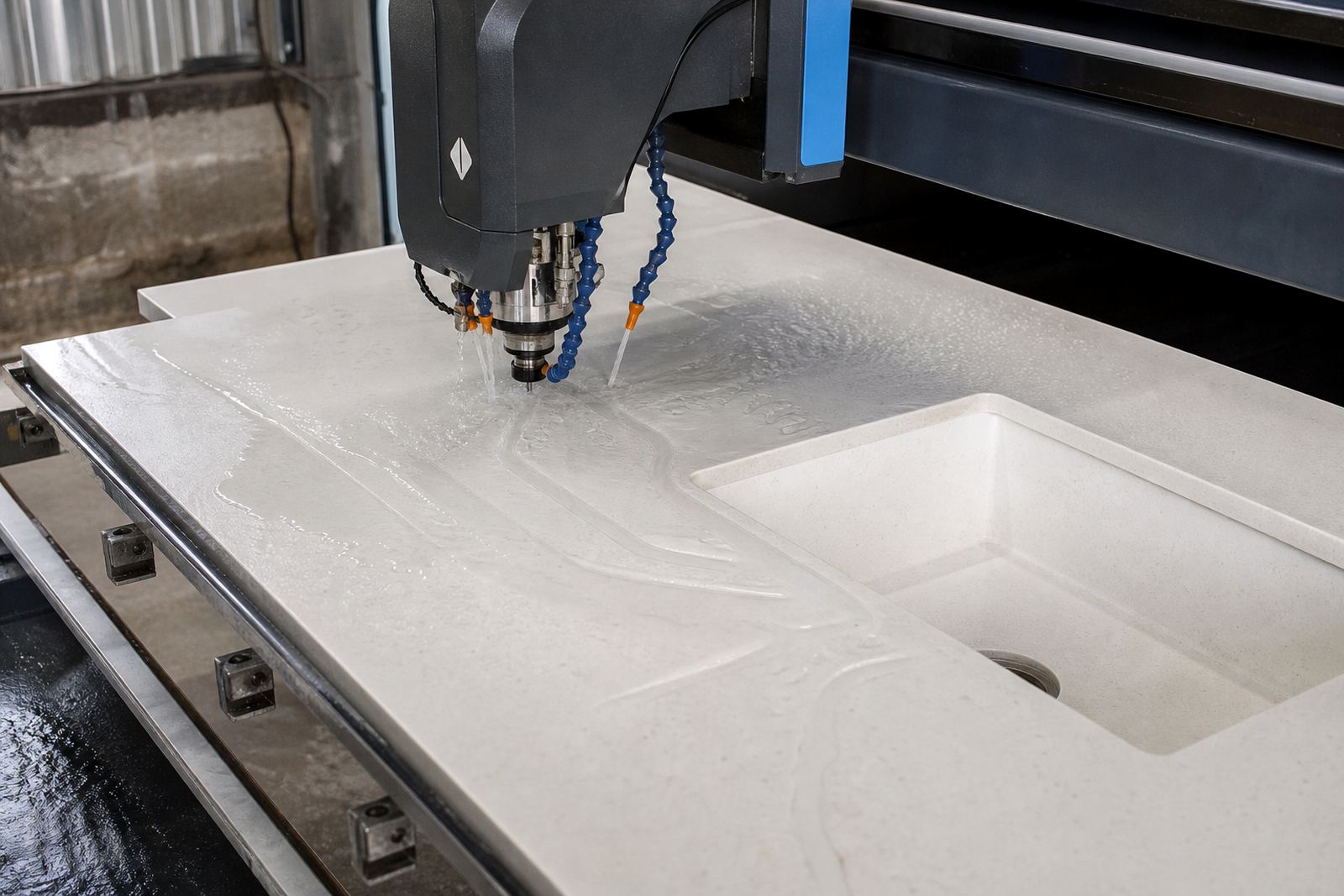
Undermount sinks are common in kitchens and in higher-end sculleries. The cut-out is made to the sink profile, then the bowl is fixed from below so crumbs and water can be wiped straight into it. On quartz, the underside of the opening must be neatly finished and the sink support has to be solid. A heavy bowl full of water is not the place for shortcuts.
The visible effect is neat and uncluttered. The edge of the slab can be square, pencil-rounded or lightly bevelled, but the junction should remain tidy. With a 20 mm quartz top, the sink support rails and fixing method need careful planning. Solid-surface tops give more freedom, because the material can be shaped and bonded with fewer visible joints.
- Good for streamlined kitchens and prep areas.
- Works well where the client wants the counter surface kept open.
- Needs accurate templating so the bowl lands square and true.
- Careful sealing is important around the cut-out and the fixings.
Top-mounted sinks when practicality matters more than a flush finish
Top-mounted sinks sit on top of the cut-out, so the rim becomes part of the visible detail. This approach is often chosen where the room needs a straightforward, serviceable finish or where the basin itself is doing some of the sealing work. It is a familiar format in many homes and some shopfit areas too.
On quartz, a top-mounted sink can be a sensible choice where the cabinet opening, support structure or maintenance routine suits a more conventional fit. The edge profile around the opening is less exposed than with some undermount details, but the cut must still be clean and true. If the sink is oversized, the installer must leave enough material around the cut-out so the top does not look cramped or weaken at the opening.
- Useful where the client prefers a visible rim.
- Often quicker to maintain around the sink edge.
- Can suit rental units, offices and busy family kitchens.
- Needs a neat silicone line and careful corner finishing.
Integrated sinks in solid-surface work for one continuous surface
Integrated sinks are one of the strongest reasons clients choose solid-surface material for vanity tops and some utility areas. The basin is formed as part of the top, so there is no separate lip around the bowl. That gives a continuous surface which is easier to wipe and visually calm, especially in smaller bathrooms where every line is visible.
This style is not the same as a standard sink cut-out. The fabrication is more involved and the joining must be clean, because the bowl and top behave as one unit. In the right setting, the result is practical and tidy. It is a good fit for vanities in Sandton apartments, guest bathrooms in Midrand, and office wash areas where water marks need to be kept under control.
- Best suited to solid-surface rather than quartz.
- Good where a smooth basin look is wanted.
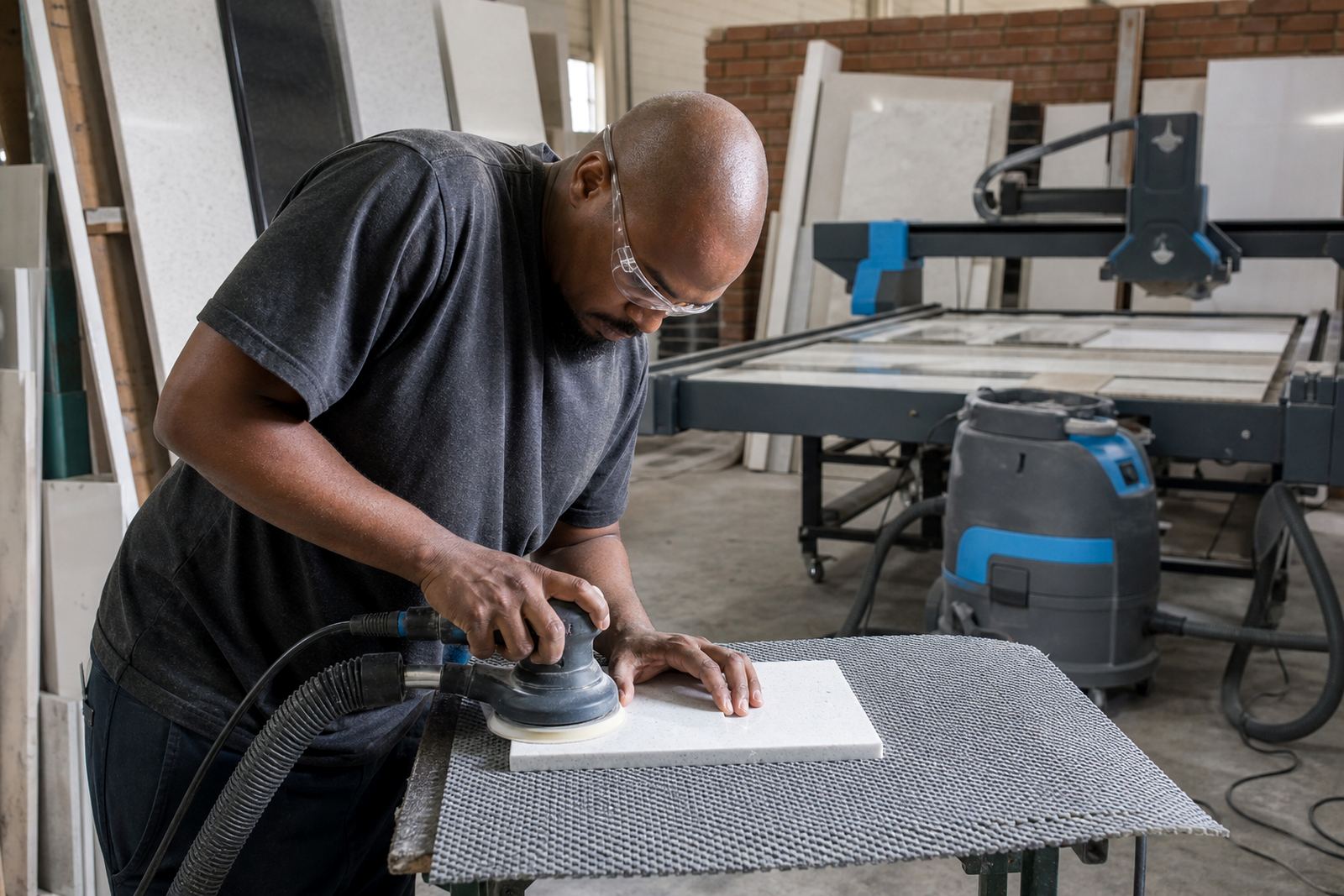
- Requires careful polishing after fabrication and fitting.
- Helps reduce grime build-up around the bowl edge.
Templating, seams and support around the opening
Sink cut-outs are measured after the base cabinets are fixed and the surrounding work is ready for template-taking. A few millimetres can change the alignment of taps, clips and waste points. That is why digital measuring and site templating matter on kitchens, vanities and counters with hob and sink cut-outs on the same run.
Where the sink sits close to a seam, the layout has to be thought through in advance. A seam too near a bowl opening can create visual clutter and make the edge work harder than it should. The same applies to splashbacks and upstands. If water is likely to run back from the sink, the joint lines should be positioned with care so cleaning stays manageable.
- Keep the opening clear of cabinet joins where possible.
- Plan the seam line away from the main water splash zone.
- Allow enough edge support between the cut-out and the slab edge.
- Check the tap hole, waste position and sink clips before cutting.
Heat, staining and daily care after the cut is made
Once the sink is installed, the area around the cut-out becomes a working zone. Quartz resists stains well, but it still benefits from sensible care. Hot pots, bleach-heavy cleaners and standing water can all affect the finish over time. Solid-surface material is more forgiving in some respects, yet it can mark if it is used roughly near the bowl or scoured with harsh pads.
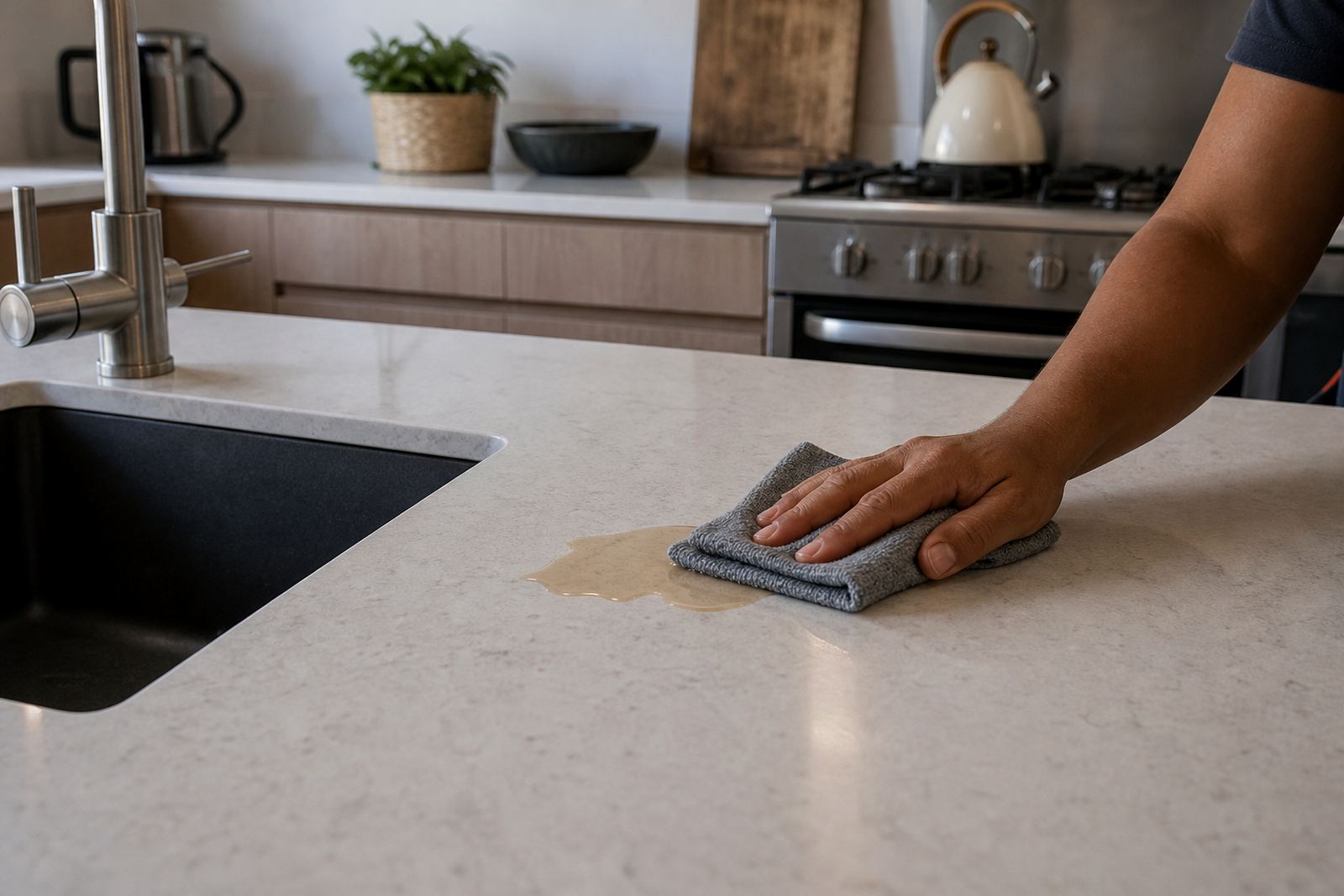
Local conditions matter too. In Randburg and across Gauteng, hard water can leave marks around a sink if the surface is left wet for long periods. A dry cloth after washing up keeps the edge detail looking better for longer. For heat, the rule is plain: use a trivet or mat. Direct heat near the sink cut-out can affect adhesives, sealants and the finish on neighbouring areas.
- Wipe splashes before they dry on the edge.
- For routine care, wipe with a soft cloth and a mild cleaner.
- Avoid dropping heavy pans onto the rim or cut-out.
- Do not leave standing water trapped around sealant joints.
Randburg family kitchen sink cut-out
In a family kitchen in Fourways, the brief often comes down to speed of cleaning and how the sink area handles daily traffic. A undermount bowl in a 20 mm quartz top can suit that kind of room when the cabinet support is sound and the owner wants a smooth wipe-down from prep area to basin. In a nearby guest bathroom, a solid-surface vanity with an integrated basin may be the better fit because the surface stays visually tidy and the join lines are reduced.
For shopfitters and office projects, the answer may shift again. A top-mounted sink can suit a utility counter where maintenance access matters more than a flush look. Our aim is not to fit one answer into every kitchen. It is to match the sink cut-out type to the slab thickness, the edge profile, the way the room is used and how the client wants the finished surface to work.