
Where grooves earn their keep
Drainer grooves work well beside inset sinks on engineered quartz and solid-surface countertops where washing-up happens every day. They guide water back to the bowl instead of letting it sit in a shallow puddle on the benchtop, which is useful in busy family kitchens, compact sculleries and office tea points.
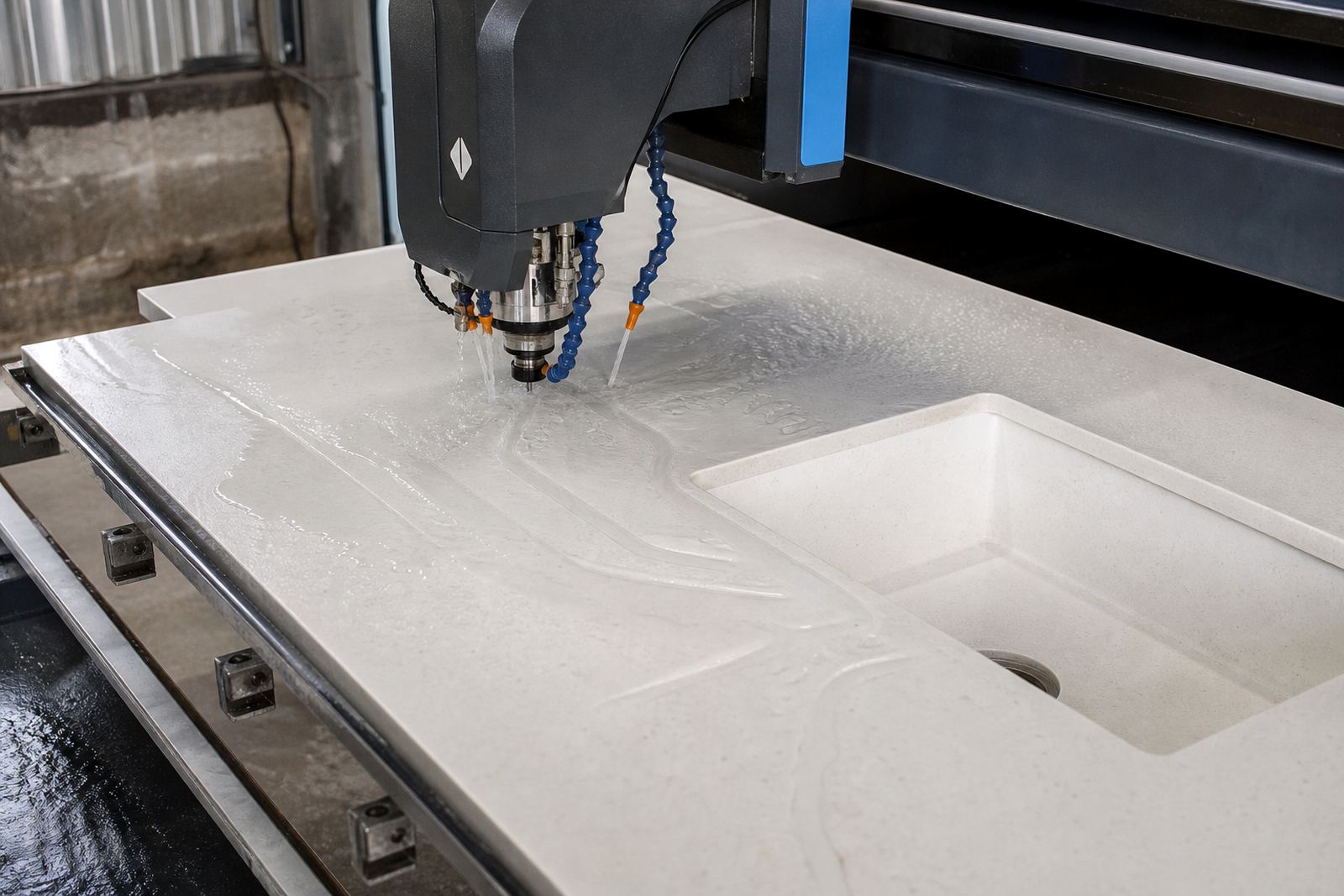
The detail is usually cut into the slab surface with shallow parallel channels, then polished so the water follows the line of the grooves. On solid-surface material the finish can look more integrated because the surface is homogeneous, while quartz needs a bit more care around the visible stone pattern and the cut edges. Either way, the layout must suit the sink size, the wall line and the way the tap throws water.
- Best near prep sinks and main kitchen sinks
- Useful where drying space is limited
- Common in homes, boardroom kitchens and small hospitality counters
- Needs enough fall to move water cleanly
When a plain flat top is the better call
Not every countertop needs grooves. A simple flat surface can be easier to live with in a bathroom vanity, a drinks station or a low-use guest kitchen. If the space already has a freestanding dish rack, a large sink or a separate scullery trough, the grooves may add little practical value.
Grooves also ask for a bit more cleaning. Soap residue, limescale and fine dust can settle in the channels if the surface is neglected, especially in inland towns where hard water leaves mineral marks. In Randburg and Sandton homes, that often shows up around bright white slabs where every trace stands out.
- Skip grooves where water use is light
- Avoid them if the sink position is awkward
- Consider the cleaning habits of the household or office team
- Check whether the room already has drying space nearby
The slope, the sink and the seam line
The groove layout must work with the sink cut-out, not fight it. If the sink is too far from the edge line, water can collect in the wrong spot and run across the face of the top. If the grooves point away from the bowl or stop short of the lip, the effect looks unfinished and the water path becomes patchy.
Templating matters here. A good template captures the wall line, sink centre, tap position, overhang and any hob cut-out close to the work zone. On a long run, the seam position also matters. A seam should not land where the grooves need a clean uninterrupted line, because that can break the visual flow and complicate polishing.
- Match groove direction to the sink outlet side
- Keep grooves clear of seam joins where possible
- Allow space for tap splash and hand movement
- Confirm the top thickness before the detail is finalised
Quartz and solid-surface do not behave the same
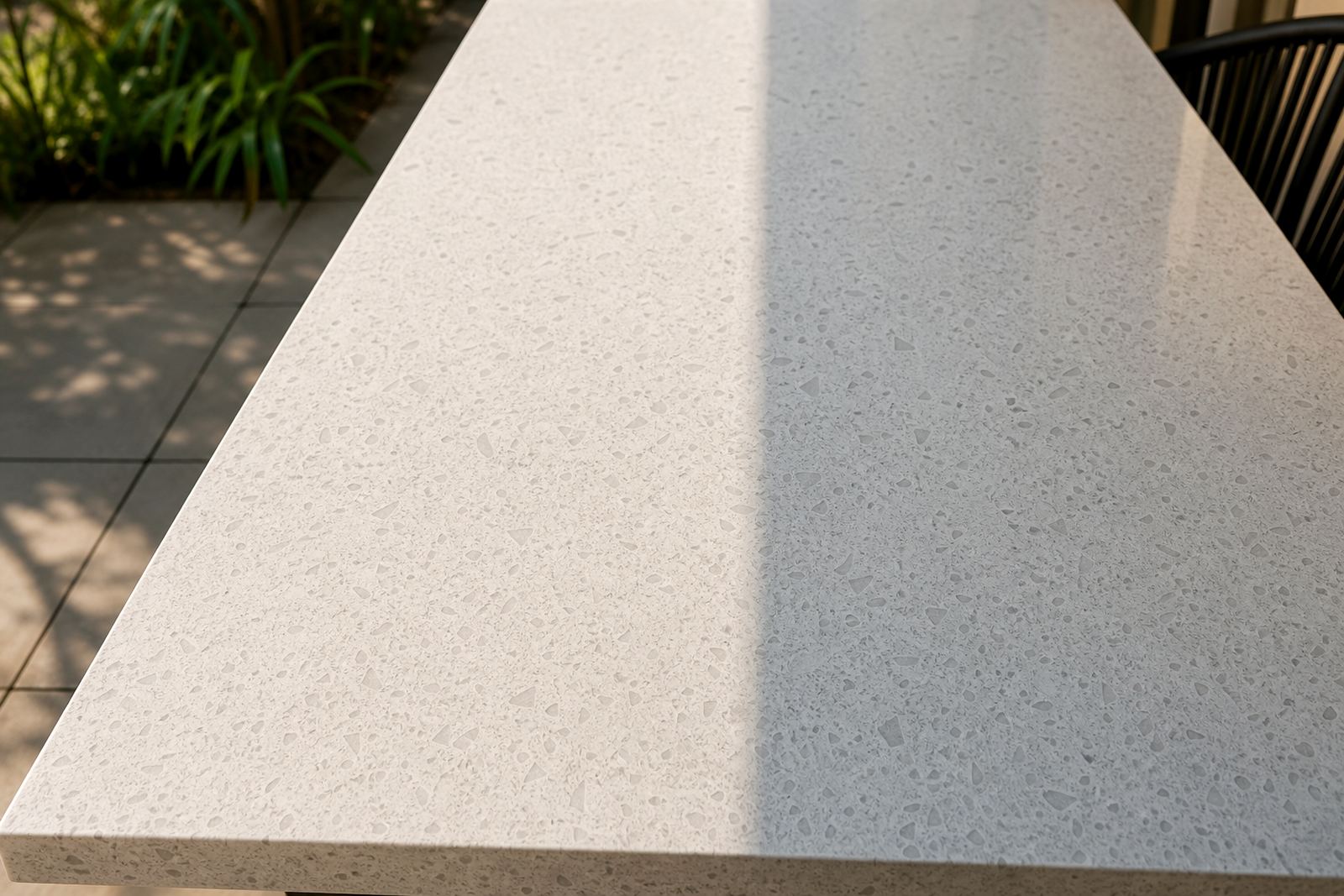
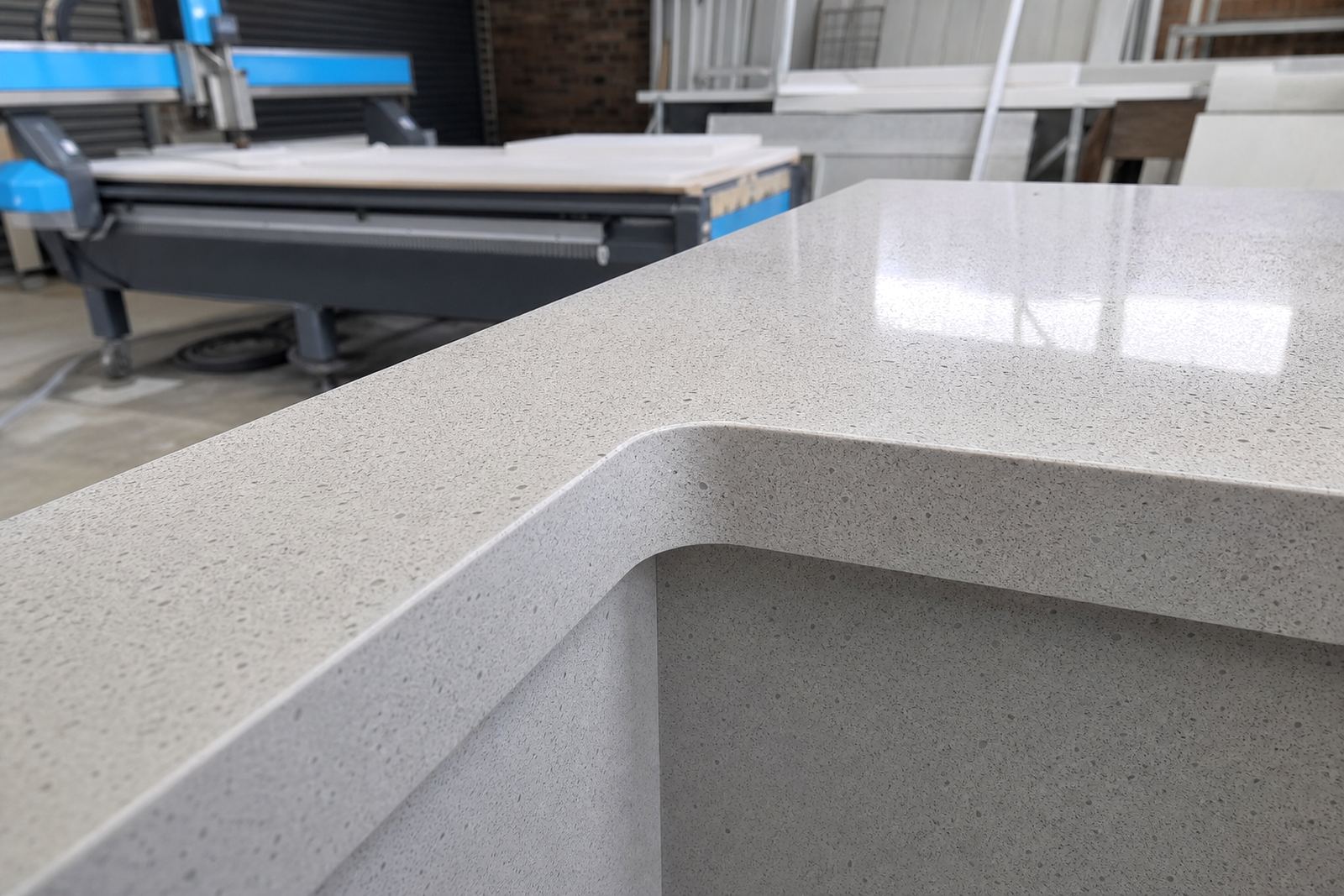
Engineered quartz is dense and hard wearing, with a polished face that suits crisp groove lines and sharper edge profiles. Solid-surface material is warmer to the touch and easier to shape, so grooves and sink cut-outs can be blended into a softer visual finish. The right choice depends on the room, the colour, and how much daily wear the top will take.
With quartz, the grooves should be cut with care so the finish stays even and the exposed edges do not chip during use. With solid-surface, the benefit is repairability, because light marks can often be worked down by a skilled finisher. In both materials, the grooves must stay shallow enough to clean properly, but deep enough to move water without leaving a slick in the middle of the run.
- Quartz suits crisp, linear kitchen detailing
- Solid-surface suits softer joins and more blended shaping
- Both need careful polishing after cutting
- Colour and pattern affect how visible the grooves will be
Heat, stain care and day-to-day use
Drainer grooves do not change the basic care rules. Hot pots should still be kept on a trivet, not dropped straight onto the surface near the sink. Tea, coffee, turmeric and fruit acids can stain grout lines and polished grooves if spills sit for too long, even when the slab itself is sound. A quick wipe with mild soap and a soft cloth is usually enough for everyday cleaning.
In a home kitchen in Fourways, for example, a family may use the grooves after breakfast and again after school lunch packing. The channels help water run off, but they still need a rinse now and then so residue does not build up at the sink edge. In a small office pantry in Midrand, the same grooves may work well because cups, plates and taps all sit in one tight area, and the top stays looking neater between clean-ups.
- Use mild cleaners rather than harsh abrasive pads
- Wipe standing water so minerals do not mark the channels
- Keep hot cookware off the top near the sink
- Treat spills quickly, especially on lighter colours
How the detail is planned in real Gauteng jobs
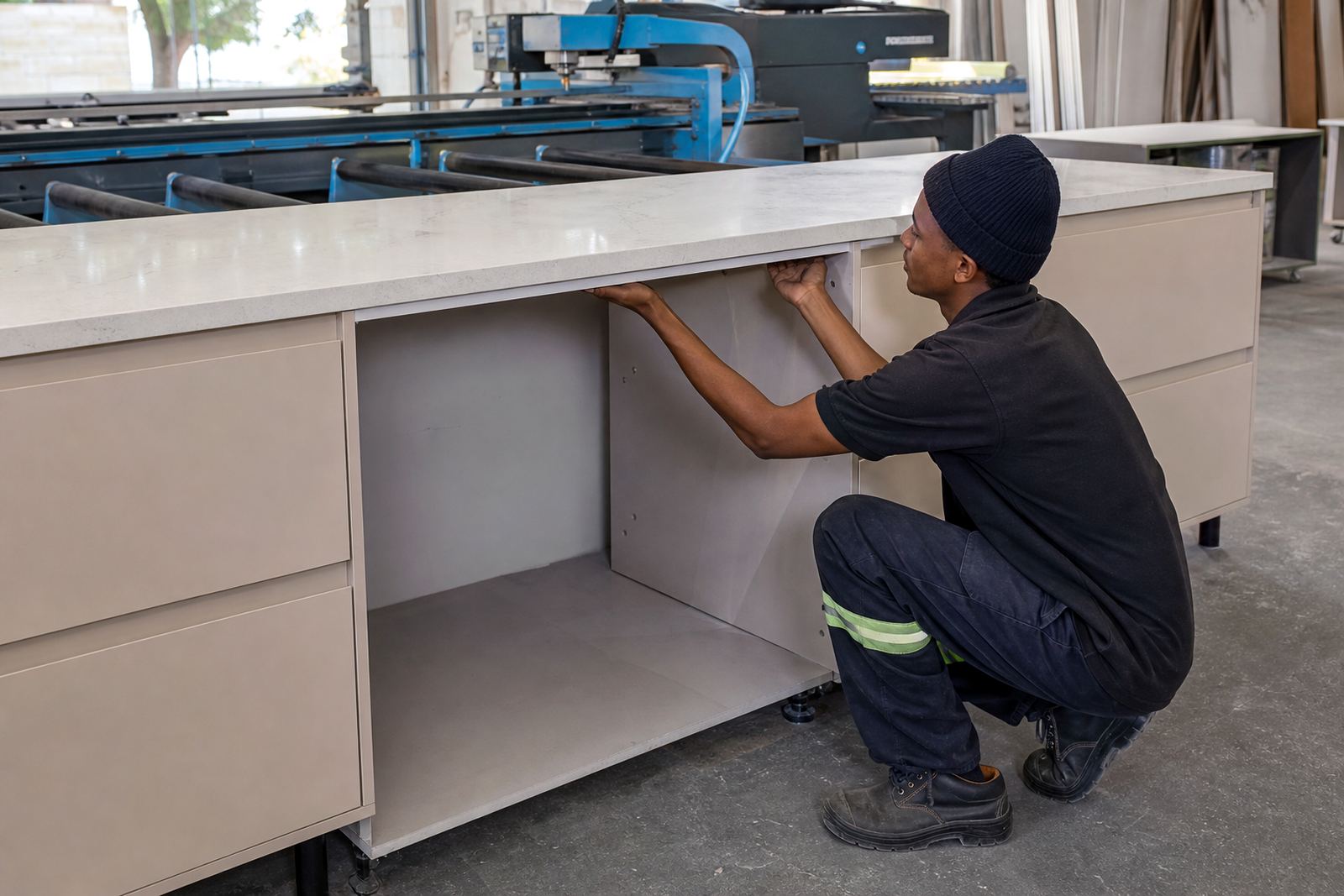
At our Strijdom Park workshop, drainer grooves are usually planned during templating, before cutting starts. That is the point where slab layout, sink size, edge profile and splashback height are all checked against the room. A vanity in Pretoria may need a different groove length from a kitchen in Roodepoort, because the basin placement and wall finish are not the same.
For shopfitters and homeowners alike, the useful question is not whether grooves look neat in a photo. It is whether the room can use them every day without trapping water, clashing with a seam or making cleaning harder than it should be. When the detailing suits the basin, the fall and the slab thickness, the result feels practical rather than decorative.
- We measure the sink and tap positions on site
- We check groove length against the usable drain area
- We plan seams, cut-outs and edges together
- We fit and give aftercare advice for the finished top