
What changes when the top moves outside
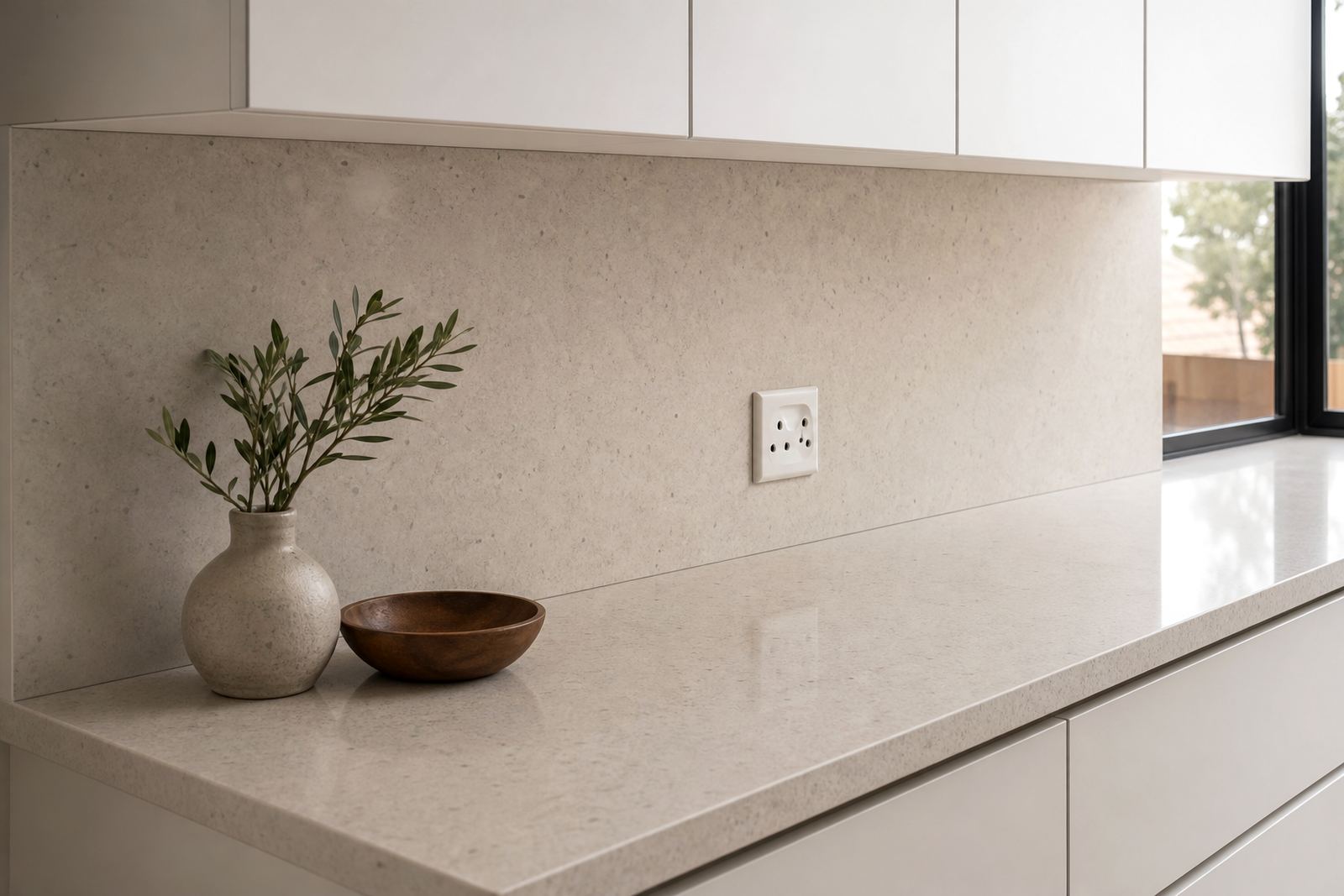
Inside a kitchen or vanity area, engineered quartz and solid-surface materials live in a steadier environment. Outdoors in Gauteng, a patio counter near a braai or pool picks up direct UV, hot afternoon surfaces, cooler night air and fine grit carried by wind. Those changes matter, especially where the slab joins a wall or wraps around a sink or bar ledge.
Quartz slabs are usually used in common thicknesses such as 20 mm and 30 mm, while solid-surface sheets are often thinner but can be built up for a thicker edge. That detail is not just cosmetic. The thickness, support spacing and edge profile all play into how the top holds up when it is exposed to weather and constant temperature change. A clean pencil edge may suit a sheltered serving counter, while a more substantial built-up edge can suit a vanity or protected bar where knocks are more likely.
Outdoor use is not a straight yes or no answer. It depends on where the piece sits, whether it gets full sun and if the installation allows for movement at the walls and joints. A careful template on site makes those risks visible before fabrication starts.
Sun, shade and the colour question
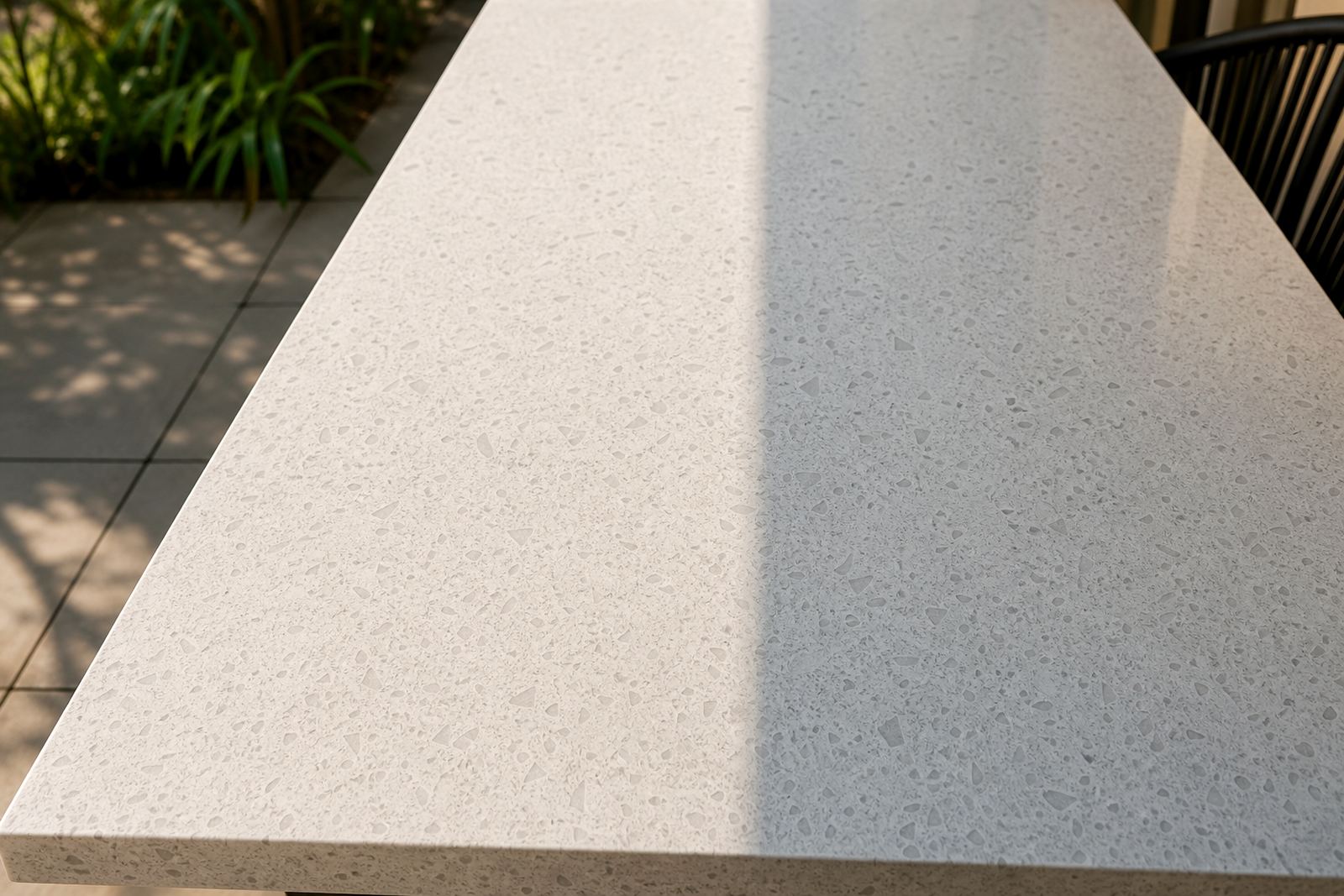
Direct sun is the first thing to examine. Quartz surface colour can shift over time if it sits in harsh exposure, and some shades show this sooner than others. Solid-surface material is also affected by ultraviolet exposure, though the change may show up as slight dulling, softening of colour or local wear on the most exposed face. In a Randburg or Sandton courtyard, the afternoon sun can be stronger on one side of a counter than another, which leads to uneven ageing.
If the outdoor area is partly covered, the risk drops. Under a pergola, roof overhang or deep recess, the material stays closer to its indoor behaviour. In a fully open yard, especially where the slab faces north or west, the material choice needs more caution. The client may still get a neat result, but the surface should be selected with eyes open and with maintenance in mind.
- Shade structure reduces direct UV stress.
- Light colours usually hide dust and mineral marks better than dark ones.
- Matte finishes often show less glare, though they can mark differently from polished faces.
- Edge detailing should avoid thin, fragile lips where impact is likely.
Heat from braais, pots and hot plates
Heat is the second limit. Outdoor counters are often used near braai stations, warming trays or portable cooking equipment, and quartz does not like sudden heat placed straight onto the face. Solid-surface also needs care around heat, because concentrated temperature can mark or distort the material. A hot pot lifted from a fire and set on the counter is a common cause of damage, even if the top looks tough at first glance.
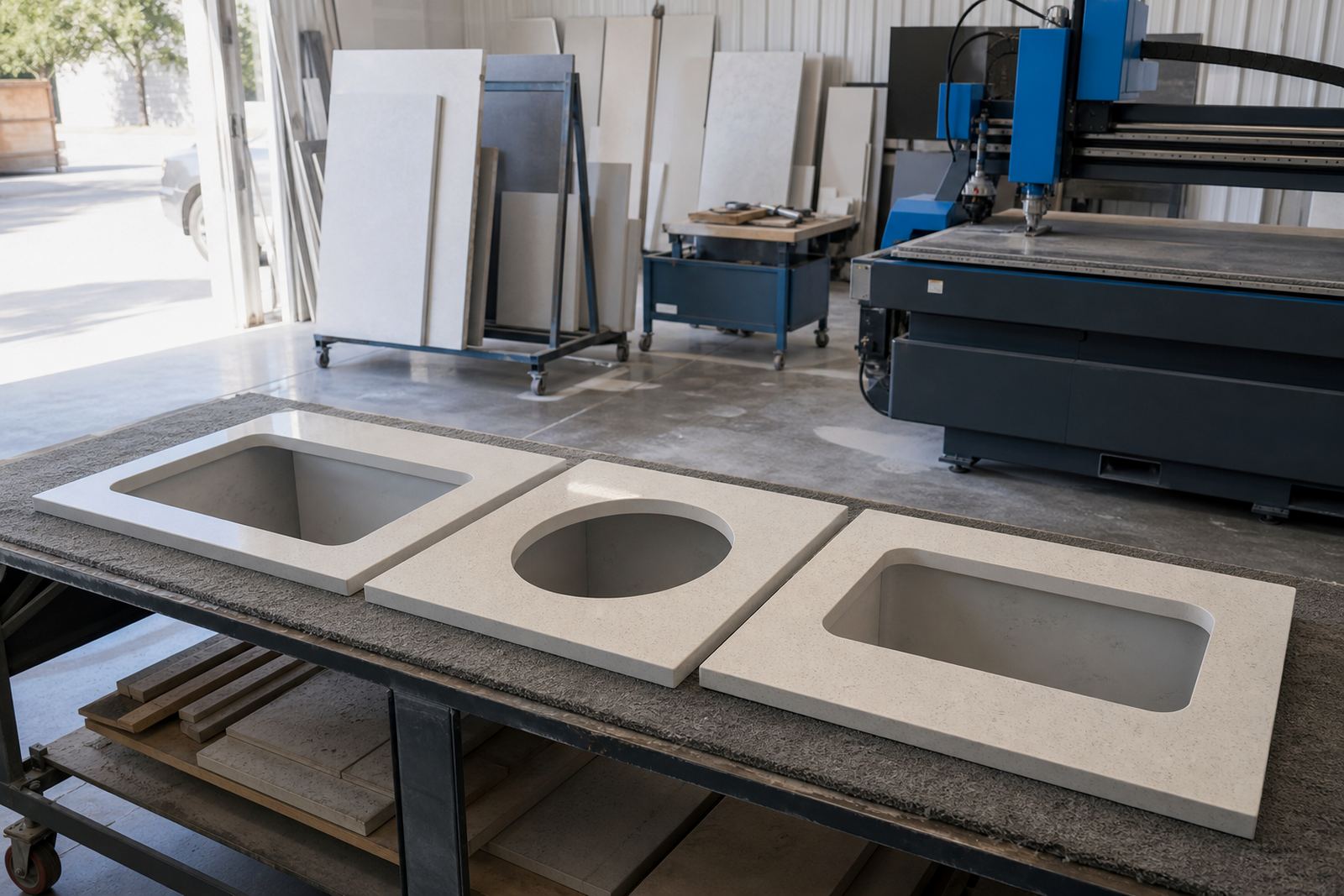
For a well planned outdoor run, the worktop should be set out so hot equipment has a clear landing place away from the slab. Where a sink cut-out or hob cut-out is required, the surrounding support and sealing detail must be accurate. An exposed edge at a cut-out is more vulnerable than a full slab field, and any poor joint will show faster when weather gets to it.
- Use trivet space near cooking zones.
- Do not rely on the slab to take direct flame or glowing coals.
- Allow clearance around hob openings and sink bowls.
- Seal edges properly where water may sit after rain or wash-down.
Water, dust and the seam line that tells the truth
Rain brings another issue. Water does not only land on the surface, it moves into corners, around seams and under splashbacks if the detailing is loose. In Pretoria and Midrand, where summer rain can hit hard and then clear fast, water pooling around a poorly fitted joint can cause staining at seal lines and grime build-up in the corners. Dust from open yards and driveways adds to the problem, especially on lighter coloured tops.
Seam joining needs more attention outdoors than it does in a closed kitchen. A neat seam should be planned where the eye can forgive it and where the structure beneath is sound. Long runs may need more than one piece, so slab layout planning matters before anything gets cut. With the right template, the installer can place seams away from sink cut-outs, unsupported corners and high-visibility front edges.
It is also worth checking how the surface drains. A slight fall away from the back edge or around an inset basin can help stop standing water. That is not always possible on every design, but it should be discussed before fabrication starts.
When solid-surface has the edge, and when quartz does
Solid-surface often suits outdoor areas where a softer feel, integrated joins or shaped details are wanted. It can be repaired more easily than many hard surfaces, and the material allows more freedom with curves, drainer grooves and formed features. For a sheltered garden bar in Fourways or a vanity in a covered courtyard, that flexibility can be useful.
Quartz, by contrast, offers a harder feel and a stone-like look that many clients prefer for formal entertaining spaces. It is well suited to indoor work and to some sheltered exterior areas, but it needs more caution where sun and heat are constant. The local setting should guide the choice. A covered braai patio in Johannesburg may be fine with one product, while a fully open rooftop setting in Randburg might call for a different surface or a different finish altogether.
There is no point forcing an indoor material into a harsh exposure zone and expecting it to behave like a garden tile or concrete slab. The right question is not only how it looks, but how it will age in the exact spot where it sits.
What our templating team checks on site
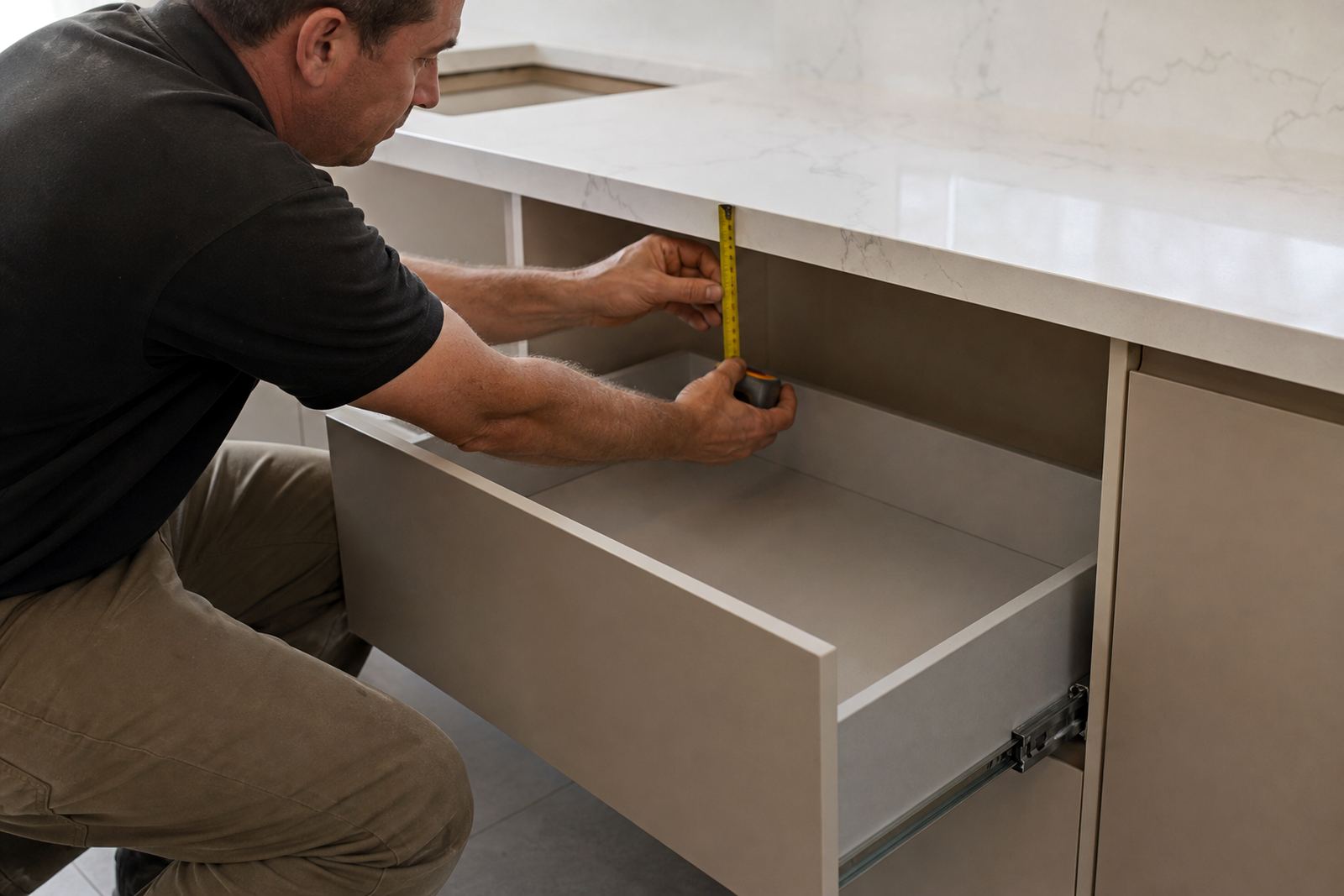
Good outdoor work starts with site templating and digital measuring. In a real property, the surface rarely sits square to the wall, especially on older homes, converted patios or shopfront entertaining areas. A few millimetres off at the back edge can become a visible gap once the slab is installed. Our team checks wall straightness, fall, clearances, overhangs and where the water line will run after cleaning.
At Plastone in Strijdom Park, Randburg, the workshop and installation teams work through the practical details before cutting begins. That includes edge profiling, sink cut-outs, hob cut-outs and where seams should land in relation to the sun. Aftercare advice also matters outdoors, because the cleaning routine is different from an indoor kitchen. A gentle cleaner, a soft cloth and prompt drying after rain or wash-down help the finish last longer.
For exposed exterior settings across Gauteng, the honest answer is often a qualified one. Sheltered work can be done neatly and last well, but fully open conditions need more restraint, better planning and the right product choice for the setting.