
When the wall finish shares the top, the room reads as one piece
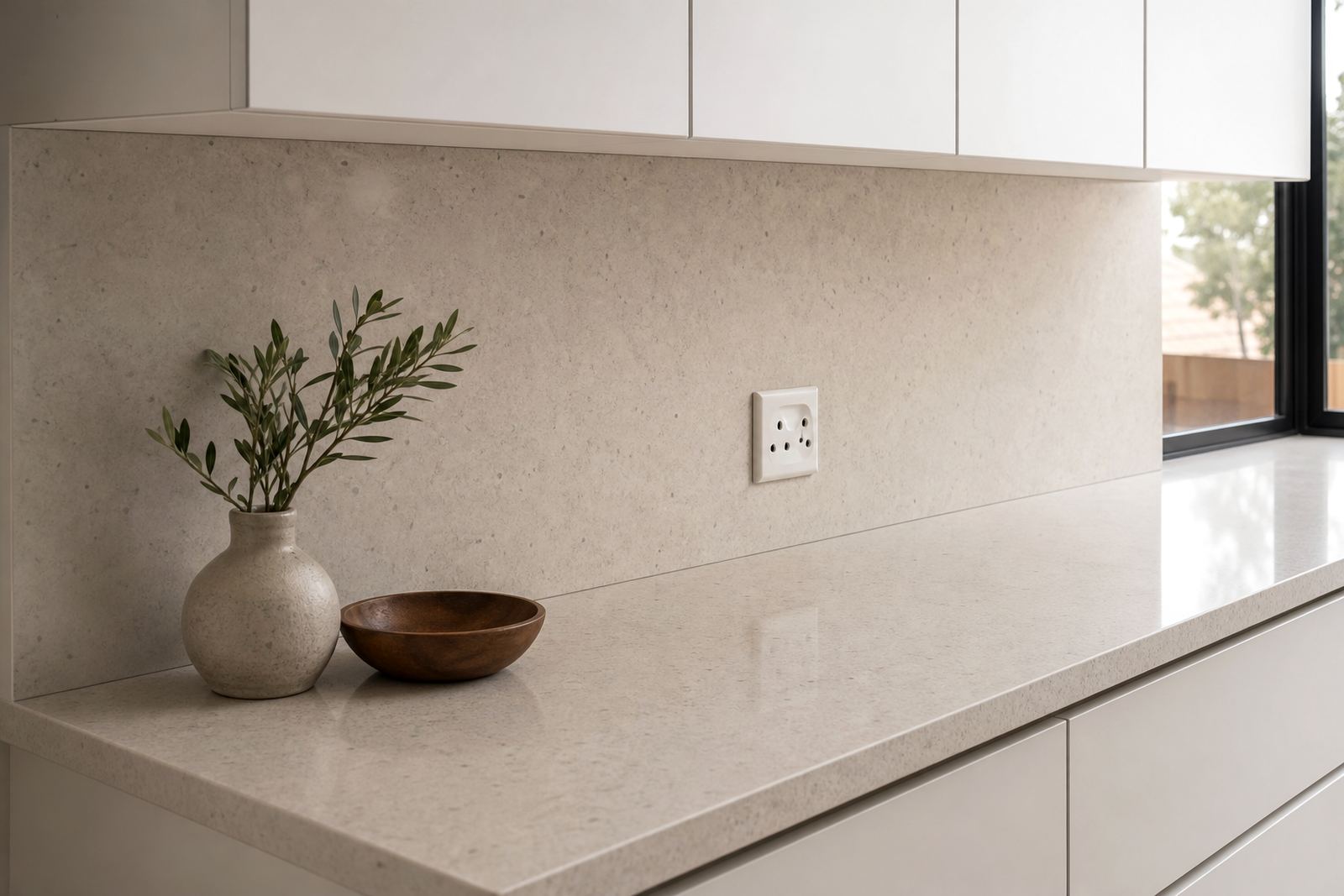
A matching splashback can calm a kitchen where the cupboards, appliances and worktops already have a lot going on. The eye moves from counter to wall without a hard break, which is useful in compact apartments, open-plan homes and office tea stations where the finish has to feel deliberate, not busy.
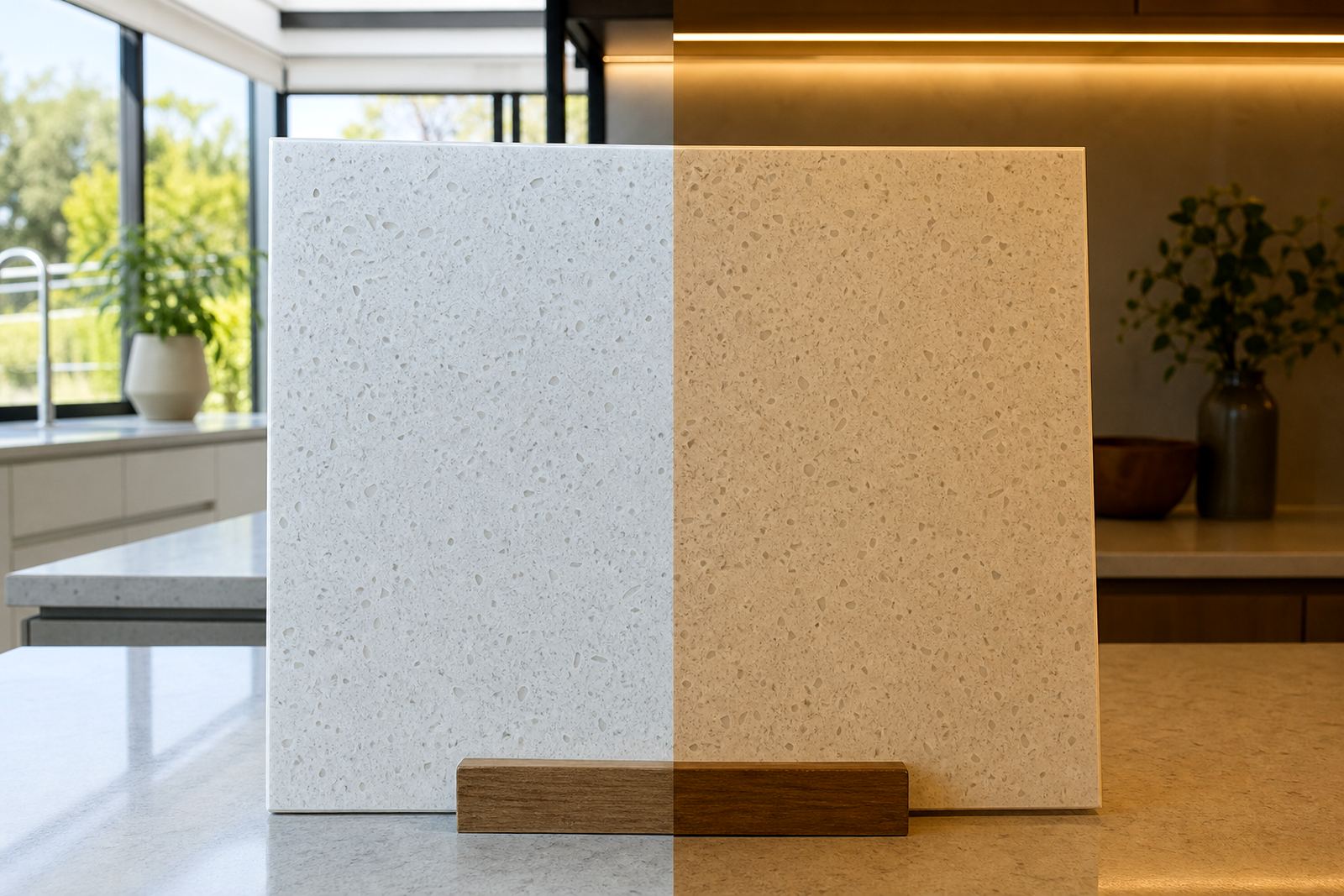
With engineered quartz, the wall panel can take the same visual grain and colour as the countertop. With solid surface, the splashback can be matched even more closely because the sheets are often worked in a way that keeps the finish continuous. That does not mean every wall line disappears. It means the transitions are planned properly, especially around corners, window reveals and wall unevenness that shows up once a template is taken.
In Randburg and across Johannesburg, many kitchens mix stone-look counters with painted walls. A matching splashback gives the wet zone more presence, and it helps the front edge of the counter feel finished instead of floating against bare plaster.
Thickness, edge lines and the way the splashback meets the counter
The practical side starts with thickness. Engineered quartz is often fabricated in slab thicknesses suited to kitchen worktops, and the splashback is normally cut and fitted to suit that same material line. Solid surface can be formed to different wall heights and joined more invisibly where the layout allows. The key is not only colour match but the way the edge lands.
Edge profiles on the countertop affect the look of the splashback as much as they affect the front face. A square edge gives a neat modern line, while a softer radius can feel easier to clean in family kitchens. The splashback should be set so the top edge is level and the lower edge meets the counter without awkward gaps, especially where walls are slightly out of plumb.
- Check whether the splashback will stop at a standard height or run higher behind a hob.
- Allow for the countertop edge profile, then finish the wall panel to match the same visual language.
- Where the wall is uneven, templating helps avoid narrow filler strips that look improvised.
- In humid coastal air or steamy kitchens, tight joins matter because dirt builds up faster in open joints.
Templating makes the match believable, not only the colour
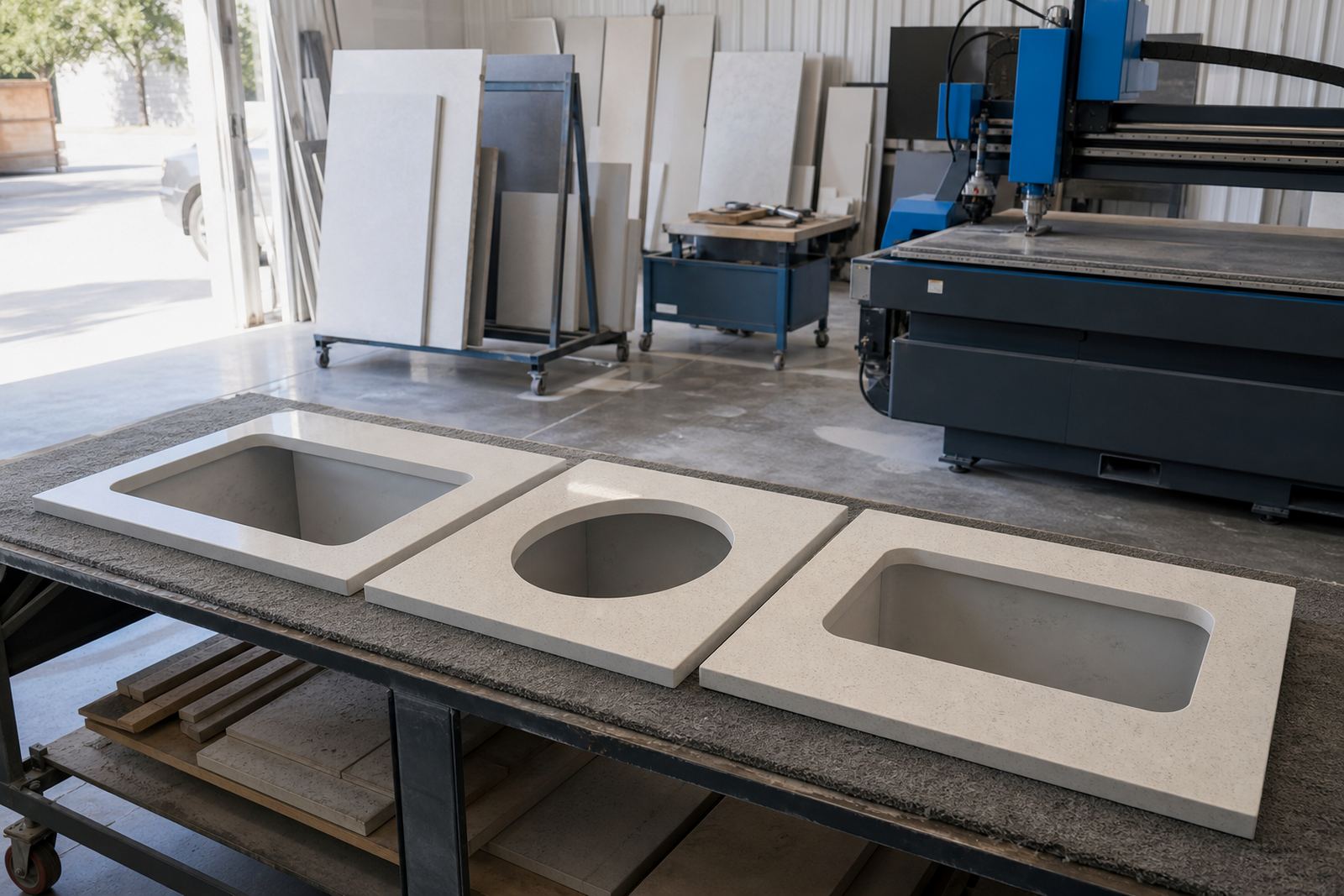
Matching materials only work when the site measurements are honest. A laser or digital measure gives the first read, then a physical template confirms the real wall line, the position of sockets, the fall of the counter and any pipe chases hidden behind vanity units or under a window. That stage matters when the splashback must line up with the top, the sink and the side returns.
On a job in Fourways, for example, a kitchen can look square until the template is done. Then you find a wall that leans a few millimetres, a sill that dips, or a tiled return that sits out from the plaster. Those small differences decide whether the finished panel feels custom or forced. Once the cut list is set, the slab layout can place the best section of the sheet where it will be seen first.
For offices and shopfitting work, the same logic applies. A reception tea point or staff kitchen may need a splashback that matches the counter but also carries through sink cut-outs, tap positions and service access. If the templating is rushed, the matching surface becomes the part that shows the error.
Heat, stain care and the zones that take the most punishment
A splashback behind a hob or prep area has a different job from one behind a vanity. Quartz and solid surface both resist everyday use well, but they each still need sensible care. Hot pans should not be set directly against the wall panel, and spills from sauces, coffee or cosmetics should be wiped before they sit. In a busy household, that practical habit matters more than any sales talk.
Quartz tends to be chosen where homeowners want a hardwearing, low-porosity surface for kitchens that see constant use. Solid surface is often preferred where smooth joins and a softer visual finish matter, especially in vanities and custom wall details. Both materials benefit from careful seam joining and neat silicone at the counter line, since that joint is where splash control either works or fails.
- Use a trivet or heat pad near appliances that throw direct warmth.
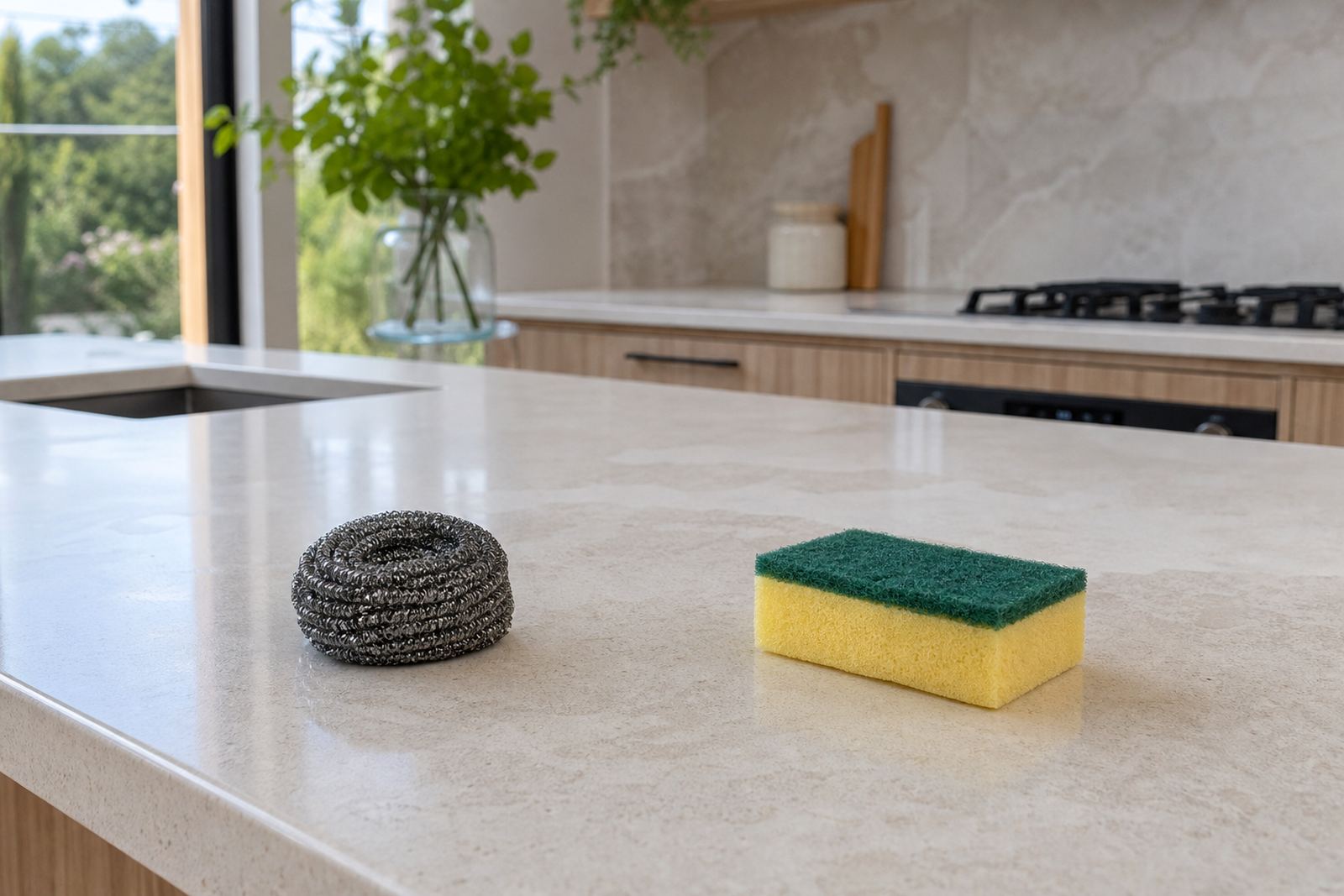
- Keep abrasive pads away from the finished face, they mark the sheen.
- Clean with mild soap and a soft cloth rather than harsh scourers.
- Ask for cut-outs and seams to be planned before fabrication starts, not after.
Where splashbacks earn their keep in homes and fit-outs
A matching splashback is not only for show kitchens. In a family home it protects the wall behind the sink, kettle and prep zone. In a Sandton office pantry, it stops the wall finish from taking daily spill damage. In a shop fitting, it helps the counter read as part of one built-in run, especially where staff move fast and cleaning has to be straightforward.
Local conditions matter too. Gauteng kitchens often have dry air for part of the year, then a summer shift that brings more steam and moisture. That can expose weak joints and rough wall prep. A well-cut splashback, fitted after proper templating, sits cleaner against the substrate and keeps the line between counter and wall easier to maintain.
For vanity installations, a matching wall panel behind the basin also helps visually. It frames the bowl, supports tap cut-outs where needed, and makes small rooms feel more ordered. In a bathroom or guest cloakroom, that extra continuity is often what makes the finish feel properly planned.
Randburg kitchen counter and splashback
In a Randburg renovation, a homeowner wanted a single material across the kitchen counter and the short wall behind the hob and sink. The room was not large, and the old tiled splashback had broken grout lines and a patchwork feel. After templating, the countertop was laid out so the best face of the slab sat in the main sightline, while the splashback followed the same tone and movement.
The result was not just a colour match. The front edge, sink cut-out, seam position and wall line were all set together, so the finish felt like one piece from eye level down to the sink run. That is the real benefit of matching splashbacks. The material choice matters, but the measured fit matters more.
For homeowners and fit-out teams across Johannesburg, Sandton, Midrand, Fourways and Pretoria, the same principle holds. If the splashback is going to follow the countertop material, the details should follow too. Templating, slab layout planning, edge profiling and careful installation are what make the match believable when the room is used every day.