
What slowly changes the finish
A countertop can look unchanged for months, then begin to lose its crisp sheen in the busiest spots. The first signs are often a cloudy patch near the sink, a dull ring around the hob, or a surface that no longer reflects light evenly after repeated wiping.
Engineered quartz is dense and non porous, which helps with everyday spills, but it still has a polished face that can be marked by abrasive pads and gritty powders. Solid-surface material is more forgiving when repaired correctly, yet its finish can still lose clarity if people scrub it with the wrong products week after week.
In a Randburg kitchen or a Sandton reception counter, the issue is usually cumulative. One harsh clean may not look dramatic, but repeated contact breaks down the top layer of polish and leaves the surface looking tired sooner than it should.
The products and habits that do the damage
Many people think a stronger cleaner gives a cleaner result. On quartz and solid-surface worktops, that is not always true. A liquid with high acidity, bleach-heavy spray, or a powder with grit can attack sealants, stain the edge detail, or scratch the face in a way that only shows up under daylight.
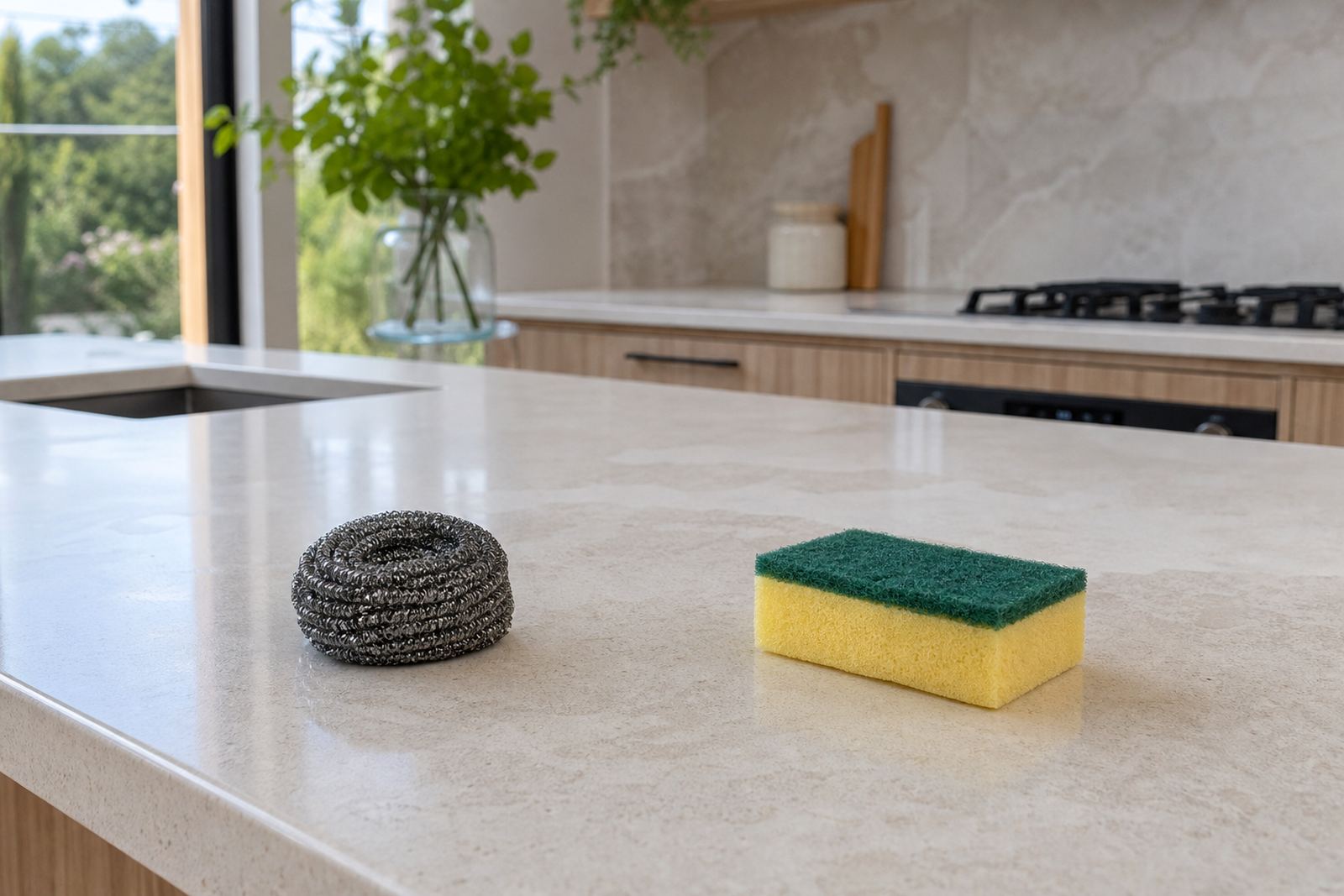
Rough cloths do their own damage. Microfibre is usually fine, but a coarse scourer, steel wool, or a stiff plastic pad can leave tiny lines that catch dust and make a neat surface look patchy. Once those marks build up, the eye reads them as wear even when the top is still structurally sound.
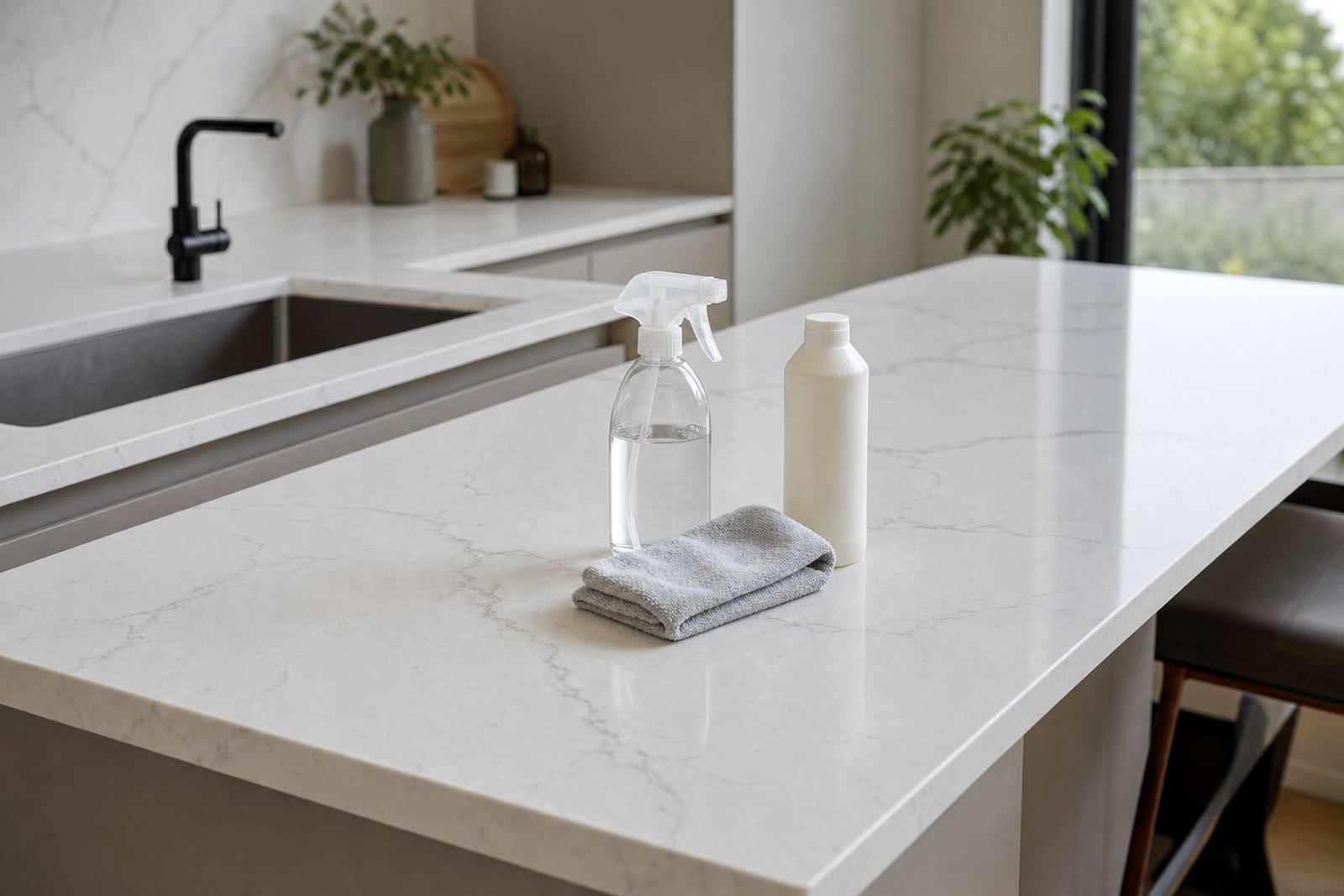
- Use a mild dish soap and warm water for routine cleaning.
- Wipe spills with a soft cloth rather than a rough pad.
- Keep scouring powders and abrasive cream cleaners off polished faces.
- Avoid letting strong chemicals sit on the surface for long periods.
- Do not use steel wool on sink rims, seams or edges.
Heat, stains and the small mistakes around the sink
Heat and stain care sit together because both can change how the surface looks. Quartz can tolerate normal kitchen use, but a hot pan placed straight down can leave a ring, mark the resin, or damage nearby adhesive if the edge is already under stress. Solid-surface tops handle spills well, though tea, coffee and cooking oil should still be wiped up before they dry and settle into a line along the sink cut-out.
Sink cut-outs and hob cut-outs deserve extra care. These are the areas where water, steam and cleaning products collect. If aggressive chemicals are used there every week, the finish around the opening can dull faster than the rest of the top. Seams need the same attention, because harsh scrubbing can make joint lines more visible over time.
That is why aftercare advice matters just as much as templating and fitting. A countertop that was cut accurately and joined neatly still needs ordinary care from the people using it each day.
A local job in Randburg that showed the pattern
A small office kitchenette in Strijdom Park gives a good local example. The top had been fitted neatly, with clean seams and a neat sink opening, but the staff used a gritty cleaner on the morning tea station almost every day. The surface started to look hazy near the tap and around the drip line, even though the slab itself was still sound.
When the cleaning routine changed to a mild detergent and a soft cloth, the finish stopped losing clarity so fast. The difference was not dramatic overnight, but the top looked more even after a few weeks of ordinary use. That is usually how it goes in Gauteng offices, shop counters and family kitchens. The material does not fail in one moment, it slowly loses its smart appearance through habits that seem harmless at first.
For shopfitters and homeowners alike, the lesson is plain. A well-fabricated surface needs the right cleaning habits if it is going to keep its colour and gloss through daily traffic.
Care that fits quartz and solid-surface worktops
Each material needs its own kind of handling, even if the cleaning routine looks similar. Quartz usually keeps its appearance best when the surface is wiped often, dried after wet work and protected from direct heat. Solid-surface tops allow more flexibility with repairs, but they still dislike repeated abrasion and harsh solvents.
- Use chopping boards instead of cutting directly on the top.
- Lift pots and appliances instead of dragging them across the surface.
- Dry the area after washing up to reduce water marks near seams.
- Check silicone lines around splashbacks and sink edges for wear.
- Ask for practical aftercare advice when the installation is signed off.
These habits are not difficult, but they do protect the finish. A few small changes in how the surface is used can keep a vanity, kitchen top or office counter looking neat for longer.
Templating and fabrication shape the final result
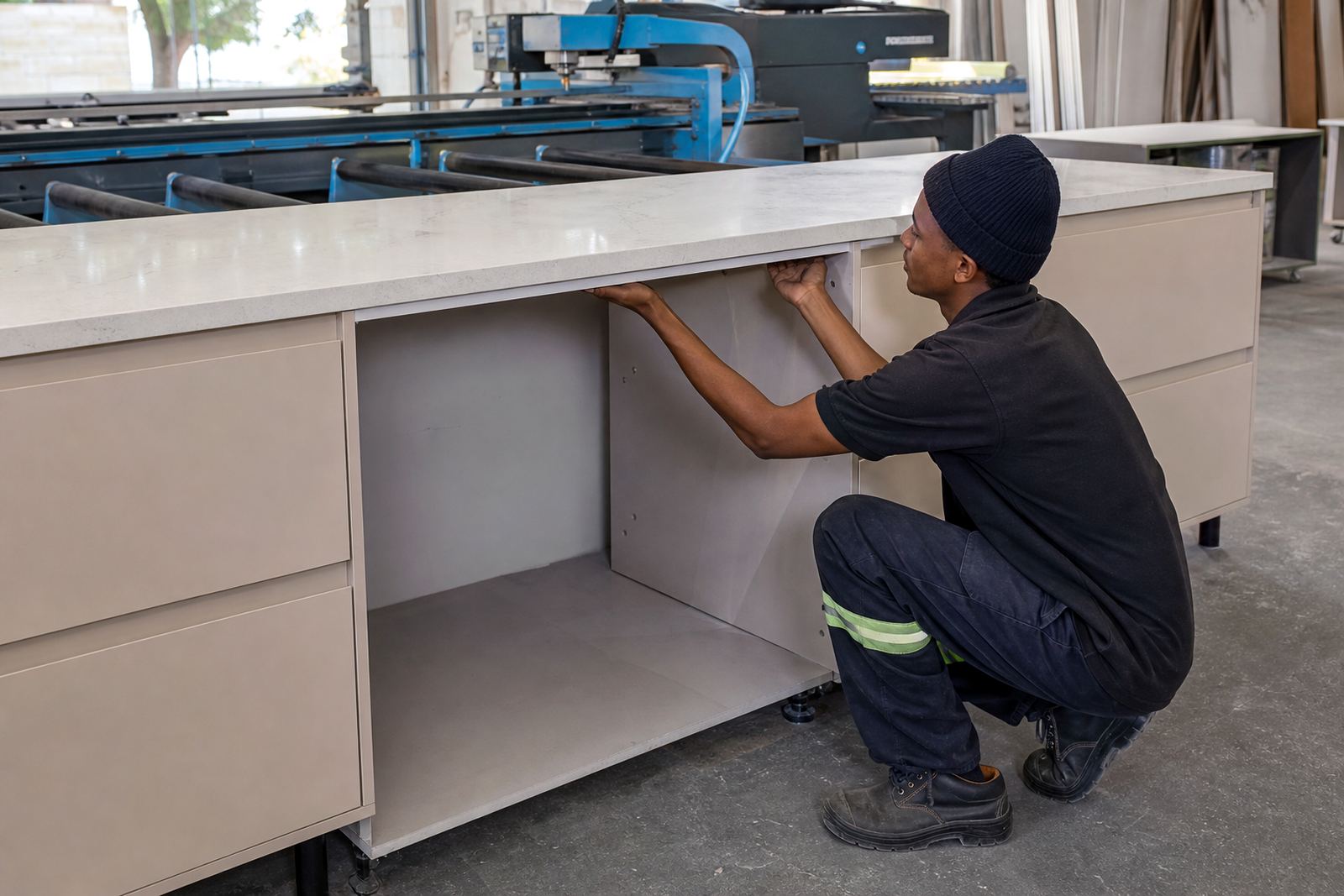
The way a top is measured, cut and fitted affects how easy it is to keep clean later. Accurate templating helps the sink cut-out sit properly, seam placement stay discreet, and edge profiles remain consistent from one section to the next. When the details line up, there are fewer uneven joins and less chance for grime to settle into awkward gaps.
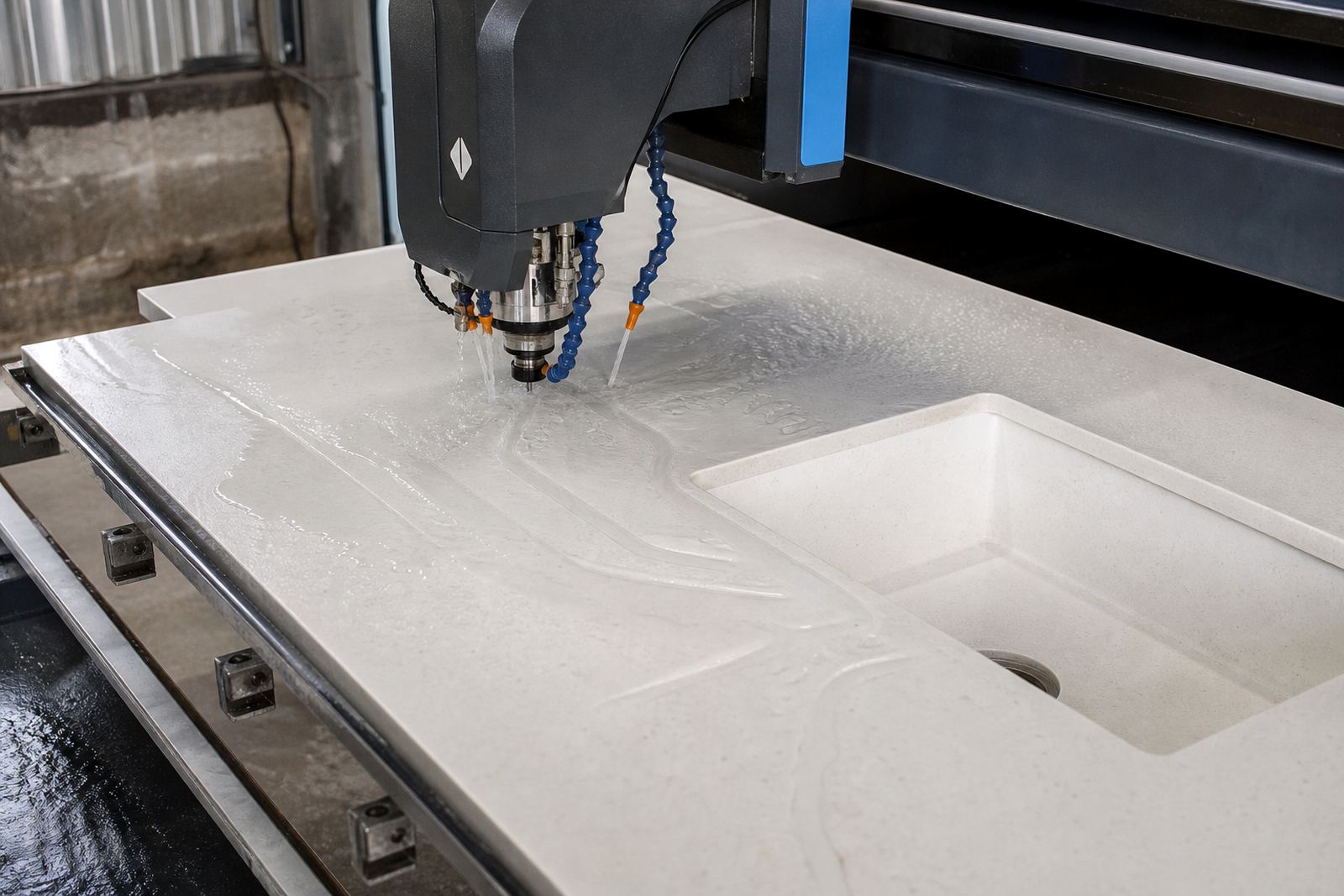
At Plastone, our workshop team fabricates engineered quartz and solid-surface countertops, vanities and splashbacks from site templating through to installation. That work includes digital measuring, slab layout planning, cutting and fabrication, edge profiling, seam joining and fitting on site across Johannesburg, Sandton, Pretoria, Midrand, Fourways, Centurion and Roodepoort.
Good workmanship does not remove the need for care, but it leaves the surface in a stronger condition from the start. A neat installation is easier to clean, easier to inspect and less likely to trap residue in the first place.