
Start with the dry wipe, not the wet cloth
Daily care begins before any cleaner touches the surface. Loose crumbs, dust and grit should first be removed with a soft dry microfibre cloth or a clean brush. If sand or fine dirt is dragged across the top with a damp cloth, it can leave the sheen looking dull over time, especially on a polished engineered quartz surface.
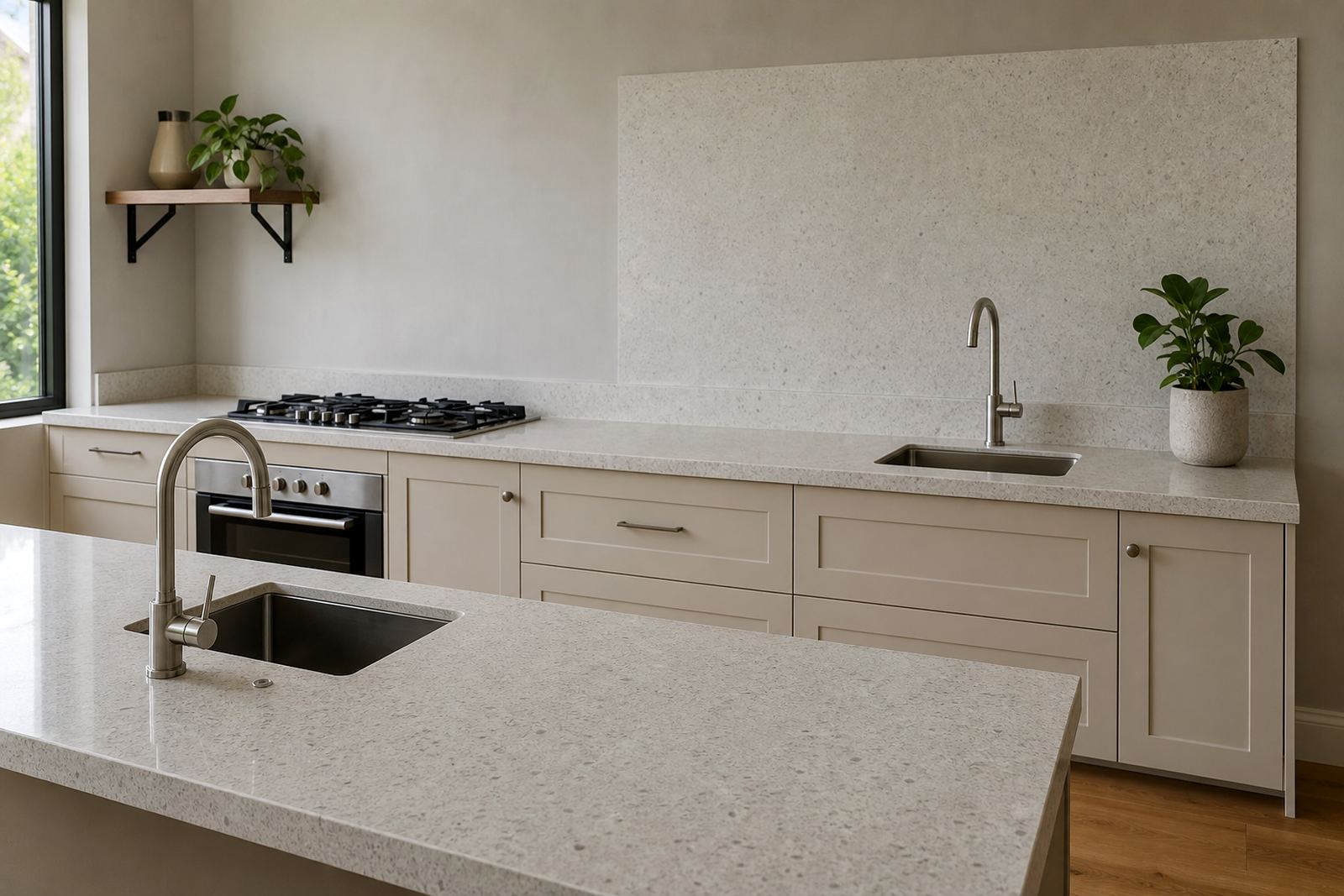
For kitchens in Randburg, Fourways and Sandton, where breakfast, lunch and prep all happen in one space, this first step matters. It takes seconds and stops the small scratches that collect around sink fronts, chopping zones and serving edges.
- Wipe from the back of the top toward the front edge.
- Lift crumbs from around taps, seams and splashbacks.
- Pay attention to corners where dust settles quietly.
- Use a clean cloth, not one already carrying grit.
A mild wash keeps the surface presentable
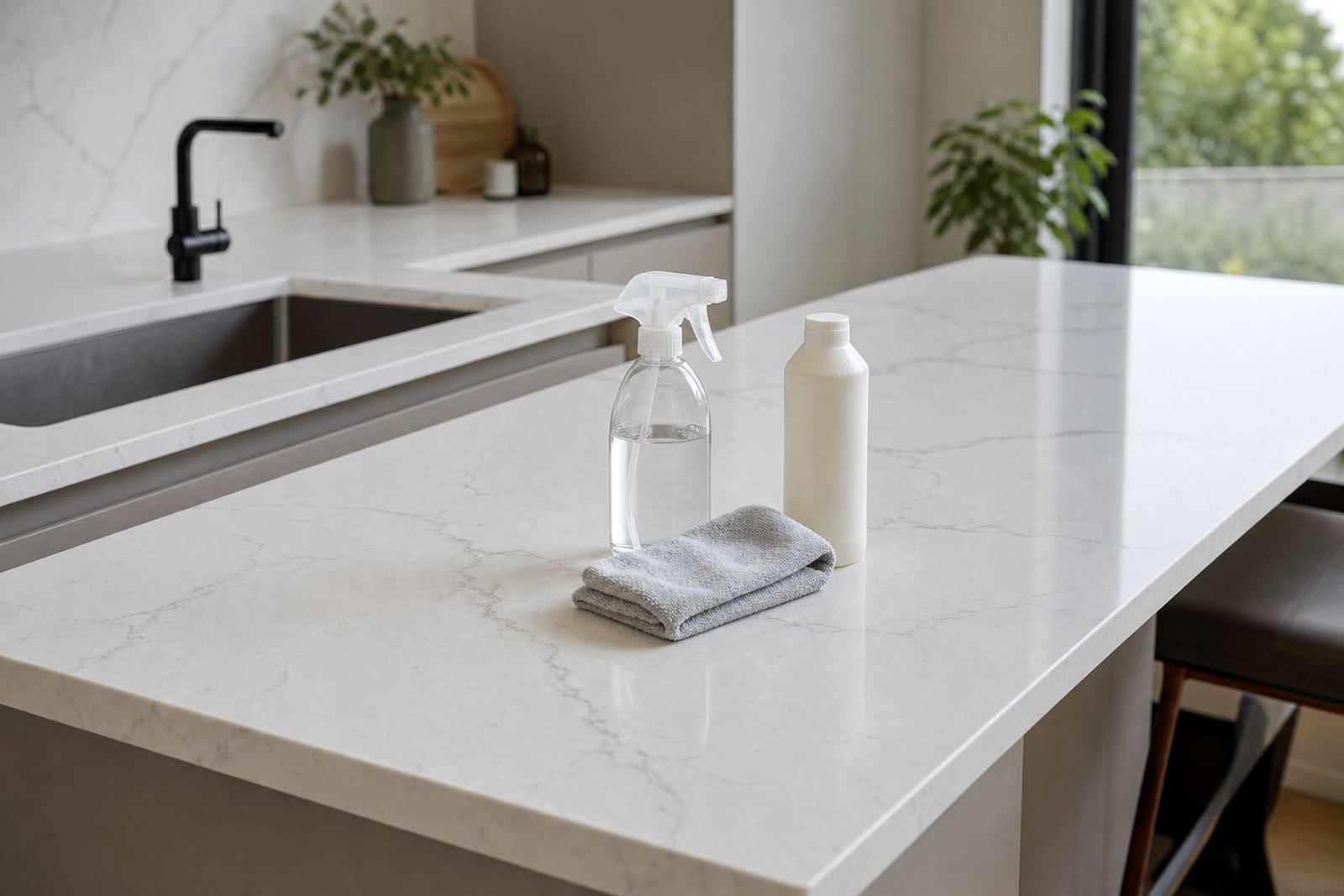
Once the dry debris is gone, a small amount of warm water and mild dish soap is usually enough for everyday cleaning. The aim is to loosen fingerprints, cooking film and water marks without leaving a sticky layer behind. Too much soap creates its own residue, and that residue shows faster on darker colours and matte finishes.
With solid-surface tops, this gentle routine keeps the texture even and stops build-up near splash zones. On quartz, it protects the polished face and helps the surface keep its clean look between deeper cleans. A soft cloth wrung out well works better than a soaking wet one, because standing water around joints and sink cut-outs is never a good habit.
- Use a pH-neutral or mild kitchen cleaner.
- Wipe in small overlapping passes.
- Rinse the cloth, then wipe once more with clean water.
- Dry the top with a separate soft cloth to avoid marks.
Stubborn marks need patience, not harsh products
Tea rings, coffee drips, food colouring and cosmetic marks should be treated early, before they settle in. For most daily stains, a soft cloth and mild cleaner will do. If something has dried on, let the cloth sit on the area for a moment so the mark softens, then wipe again rather than scrubbing hard.
Abrasive powders, scouring pads and strong solvents can roughen a surface or leave it cloudy. On quartz, that is especially important near sink cut-outs and around the hob where repeated wiping already happens. On solid-surface countertops, harsh chemicals can change the look of the finish and make future cleaning less even.
- Check a small concealed spot first when the mark looks unusual.
- Lift the stain with repeated gentle passes.
- A plastic scraper can help with dried food, used carefully.
- Avoid bleach-heavy mixes unless the product maker has given that instruction.
Heat, spills and sink edges deserve extra care
Daily cleaning is easier when the top is not being damaged by habits around it. Hot pots, baking trays and appliance bases can leave a mark or create thermal stress on many work surfaces, so a trivet or heat pad is still the safer habit. Wiping spills quickly also matters, especially acidic liquids like citrus juice, vinegar or strong sauces that can sit in seams and around upstands.
At sink cut-outs, pay attention to the silicone line and the underside of the rim if the sink is under-mounted. Water can collect there if the cloth is too wet or if the edge is not dried after use. In a busy Pretoria family kitchen, or in a Midrand office tea point, that small detail makes the difference between a top that looks fresh and one that starts to look tired.
- Wipe sink rims dry after washing up.
- Do not leave metal tins or damp cans standing on the surface.
- Lift heavy appliances rather than dragging them.
- Check splashback joints where moisture can sit unnoticed.
Small routines for homes, offices and shop counters
A house kitchen, a reception counter and a retail till point all need slightly different daily habits, but the principle stays the same. Keep the surface clear, wipe it dry, and do not let grime build up in corners. In shopfitters' work, display counters often collect fingerprints from constant contact, so a light morning clean and a later wipe can keep the finish looking even through the day.
For vanities, the main issue is usually toothpaste, soap film and stray splash water. A quick wipe after use prevents white marks from sitting at the basin edge. For office counters, coffee rings and hand prints are the usual culprits. The surface does not need heavy scrubbing, only a steady rhythm that suits the space.
- Set one cloth aside for dry dusting and one for washing.
- Keep a small spray bottle of mild cleaner nearby.
- Finish by drying the surface to remove water spots.
- Use the same routine across splashbacks, tops and vanity fronts.
When a surface stops looking right
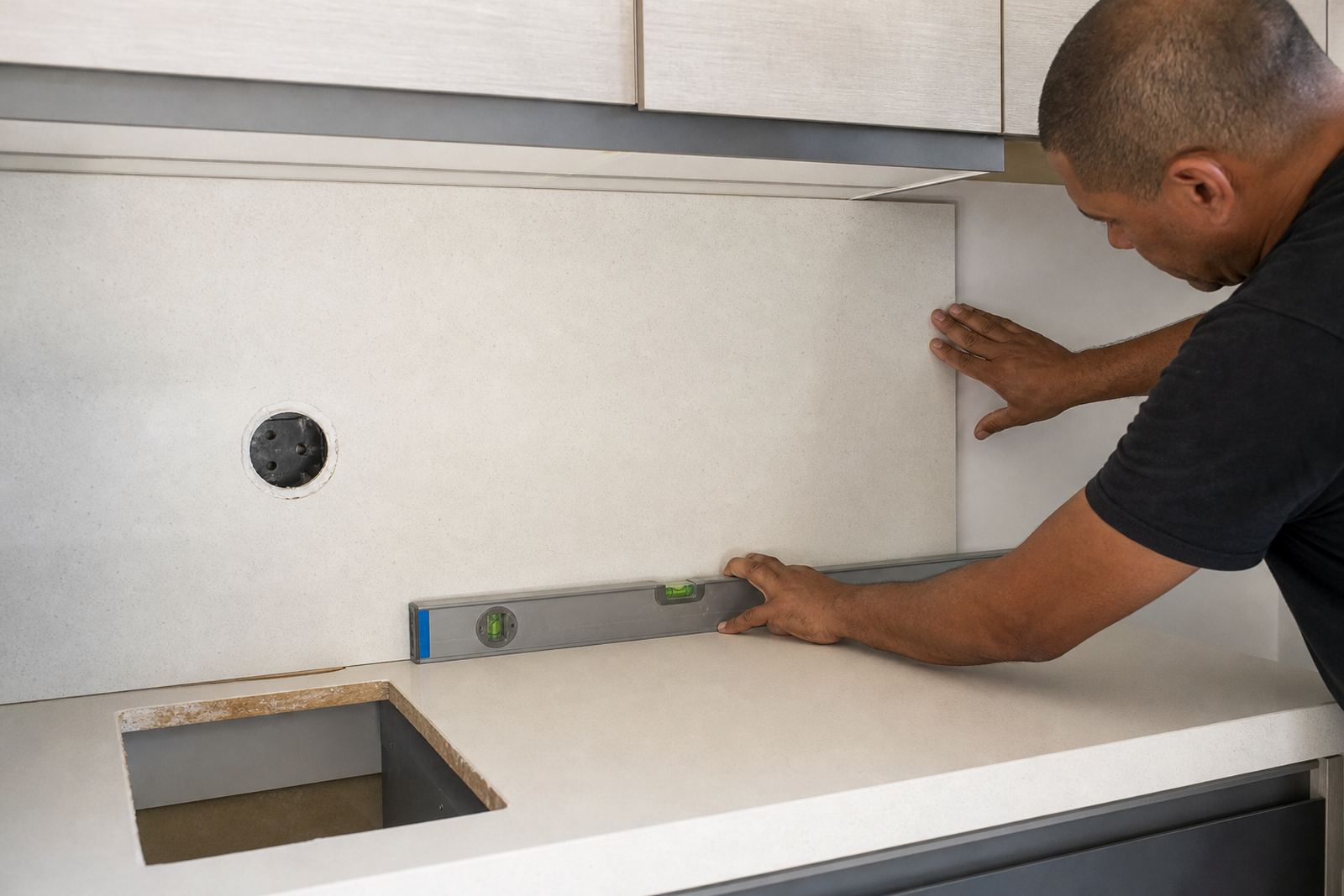
If a countertop is showing cloudy patches, lifted silicone, repeated stains or a rough spot that was not there before, the cleaning routine may not be the whole story. Daily care can keep a good surface in order, but it cannot fix a damaged seam, a poor cut-out edge or a problem caused by years of harsh products. That is where proper templating, accurate fabrication and a careful installation matter in the first place.
Plastone fabricates quartz and solid-surface tops in Strijdom Park, Randburg for homes and working spaces across Gauteng, and aftercare advice is part of the handover. A good daily routine protects the finish. It also helps you spot the point where a top may need attention, rather than waiting until a small issue becomes a bigger one.