

Two surface types, one practical workshop
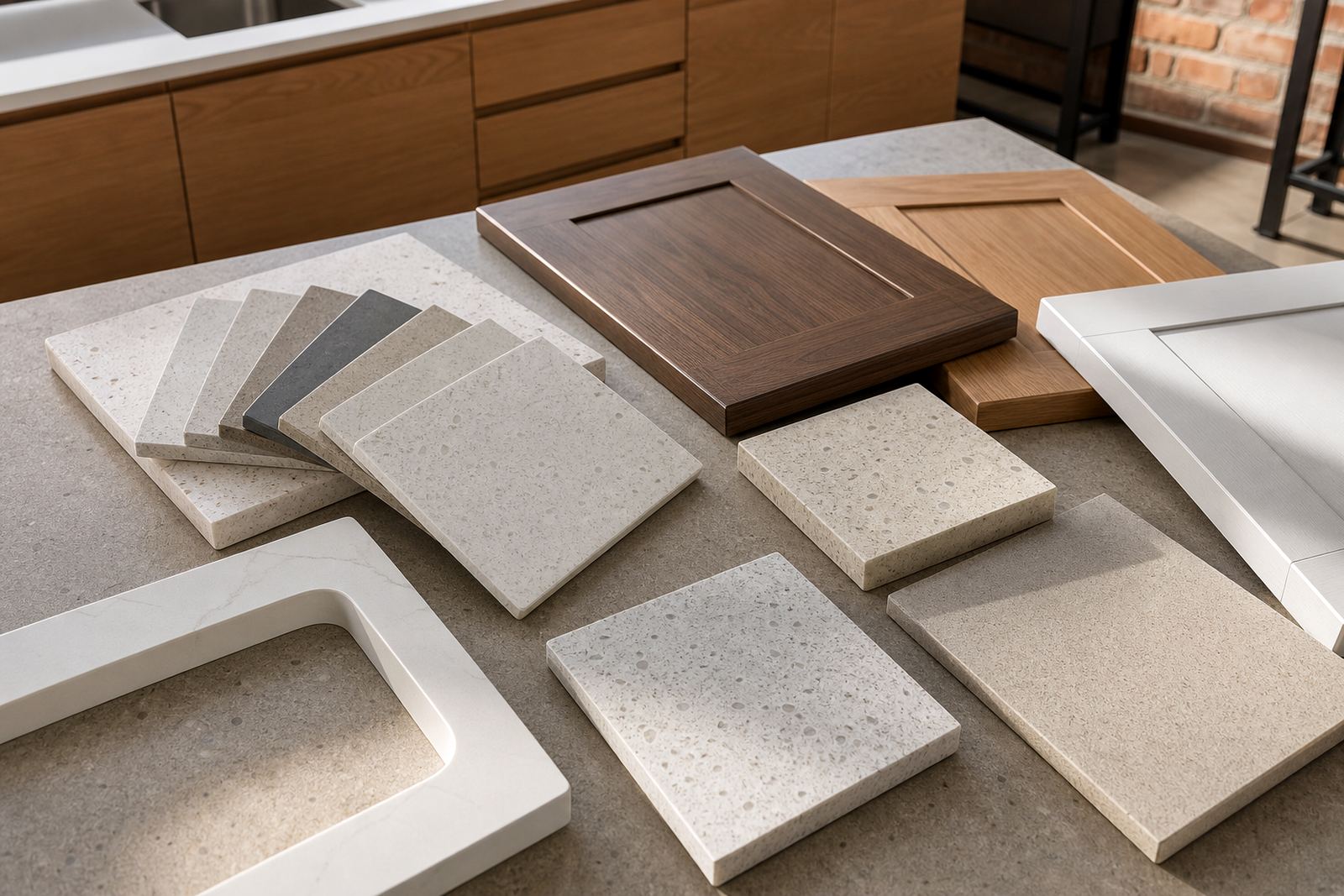
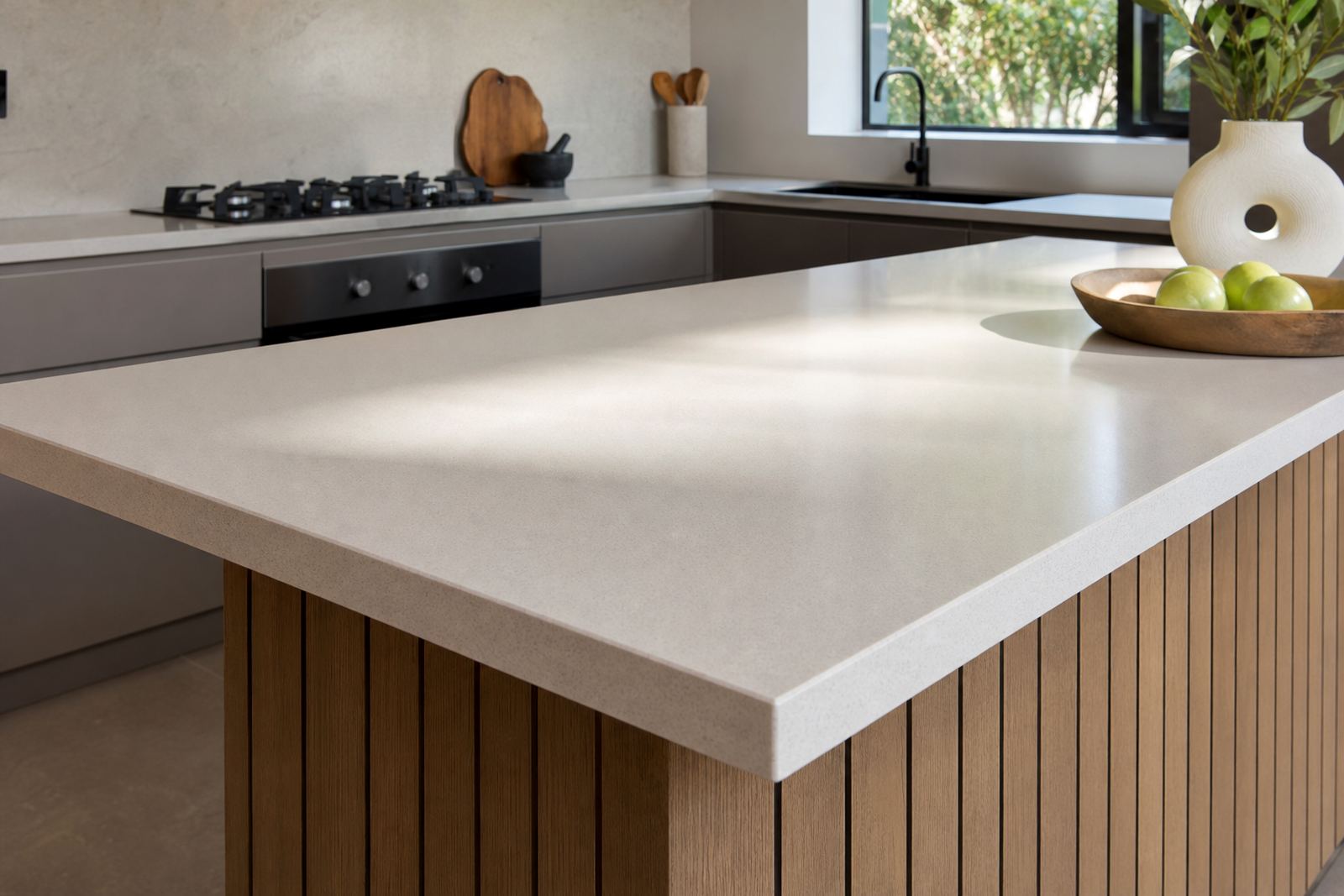
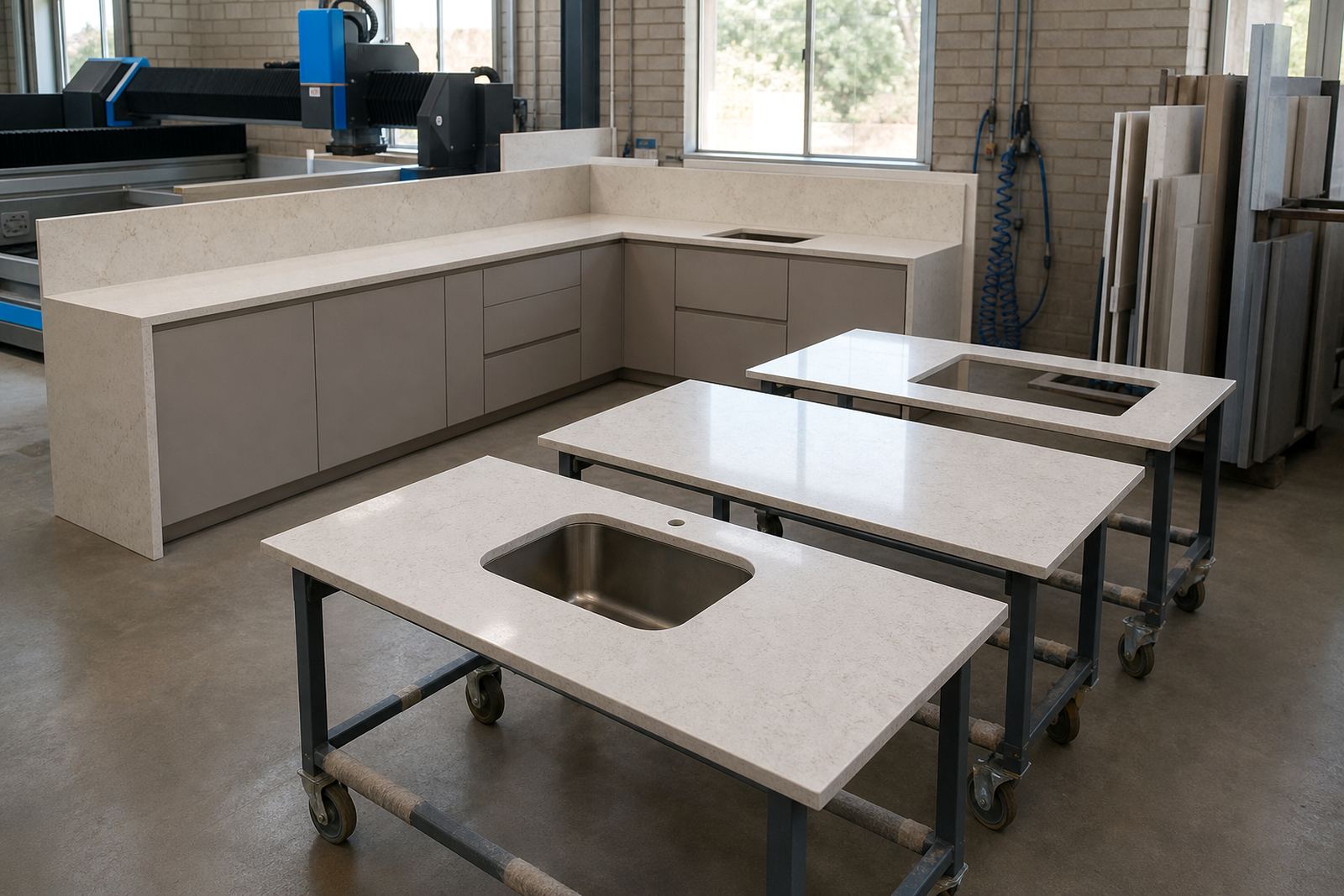
Engineered quartz gives a dense, mineral-filled surface with a polished look and a hard wearing face for kitchens, utility rooms and busy office counters. Solid-surface sheets suit cleaner joins, curved details and vanity work where a warmer touch and a more formed finish are useful.
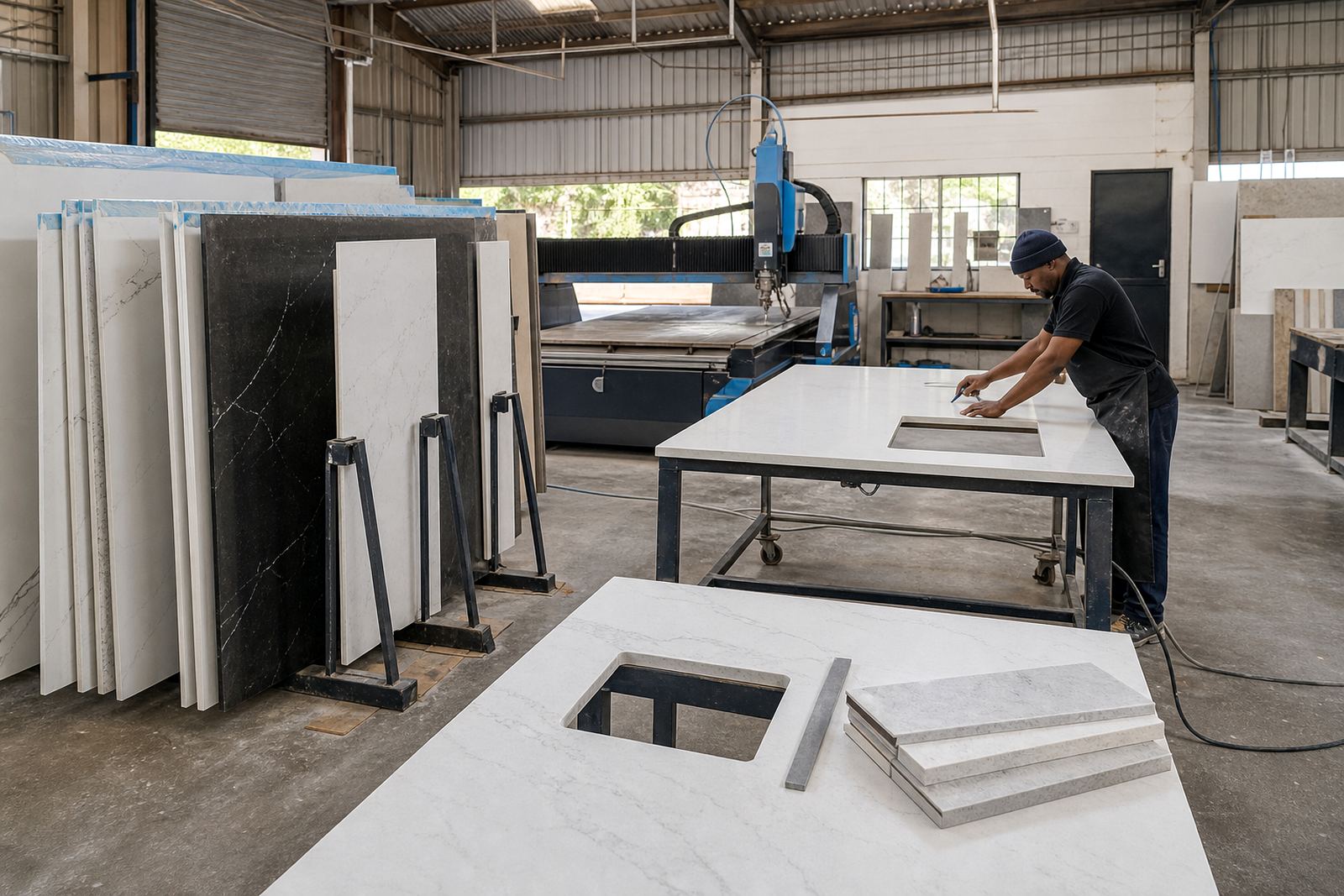
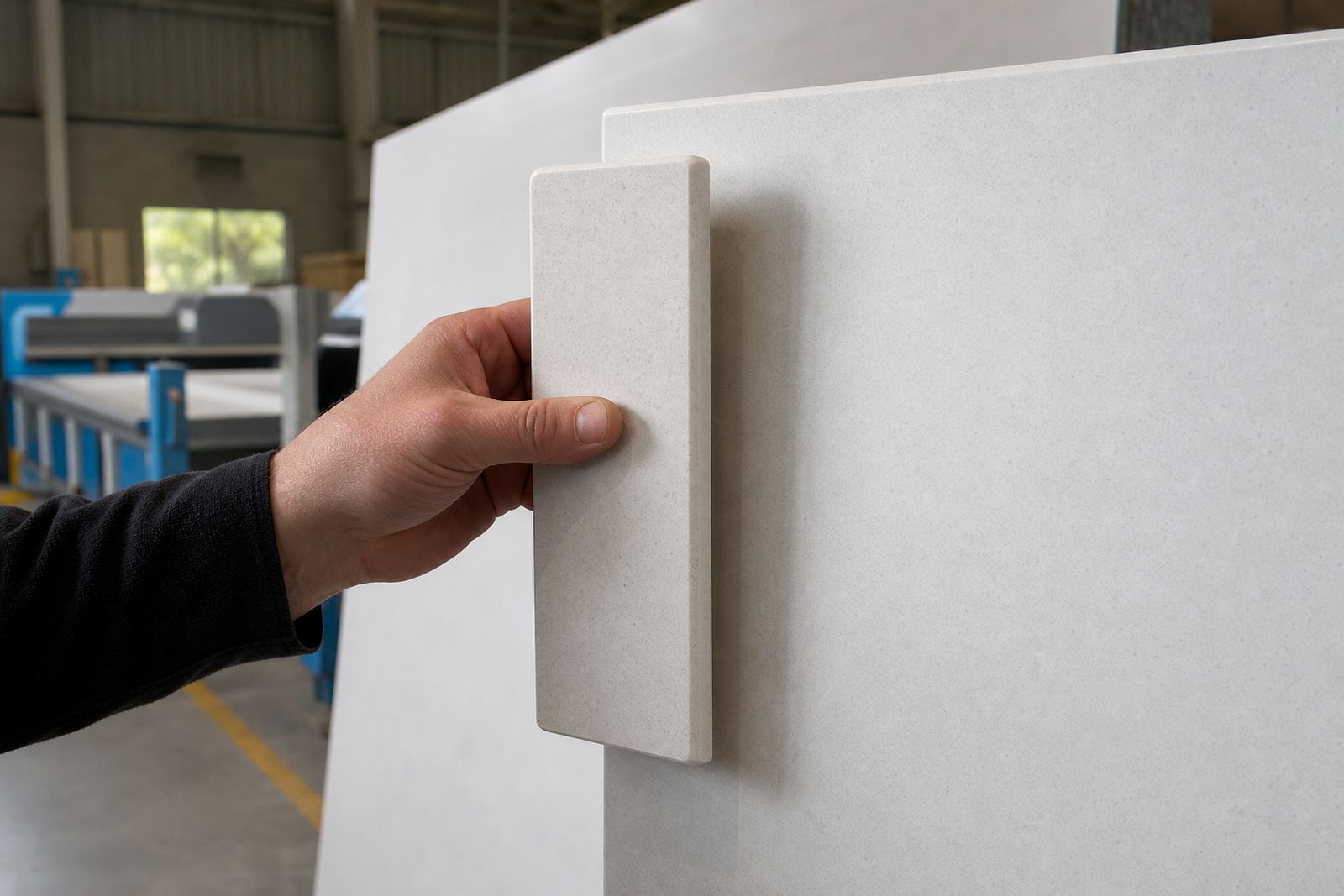
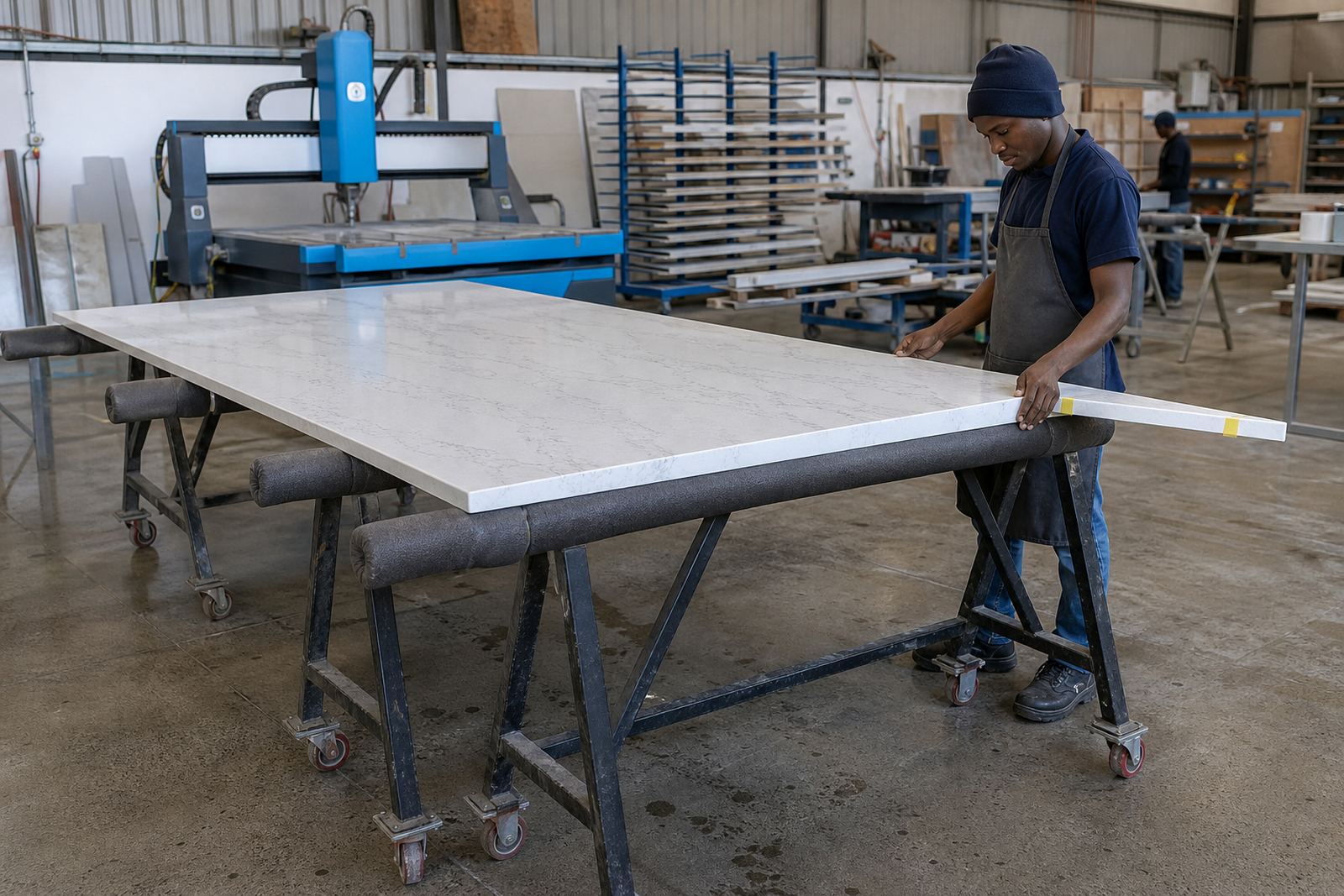
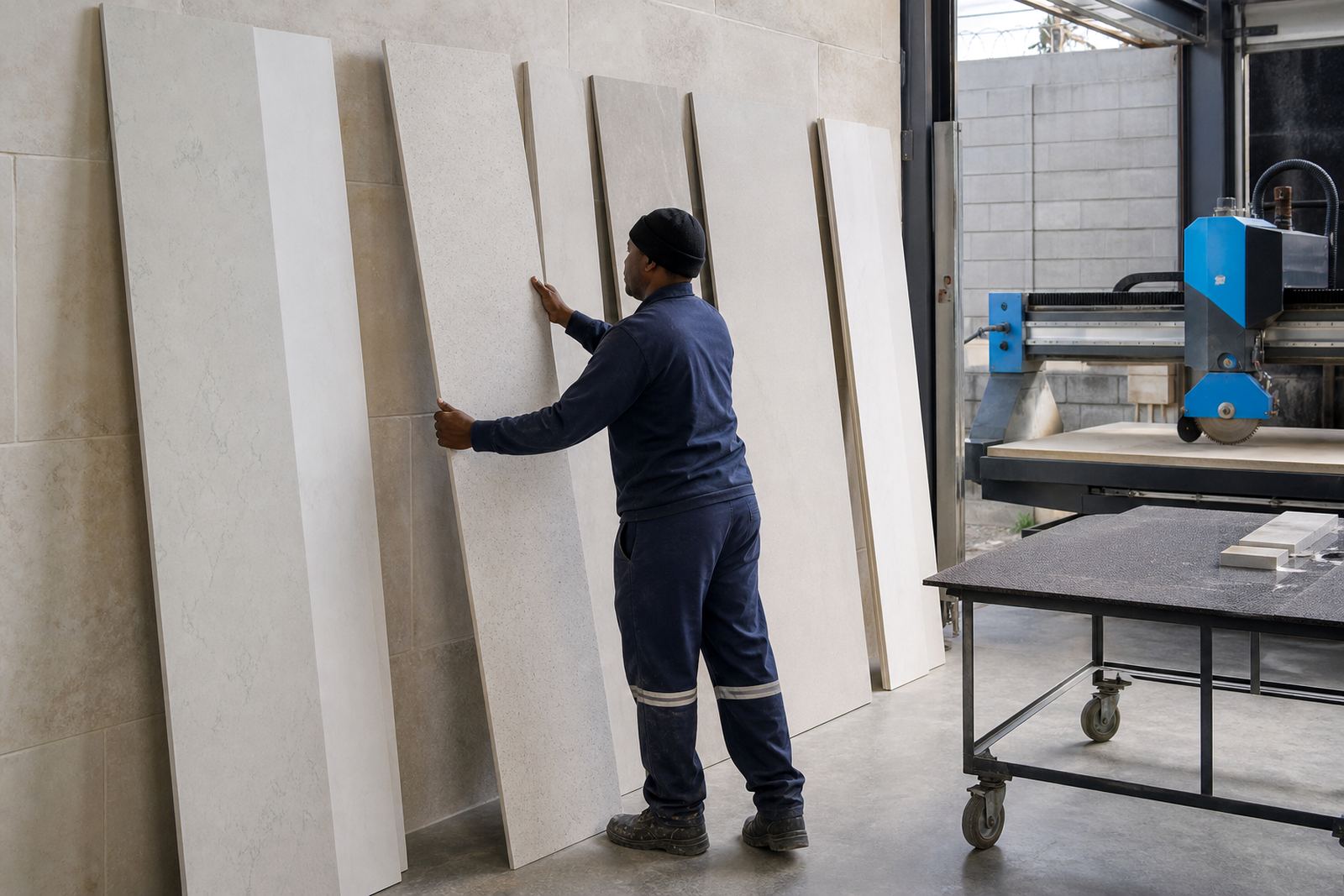
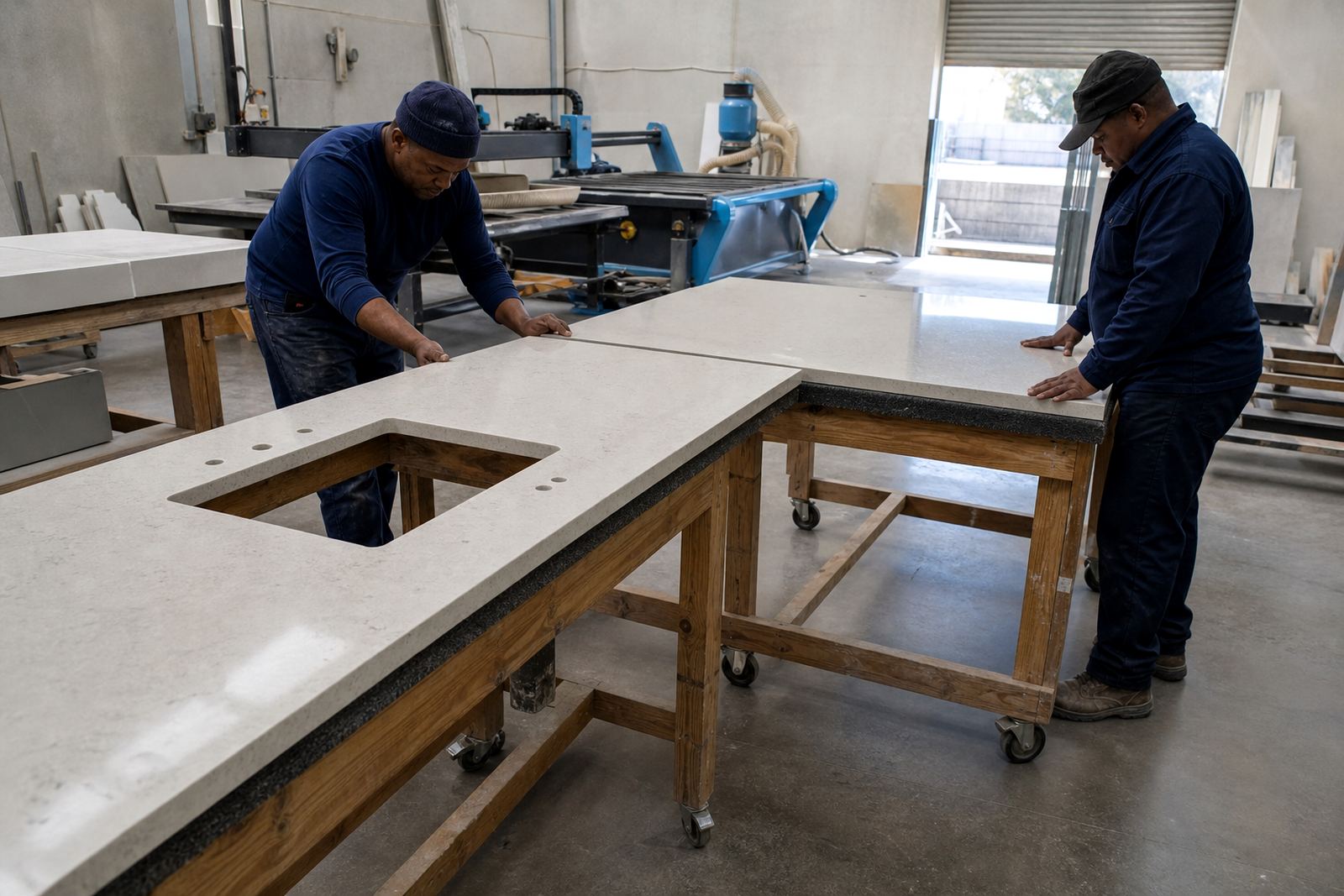
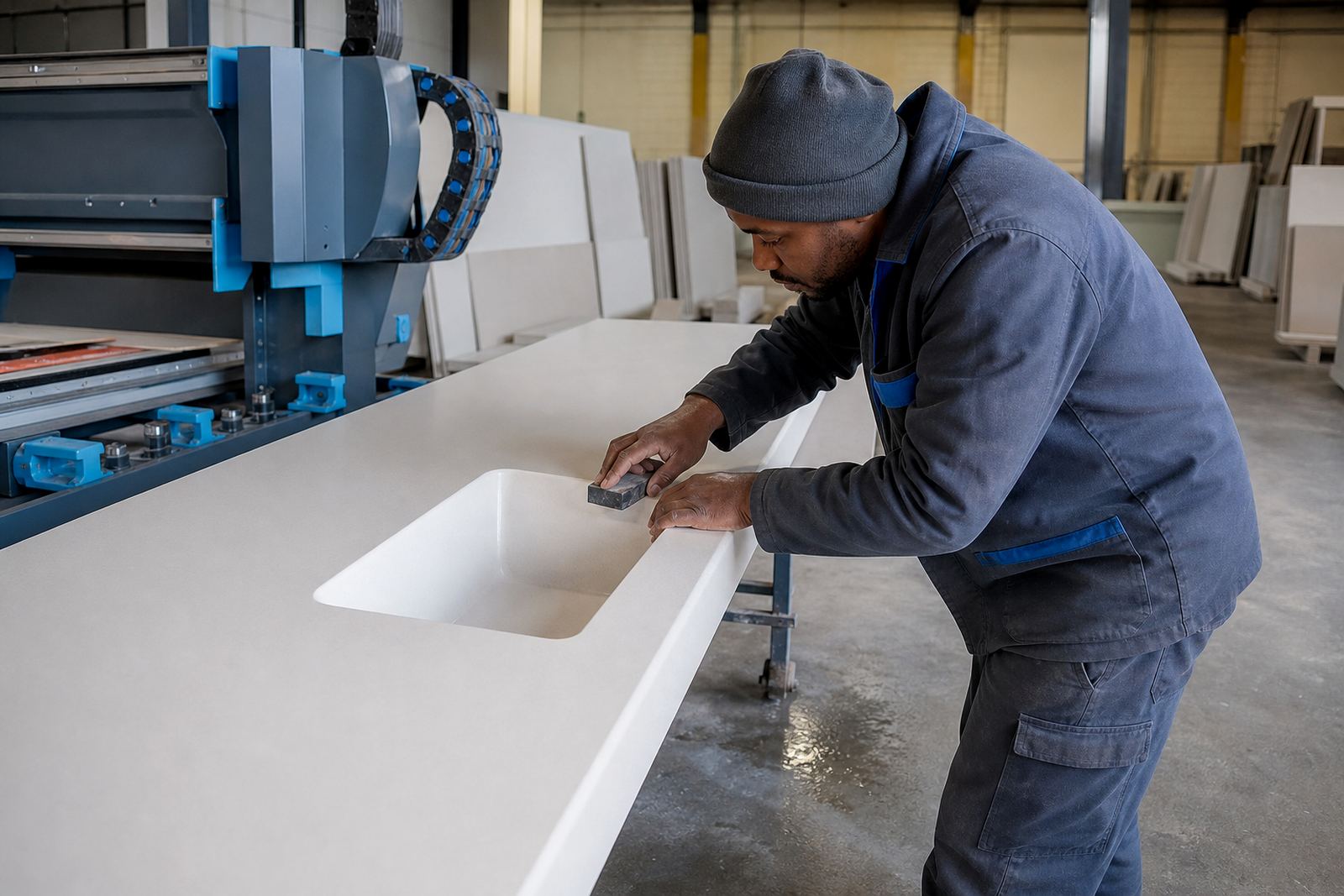
Both materials are made in slab form and cut to measured sizes after site templating. That lets us plan the work around wall lines, corner returns, sink positions and the little shifts that show up once the room is measured properly.
- Quartz is often chosen for crisp, defined kitchen worktops.
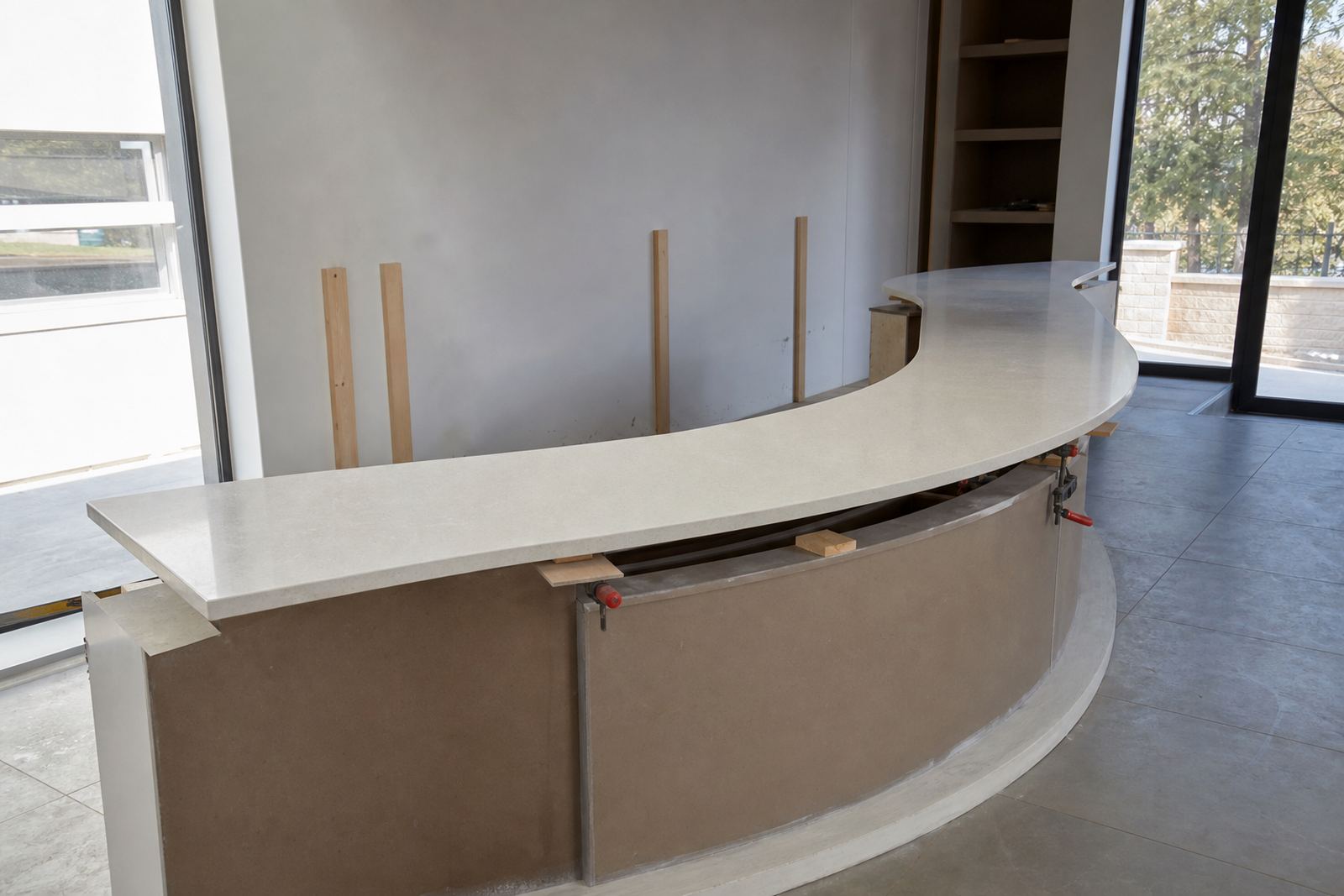
- Solid-surface suits integrated details and custom vanity shapes.
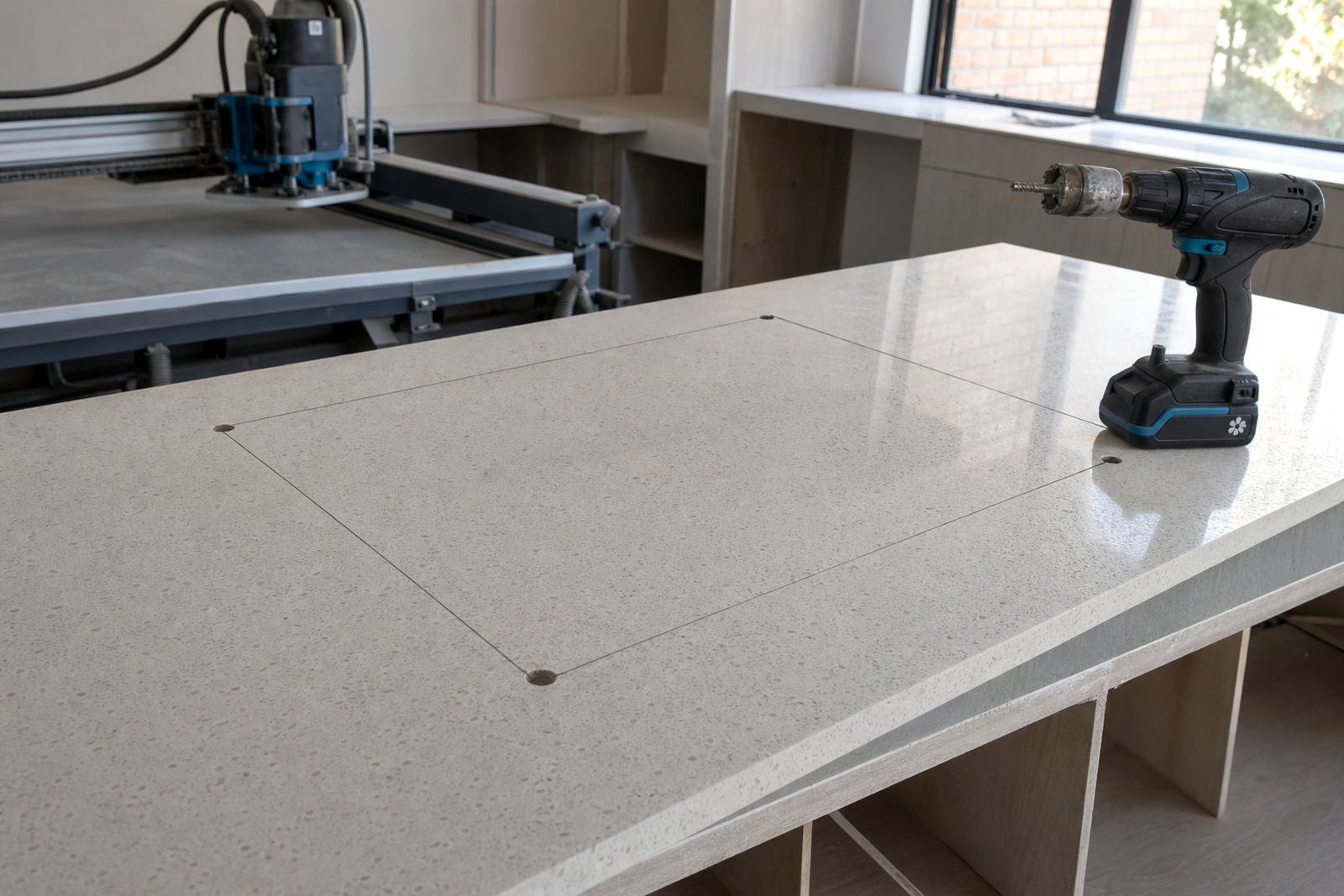
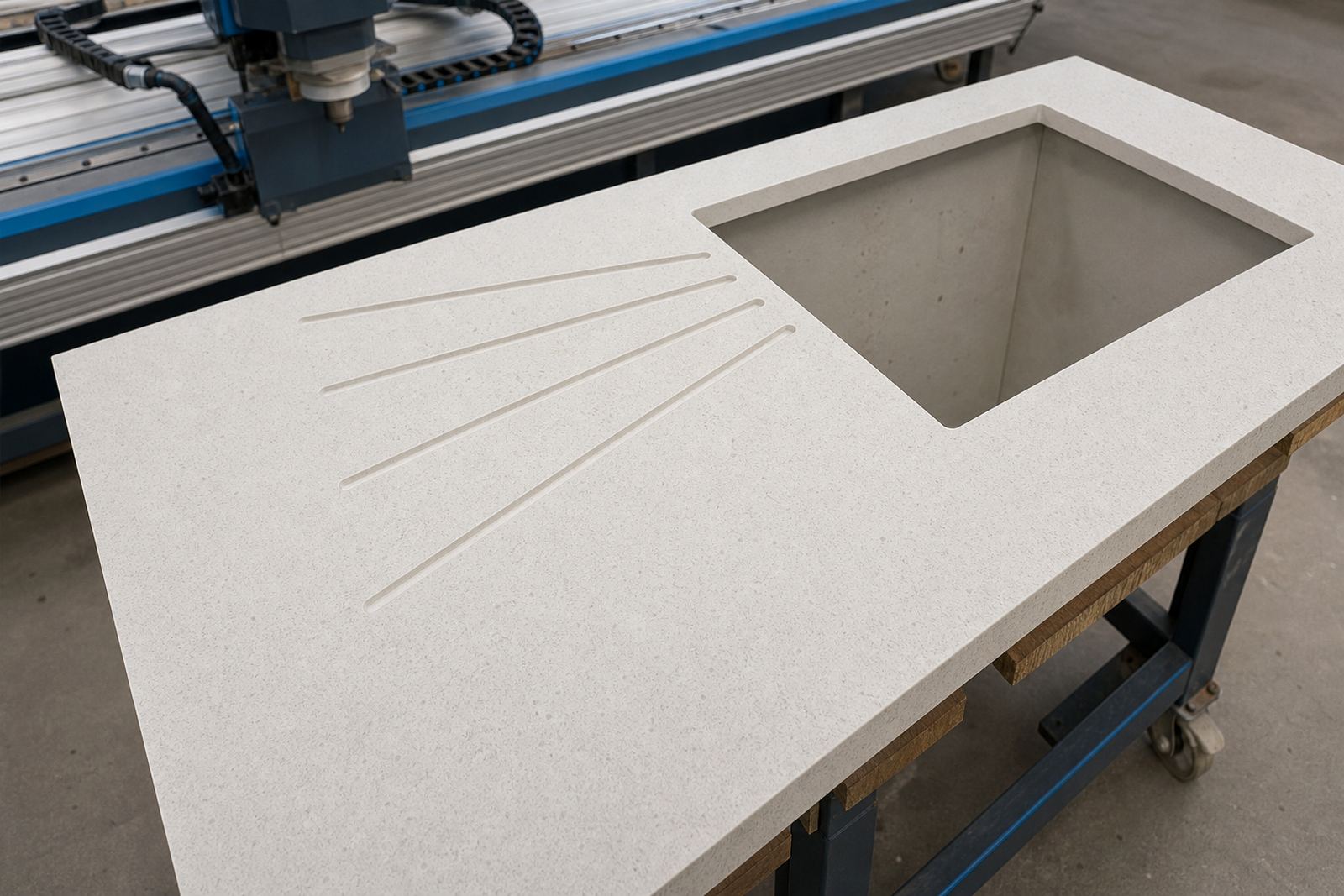
- Both can be cut for sinks, hobs and drainer grooves.
- Final fit depends on templating, seam positions and site access.
Thickness, edges and the look of the finished top
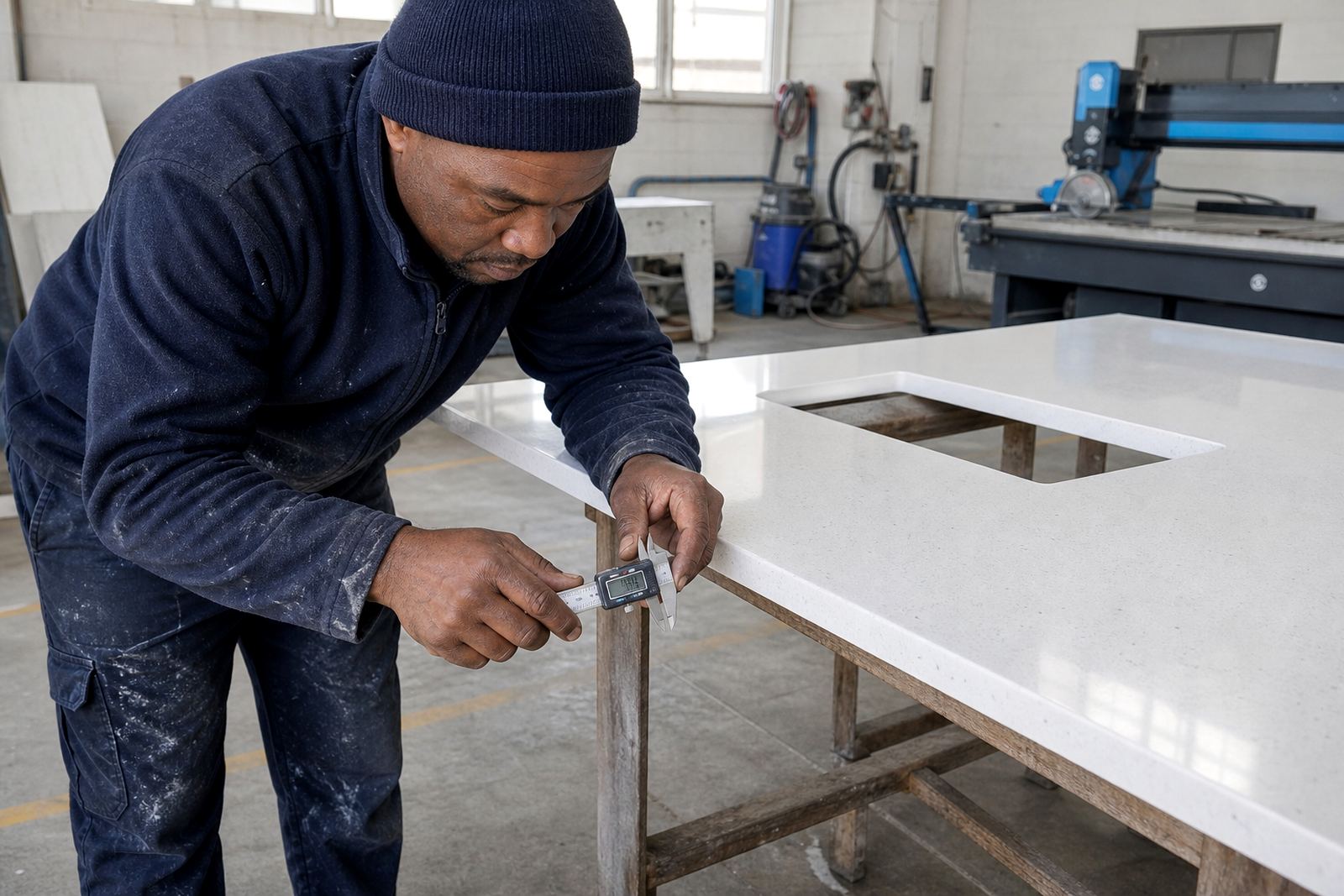
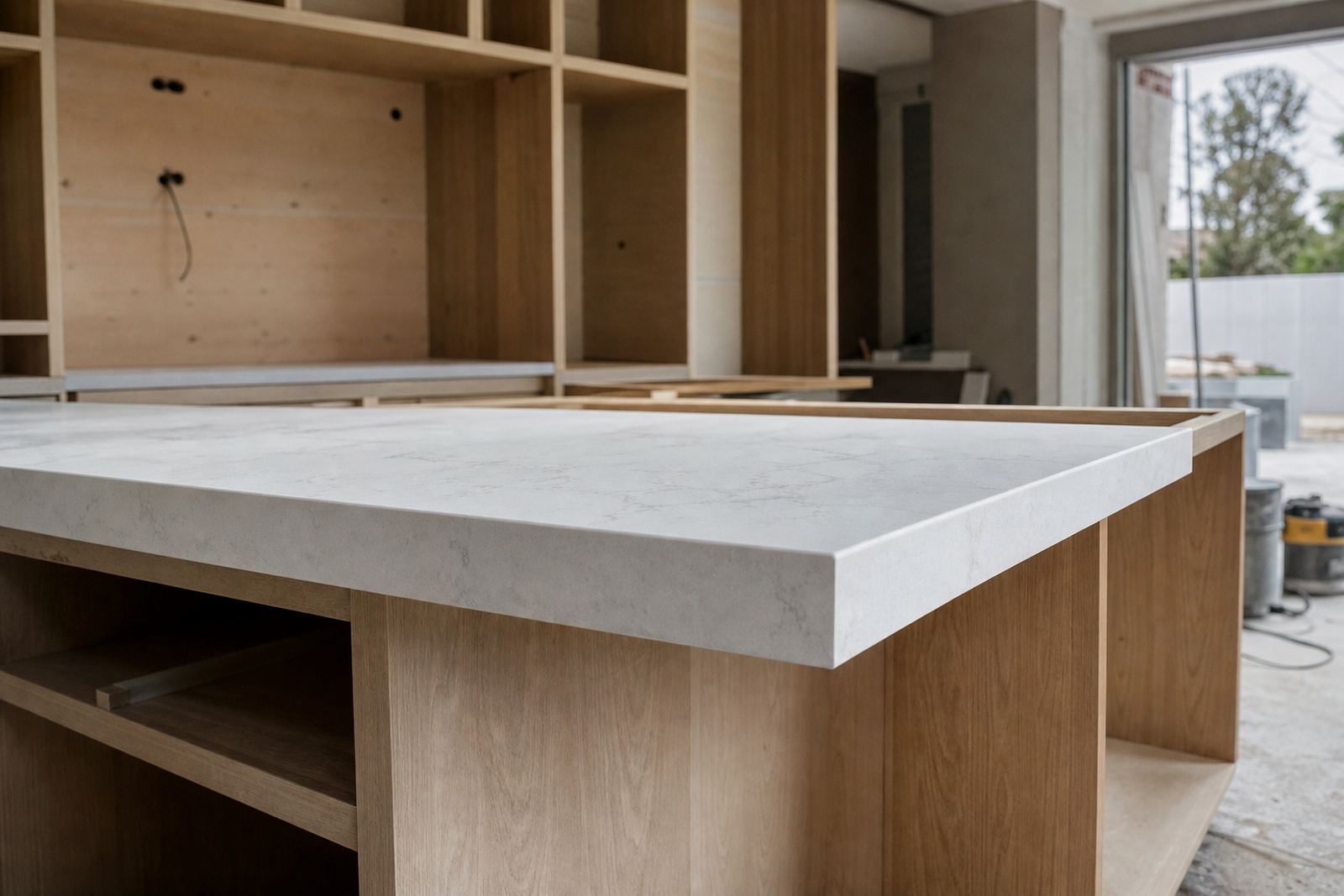
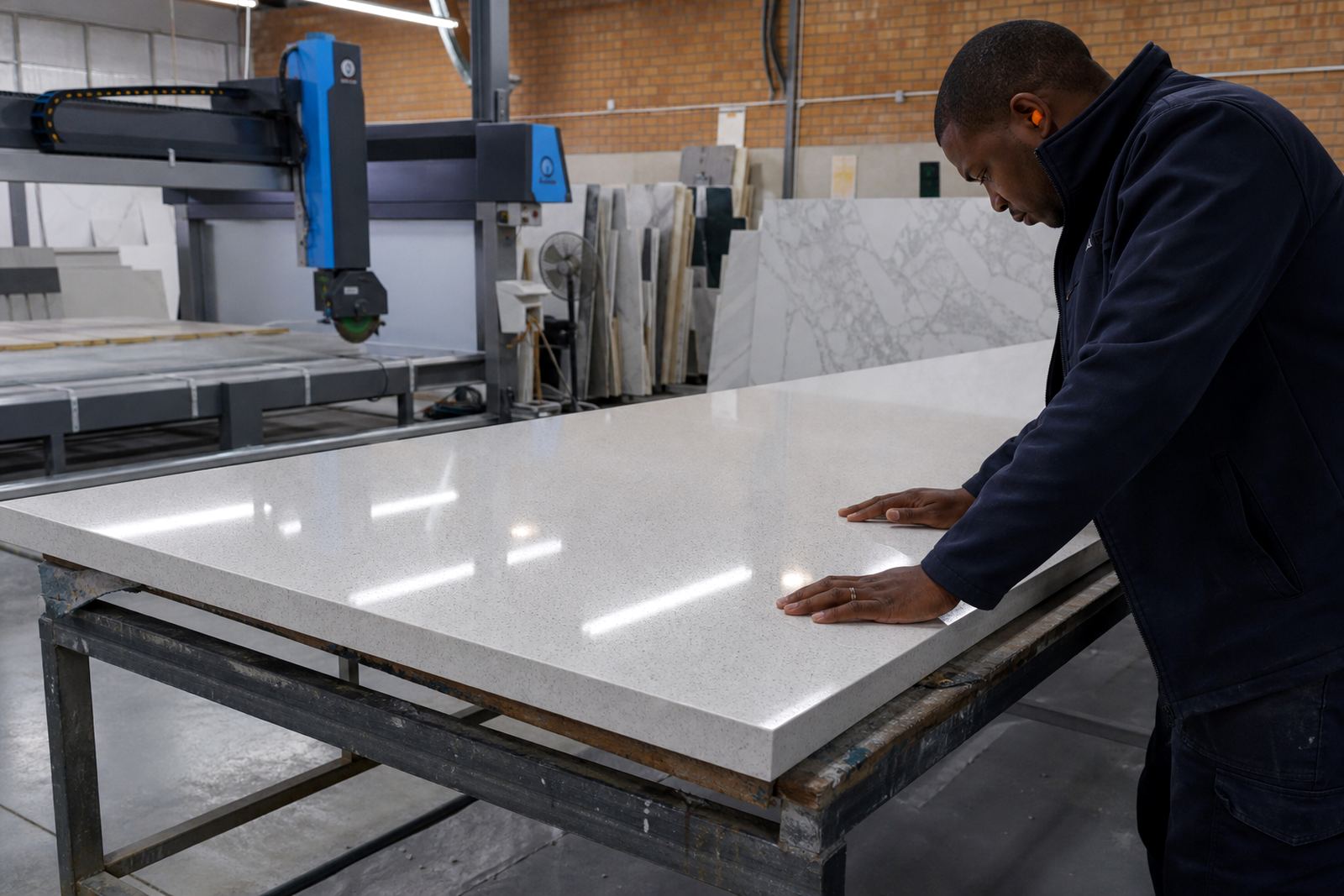
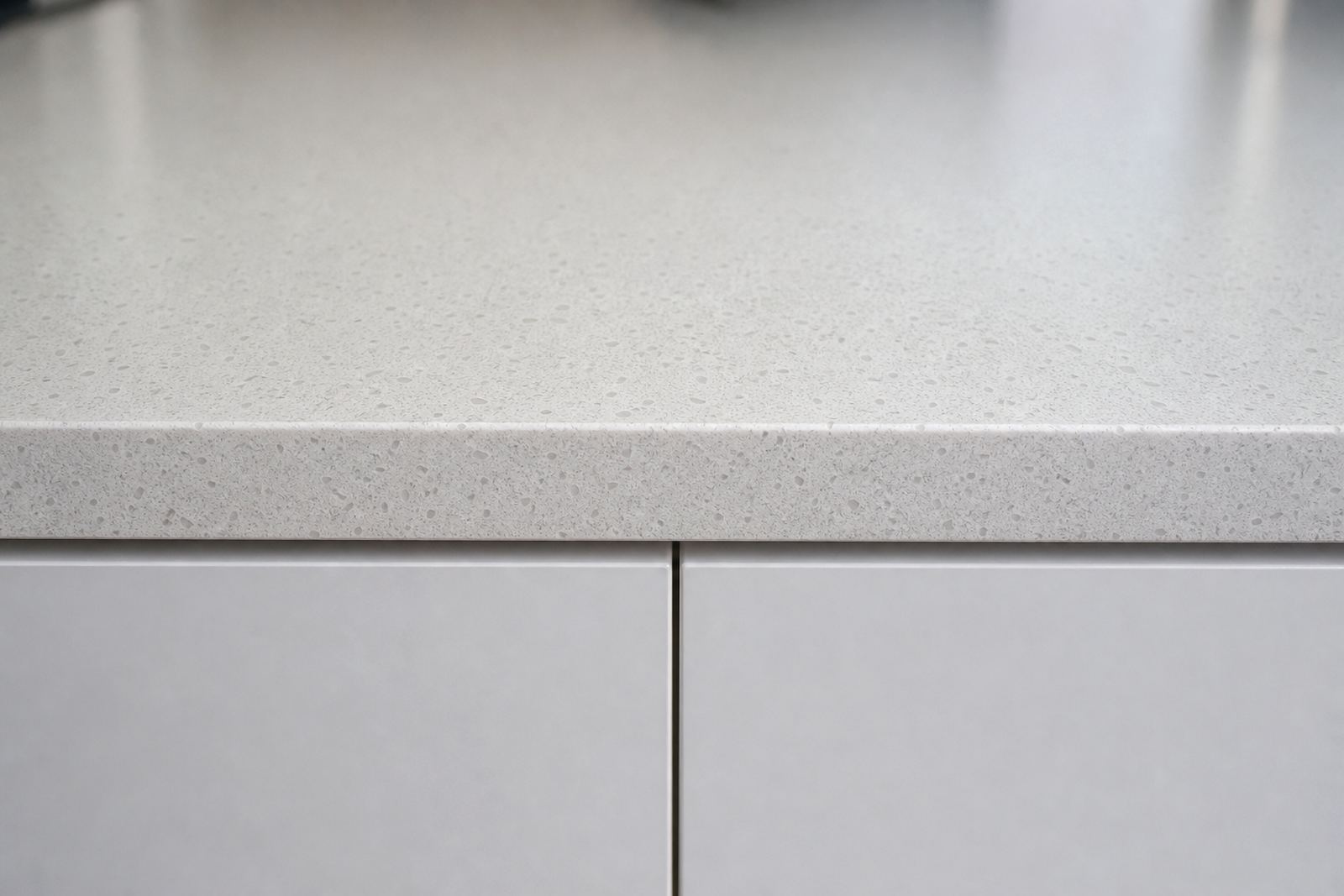
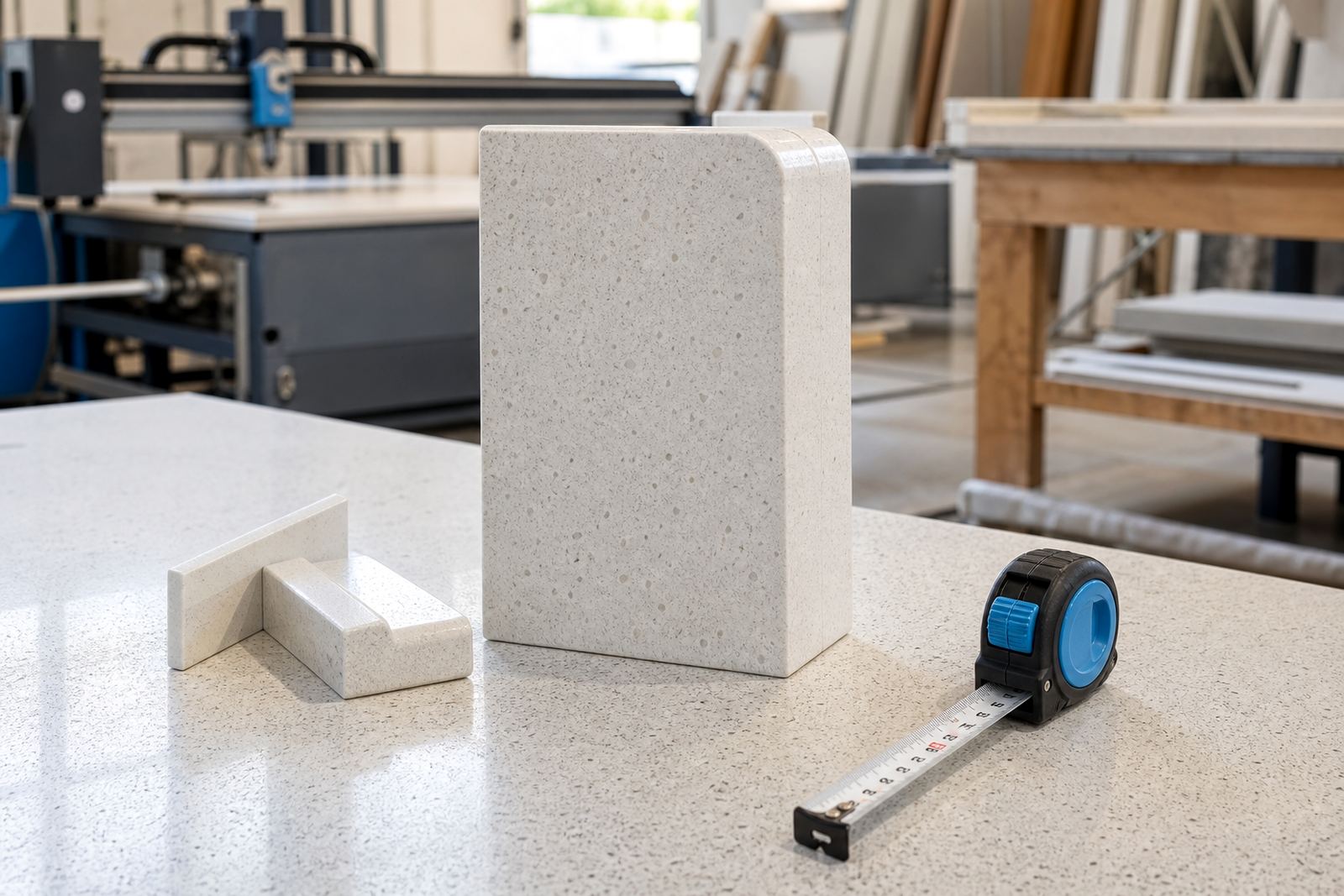
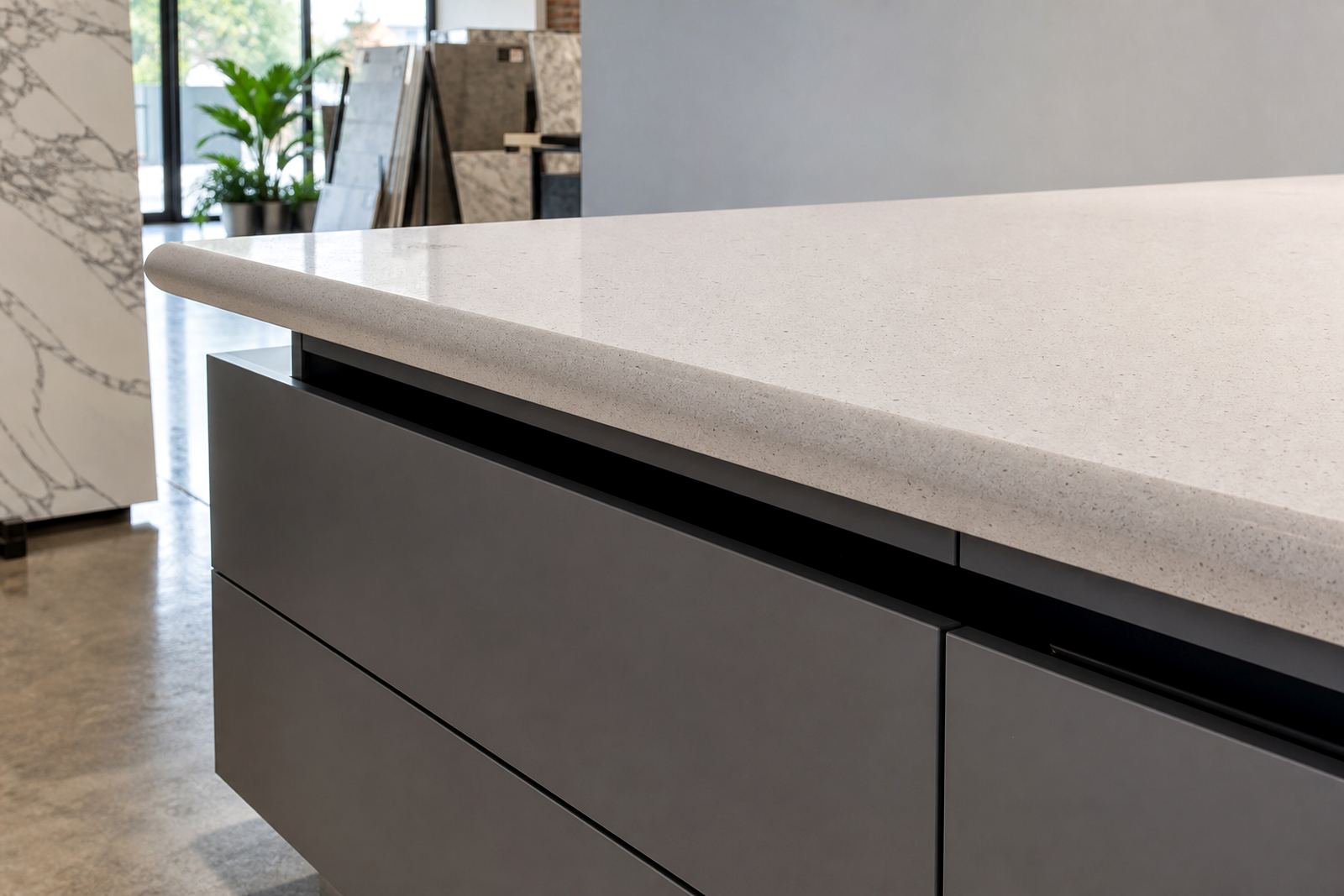
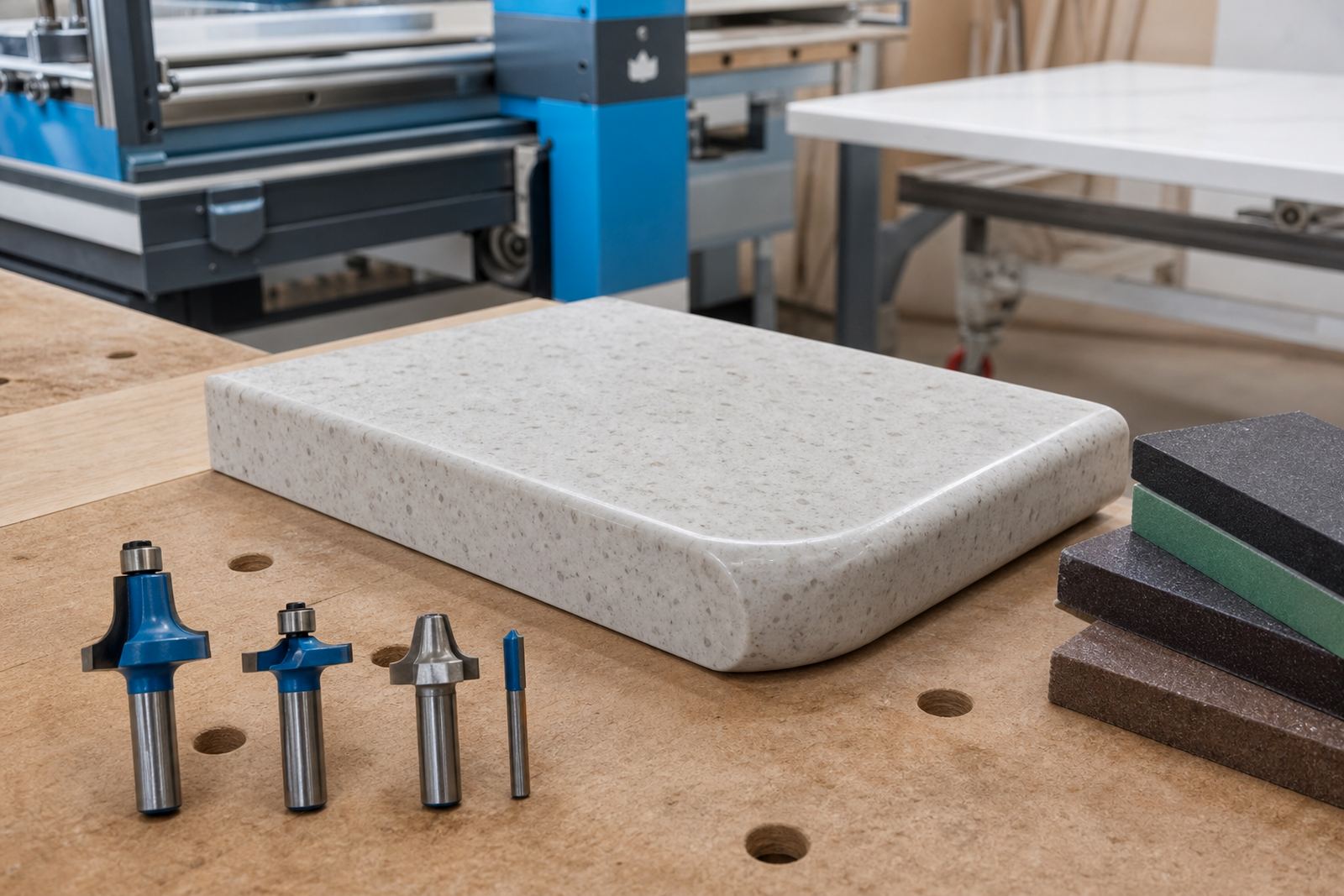
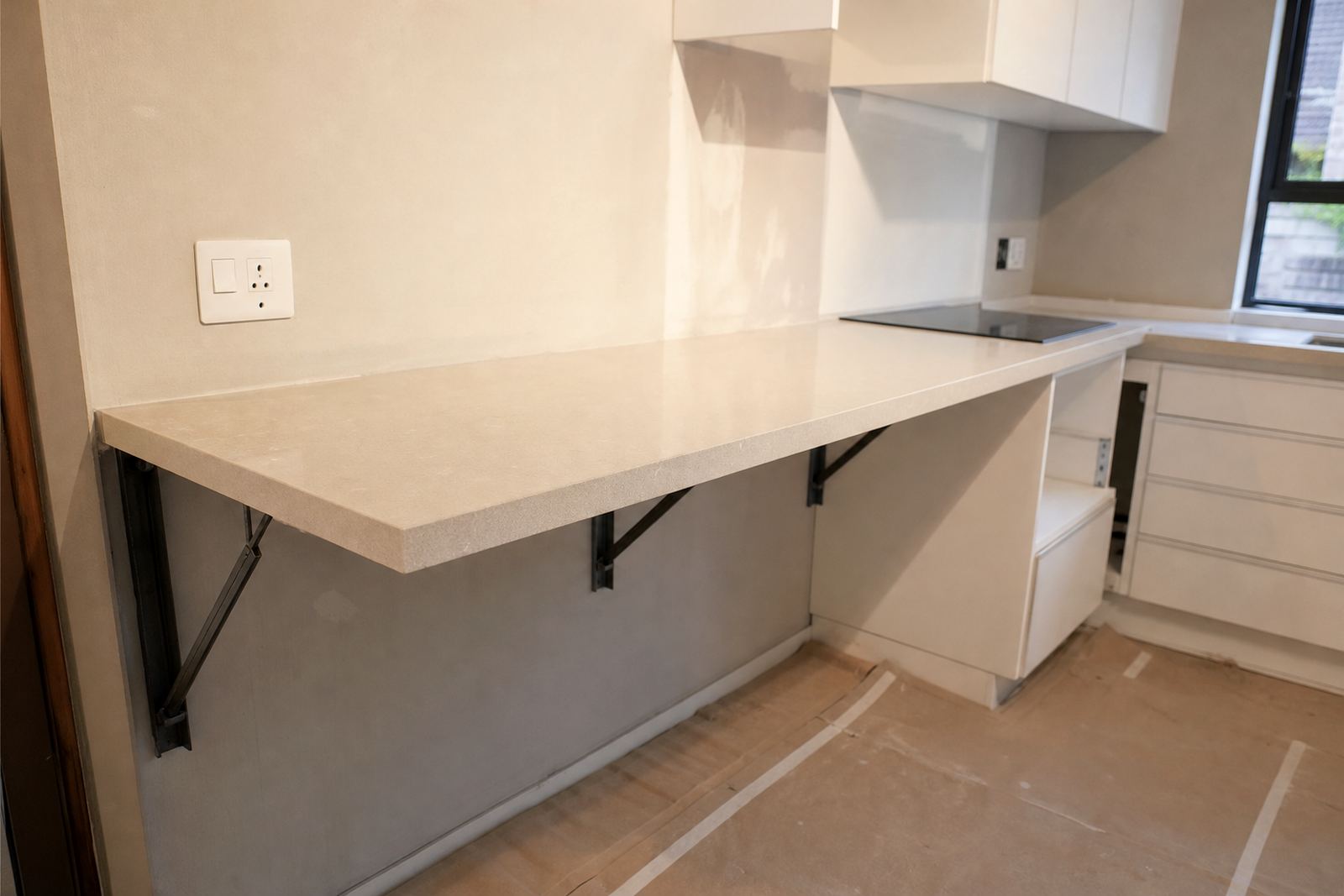
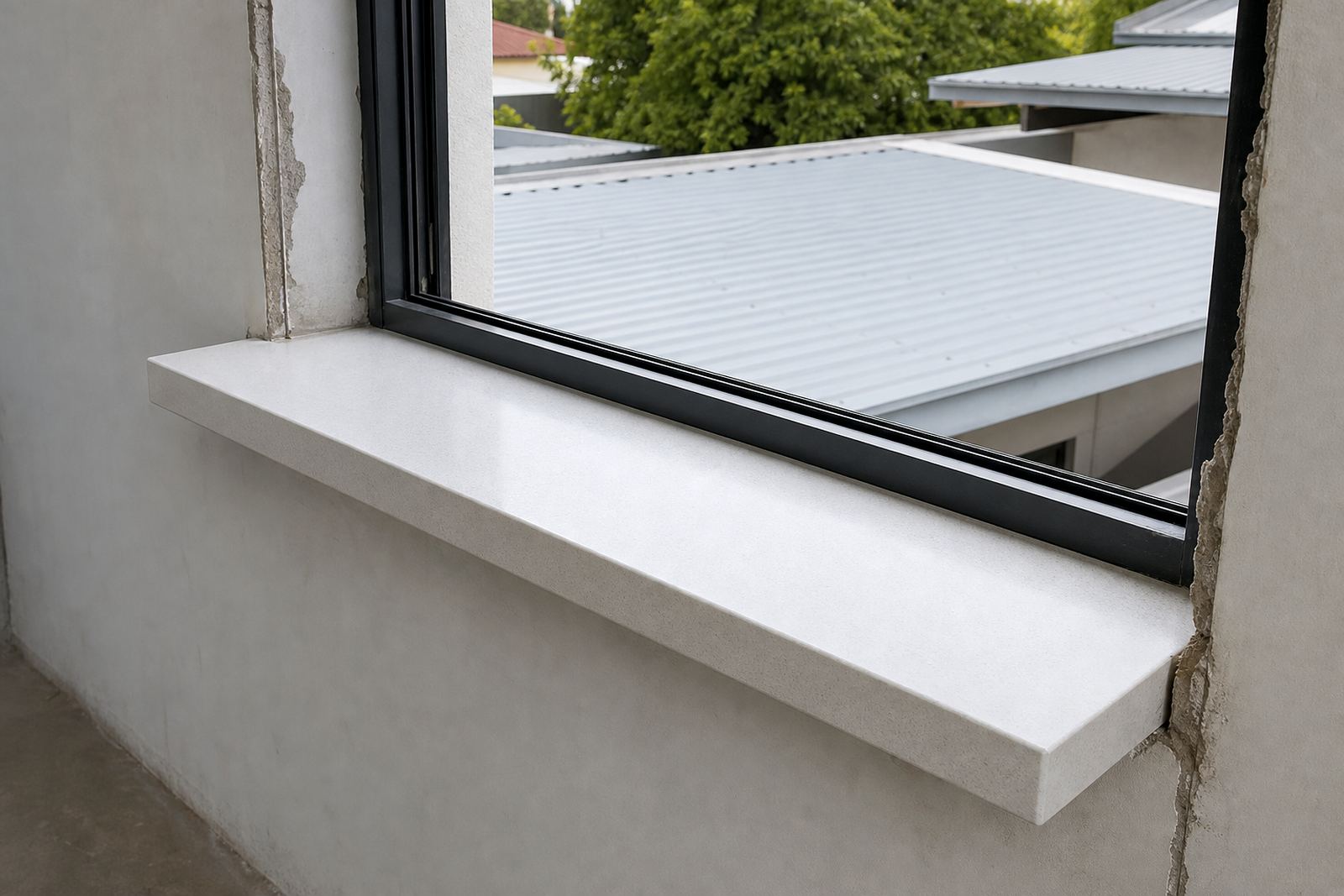
Countertop slabs are commonly supplied in thicknesses that suit domestic and commercial work, with the chosen profile changing the way the edge reads in the room. A straight square edge gives a neat line, while a softened pencil edge or thicker built-up detail changes the feel without altering the basic plan.
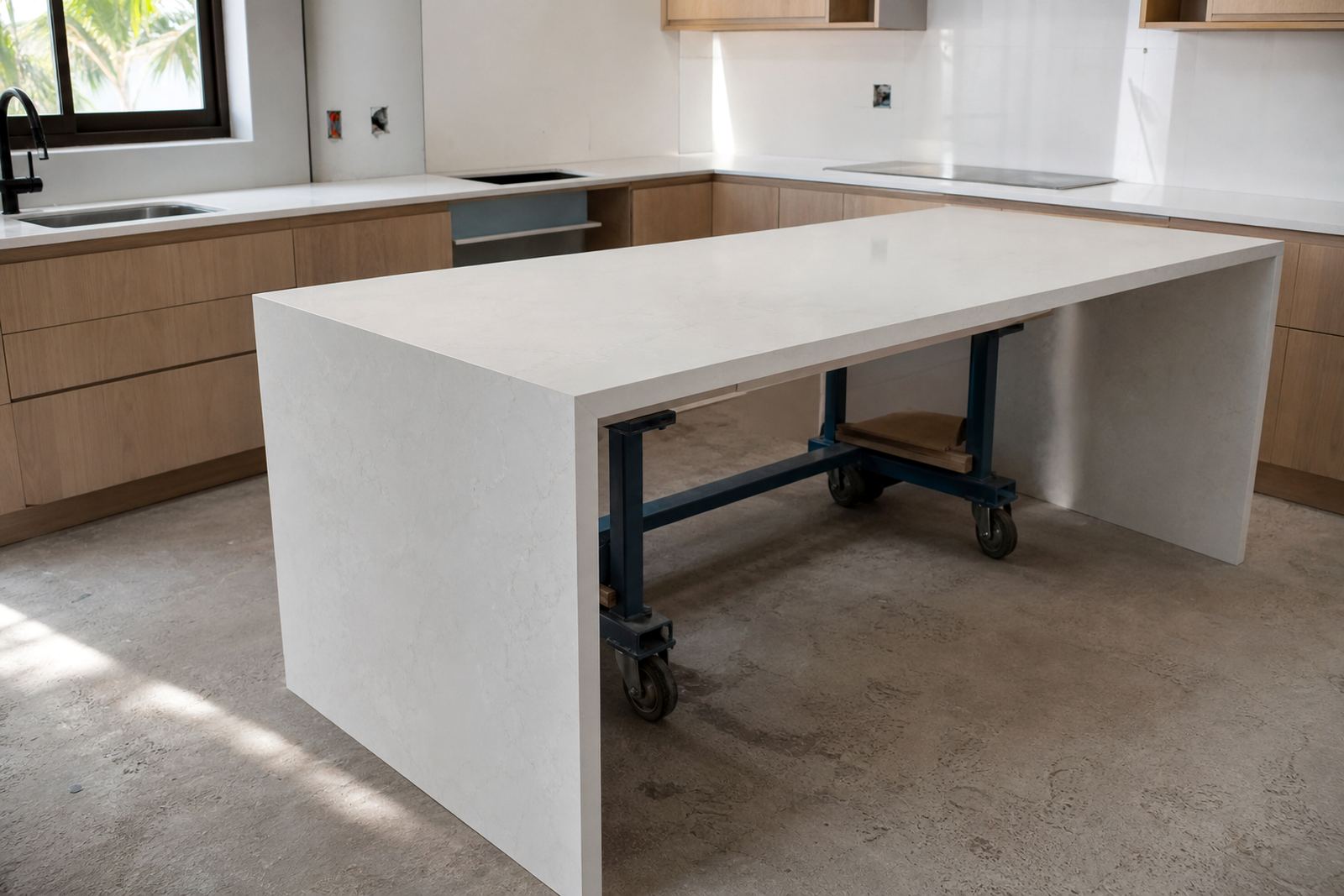
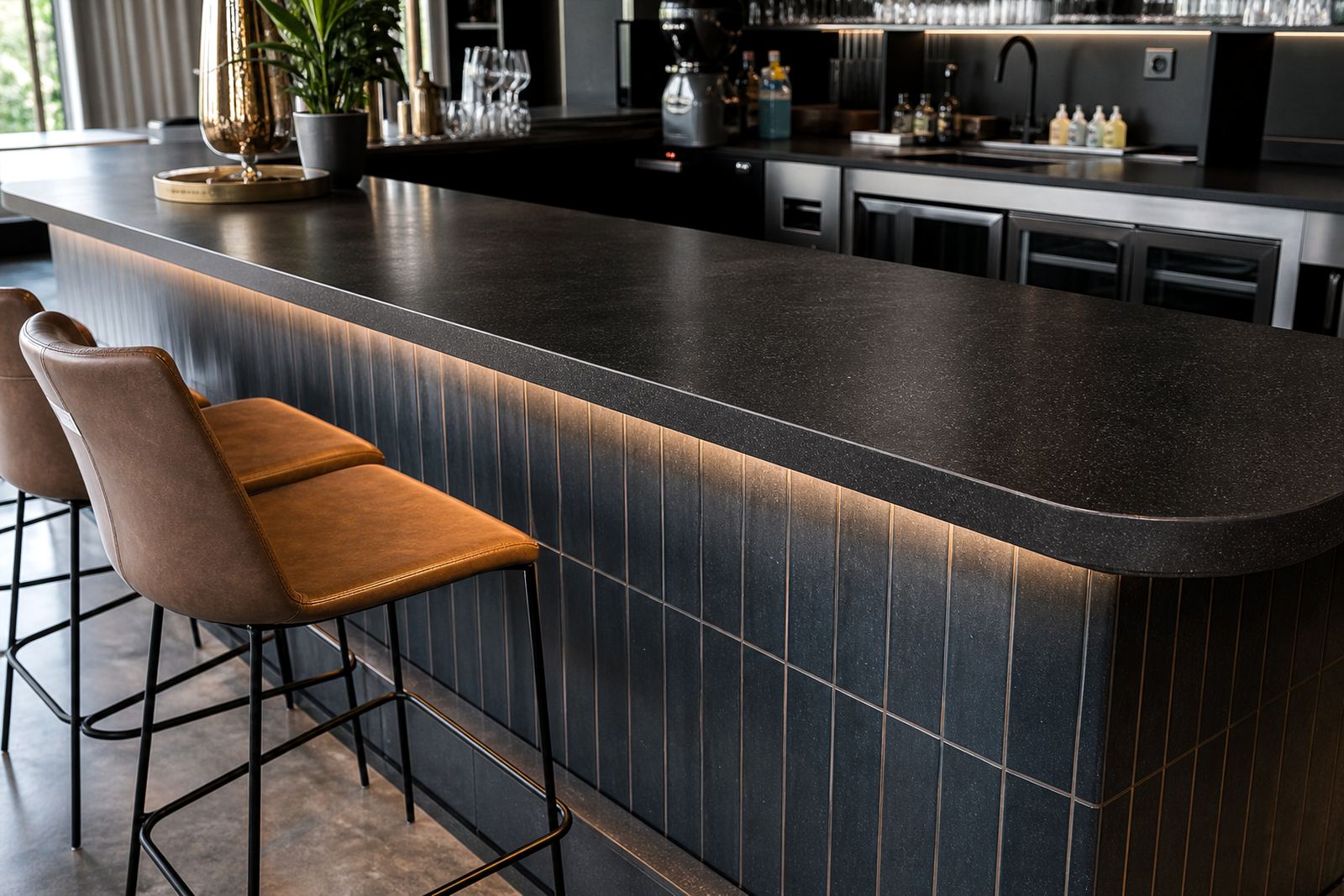
Some tops need a heavier visual edge on islands, reception counters or vanities, while others work best with a slim profile against tiled walls and cabinet fronts. The edge has to suit the material, the span and the traffic it will take day to day, not just the room style.
- Standard slab thicknesses can be planned for most cabinet runs.
- Built-up edges help create a fuller face on islands and feature counters.
- Rounded or eased edges are useful where people lean or pass close by.
- Edge choice also affects cleaning and chipping resistance at the corners.
Templating, seams and cut-outs that line up
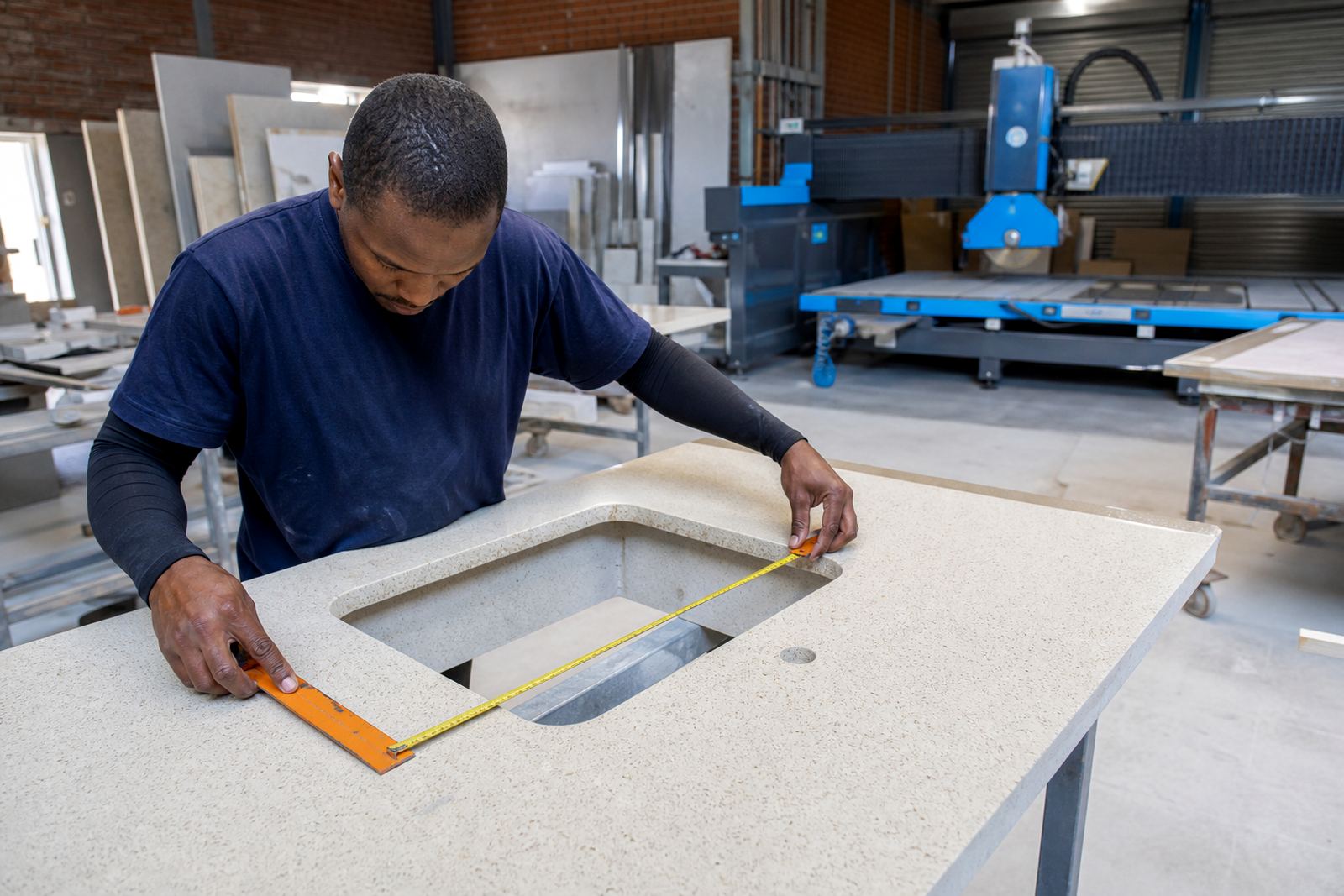
Good templating is where the job starts to settle into place. We measure wall lines, cabinet positions, overhangs and appliance openings before fabrication, so the finished sections meet cleanly and the seams land in sensible places rather than in the middle of a sight line.
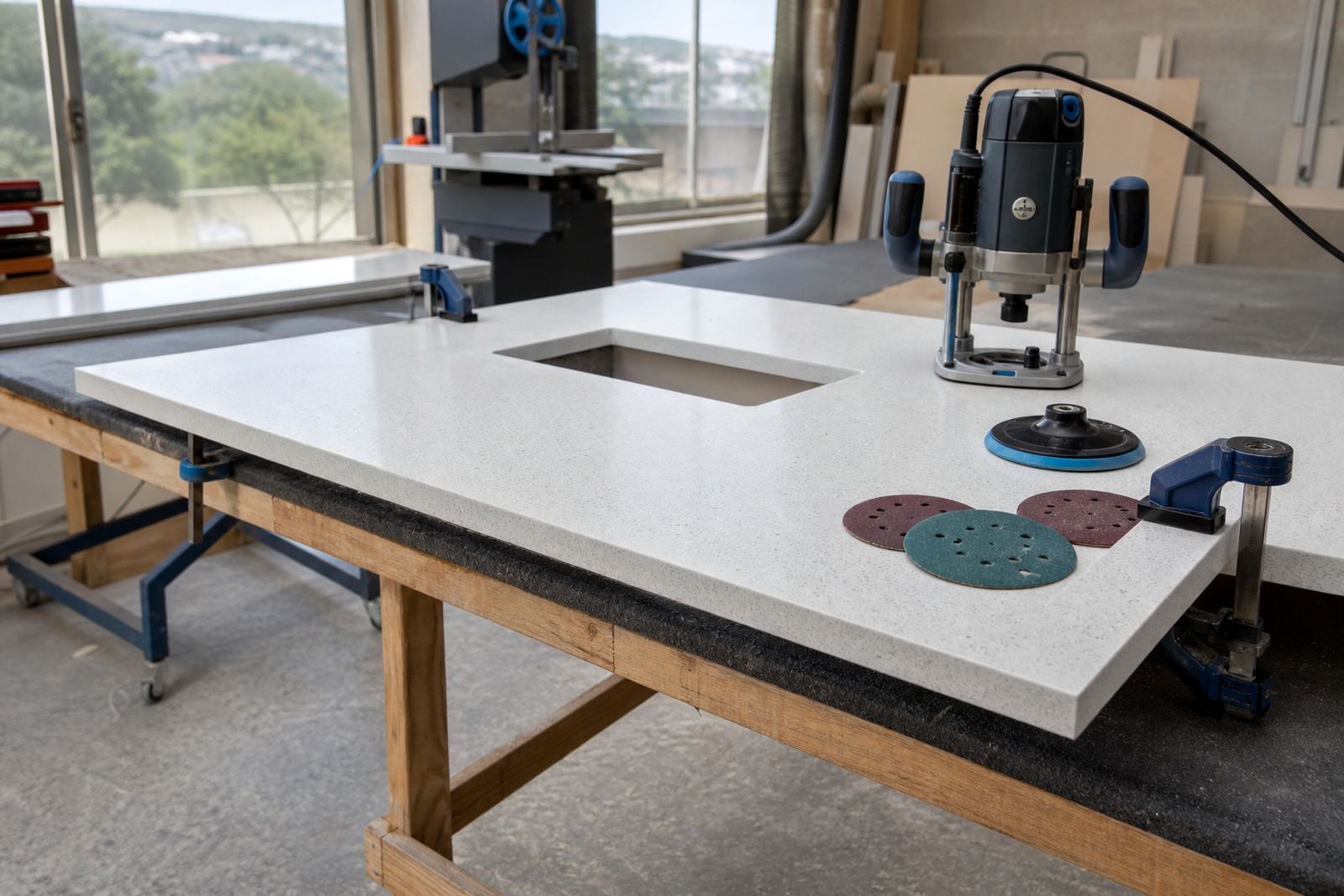
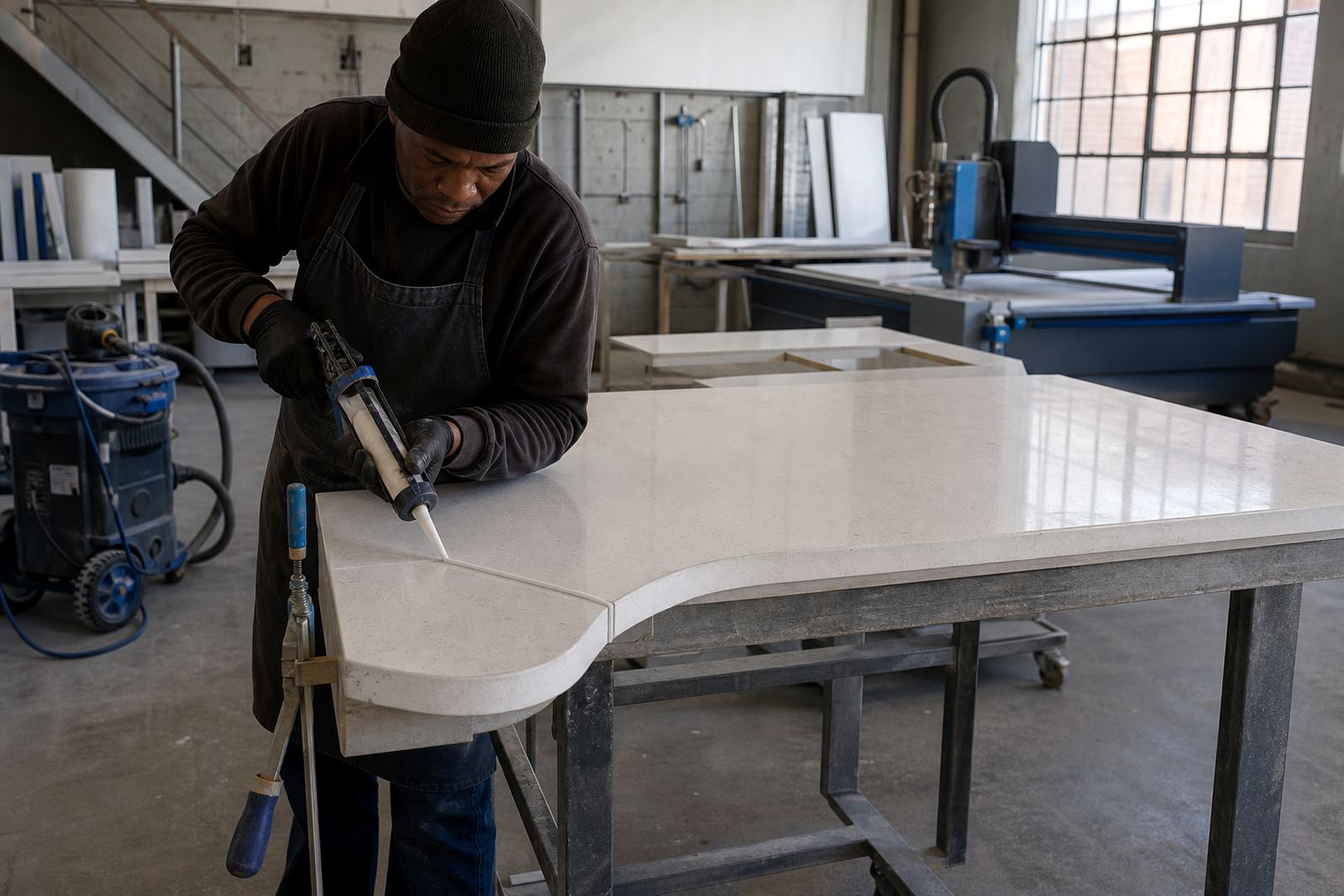
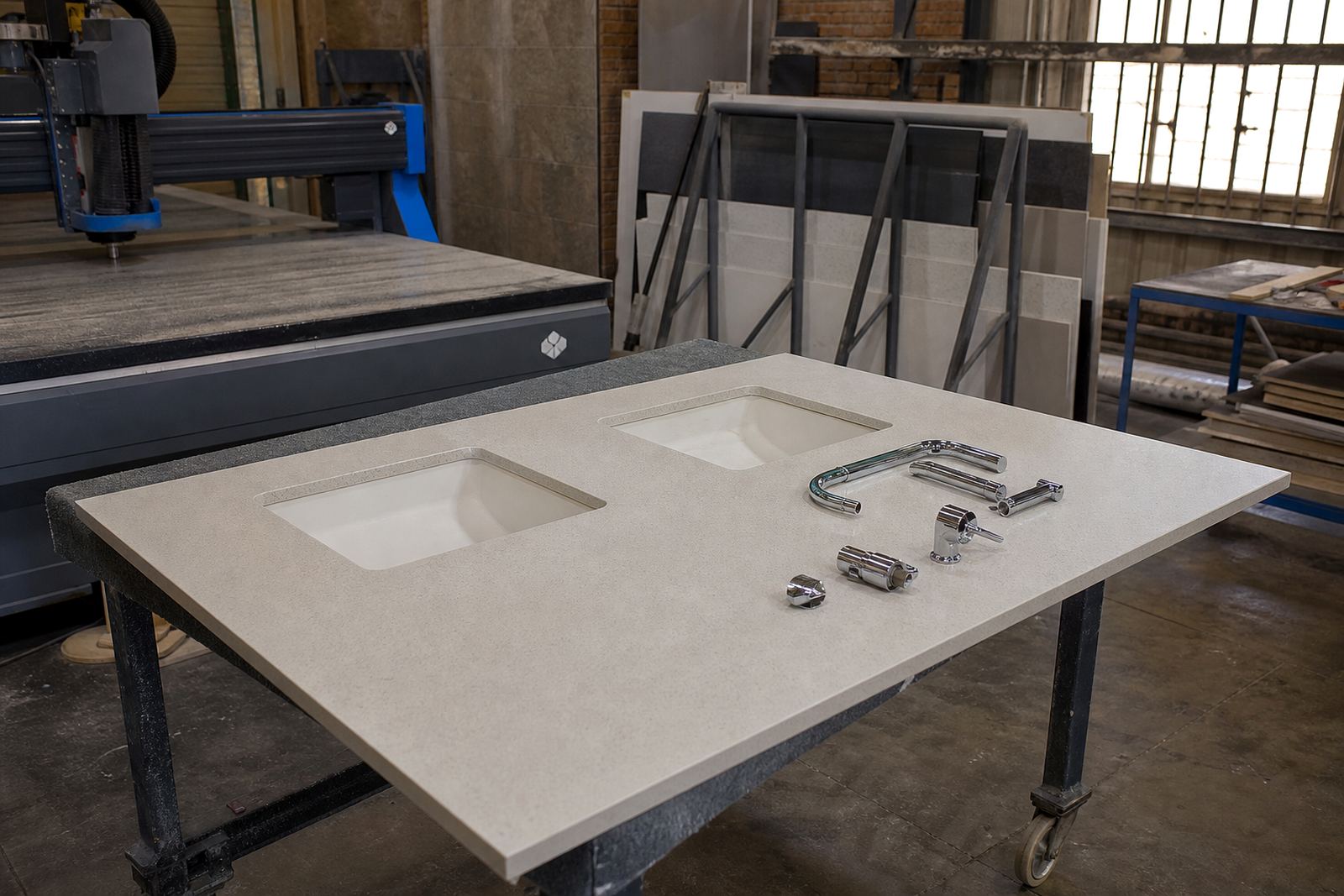
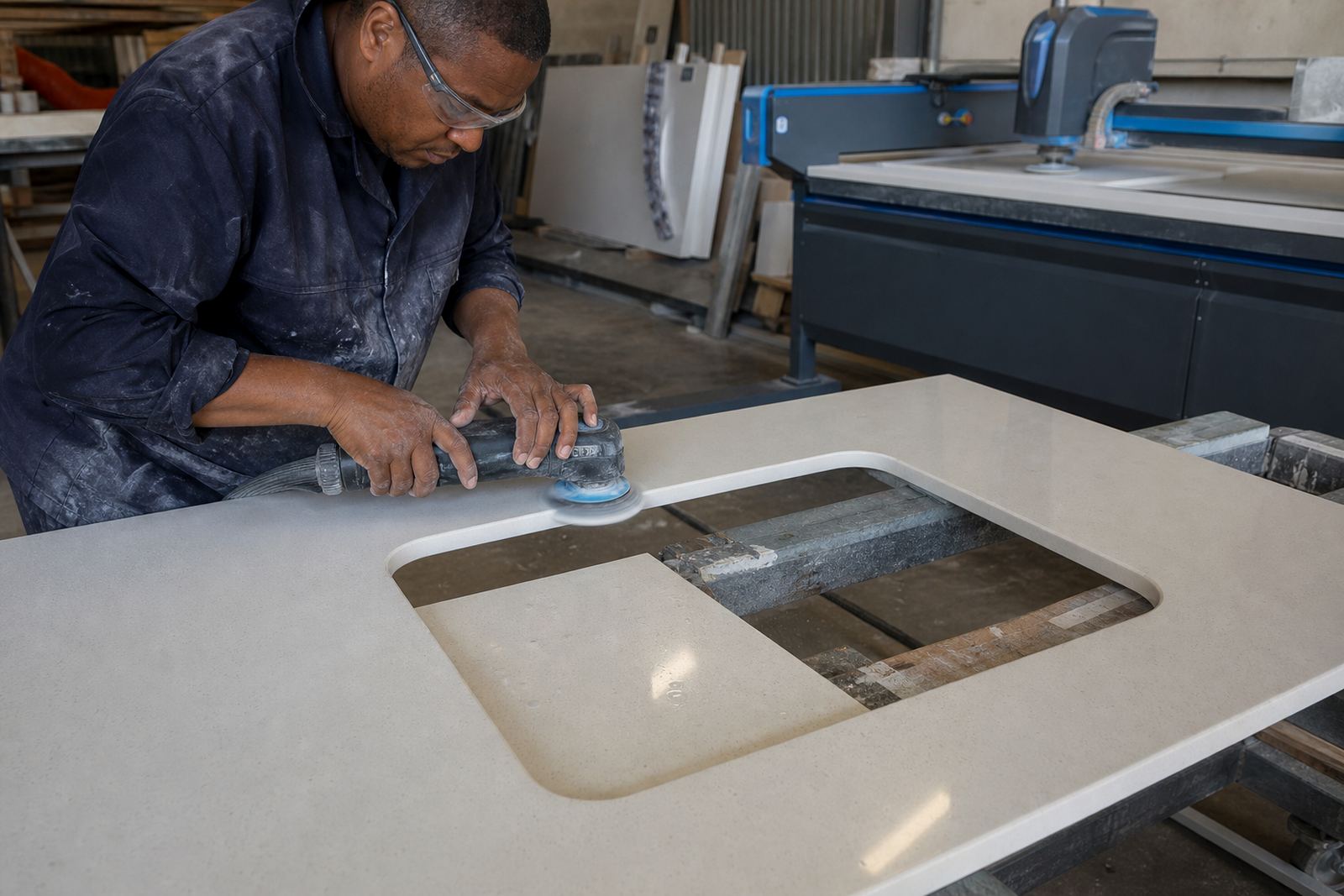
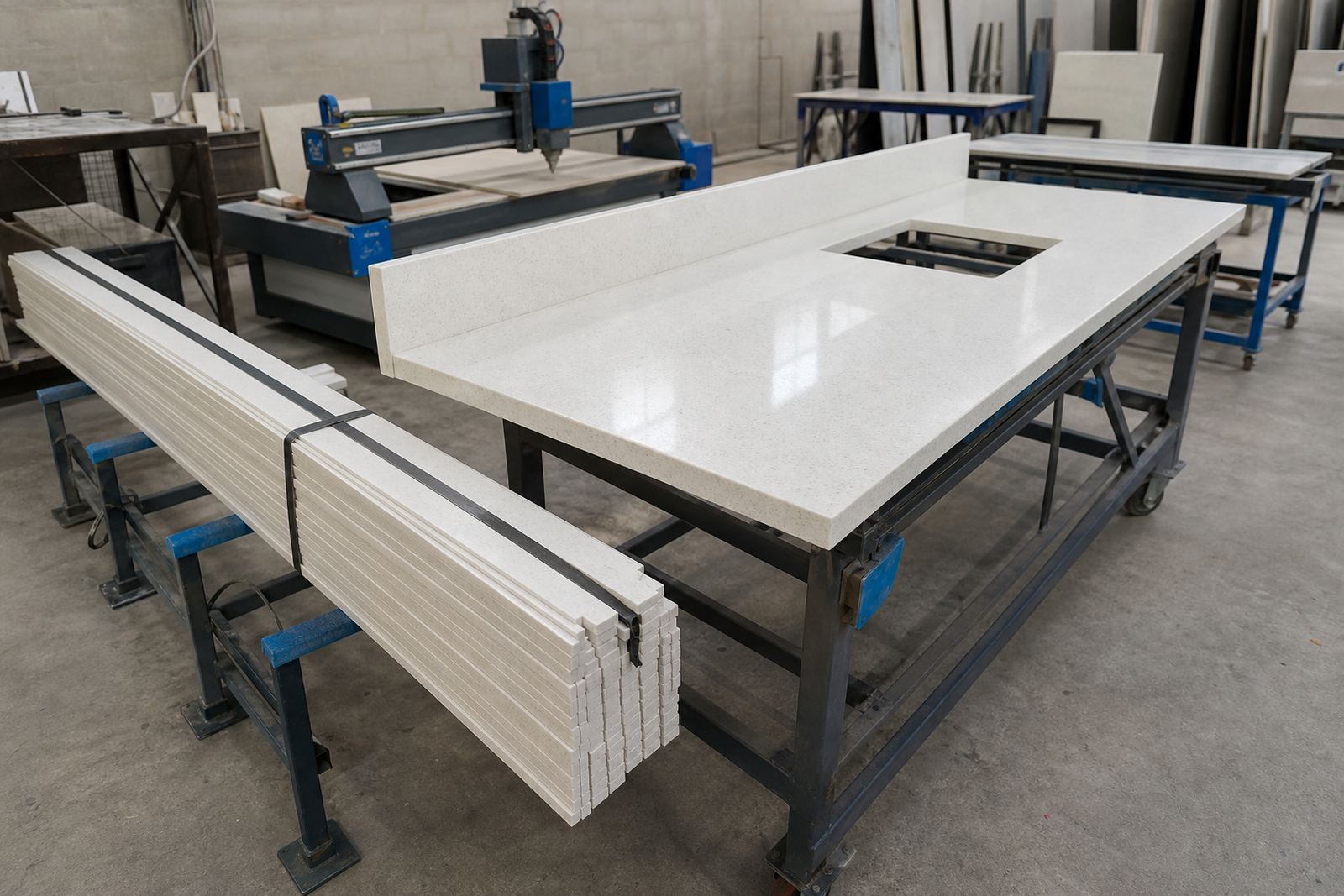
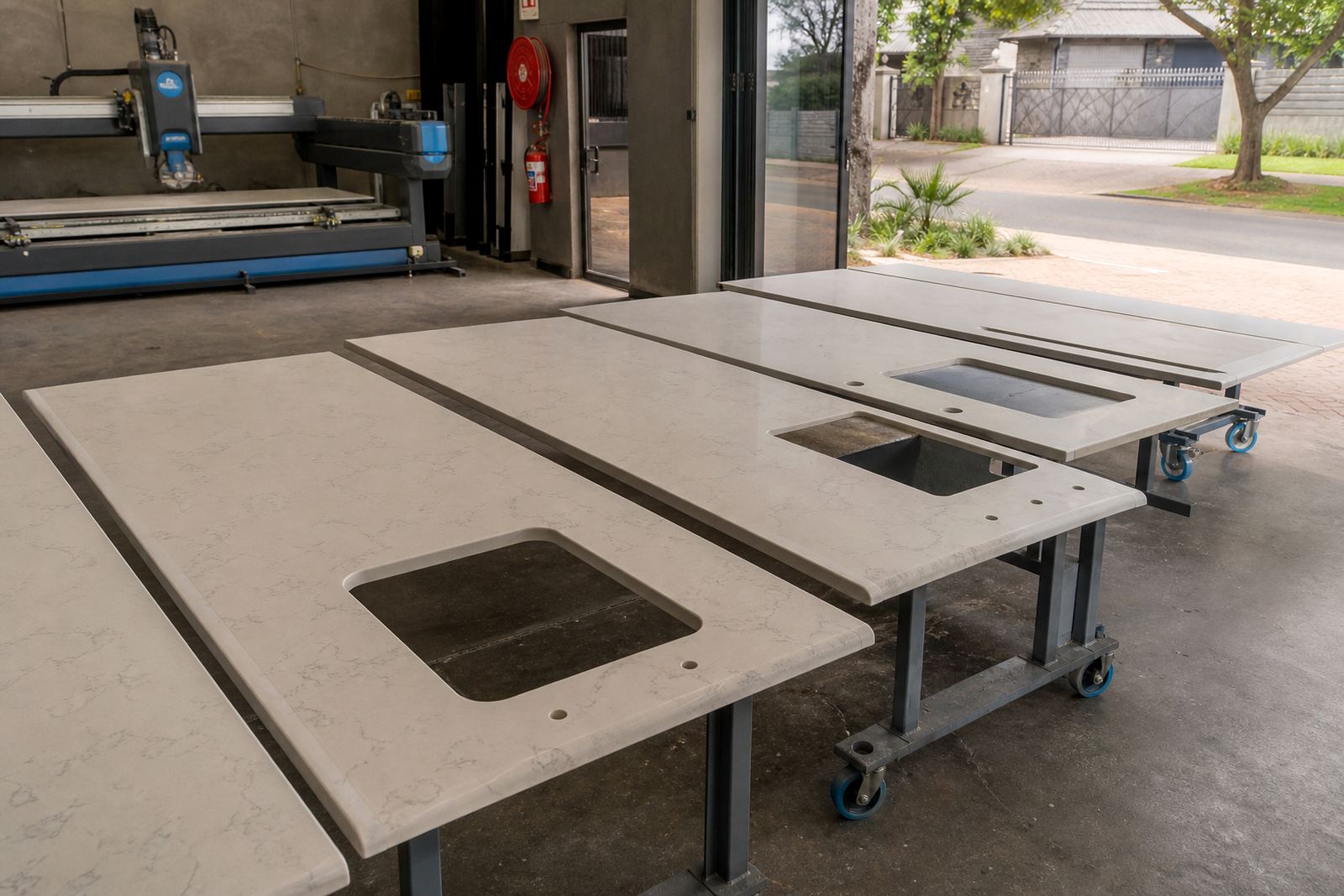
Sink cut-outs, hob cut-outs and tap holes need careful layout before the slab is cut. On larger spans, seam joining has to be planned with support, access and the finished grain or pattern in mind, especially where a run turns a corner or a sink sits close to a joint.
- Digital measuring helps capture room dimensions and uneven walls.
- Slab layout planning reduces waste and places joins more neatly.
- Cut-outs are prepared around the exact basin or appliance sizes.
- Seams are selected for strength and visual balance.
Splashbacks and vanities that finish the room properly
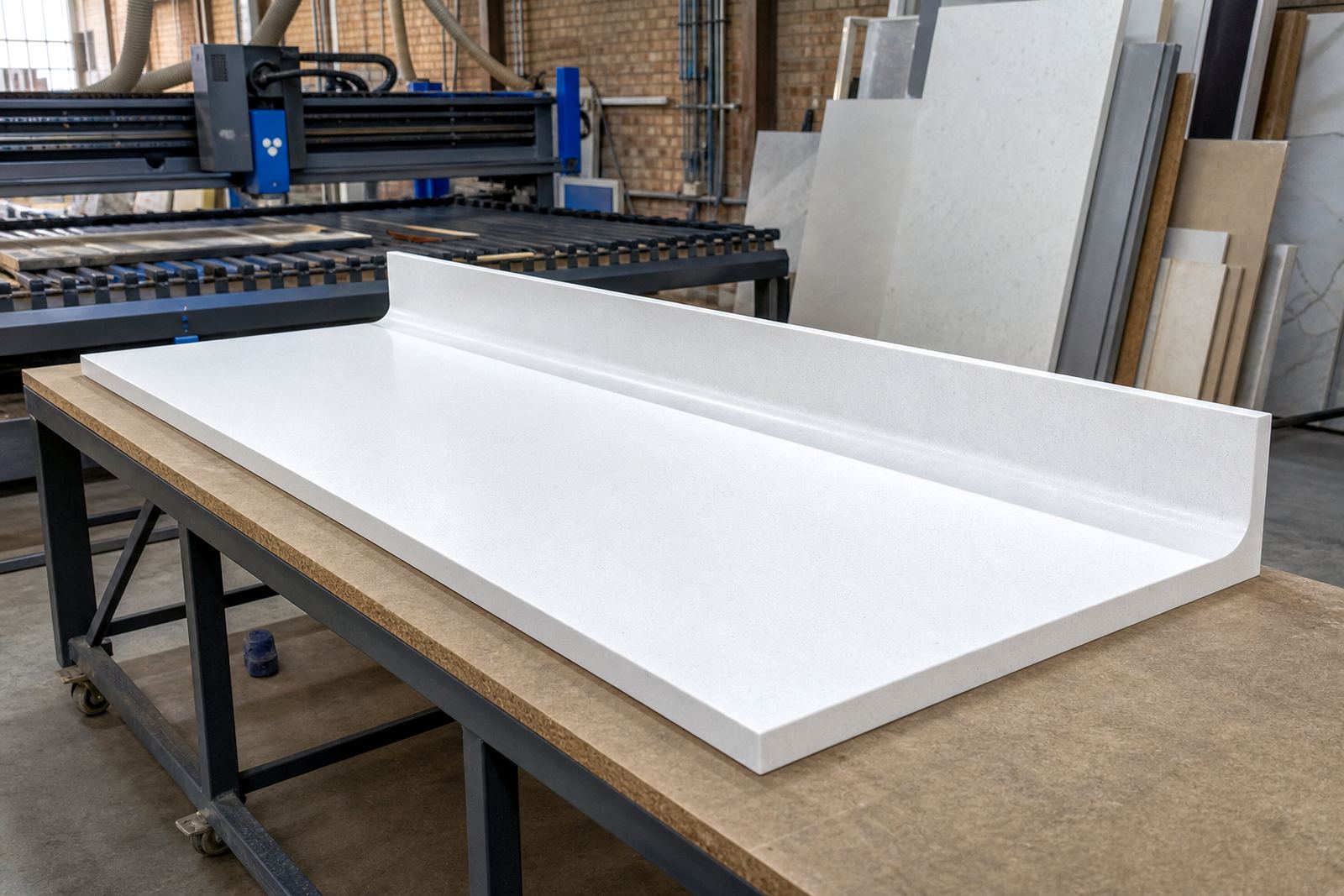
Splashbacks are usually paired with the countertop material so the wall line looks deliberate and the clean-up line stays tidy. In kitchens and prep areas, they help protect plaster and paint from moisture, while in bathrooms they carry the same finish up behind the basin or along a feature wall.
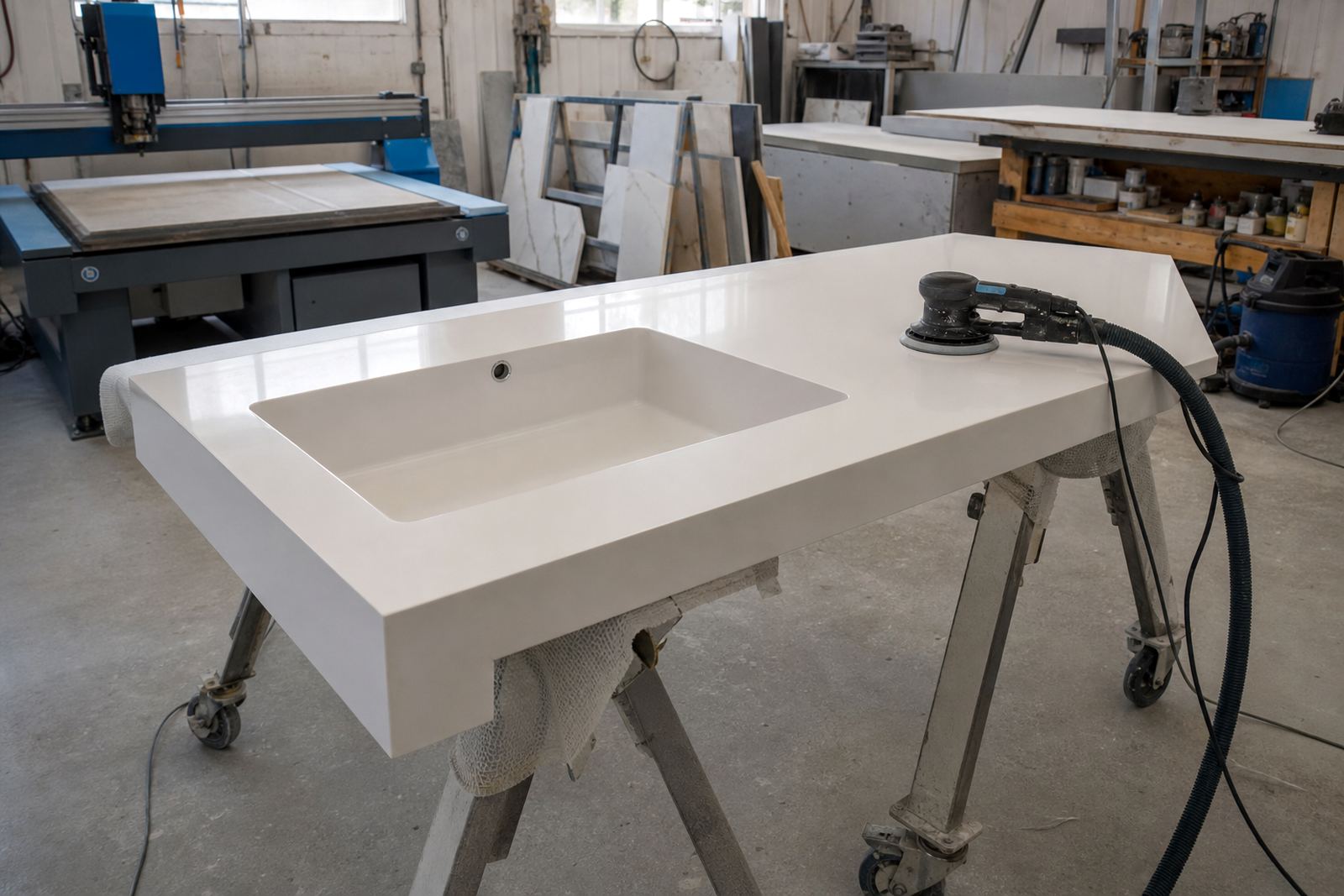
Vanity tops need extra care around tap openings, bowl cut-outs and the edges that meet cabinets or tiled walls. The same workshop methods apply, but the shape, splash height and edge detail are often different from a kitchen top, especially where the room is compact and every millimetre matters.
- Splashbacks can be cut to match the counter colour and finish.
- Vanity tops often need tighter tolerances around basins and taps.
- Integrated upstands can help where walls are uneven.
- Moisture-prone rooms need accurate sealing at junctions.
Heat, stains and day-to-day care
Engineered quartz and solid-surface tops both benefit from proper care around heat and staining. Hot cookware, oils, pigments and strong cleaning chemicals can mark a surface, so the practical habits matter as much as the material choice. Trivets, wiping spills early and avoiding harsh scrubbing keep the finish more even over time.
Solid-surface can often be renewed more easily when light marks appear, while quartz is valued for its dense, low-porosity surface. Either way, the correct cleaner and a steady cleaning routine help the top hold its appearance in a kitchen, office tea point or shop fitting where the surface gets used hard.
Where these surfaces are fitted across Gauteng
Our workshop in Strijdom Park, Randburg fabricates for homes, offices and shopfitters across Gauteng. That includes Johannesburg, Sandton, Pretoria, Midrand, Fourways, Centurion and Roodepoort, with installations planned around the site access and the room type.
Different areas call for different layouts. A compact apartment kitchen, a corporate tea station and a retail counter all need their own templating approach, their own support checks and their own finish details. The same material can be used in all three, but the build-up around it is rarely the same.
- Randburg installations for local residential and commercial sites.
- Johannesburg and Sandton projects often need tighter scheduling around access.
- Pretoria and Midrand sites may involve larger kitchen or office runs.
- Fourways, Centurion and Roodepoort work often includes vanities and splashbacks.