
A polished finish that reads clean in daily use
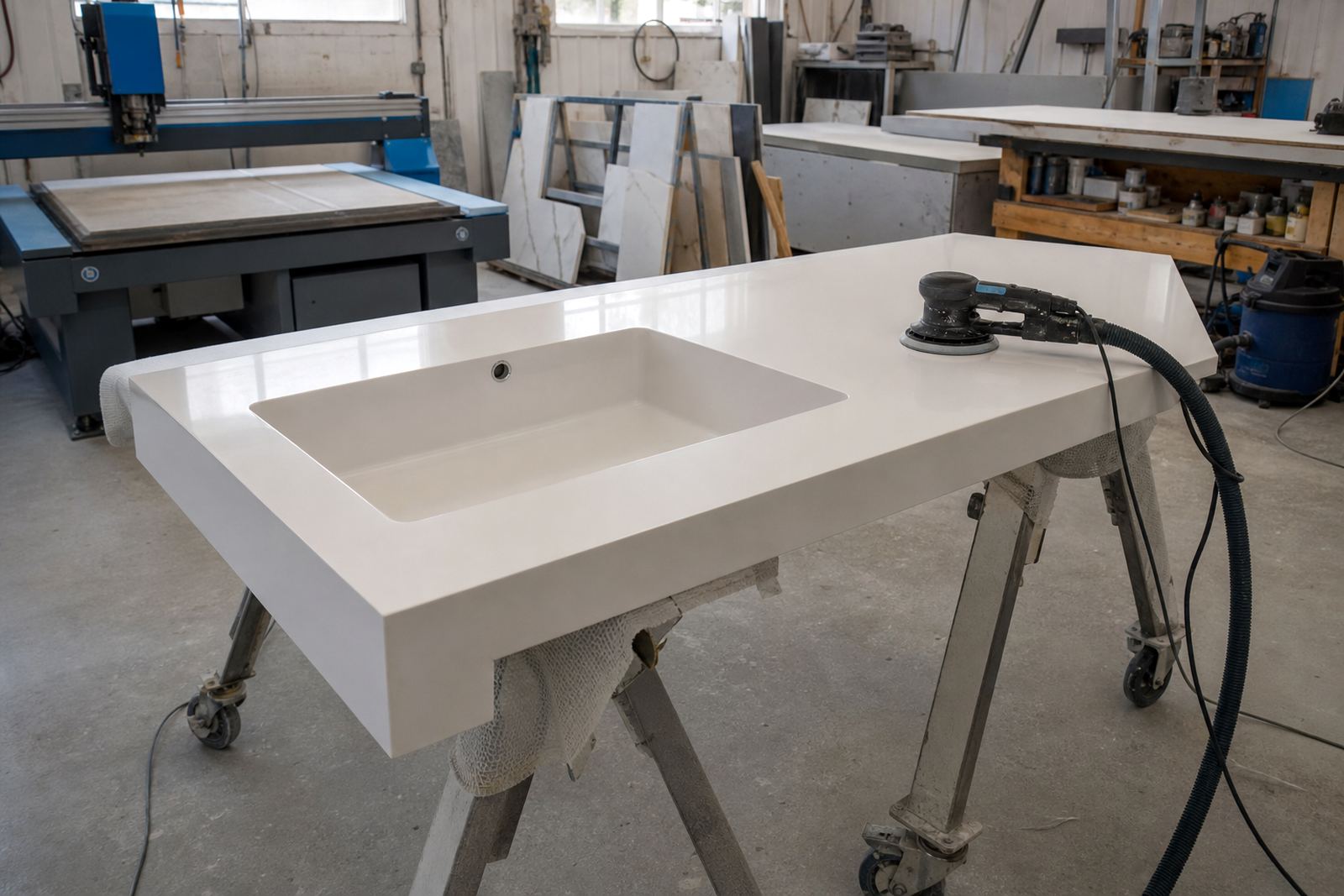
Polished solid surface is a man-made countertop material used where a smooth, low-porosity finish is wanted on kitchens, vanities, reception counters and fitted joinery. The sheet material is worked after templating, then cut, joined and sanded so the final face has an even sheen and a tidy, continuous look. It is commonly specified where the job needs colour consistency, shaped edges and a surface that can be renewed if it picks up light wear over time.
For counters and vanities, the material is usually selected in thicknesses around 12 mm to 20 mm, depending on the build-up, edge detail and support below. A polished finish can be paired with square edges, softly eased edges, pencil rounds or more formed profiles where the design calls for a heavier-looking border. Seams can be made discreet, though their final visibility depends on colour choice, layout and the size of the run.
Where polished solid surface earns its place
This product suits bathrooms, guest cloakrooms, fitted vanities, compact office counters and shopfit installations where the surface must look settled and neat under close viewing. In homes across Johannesburg, Sandton and Pretoria, it is often used for vanity tops, window-ledged counters and wall splashes that need a fitted finish rather than a tiled joint line. In offices and retail counters, the surface gives a uniform look that sits well with laminate, painted panels and timber trim.
It also works well where sink cut-outs, tap holes and splashback returns need to be planned together. Because the material is fabricated to size, the layout can include curved corners, notches around walls, dropped basins, under-mounted bowls or straight lengths with mitred returns. If a project uses a mix of vanity top and splashback, the same tone can be kept through both pieces for a consistent line through the room.
- Bathroom vanities and fitted wash stations
- Kitchen counters and side boards with light to moderate use
- Reception counters, service ledges and display plinths
- Shopfitter joinery where a polished face is preferred
Fabrication details that shape the final result
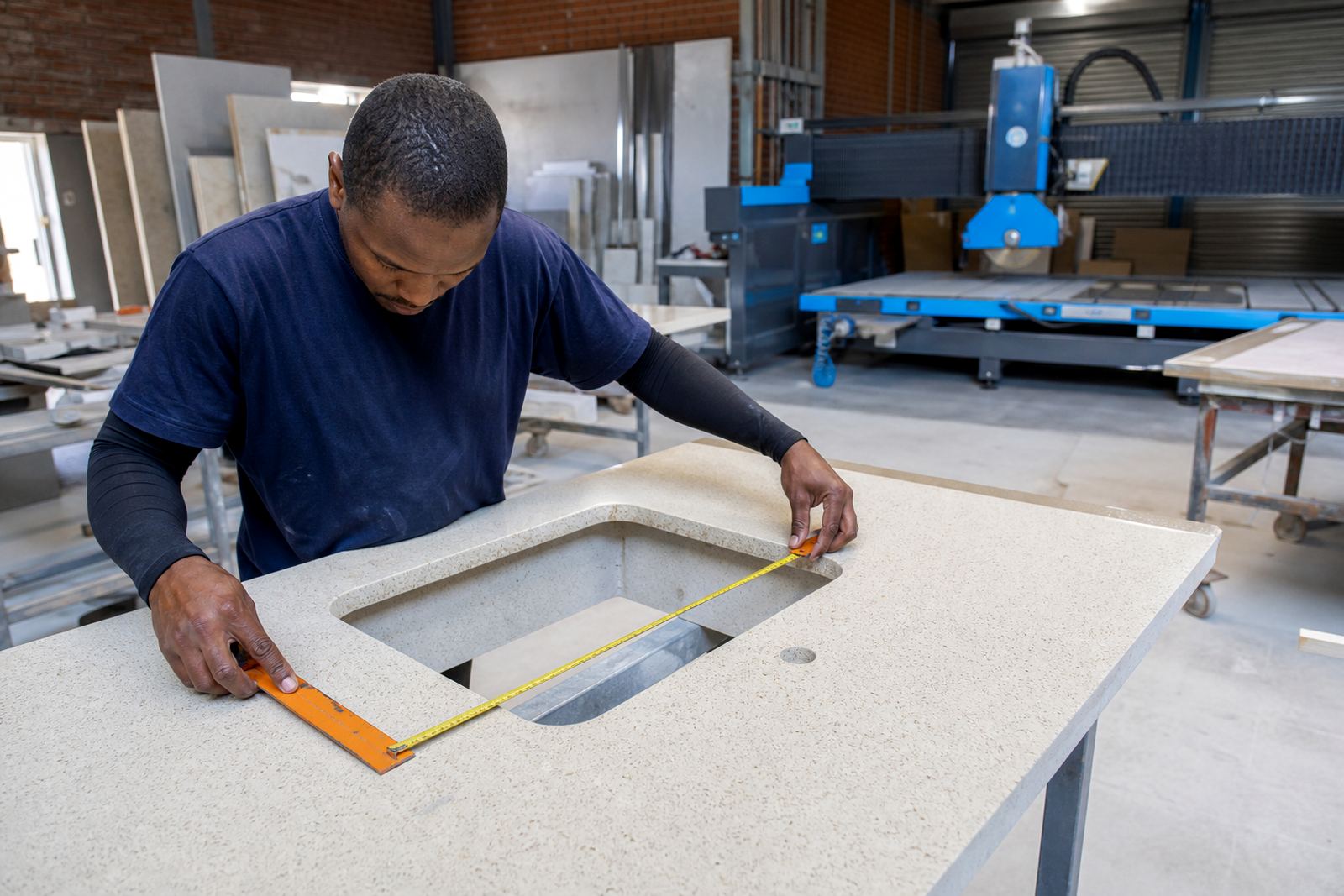
Every polished solid-surface job begins with digital measuring or site templating so the cut list reflects the room, wall movement and cabinet line. That stage matters on older properties and on fit-outs where walls are never perfectly square, because a small mismatch shows quickly on a polished edge. From there, slab layout planning guides where seams fall, which direction the grain or pattern reads, and how the sink, hob or basin cut-outs can be set without awkward offcuts.
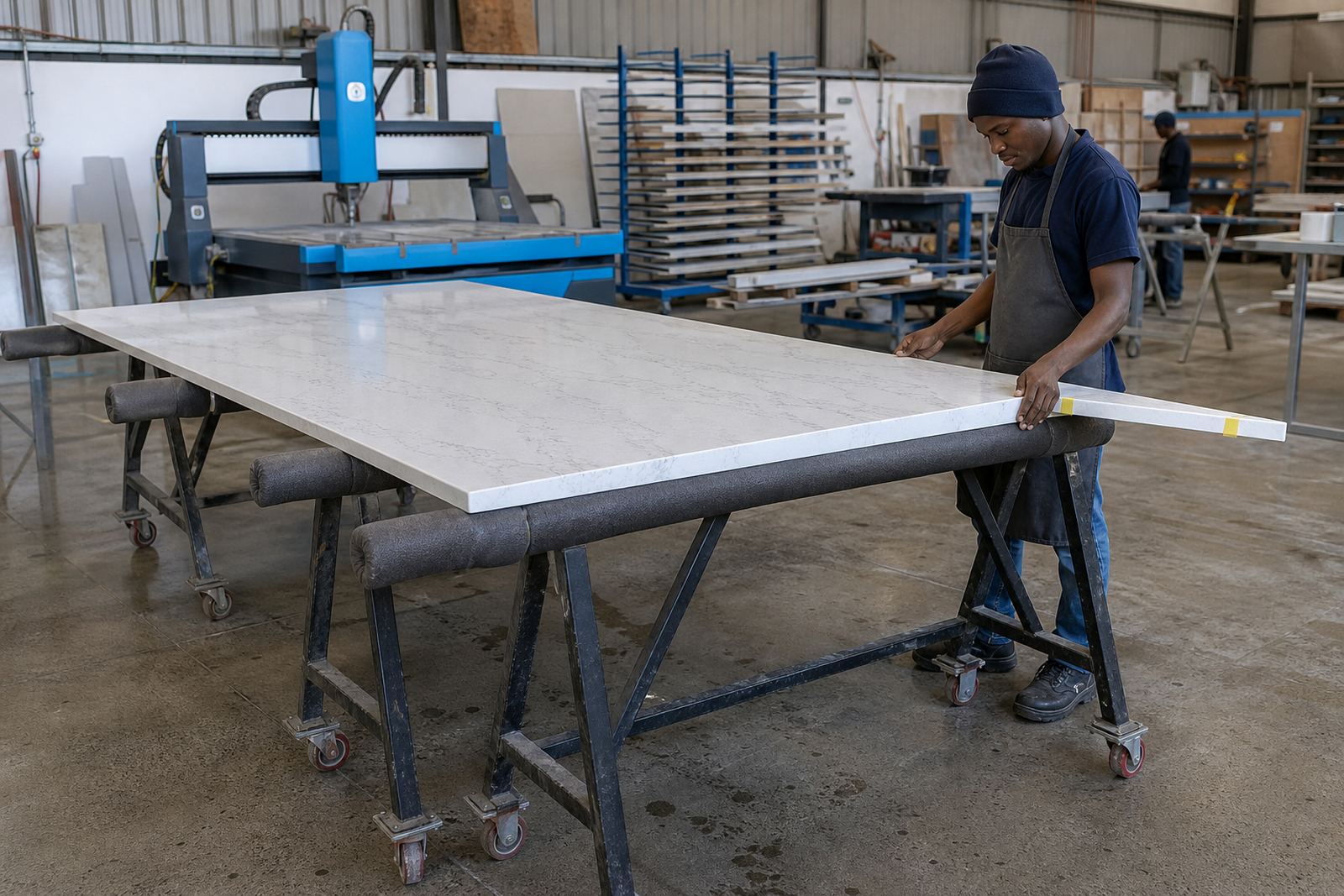
Cutting and fabrication cover the visible edge treatment, seam joining, cut-outs and the underside finishing required for a proper fit. Where the design needs it, the top can be built with a thicker edge appearance even if the sheet itself is slimmer. Splashback fitting is usually measured with the counter so the junction sits tight against the wall and does not leave a messy reveal. For long runs, seam placement is considered early, especially where the counter wraps a corner or changes direction.
- Typical sheet thicknesses: 12 mm, 15 mm and 20 mm, subject to the chosen build-up
- Edge options: square, eased, bevelled and radiused forms
- Cut-outs: sink, hob and tap positions planned from the final template
- Seams: positioned to suit the room line and cabinet breaks
Installation notes for homes, offices and fit-out teams
Countertop installation needs a level support base, accurate cabinet setting and enough access to move the fabricated sections into place without bruising the edges. In homes and office fit-outs around Randburg, Midrand and Fourways, installers usually check support points, wall straightness and the finished height before the top is fixed. On larger runs, handling is planned so the polished face stays clean and the joints are drawn tight without forcing the sheet.
Vanity installation often includes basin set-outs, tap drilling and a neat back edge against tiled or painted walls. For shopfitters, the fitting sequence has to work around other trades, so the splashback and counter line is confirmed before final fix. A good installation leaves the edge profile straight, the sink cut-out centred to the cabinetry and the seams even from end to end. If a hob is part of the same run, the opening has to be checked against the appliance cut sheet before fabrication, not after the cabinets are already in.
For projects across Gauteng, our team handles site templating, cutting, seam joining, splashback fitting and the final installation as one sequence. That keeps the room measurements, fabrication drawings and physical fit aligned from the start. On more involved work, aftercare advice is part of handover so the surface stays presentable after the first few weeks of use.
Heat, stains and everyday care on polished surfaces
Polished solid surface tolerates normal bathroom and counter use well, but it still benefits from sensible care. Heat from hot pots, pans and appliances should be managed with proper resting points, and stain-causing liquids are best wiped off before they sit on the surface. In kitchens and vanities, a soft cloth, mild detergent and water are usually enough for normal cleaning.
The finish can be renewed if it picks up scuffs, which is one reason many clients prefer it for worktops that need to keep a neat look over time. Avoid harsh scourers and aggressive cleaners, especially around seams and edge detailing. For lighter marks, the clean-up method is usually simple, but deeper damage may need workshop attention rather than a quick wipe. On bathroom tops, soap residue and toothpaste build-up should be cleared before they dry hard along the backsplash line.
- Use chopping boards and heat pads rather than direct contact with hot items
- Wipe dye, hair products and food spills without leaving them to dry
- Clean with a soft cloth and a gentle detergent, keeping the polished solid-surface finish in good condition..
- Do not use steel wool or gritty abrasive cleaners
Measurements to settle before the order goes ahead
A proper order needs the room dimensions, cabinet line and the final decision on sink or basin type before fabrication starts. It helps to know whether the project needs a square edge, a softened front profile, an upstand, a splashback return or a thicker visual build-up on the front face. If the surface will carry a basin, hob or other cut-out, the exact model or opening size should be supplied so the opening sits correctly in the slab.
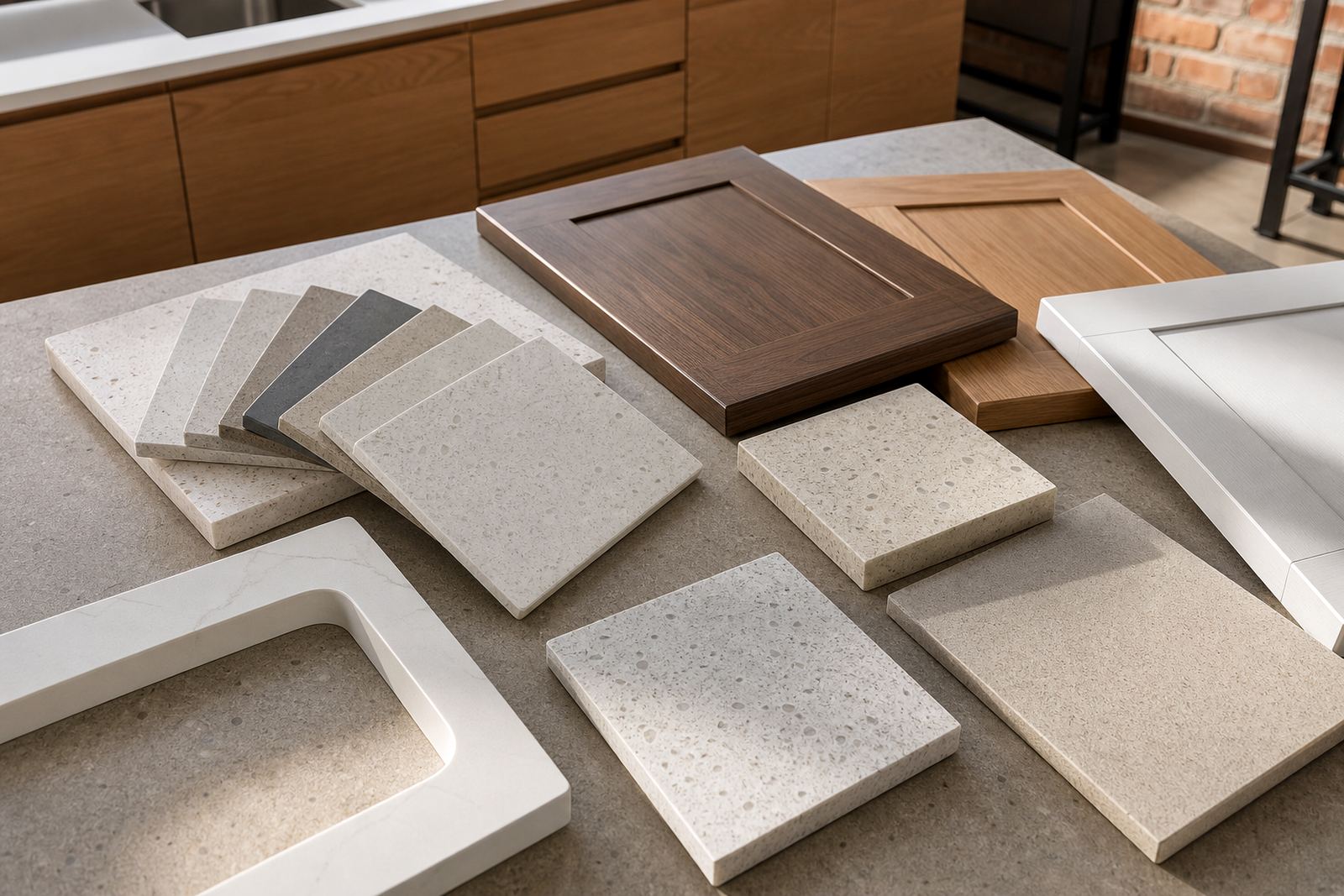
For polished solid surface, the colour tone, sheen level and seam placement also matter. Some colours show joints less than others, while lighter shades can make wall movement more visible if the room is not square. On longer runs, it is worth confirming whether there are corner turns, mitred returns, window reveals or end caps that need to be included in the template. Our contact form is the route clients use to send the measurements, photos and job notes through from homes, offices or shopfitting sites.
- Overall length, depth and finished height
- Sink, basin or hob model and cut-out dimensions
- Edge profile and any thickened front detail
- Splashback height, returns and corner conditions
- Site address, access notes and preferred installation area
Key facts
| Product type | Polished solid-surface countertop and vanity finish |
|---|---|
| Typical thickness | 12 mm to 20 mm, subject to build-up and profile |
| Common edge profiles | Square, eased, bevelled and radiused edges |
| Cut-outs available | Sink, basin, tap and hob cut-outs |
| Surface character | Smooth polished finish with low-porosity face |
| Service area | Strijdom Park, Randburg and Gauteng installations |