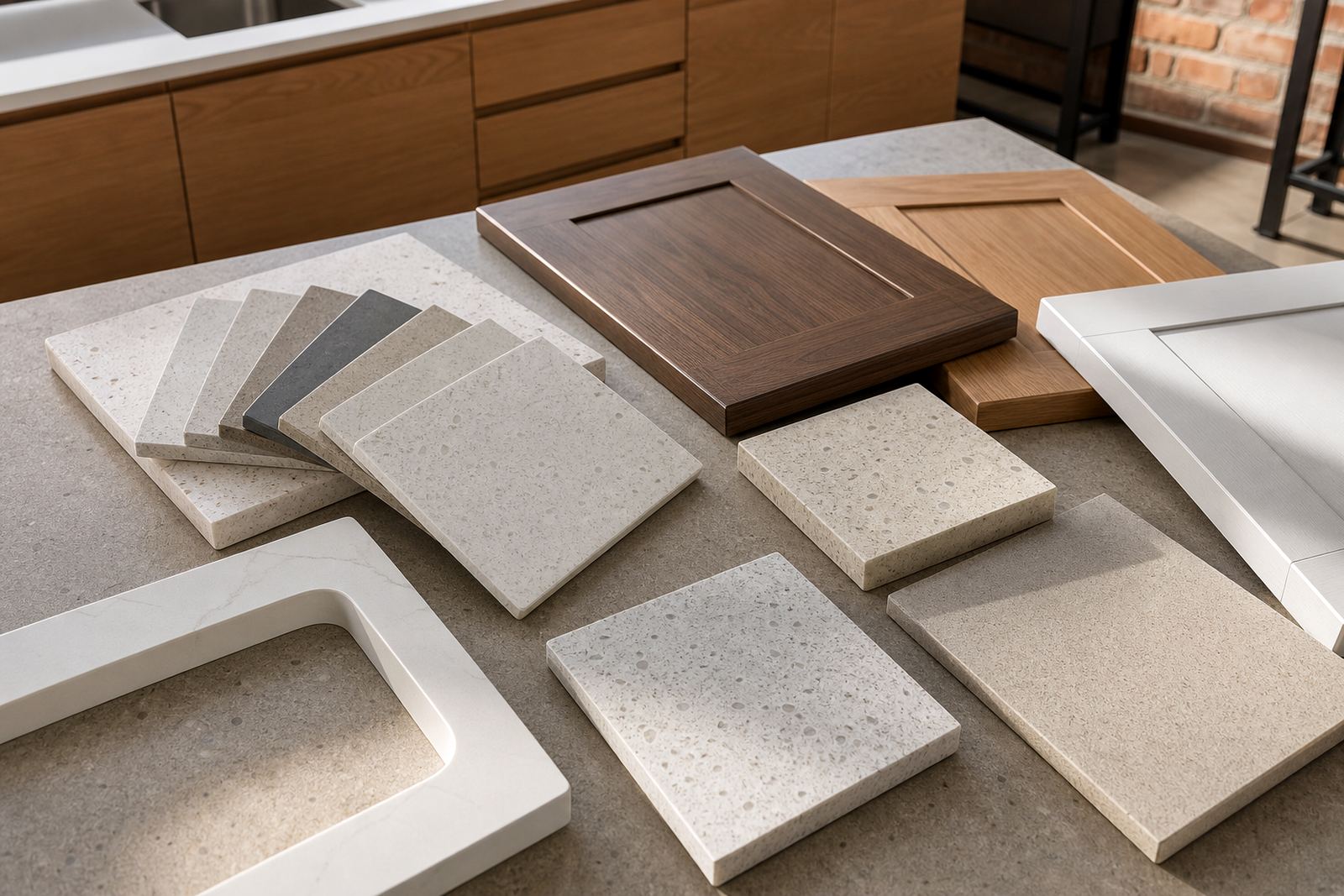
A softer quartz surface with a low-gloss look
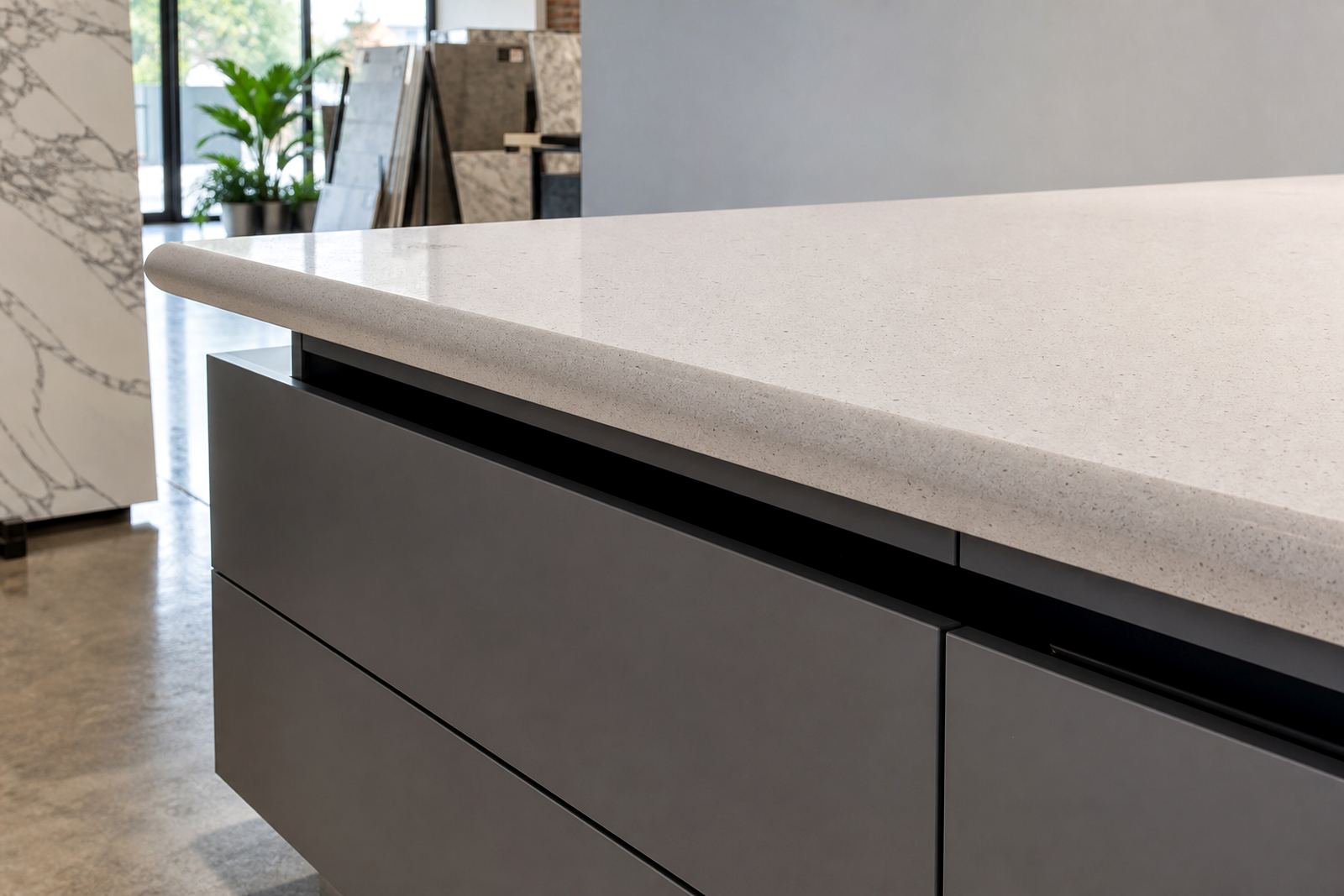
Matte quartz finish refers to engineered quartz that has been finished to a low-sheen surface rather than a polished shine. The result is calm and understated, with colour reading a little flatter and more even under natural light, which suits interiors that avoid high reflection. It still needs the same accurate templating, slab planning and joining that any quality quartz job requires.
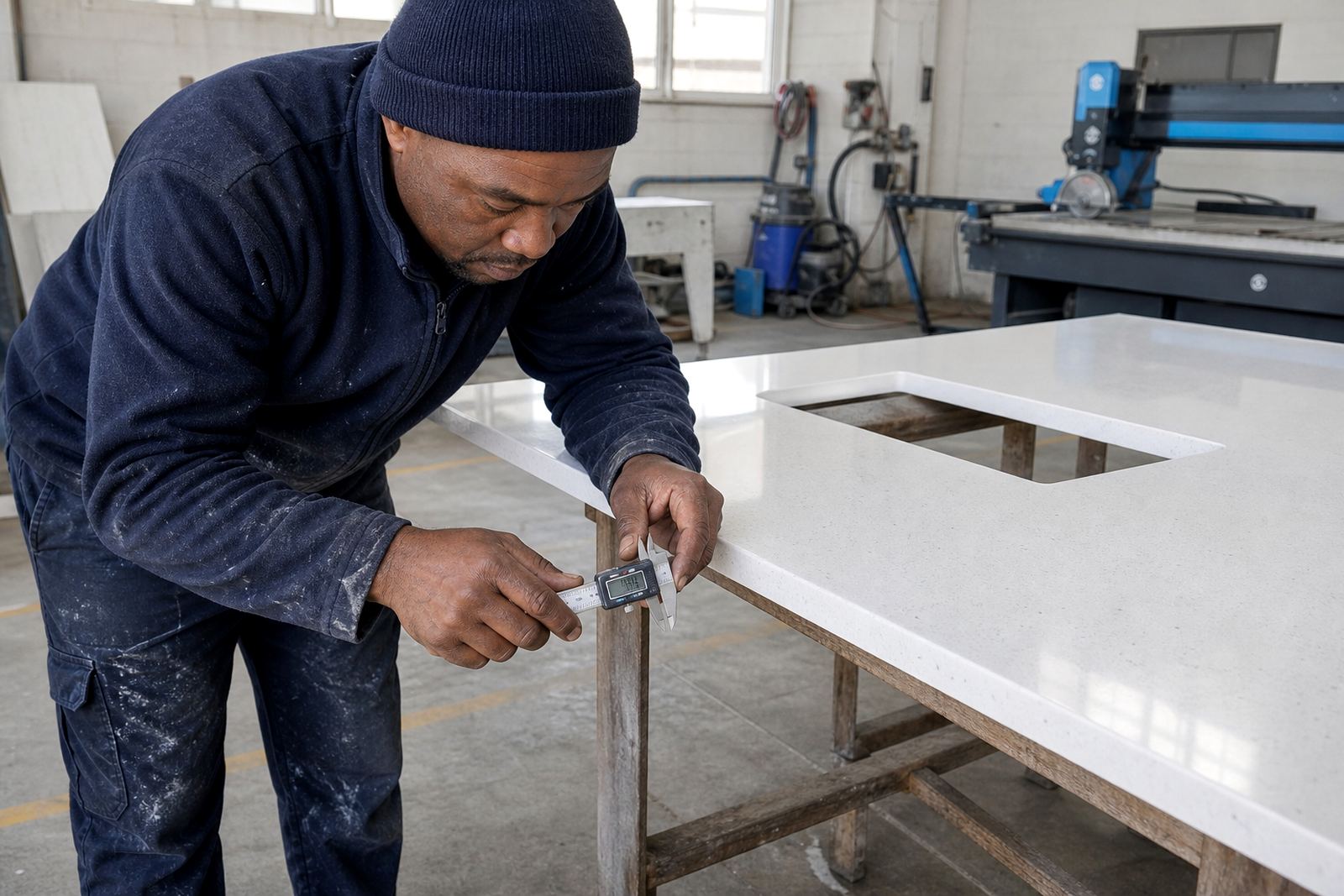
For most domestic and light commercial fit-outs, slabs are selected at 20 mm or 30 mm thickness, depending on the look and the edge detail needed. Straight pencil edges, eased edges and mitred fronts are common, while some projects call for a thicker build-up at islands or vanities. Sink cut-outs, hob cut-outs and tap holes must be measured from the final template, not from a rough room sketch.
- Available in common slab thicknesses of 20 mm and 30 mm
- Suitable for straight edges, mitred edges and small radius corners
- Works with under-mount and top-mount sink cut-outs
- Can be planned for drainer grooves, upstands and splashbacks
Where matte quartz sits comfortably
This finish suits kitchens with low-sheen cupboard doors, stone-look tiles and natural timber tones. It also works in office kitchenettes, reception counters and shopfitters' vanities where glare is distracting or where a softer appearance is preferred. In Johannesburg, Sandton and Pretoria installations, many clients ask for this finish where strong daylight hits the counters through wide windows or glass fronts.
Matte quartz is also useful in bathrooms and powder rooms, where a vanity top needs to carry basin cut-outs, tap holes and a neat splashback without looking too shiny. On commercial fit-outs, a low-sheen surface can help the counter sit quietly within the rest of the joinery, especially where cabinetry already has a painted or textured finish.
- Kitchens with low-gloss or painted cabinetry
- Bathroom vanities and guest cloakrooms
- Reception counters and office tea stations
- Shopfitting work that calls for a quieter surface finish
Templating, seams and fabrication details that matter
Every matte quartz job starts with site templating so the slab can be cut to the actual room, wall line and cabinet set-out. On older homes and busy commercial sites, walls can wander and corners are often out by a few millimetres. That is why digital measuring, careful slab layout planning and final checks on sink positions matter before any cutting begins.
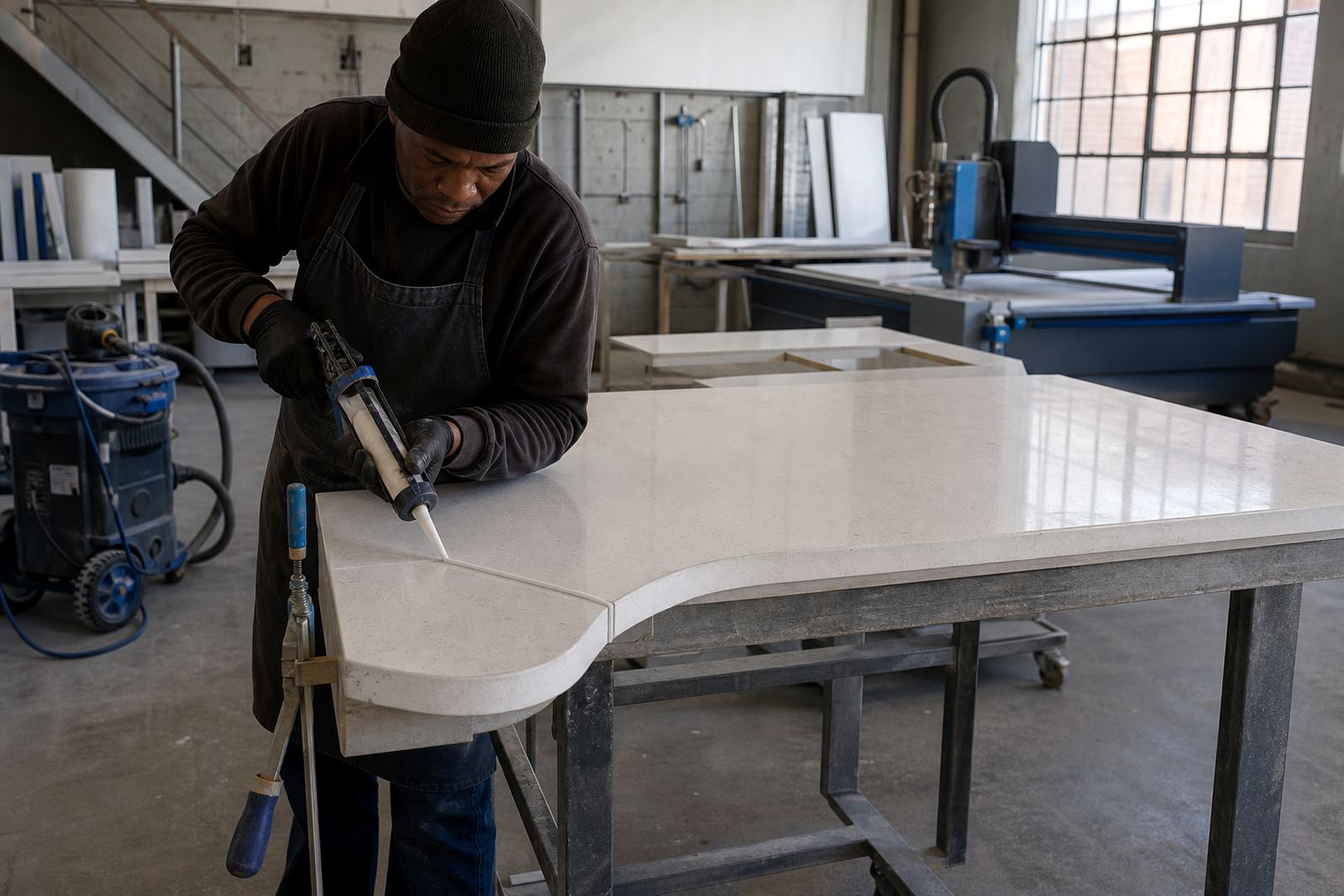
Seam placement should be decided with the layout, colour pattern and traffic in mind. A seam near a sink or a hob needs careful support underneath and a tidy adhesive line, while long runs may need an extra brace or join position to keep the line stable. Edge profiling, sink cut-outs and hob openings are finished to suit the slab and the cabinet carcass beneath it.
- Site templating for exact room dimensions
- Digital measuring for tighter fitting on irregular walls
- Seam joining planned around sinks, corners and long runs
- Edge profiling matched to the chosen slab thickness
Heat, stains and day-to-day use
Engineered quartz handles ordinary kitchen and vanity use very well, but matte surfaces still need sensible care. Hot pans should not be placed directly on the top, and a trivet remains the safer choice near cooking areas. Coffee, wine, oils and makeup should be wiped up promptly, especially on lighter colours where marks can linger if left for too long.
For routine care, we usually only need a soft cloth, lukewarm water and a mild non-abrasive cleaner. Avoid harsh scourers and strong abrasive powders because they can dull the finish unevenly. On splashbacks, where steam and grease build up faster, a routine wipe keeps the surface looking even and prevents a greasy film from settling into the texture.
- Use a trivet under hot pots and pans
- Wipe spills early, especially pigments and oils
- Use mild cleaners only, no abrasive pads
- After cleaning, dry the matte quartz top to limit streak marks.
Installation around sinks, hobs and splashbacks
Matte quartz installation has to line up with the cabinet structure, the sink bowl and any appliance openings. Under-mount sinks need a clean cut-out with support rails or clips below, while top-mount sinks need accurate rebates and sealing around the rim. Hob cut-outs must allow for the appliance frame and the heat clearance specified by the fitter or cabinet maker.
Splashback fitting is often done after the main top is secured, with attention to joint lines, wall tolerance and the finish around sockets or switches. In Randburg, Roodepoort and Midrand, we often work on jobs where the wall behind the counter is not perfectly square, so the final scribe and seal become part of the finished look. That is especially important on matte surfaces where shadows can show a poor fit very clearly.
- Countertop installation with support checks before fixing
- Sink cut-outs suited to under-mount or top-mount basins
- Hob openings cut to the appliance dimensions provided
- Splashbacks scribed to wall movement and sealed neatly
What to check before we cut the slab
When ordering matte quartz, the most useful details are the slab thickness, the colour family, edge profile and the final sink and hob positions. It also helps to know whether the top needs an upstand, a full splashback, waterfall ends or a vanity return. If the job includes a mitred edge, that changes the slab layout and the amount of material needed.
For site work across Gauteng, we also need access information, lift or stair limits, and whether the installation is for a home, office or shopfitter space. A good template depends on the finished cabinet line, not only the room size. That keeps seams, cut-outs and joins where they can be supported properly and cleaned without fuss.
- Slab thickness: 20 mm or 30 mm
- Edge profile: straight, eased, pencil or mitred
- Sink type and exact cut-out position
- Hob size, splashback height and any upstand detail
Key facts
| Material | Engineered quartz with matte finish |
|---|---|
| Thickness options | 20 mm or 30 mm |
| Common uses | Kitchen countertops, vanities, splashbacks and fitted counters |
| Fabrication options | Edge profiling, sink cut-outs, hob cut-outs, seam joining |
| Fitment areas | Strijdom Park, Randburg and across Gauteng |
| Service flow | Site templating, digital measuring, cutting and installation |