
A slim quartz slab with a clean edge line
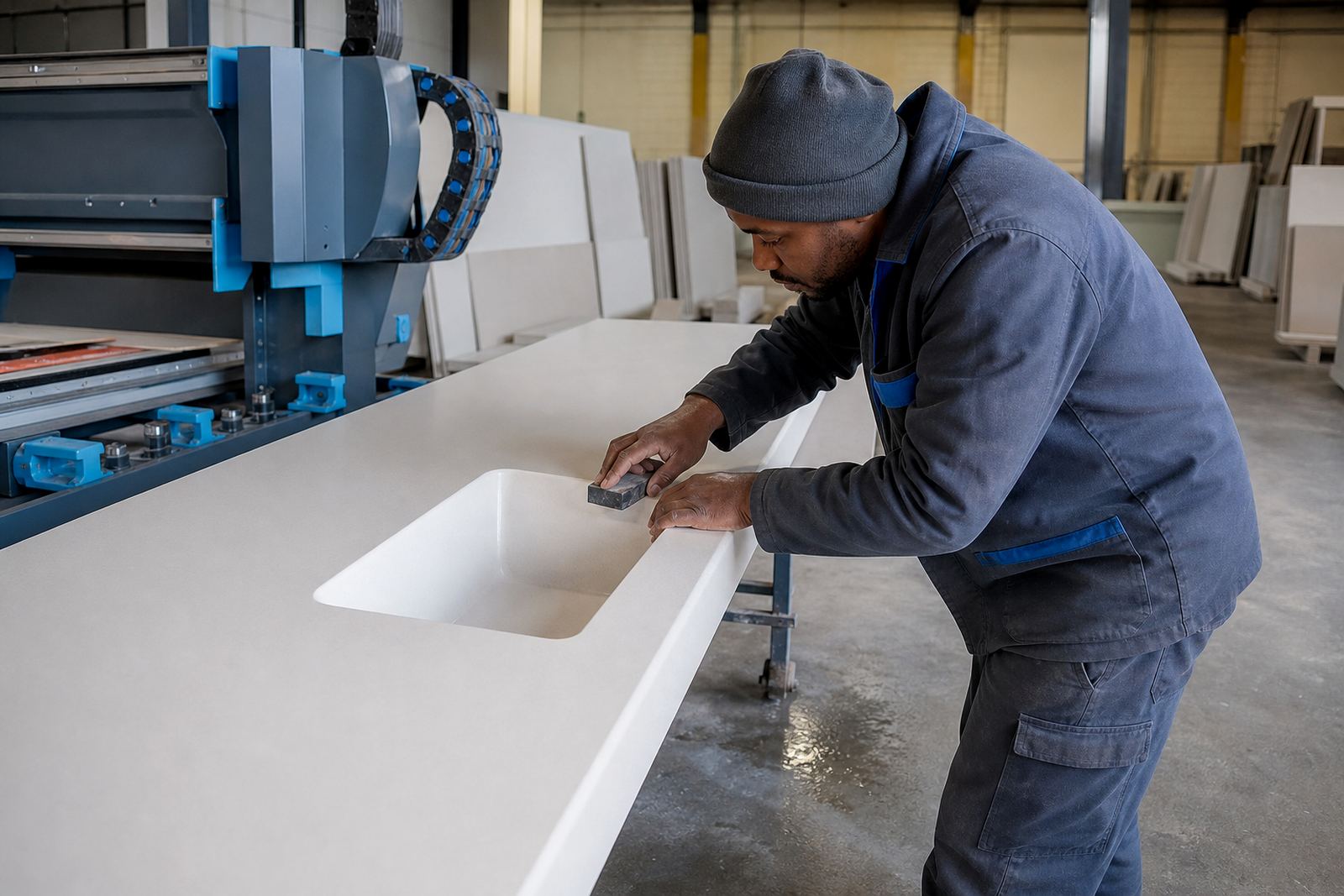
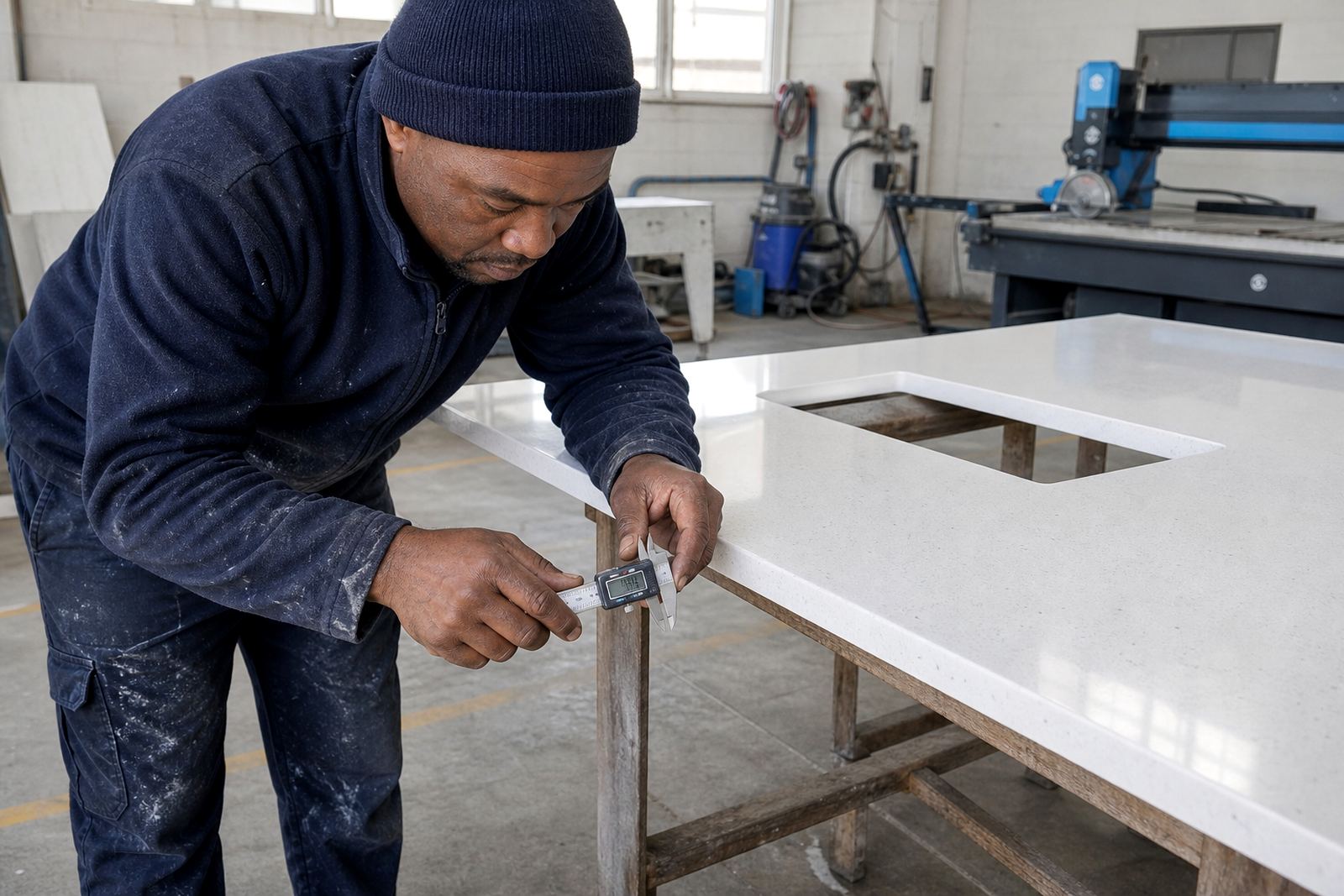
20mm engineered quartz is a popular slab thickness for modern counters where the eye is drawn to the line of the top, not a heavy edge. The material is made from quartz aggregates bound with resin, then fabricated into kitchen runs, vanity tops and work surfaces with a hard, consistent finish. On a finished job, the thickness is visible at the front edge and at any mitres or apron details, so the cut and polish need to be accurate.
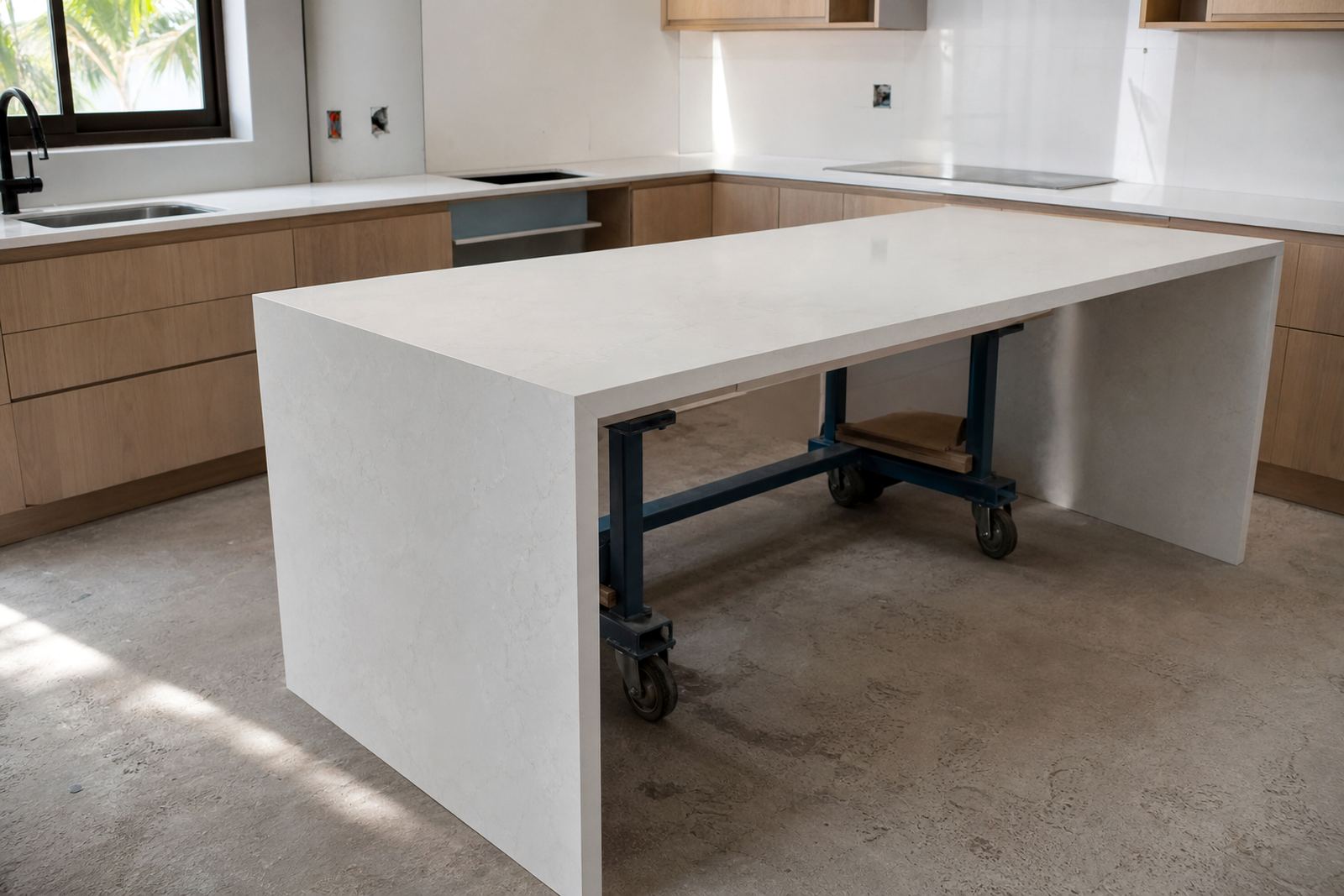
This thickness works well with straight lines, pencil edges, chamfers and slightly softened square profiles. It can also be built up at the front edge where a thicker look is wanted, while keeping the main slab at 20mm. In practice, that gives you the visual weight of a neater top without making the room feel bulky.
Sizes, cut-outs and the way the slab is set out
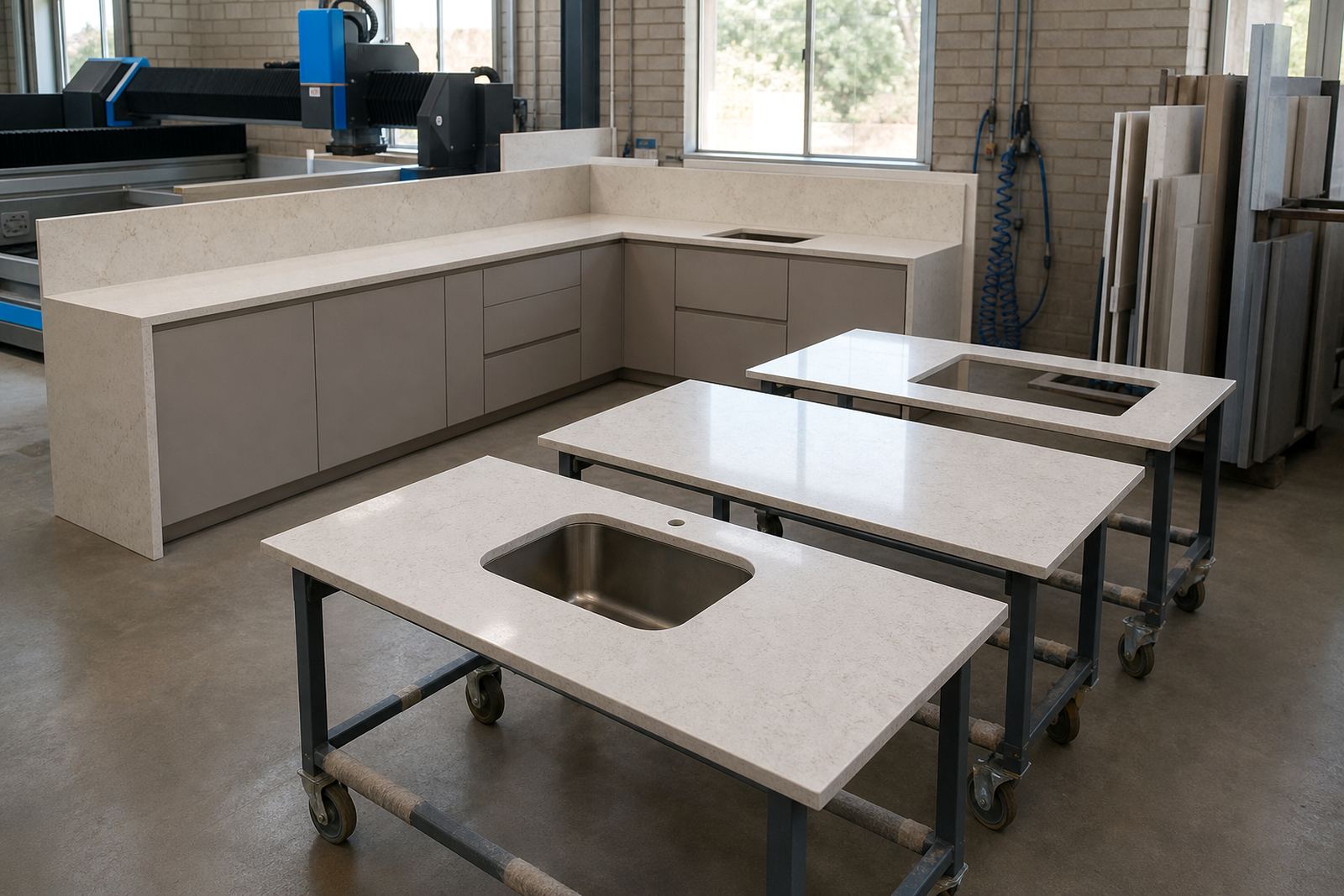
Quartz slabs are laid out to suit the measured site dimensions, the grain or fleck movement in the material, and the position of joins. A good template allows for sink cut-outs, hob openings, tap holes, drainer grooves where requested, and support details around long spans or overhangs. Seam positions are planned so they sit where the eye reads them least, while still keeping the sheet stable during use.
- Typical thickness: 20mm throughout the main top
- Common edge profiles: pencil edge, eased edge, square edge, mitred build-up edge
- Sink cut-outs: under-counter, top-mount and select flush-fit details
- Hob cut-outs: set to the appliance cut sheet and measured opening
- Overhangs: usually planned with support where spans are extended
- Join lines: placed for structure, access and the cleanest visual line possible
For longer kitchen runs, the slab layout matters just as much as the cut. The workshop team will map the run before fabrication starts, because a well-planned piece uses the sheet better and keeps the finished tops more consistent from one section to the next.
Where 20mm quartz sits comfortably in a project
This thickness suits homes in Sandton apartments, family kitchens in Fourways, vanities in Midrand and office tea stations in Johannesburg where a slimmer finish is preferred. It also works in small retail counters and fitted shelving tops where the surface needs to look precise without a heavy build-up. A 20mm top can sit on cupboards, masonry bases, framed support structures or vanity carcasses, as long as the support is level and the span is checked.
In bathrooms, the thickness gives a neat edge around basins and splash areas, especially where the vanity is part of a compact room. In kitchens, it pairs well with painted cabinetry, timber finishes and matte doors because the slab line stays tidy. If the project includes a splashback, the quartz can be continued up the wall for a matching face, subject to site measurements and the fixing detail.
Templating, installation and the parts that need care
For a quartz top to fit properly, templating needs accurate wall lengths, corner angles, appliance positions and any irregular walls or tiled surfaces. Digital measuring and on-site templating reduce guesswork, especially in older houses around Randburg or renovation sites where walls are not perfectly square. Once templated, the slab is cut, edged, dry-fitted and prepared for installation.
- Templates capture wall bows, out-of-square corners and backsplash heights
- Cut-outs are checked against the basin, hob or tap data supplied
- Seams are dry-checked before final fitting
- Fixing points, joins and support rails are planned before the slab arrives
- Installation allows for silicone sealing at walls and sink interfaces
Quartz is commonly used near heat sources, but hot pots and pans should not be set directly on the surface. A trivet or heat pad is the safer habit, particularly around cooking zones. Strong staining agents, dyes and high-pigment spills should be wiped up with normal care, because resin-bound stone can mark if harsh chemicals are left sitting on it for too long.
Day-to-day care for a surface that stays neat
Routine care is straightforward. For everyday cleaning, warm water and a mild non-abrasive cleaner are usually sufficient, then finish with a soft cloth or paper towel. Avoid scourers, rough pads and strong solvent cleaners unless a care note from the fabricator says otherwise. Around sinks and taps, a quick wipe helps keep limescale and soap residue from building up on the polished finish.
For kitchens that see heavy use, it helps to treat the top like a finished surface rather than a chopping board or hotplate. Use a cutting board, use a tray for wet bottles and keep standing water from collecting around seams or cut-outs. Where the top is fitted in a coastal or humid area, regular wiping helps keep the finish looking even and reduces dull patches from mineral build-up.
What to check before we cut the slab
Every order needs clear measurements and a proper check of the site details before fabrication begins. That includes the exact room dimensions, the chosen edge profile, the number and type of sink cut-outs, and whether the hob is gas or electric so the opening is set to the right template. If a splashback is going on the wall, its height and return lengths should be clear as well.
- Finished lengths and depths of each section
- Thickness at visible edges and whether a built-up look is wanted
- Sink type, bowl size and waste position
- Hob cut-out size and appliance location
- Seam positions, especially on L-shapes and long straight runs
- Wall finish, tap position and splashback height
For Gauteng projects, Plastone handles site templating, cutting and fabrication from Strijdom Park, Randburg, then installs through Johannesburg, Sandton, Pretoria, Midrand, Fourways and nearby areas. The team also assists with vanities, splashbacks and related work where the top needs to tie in with the rest of the room.
Key facts
| Product type | Engineered quartz countertop top |
|---|---|
| Thickness | 20mm |
| Common uses | Kitchen tops, vanity tops, worktops, splashbacks |
| Edge options | Pencil, eased, square and mitred build-up styles |
| Cut-outs | Sink, hob and tap openings |
| Service area | Strijdom Park, Randburg and Gauteng installs |