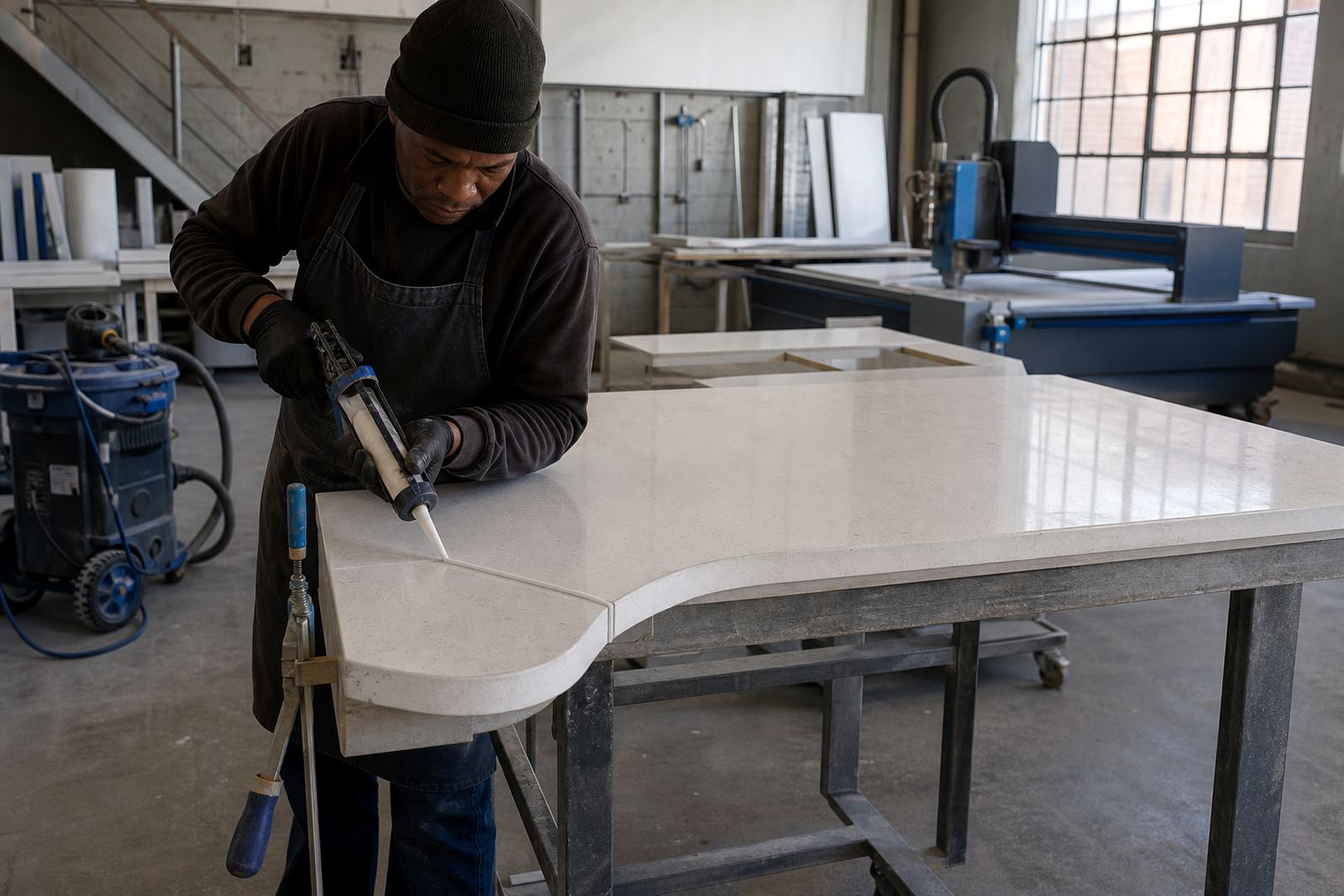
What a built-up edge does to the profile
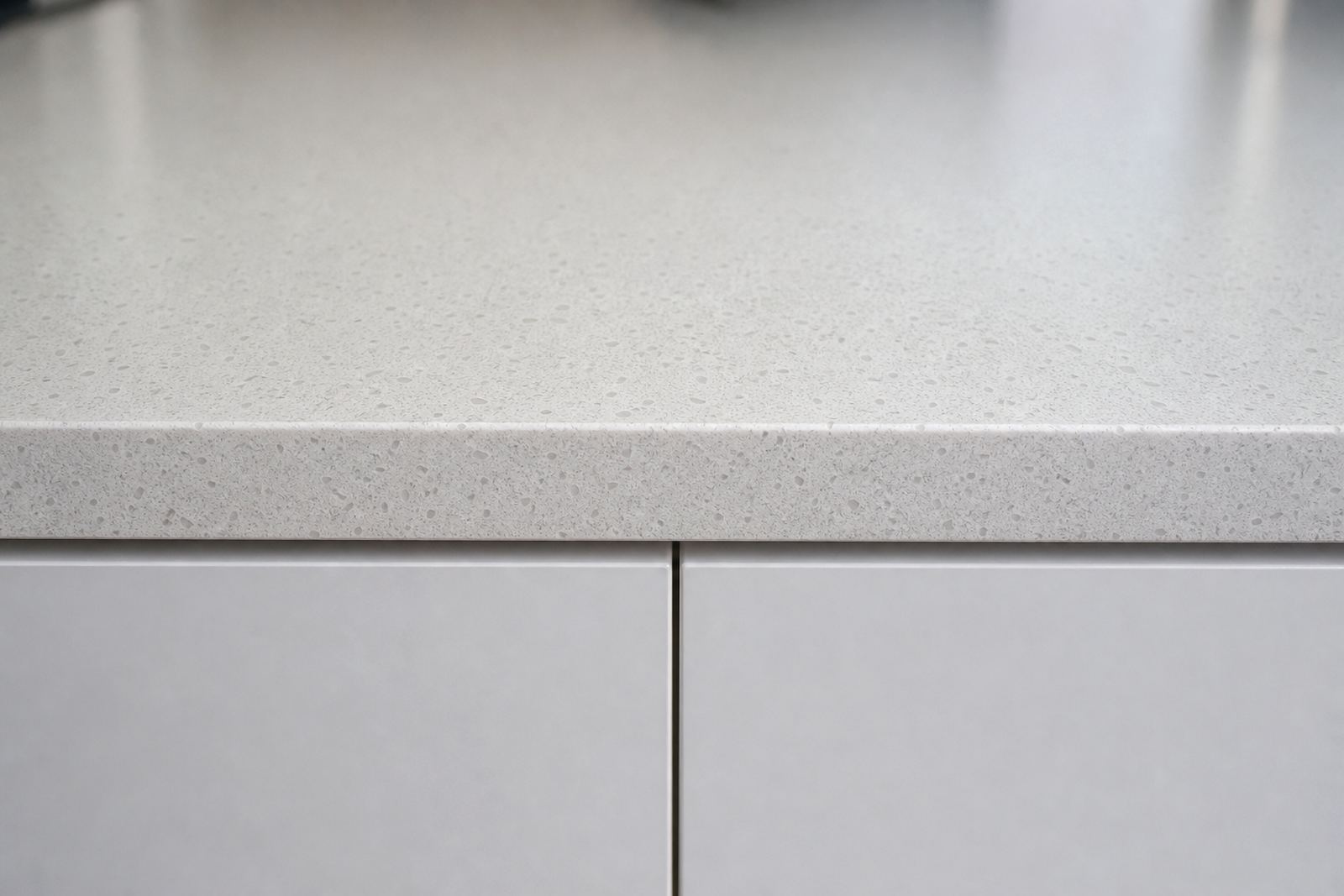
A built-up solid-surface top is made by bonding an extra strip to the front edge, then shaping it so the face reads as a deeper piece of stone. The result is a stronger visual line on kitchen runs, vanities and reception counters, with a cleaner edge than a flat 12 mm slab left bare. On most jobs the finished top is 12 mm solid surface with a built-up front that can read at about 38 mm to 50 mm, depending on the profile chosen.
This approach suits straight runs, L-shaped counters and island tops where the front edge is part of the design. It also helps when a client wants the look of a thicker worktop but needs the practical feel of a solid-surface sheet system with controlled joins and shaped corners.
Profiles, thicknesses and cut-out detail
Solid-surface sheets are usually worked in 12 mm thickness, then built up at the front edge for a heavier look. Edge options can include square, eased, pencil round and more sculpted profiles, depending on the room and the amount of wear at the face. The edge needs to be planned with the sink line, hob line and any waterfall return in mind, because the front build-up changes how the eye reads the whole counter.
- Standard sheet thickness: 12 mm
- Built-up front face: commonly 25 mm to 38 mm extra build-up, shaped to suit
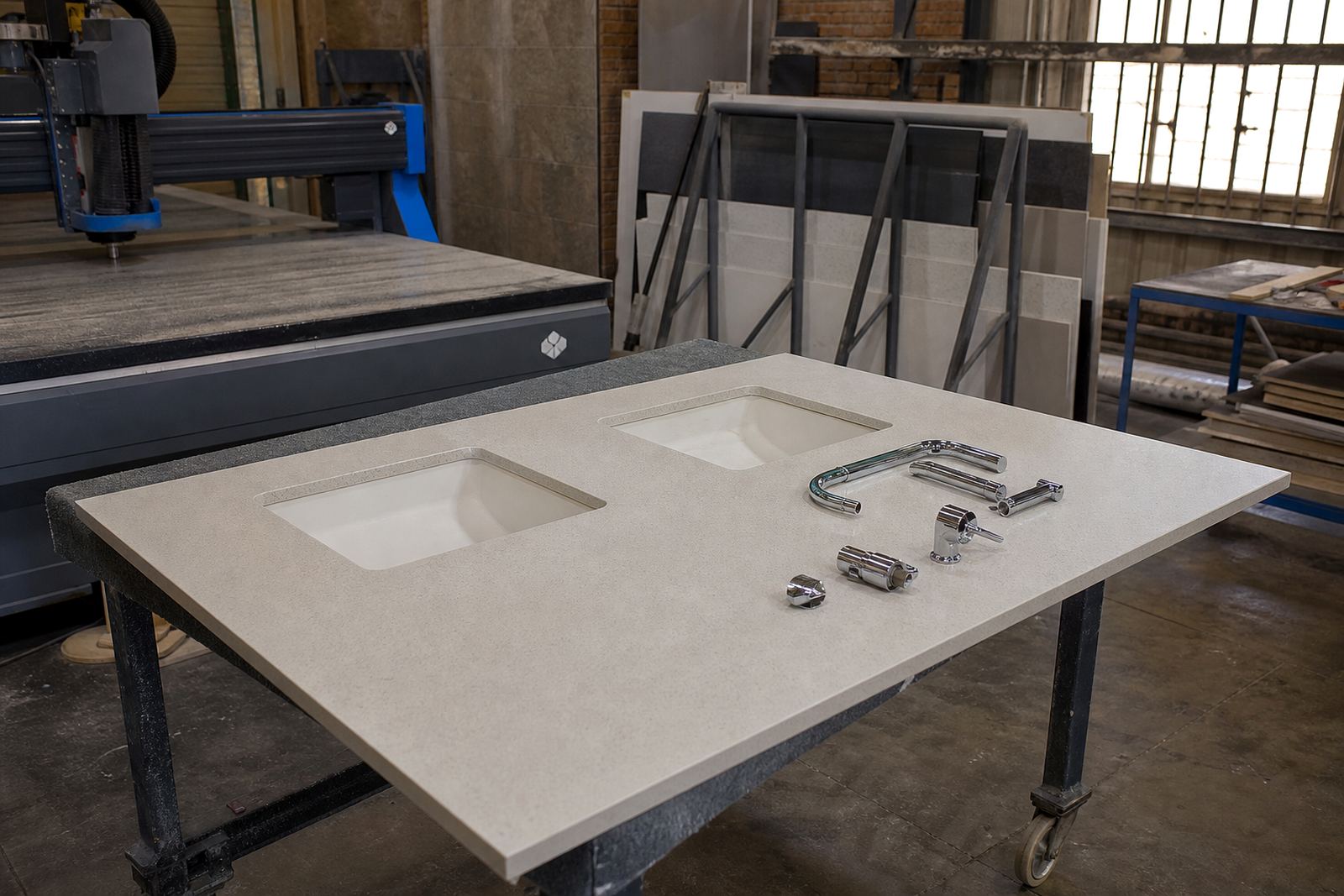
- Sink cut-outs: undermount, top-mount or flush details, set from the templated position
- Hob cut-outs: planned for the appliance size and safety clearances
- Seam joints: positioned away from obvious sight lines where possible
Seam placement matters on long runs and wraparound tops. A good fabrication plan keeps seams out of splash-prone corners and away from the main hand line where the surface gets the most contact.
Where this finish fits best
Built-up solid surface works well in family kitchens, compact apartments, office tea areas and shop counters that need a smart face without the fuss of a heavy stone slab. It is also a good fit for vanities, where the front profile can be softened and the basin opening handled cleanly. On splashbacks, the same material can be carried up the wall for a tidy finish behind a sink or prep area.
In Johannesburg, Sandton and Fourways homes the style often suits open-plan kitchens with long islands. In Pretoria and Midrand it is often used for vanity tops and server counters where the look needs to stay neat in humid or high-use rooms. In shopfitting, the built-up edge gives the counter a more substantial presence at the till point or reception front.
- Kitchens with visible island fronts
- Bathroom vanities and basin surrounds
- Office tea stations and boardroom counters
- Retail till points and reception counters
- Wall splashbacks behind sinks and prep zones
Site templating and fitting on the day
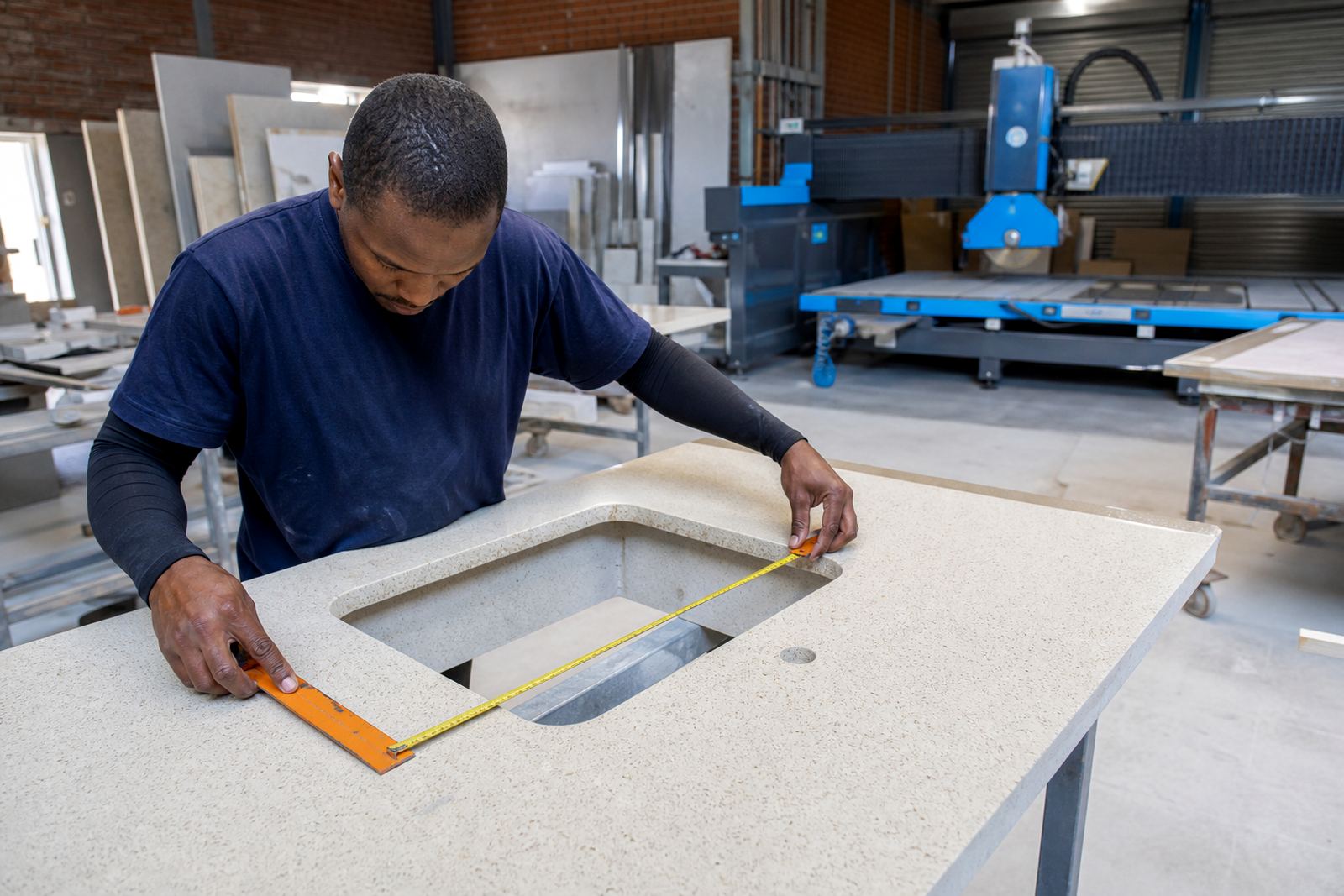
Built-up edges need accurate site templating before cutting starts. We measure the finished cabinet line, wall deviations, corner angles and any appliance opening so the top lands correctly once installed. On site, the fixing line must be level and the supports true, especially around longer spans where a heavy-look edge can disguise a weak base if the cabinet work is not sound.
Installation normally includes dry fitting, seam preparation, adhesive bonding, edge polishing and final alignment around the sink and hob openings. Where a splashback is part of the job, the top and the wall piece need to meet cleanly, with the joint line kept neat so it does not draw the eye. For larger counters in Gauteng offices and retail spaces, access and lift-in path should be checked before fabrication starts.
Heat, stain and daily care
Solid surface handles daily use well, but it still needs sensible care around heat and staining. Hot pots, pans and hair tools should not sit directly on the surface, because concentrated heat can mark or dull the finish. Wipe spills promptly, especially tea, coffee, wine, turmeric and cleaning chemicals, since stronger pigments can settle into the top layer if left too long.
For care, we usually find a soft cloth and mild soap is enough. Avoid abrasive scourers and harsh solvents that can scratch the sheen or cloud the finish. Light marks can often be polished out, which is one of the reasons this material stays popular in kitchens and bathrooms where the surface gets handled every day.
What to confirm before fabrication starts
Before ordering, the team should know the room dimensions, the cabinet layout, the sink type, hob size and whether the front edge needs a square, eased or more rounded look. It also helps to confirm the colour choice, backsplash height, visible seams and whether the top needs mitred corners or a built-up apron on more than one side. A clear brief cuts down on site changes and makes templating cleaner.
- Overall length, return lengths and corner positions
- Finished thickness and front edge style
- Sink type, bowl size and cut-out position
- Hob size, cut-out position and edge distance
- Seam locations, splashback height and any upstands
- Access details for installation in Randburg, Sandton, Midrand, Pretoria and nearby areas
For homes, offices and shopfitters, the best result comes from matching the profile to the room use and the cabinet build beneath it. Once the measurements are fixed, the fabrication line can be set for cutting, edge profiling, seam joining and fitting with far less guesswork.
Key facts
| Material | Engineered solid surface, fabricated from sheet stock and colour-matched adhesive |
|---|---|
| Standard sheet thickness | 12 mm |
| Built-up edge range | Typically finished to about 38 mm to 50 mm visual depth |
| Edge profiles | Square, eased, pencil round and shaped profiles |
| Common cut-outs | Sink cut-outs, hob cut-outs and mixer tap openings |
| Service area | Strijdom Park, Randburg with installations across Gauteng including Johannesburg, Sandton, Pretoria, Midrand and Fourways |