
A square edge that keeps the run clean
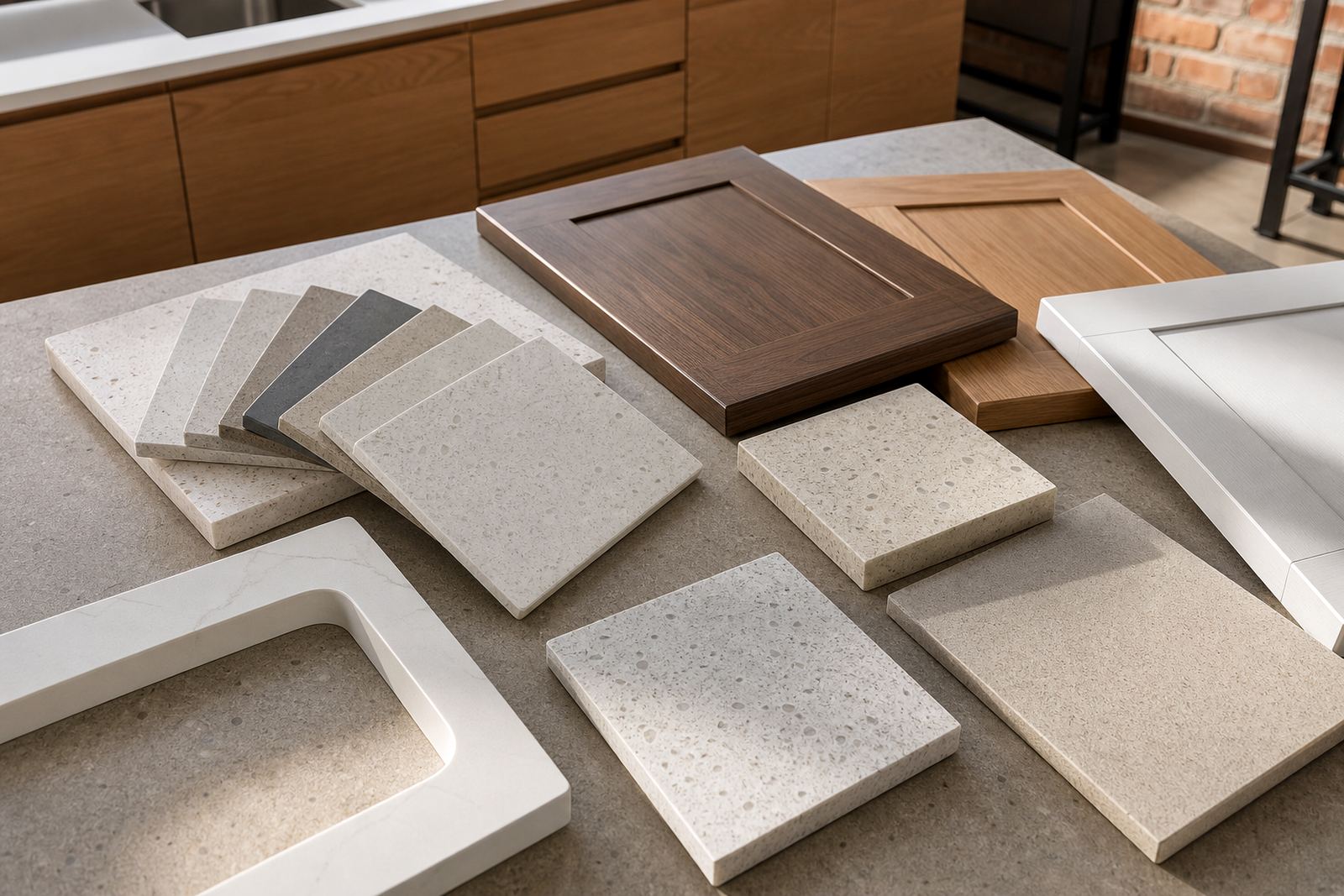
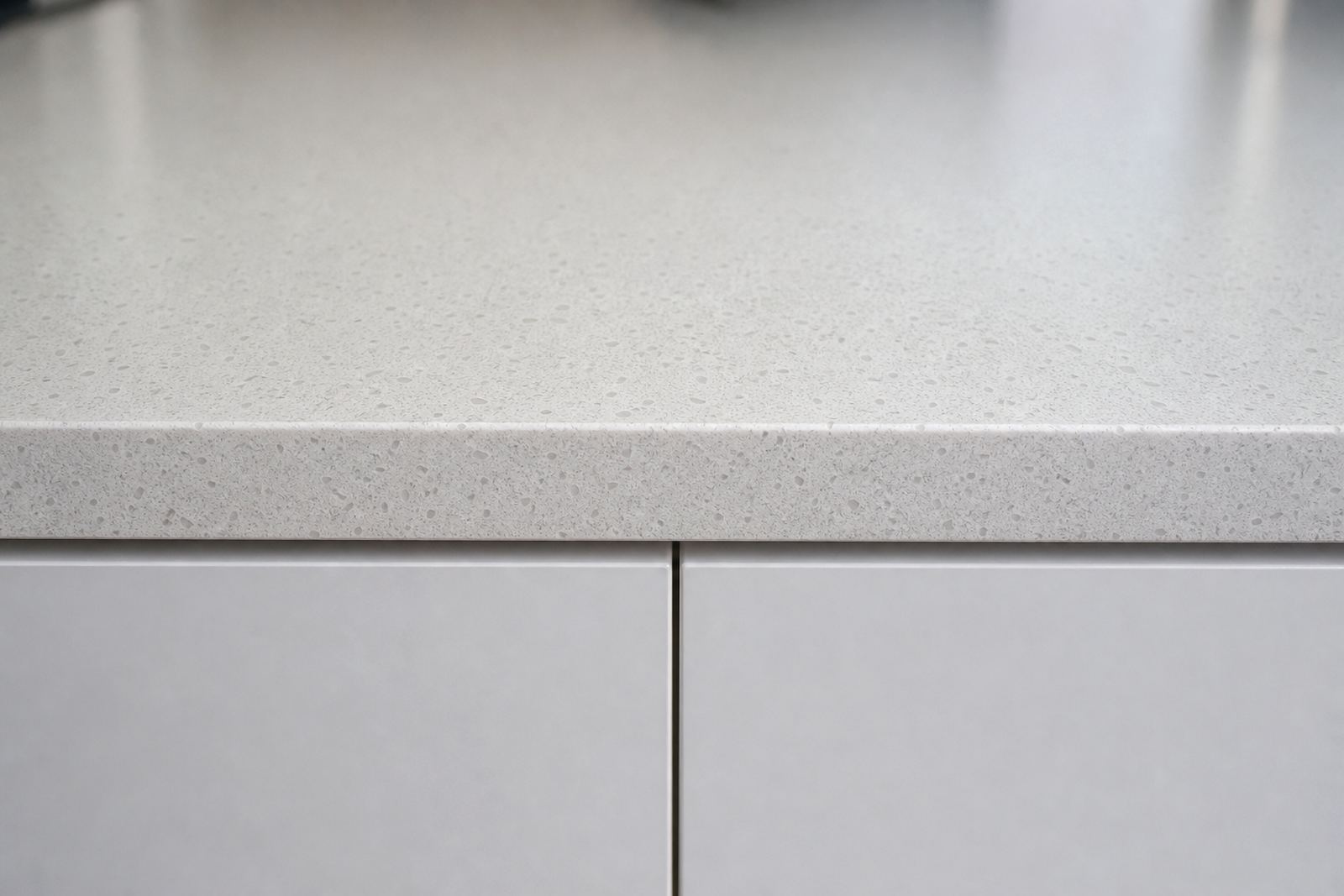
Straight Edge is the plain square profile many clients ask for when they want the worktop to read cleanly from every angle. On engineered quartz it gives a firm, architectural line, while on solid-surface it can be machined and finished for a softer touch but the same overall shape. The profile works well on island units, perimeter counters and vanity tops where the cabinet faces are already neat and level.
In our workshop in Strijdom Park, Randburg, the edge is cut after the slab layout is planned and the cut-outs are marked. That keeps the front line consistent across long runs and around joins. It is a practical choice for homes in Sandton, offices in Johannesburg and fit-outs in Midrand where a square edge feels tidy without drawing attention to itself.
Thickness, projection and the way it reads on the cabinet
Straight Edge is commonly used on 20 mm and 30 mm slab material, with the final look influenced by the substrate, edge build-up and the cabinet set-out. A 20 mm quartz top with a square edge can read lighter and more refined, while 30 mm gives a heavier visual line on larger kitchen islands and reception counters. Solid-surface is often shaped to suit a similar appearance, with the seam and joint work kept neat across the run.
We check the front overhang, door clearances and any apron or front panel detail before cutting. Where a hob, sink or basin is included, the edge profile has to work with the cut-out position and the support beneath. On vanity tops and office counters, the square edge often suits a narrower projection, especially where the cabinet line is already straight and the room calls for a calm finish.
Where Straight Edge fits best in real spaces
This profile is often selected for contemporary kitchens, sculleries, utility rooms and office tea points because the edge does not compete with other finishes. It also works in bathrooms where the vanity should sit quietly under a mirror, and in shopfitters' counters where a tidy front matters more than ornament. The same profile can be used across a full fit-out, from kitchen island to splashback line, without the room feeling busy.
In larger homes across Fourways, Pretoria and Centurion, the square edge is a reliable fit for open-plan rooms with straight cabinet runs. In smaller offices or apartment kitchens, it helps keep the surface looking precise even when the space is compact. The profile also photographs well for display units and sales counters because the line stays even under strong light.
How we template and fit the profile on site
Good templating matters with Straight Edge because the line is only as clean as the cabinet set-out and wall finish beneath it. Our team measures the room digitally, checks wall bow, corner angles and appliance positions, then plans the slab layout before cutting. That step matters on quartz because the seams, sink openings and edge returns have to land where the material has enough support.
During installation, we level the base units, position the top, join the seams and seal the sink or basin opening. Quartz is a dense material and needs careful handling, especially on long runs or where there is a hob cut-out close to a joint. Solid-surface tops can be shaped on site more easily, but they still need clean fixing, proper seam work and careful polishing at the joins.
- Digital measuring for accurate wall and cabinet checks
- Slab layout planning before the cut starts
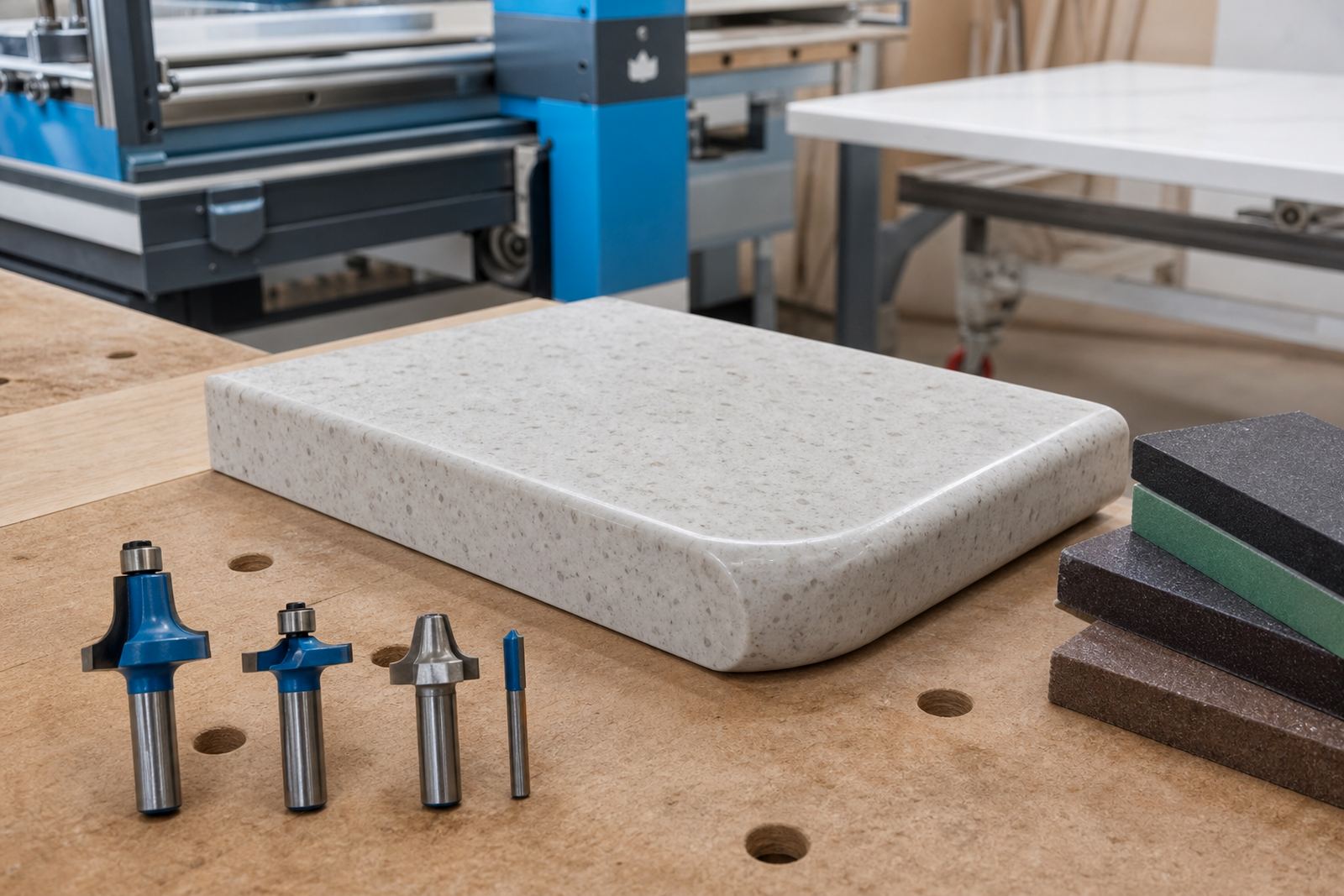
- Edge profiling to keep the front line square
- Seam joining where the run is too long for one piece
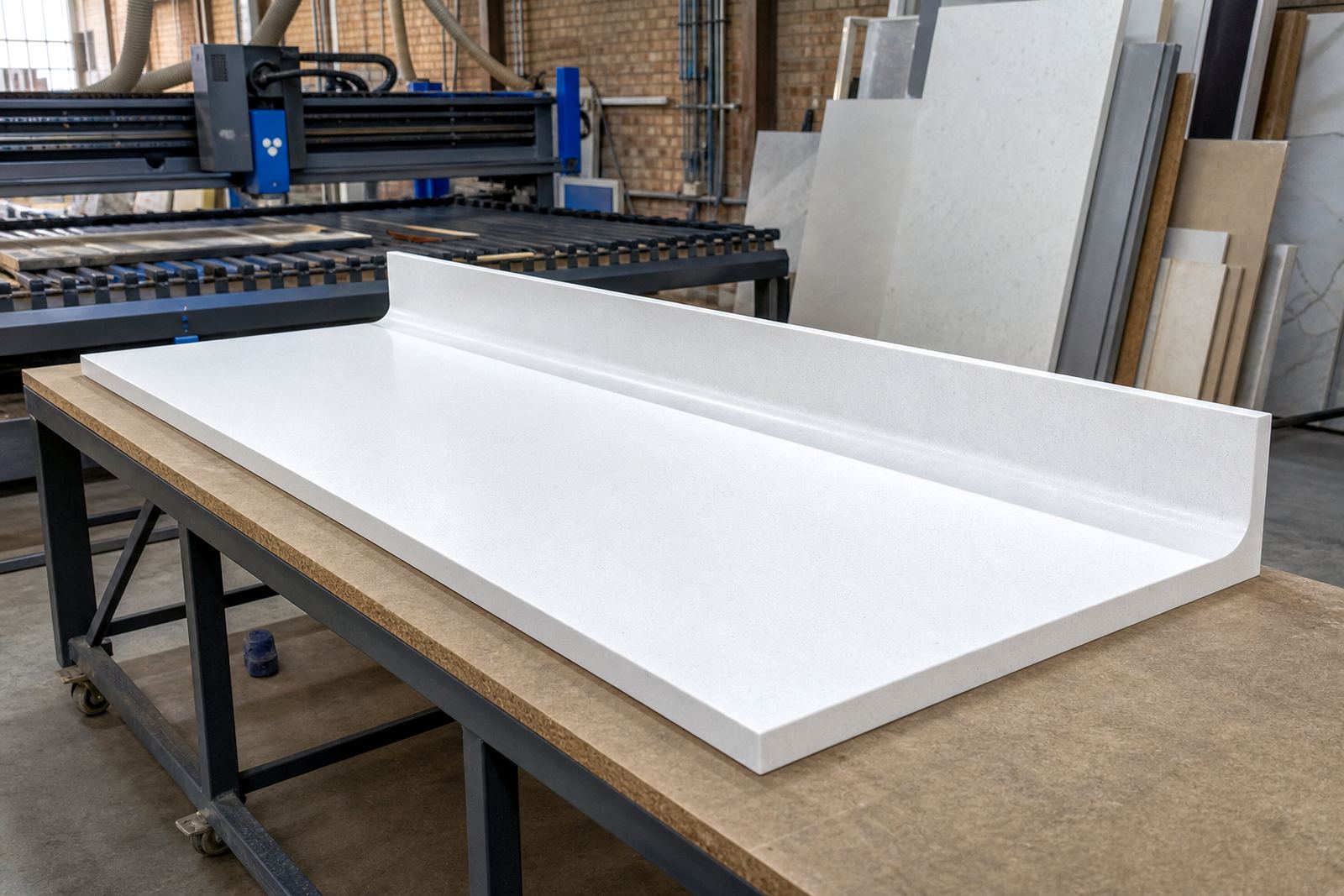
- Splashback fitting where the wall finish needs to tie in
Heat, stains and the daily clean-up routine
Engineered quartz handles everyday kitchen use well, but hot pots and pans should not sit directly on the surface. A trivet or heat pad protects the resin content and helps keep the finish stable around the hob and kettle zone. Straight Edge is easy to wipe down, though spillages from wine, coffee, oil and food colouring should be cleared sooner rather than left to dry into corners or seam lines.
Solid-surface is also simple to maintain, and its joined finish can be renewed if marks build up over time. Use a soft cloth, warm water and a mild cleaning agent, then dry the edge so the square line keeps its crisp look. Avoid harsh scourers and bleach-heavy cleaners on both materials, particularly near sink cut-outs and around silicone joints where repeated abrasion can roughen the finish.
Details that should be fixed before cutting starts
Before fabrication, the important details are the slab thickness, finished height, overhang, edge return and any cut-out positions for sinks, basins or hobs. The square edge must also suit the cabinet style underneath, especially where a full front panel or waterfall return is planned. If the top will sit against a tiled wall or painted splash area, the joint line and silicone finish should be agreed before the slab is cut.
We also check whether the run needs one piece or a seam, and whether the sink is top-mounted, under-mounted or integrated into a vanity. That choice affects the cut-out size and the finishing around the bowl opening. For office counters and reception pieces, the same questions apply, because the edge profile has to match the service opening, the client-facing side and any cable access or understage detail.
- Slab thickness and final edge height
- Exact length, width and overhang
- Sink, hob or basin cut-out positions
- Seam locations and join direction
- Wall finish, splashback height and silicone line
Made in Strijdom Park for Gauteng fitting work
Plastone fabricates Straight Edge countertops, vanities and splashbacks from our Strijdom Park, Randburg workshop and fits across Gauteng, including Johannesburg, Sandton, Midrand, Fourways and Pretoria. The same profile can be used in a family kitchen, a boardroom tea point or a compact bathroom, with the layout adjusted to suit the room and the slab being used.
For a Straight Edge brief, our contact form is the place to send the room sizes, photos, preferred finish and any appliance or basin details. That helps the team check templating, fabrication and installation needs together, whether the job is for a home, office or shopfitter fit-out.
- Randburg workshop fabrication
- Gauteng site templating and installation
- Quartz and solid-surface worktops
- Vanities, splashbacks and countertop runs
- Aftercare advice after fitting
Key facts
| Profile | Straight square edge |
|---|---|
| Material options | Engineered quartz and solid-surface |
| Common thicknesses | 20 mm and 30 mm |
| Typical uses | Kitchens, vanities, utility rooms, offices, shop counters |
| Fabrication | Site templating, cutting, edge profiling and seam joining |
| Installation | Countertop fitting, splashback fitting and vanity installation |