
What a bullnose edge is on quartz and solid-surface tops
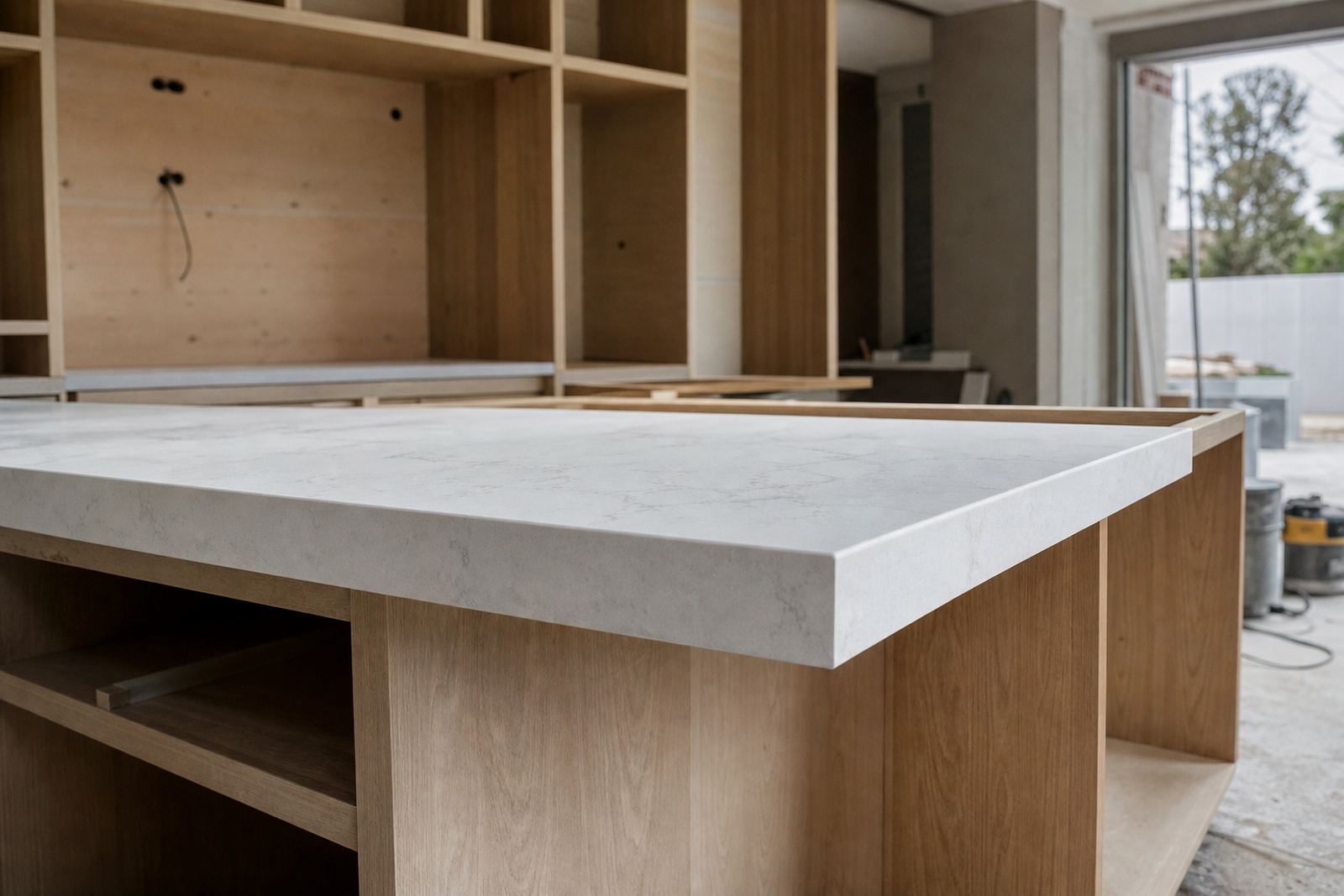
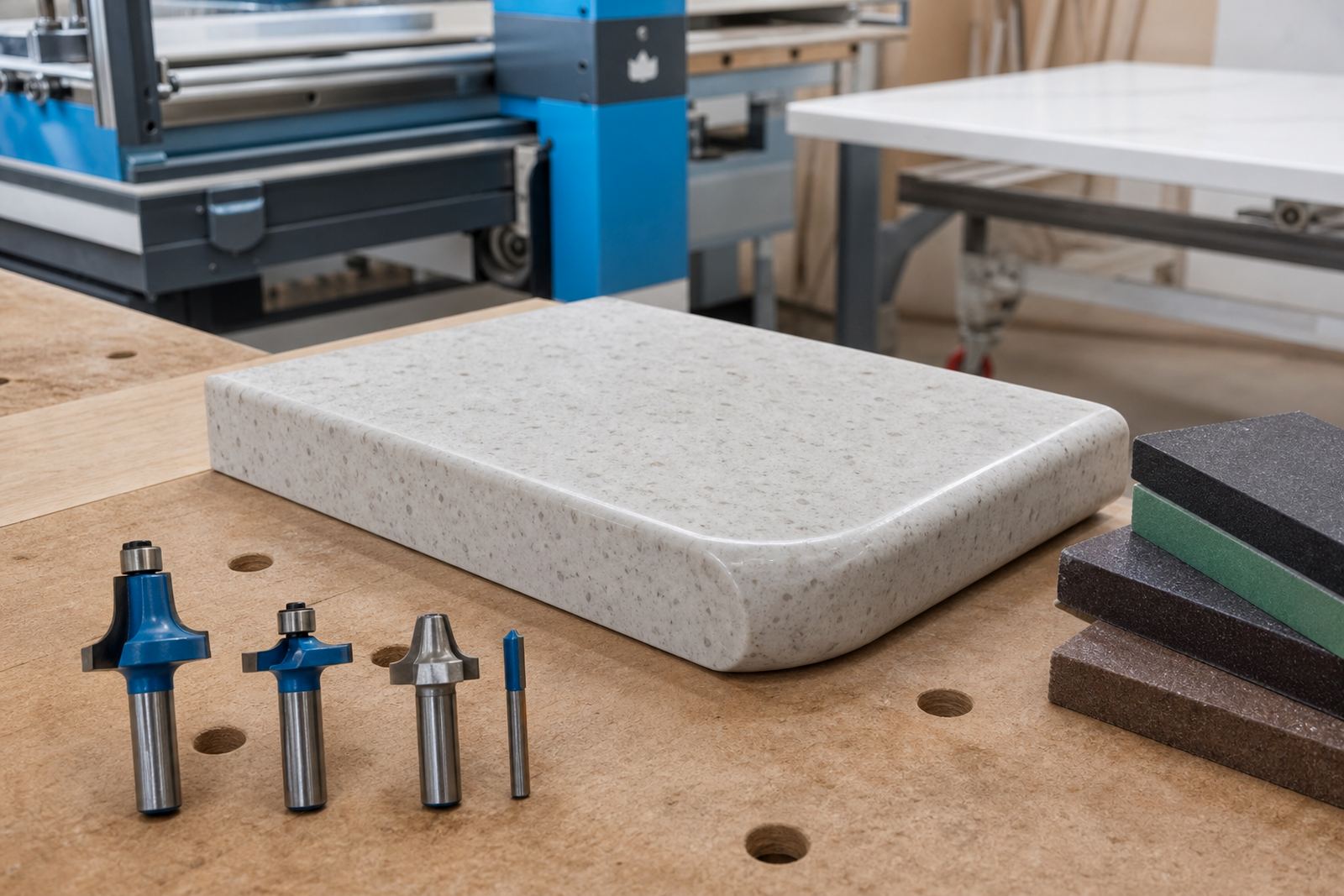
A bullnose edge is a fully rounded profile taken to the front and top corners of the slab, then eased into the underside so the edge feels continuous rather than sharp. On engineered quartz and solid-surface work, that round return is usually machined after templating and before final polish, with the radius chosen to suit the slab thickness and the look of the room.
It is a practical finish for tops that need a softer feel without losing the clean line of a fabricated surface. In homes and retail counters it also reduces the hard corner that can chip first when trays, plates or bags knock the edge. The profile can be run on straight lengths, curved islands, peninsula ends and vanity fronts, although the exact finish depends on the slab build-up and the way the installation is joined.
- Common slab thicknesses are 12 mm, 20 mm and 30 mm depending on the material selected and the finished height required.
- The profile may be full bullnose, near-full bullnose or a softer pencil-rounded variation where the project calls for less roundness.
- On quartz, the surface pattern continues across the edge as far as the material allows; on solid-surface, the edge can be blended to feel more uniform.
Best uses for a bullnose edge
The bullnose edge is popular where hands meet the countertop often, especially on family kitchens with a central island, coffee station, breakfast bar or serving ledge. It also suits bathroom vanities because the round form feels less severe in smaller rooms and sits well with basins, mirrors and light-coloured boards.
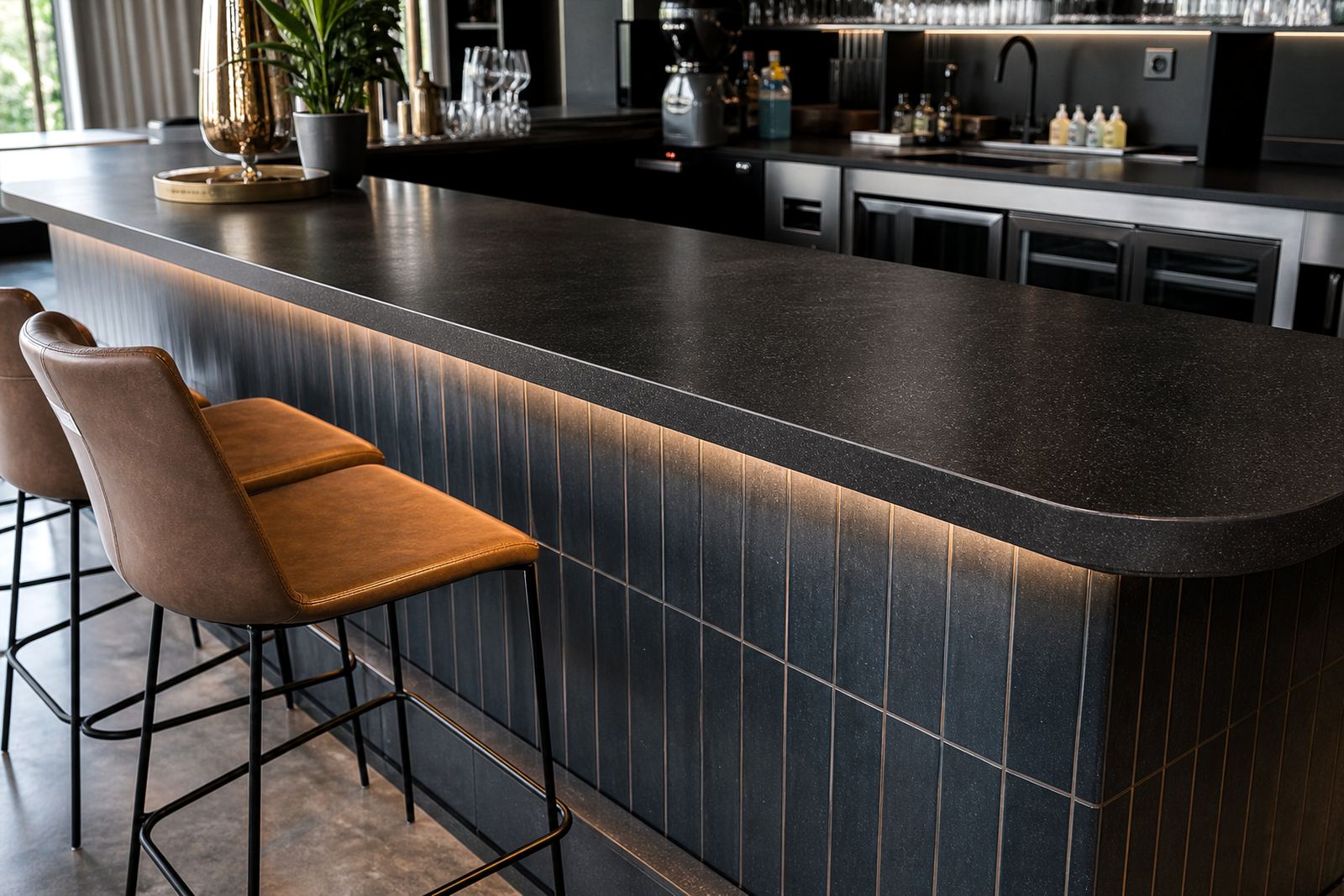
For shopfitters and office projects, it works on welcome counters, tea stations and display pieces that need a friendlier front line. In commercial spaces with high foot traffic, the rounded face helps the edge withstand daily contact better than a crisp sharp corner, although correct support and fitting still matter. We see it often on tops that need a neat front return with no visible roughness at the touch point.
- Kitchens where children, guests or staff move close to the front edge.
- Bars and serving counters that need a more finished front face.
- Vanities with integrated bowls or splashbacks, especially in compact bathrooms.
- Reception counters where the top must look tidy from both sides.
How the profile is made into the finished top
Once the site is templated, the workshop can set the cutting path, sink positions and edge treatment together so the bullnose sits in line with the rest of the top. The slab edge is cut, shaped and sanded through the profile stages, then the radius is blended to keep the roundness even from end to end. If a seam is needed, the join is planned away from the most visible front run where possible.
For quartz, the edge profile has to respect the structure of the slab and the finished thickness, so the underside return is handled carefully to avoid weak spots around cut-outs and mitres. Solid-surface material allows more blending at the join and around corners, which is helpful on vanities, curved reception tops and long runs with splashbacks. Hob cut-outs and sink cut-outs are set out before profiling is finalised, because those openings influence edge support and the amount of visible return around the front line.
- Template accuracy affects the bullnose line at corners and around curved ends.
- Seams are checked for colour match, alignment and the way light hits the front edge.
- Sink apertures, hob openings and drainer grooves need enough material left around them for strength.
Sizes, edge options and finish choices
The actual size of the bullnose depends on the slab thickness and the look the client wants. A full rounded edge on 20 mm quartz reads differently to the same profile on 30 mm material, because the visual mass changes. Some projects call for a slim, neat face, while others need a deeper edge that carries more presence on an island or bar front.
There are also small choices around the underside, corner return and how much of the profile is visible from standing height. On long counters, the fitter may soften the inside corner slightly so the profile does not look harsh at the mitre. On vanities, the edge often ends up closer to the room user, so the roundness and polish need to be consistent right along the front line.
- Typical edge range: 12 mm, 20 mm and 30 mm slab builds.
- Typical profile choices: full bullnose, eased bullnose, or a custom soft-round edge.
- Available on straight runs, L-shapes, islands, peninsulas and vanity fronts.
- Can be combined with matching splashbacks and integrated cut-outs.
Fitting details that keep the edge sound
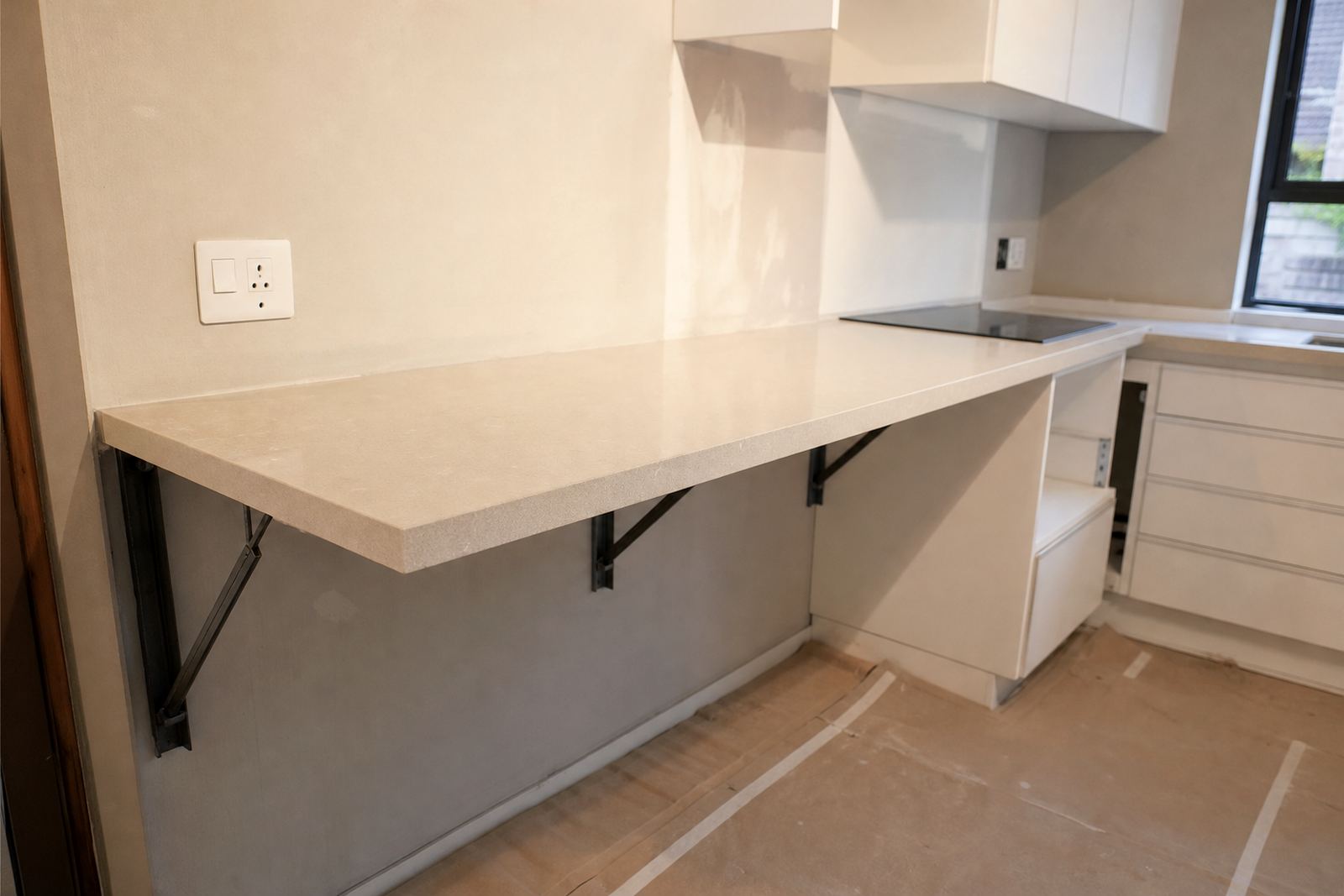
Good fitting starts with level cabinets, sound support and an accurate template. A bullnose edge shows unevenness more clearly than a flat square edge, so the base units and wall line must be checked before fabrication is locked in. Where the surface spans an appliance opening or a wide sink bay, extra support and correct joint placement help the edge stay clean under daily use.
During installation, the fitter has to protect the polished round face from scuffs and impact, then seal the joins so water does not sit in the vulnerable areas near the sink or splashback. On quartz, a neat seam and proper support under the front rail matter a lot because the profile can draw the eye straight to any misalignment. On solid-surface work, the edges can be finished to flow into one another, but the fit still needs careful sanding and final polishing.
- Check cabinet level before the template is approved.
- Confirm the position of sink bowls, taps, hob openings and appliance clearances.
- Plan seam locations where the edge line will not be interrupted in plain view.
- Allow for wall straightness, tile thickness and splashback height at the rear.
Care for rounded edges in busy rooms
Daily care is straightforward, but the rounded form still benefits from a gentle routine. Wipe up spills with a soft cloth and a mild cleaner, then dry the edge where water often collects near the sink or tea station. Avoid dragging heavy cookware or sharp trays across the front radius, because repeated knocks can leave marks even on a well-made edge.
Heat and stain care still matter on quartz and solid-surface tops. Use a trivet or pad for hot pots and trays, keep bleach or harsh solvents off the surface, and clear acidic spills before they sit. On a bullnose edge, the front line often catches more hands and cups than the centre field, so the edge should be treated as part of the working surface not just a decorative detail.
- Use soft cloths and non-abrasive cleaners.
- Lift rather than scrape objects across the edge.
- Keep hot items off the finished surface.
- Dry the front radius after sink work or splashback cleaning.
Details to confirm before ordering your bullnose edge
When ordering a bullnose edge, the main job is to match the profile to the slab, the room and the way the top will be used. A full rounded finish on a vanity may need a different build-up to the same edge on a kitchen island, especially where a sink cut-out or hob cut-out sits close to the front. If the project includes a splashback, make sure the profile, height and corner returns all work together before fabrication starts.
For homes, offices and shopfitting work in Strijdom Park, Randburg and across Gauteng, our team handles site templating, digital measuring, cutting and fabrication, edge profiling, seam joining and installation. Use our contact form to start a bullnose edge quote. It helps to send the room dimensions, slab choice, the length of exposed edge, the number of cut-outs, the cabinet type and whether the bullnose is needed on one side or around a full island. That gives the workshop a clean brief and keeps the profile aligned with the rest of the top.
- Room type and site location: kitchen, bar, vanity or reception counter.
- Slab thickness and material type: engineered quartz or solid-surface.
- Edge extent: single run, front-only, L-shape, island or full wrap.
- Cut-outs and add-ons: sink, hob, drainer grooves, splashbacks and mitres.
Key facts
| Profile | Fully rounded bullnose edge for quartz and solid-surface countertops |
|---|---|
| Typical slab thickness | 12 mm, 20 mm and 30 mm depending on the project |
| Suitable applications | Kitchens, bars, vanities, reception counters and shopfitters |
| Fabrication stages | Site templating, cutting, profiling, seam joining and installation |
| Common pairings | Sink cut-outs, hob cut-outs, splashbacks and mitred corners |
| Service area | Strijdom Park, Randburg and across Gauteng including Johannesburg, Sandton, Pretoria, Midrand and Fourways |