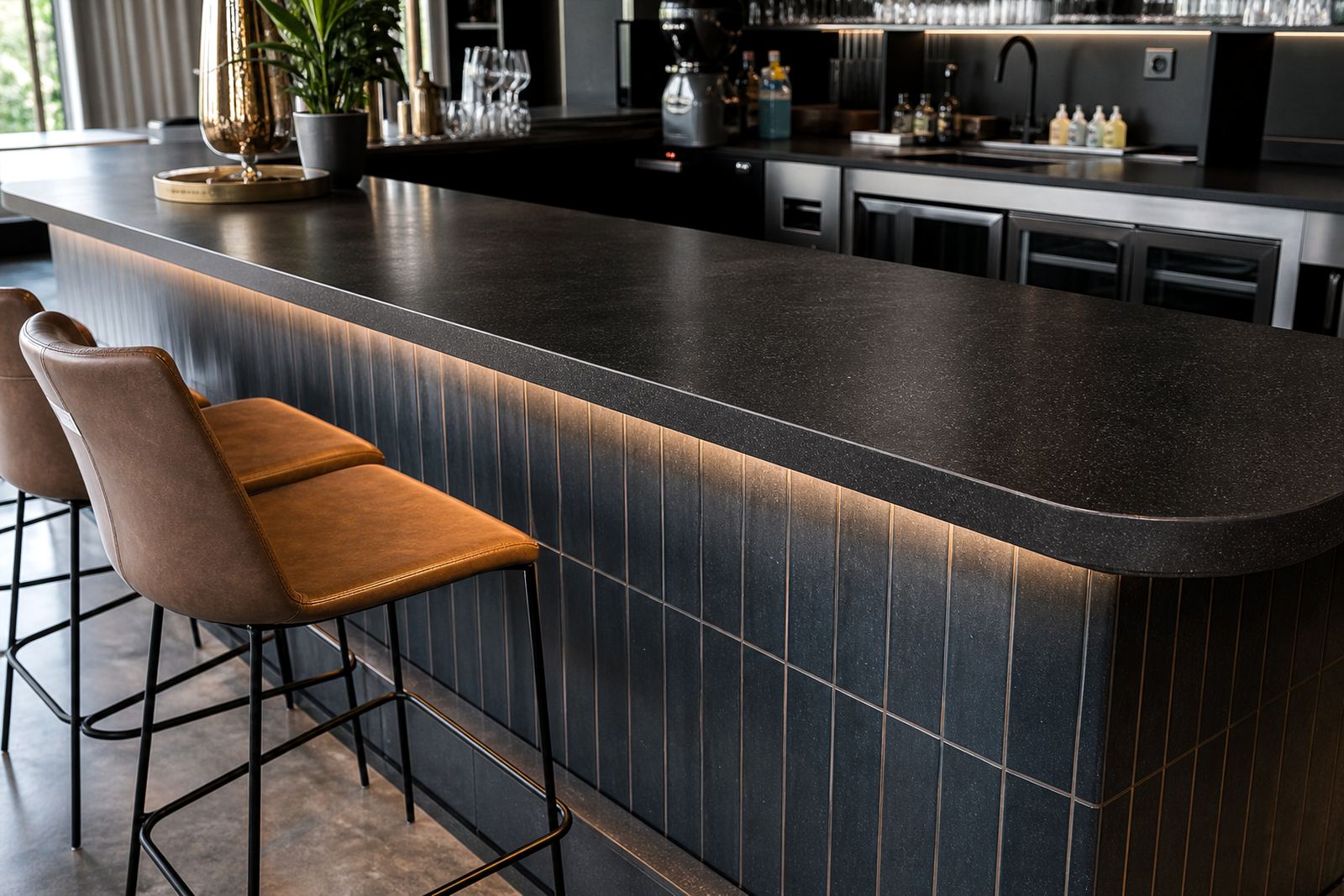
A bar top built for spills, elbows and repeated cleaning
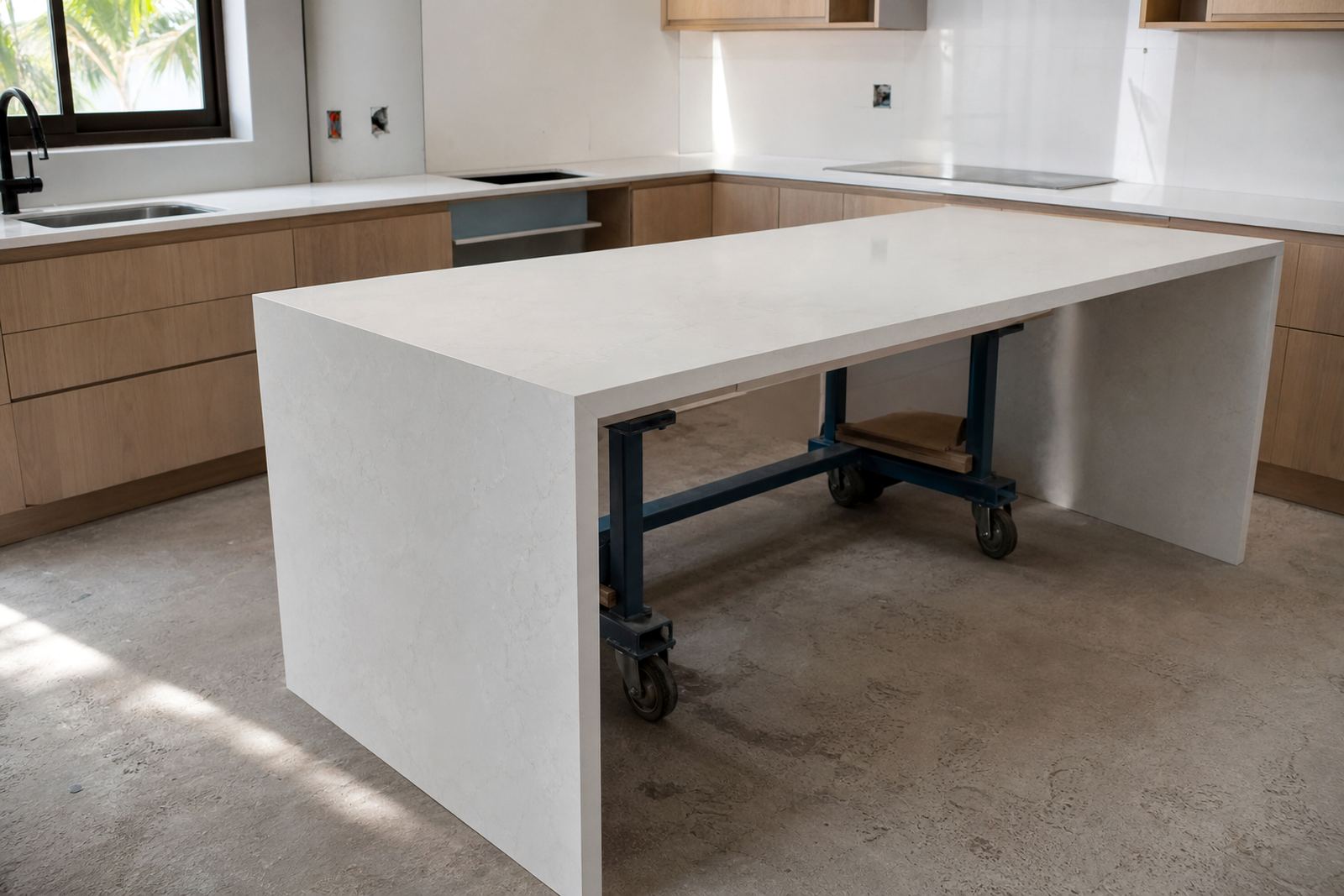
A bar top is a working counter with a social edge. It can run straight, turn a corner or wrap around a serving area, and it often needs a deeper overhang than a standard kitchen counter so people can sit comfortably on stools. For this kind of use, engineered quartz gives a dense, polished surface with strong stain resistance, while solid-surface offers a warmer matte feel and more shape flexibility around curves and joins.
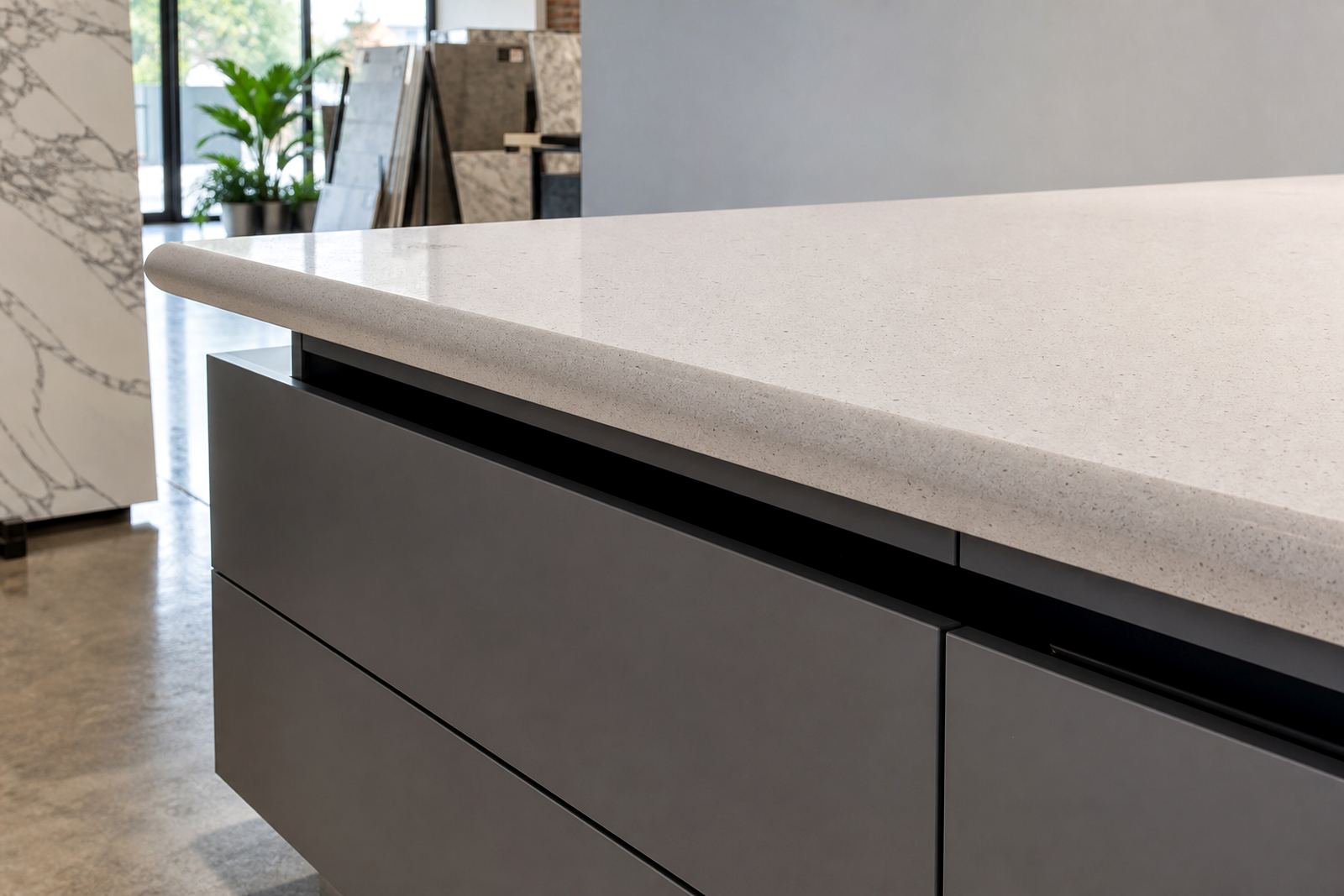
Most bar counters are built from 20 mm or 30 mm slab thickness, with the top edge eased or profiled to suit the look of the room. A square pencil edge gives a neat modern line, while a slightly rounded edge softens the front where people lean against it. Splash-resistant upstands can be added behind the bar or along a wall face to help contain spills and ice water.
Sizes, overhangs and edge details that make sense
Bar tops are usually planned around the room, the stool spacing and the service side behind the counter. A practical overhang lets knees fit beneath the front edge, while the working side can be kept shallower for glassware, trays or a coffee point. Long runs may need a discreet support frame or brackets, especially where the stone extends beyond the cabinet line.
- Slab thickness: 20 mm or 30 mm, depending on the look and the span
- Edge profiles: straight, eased, pencil, bullnose or a thicker built-up edge
- Corner options: square, chamfered, rounded or splayed to suit traffic flow
- Overhangs: sized for seating comfort and structural support
- Finish: polished quartz or matte solid-surface, chosen to suit the room
On larger bars, slab layout planning matters. Good layout reduces visible joins and keeps the pattern flow sensible across the counter. In darker quartz colours, seam placement and slab matching need care so the top reads as one clean surface, not a patched job.
Templating the room before the first cut
We begin with site templating or digital measuring so the bar top matches the actual walls, posts and cabinet lines, not just the drawings. That matters where a wall bows, a floor runs out, or the bar has a feature corner that must land exactly against cladding or timber trim. A good template also captures sink cut-outs, tap positions, fridge vents and any service gaps that need to stay accessible.
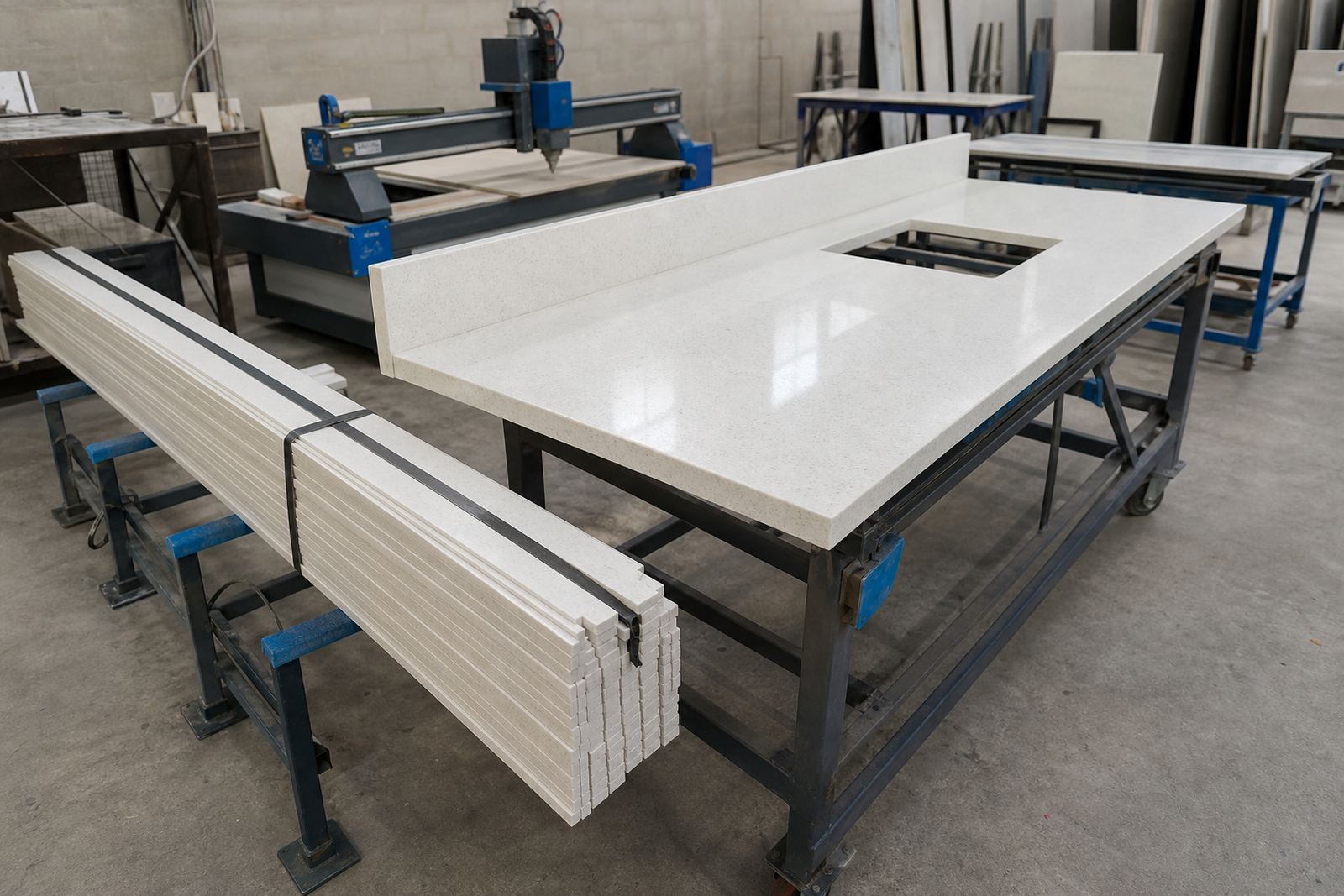
For a bar counter, we also check the front fascia, the underside clearance and any splashback height behind the working side. If the design includes a drink sink, ice sink or hob-style warming plate in a hospitality setting, those cut-outs need clear layout before fabrication starts. The templater also confirms access paths into the room, because a large bar top may need sectional fabrication rather than one full piece.
- Wall lengths, inside corners and outside corners are measured on site
- Cabinet heights and support points are marked before cutting
- Sink cut-outs and tap holes are set out before fabrication
- Seam positions are planned to suit slab size and handling access
- Final edge detail is confirmed against the room style
Where bar counters work best in Gauteng
We fit bar tops for homes, office entertainment areas, showrooms, cafés and shopfitters across Johannesburg, Sandton, Pretoria, Midrand, Fourways, Centurion and Roodepoort. In a private home, the top may form part of a kitchen island or entertainment wall. In an office, it often sits in a breakaway area or reception setting where the finish has to look neat under daily use. In shopfitting, the counter may need a tougher service side and a tidy customer-facing edge.
Quartz suits busy areas where drinks, citrus, wine and coffee are common. Solid-surface is often preferred where a more smooth visual line or shaped edge is needed, especially on curved counters or where the design wants a softer hand-feel. Both materials can be worked for splashbacks, front panels and matching vanity-style surrounds when the project calls for a coordinated finish.
Fitting, joints and the parts people notice later
Installation starts with a level base. If the supporting cabinets or frame are out, the top can telegraph that problem straight away. We check the substrate, fit the pieces, join the seams and seal the relevant edges so the bar top sits tight and looks balanced from the customer side and the working side. At the front of a long bar, a clean seam line is often better than a forced one-piece span that carries unnecessary stress.
Joinery around bar tops has to cope with movement, handling and daily wipe-downs. Seams are placed where they make practical sense, then finished to keep the surface easy to clean. If a splashback is part of the job, the vertical return helps protect the wall behind the drinks area from repeated spills and splash marks. Our installations team also works with aftercare advice so the top stays looking presentable after the first few busy weekends.
Keeping the surface presentable after service
Quartz and solid-surface both need ordinary care, but the habits are different. For routine cleaning, wipe with a soft cloth and mild soap mixed with water. Wipe up wine, citrus, coffee and syrup spills without leaving them to sit. Put hot pans, kettles or serving trays on a trivet rather than directly on the slab, because heat can mark joins, dull the polish or leave a visible stress patch on some finishes.
Solid-surface can be buffed more easily if a surface mark appears, while quartz normally keeps a crisp polished finish with regular cleaning. Avoid harsh scouring pads and abrasive powders, especially near edge profiles and seams. For bar tops in coastal or high-humidity areas, keep the underside dry and the splash zone clean so the supporting structure and fittings stay in good condition.
- Wipe spills early, especially alcohol, citrus and coloured drinks
- Use trivets under hot items and metal drink prep tools
- Clean around sink cut-outs and tap bases where moisture collects
- Do not drag heavy bottles or ice buckets across the edge
- Check seal lines and joints during routine cleaning
Details to confirm before fabrication starts
The right bar top starts with the right brief. Confirm the overall length, depth, return legs, overhang allowance and the material choice between quartz and solid-surface. Also confirm whether the bar needs rounded corners, a thicker front edge, a matching splashback, under-counter support or a sink cut-out. If the top wraps around a pillar or meets another surface, those dimensions need to be taken from the room.
Clients can use our contact form with photographs, rough measurements and any drawings they have on hand. That helps the team check the slab layout, the seam positions and the handling plan before the workshop begins cutting. For office and shopfitting work, it is also useful to note any access limits, security rules or building times that affect installation on site.
- Finished size in millimetres, including returns and overhangs
- Material choice, colour family and gloss or matte finish
- Edge profile and corner treatment
- Any sink, tap, hob or service cut-outs
- Support requirements and access into the room
- Whether a splashback or matching side panel is included
Key facts
| Materials | Engineered quartz or solid-surface |
|---|---|
| Typical slab thickness | 20 mm or 30 mm |
| Edge options | Square, eased, pencil, bullnose or built-up front edge |
| Common features | Overhangs, rounded corners, seam joins, splashbacks, cut-outs |
| Installation area | Strijdom Park, Randburg and Gauteng |
| Related services | Site templating, digital measuring, fabrication, installation, aftercare advice |