
A Low Wall Edge That Keeps the Water Line Tidy
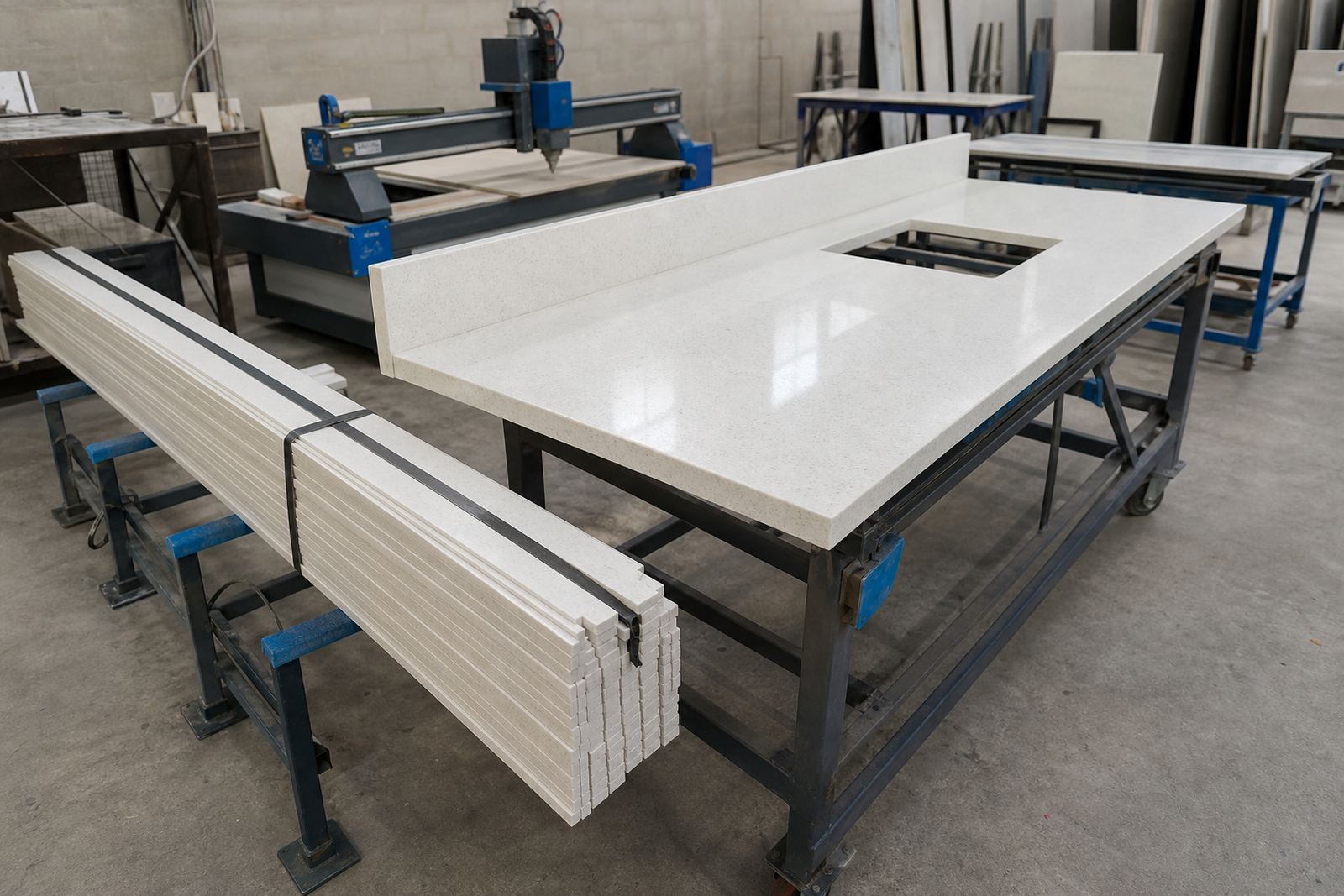
A loose upstand is a separate strip fixed along the back or side edge of a countertop, usually between 50 mm and 150 mm high. It gives a neat rise where water, soap and day-to-day splash need to be held back without taking the wall all the way to full height. On engineered quartz, the strip is cut from matching slab offcuts or planned slab sections, while solid-surface can be machined to sit flush with softer returns and corner details.
The strip is useful where tiles will finish above it, where a painted wall needs protection at the sink run, or where a vanity needs a cleaner edge around basins and mirror walls. In practice it is a small detail, but it changes how the top sits against the wall, especially when the wall is not straight and the installer has to work with real site conditions.
- We usually make the upstand 50 mm, 75 mm, 100 mm, 120 mm or 150 mm high.
- Usual thickness: matched to the top, often 20 mm or 30 mm on quartz and solid surface.
- Finish: polished face, eased top edge, clean square line or small bullnose style.
- Use: kitchen backs, vanity walls, scullery runs and utility counters.
Sizes, Thicknesses and Edge Choices That Shape the Job
Loose upstands are normally fabricated to suit the chosen countertop thickness, with the strip taken from the same material batch where possible. Quartz slabs are commonly worked in 20 mm and 30 mm thicknesses, while solid-surface sheets are built to suit the design and the edge detail. The height can be kept low for a light visual line, or lifted where a sink run needs more cover against splashes and wiping.
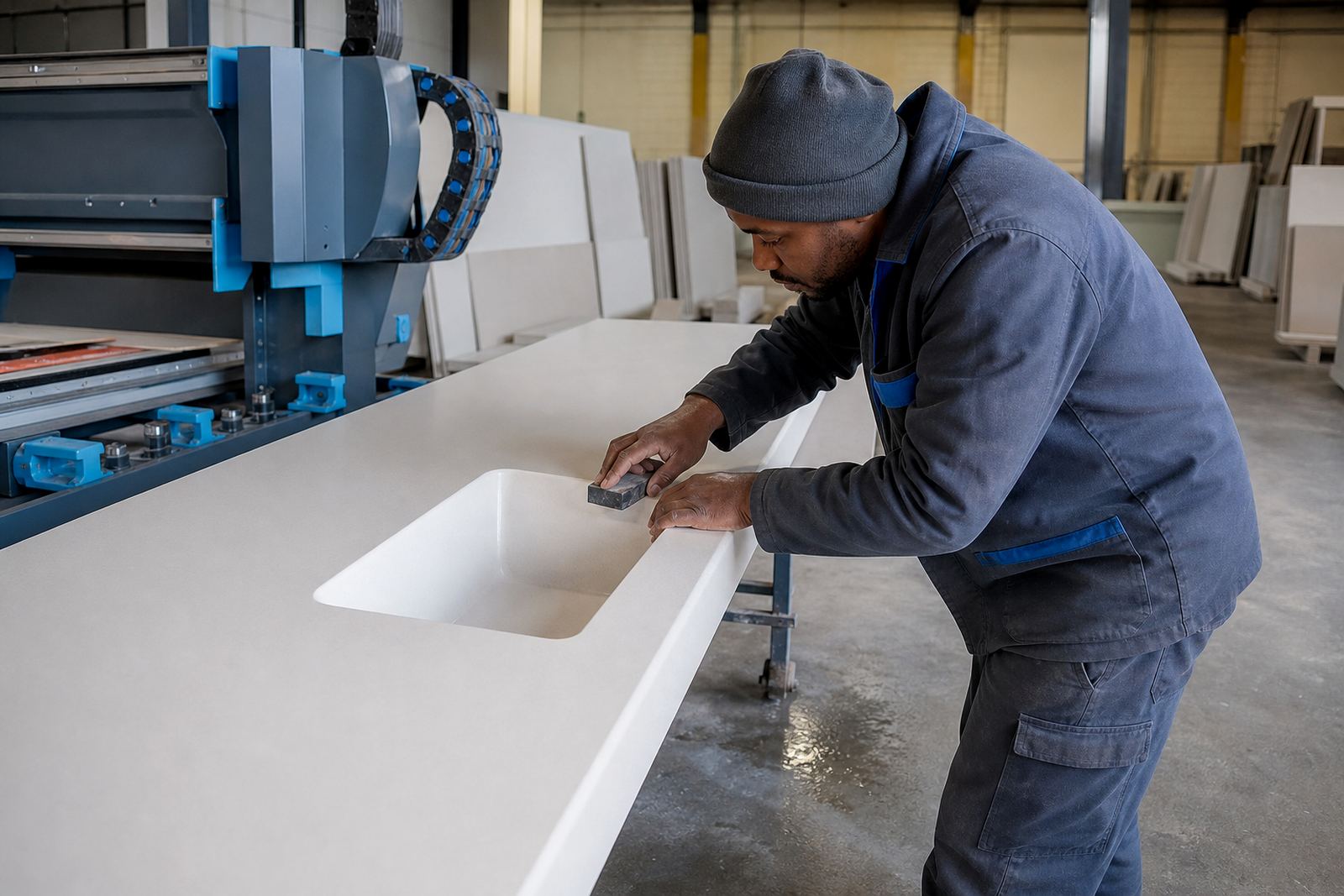
Edge profiling matters because a loose upstand sits where hands, cloths and cleaning tools travel every day. A square edge gives a crisp modern look, but many clients prefer a small eased edge or a soft radius to reduce sharp corners around children, staff movement and tight kitchen layouts. At inside corners, the join should be planned so the line stays neat and the return does not trap grime.
- Edge options include square, eased, pencil and small radius profiles.
- Lengths are cut to site dimensions, with mitred or butt-joined corners as the job calls for.
- Returns can be added at ends, around openings, or behind basin runs.
- For quartz, colour and veining direction should be checked before cutting starts.
Where Loose Upstands Make Sense in Real Rooms
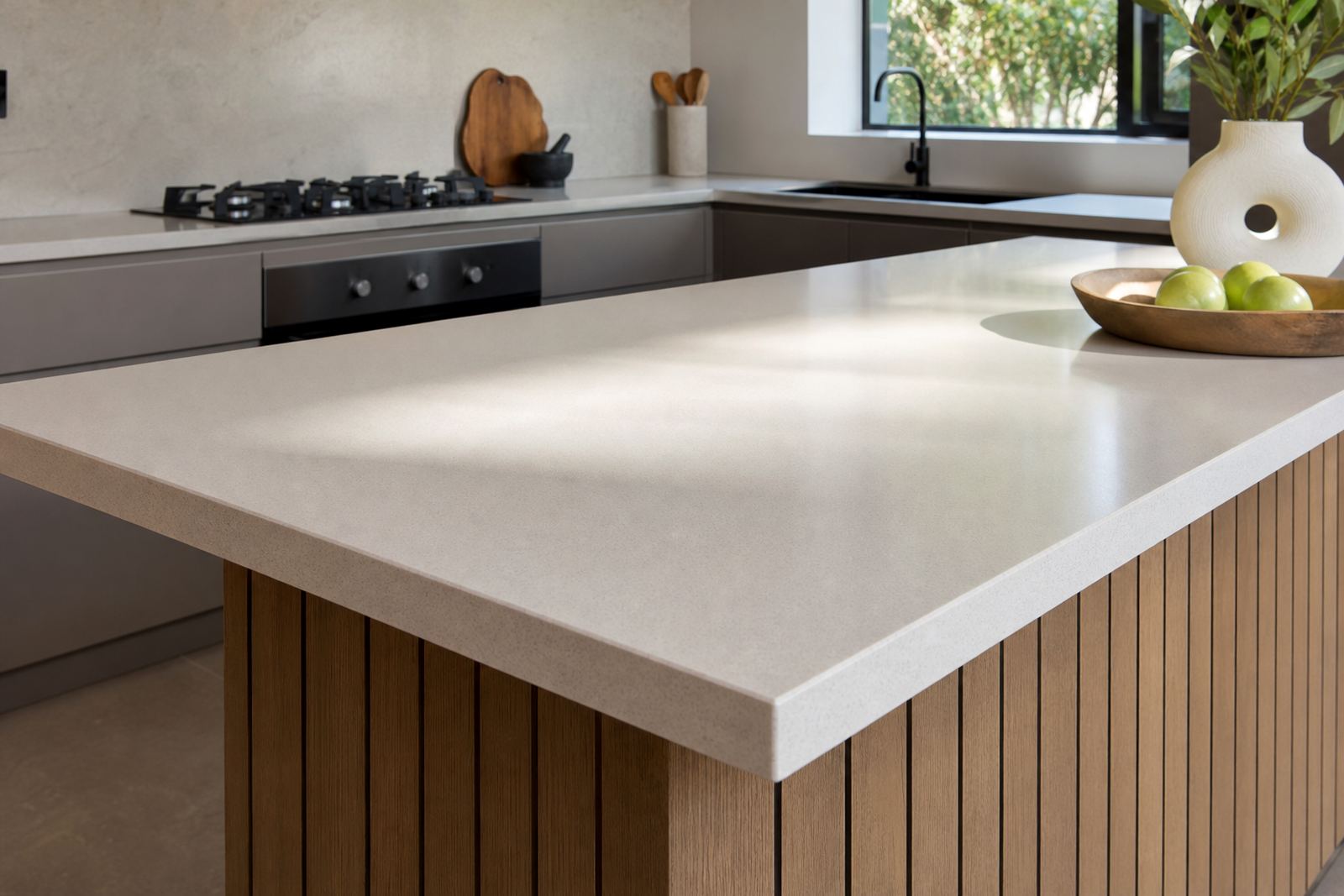
This detail suits rooms where a full-height splashback would feel too heavy, too costly or simply unnecessary. In a kitchen it can protect the back edge behind the sink, dish area or prep line. In a vanity room, it keeps toothpaste, water and cleaning spray from sitting directly on a painted wall. In office tea points and shopfitters' counters, it gives a clean finish where staff need a practical edge without overbuilding the whole wall surface.
Loose upstands also work well where tile finishes are still to be decided. The strip can sit below the tile line and help the installer leave a crisp transition. On uneven walls, the piece can be scribed and trimmed to follow the wall more closely, which reduces visible gaps and helps the final seal run hold better.
- Kitchen sink runs with painted walls or tiled sections above.
- Vanities where the basin wall needs light protection.
- Sculleries and laundry counters with regular wiping.
- Office and retail tea stations where a low maintenance finish is preferred.
Templating, Cutting and Fitting Around the Wall Line
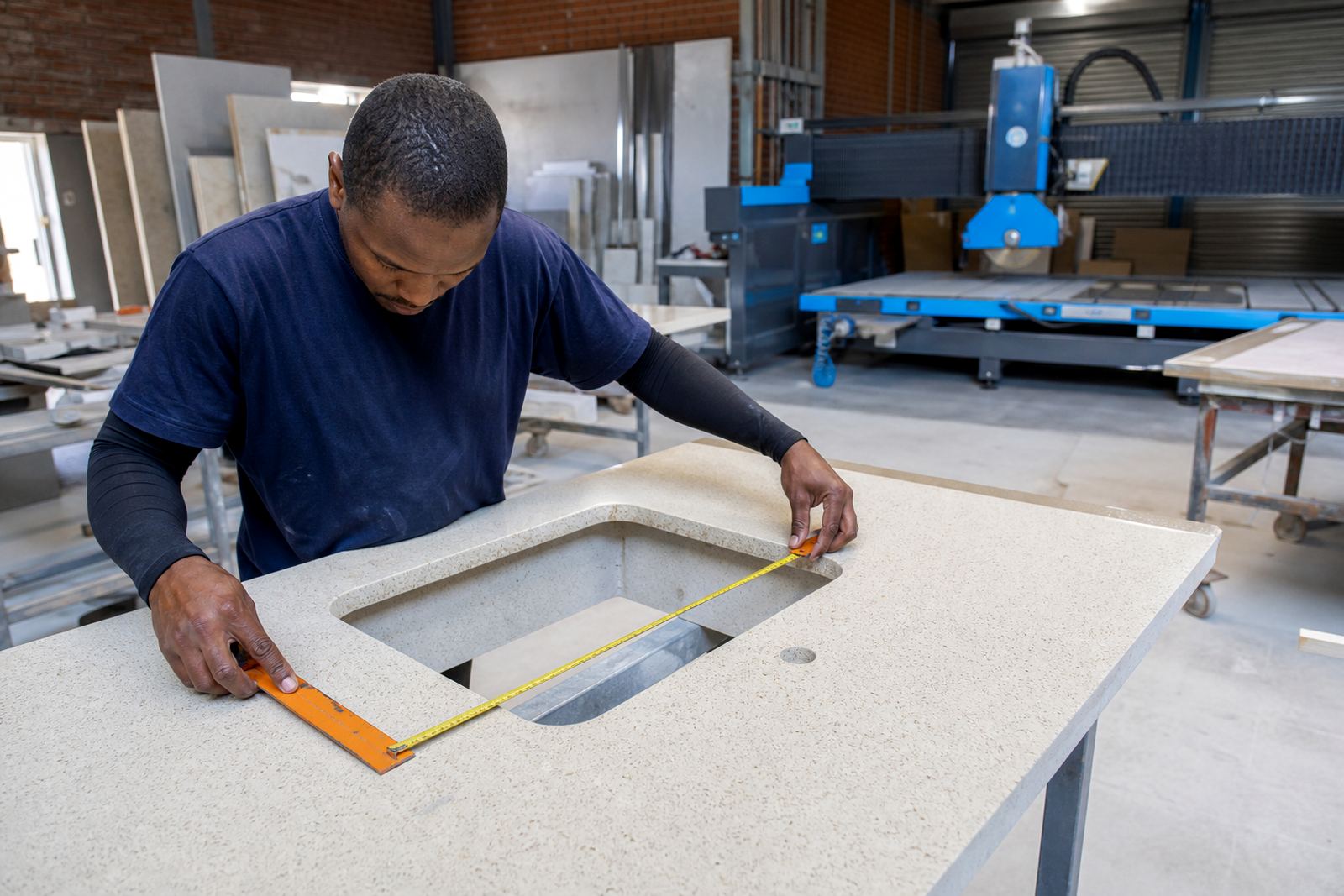
Loose upstands depend on careful templating because the wall behind a counter is rarely perfectly straight. The measured line must pick up the top edge, the fall of the floor, the position of the sink cut-out and the place where a seam may need to sit away from a corner. If the base counter is already templated for a hob cut-out or a basin opening, the upstand should still be checked against those points so the finished run does not fight the hardware.
During fitting, the strip is bonded and sealed so the joint at the counter stays tight. On quartz, the installer has to work neatly because polished edges show any mismatch. On solid surface, the advantage is cleaner blending at small joins and shaped corners, though the fixing still needs accurate support and a calm hand at the wall line. A dry layout before bonding helps mark the exact run, especially where a wall bows or a window reveal changes the line.
- Site templating should capture wall straightness, socket positions and end conditions.
- Seams should be kept away from the most visible centre points where possible.
- Installers should allow for silicone sealing at the top edge and corner transitions.
- Any splashback tiles above the strip need a neat final gap and finish detail.
Cleaning and Day-to-Day Care After Installation
Loose upstands are easy to live with when the surface is wiped properly. For engineered quartz, a mild dish soap solution and a soft cloth are usually enough for routine cleaning. Harsh scouring pads can dull the polish, and high heat from a kettle, pan or appliance can mark any engineered surface if care is not taken. Solid-surface upstands are also best kept to gentle cleaners, with spills removed before they dry on the join or corner.
The line where the upstand meets the wall should not be scrubbed with sharp tools. If a sealant joint opens slightly over time, it can be refreshed to keep moisture out of the wall edge. In busy homes and commercial kitchens, that small maintenance step keeps the finish sharp and helps stop staining around the back run, especially where tea, coffee or cooking oils get handled often.
- Use soft cloths, non-abrasive cleaners and warm water for routine wipe-downs.
- Avoid dragging cookware or hard utensils across the top edge.
- Keep the seal line checked where water regularly sits.
- Clean spills early, especially around sinks and prep zones.
What to check before we cut the upstand strip
When ordering loose upstands, the important details are practical ones. The height, thickness, length and edge profile need to match the countertop and the room. The wall finish must be known too, because tile, paint and mirror surfaces each ask for a different termination. Where there is a sink cut-out, the upstand may need to be interrupted or shaped so it does not clash with taps, splash zones or a tiled corner.
It also helps to confirm whether the strip must run full length or stop short of end panels, window reveals or corners. If the counter is being installed with a vanity basin, the basin projection and tap position should be included in the notes. For Gauteng sites, our team can template, fabricate and fit loose upstands in Johannesburg, Sandton, Midrand, Fourways, Pretoria, Centurion, Roodepoort and Randburg, with the strip arranged to suit the room instead of making the room suit the strip.
- Confirm material type: engineered quartz or solid surface.
- Confirm strip height, thickness, length and edge profile.
- Confirm wall finish, corner turns and any tile or mirror terminations.
- Confirm sink, tap, hob or vanity openings that affect the run.
Clients may send the job details through our contact form on our contact page when they need a quotation or a fitment chat for loose upstands. The more exact the site notes, the cleaner the fabrication line and the final wall finish.
Key facts
| Product | Loose upstands for engineered quartz and solid-surface tops |
|---|---|
| Typical heights | 50 mm to 150 mm |
| Common thicknesses | 20 mm and 30 mm quartz, matched solid-surface build-up |
| Edge options | Square, eased, pencil, small radius and selected mitres |
| Install methods | Bonded, sealed and aligned to templated wall lines |
| Use areas | Kitchens, vanities, sculleries, tea stations and light-use prep counters |