
Rim-support openings that sit cleanly on the top face
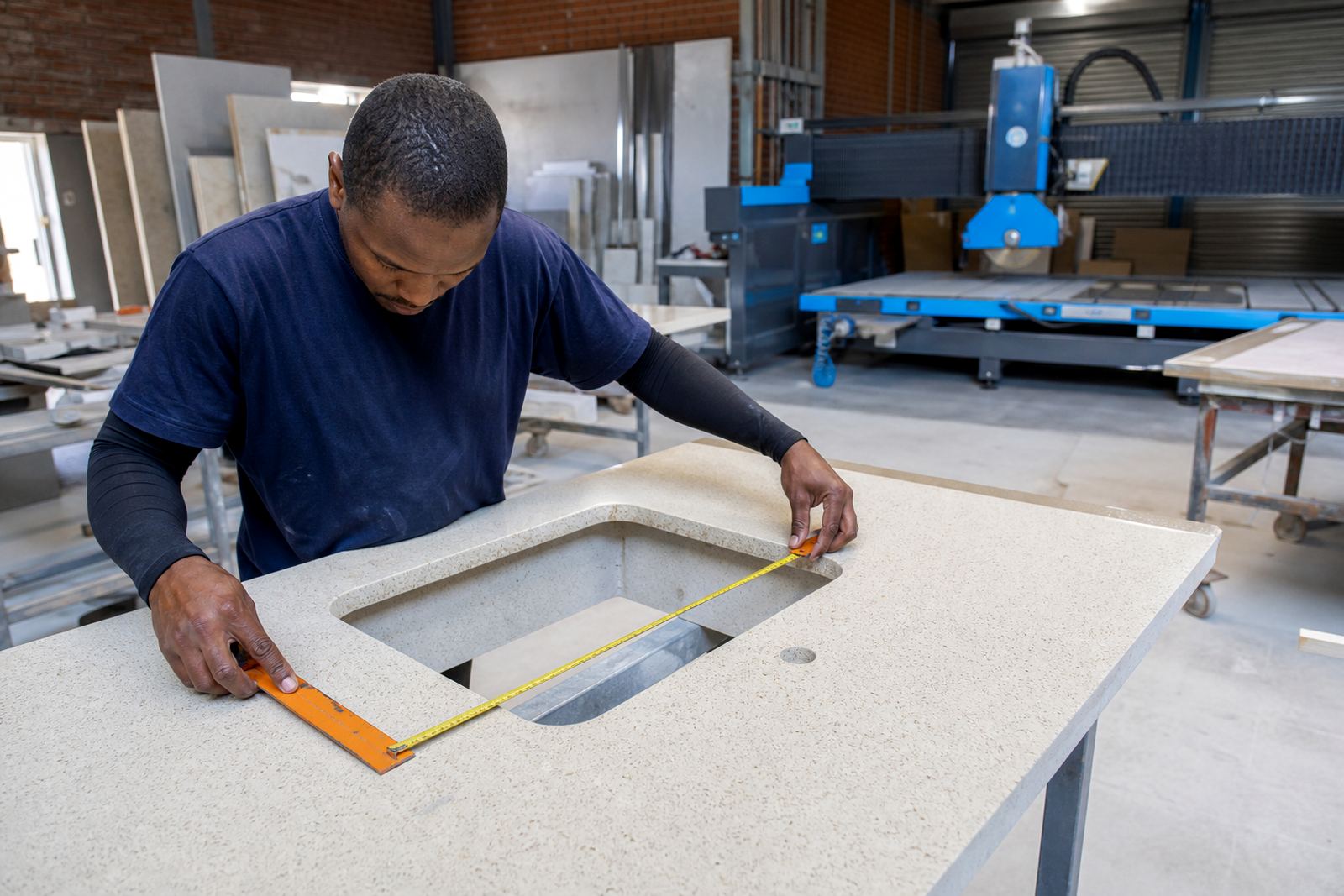
Drop-in sink cut-outs are made for top-mounted basins where the rim carries the finished edge and the sink bowl drops through the slab. The opening is measured to suit the sink body, the flange width and the sealant line, so the rim lands evenly and the cut-out does not crowd the bowl. On engineered quartz and solid-surface tops, that detail matters because a few millimetres can change how the sink seats and how the bead of silicone finishes around it.
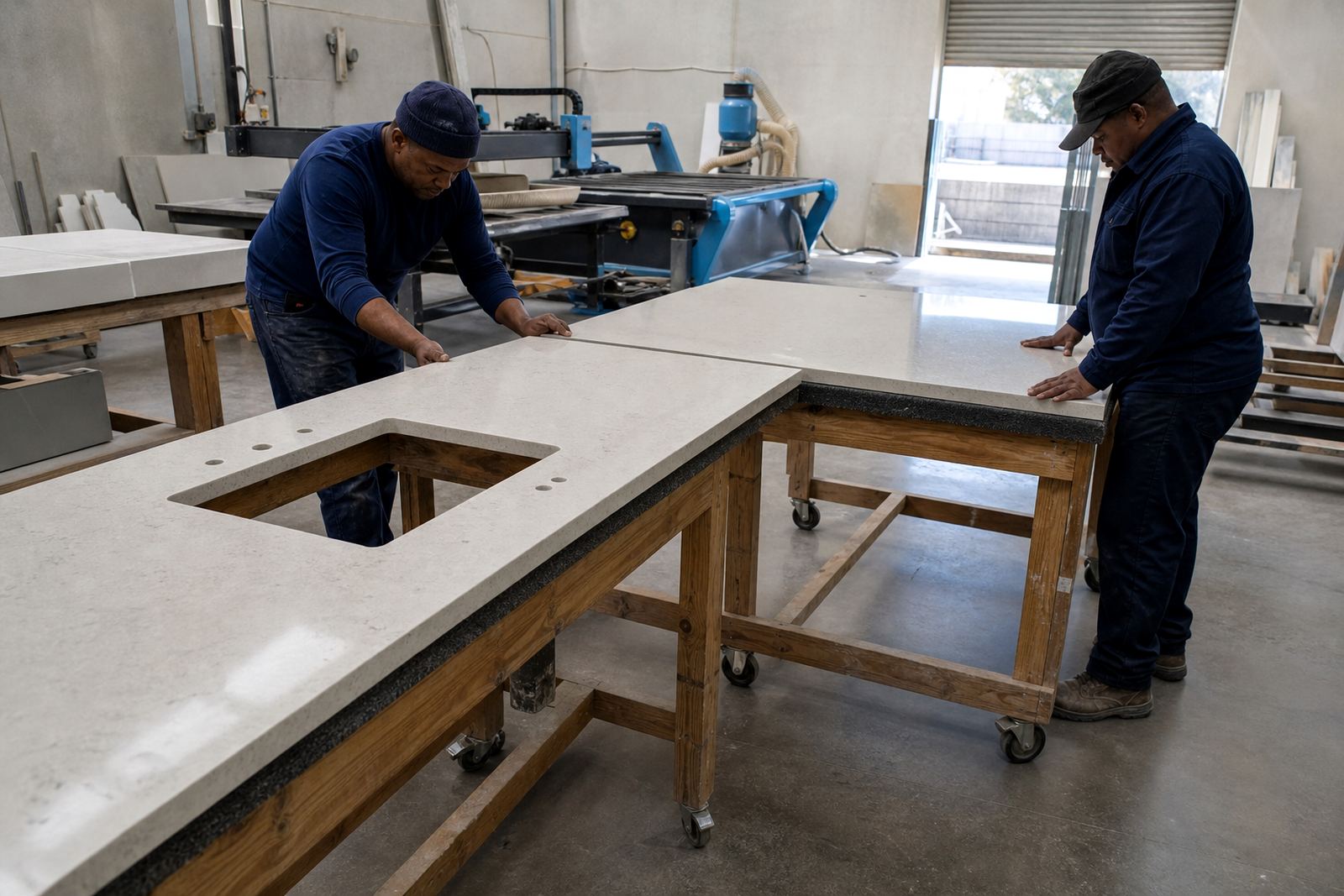
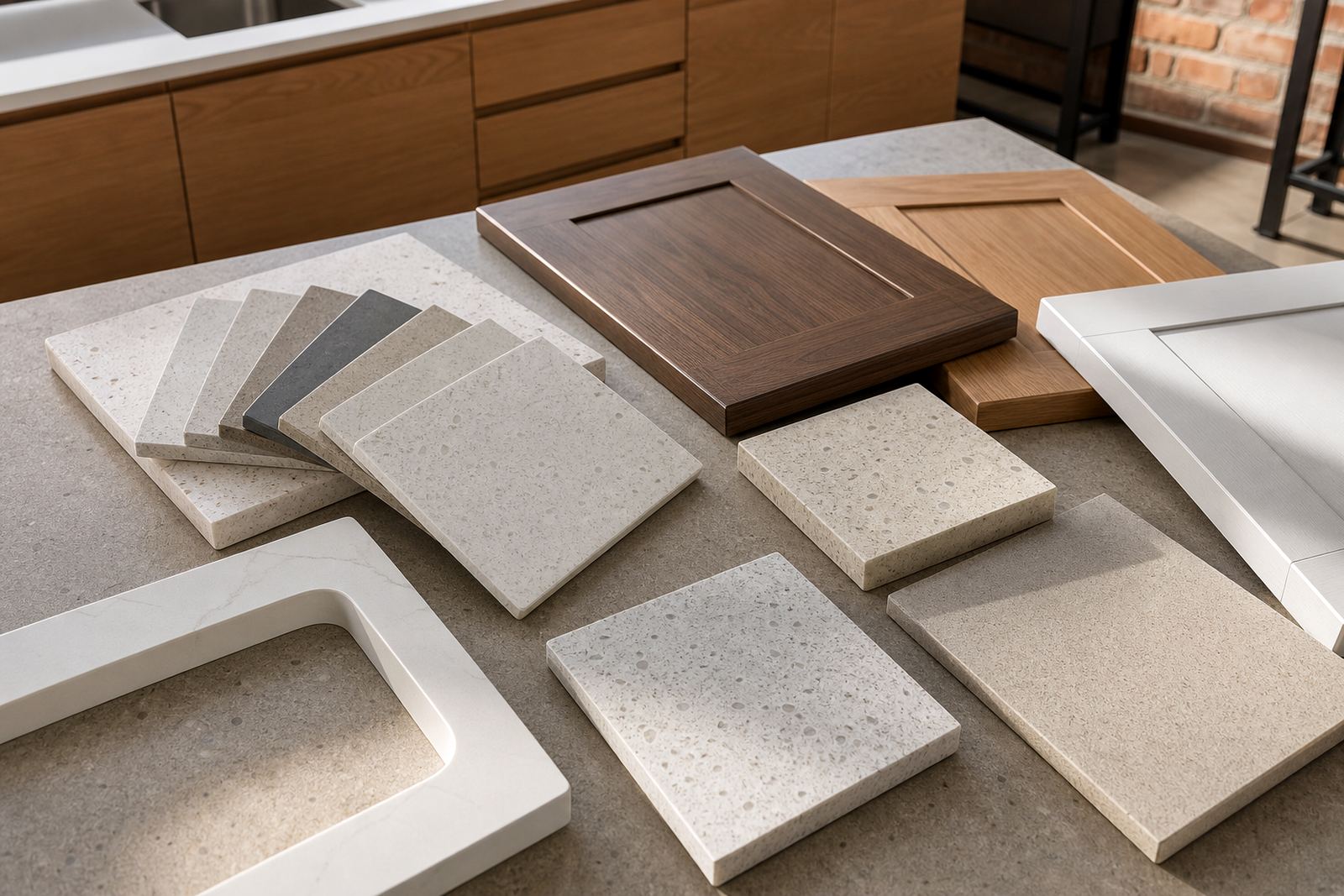
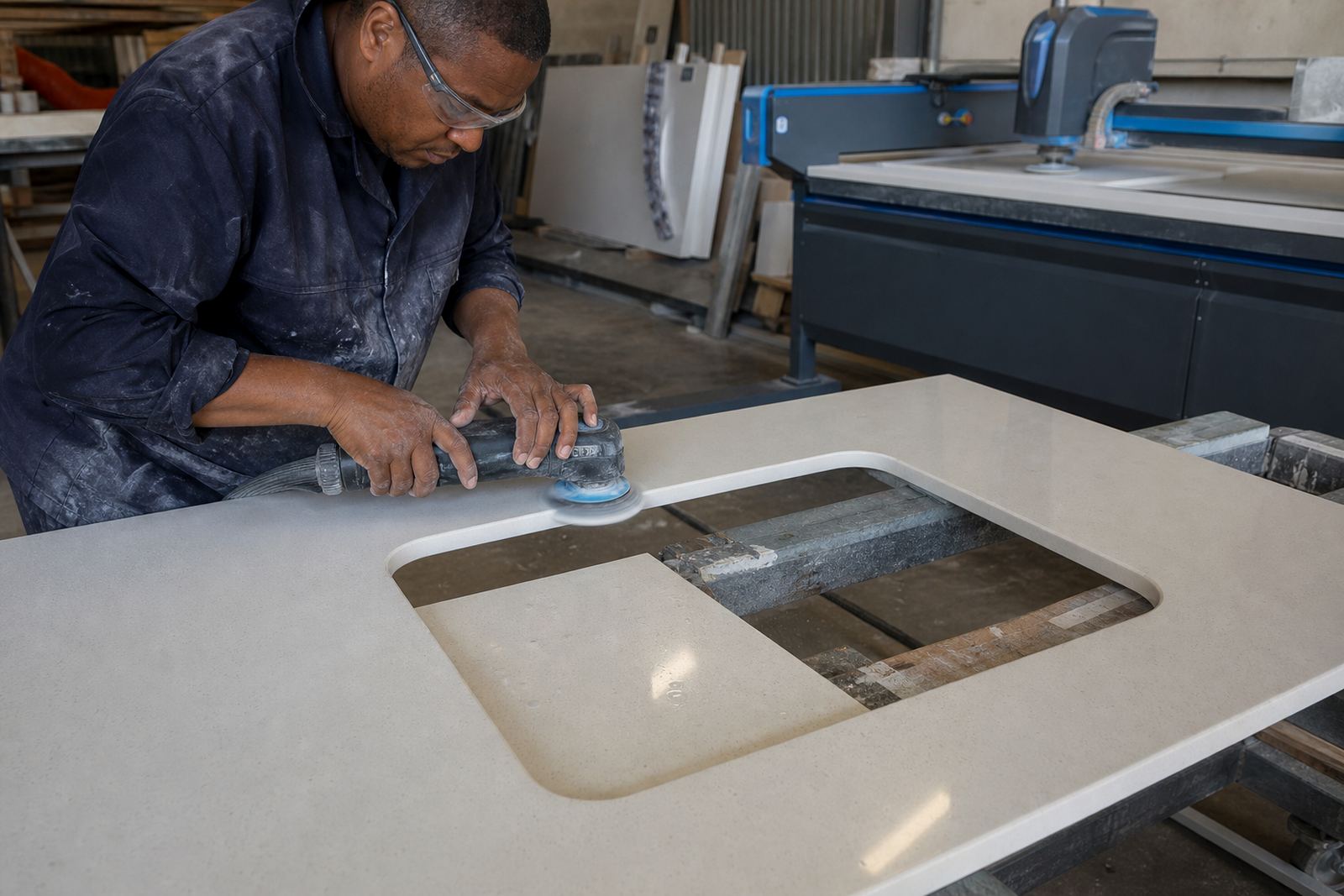
We work from site dimensions or from the sink itself after templating. The opening is cut to the shape required, then the edges are dressed for a clean, tight fit. For solid-surface work, the visible edge can be softened more freely. With quartz, the edge profile is usually kept crisp and controlled to match the slab thickness and the sink style. Where the basin has a deeper rim or a wider lip, the cut-out is adjusted so the finished opening still looks balanced from every side.
- Suitable for top-mounted kitchen, scullery and utility sinks
- Common on 20 mm and 30 mm engineered quartz tops
- Also used on solid-surface tops for wash areas and office tea points
- Can be paired with an undermount elsewhere on the same run if the layout calls for it
Sizes, edges and cut detail we set before fabrication
Sink cut-outs are not one-size work. We confirm the sink bowl size, rim width, corner radius, drain position and the amount of overhang allowed by the cabinet line. A standard rectangular basin may need square shoulders and a slightly eased corner radius, while a round or oval sink asks for a different tool path and a neater curve. The slab thickness also guides the finish because the cut edge must look deliberate beside the basin rim and any nearby hob cut-out.
For quartz, the opening is usually set with enough tolerance for a tidy seal but not so loose that the rim floats. For solid-surface, the opening can be refined more tightly and the edge can be profiled to suit a softer internal line. We also look at the underside clearance, especially where clips, taps or waste fittings sit close to the cabinet bracing. If the sink is being fixed into a vanity top, the cut-out may need a smaller return lip to keep the front edge comfortable in daily use.
- Rectangular, square, round and oval sink openings
- Corner radius matched to the basin
- Allowance for clip positions, waste clearance and tap placement
- Edge finish can be eased, square or lightly rounded, depending on material
Where drop-in sink cut-outs work hardest
These cut-outs suit kitchens, sculleries, laundry rooms, office kitchenettes and shopfitters fitting wash points into compact counters. In homes across Randburg, Sandton and Fourways, a top-mounted sink is often the practical choice where the cabinet opening is fixed and the owner wants a straight install without chasing a complicated underside detail. In offices and retail back-of-house areas, the format is handy where durability and a clean rim seal matter more than a decorative reveal.
On vanity tops, a drop-in sink can be a good match where the basin size is small, the counter is narrow and the client wants less exposed bowl beneath the surface. That approach works well with solid-surface because the material can be finished neatly around the rim. In busy family kitchens, the sink lip also helps with everyday wiping and makes the cut-out easy to clean around. Where the counter sees regular water, the seal around the rim should be kept sound and the basin should sit level, not twisted in the opening.
- Kitchen counters with cabinet runs already set out
- Sculleries and laundry counters with frequent water use
- Vanities where a clean top-mounted basin is preferred
- Office tea areas and retail prep counters with limited space
How fitting works on the day of installation
The cut-out is only one step in the full countertop work. The sink must sit level, the rim must compress evenly against the seal, and the basin must be supported so it does not rock when filled. Our templating team checks the sink position against the cabinet line, tap hole layout and any nearby splashback. Where the basin sits close to a wall, the rear edge needs enough clearance for sealing and cleaning. Where it sits in a corner, the angles are checked more carefully so the rim does not meet the wall unevenly.
For quartz and solid-surface tops, the installation process includes handling the slab carefully, keeping the opening clean and dry, then setting the basin with suitable sealant and mechanical support where required. If a drain board, drainer groove or adjacent hob cut-out is included, the sequence is planned so the sink position does not interfere with the rest of the top. Our workshop team in Strijdom Park, Randburg prepares the opening before the slab leaves the shop, which helps the final fitting line up properly at site.
- Set out from digital measuring or physical templating
- Opening checked against tap holes, waste outlets and cabinet framing
- Basin seated level with even rim compression
- Seal line finished so the edge can be wiped clean easily
Heat, stain and daily care around the opening
The area around a sink sees hot mugs, dishwater, soap residue and steady wiping, so care matters. Quartz should be protected from direct heat at the rim and from harsh cleaners that can mark the finish. Solid-surface is easier to renew visually if it gets light wear, but it still benefits from mild detergent and a soft cloth rather than abrasive scouring pads. Around the cut-out, the sealant bead should be checked from time to time, especially where water sits at the rim after heavy use.
Tea stains, food colour and soap film can collect near the basin lip if the area is left damp. A quick wipe with a non-abrasive cleaner is usually enough for routine maintenance. If the sink has been fitted into a vanity or compact prep counter, keep an eye on any pooled water at the back edge where the seal meets the wall. For shopfitters and office clients, a tidy sink edge helps the whole counter stay presentable with less fuss, especially in high-traffic spaces.
- Use mild cleaning products on the rim and cut edge
- Keep heat pads handy near kettles and hot pans
- Check sealant where the sink meets the slab
- Wipe standing water after heavy use to limit staining
Ordering details that help us cut it right first time
To set out a drop-in sink cut-out correctly, we need the sink make-up details in plain numbers and measurements. Tell us the overall bowl size, the flange width, the corner radius if it is not square, the exact position of the tap holes and whether the sink is being fixed into quartz or solid-surface. If there is a matching splashback, we also need to know the wall line so the rear clearance is handled properly. For vanity work, the cabinet width and front overhang should be included as well.
It also helps to share whether the sink will sit in a kitchen, vanity, wash area or office counter, because each one changes the fitting detail a little. A top-mounted basin in a busy scullery may need a stronger support approach than a light vanity sink, while a compact office basin may call for tighter edge control. Send the sink model and cabinet size through our contact form, and we use those details to plan the cut, the rim seat and the fitting order before the slab goes out.
- Sink brand or model sheet, or a clear measured sketch
- Overall bowl size and flange width
- Corner radius and drain position
- Counter material, thickness and edge profile
- Tap hole layout and rear wall clearance
- Site location across Gauteng for templating and installation
Key facts
| Material | Engineered quartz and solid-surface countertops |
|---|---|
| Cut-out type | Drop-in, top-mounted sink opening |
| Typical slab thickness | 20 mm or 30 mm, depending on product line |
| Finish options | Square edge, eased edge or lightly rounded edge |
| Fitment scope | Templating, cutting, basin opening, sealing and installation |
| Service area | Strijdom Park, Randburg and across Gauteng including Johannesburg, Sandton, Pretoria, Midrand and Fourways |