
What the sharknose detail does to the front line
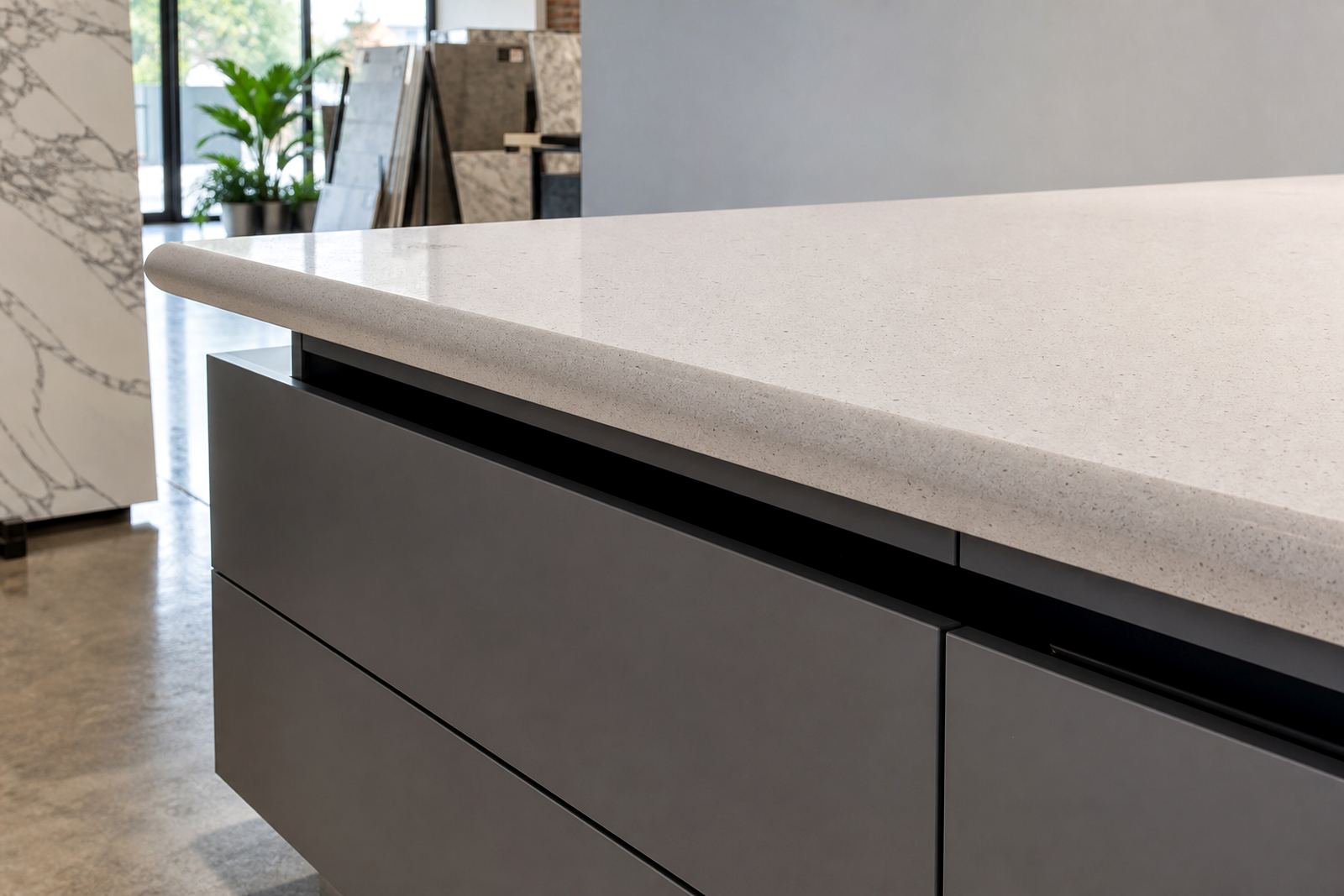
A sharknose edge is formed by shaping the underside of the front edge so the face reads as a slim projection with a hidden recess below. On a handleless run, that recessed line gives the hand somewhere to land when opening drawers or doors, while the top line still looks neat from standing height. In engineered quartz the profile is usually cut and polished from the slab itself, while solid surface can be shaped and blended with a softer transition or a tighter shadow line depending on the brief.
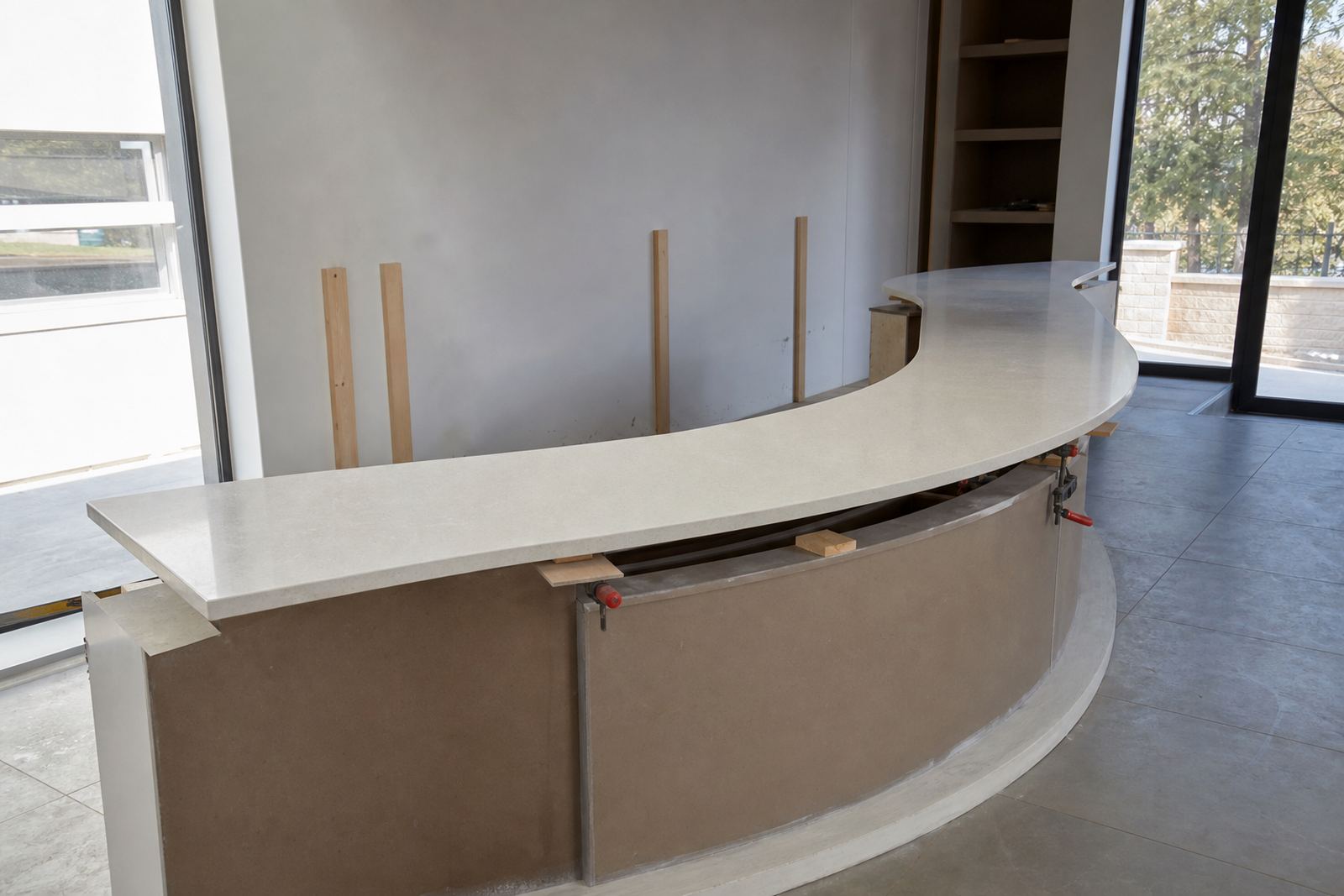
The detail is most often used on kitchen runs, scullery counters and vanity tops where people want a clean front without visible handles. It can also suit compact office tea points and shopfit counters where the front needs to read as one plane. The finished look depends on slab thickness, edge build-up, cabinet alignment and how much shadow the client wants under the nose.
- Typical slab thickness: 20 mm or 30 mm, with some jobs using laminated build-ups for a deeper face.
- Usual projection beyond cabinets: 20 to 40 mm, depending on carcass depth and appliance clearances.
- Shadow gap under the lip: often 6 to 12 mm, set to suit the cabinet opening style.
- Edge finish: polished, matt or honed depending on the material and room finish.
Where the profile works best in Gauteng homes and fit-outs
Handleless kitchens in Sandton apartments, Randburg family homes and Midrand renovations often choose this edge because it keeps the front neat and practical. It also works well where splashbacks run high and the eye already meets a strong horizontal line, since the sharknose adds detail without looking heavy. In commercial fit-outs it can suit reception counters, staff pantries and showroom islands when the cabinet maker wants a restrained front face.
Material choice matters. Quartz gives a very consistent look across long runs, which helps when the edge needs to stay straight over several metres. Solid surface is useful where a lighter feel or a more sculpted front is wanted, especially on vanity tops and smaller counters. For wet areas, the fitting must allow for correct sealing at wall junctions and around basins so water does not work into the joint line.
- Best suited to handleless cabinetry and push-to-open systems.
- Works on straight runs, L-shaped counters and island returns.
- Can be used with undermount or top-mounted sinks, subject to cut-out layout.
- Common on kitchens, vanities, tea points and display counters.
Dimensions, build options and the line you are ordering
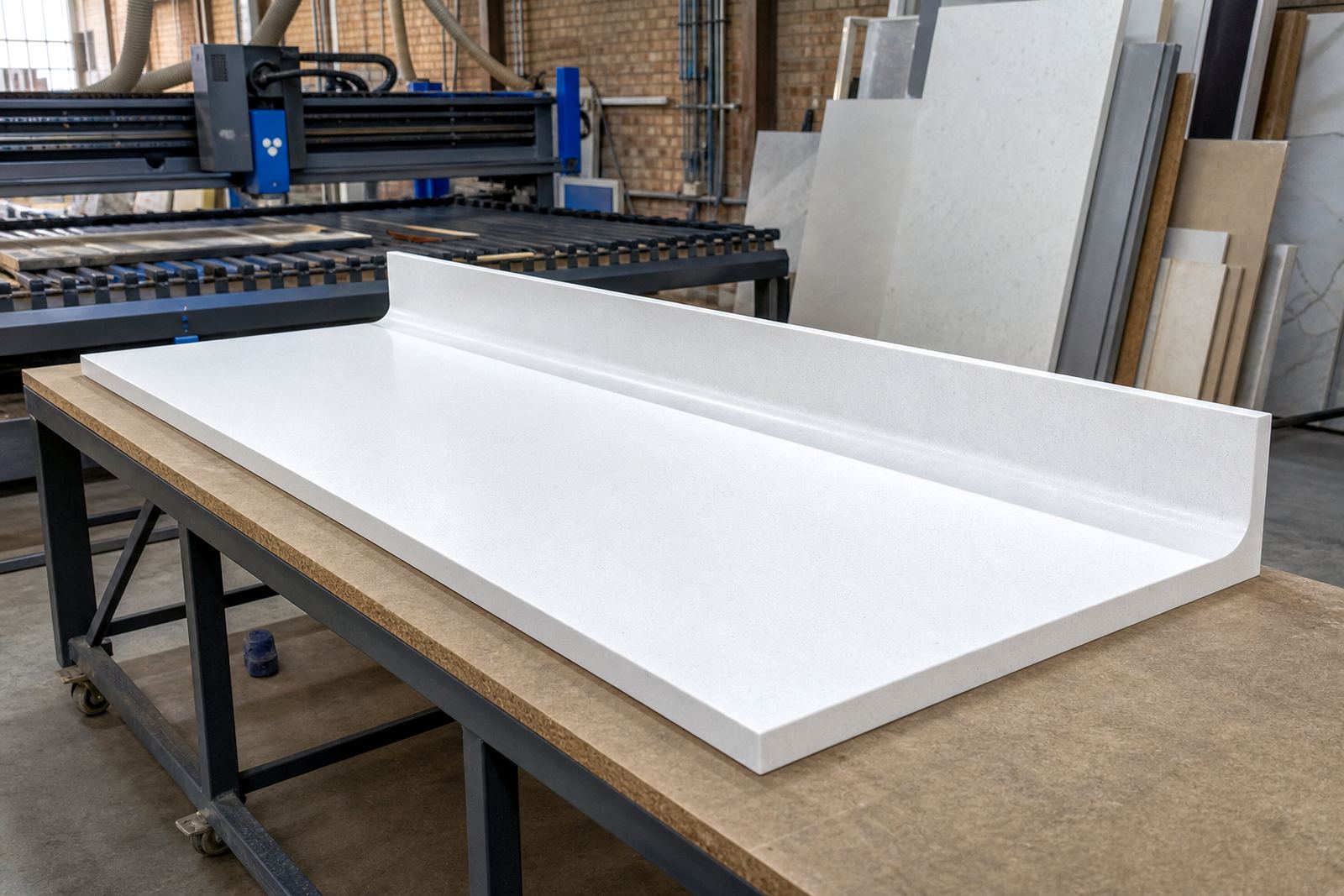
For this detail, the numbers need to be clear before fabrication starts. The slab thickness, cabinet height and overhang all influence how the front will read once the profile is cut. On quartz, a sharknose is usually machined from a 20 mm or 30 mm slab and then polished to keep the front face clean. On solid surface, the same front can be built with more shaping freedom, which helps on curved or slightly irregular work.
Edge depth and radius should match the cabinet style. A deeper recess can suit a strong modern kitchen, while a tighter line works better on smaller spaces or where the client wants a quieter finish. Sink cut-outs, hob cut-outs and seam positions need to be mapped before the edge is finalised, because a front profile can affect where support bars, braces or joins should sit underneath. On long runs, seam placement and slab layout planning are included in the edge detail.
- Slab thickness options: 20 mm and 30 mm are the most common starting points.
- Recess depth: usually planned between 6 mm and 15 mm.
- Front projection: often 15 mm to 30 mm past the cabinet face.
- Joint planning: seams should avoid sink centres, hob openings and the most visible sightlines where possible.
Fitting notes for templating, seams and cut-outs
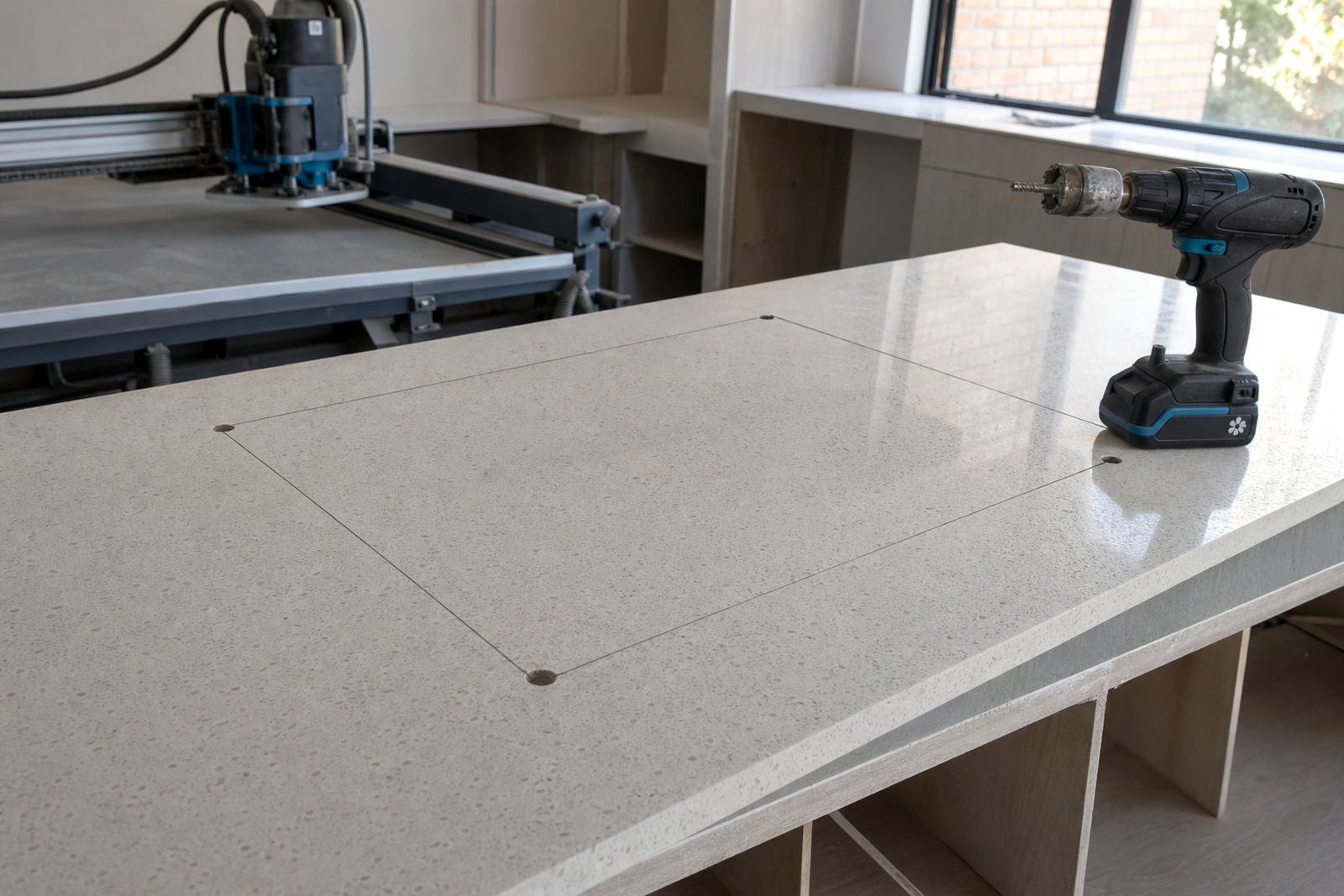
A sharknose front only looks right when the templating is accurate. The top line, carcass faces and wall tolerances all need checking before cutting begins, especially on older homes where walls drift a little. Our templating and digital measuring team maps the run, checks the overhangs and marks the final positions for basins, hobs and seam joins. With those marks set, the recess and front line stay even along the full run.
When the job reaches the workshop, the cut edge has to be finished carefully so the recess stays even. At installation, the support underneath must be level and solid, and the front line must not be forced against an uneven cabinet face. On quartz runs, seams should be colour matched as closely as possible and set where the profile can be read cleanly. On solid surface, the edge can be jointed and blended with a more continuous finish, which is useful where the front wraps around a vanity or reception counter.
- Templating should include cabinet depth, wall bow, sink position and appliance cut-outs.
- Supports under overhangs may be needed on longer spans or at joins.
- Seam placement should be agreed before cutting starts.
- Wall junctions need neat sealing, especially near sinks and splashbacks.
Day-to-day care for quartz and solid-surface sharknose edges
The recessed line collects a little more dust and crumbs than a square edge, so it benefits from a soft cloth and regular wipe-downs. On quartz, use a mild cleaner and a non-scratch pad if needed, then dry the front edge so mineral marks do not build up in the recess. Solid surface can be cleaned with the same light approach, but it also allows gentle surface renewal if light scuffing appears over time.
Heat and stain care matters most around hobs, kettles and prep zones. Hot pots should not be placed straight onto the top, and harsh abrasives can dull the finish at the lip. Spilled tea, wine, oil and strong colouring agents should be wiped rather than left to dry in the shadow line. Around sinks, keep an eye on the sealant bead and the underside of the front edge, because standing water is the main thing that shortens the neat look of any profile.
- Wipe the recess with a soft cloth, not a sharp tool.
- Use trivets or heat pads near hot cookware.
- Clean spills before they settle into the shadow line.
- Check silicone joints around basins and splashbacks during routine cleaning.
Details to confirm before fabrication starts
To price and cut a sharknose edge properly, the workshop needs a few clear decisions from the start. The exact slab material, thickness and finish should be fixed, along with whether the profile runs on all exposed sides or only on the front of the main run. Cabinet style matters too, because a handleless drawer line and a standard door line do not always want the same recess depth.
It also helps to confirm the sink type, hob size, splashback height and whether the counter will meet plastered walls, tiled walls or a painted drywall finish. On vanities, the basin cut-out, tap hole positions and any mirror or wall light spacing can affect how the front line is set. For long kitchen runs across Johannesburg, Pretoria or Fourways, the installer also checks access, lifting points and where the seams will travel through the room.
- Material: engineered quartz or solid surface.
- Thickness: 20 mm or 30 mm, or a built-up option where specified.
- Profile extent: front only, three sides or full exposed perimeter.
- Cut-outs: sink, hob, tap holes and any service openings.
- Finish: polished, matt or honed, matched to the rest of the room.
Key facts
| Profile type | Sharknose recessed front edge |
|---|---|
| Material options | Engineered quartz, solid surface |
| Common slab thickness | 20 mm, 30 mm |
| Typical recess depth | 6 mm to 15 mm |
| Typical front projection | 15 mm to 30 mm |
| Main uses | Handleless kitchens, vanities, tea points, display counters |