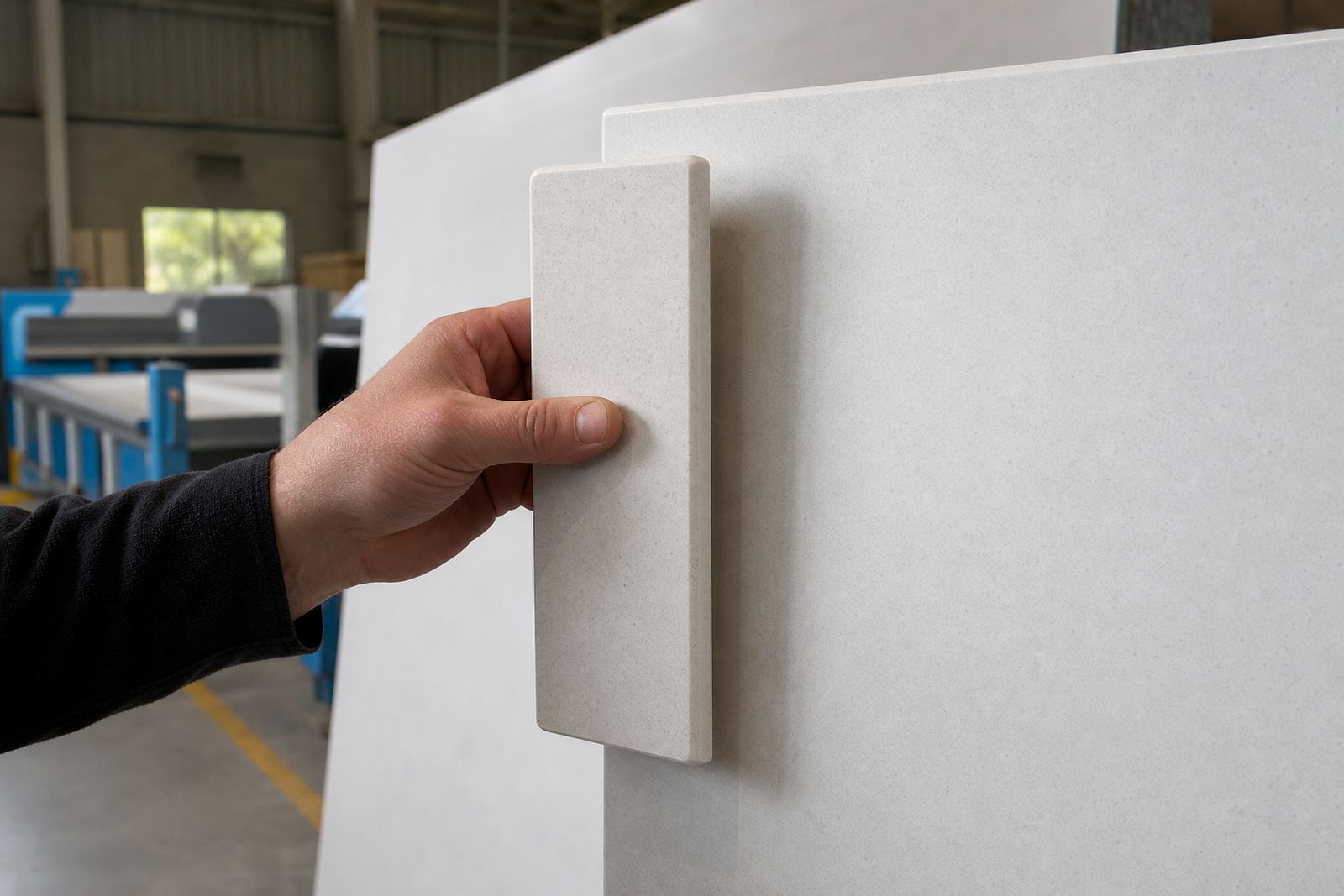
A clean edge with a small eased corner
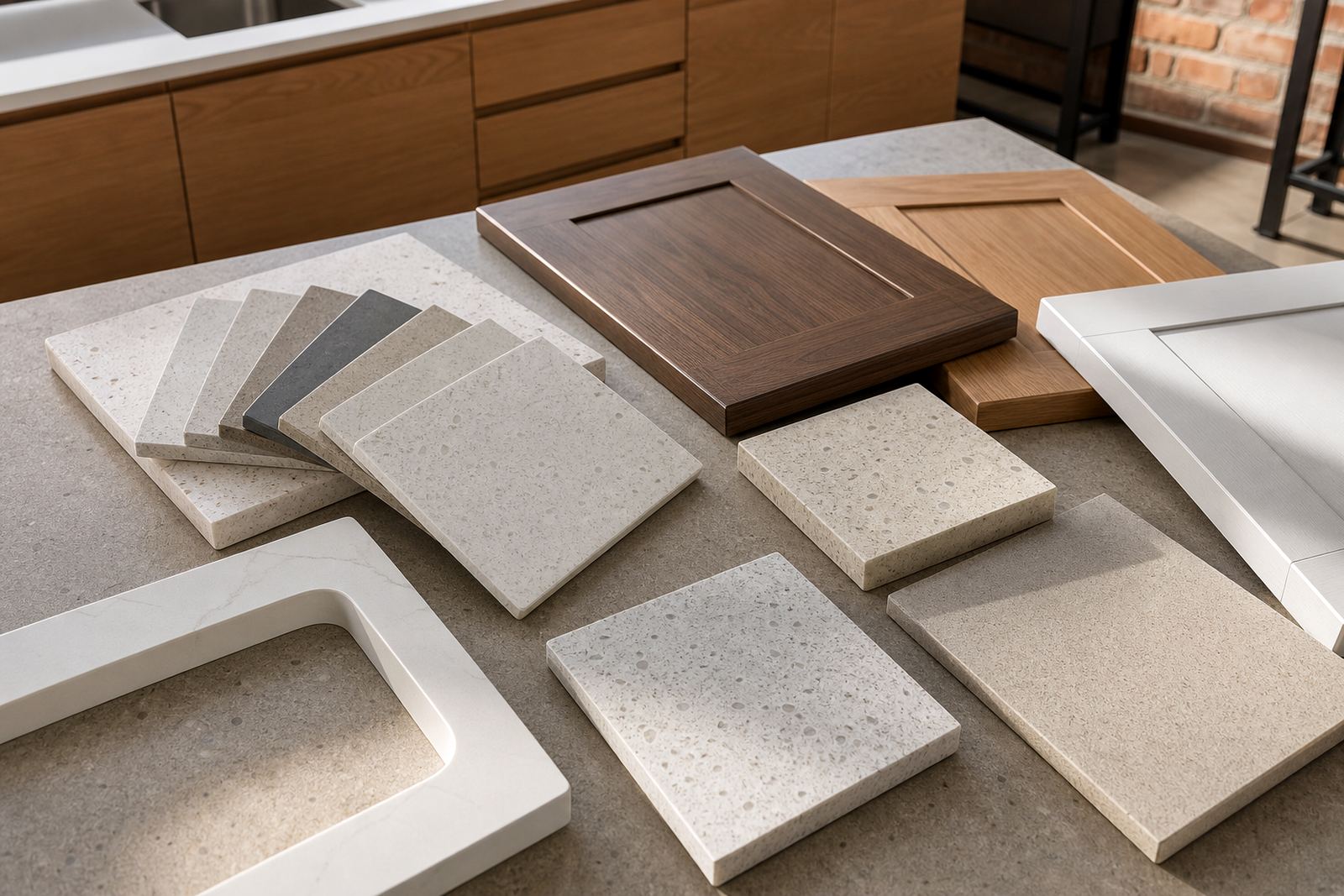
The pencil round profile is a light radius on the top and bottom edge of the slab, usually around 2 mm to 4 mm depending on the stone thickness and the finish you want. It softens the hand contact points, helps the edge feel less sharp, and still keeps the countertop looking crisp rather than overly ornate.
On engineered quartz and solid-surface tops, this profile works well on straight runs, island tops, vanities and reception counters where the edge is touched often. The profile can be used with a 20 mm or 30 mm slab, and the cut is usually finished with a consistent polish so the line reads evenly from end to end. It suits light, dark and veined surfaces because the edge detail does not overpower the slab face.
In practical terms, the pencil round edge is a good middle ground. It gives a slightly softer feel than a square arris, but keeps a modern appearance that sits well in homes, offices and fitted shop counters.
Where the profile fits best in real rooms
We often specify this edge on kitchen tops where cupboards run wall to wall and the client wants a neat line that still feels practical at the front edge. It also suits bathroom vanities, especially in smaller rooms where a heavy decorative edge would feel out of place. In office tea areas and front-of-house counters, the profile gives a tidy finish that photographs well and cleans easily.
For shopfitters, the pencil round edge is useful where a counter must look sharp but still survive everyday use. It is common on customer service counters, till surrounds and fitted display surfaces where the front edge gets frequent contact from bags, paper work or cleaning cloths. In humid coastal conditions, the profile itself is not the issue, but the full installation needs proper sealing, neat joins and correct support so the top stays stable.
It also works well with splashbacks, especially where the backsplash line needs to meet the top without a bulky edge treatment. A neat pencil round around the front and side returns keeps the whole run looking controlled.
How the edge is made to fit the slab and the room
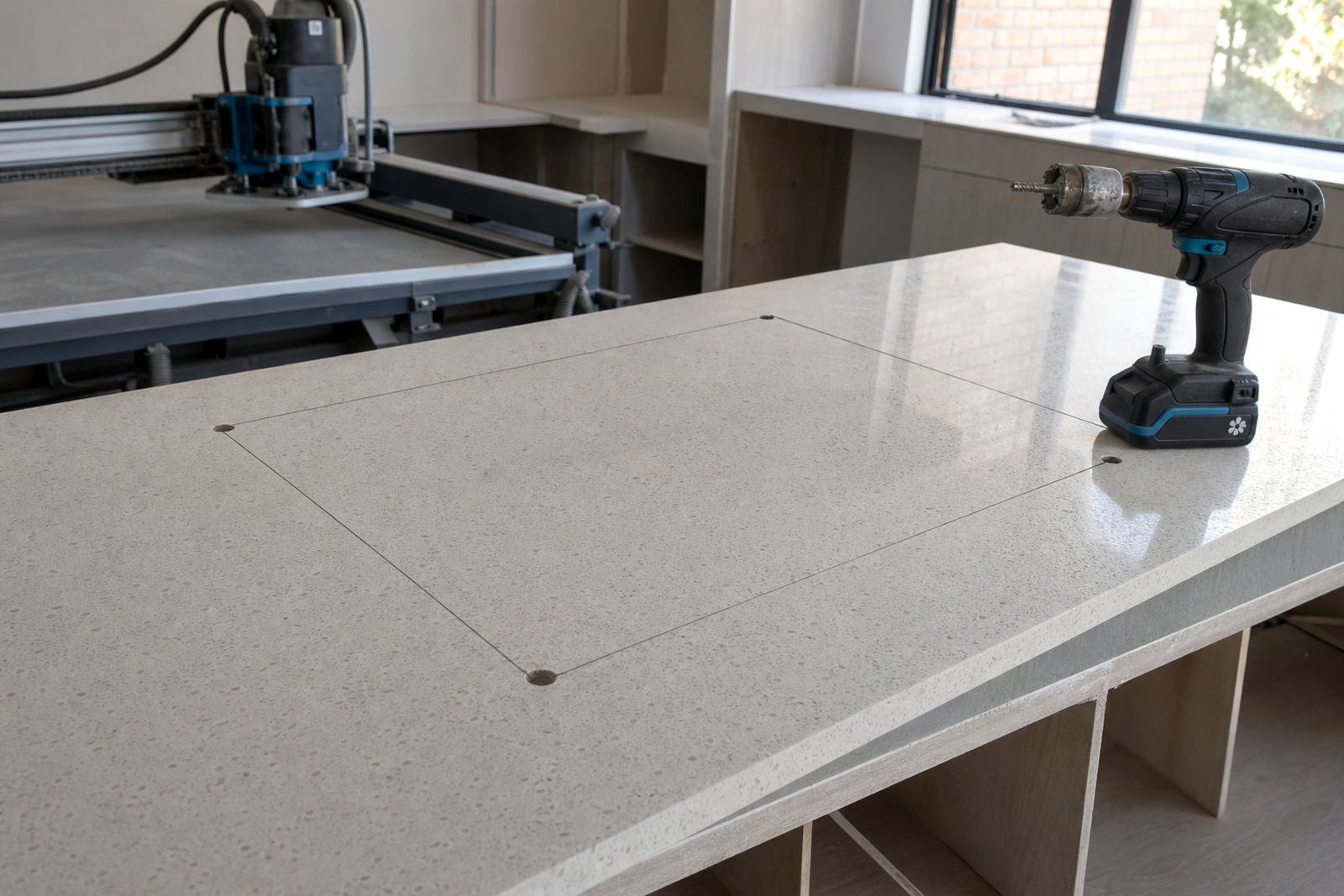
The edge finish starts at templating, because the edge line has to work with the wall set-out, appliance openings and the finished front projection. We measure the site, mark sink and hob positions, and plan the slab layout before cutting. That matters when the pencil round has to run continuously around mitres, corners or long spans without looking uneven.
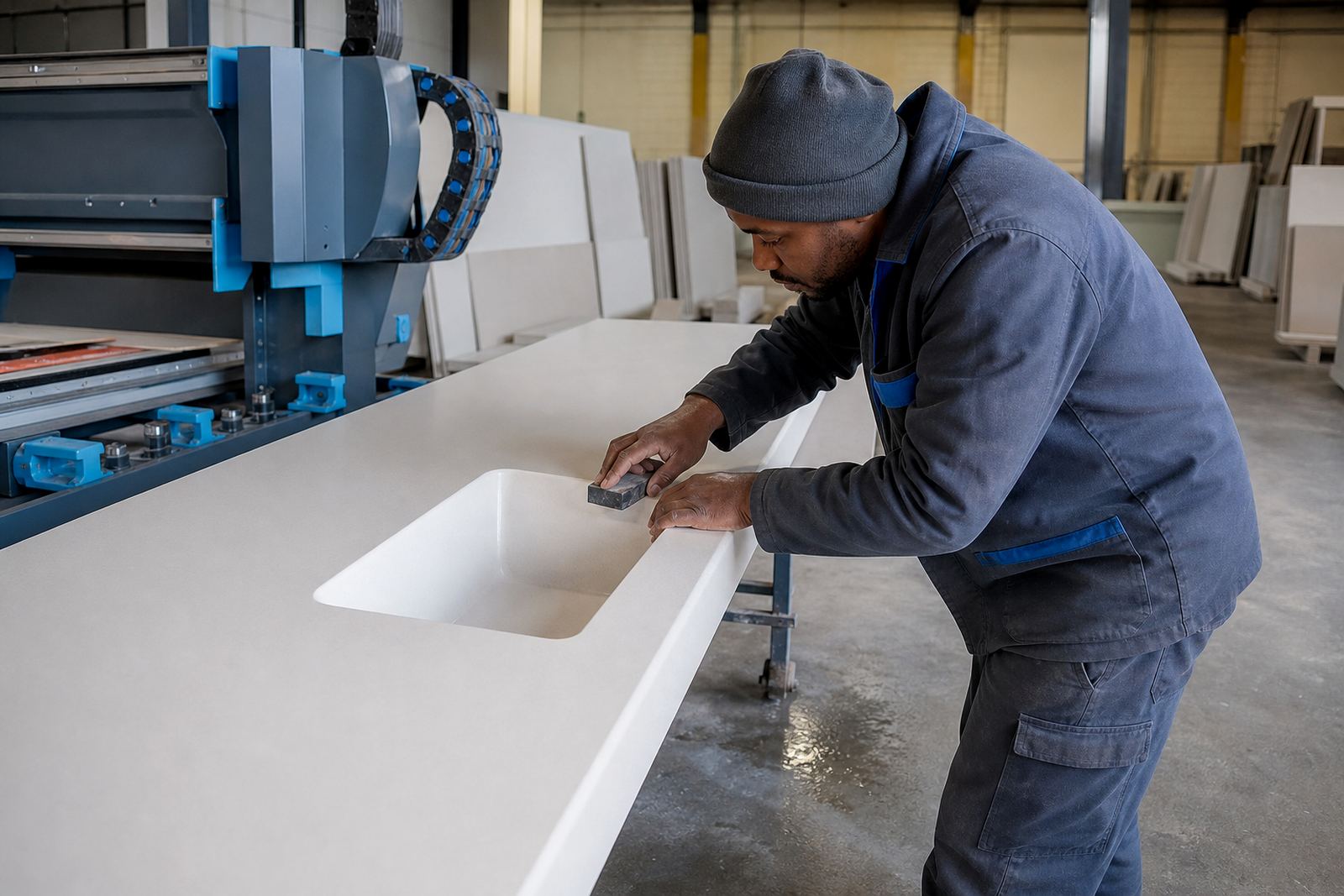
During fabrication, the slab is cut to size and the edge is profiled before final polishing. If the top includes a sink cut-out or hob cut-out, the opening must be positioned so the edge line still has enough strength at the front and side. Seams are planned away from high-visibility points where possible, and on long runs we match the joint line so the profile continues cleanly across the join.
For solid-surface material, the edge can be shaped and blended with a very smooth finish. For engineered quartz, the profiling is more precise and needs careful handling because the material is harder and the polish must remain even across the full face and edge.
Care around heat, marks and daily cleaning
A pencil round edge is easy to maintain, but the material still needs sensible care. For engineered quartz, use a cloth with warm water and mild detergent for routine cleaning. Acidic cleaners, scouring pads and abrasive powders can dull the finish over time. For solid-surface tops, the same basic cleaning approach works, and minor marks can often be dressed out more easily than on harder stone-like surfaces.
Heat care matters on both materials. Pots, pans and hot equipment should not be placed directly onto the surface, and a trivet or heat mat is the better habit at the prep area. The edge itself is not a heat shield, so the top should be treated as a finished interior surface rather than a cooking platform. On busy household or office counters, quick wipe-downs keep the radius line from collecting grime where fingers naturally touch.
Spillages from tea, coffee, oils and sauces should be wiped before they sit for long periods. The pencil round profile makes the front edge comfortable to use, but it still benefits from simple daily care and a dry cloth finish after cleaning.
Details to confirm before fabrication starts
Good pencil round work depends on clear information at ordering stage. We need the slab thickness, the edge profile depth, whether the top is quartz or solid-surface, and where the visible edges will sit. A corner that is exposed to traffic may need a slightly different treatment from a concealed side, and a peninsula return may need a matching profile all the way round.
It also helps to confirm the sink type, basin cut-out size, hob opening, tap hole positions and splashback height. If the installation includes a mitred corner or a long seam, the join position should be agreed before fabrication so the finish is neat on site. For vanities, the waste position and basin overhang should be checked against the cabinet carcass, because the front edge must line up with the final room geometry not just the cabinet box.
When the room includes walls that are out of square, the template tells us where to ease the edge and where to keep it tight. That sort of detail saves trouble later, especially on installations in Randburg, Sandton, Midrand, Fourways, Johannesburg and Pretoria where room conditions vary from one project to the next.
Plastone fitting teams and aftercare in Gauteng
From our Strijdom Park, Randburg workshop, Plastone handles the full chain from templating and digital measuring to cutting, edge profiling, seam joining and installation. Our team works on kitchen tops, bathroom vanities and splashbacks for homes, offices and shopfitters across Gauteng, including Johannesburg, Sandton, Pretoria, Midrand, Fourways, Centurion and Roodepoort. The edge profile is one part of the job, but the fit, support and final clean-down matter just as much.
After installation, our aftercare advice covers day-to-day cleaning, stain control, edge protection and how to avoid impact marks on vulnerable corners. On busy counters, a pencil round edge can keep the front line feeling comfortable without looking bulky, and that balance is often what clients want when the room has already got cabinetry, taps and appliances doing most of the visual work.
For project queries, clients send us details through our enquiry form, and we handle them from there. We use it for new quotes, plan checks and fitting questions that need site-specific detail.
Key facts
| Product | Pencil Round Edge for engineered quartz and solid-surface tops |
|---|---|
| Typical slab thickness | 20 mm or 30 mm |
| Edge radius | Light eased profile, usually 2 mm to 4 mm |
| Suitable spaces | Kitchens, vanities, office counters and shopfitters |
| Compatible detailing | Sink cut-outs, hob cut-outs, seams and splashbacks |
| Service area | Strijdom Park, Randburg and Gauteng installations |