
What a drainer groove does on a finished top
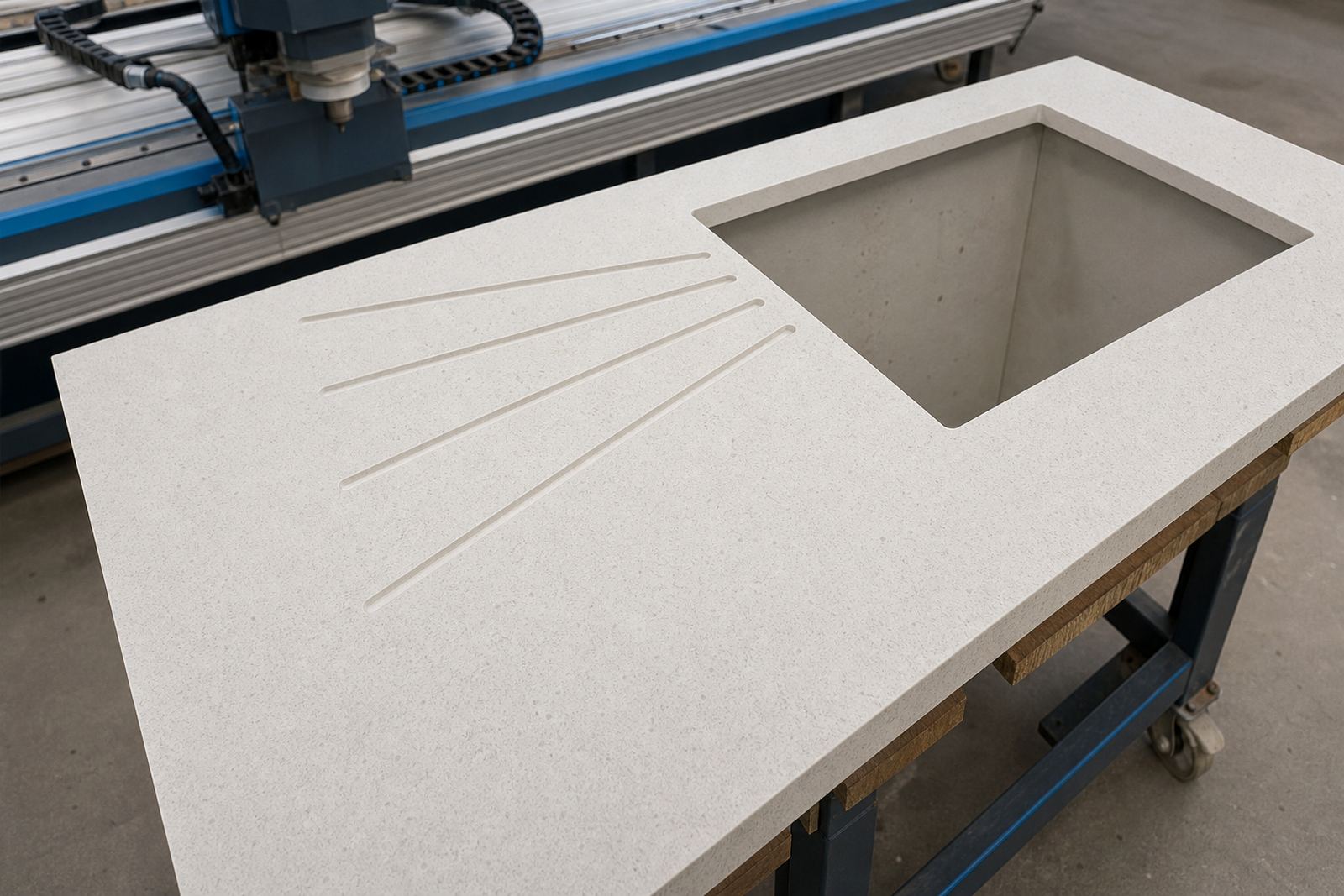
A drainer groove is a shallow routed channel cut into the surface beside a sink cut-out, usually in a fan or straight pattern that lets water run back to the bowl instead of pooling on the worktop. On engineered quartz the grooves are cut after templating and slab layout, then polished to match the chosen finish as closely as possible. Solid-surface tops allow more shaping freedom, which is useful where the client wants a wider drainage field or a softer transition into the sink area.
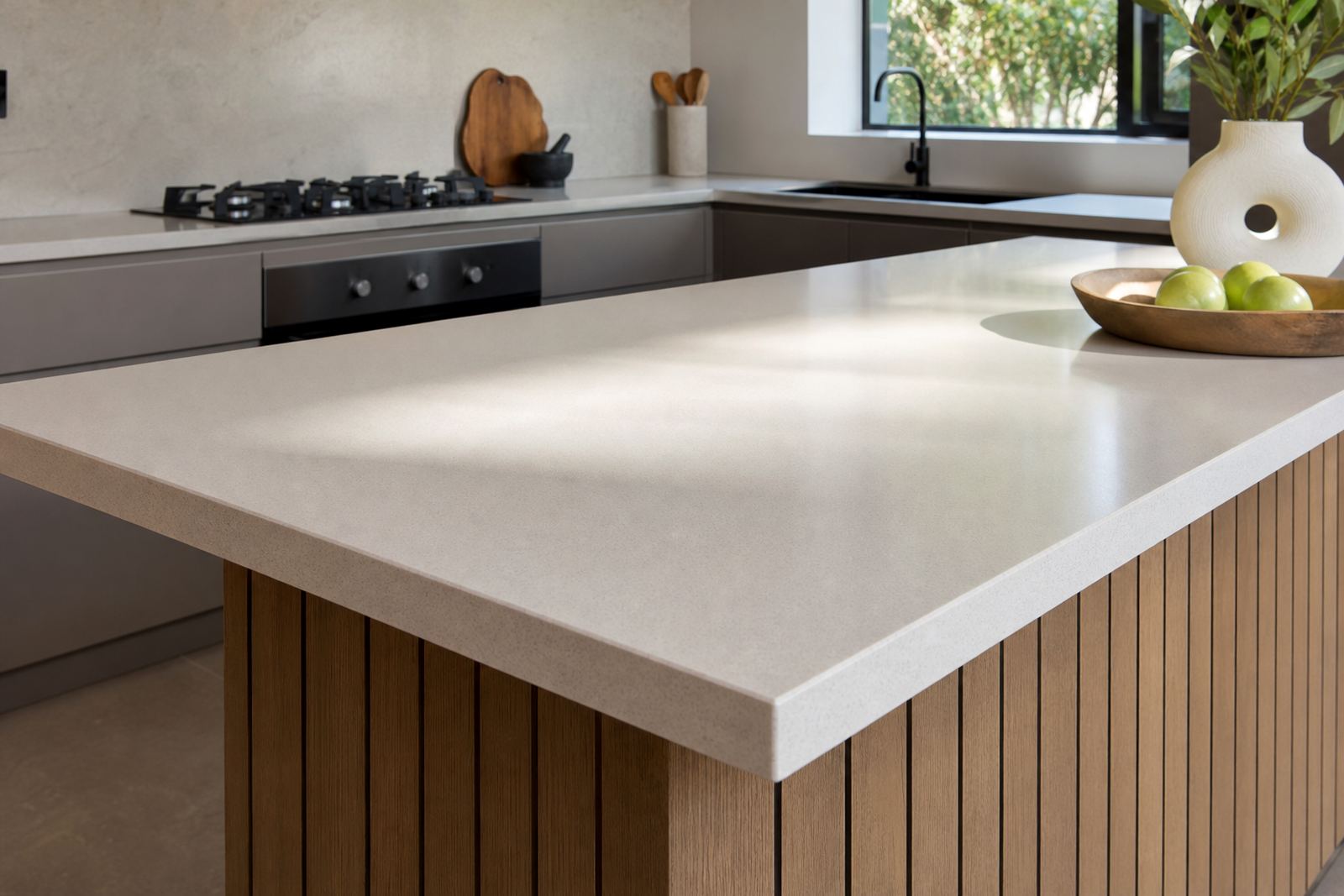
The groove set needs to match the basin position, the fall of the top and the way the room is used. In a busy family kitchen, water marks from rinsed vegetables or washed glassware can sit in the same place every day, so groove spacing and depth matter more than decoration. On vanity tops, the same detail helps with toothbrush rinsing and general splash control around the basin.
Sizes, spacing and edge details that can be specified
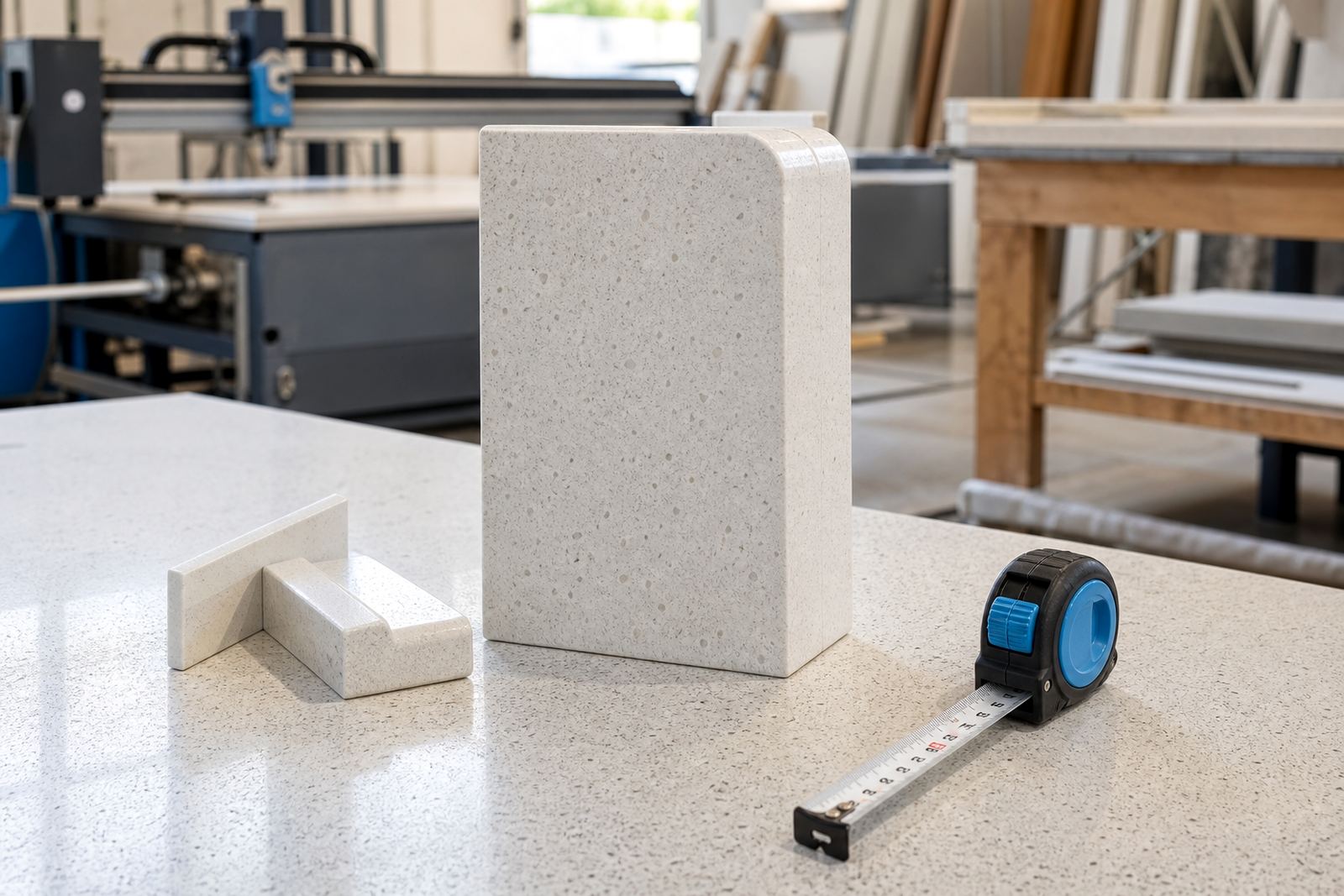
Grooves are usually set out to suit the slab thickness, basin width and usable deck space around the sink. On 20 mm quartz, the channel is often kept fairly shallow so the top keeps its clean profile, while 12 mm and 30 mm solid-surface builds can be shaped with different visual weights. The number of grooves, their length and the line of fall are all confirmed during templating.
- Typical groove runs: 3 to 8 channels beside one sink
- Common lengths: 150 mm to 450 mm per line
- Common groove widths: 6 mm to 12 mm
- Visible spacing: 10 mm to 25 mm between channels
- Edge profiles: square, eased or softly radiused
Where the sink sits close to a side wall or upstand, the groove layout may be shortened so the drainage pattern stays neat and does not crowd the edge. If the design uses a mitred edge build-up, the groove line is set to avoid the joint and preserve a balanced look across the front edge.
Where drainer grooves work well in Gauteng homes and workspaces
These grooves are a practical fit for kitchens in Sandton apartments, Bryanston family homes, Pretoria renovation projects and Midrand office tea stations where the sink area gets regular use. They also suit shopfitters who need a polished top that still handles rinse water, cleaning cloths and daily foot traffic around a service point. In humid months, a controlled drainage line helps reduce lingering water patches on the surface after washing.
For vanities, grooves work best where the basin is used for shaving, face washing or hand rinsing and the client wants less standing water near taps and soap bottles. In sculleries or prep areas, they are useful when the worktop joins a sink cut-out and the user wants a tidy runoff path without adding loose draining accessories.
- Domestic kitchens with under-counter or top-mounted sinks
- Guest bathroom vanities and main en-suite basins
- Office kitchens, client lounges and reception prep points
- Shop counters with rinse or wash-down activity
- Utility rooms where a neat drying zone is preferred
How the groove gets made during fabrication
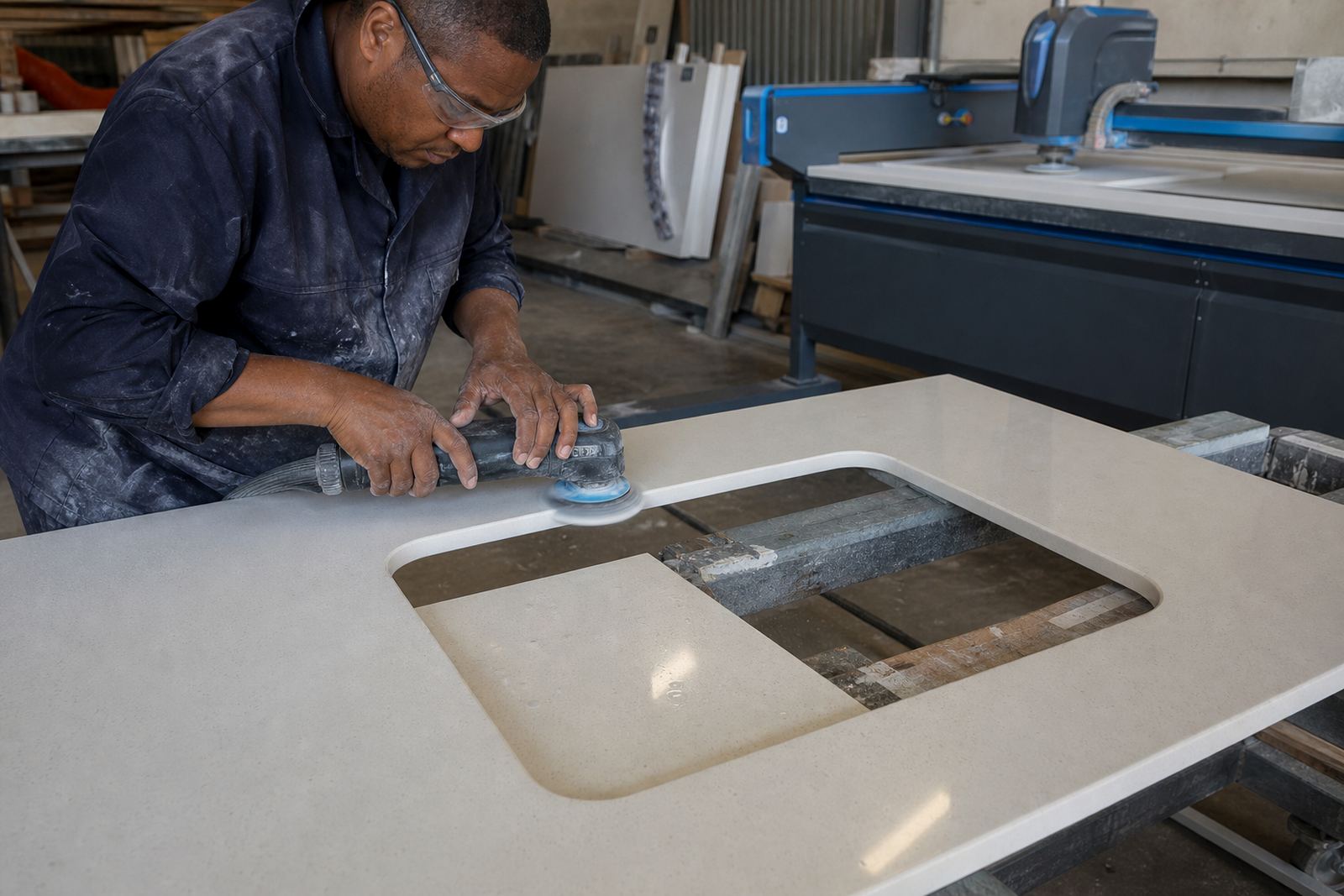
The process starts with digital measuring or on-site templating so the sink position, wall lines and overhangs are set correctly before the slab is cut. Once the top is fabricated, the drainer grooves are machined into the selected area, then checked against the basin placement, seam position and edge finish. If a sink cut-out, hob cut-out or seam falls near the drainage zone, the layout is adjusted so the visual line stays clean.
Quartz fabrication needs careful handling around the groove ends because hard material can chip if the cutter is rushed. Solid-surface can be shaped differently, but the drainage pattern still needs proper spacing and a sensible fall so water moves away from the working area. At installation, the team checks the fit against the cabinet run, splashback line and tap setout, then makes sure the sink opening and groove field sit in the right relation to one another.
- Template the sink, tap and cabinet position first
- Confirm groove direction toward the bowl
- Check clearances around joints and splashbacks
- Polish or finish the routed lines to suit the top
- Seal and fit the top with the correct support points
Care, heat and stain habits around the drainage area
Drainer grooves need the same sensible care as the rest of the top. Wipe down soap residue, tea marks and mineral build-up with a soft cloth and a non-abrasive cleaner, then rinse and dry so the channels stay clear. Avoid dragging heavy pots or sharp scrapers across the grooves, because the edges are still part of a finished surface and can show wear if treated roughly.
Quartz can handle normal kitchen use, but direct heat from hot pans should still be kept off the surface and off the groove zone. Solid-surface tops handle stains well when wiped early, though strongly coloured liquids can mark if left sitting too long in a pooled channel. In either material, a dry finish after washing helps preserve the clean look around the sink cut-out and adjoining edge line.
Order details to confirm first
When a groove set is being specified, the details should be clear enough for the workshop to cut once and fit once. Send the top dimensions, sink type, basin position, edge profile and whether the drainage lines should run straight, angled or fanned. It also helps to note if the top needs a matching upstand, a seam close to the basin, or a vanity layout with limited depth.
Our contact form is the simplest way to send the measurements and room notes for a quartz or solid-surface top with drainer grooves. Please include the site address area, the number of sinks, cabinet widths and any special finish around the drainage field so the fabrication plan can follow the room properly.
- Material choice: engineered quartz or solid-surface
- Top thickness: 12 mm, 20 mm or 30 mm build-up
- Groove style: straight, angled or fan layout
- Sink type: under-mount, top-mount or integrated basin
- Finish: polished, matte or lightly textured where suitable
Key facts
| Material options | Engineered quartz and solid-surface |
|---|---|
| Common top thicknesses | 12 mm, 20 mm, 30 mm |
| Groove width range | 6 mm to 12 mm |
| Groove length range | 150 mm to 450 mm |
| Typical application | Kitchen sinks, vanities and utility tops |
| Service area | Strijdom Park, Randburg and Gauteng installations |