
Sharp corners are where the pressure gathers
When a sink, hob or appliance opening is marked out, the corner detail needs as much thought as the visible edge profile. A neat square opening can look tidy on paper, but inside the slab it creates a tight point where stress collects. That matters in engineered quartz and in solid-surface tops, especially when the slab is 20 mm or 30 mm thick and the opening sits close to another cut-out or a seam.
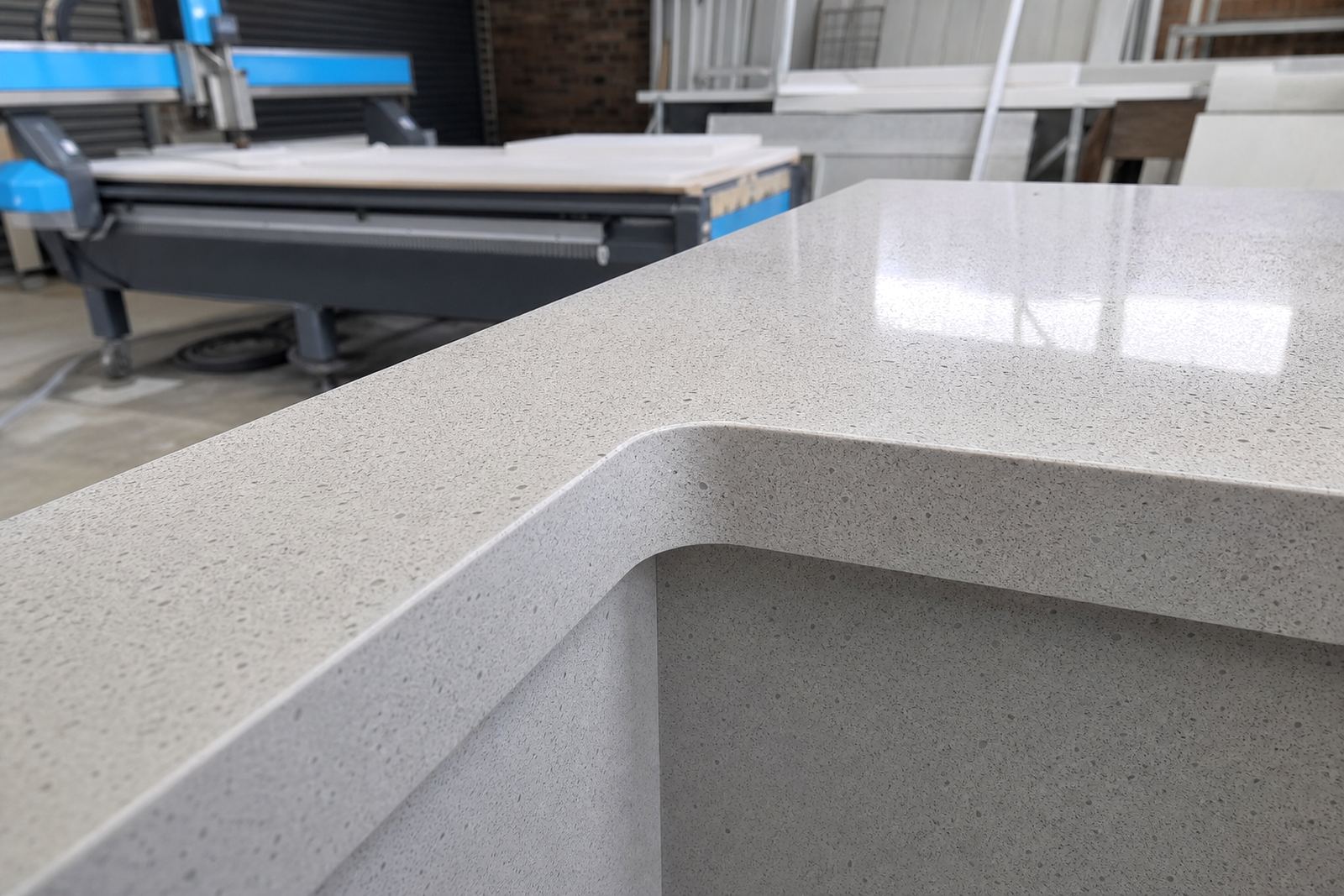
At our Strijdom Park workshop in Randburg, we look at the full job rather than the hole on its own. The slab has to live with transport, lifting, fixing points, daily use and the slight movement that comes with buildings in Johannesburg, Sandton, Midrand and Pretoria. A corner radius gives the material a gentler transition, so a load or knock is less likely to start a crack from a tight inside corner.
- A tighter corner holds more stress than a curved one.
- Radius choice should suit the slab thickness and opening size.
- Heat, impact and poor support all add pressure to the same area.
How radius size changes the way a cut-out behaves
No one corner radius suits every countertop job. A sink cut-out in a vanity top may need a different treatment from a hob cut-out in a family kitchen. The opening size, the distance to the slab edge and the edge profile all affect the result. A bullnose or pencil profile behaves differently from a squared edge, because the visible edge and the internal cut geometry are not asking the same thing from the material.
On a straight run, a corner radius can also help the eye read the work better. The transition feels deliberate rather than forced, and the cut edge is easier to finish cleanly. That does not mean the radius should be oversized. Too much rounding can reduce usable space around the basin or appliance, and the installer still needs enough material to support the sink rail or hob flange.
- Small radii suit compact basins where space is tight.
- Larger radii can help around wider openings and heavier fittings.
- The right size must leave enough material around the cut-out.
What templating picks up before the saw starts
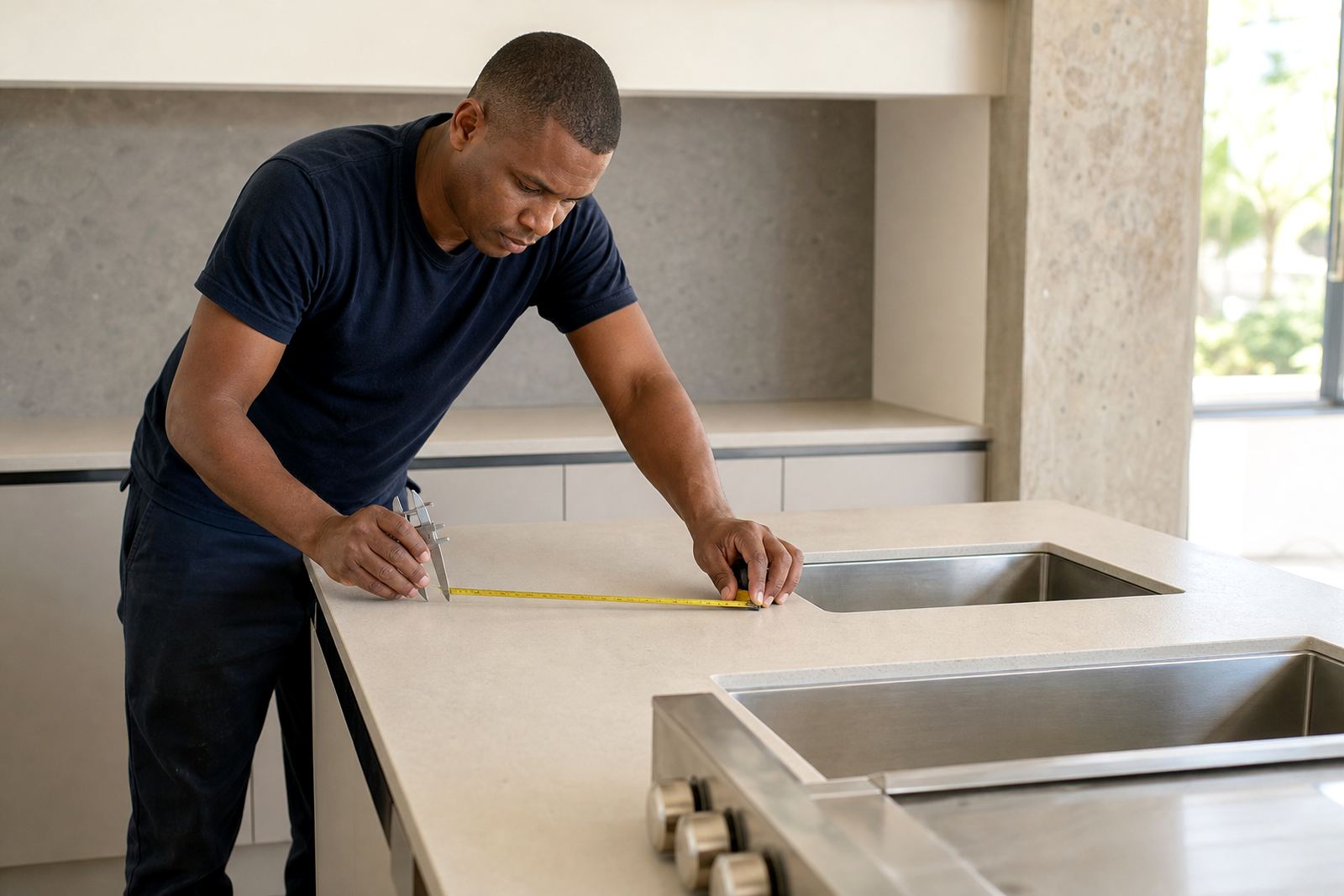
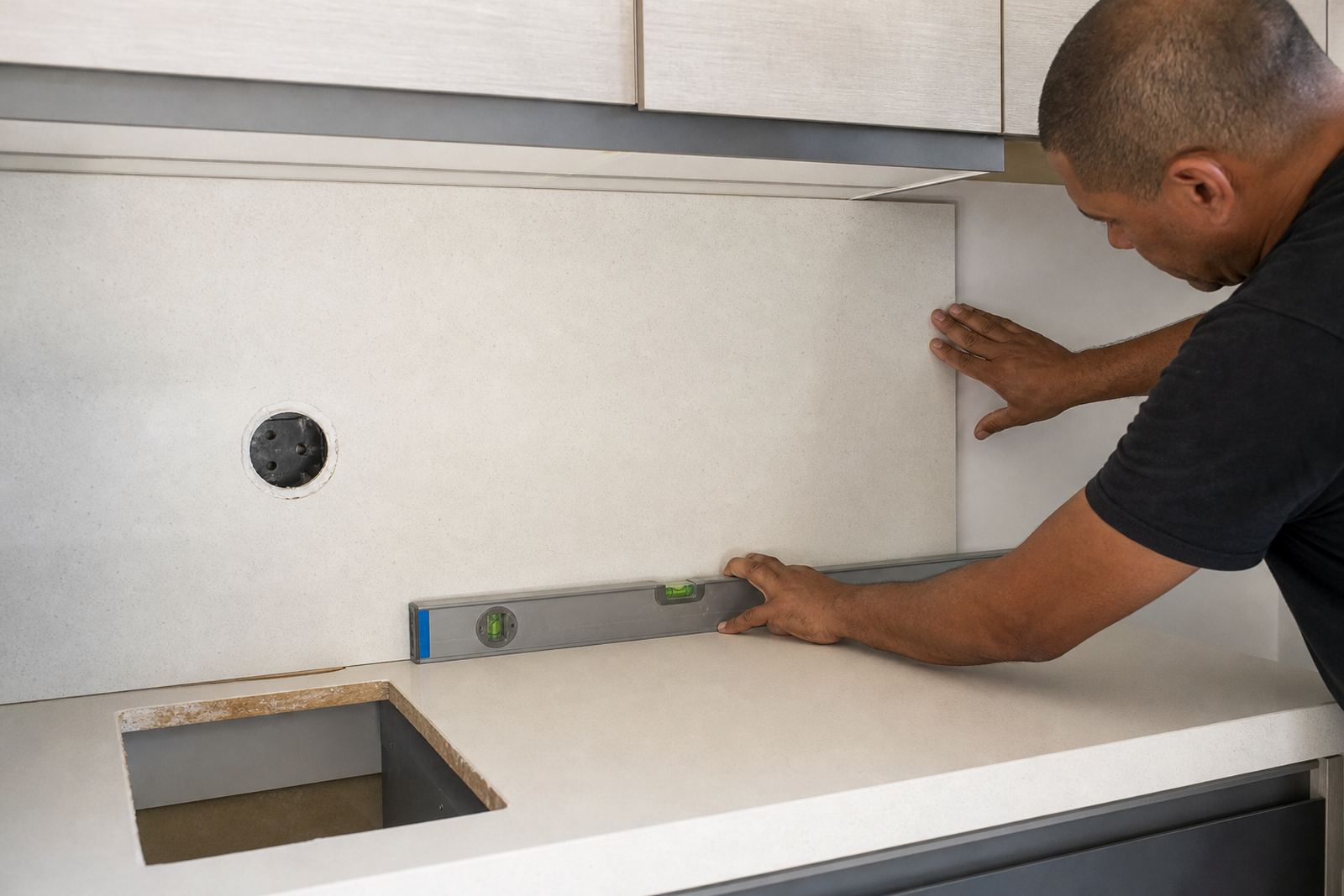
Good templating catches the things that drawings miss. A wall may wander, a cabinet line may sit a few millimetres off, or a sink bowl may not centre exactly where the original plan showed it. Digital measuring and on-site templating let us set the opening and the corner radius against the real space, not the hopeful version of it. That matters when a top has to meet a tiled splashback, a upstand, or a vanity basin that already has fixed positions.
In Randburg apartments and office kitchens, there is often very little forgiveness at the edges. A templater has to account for the actual cabinet square, the overhang and any need for a seam to fall away from the highest stress point. Johan Ngwenya leads that part of the work, because a few millimetres at templating can change how the entire cut-out performs later.
- Measure cabinet lines, wall angles and appliance positions together.
- Check where seams, sink clips and support rails will land.
- Mark the radius in relation to the final edge finish.
Where the corner meets the seam, the detail gets serious
A seam close to an internal corner needs careful planning. If the joint lands too near the opening, the slab can carry stress through both points at once. That is one reason we plan slab layout before cutting begins. The workshop team looks at grain movement in solid-surface sheets, the direction of any visual pattern in quartz, and the strongest path for the join. Sibusiso Mdlalose and the workshop team set this up before fabrication starts.
A seam is not only about looks. It also affects how the top deals with cleaning, wet cloths and everyday knocks. A tidy seam away from a tight radius gives the top a better chance of staying steady in use. In a long kitchen run, that can be the difference between a clean working surface and a corner that starts showing hairline movement after plenty of use near the sink.
Heat, stains and the habits that protect the opening
Engineered quartz resists stains well, but it still dislikes direct heat from hot pans or trays. Solid-surface material is more forgiving in one sense because small marks can often be repaired, yet it too benefits from basic care. Around sink cut-outs and hob cut-outs, the corner radius helps by removing the sharpest point, but daily habits still matter. A stress-free corner will not protect the slab if a hot pan lands on it or a heavy pot is dragged across the edge.
For homeowners in Fourways or Centurion, the practical advice is the same as for a shopfit in Sandton: use a trivet, wipe spills early, and keep abrasive pads away from the opening. Acidic cleaners can dull some finishes over time, and standing moisture around a poorly sealed cut-out can be a nuisance. Thabo Rademeyer handles aftercare advice, and the guidance stays plain because the material works best when people use it sensibly.
- Use heat protection close to hobs and hot dishes.
- Wipe strong stains before they dry hard on the surface.
- Keep the cut-out seal and the underside dry where possible.
Randburg kitchen cut-out and seam work
A recent countertop for a family kitchen near Strijdom Park needed a sink cut-out close to a corner return and a hob opening on the same run. The cabinet layout was tight, and the client wanted a clean edge profile with a practical working surface. We adjusted the internal radii so the openings kept their shape without crowding the weak points, then set the seam further along the run where the slab could carry itself more comfortably.
We often handle that kind of job across Gauteng. In Johannesburg and Midrand, the rooms are often compact. In Pretoria, the span can be wider and the island bigger, but the same rule still holds: if the corner is under control, the rest of the top behaves better. The final fit looked plain, which is the point. A careful radius does its work quietly, and the owner only notices it when the surface keeps holding up.
The details that keep a cut-out honest
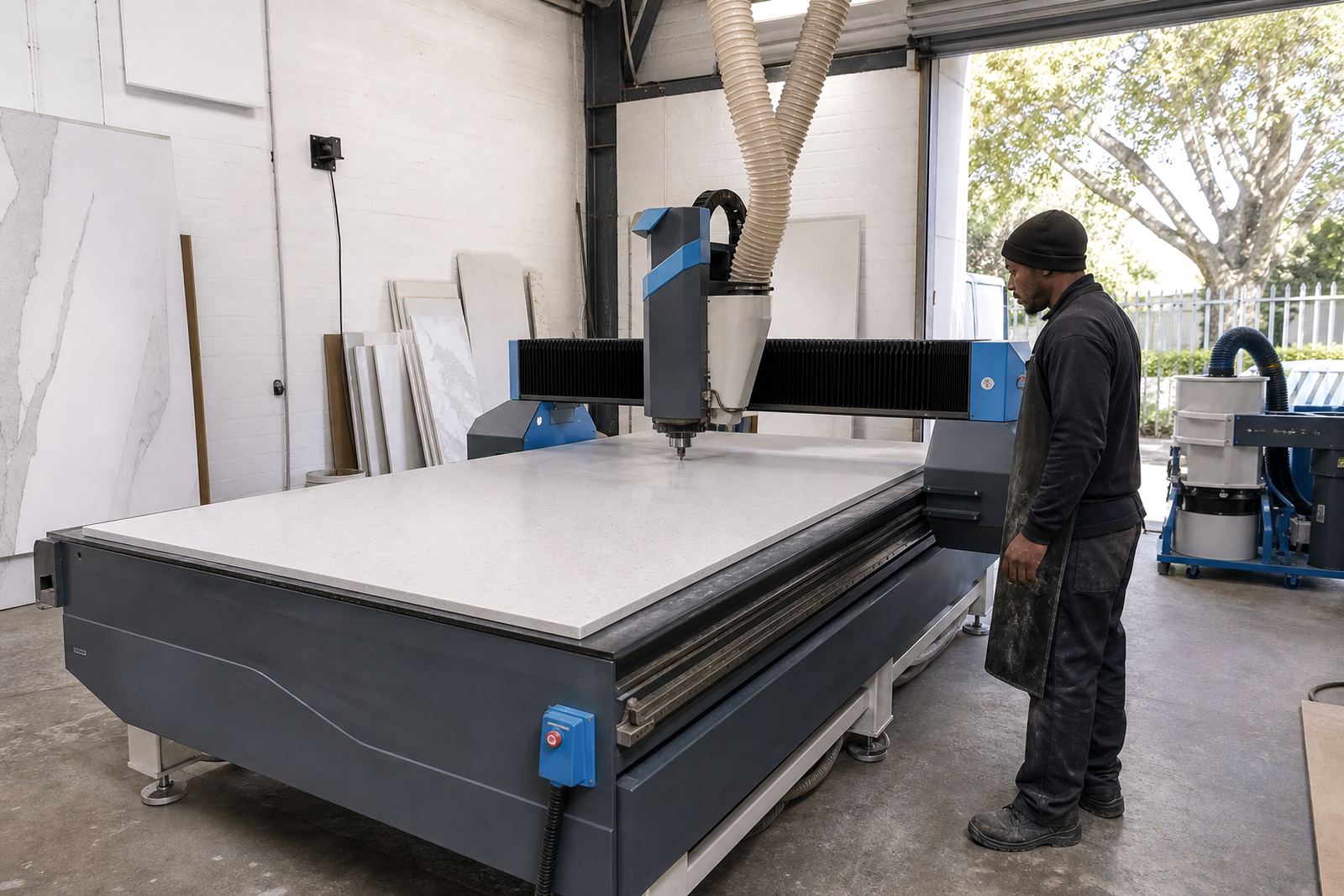
Corner radii are small, yet they affect the whole life of a countertop. They influence how the opening is cut, how the slab is carried, where the seam goes and how the surface stands up to daily use. For quartz and solid-surface work, the best results come from a measured approach: templating first, layout second, fabrication after that, and installation only when the support points are right.
At Plastone, Morne Moonsamy works with the team across installations in Randburg, Johannesburg, Sandton, Midrand, Fourways, Pretoria, Centurion and Roodepoort. The service list covers templating, digital measuring, slab layout planning, cutting and fabrication, edge profiling, sink cut-outs, hob cut-outs, seam joining, splashback fitting, vanity installation, countertop installation and aftercare advice. The radius may be a small detail, but it is one of the parts that keeps the whole job in line.