
When a solid-surface top needs attention, not replacement
Solid-surface countertops are made to be worked on later, which is part of the appeal in homes and fitted spaces around Randburg, Sandton and Midrand. Minor scuffs, light heat dulling, shallow scratches and worn edges can often be reduced by refinishing the affected area instead of stripping out the whole installation.
The trick is reading the mark properly. A white ring from a hot mug, a fine scratch near the sink cut-out, or a tired seam by the hob do not all need the same treatment. Some issues sit only on the face of the sheet, while others run deeper and ask for more careful filling and blending.
- Surface scratches may respond to graded sanding and polishing.
- Localised dull patches can often be improved without removing the top.
- Edge knocks usually need reshaping before the final finish is restored.
How a repair is planned before any tool touches the slab
Good repair work starts with an honest inspection. We look at the thickness of the top, the edge profile used on the job, the position of seams and whether there are cut-outs close to the damaged area. A vanity top in Fourways may need a different touch from a shop counter in Johannesburg, especially where the repair sits near a basin or a hob opening.
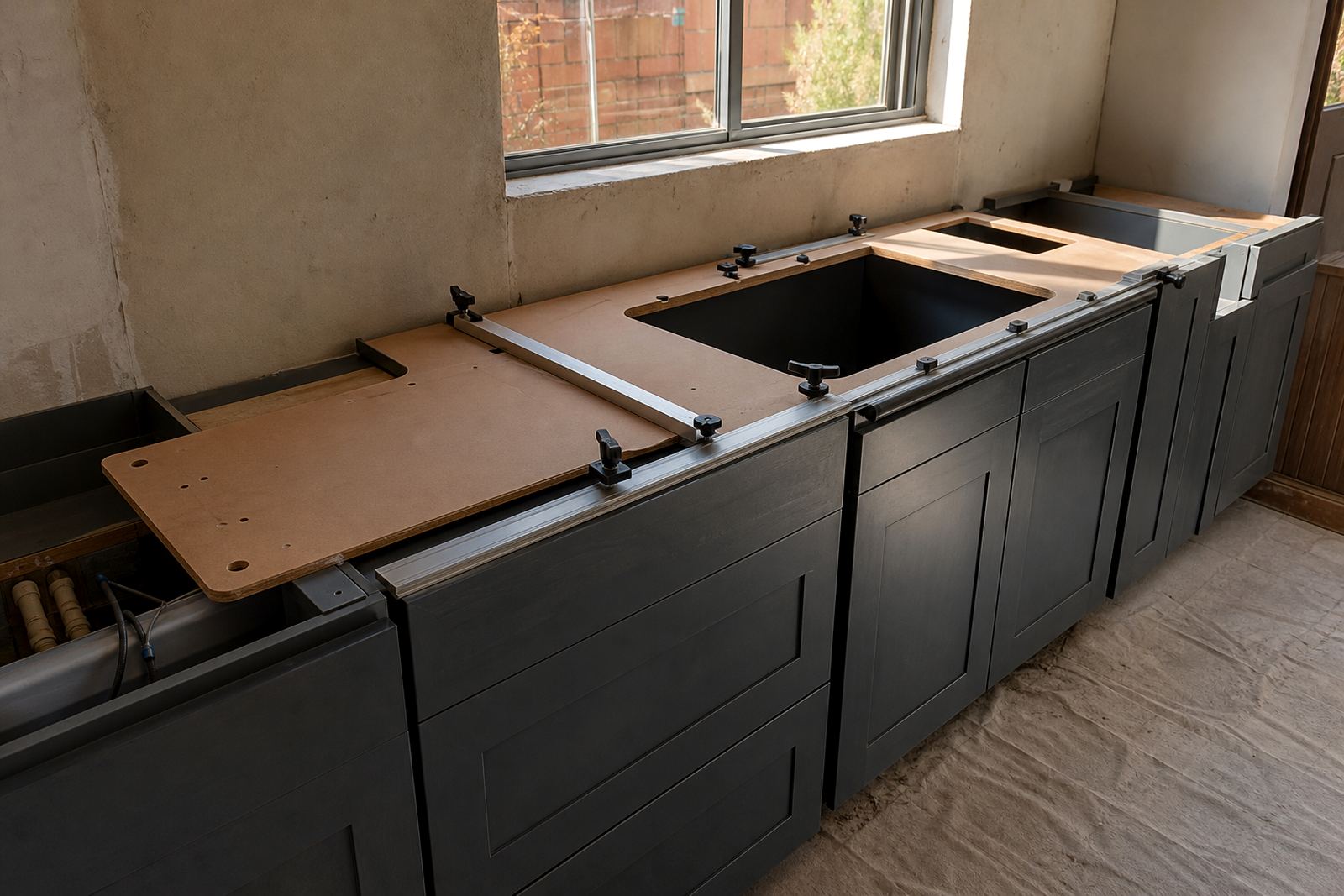
Templating records, if they are available, help guide the repair approach. They show where the joins were set, how much material is around a cut-out, and which parts of the top carry the most stress. That matters when a chip sits close to a sink bowl or where a seam has opened slightly after years of use.
- Check whether the mark is only on the face or at a joint.
- Measure how much material surrounds the damaged point.
- Look at whether the repair area affects a basin, hob or splashback line.
Refinishing marks without chasing the whole surface
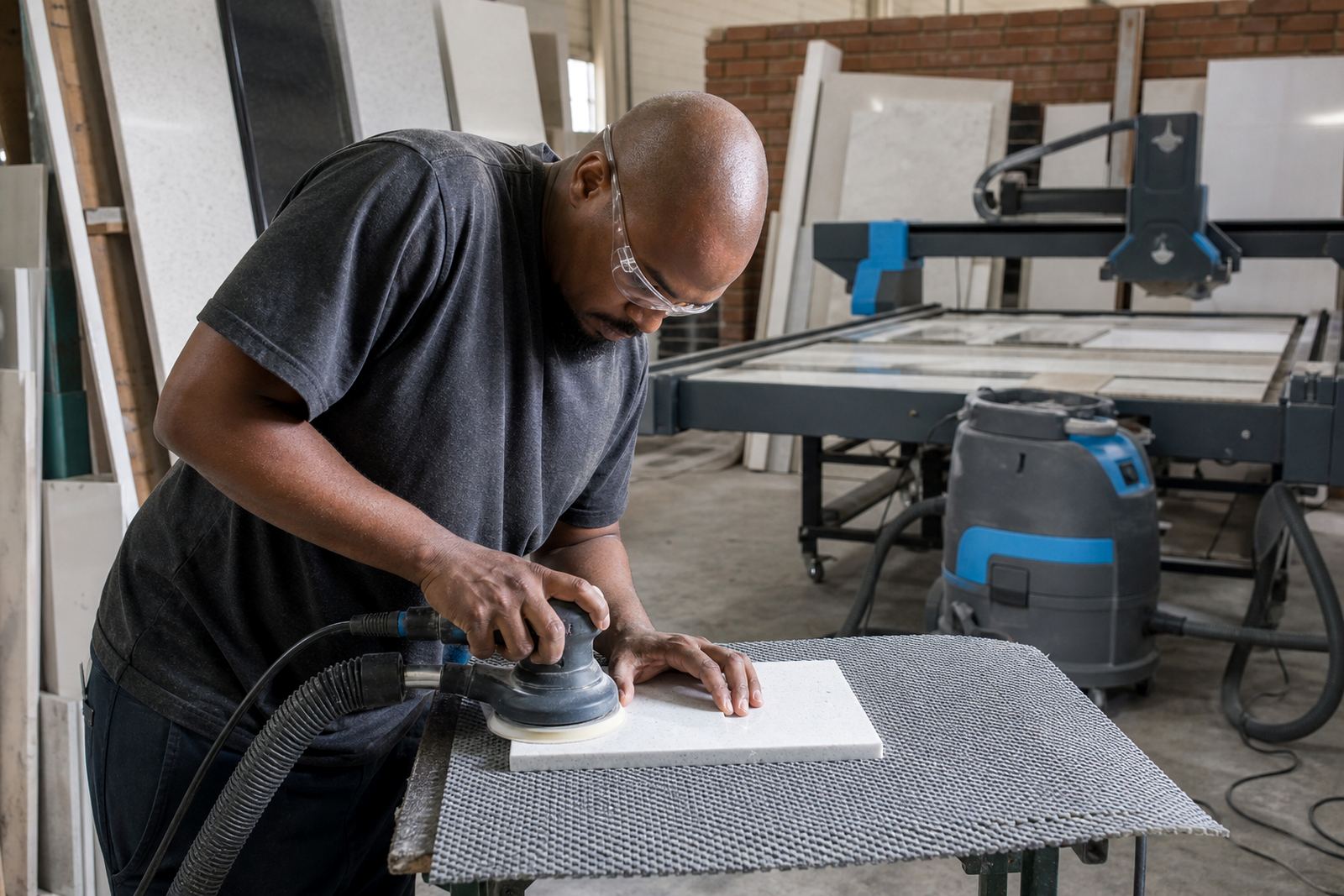
Light repairs on solid-surface material usually involve controlled sanding, blending and polishing in stages. The aim is not to make the top look newly cut from the factory, but to recover an even working finish that sits comfortably with the rest of the installation. If the surface has a matt look, that texture must be matched. If it carries a softer sheen, the repair needs to fade into that rather than stand out.
Kitchen tops in Johannesburg and Pretoria often pick up knife scuffs near prep zones and dulling beside kettles or toasters. In a small office tea station, the damage may be more about cups, cleaning pads and everyday abrasion. The repair method changes with the wear pattern, not with the postcode.
- Use graded abrasives so the repair does not leave a hard edge.
- Blend beyond the visible mark to avoid a patchy line.
- Finish with the same sheen level already on the top.
Heat, stains and the habits that shorten a surface's life
Solid surface handles normal domestic use well, but it still asks for a little care. A hot pot placed straight down can leave a mark, especially near a pale top where dulling shows more clearly. Strong dyes, oil spills and long contact with staining liquids can also leave traces if they are left to sit.
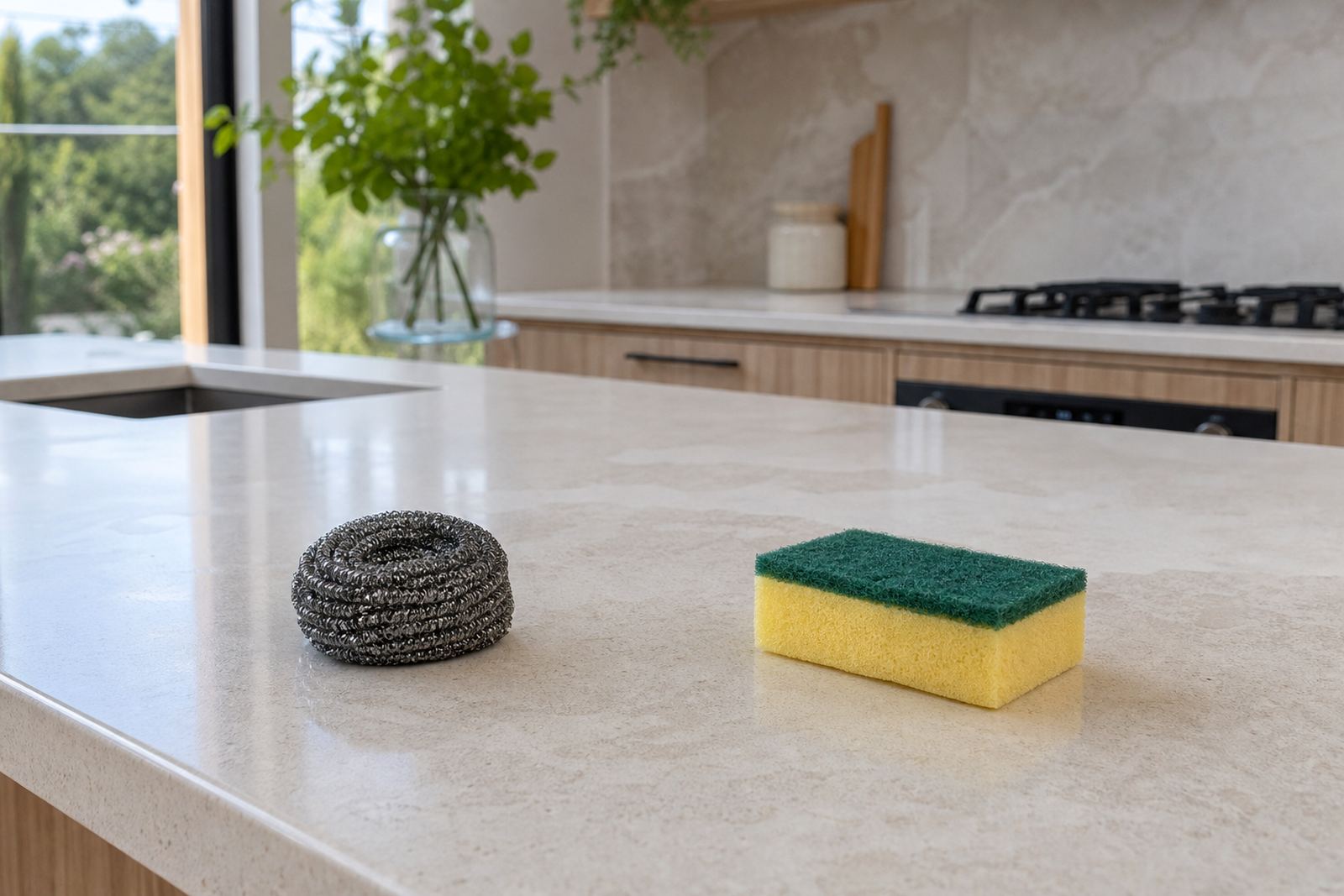
The practical side is straightforward. Use a trivet for hot cookware, wipe acid or pigment spills without dragging them across the surface, and avoid aggressive powders that cut too hard into the finish. In Gauteng homes with busy kitchens, these small habits make a visible difference over time.
- Heat marks need careful assessment before sanding starts.
- Some stains sit in the finish rather than the body of the top.
- Harsh scouring pads can leave more damage than the stain itself.
Seams, joints and repairs near cut-outs
Not every repair is about the flat field of the countertop. Seams between lengths, splashback joints, and areas around sink or hob cut-outs can show movement or wear first. A seam that has opened slightly may catch grime, while a cut-out edge can chip where heavy use concentrates on one point.
These areas need patience. Filling a joint is only part of the job. The join has to be shaped, levelled and colour matched so the line does not shout from across the room. Around a basin or hob, the finish must be neat enough to cope with cleaning and daily contact without leaving a ridge.
- Open seams need cleaning before any filling starts.
- Cut-out edges are checked for chips and stress lines.
- Repairing near a hob opening demands careful heat awareness.
Local repair job from Randburg to Pretoria
A vanity top in Strijdom Park may only need a tidy-up after years of toiletries, jewellery and cleaning products have dulled the surface near the basin. In a Sandton apartment, the issue might be a light scorch mark near a kettle stand and a small chip on the front edge. Both jobs call for the same measured approach: inspect, test, refine, then blend.
That practical method is useful across Gauteng because the setting changes, but the material behaves in the same basic way. A reception counter in Midrand, a family kitchen in Fourways, or a bathroom top in Pretoria can all carry the same kind of wear, just in different places. Repair work has to respect the shape already built into the top.
- Homes often show wear near sinks, prep areas and vanity bowls.
- Office counters usually wear along hand zones and corners.
- Shopfitters need repairs that sit cleanly beside existing joins.
Aftercare that keeps the finish easier to live with
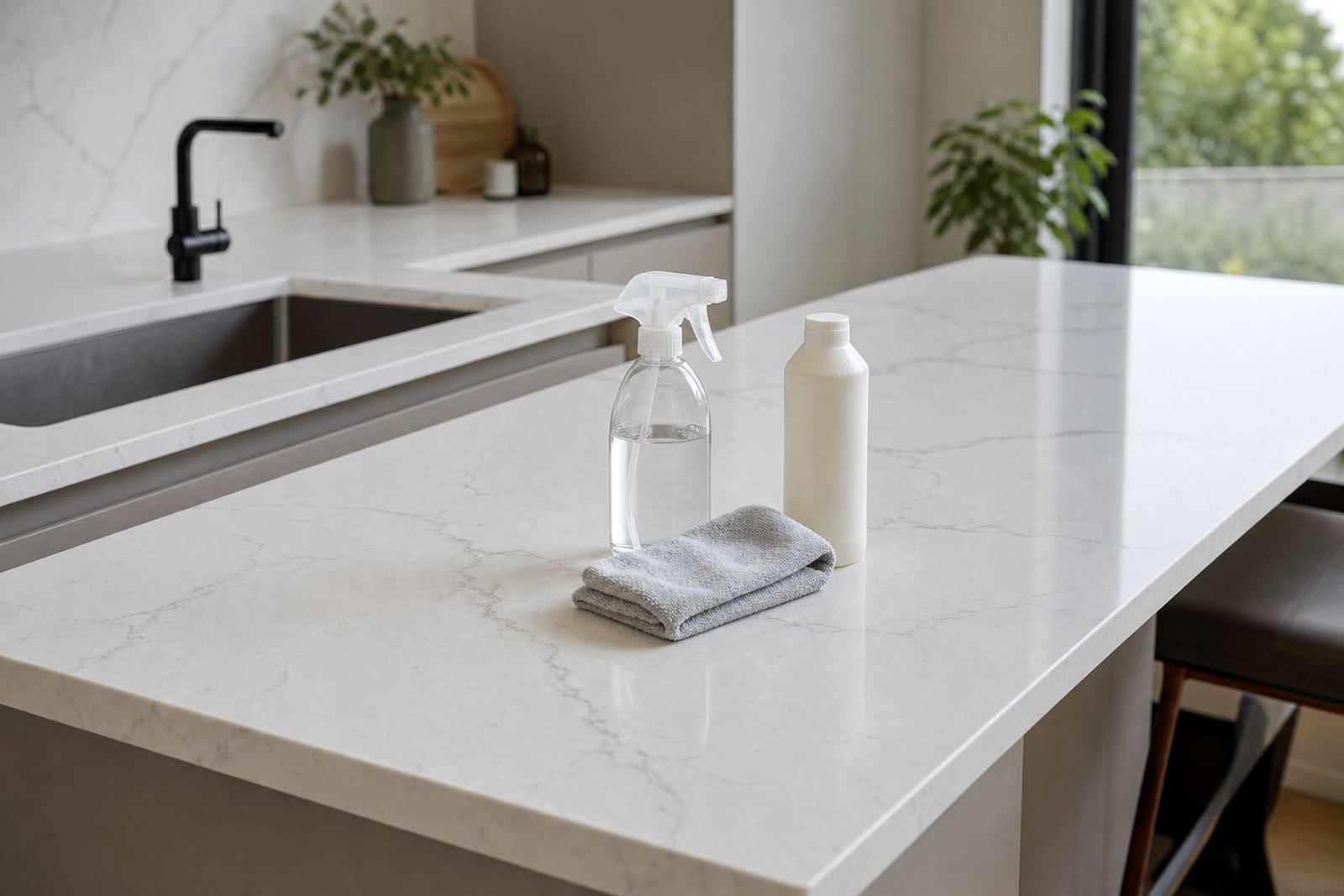
Once a repair has been completed, the surface usually benefits from plain, steady care. Warm water, a mild cleaner and a soft cloth are often enough for daily cleaning. If a mark appears later, it is better to assess it early rather than scrub it hard and widen the damage.
Our aftercare advice covers how to keep the repaired area looking even, how to deal with new marks, and when a deeper refinish makes sense. For homes and fit-outs across Johannesburg, Sandton, Midrand, Fourways and Pretoria, that guidance helps owners protect the work already done instead of letting minor wear build into a larger problem.
- Use gentle cleaners rather than abrasive powders.
- Lift heavy items instead of dragging them across the top.
- Check repaired seams and edges during normal cleaning.