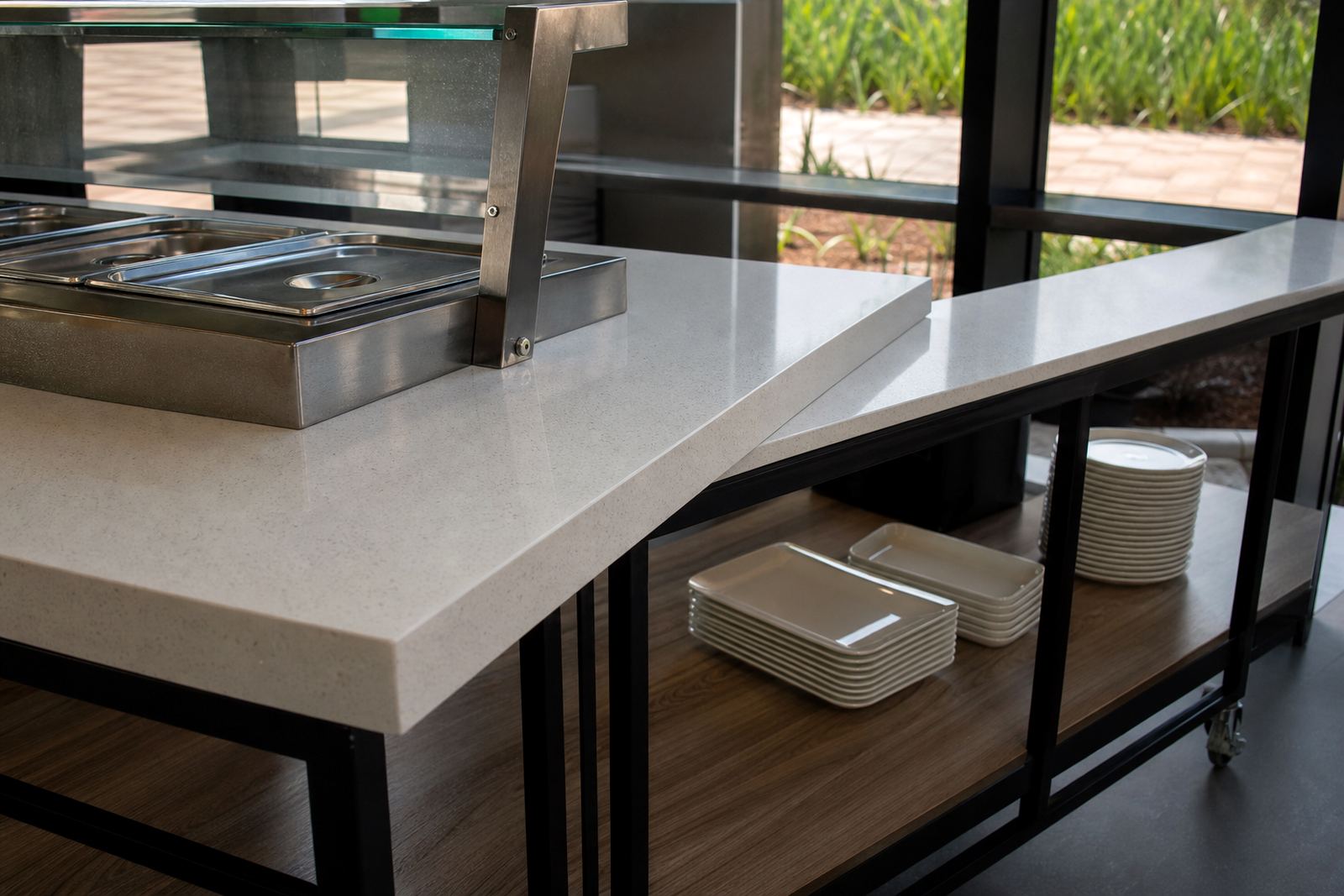
Hot pans and solid-surface tops do not mix well
Solid-surface material is valued for its smooth finish, integrated joins and easy cleaning, yet it is not a cast iron surface. A pot taken off a gas flame or induction hob can sit well above the temperature the top is happy to see, especially if it lands in one spot for too long. That is where marks, softening or a dull patch can appear.
In our Randburg workshop we see this most often around kitchen landing zones, tea points and island counters. A trivet is still the better answer, even on a top that feels tough to the touch. Heat care starts with the habit, not with a repair.
- Use a trivet under every hot pan, tray or casserole dish.
- Place hot cookware on a board first if the trivet is out of reach.
- Do not slide a saucepan straight from the hob onto the top.
Why a trivet still earns its space on the counter
Many owners assume a solid-surface counter can take heat in the same way a metal tray would. It can resist a fair amount of everyday kitchen activity, but direct heat is a different matter. The finish may discolour, the surface can mark, and repeated abuse can leave a patch that is hard to hide.
That is why our aftercare advice always keeps trivets in the picture. In a family kitchen in Fourways, for example, the most careful routine is often the simplest one: the kettle stays on its base, baking trays cool on a rack, and a thick board handles the hot casserole before it reaches the counter. Small habits protect a large investment.
- Keep at least one trivet near the hob and another near the oven.
- Choose a trivet with feet or insulation, not a thin cloth alone.
- Let roasting trays cool for a few minutes before moving them.
Sink cut-outs, seams and the heat zones around them
Heat care is not only about the open counter. It also matters around sink cut-outs, hob cut-outs and seam lines. Those are the places where fabrication details meet daily use, and the finish needs a bit more respect. Water around a sink is normal, but very hot pans placed nearby can still strain the surface.
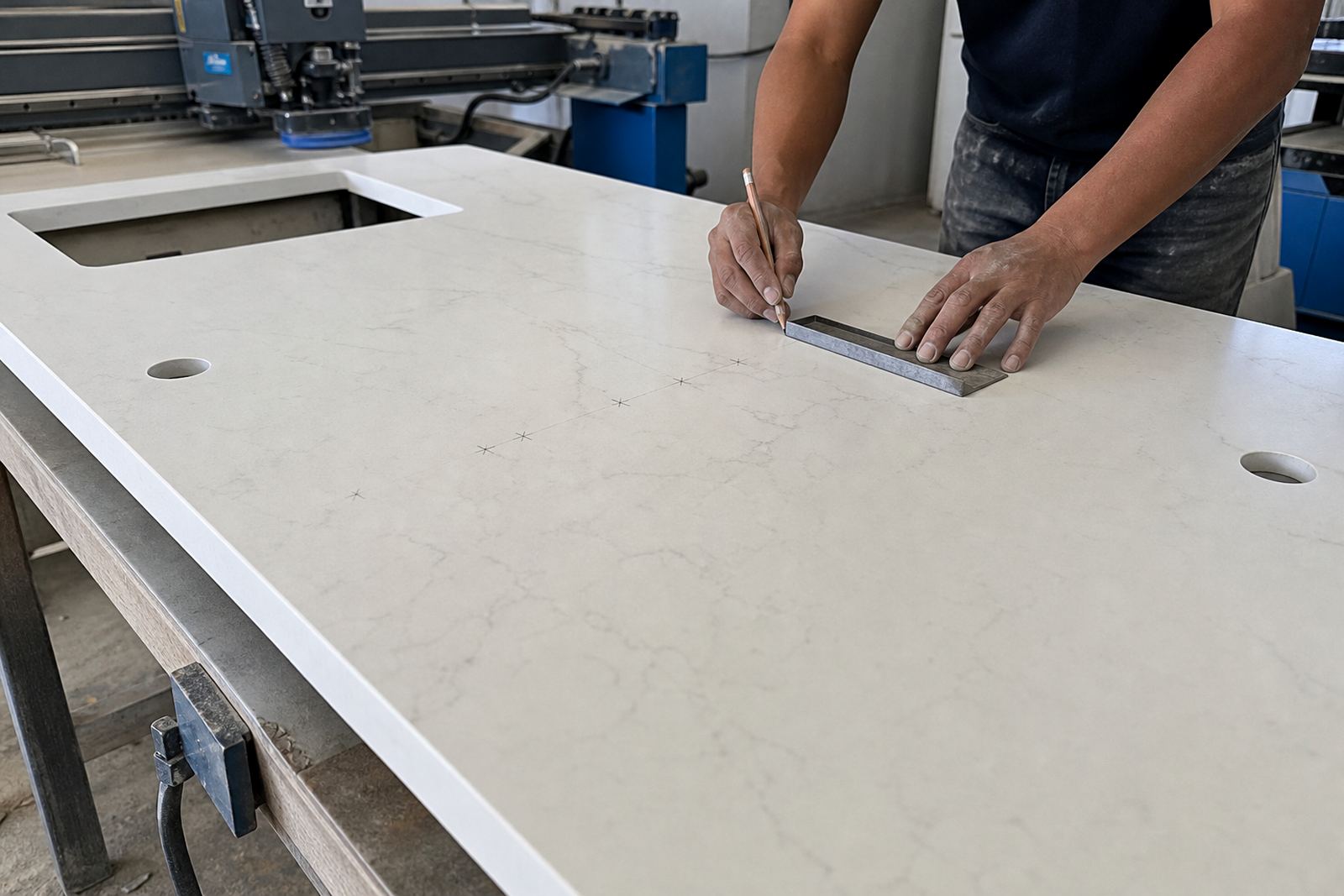
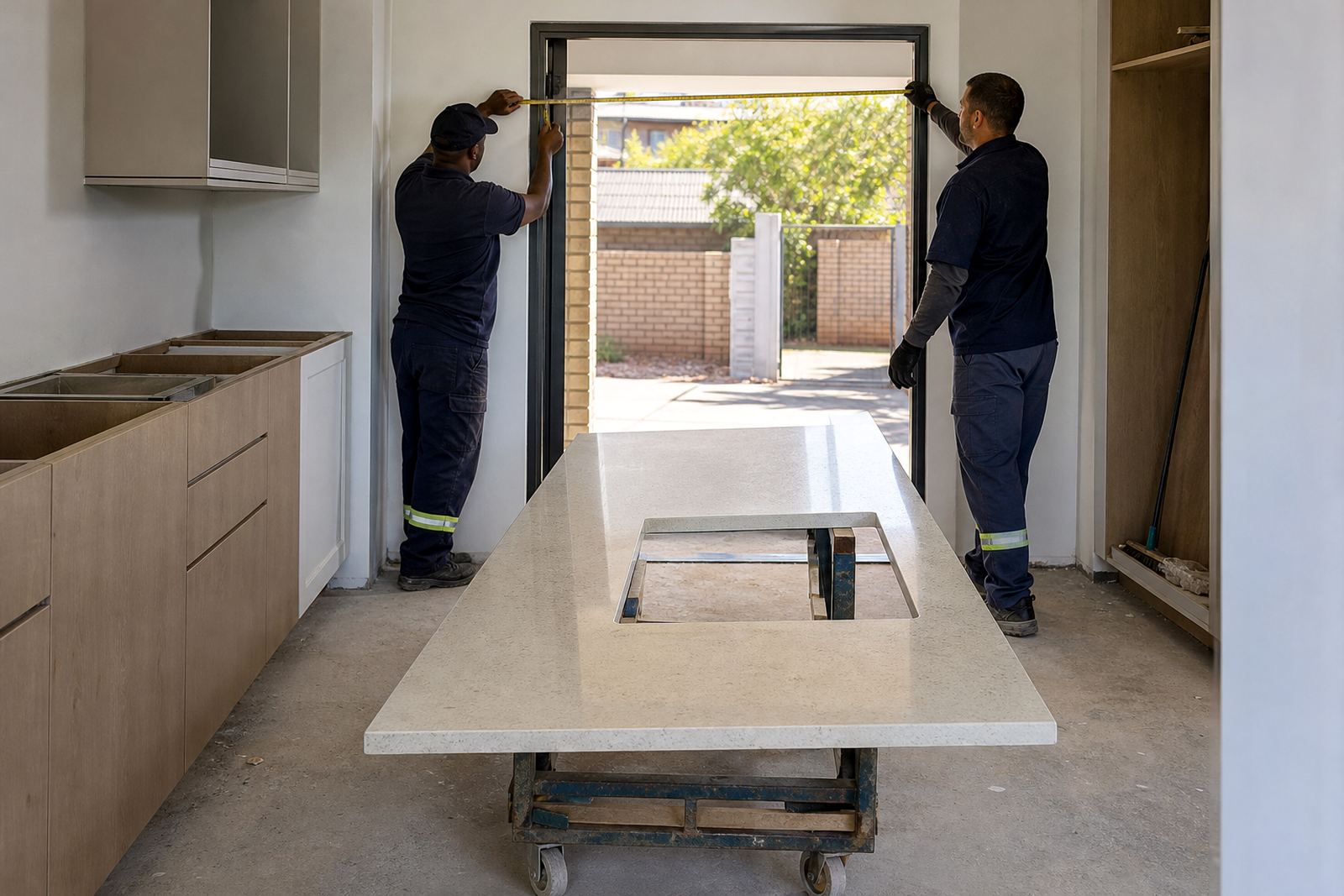
During templating and digital measuring, we plan these details carefully so the cut-outs sit cleanly and the edges are finished with the right profile. That helps with cleaning, but it does not make the material immune to heat. A seam is meant to be neat and stable, not a landing spot for a pan fresh from the oven.
- Keep hot cookware away from sink rims and seam joins.
- Wipe water away before putting down serving dishes.
- Let installers know where the heaviest heat will happen in the room.
House rules for kitchens, offices and shop counters
The same heat rule applies in different spaces, though the routine changes. In a home kitchen, the danger is usually a tray from the oven or a pot from the hob. In an office tea point, it is often a hot kettle base, a mug warmer or a canteen tray. In a shopfit-out, staff may place heated serving items on a counter meant for display and payment, which is not the same as a catering bench.
Solid-surface tops are popular because they give a clean line through vanities, service counters and kitchen islands. That clean line stays better when users know where the hot items should land. A sign is not always needed, but a trivet in plain sight often does the job.
- Mark one safe hot zone and keep it consistent.
- Train staff to place serving dishes on a board first.
- Use felt or silicone feet under small appliances where suitable.
What heat can do to the finish over time
Heat does not always leave a dramatic scar. Sometimes it shows up as a small dull patch, a slight colour change or a soft mark that appears after repeated exposure. On lighter colours, the change can be more visible. On darker tones, the mark may be easier to miss until the light hits it from the side.
That is one reason aftercare advice matters after installation. We explain how to clean the surface, how to avoid harsh scouring and where heat should never be placed directly. A solid-surface top is practical, but it still rewards careful use.
- Wipe spills once the surface has cooled.
- Avoid abrasive pads that can change the sheen.
- Do not put hot roasting dishes straight onto one spot.
A Randburg fitting story with a simple lesson
A kitchen in Randburg gave us a useful example. The owner wanted a pale solid-surface island with a neat edge profile and a flush sink cut-out, so the room could carry through from breakfast to homework to weekend cooking. The top was installed cleanly, but the family kept placing hot dishes on the same corner near the seating side.
After a few weeks the corner showed a dull patch where the heat landed most often. The fix was not complicated: a thicker trivet, a small tray for oven dishes, and a clear rule that hot servingware waits on the board first. The surface settled back into normal use, and the household stopped thinking about the counter as a heat proof bench.
Small habits that make the top last longer
Good heat care is usually invisible. It looks like a trivet where the pot lands, a board by the oven, and a pause before a dish reaches the counter. It also means using the top for what it does best: prep, plating, washing and day-to-day service, not as a resting place for scorching cookware.
For homes, offices and shopfitters across Gauteng, that approach keeps the surface looking cleaner for longer. It also helps the join lines, sink rims and edge profiles stay neat, which is the point of a well-made solid-surface top in the first place.
- Keep trivets, boards and cooling racks close to the action.
- Use the same rule for every room, not only the kitchen.
- Tell cleaners and staff not to shift hot items across the surface.