
The edge is a working detail, not just a trim
When a quartz or solid-surface top is cut, the edge profile is one of the first details that changes the whole job. A square edge gives a clean, formal look and works well in kitchens, vanities and reception counters where people want straight lines. A softened edge is easier on hands and hips, and it also helps with chips at busy corners. In a home in Fourways or a shopfitter install in Sandton, the edge can make the same slab read very differently.
We usually look at the room’s use before choosing the profile. A family kitchen with children, frequent cooking and busy prep areas calls for a different detail from a guest bathroom or office tea point. The profile also affects how light falls across the front edge and how visible small marks become, so the finish needs to suit the setting not just the drawing.
Some clients want the edge to disappear, others want it to show. That choice affects the work at templating, cutting and polishing, and it also affects how the finished top will feel when someone leans against it or wipes crumbs from the front line.
Popular edge finishes
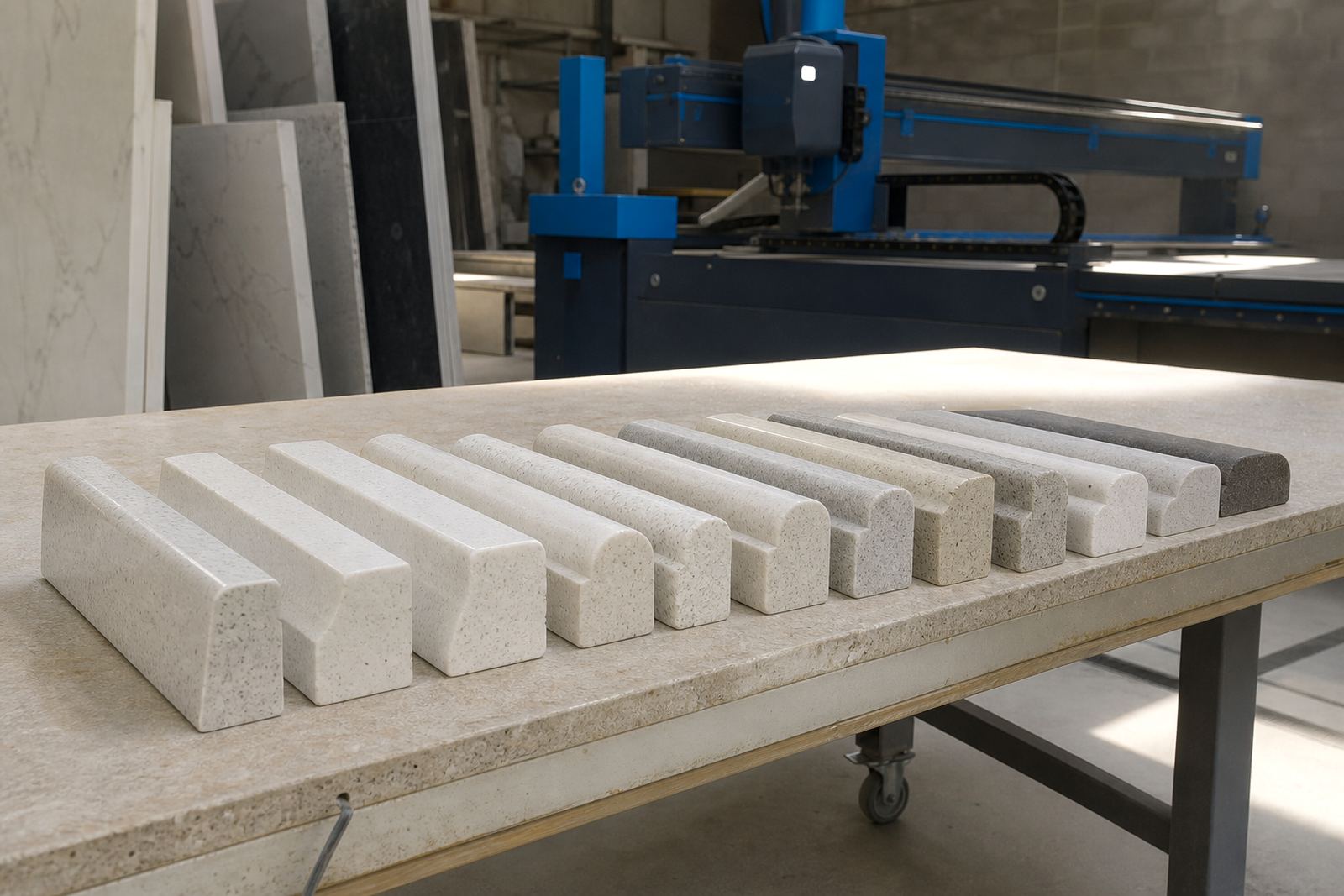
The range is wider than many people expect, but most jobs in Gauteng settle into a few familiar shapes. Each one changes the way the top looks and the way it behaves around sinks, splashbacks and joins.
- A square or straight edge gives a crisp face and suits modern kitchens and office counters.
- A eased edge softens the front corner without making the profile too decorative.
- A bullnose edge rounds the front more fully and is kinder in tight family spaces.
- A bevelled edge catches light and works well where the cabinetry has a sharper line.
- A stepped or built-up edge adds visual weight and can suit large island tops.
Solid-surface tops allow more shaping at the edge, while engineered quartz is usually kept to profiles that suit the slab thickness and the material’s structure. In both cases the finish has to be consistent across the full run, especially where two lengths meet at a seam or turn a corner around a hob cut-out.
Cleaning, fingerprints and the daily wipe-down
Many edge choices are really cleaning choices in disguise. A flatter profile with fewer grooves is easier to wipe after breakfast, lunch prep or a quick clean before clients arrive. In a busy office kitchenette, that can matter more than the style photo on the quote.
Raised lips, deep bevels and layered details can collect dust or grease at the front line. They are not difficult to maintain, but they do ask for a more careful wipe, especially near a splashback or where steam from a kettle hangs in the air. In coastal or humid stretches around Gauteng’s wetter seasons, that extra attention helps keep the surface looking fresh.
For many households, the best choice is the one that looks neat without creating extra corners to scrub. A good profile should support the way people actually use the room, not the way they imagine they will use it.
Safety at corners, sinks and high-traffic spots
Edge profiles also affect safety. A sharp front corner can look smart on a showroom sample, but in a tight galley kitchen it may not suit a passing hip, a child’s hand or a chair that swings too close. Softer corners reduce the chance of knocks feeling harsh, especially on island ends and vanity fronts.
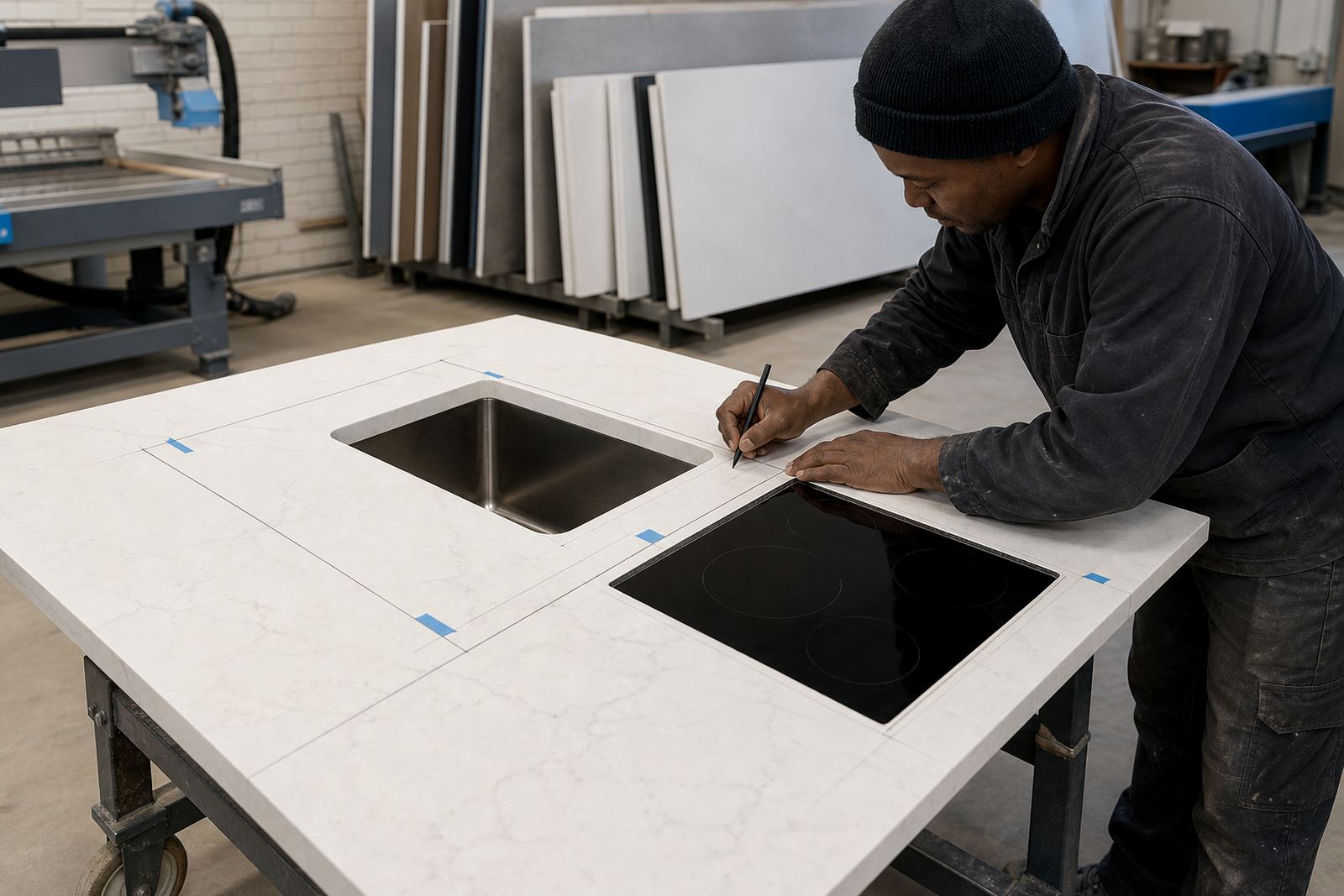
Sink cut-outs and hob cut-outs place extra stress on the slab, so the edge detail has to work with the overall cut plan. Thin-looking details can still be practical, but the fabricator must leave enough material where the top is most vulnerable. That includes the area around sink openings, long runs with unsupported spans, and corners close to seams.
- Rounder corners help in family kitchens and shared office spaces.
- Heavier front edges suit island counters with more visual presence.
- Simple profiles are easier to keep consistent over long runs.
- Where there is a seam, the profile must line through cleanly on both sides.
How thickness and material change the result
Slab thickness matters more than most people expect. A 20 mm quartz slab will not present the same front as a thicker built-up edge, and solid-surface can be shaped in a different way again. The profile has to suit the material, the cabinet line and the room proportions. On a slim vanity in Pretoria, a neat eased edge can keep the top looking light. On a larger kitchen island in Midrand, a more substantial front may suit the scale better.
With engineered quartz, the finish usually stays more controlled because the material is hard and consistent. With solid-surface, there is often more freedom to form a softer radius or a more sculpted edge. That said, any profile still needs careful polishing and accurate joining so the front line reads as one continuous piece.
Good edge finishing is about more than appearance. It helps the top sit square on the cabinets, keeps the front line aligned with the room, and avoids awkward transitions where the slab meets a splashback or returns at a peninsula.
A Strijdom Park job with a practical brief
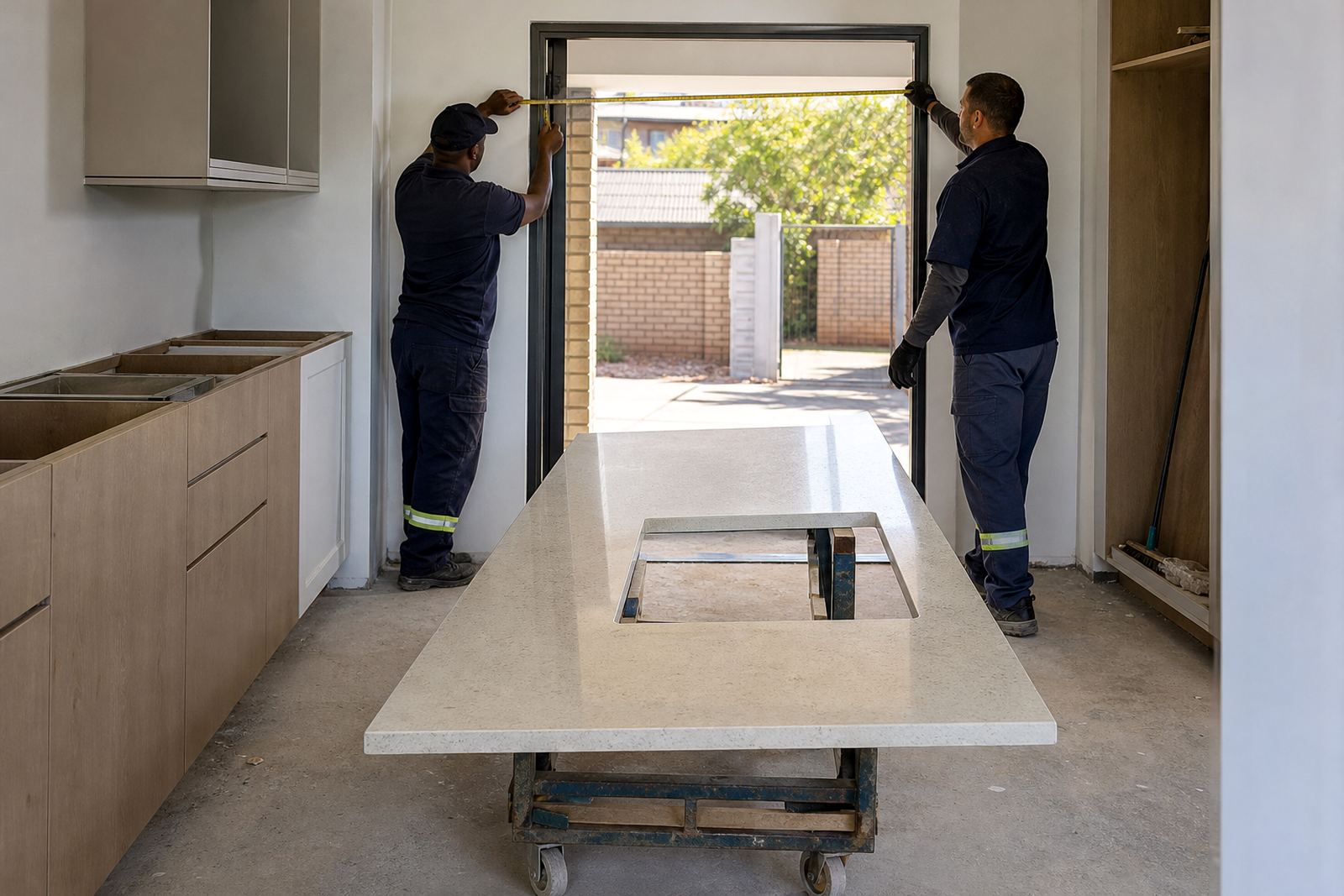
In Strijdom Park we often see the same brief in different settings, a home kitchen needing clean lines, then a nearby showroom or office wanting a stronger front edge for visual weight. The right profile changes once the room is measured, because the actual cabinet line, window height and wall movement all affect what will work neatly.
One local example was a kitchen with a long island and a small prep sink. The client wanted a strong front edge but also wanted cleaning to stay easy. The final choice was a simple softened profile rather than a heavy layered detail. That kept crumbs from collecting, reduced the chance of sharp contact at the island end, and matched the straight cabinetry without making the space feel bulky.
Edge selection is where the real value shows in our quartz and solid-surface tops. It is not only a style decision, it is a working detail that sits between material, use and the way the room is lived in every day.
Matching the edge to the room, not the sample
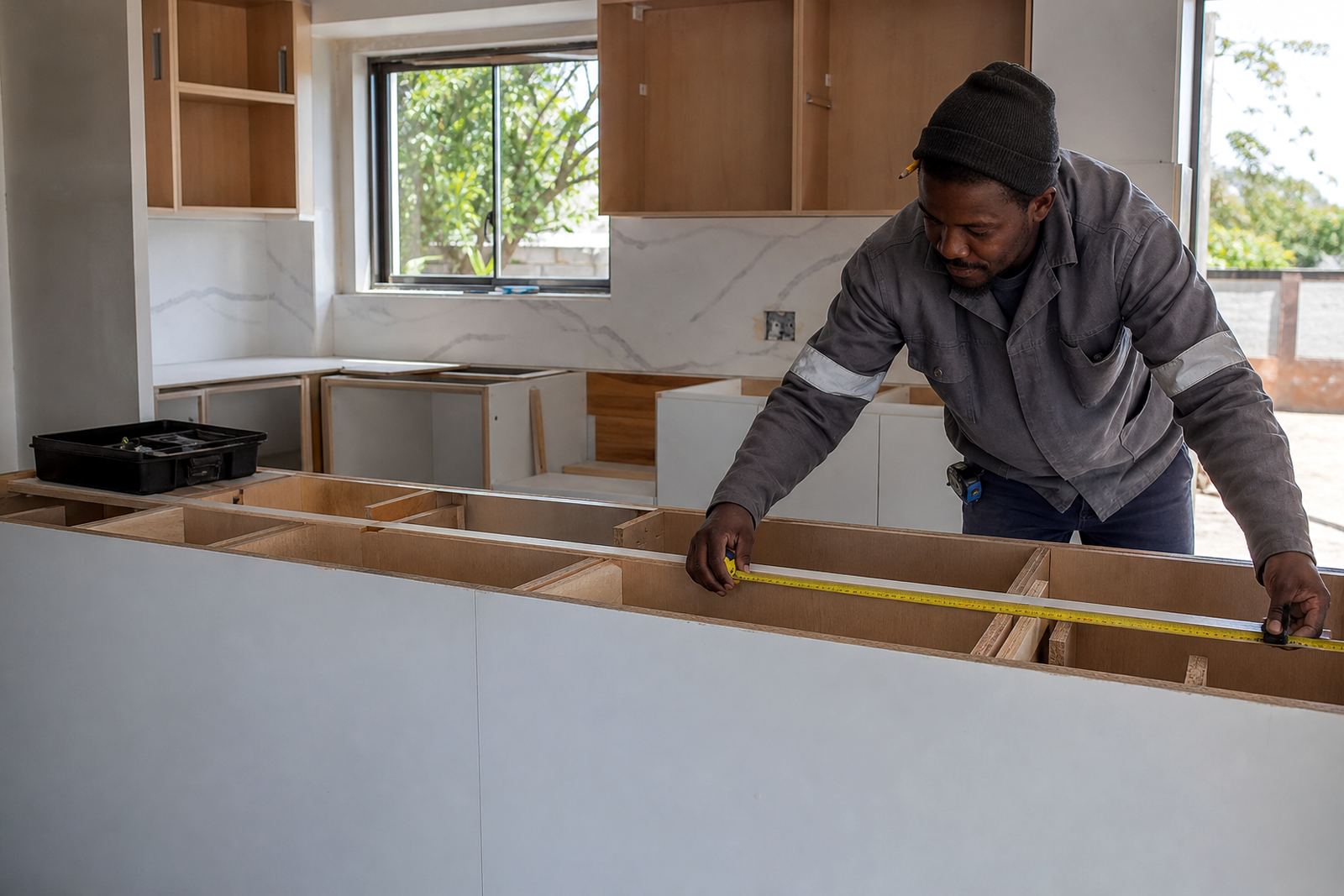
At templating, we look at the full picture before the cutter starts work. The shape of the cabinets, the position of sinks and hobs, the amount of overhang, and the way the room is used all shape the final edge choice. What looks right on a small sample can feel too light or too heavy once it runs across several metres of countertop.
- Kitchen islands often suit a cleaner, more visible front line.
- Vanity tops usually work best with a softer edge that is easy to wipe.
- Shop counters may need a profile that handles daily contact well.
- Countertops near splashbacks need an edge that finishes neatly at the wall line.
For engineered quartz and solid-surface work across Johannesburg, Sandton, Midrand, Fourways and Pretoria, the edge profile should be treated as part of the full fabrication plan. When it is chosen well, the top feels settled in the room and stays practical under everyday use.