
The point where measuring stops being guesswork
Countertop templating is not the first step in a kitchen or bathroom project, and it is not the last either. It belongs at the stage where the carcasses are installed, the room is closed up, and the final layout is no longer moving around. If the cabinets still need to shift, the wall tiling is unfinished, or the plumber has not marked the basin position, the numbers can change under your feet.
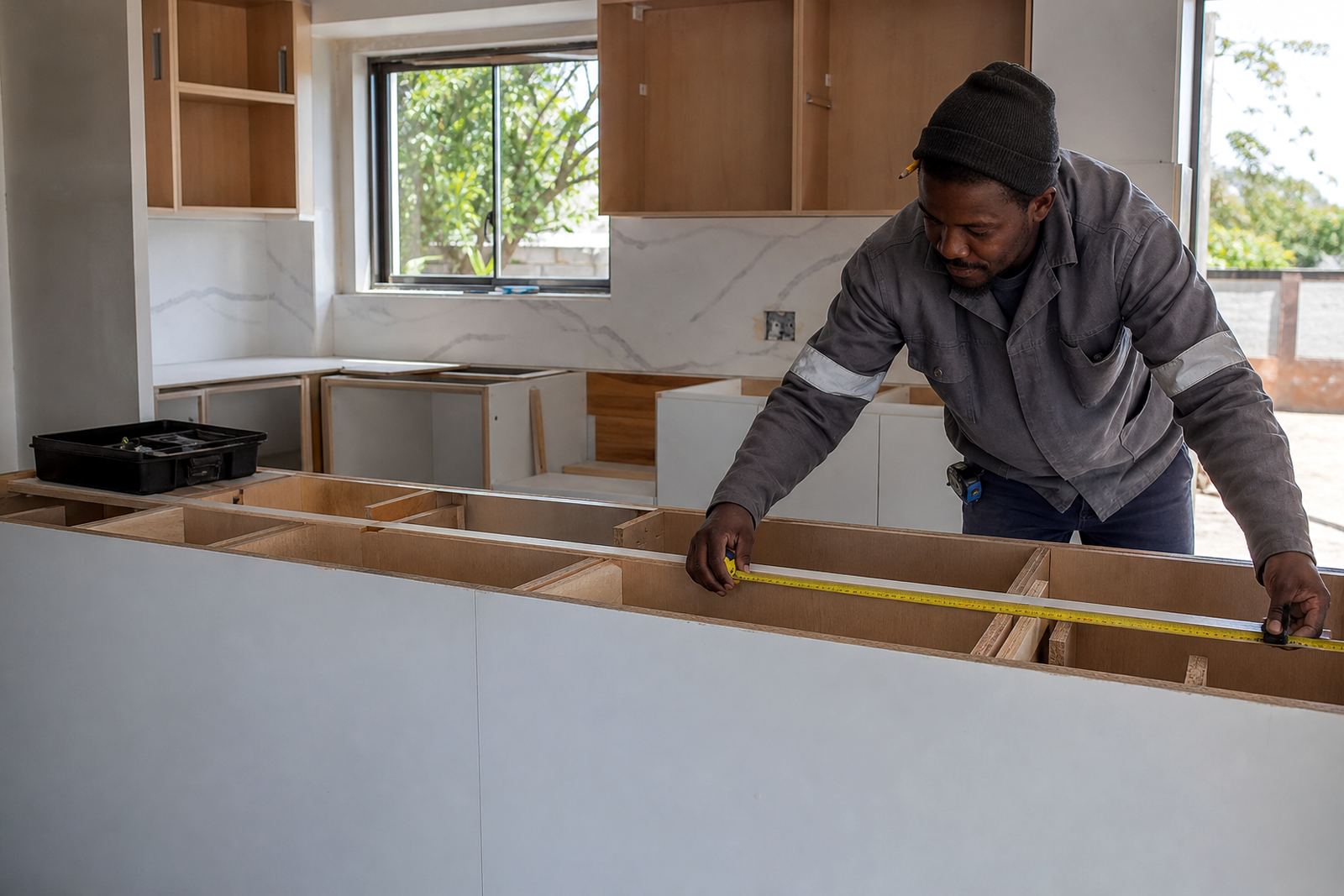
For engineered quartz and solid-surface work, that timing matters because the slab is cut to the room, not the other way round. A careful template captures the true wall line, the square of each corner, the depth of the overhang and the place where the sink, hob and taps must land. In Randburg, where older homes and newer additions often meet slightly uneven walls, that extra check saves a lot of trimming on site.
Before the template is booked, the room should have settled
The best time is after the final cabinet run is fixed in place and before any permanent cut-outs are made in the stone. If the vanity top or kitchen counters are still waiting on plumbing changes, the templater may have to measure to a moving target. Even a small 5 mm shift can affect a mitred edge, a hob cut-out or the position of a seam.
- Cabinets should be level and secured.
- Walls should be tiled, plastered or painted to their final line.
- Basins, hobs and taps should be on site where possible.
- Floor finishes should already be in, or their finished height must be known.
- Any appliance housing must be fixed before measuring starts.
That sequence gives the workshop a clean set of figures for slab layout planning, seam placement and edge profiling. It also helps with splashbacks, which need to follow the wall rather than fight it.
What templating protects on quartz and solid-surface jobs
Quartz slabs are hard wearing and suited to busy kitchens, but the material still needs accurate cutting. Solid-surface tops allow more flexibility around joins and curves, yet they also depend on clean measurement if the finish is to look neat. Templating protects the places where the eye goes first: mitred corners, hob openings, sink cut-outs and the front edge that runs along a breakfast counter or island.
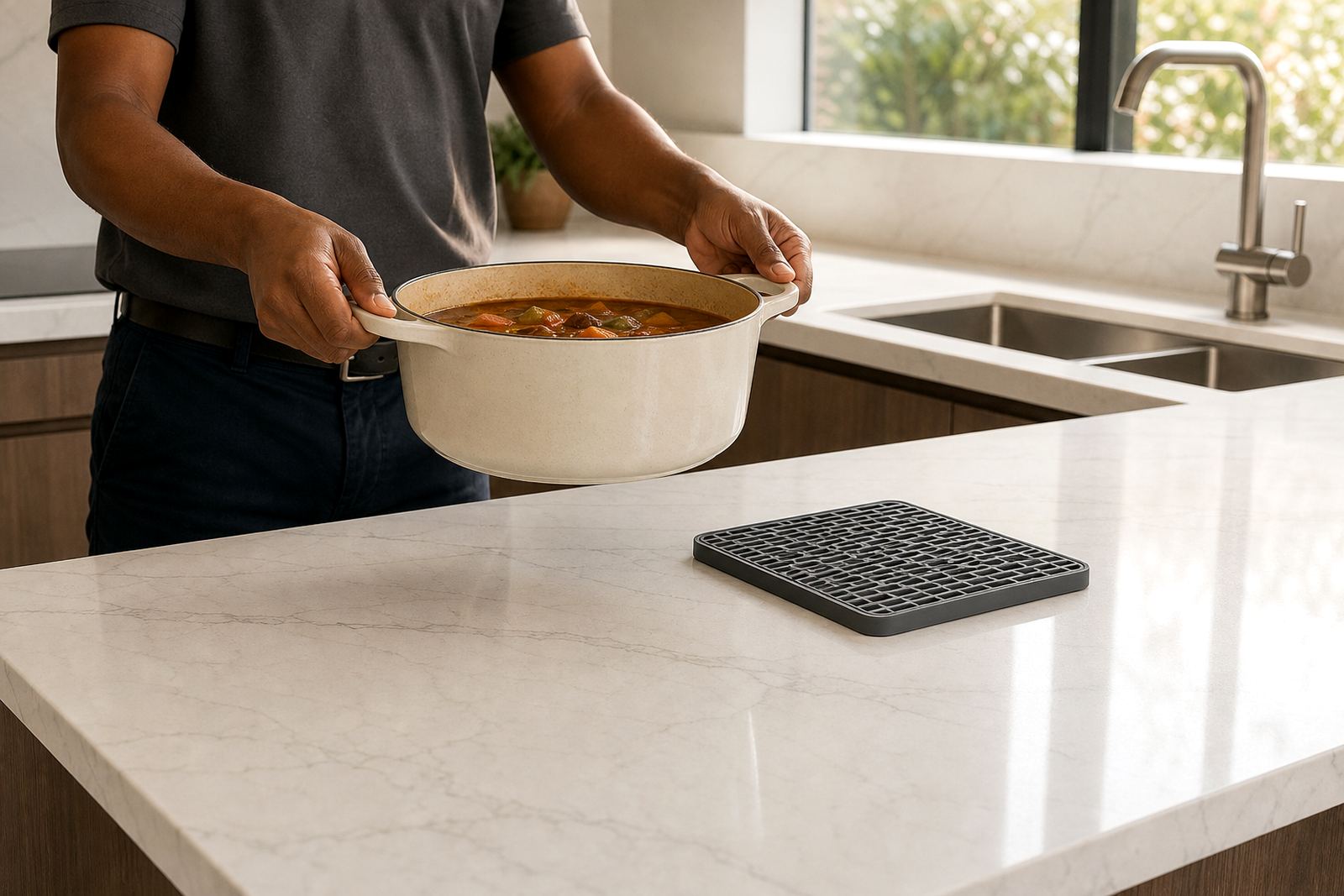
A proper template also helps the installer plan where seams should fall. On long kitchen runs, a seam should sit where it makes sense structurally and visually, not where the mistake happened. Heat resistance and stain care still matter after installation, of course, but those daily habits only help if the top was cut and fitted correctly in the first place.
Renovations, fit-outs and the moments that usually go wrong
In a renovation, the biggest trouble comes when the countertop is ordered before the room has settled. A plumber may still need to move a waste outlet. A tiler may leave a thicker line at one wall than another. A cabinet installer may discover a floor that falls away in one corner. If templating happens too early, the top can end up trimmed on site, and that is rarely the neatest path.
Shopfitters face a different problem. Tight handover dates can tempt a team to measure from drawings only, but drawings and finished walls are not the same thing. When we work on offices or retail counters in Johannesburg or Sandton, the practical sequence is usually the same: final structure first, then templating, then fabrication, then installation. That order gives the cutter a real room to work from.
- Do not template before cabinet carcasses are fixed.
- Do not template while walls are still moving.
- Do not leave sink or hob positions to the last minute.
- Do not assume a square room is actually square.
Fourways kitchen template on a busy remodel
Take a family kitchen in Fourways with a long island, a pantry run and a sink under a window. The cabinet maker finishes the carcasses, the electrician marks the appliance points, and the plumber sets the basin position. Only then does templating make sense. The templater records the wall irregularities, checks the overhangs, notes where the seams can disappear into less visible sections, and confirms how the splashback will meet the wall.
If that same room had been templated before the floor tiles went down, the finished height could have shifted the whole profile. If it had been templated before the sink was selected, the cut-out may have needed changing. In a bathroom vanity, the same logic applies. A wall hung unit with a basin cut-out needs a template after the vanity is fixed and the taps are positioned, not while the bathroom is still being tiled.
How our team uses the template once it leaves the room
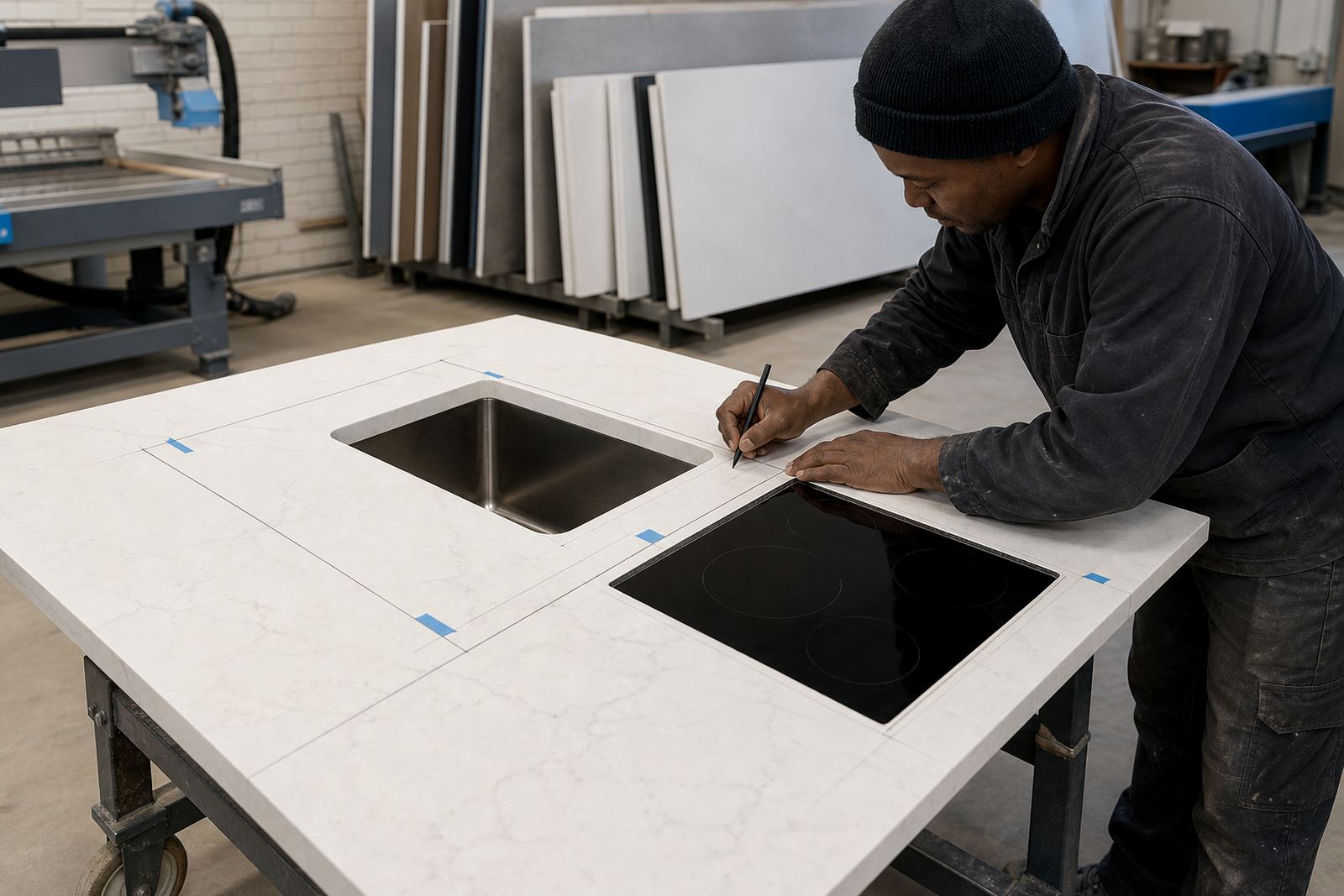
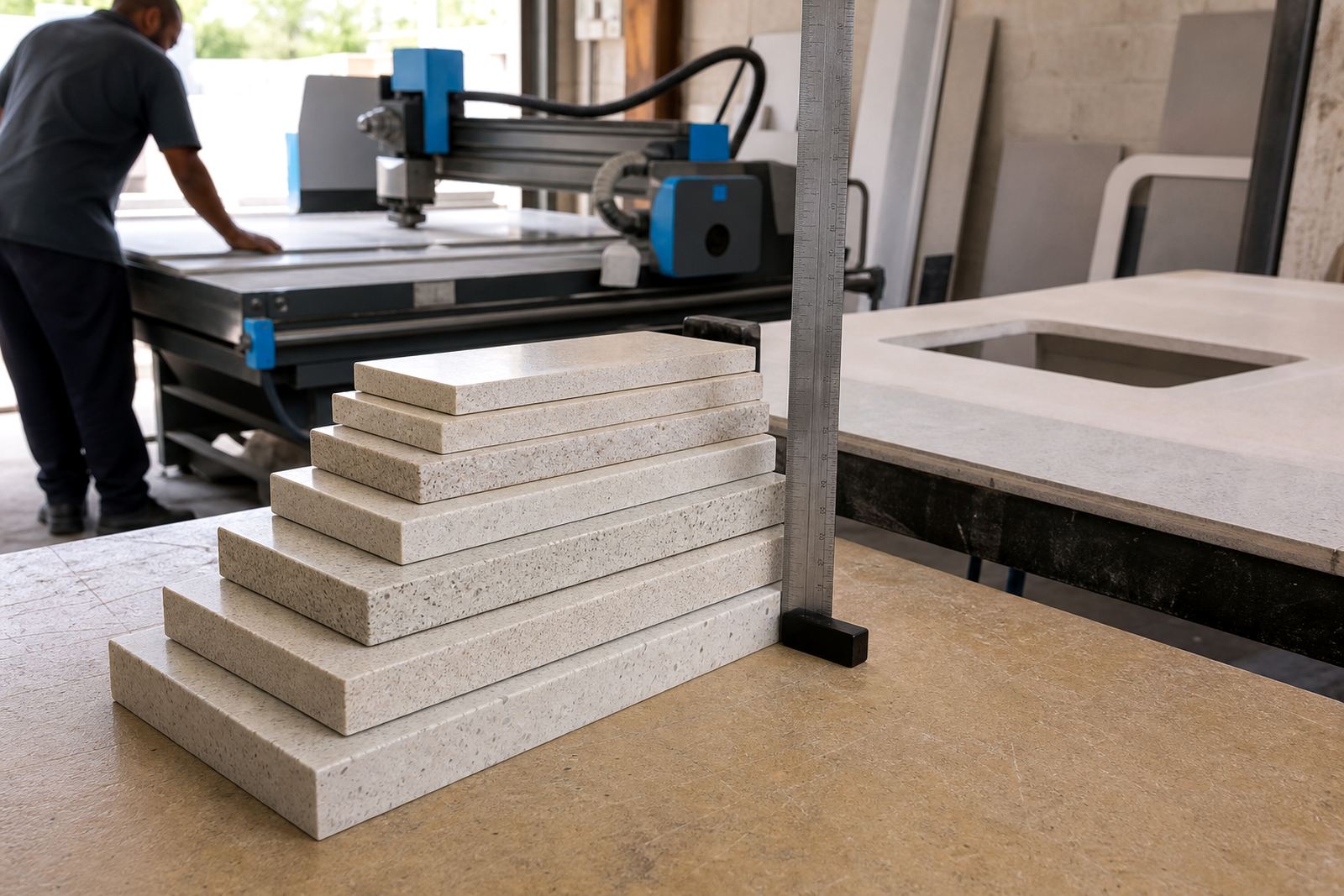
Once the dimensions are taken, the workshop turns them into cut lines, edge details and join positions. That is where digital measuring, cutting and fabrication work together. A 20 mm quartz top may call for a clean square edge, while a solid-surface vanity can carry a softer profile if the design asks for it. Either way, the template guides the slab layout, the sink opening and the seam joints, so the finished piece follows the room rather than forcing the room to adapt.
Templating also supports aftercare. If a client knows where the joins are, how to treat heat, and what to avoid around stains and abrasives, the top usually stays looking right for longer. Thabo often finds that the first maintenance questions come from people who were never shown the join lines, the overhangs or the correct seal area around the sink. A clear handover avoids that confusion.
The practical rule that saves most jobs
If the room still needs moving parts, wait. If the cabinets are fixed, the walls are final and the appliance points are known, then template. That is the cleanest rule for quartz kitchen tops, vanity tops and splashbacks across Randburg, Pretoria, Midrand and the rest of Gauteng. It keeps the fabrication accurate and lowers the chance of awkward site alterations.
For homes, offices and shopfitting projects, the best moment is usually just after the last real adjustment and before fabrication starts in the workshop. That is the point where the room becomes a set of measurements. Not before, and not after.