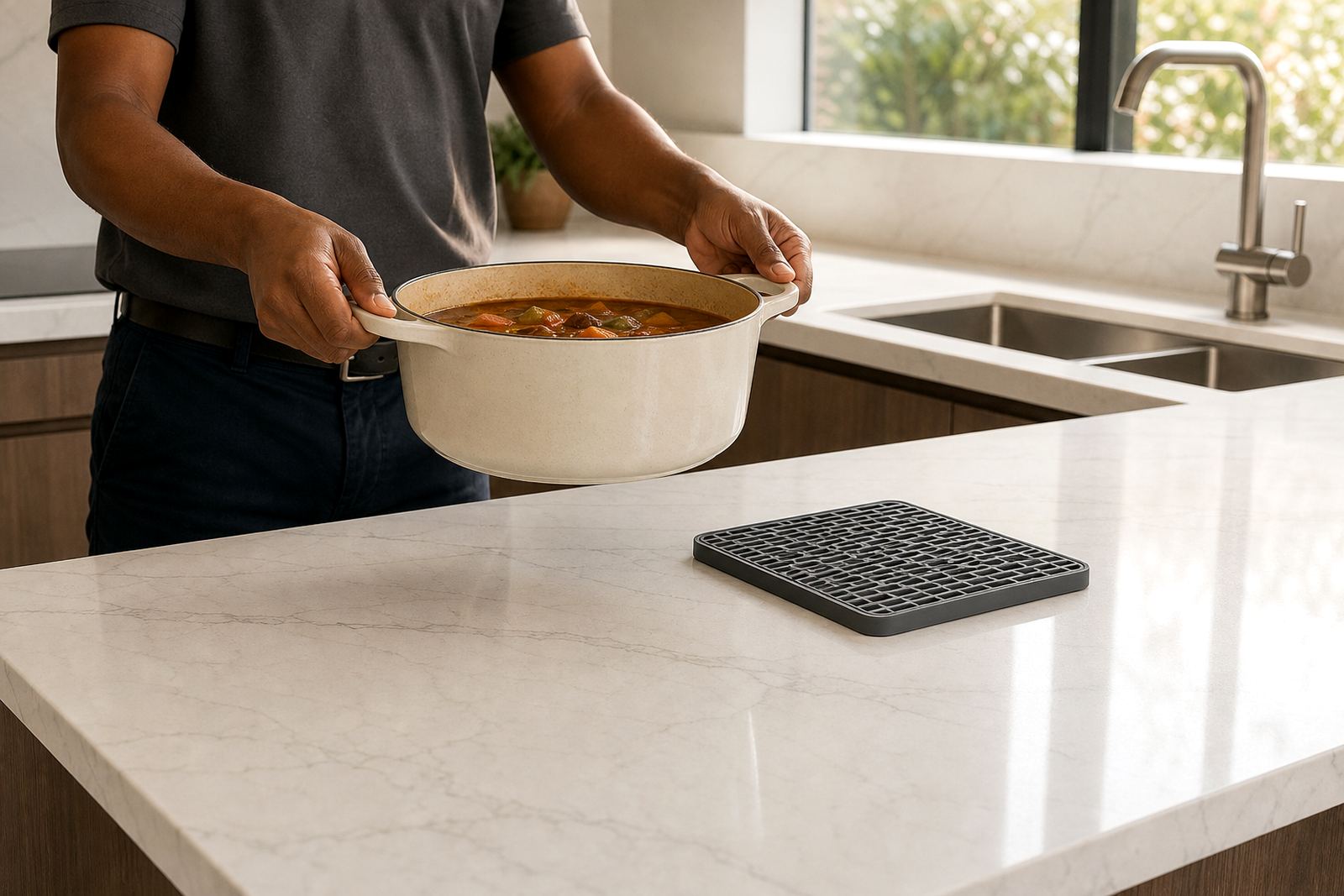
Heat leaves a different mark on quartz than on tile
Engineered quartz is built from crushed quartz and resin, which gives it a dense, clean finish and a dependable surface for kitchens, vanities and office tea points. That resin content is also the reason direct heat needs caution. A hot saucepan, kettle base or baking tray can create a thermal shock point that the slab did not need, especially where the surface is already cut for a sink or hob.
In practical terms, quartz is happiest with normal room heat, warm mugs and day to day prep. It is not made to be treated like a trivet. If a hot item sits still in one place, the surface can discolour or craze, and that risk is higher near seams, mitred edges and slim profiles where the material is working harder.
On a Randburg family kitchen, the same rule applies whether the counter is 20 mm or 30 mm thick. The slab still needs a barrier between the hot base and the finish.
What our workshop watches for before a slab is cut
Heat care starts long before installation. During site templating, the team checks where cooking equipment sits, how far a hob is from the splashback and whether the counter layout leaves enough space for trays and hot dishes to be parked safely. Cut-outs for sinks and hobs reduce the material around them, so the cut plan has to be neat and the support beneath the slab has to be right.
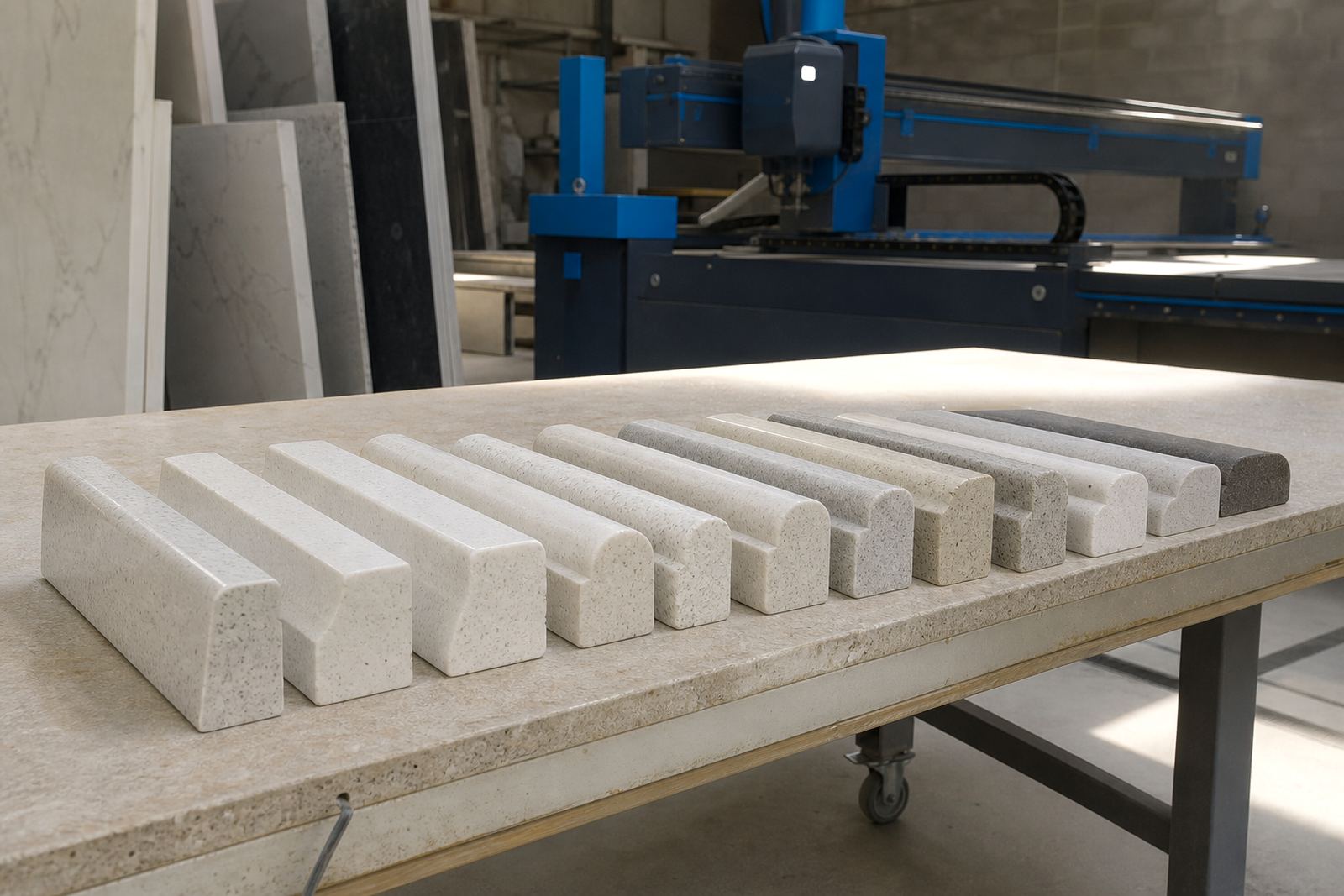
Edge choice also affects daily use. A square edge, eased edge or pencil edge will all look different and feel different at the front of the counter, but none of them changes the need for sensible heat habits. Seams must be planned with care too, because a poor seam under repeated heat can show earlier than the rest of the top.
- Keep hob openings accurate so the slab is not stressed by a tight fit.
- Leave practical landing space beside cooking zones.
- Use proper support on overhangs and corners.
- Place seam lines away from obvious hot spots where possible.
Those details matter in homes, boardrooms and shopfitters’ counters alike. A good layout reduces the chance of later movement and keeps the surface easier to live with.
The small habits that protect a busy kitchen
Most quartz heat damage does not happen in one dramatic moment. It builds through habit. A dish is left too near the stove. A roasting tray is put down without thinking. A pan rests on the same corner every night after supper. In a kitchen that serves a family in Fourways or a staff tea area in Midrand, those small acts repeat and the surface takes the strain.
Good habits are plain and cheap. Use a trivet, wooden board or heat pad every time hot cookware leaves the stove or oven. Lift, do not slide. Let baking trays cool on a rack instead of on the counter. When draining hot water from a pot, avoid placing the base on the quartz while it is still steaming.
- Keep a trivet near the hob, not stored in another room.
- Train staff or family members to use it without thinking twice.
- Do not stack warm dishes directly on top of each other on the slab.
- Wipe splashes after cooking so heat and spill marks do not sit together.
These habits are especially useful in open plan kitchens where the counter stays visible all day. The surface then keeps a cleaner look for longer and the owner avoids avoidable wear.
When a splashback and vanity need the same care
Quartz heat care is not only about kitchen tops. A splashback behind a tea station or a vanity next to styling tools can also take repeated warmth. Splashbacks are often mounted close to cooking or water points, so they should be cleaned with mild products and protected from direct heat sources where possible. A vanity top in a home bathroom usually sees less intense heat, but straighteners, curling tools and hot cosmetic appliances can still mark the finish if they are set down bare.
Solid-surface counters behave differently from engineered quartz, but both benefit from the same basic habit: keep hot objects off the finished sheet. On either material, a protective mat is easier to replace than a damaged top. Aftercare advice matters here because the right routine keeps the finish looking even, especially on pale colours where marks show sooner.
For offices and reception spaces in Johannesburg or Sandton, the heat issue may come from kettles, urns or catering trays rather than daily cooking. The rule is unchanged. If it is hot enough to make you pull your hand away, it should not go straight onto the surface.
How we explain heat limits to clients before installation
People often want a counter that looks crisp and handles real life. That is fair. The job is to balance appearance, join details and day to day use. Before installation, the discussion usually covers slab thickness, overhangs, seam positions, sink cut-outs and the likely heat zones in the room. A kitchen with a gas hob, for example, can ask more of a counter edge than a vanity in a guest bathroom.
The workshop and installation team also look at where the top meets walls, appliances and return panels. Tight corners and narrow strips can become hot spots if the surrounding layout is cramped. That is why digital measuring and slab layout planning matter. They reduce unnecessary joins and help the fitters place the stone in a way that suits the room, not just the drawing.
- Ask where the hottest items will be placed during normal use.
- Check whether a trivet can sit near the cooking zone without crowding the counter.
- Keep a clear landing area for oven trays and pans.
- Use the aftercare notes to set a simple house rule for hot items.
At Plastone, that conversation is part of the job. Morne Moonsamy and the team work on kitchens, offices and shopfitters’ projects across Gauteng, from Strijdom Park and Randburg to Pretoria and Centurion, so the advice has to fit busy local spaces, not a showroom fantasy.
If heat damage does happen, act early and keep it honest
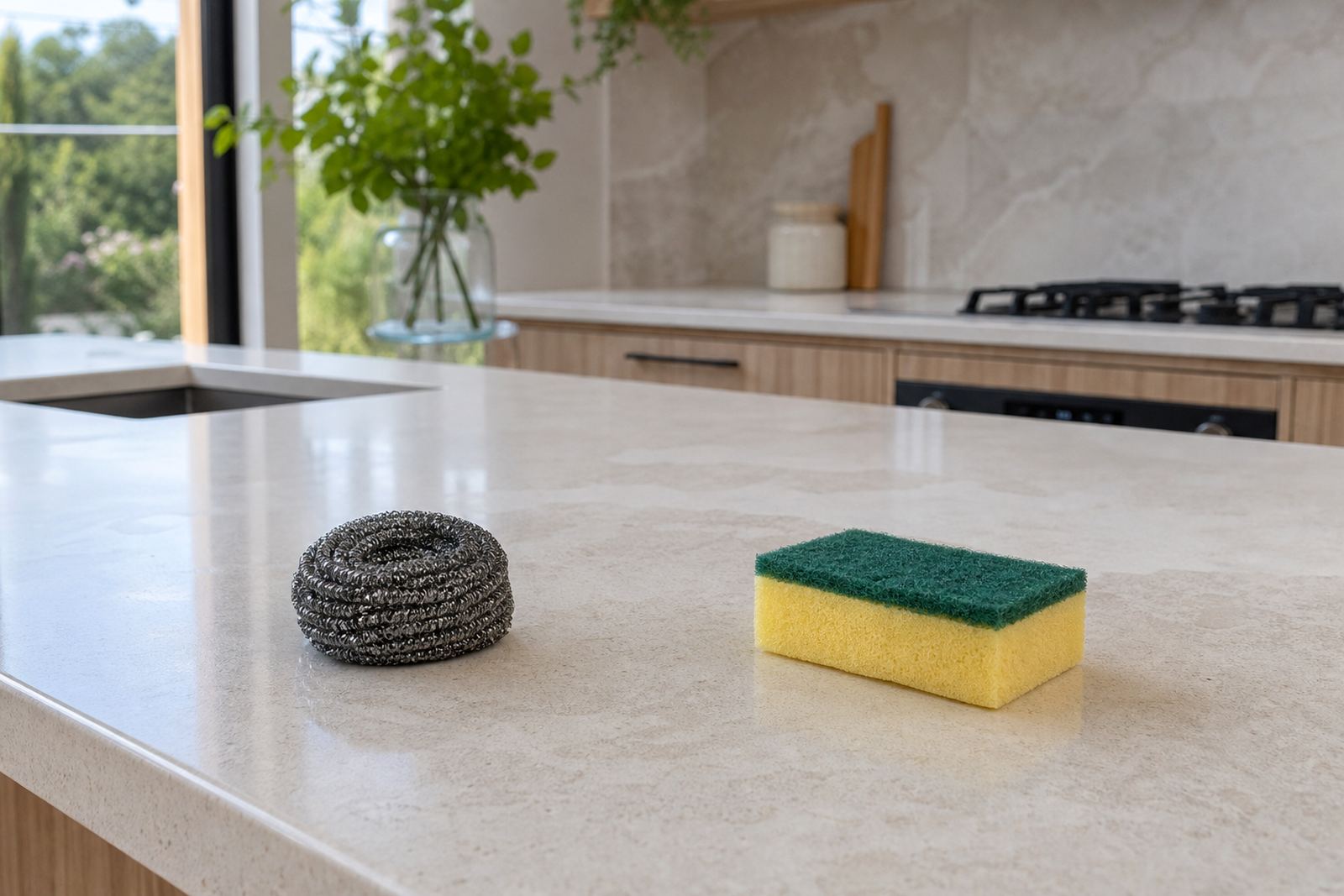
If a hot item has already left a dull patch or a visible mark, do not reach for an abrasive scourer. Harsh scrubbing can worsen the finish, especially on polished quartz. Start with mild soap, warm water and a soft cloth, then check whether the mark is surface residue or actual heat damage. If the texture has changed, the issue is usually deeper than a simple wipe.
Seams and cut-outs deserve a close look because they tell the story first. A small chip near a hob opening or a line opening at a join can widen over time if the counter keeps taking direct heat. That is why correct templating, careful fabrication and proper installation matter before the first meal is cooked on the top.
Hot cookware and engineered quartz can live together well, but not without a bit of discipline. Use protection, plan the layout properly and treat the surface as a finished worktop, not a cooling rack.