

1. Start at the surface, not the paperwork
2. Inspect the joints where two pieces meet
Seams are where workmanship shows most clearly. A well-joined seam should be tight, thin and aligned, with no lipping between pieces. In a busy Gauteng kitchen, especially around a sink run or a long L-shaped counter, the joint should not catch crumbs or leave a ridge under your cloth. On solid-surface work, the join is often blended to reduce the line visually, while engineered quartz usually keeps a more visible but neat seam.
Look closely at the colour of the adhesive line, because a poor colour match can read as a dark stripe under overhead lights. If the seam crosses a front edge or wraps near a hob, ask how the pieces were supported underneath. That support matters when the slab is carrying weight from appliances, chopping, or daily cleaning. The line should feel firm, with no movement when pressed.
- Check that the joint is flush to the touch.
- Look for glue smears on the surface or edge.
- Ask whether the seam was placed away from the highest-stress point.
- Confirm that support brackets or substrate pieces are concealed and secure.
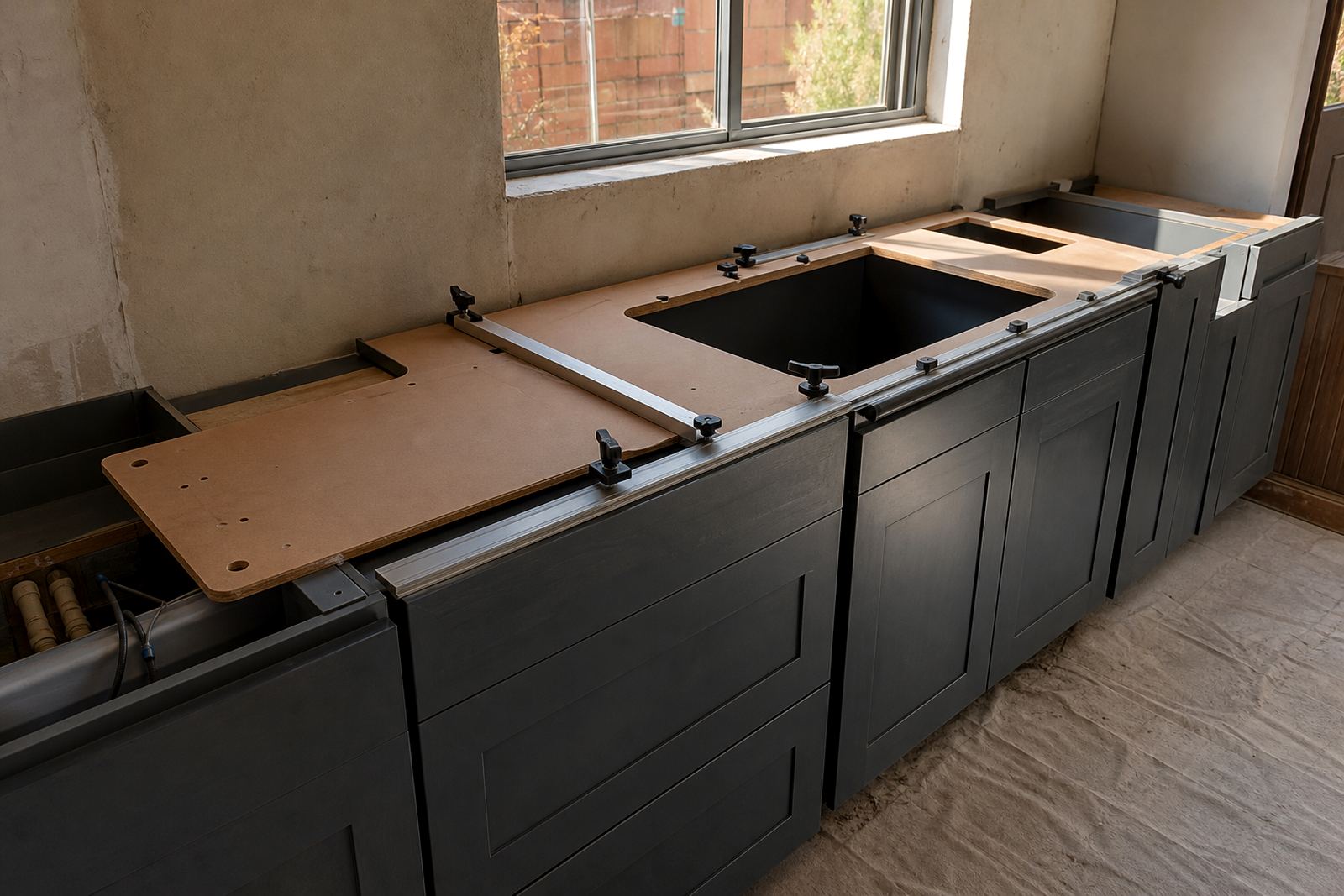
3. Test the sink and hob cut-outs before the room fills up
4. Check edges, corners and any profile work by hand
Edge profiling changes both the look and the feel of the top. A square edge gives a crisp, modern line, while a softened or rounded profile is kinder on hips and forearms in tighter kitchens. Whatever the profile, it should be consistent along the length of the run, with corners shaped evenly rather than left slightly flat or pointed. On vanities, the edge also needs to work with splashback heights and tap positions.
Feel the underside of the edge where your fingers would naturally go. The underside should be smooth, without sharp burrs or rough grinding marks. If a splashback rises behind the top, the corner where it meets the wall should sit neatly against the tile or painted surface. In older Randburg homes with walls that are not perfectly straight, good scribing makes a big difference to the final line.
- Run your fingers along the full edge profile.
- Check that corners match one another in shape and polish.
- Look for chipping around sink rims and external corners.
- Confirm that splashbacks sit tight to the wall finish.
5. Look at seal lines, wall gaps and water points
Any place where the countertop meets a wall, a basin, or a splashback needs a proper seal. The seal line should be neat, continuous and suited to the room. In a bathroom, too much sealant can look clumsy, while too little leaves a path for moisture. In a kitchen, the line behind a sink or near a water point matters because repeated wiping will test it every day.
Check the gap between the top and the wall. A small, even line is normal where the wall is not perfectly plumb, but the filled finish should not look thick on one side and thin on the other. Where the surface meets a backsplash, the join should not trap dirt. If the room is a shopfitting project in Johannesburg or a reception counter in Midrand, this same principle still applies, because public spaces show dust and fingerprints faster than private rooms.
- Inspect sealant around sinks, basins and splashbacks.
- Look for gaps where water can sit behind the top.
- Check that wall lines are finished evenly, even if the wall is not perfect.
- Ask how to clean the seal without damaging it.
6. Review the care advice before the first cloth goes down
The handover should include practical care advice, not a vague promise. Quartz is stain resistant in daily use, but spills should still be wiped up, especially tea, coffee, wine and cooking oil. Solid-surface tops are more forgiving with minor surface marks, yet they also need sensible cleaning products and a little patience with hot items. Harsh scourers, abrasive creams and cheap blades can spoil a neat finish faster than most people expect.
Ask what cleaner is safe for the surface and what to avoid. Also ask about the first few weeks after installation, because new silicone, fresh sealant and newly fitted sinks deserve gentler treatment while the room settles. In a humid coastal climate these tops may move less than timber, but the seals around them still need observation. In Gauteng the issue is more often dust and daily traffic, so a microfibre cloth and mild cleaner do most of the work.
- Confirm the right cleaner for quartz or solid-surface material.
- Ask which pads or cloths are safe for daily wiping.
- Find out how to deal with a spill before it marks.
- Keep heat mats or trivets near ovens and hobs.
7. Test the whole handover on one local kitchen
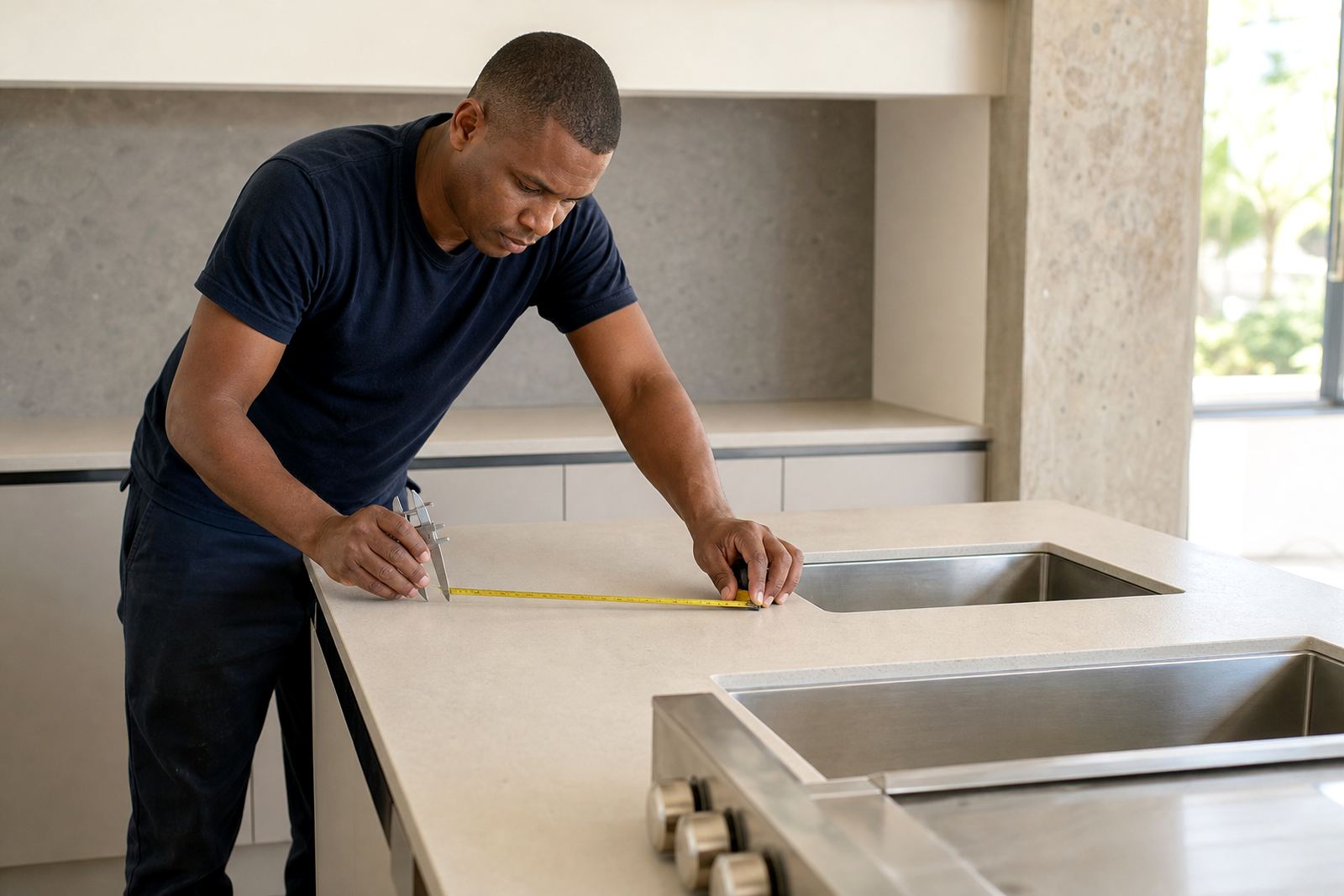
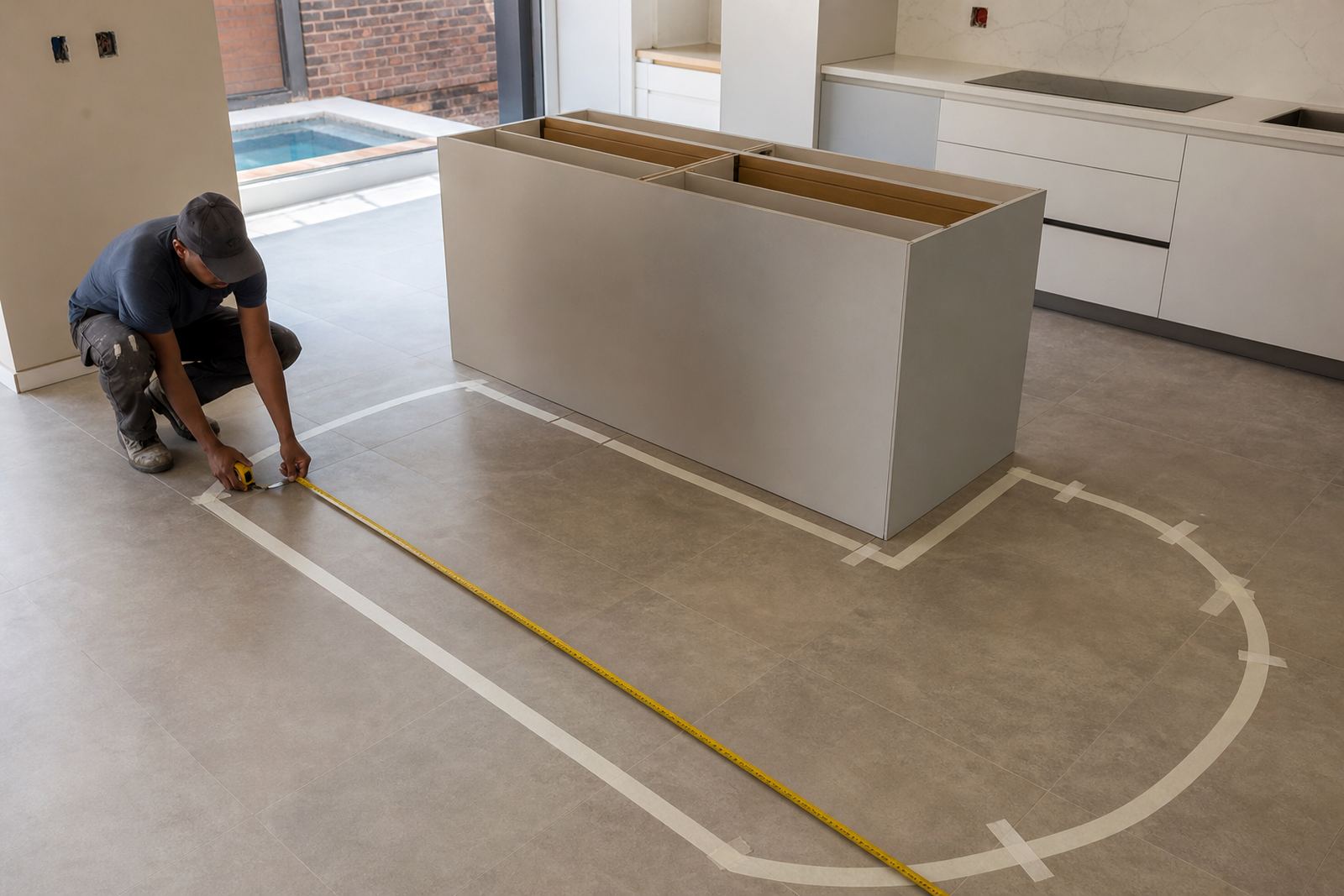
Picture a family kitchen in Fourways with a straight run, an island, and one undermounted sink. The installer finishes the fit, wipes the slab, and steps back. At handover, the family checks the seam beside the sink, runs a hand along the front edge, and looks under the island overhang for any rough fixings. They also test the tap reach, the basin position and the splashback joint behind the hob.
That kind of review takes only a few minutes, yet it tells you whether the room is ready for the daily routine. If a small adjustment is needed, it is easier to raise it while tools are still nearby and the installation is fresh. Our team at Plastone works through templating, cutting, fitting and aftercare advice with the same sequence in mind, so the finished top is not only attractive but practical for the way the room will be used.
- Walk the full length of the kitchen or vanity together.
- Test taps, basin position and clearances before putting items away.
- Note any small finish items while the installation is still open.
- Keep the care notes with the rest of the room documentation.