
Where the waterfall joint sits in the build
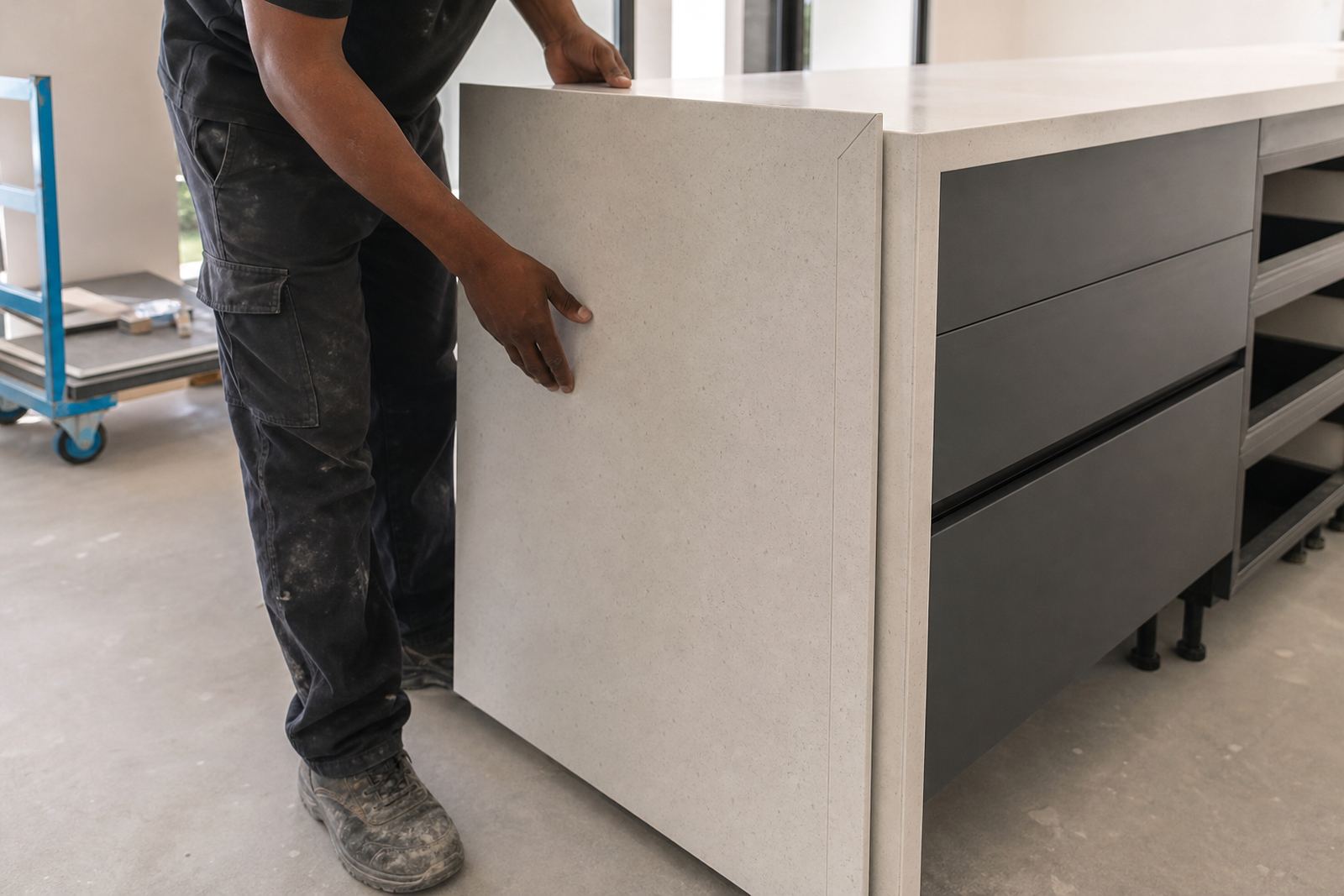
A waterfall end turns the benchtop down the side of the cabinet so the front face runs to the floor in one continuous visual line. The joint usually lands on the corner return, where the horizontal top meets the vertical panel, and that is the point that needs the most care.
For engineered quartz, the slab thickness is often 20 mm or 30 mm, with the edge built up where a heavier look is wanted. Solid-surface sheets are more forgiving on shape, but the joint still has to be planned around the grain, colour movement and any bookmatched effect. If the join is shifted even a little, the whole face can look off square.
- Keep the joint out of the most exposed sightline where possible
- Allow for the actual slab thickness, not just the drawing
- Check that the side panel lands true to the cabinet face
Support beneath the return is more important than many people realise
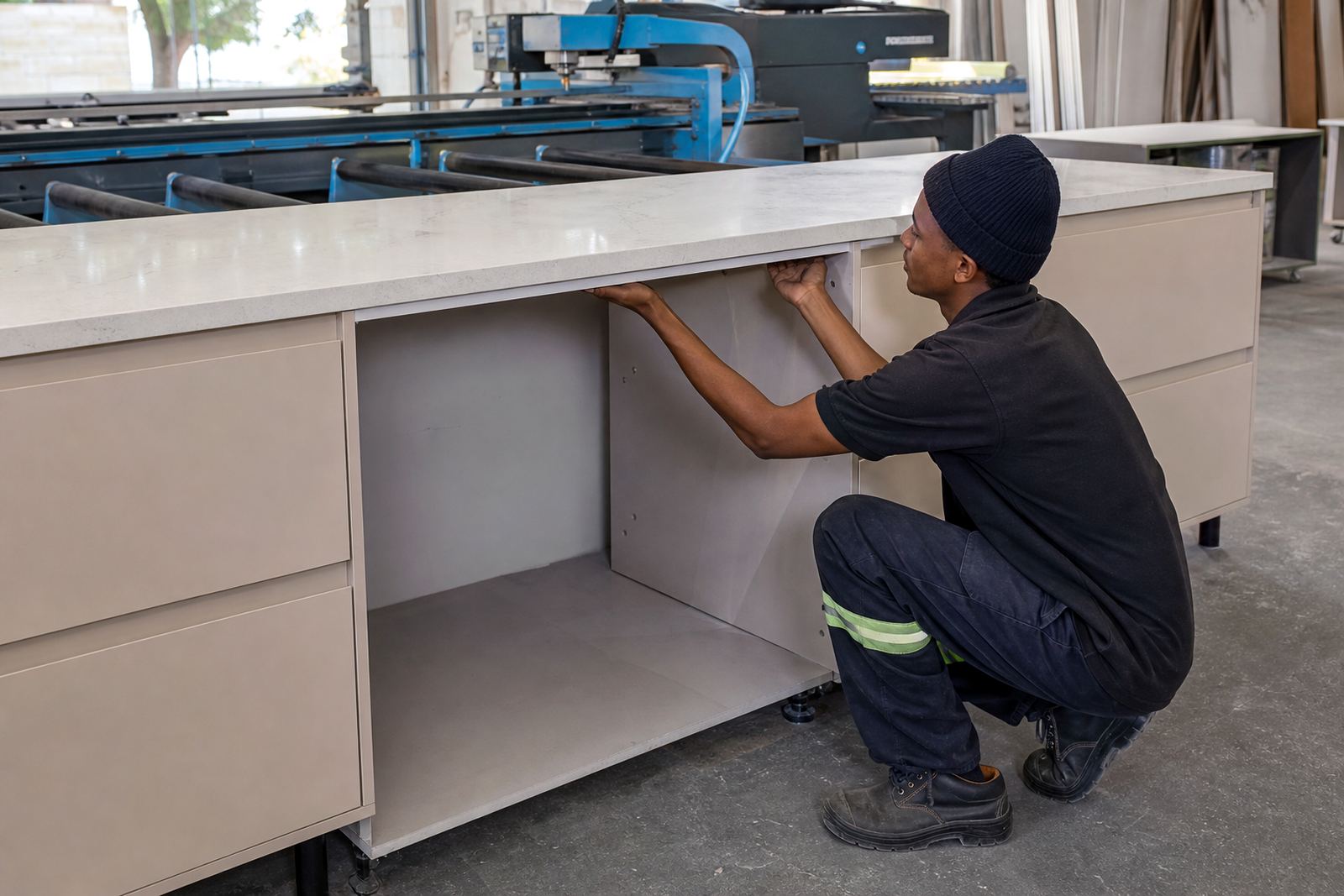
The vertical leg is not hanging there for show. It needs full support behind it, and the cabinet structure must be level, square and fixed. If the base moves, the join will show movement sooner than the rest of the top. That is where small gaps open, especially at a mitred corner on quartz.
On site in places like Waterfall, where homes and offices often have long island runs, the substrate must be checked before cutting starts. We look at wall straightness, floor dips and the cabinet line before any seam is set. A waterfall end that is supported well will sit quietly for years, while one that is left to carry itself can telegraph stress through the joint.
- Use solid backing inside the return where the design allows it
- Check that the cabinet run sits level from front to back.
- Do not rely on adhesive alone to hold the panel in place
How the join is formed on quartz and solid-surface
Waterfall joints are usually cut with a mitred edge so the front face and the side face meet cleanly. That gives the appearance of a continuous slab and keeps the edge line sharp. On engineered quartz, the mitre has to be measured carefully because the material is dense and less forgiving if the angle is out by even a few millimetres.
Solid-surface can be joined with a different level of flexibility, and the seam can be finished to blend more softly into the surface. The method depends on the slab size, the edge profile, and whether the client wants a crisp architectural finish or a more understated look. Sink cut-outs and hob cut-outs also need to be checked against the waterfall return, because a badly placed opening can weaken the panel layout.
- Mitred joints suit a sharp, continuous waterfall look
- Join placement should respect cut-outs and corner lines
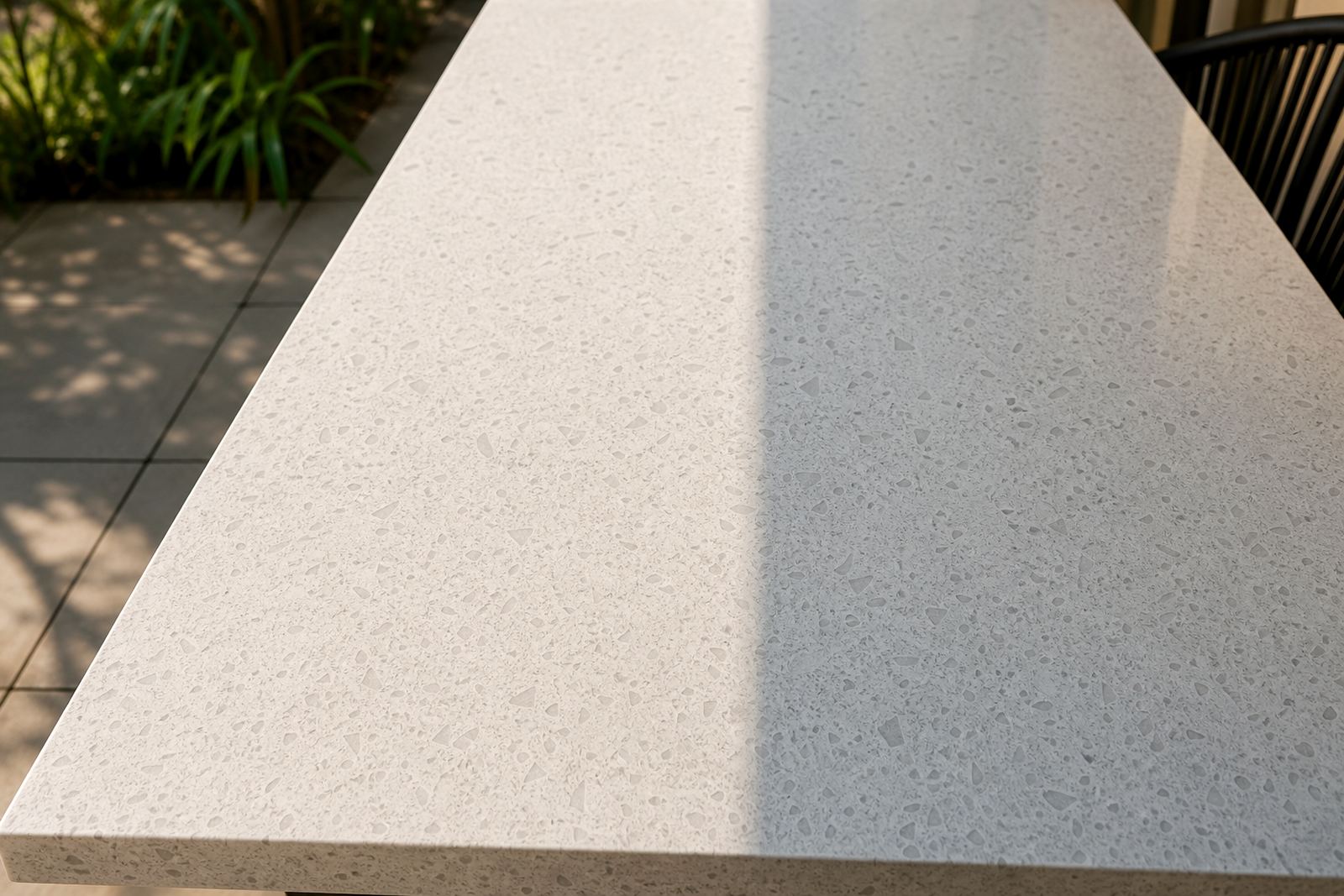
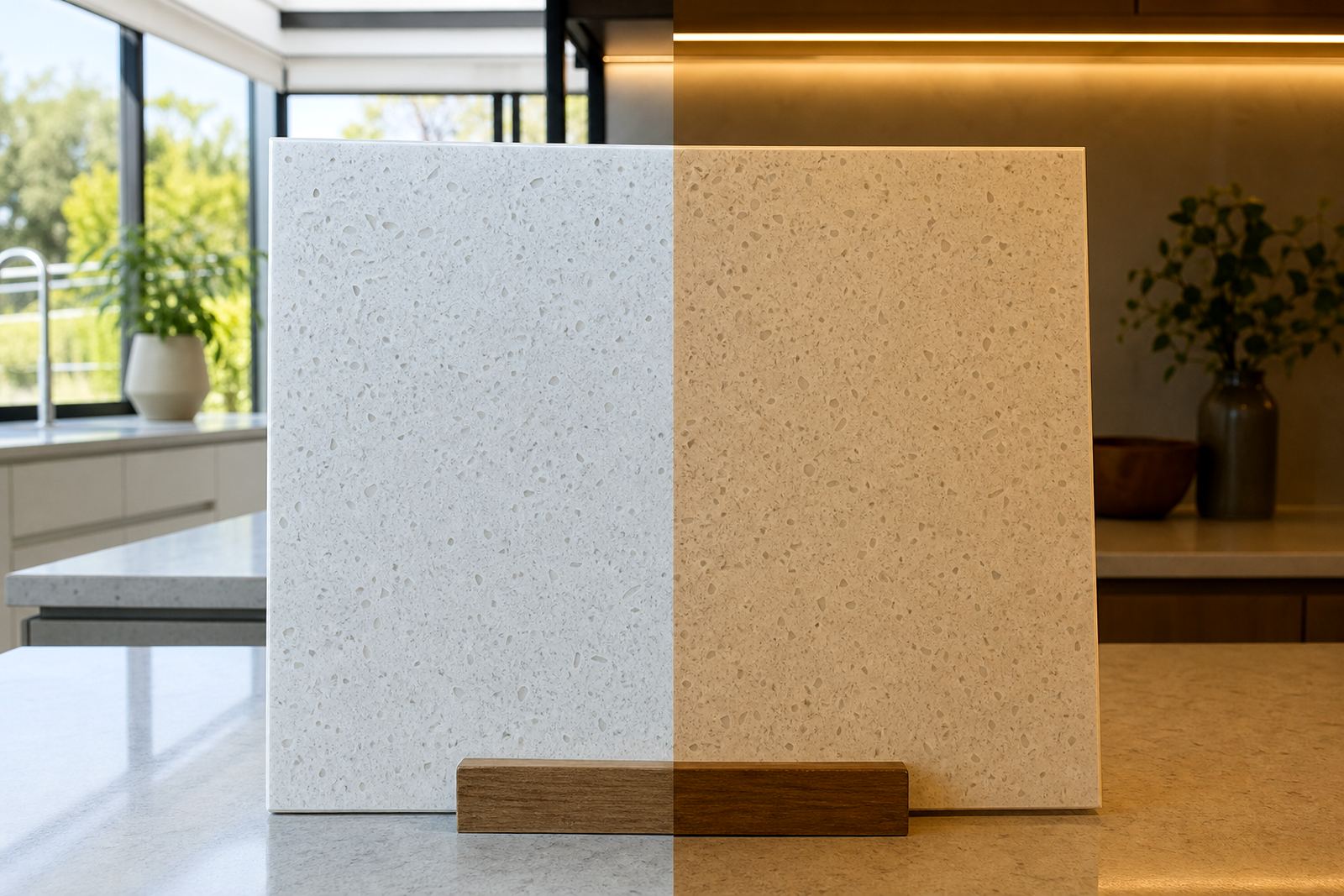
- Colour variation needs to be checked before fabrication begins
Seam lines, colour direction and the eye at standing height
A waterfall end is read from standing height, not from a drawing. That means the grain, veining and polish all need to flow in the right direction. If the seam lands where the eye naturally travels, the finish can feel interrupted even when the joint is technically sound.
At Plastone, slab layout planning and digital measuring are used together so the pieces are placed with the finished face in mind. A long island in Sandton or a vanity in Pretoria can both need the same discipline. The surface has to read as one piece, and the join must disappear into the geometry rather than fight it.
- Match vein direction before cutting the return
- Place visible seams away from main sightlines where possible
- Confirm the edge profile works on both the top and the drop
Heat, stain and cleaning habits around the joint
Waterfall ends collect handling marks faster than flat tops because people brush past the side face and rest bags against it. Quartz handles everyday kitchen use well, but hot pans should not sit directly on any stone surface. Solid-surface also needs a careful touch around heat, sharp knives and harsh chemicals.
Stains are usually easier to prevent than to remove. Wipe spills early, especially around the seam where residue can settle into fine lines. For day to day care, a neutral cleaner and a soft cloth are usually all we need. Avoid strong abrasives on polished faces, because they can dull the finish and make the joint look more obvious than it should.
- Use a trivet for hot cookware and appliances
- Wipe sugary or coloured spills before they dry
- Keep scouring pads off polished edges and mitres
Gauteng jobs need careful templating before fabrication starts
A waterfall joint that works in a Randburg workshop must also fit the actual room in Johannesburg, Midrand, Fourways or Pretoria. That is why templating is done on site before cutting. Wall tiles, plaster lines, window reveals and cabinet offsets all affect where the corner lands.
In a recent Gauteng kitchen, a long island had a waterfall end beside a breakfast seating overhang. The side panel could not sit on guesswork, because the floor slope and the cabinet toe line changed the final reveal. Once the measurements were set, the joint position, support points and seam finish could be planned together. That sort of preparation saves the fit from awkward scribing later.
- Measure the room, not only the cabinet plan
- Allow for floor slope at the drop to the skirting line
- Check access for installation before the slab is cut
Aftercare that keeps the joint honest
A well made waterfall joint should not need constant attention, but it still benefits from sensible care. Check the seam line now and then, especially after the first few weeks of use. If anything shifts at the base cabinet or the sealant edge, it is easier to address early than after movement has settled in.
For homes, offices and shopfitting work, the same principle holds. The installation has to be square, the support has to be fixed and the finish has to suit the room. When those parts line up, the waterfall end does what it should do, which is carry the eye down the side without drawing attention to the join itself.