
Let the silicone and joints settle before you test them
Freshly fitted tops need a quiet first week. The sealant at the wall, around the sink cut-out and along seams is still curing, so it pays to leave those areas alone while the adhesive does its work. Do not scrub the joints or run wet cloths back and forth over the same spot. Light use is fine, but keep the pressure down when wiping the edges and splashback line.
In a Randburg kitchen we often see the same early mistake, people want to inspect every join with a fingernail or a knife tip. That leaves marks that have nothing to do with the stone itself. A clean cloth and plain water are usually enough. If the installer has explained a curing period for a specific sealant or mastic, follow that note exactly and keep the sink, hob and edge lines free of extra stress.
- Avoid dragging pots, trays or appliances across fresh seams.
- Keep dish racks and heavy items off the sink edge for a few days.
- Do not pick at silicone beads near the splashback or wall.
Use gentle cleaning from day one
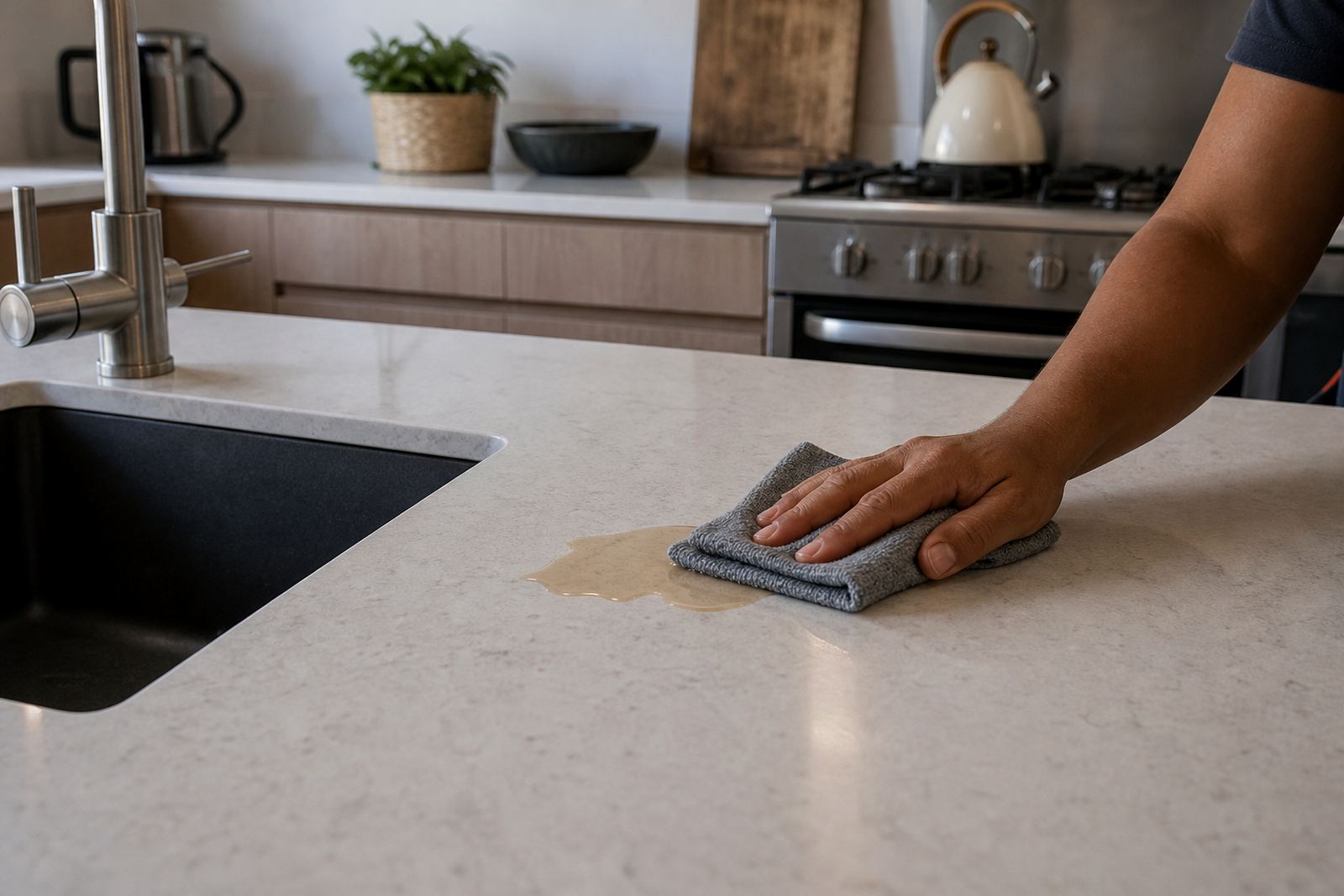
Engineered quartz and solid-surface tops do not need harsh cleaners to stay neat. Warm water, mild dish soap and a soft microfibre cloth can handle most marks from the first week. Strong solvents, bleach-heavy liquids and gritty powders can dull the finish or leave patchy areas, especially on a matte surface. If the top has a polished face, streaks show faster under daylight from a north facing window.
After breakfast or supper, wipe crumbs, tea rings and cooking splashes before they dry. That habit is more useful than any special product. For splashbacks, clean from the top down so liquid does not track over the same patch twice. Around Pretoria homes where borehole dust and garden grit are common, a quick wipe with a soft cloth stops tiny particles from rubbing the surface while you clean.
- Use a gentle cloth, not anything abrasive.
- Rinse the cloth often so grit does not scratch the finish.
- Dry the surface after cleaning to reduce water spots.
Heat needs a buffer, even with stone-look tops
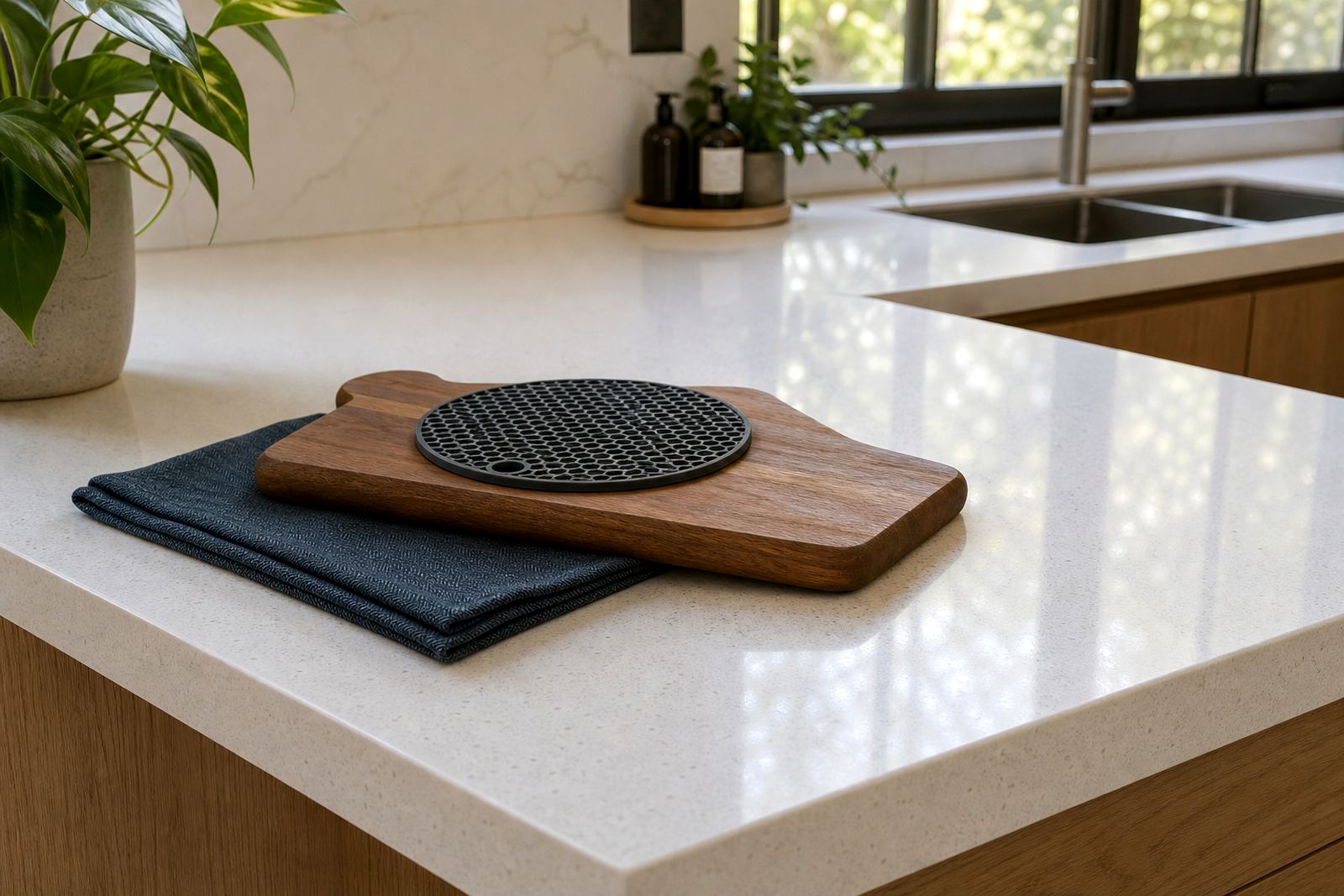
Quartz and solid-surface tops cope well with normal kitchen use, but direct heat still calls for care. A pan from the hob, a casserole dish from the oven or a kettle base can leave a mark if it lands straight onto the surface. That matters most in the first week when everyone is getting used to the new layout and the sink, hob and prep zones feel unfamiliar.
Keep trivets, heat pads and wooden boards within reach. A cutting board is for knives, not for hot cookware, and a trivet is still the safer choice on a side counter or island. If you have a vanity top in a guest bathroom, avoid setting hot styling tools directly on the stone. Heat marks are easier to prevent than to correct, especially on lighter colours where a faint change in tone shows sooner.
- Lift hot items rather than sliding them.
- Keep oven trays and pans away from the edge profile.
- Use a heat pad under hair tools on vanity tops.
Pay attention to edges, cut-outs and seams
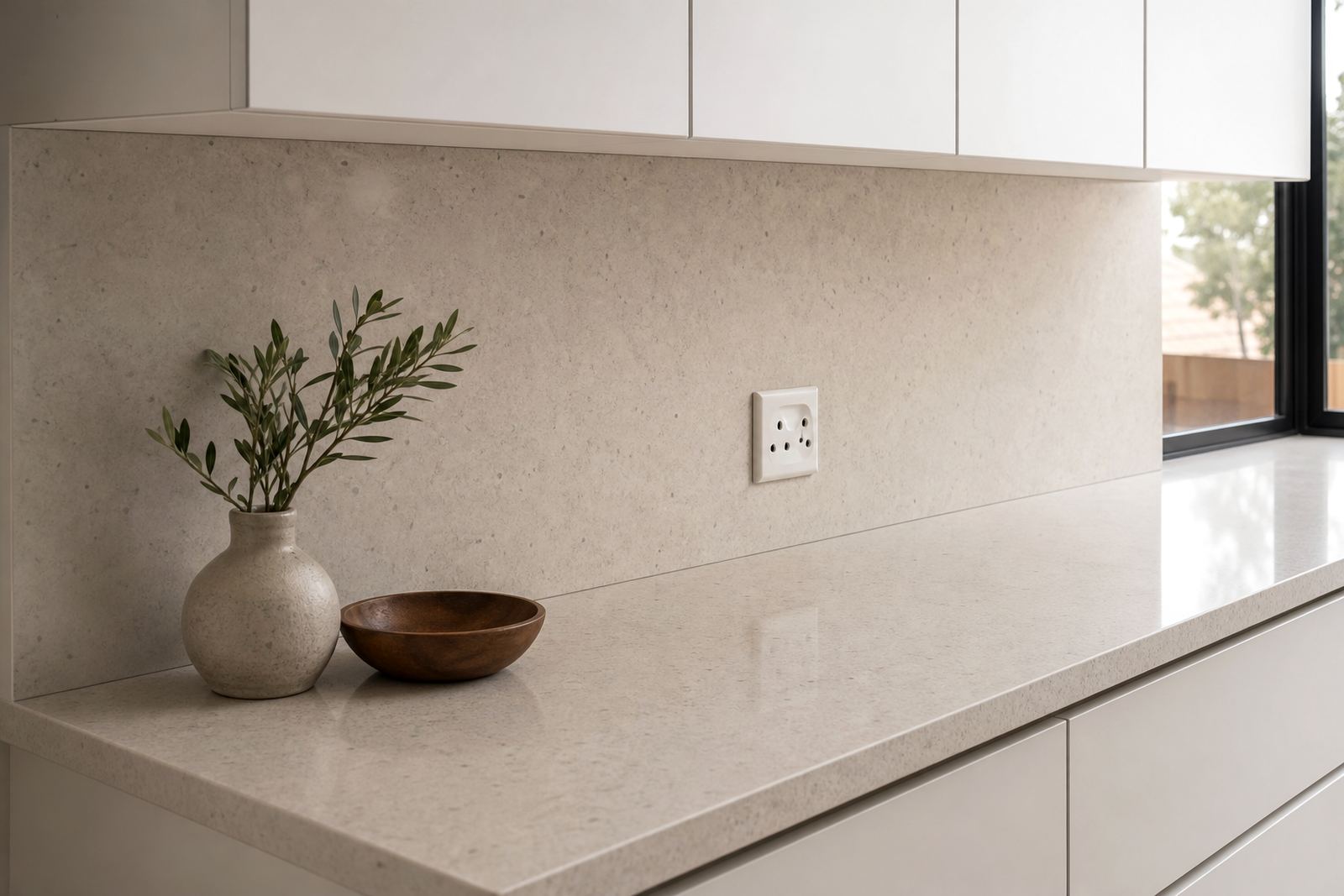
The details around a sink cut-out, hob opening and edge profile do most of the visible work on a fitted top. Clean those lines carefully during the first week. A seam that looks almost invisible from across the room can still collect crumbs or detergent residue if it is ignored. Use a damp cloth and a light touch, then dry the area with a second cloth so water does not sit in the joint.
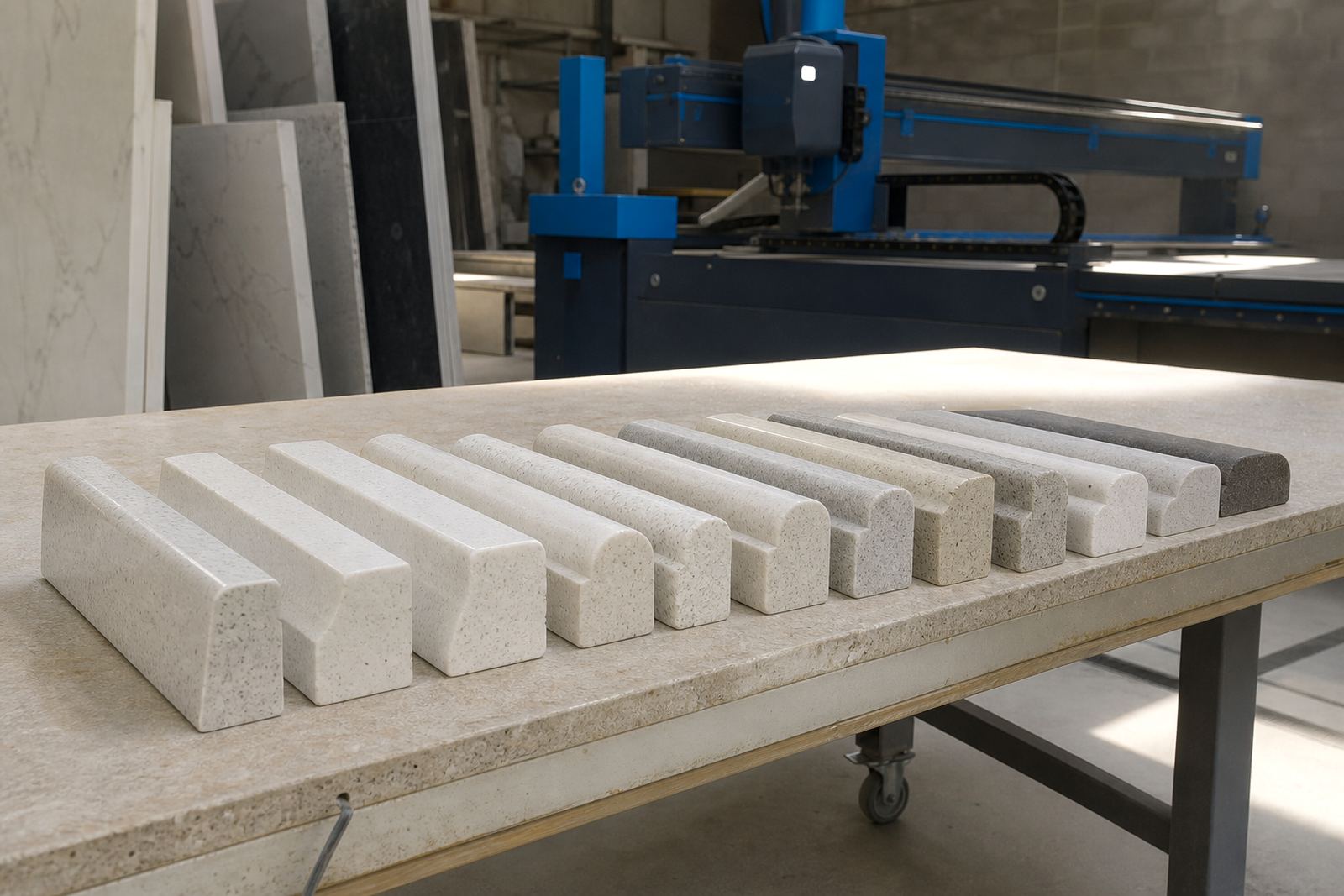
When a top has a mitred edge, pencil round, bullnose or square edge, the profile changes how you handle corners. Square edges are easier to bump, while rounded profiles are kinder in busy family kitchens. On a shopfitting job in Sandton, staff members often place boxes down hard on the nearest edge, so a simple habit like lifting instead of dropping makes a real difference. Do the same with vanity basins, where jewellery, bottles and grooming tools can chip a corner if they get pushed around.
If the installer leaves care notes for a seam or sink rim, keep them somewhere visible for the first few days. That is the point when small mistakes happen, not months later.
Treat the slab as a room surface
New countertops often get overloaded in the first week because everything is moving back into place. Keep heavy appliances where they belong and avoid standing on the top to reach a cupboard, even if it feels convenient. Quartz and solid-surface slabs are made for horizontal use, not for impact from dropped jars, ladders or tool bags.
In Midrand and Fourways homes, the kitchen usually doubles as the place for school bags, groceries and pet bowls. That is normal, but the new top will last better if the clutter stays under control during the first few days. Clear the surface at the end of each day so you can spot a stain, chip or loose bead before it becomes harder to sort out. A little order in the first week saves time later.
- Use felt pads or soft bases under small appliances.
- Keep knives in a block or drawer, not loose on the top.
- Move plant pots and wet containers onto trays.
A local week in Randburg tells the story
A family in Strijdom Park had a white quartz island fitted with a sink cut-out, a short splashback and a polished edge profile. For the first week, they kept a trivet by the stove, wiped the top after school lunches and left the silicone around the splashback untouched except for a light dusting. The surface stayed neat because nobody tried to over-clean it. That is the real pattern, calm use, basic wiping and no experiments with harsh chemicals.
The same routine helps in offices and retail spaces. In a reception tea point or staff kitchen, people tend to clean in a rush and use whatever bottle is nearest. It is better to keep one mild cleaner nearby and leave the rest in the storeroom. If the top is a solid-surface vanity in a client bathroom, the first week also sets expectations for users who do not know the material. A short notice about soft cloths and no hot tools can prevent unnecessary marks.
When a mark appears, slow down before you panic
A faint smear, dried adhesive speck or water ring during the first week does not mean the installation has failed. First, identify the mark. If it is dust or soap film, a damp cloth may remove it. If it is a sticky patch, let warm water sit on it for a minute, then wipe lightly. If it looks like a scratch, do not rub it harder. Aggressive cleaning can turn a small issue into a larger one.
For anything around a seam, sink rim or hob opening that seems out of place, keep the area clean and note exactly where it is. That helps the aftercare conversation stay focused and practical. The aim is not perfect behaviour from day one, only sensible habits that protect the finish while the top settles into daily use.