
Where chips usually start around a busy top
Most chips show up where hands, pots and cleaning habits meet the hardest working parts of the top. Sink cut-outs, corner returns, narrow strips beside a hob and the front edge near a prep area take more impact than the broad flat surface.
Engineered quartz is dense and hard, so it stands up well to daily use, but a sharp knock on a corner can still break the edge. Solid-surface material is easier to repair in many cases, yet the same rule applies, avoid sudden impact near a cut-out or a tight inside corner. In Randburg kitchens and office tea stations we often see the same pattern, a mug slid hard across the edge, a steel pan tapped down too quickly, or a cleaner dropped onto the corner while the basin is being wiped out.
The small habits that cut impact at the sink
The sink zone needs the most discipline because water, soap, crockery and knives all gather there. A drying rack or tray keeps plates from rattling against the front edge, and a rubber mat under a basin insert softens the knocks from pots and utensils. It sounds small, but that little cushion matters where the cut-out meets the working edge.
- Lift dishes over the rim instead of dragging them across the cut-out.
- Use a soft cloth or non-scratch pad for basin cleaning.
- Set heavy cookware down gently, especially near clipped corners.
- Do not use the edge as a chopping stop when moving food off a board.
On a Fourways kitchen island with a 20 mm quartz top, a simple habit like lifting the kettle rather than pulling it across the corner can make a real difference over time. The material does not need special handling, just less force at the weak points.
Corners, mitres and seams need a calmer hand
Corners are vulnerable because the profile is already working hard at that point. A square edge looks sharp and neat, while a softly eased or bevelled edge gives a little more tolerance if a tray bumps it. For families with children, or a small office pantry where people move quickly, that choice can help reduce visible damage near the busiest path.
Seams also need respect. A good seam joins two slabs closely, but it should not be treated like a strike line. Do not use the seam as a chopping line, a hammer point or a place to force a stuck utensil free. The same goes for mitred waterfall details, where the edge wraps down and the corner can chip if someone clips it with a heavy item.
- Ask for a profile that suits daily use, not just the look.
- Keep heavy appliances a little back from unsupported edges.
- Wipe grit off the top before sliding anything across it.
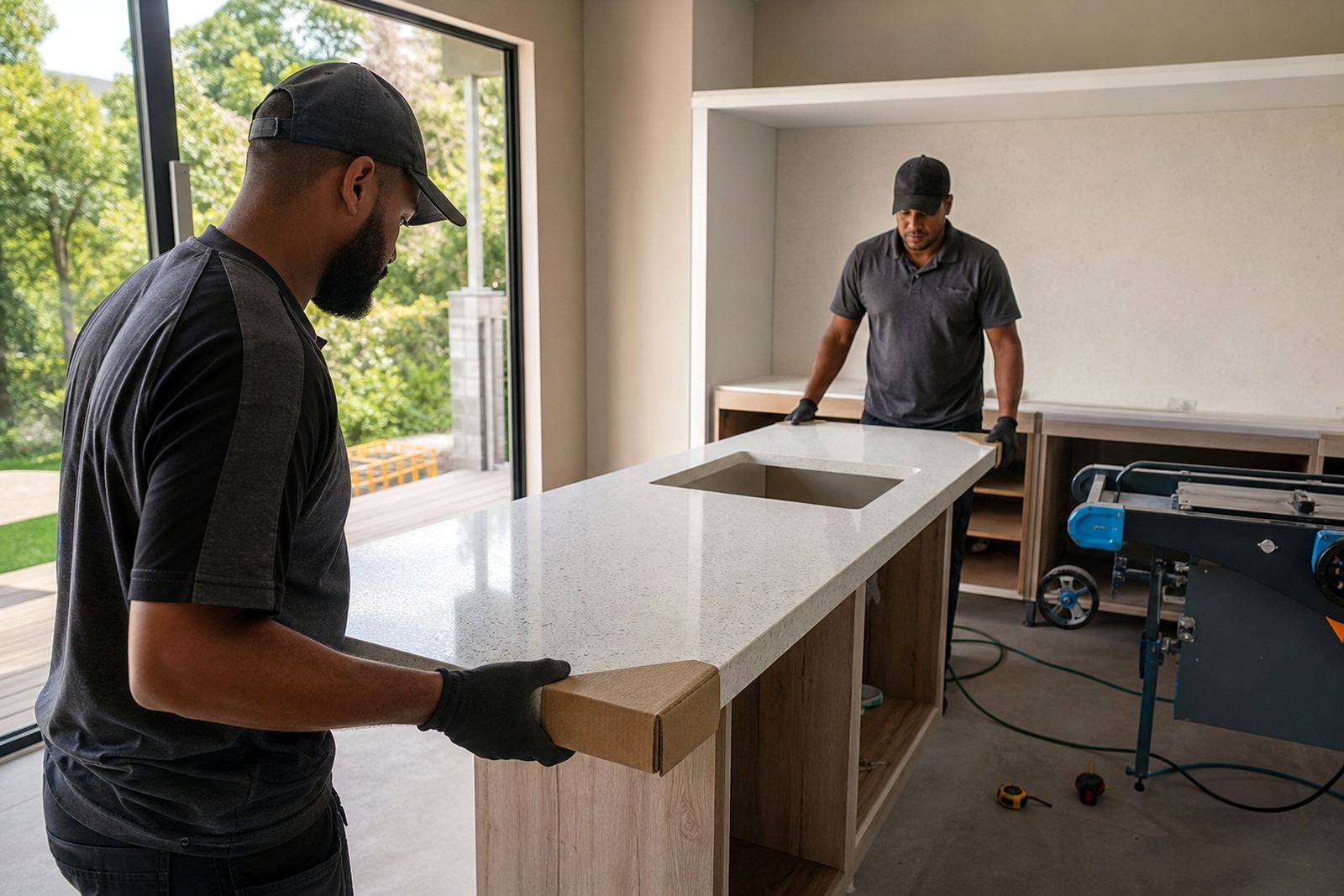
- Protect corners during moving day and fit-out work.
Heat, cold and sudden movement are part of the story
Heat does not usually chip the top straight away, but sudden temperature changes can stress the area around a sink cut-out or seam. A hot pan taken straight from the hob and dropped near a cooler surface can shock the material. The safer move is a trivet or heat pad, especially on compact kitchen islands where cooking and washing happen in the same stretch of counter.
Cold can matter too when a heavy frozen container is slammed onto an edge. The lesson is steady handling, not careful theatre. In a Sandton apartment kitchen with limited prep space, that might mean using a board for hot trays and keeping frozen pans off the front edge until they settle to room temperature a little.
Cleaning choices that protect the finish
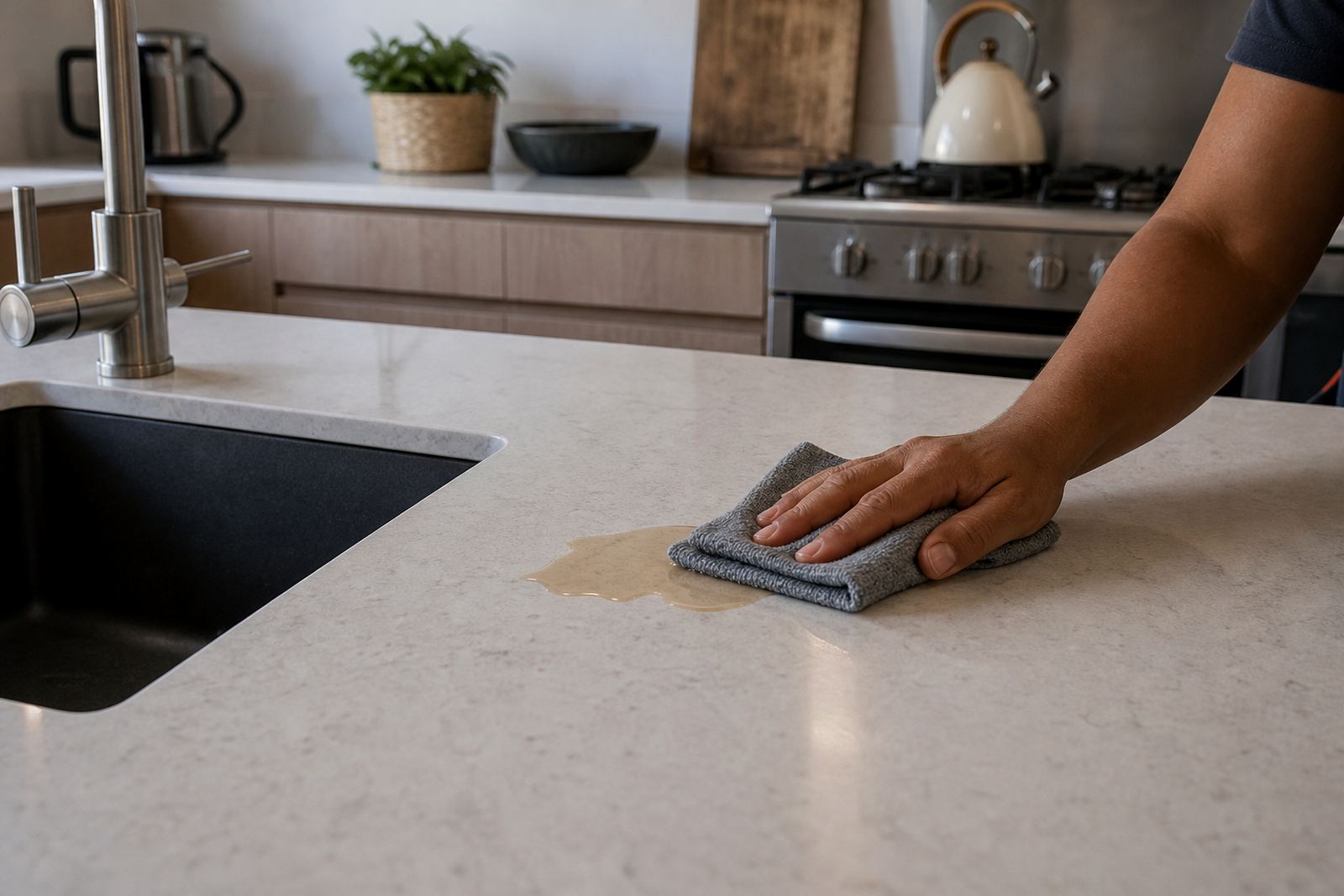
Cleaning habits have a direct effect on chips because gritty residue turns a cloth into a rubbing tool. Sand, baked-on crumbs and washing-up residue can scratch and weaken the polish at the edge, which makes later knocks more visible. Warm water, a soft cloth and a mild cleaner are usually enough for quartz and solid-surface tops.
Stay away from harsh scouring pads near edges and around sink rims. If a sticky spill has hardened, soak it first and lift it clear rather than scraping at the corner with a metal blade. In coastal humidity, especially in Pretoria or Johannesburg shops where the air changes through the day, keeping cloths dry and clean also helps stop grit from building up around the basin and splashback line.
- Wipe dust and sand away before the final clean.
- Use soft pads on the sink, not metal scourers.
- Lift stuck residue after soaking, do not pry at the edge.
- Dry the corner zones so grit does not stay trapped.
A local fit-out lesson from Randburg to the outer suburbs
We see chip prevention differently on a family kitchen than on a shop counter or office tea station. In a Randburg home, the risk is usually a pot, bottle or lunch tin hitting the same corner every day. In a shopfitout, it can be a stock crate, a till operator leaning on one edge, or a delivery trolley brushing past a slim return.
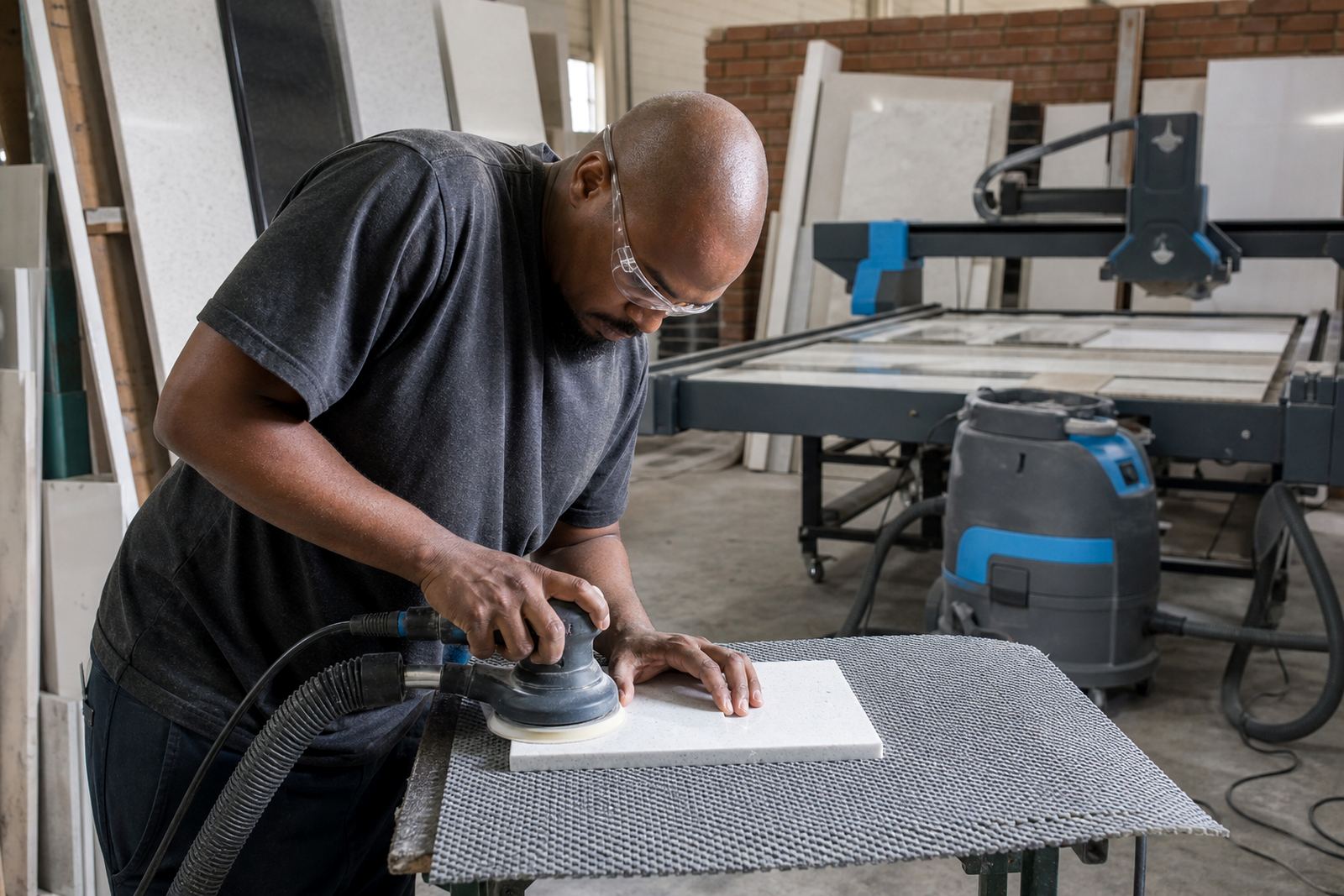
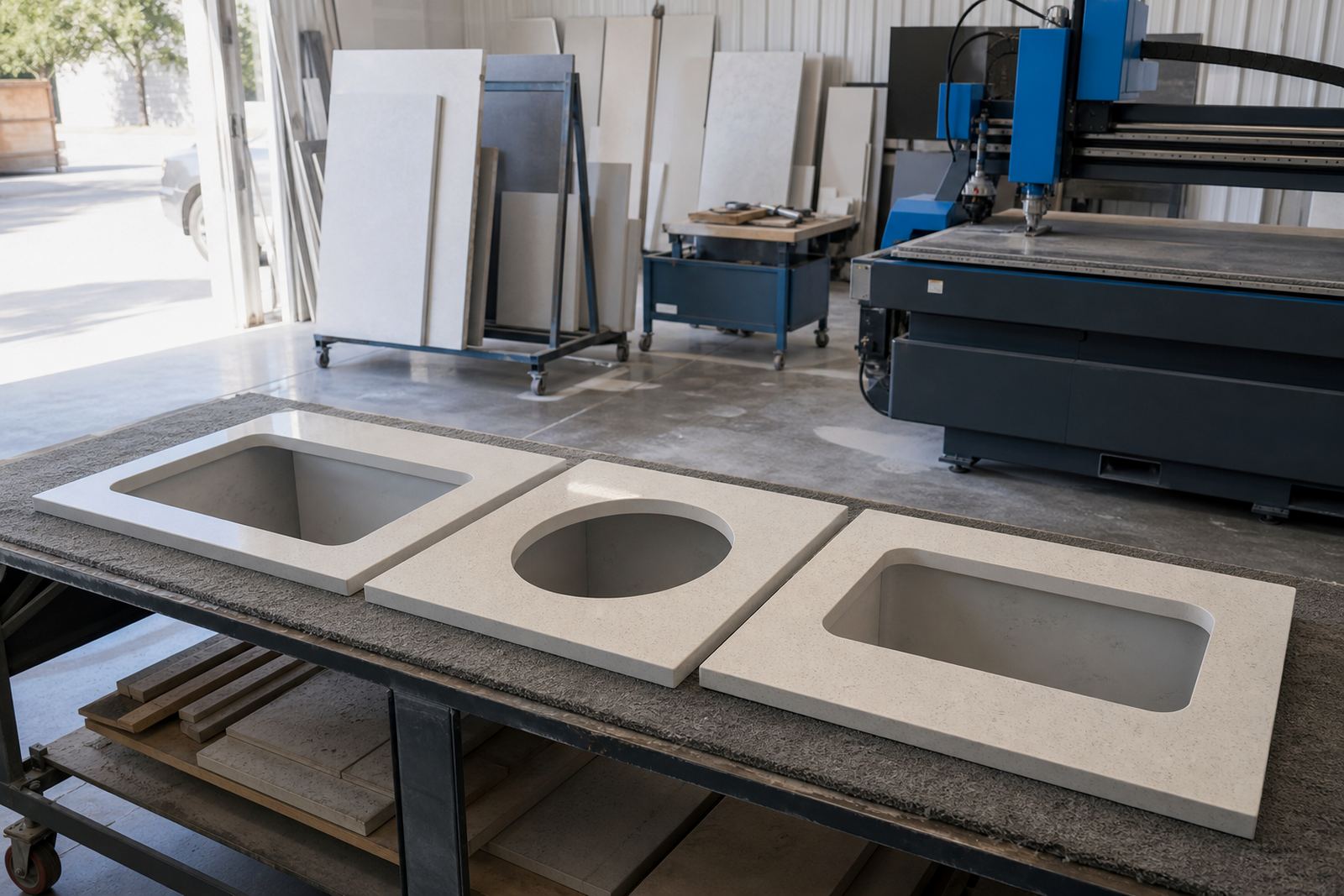
That is why templating, cut-out placement and edge selection matter from the start. A sink that sits too close to a corner, or a narrow strip left beside a hob, gives chips an easier path. During site templating and digital measuring, we look at the real movement around the top, not only the dimensions on paper. That helps us plan seams, support points and edge profiles that suit the room, whether the installation is in Midrand, Roodepoort or Centurion.
After the fitting, a short walk-through helps people use the top properly. It covers where to set hot items, how to clean the cut-out zone, and which corners need the most care. That practical handover often saves more repair work than any fancy material label ever could.
When a small chip needs attention
Not every chip turns into a bigger fault, but it should not be ignored. A tiny break at the edge can catch cloth fibres, collect dirt or grow worse if the spot keeps taking knocks. Solid-surface repairs can often be blended back neatly, while quartz repairs depend on the size and position of the damage. The sooner the area is assessed, the better the result tends to be.
If the chip is near a sink cut-out, seam or hob opening, avoid pressing on it or filling it with a hard material from a hardware shelf. That can make later work harder. Send the details through our contact form and we can review the type of top, the edge profile and the damaged area before suggesting the next step. For homes, offices and shop counters across Gauteng, the aim is the same, keep the surface tidy and the edges sound.