
When the wall is not straight, the top has to tell the truth
A room can look square at first glance, then the tape measure tells a different story. Older homes in Randburg, extensions in Johannesburg and shopfit areas in Sandton often have walls that lean, bow or pinch at the corners. A rigid countertop does not forgive that shape. The template has to capture the actual line, not the line you hoped was there.
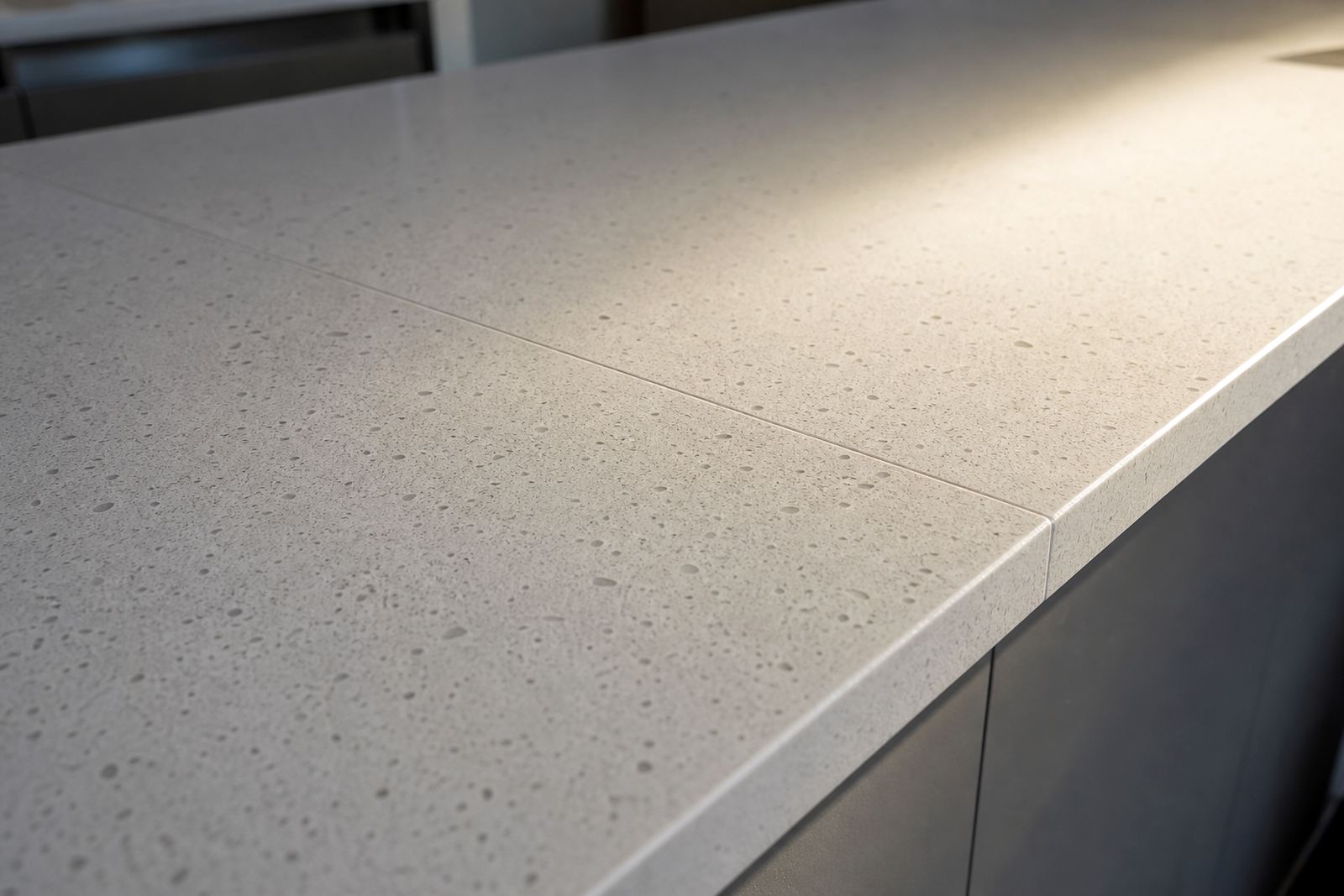
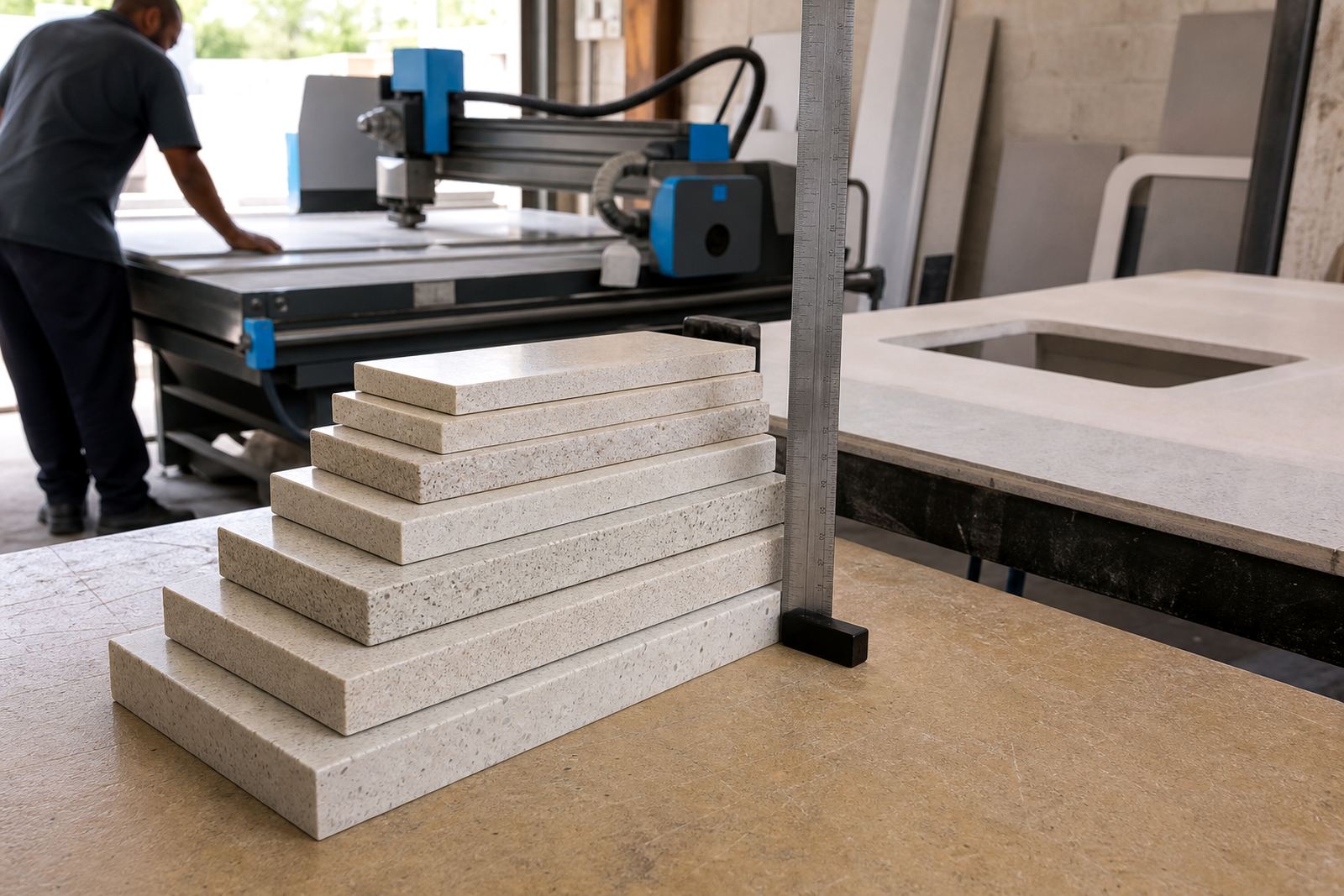
With engineered quartz, the slab arrives with a fixed thickness and a hard, clean edge. With solid-surface material, there is a little more freedom for shaping and post-forming, but the wall still sets the rule. If the wall is out, the front edge may look straight while the back needs a careful scribe. That is where good measuring saves the job from gaps, awkward fillers and corners that draw the eye for the wrong reason.
In a tight kitchen, even a few millimetres matter. A long run against a bowed wall can read as a bad cut when the real issue is the building. The job then becomes about respecting the room and hiding the irregularity where the eye will not linger.
Templates pick up the problem before the workshop does
Site templating is where the wall shape becomes useful information. A templater checks each return, notes the depth changes and marks where the line runs out. Digital measuring helps, but the human eye still catches the small things, like a plaster nib on one end or a corner that closes tighter than the rest.
For a counter that runs wall to wall, the template must allow for scribed backs, sink cut-outs, hob openings and any planned overhang. If the wall drifts, the back edge can be templated to follow it while the front stays clean and level. That balance is what stops the finished top from looking forced into place.
- Check the true corner angle, not just the room width.
- Mark wall bulges, plaster ridges and recessed patches.
- Allow for the final wall finish if painting or tiling is still pending.
- Keep appliance clearances in mind near sink and hob positions.
Scribes are small details, but they carry the finish
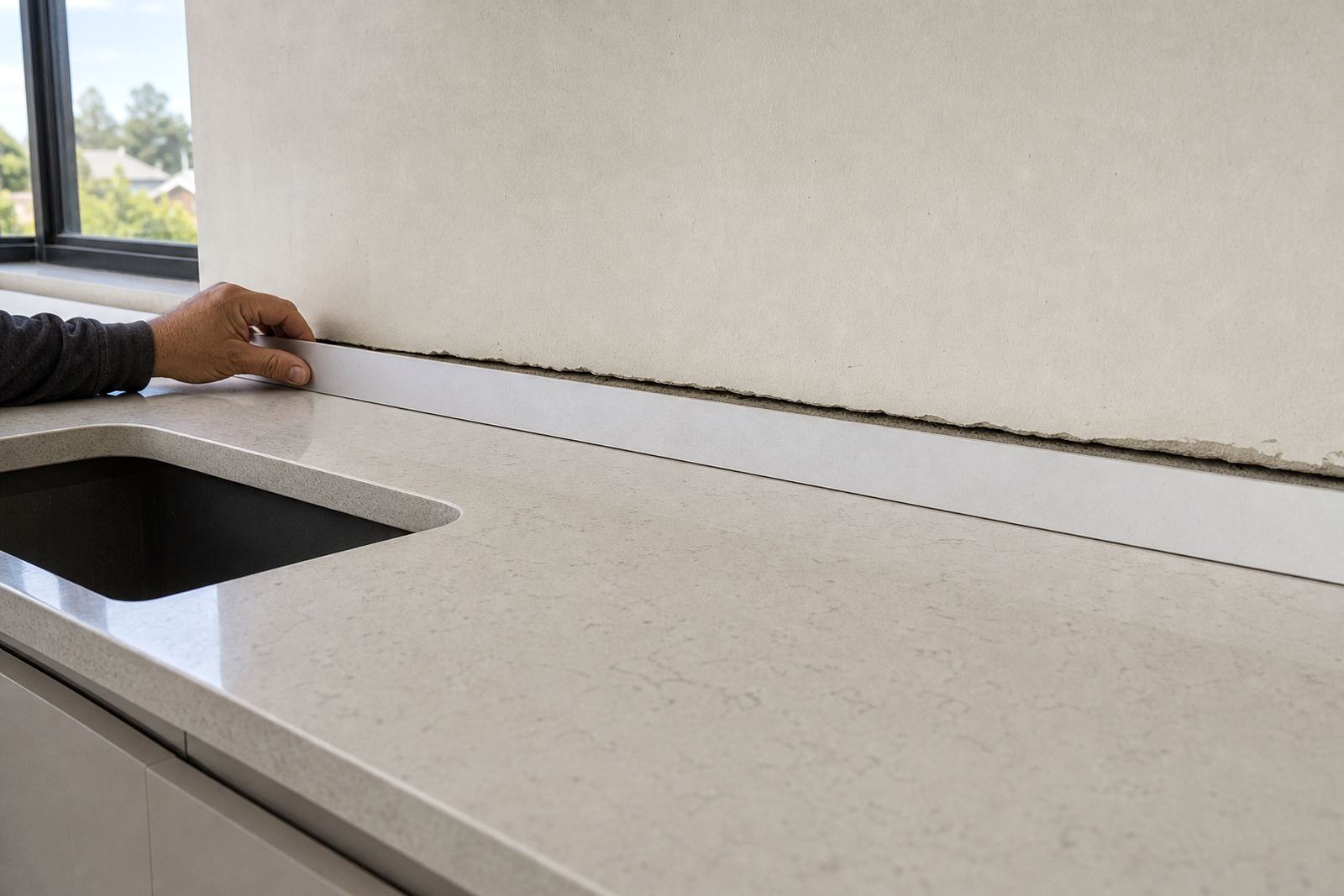
A scribe is the narrow cut that helps the top meet a wall without a visible wedge of gap. On an out-of-square wall, scribes can vary along the length of one run. A neat scribe is more than trimming to fit. It gives the line a settled look, especially where the splashback has to sit behind it.
Solid-surface counters can sometimes be eased and fettled more than quartz, but both materials still need precise handling. If a wall rolls inward near the end of a run, the scribe may need to widen at one point and tighten at another. That is common in older units and renovated spaces around Pretoria where the original structure has had several changes over time.
Bad scribes show first at eye level. A line that starts neat and ends with a wedge or shadow breaks the room. Careful templating means the finished edge appears intentional, even when the wall is not.
Splashbacks need the wall line, not a hopeful straight edge
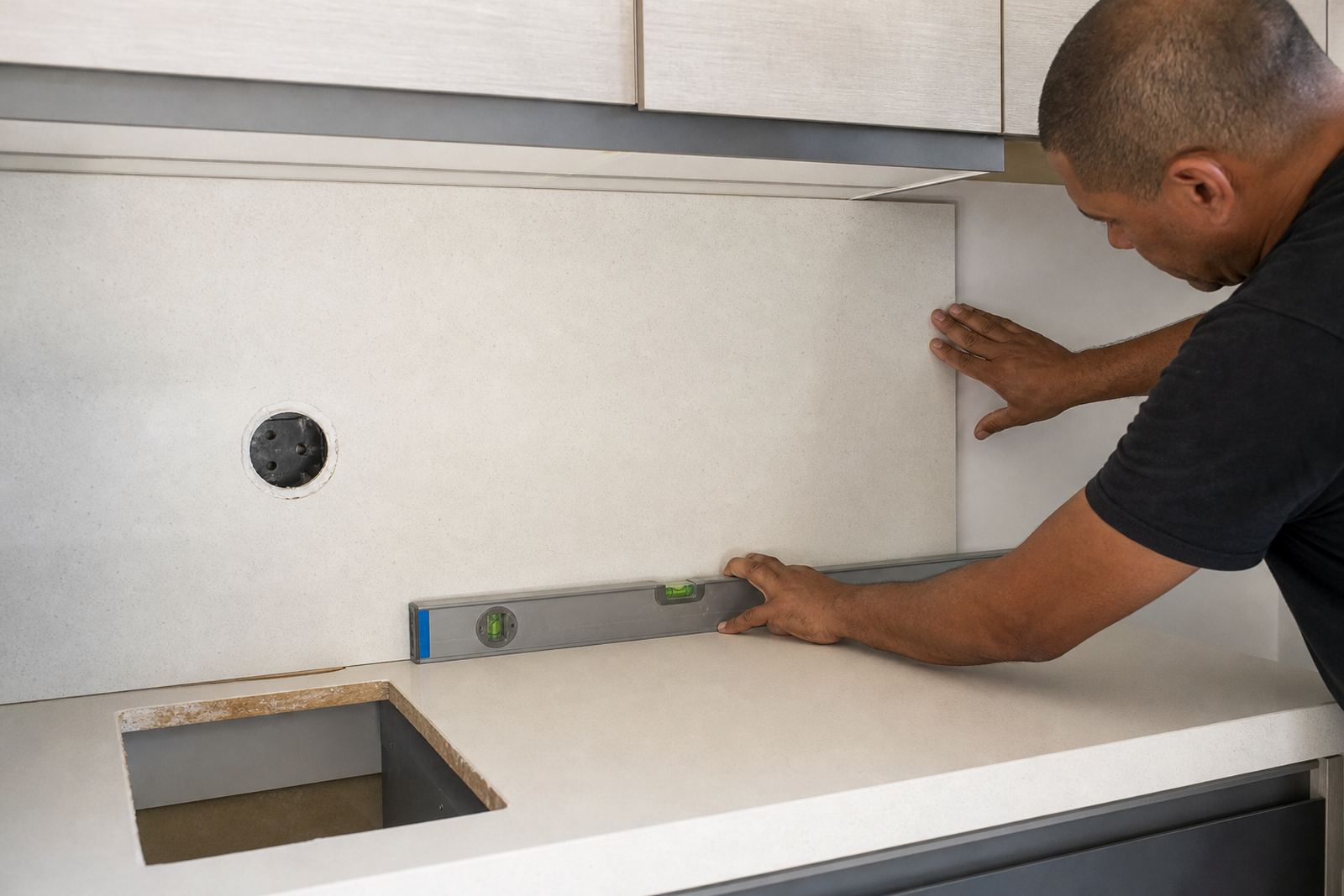
Splashbacks are where uneven walls become obvious. A wall that waves out by a few millimetres can leave open joints, lipping or a shadow line along the top edge. If the splashback is cut to a perfect rectangle and the wall is not, the eye catches the mismatch immediately.
There are three common ways the detail is handled on site. First, the splashback can be scribed to the wall line. Second, the wall finish can be improved before fitment. Third, a seam or internal return can be planned where the deviation is less visible. The best option depends on the room layout, the material and whether the installation is in a home, office kitchen or shopfitter's project.
- Check whether tiles, paint or wall cladding are already complete.
- Confirm where water is most likely to sit behind the counter.
- Plan joints so they do not fall in the most visible corner.
- Use a continuous line where the wall is stable, not where it only looks straight.
Seam planning changes when corners refuse to hold shape
Seams are easier to hide when the wall behaves. With out-of-square walls, a seam might need to move away from a corner, or land where the change in direction can be disguised by a sink base or appliance housing. In a long run, a poorly chosen seam can fight the wall and make both problems visible at once.
Engineered quartz seams need clean, accurate joins and enough support at the underside. Solid-surface seams can be blended more softly, which helps in some irregular spaces, but they still depend on a sound layout. If the wall closes in on one side, a seam placed too close to that point can open the visual irregularity rather than reduce it.
In Midrand, a tenant fit-out may need a fast, neat install in a space that has already been altered for a previous occupant. In those rooms, seam placement often becomes a design decision, alongside the fabrication note.
Strijdom Park kitchen corner quartz run
In Strijdom Park, a kitchen measured for a quartz run along one wall and around a sink return showed a steady variation from front to back. The room looked square from the doorway, but the back wall drifted enough to change the scribe across the length of the wall. The sink opening also had to be held clear of a brace under the base unit, so the template was adjusted before cutting.
The splashback line followed the wall rather than forcing a false straight edge. The seam was moved out of the tightest corner, and the front edge kept a level visual line across the run. That is usually the better answer in homes across Fourways and Sandton too, where the room may be finished beautifully but the structure underneath is less regular than it appears.
For shopfitters, the same logic applies in a different setting. A tea point in an office or a compact server room counter still needs the back edge to meet the wall properly. The material may be premium, the finish may be clean, but the wall decides the final fit.
What to watch for before fabrication starts
Out-of-square walls are not a disaster. They are a measurement problem and, handled properly, a fabrication note. The earlier they are picked up, the cleaner the finish will be. That is especially true where countertop installation, vanity installation and splashback fitting all meet in one room.
If you are planning quartz or solid-surface work in Gauteng, the important step is to have the site ready for proper templating. Wall finishes should be near final, base units should be fixed, and any changes to sink or hob positions should be settled before cutting begins. A good template gives the workshop the shape it needs, and the site the finish it deserves.
- Confirm the wall finish is at its final thickness.
- Keep the base units level before measurements are taken.
- Flag any bowed brickwork, plaster repairs or tiled returns.
- Allow the templater to see the sink, hob and adjoining corners together.
When a wall is out, the best result comes from including it in the brief and templating to suit it.