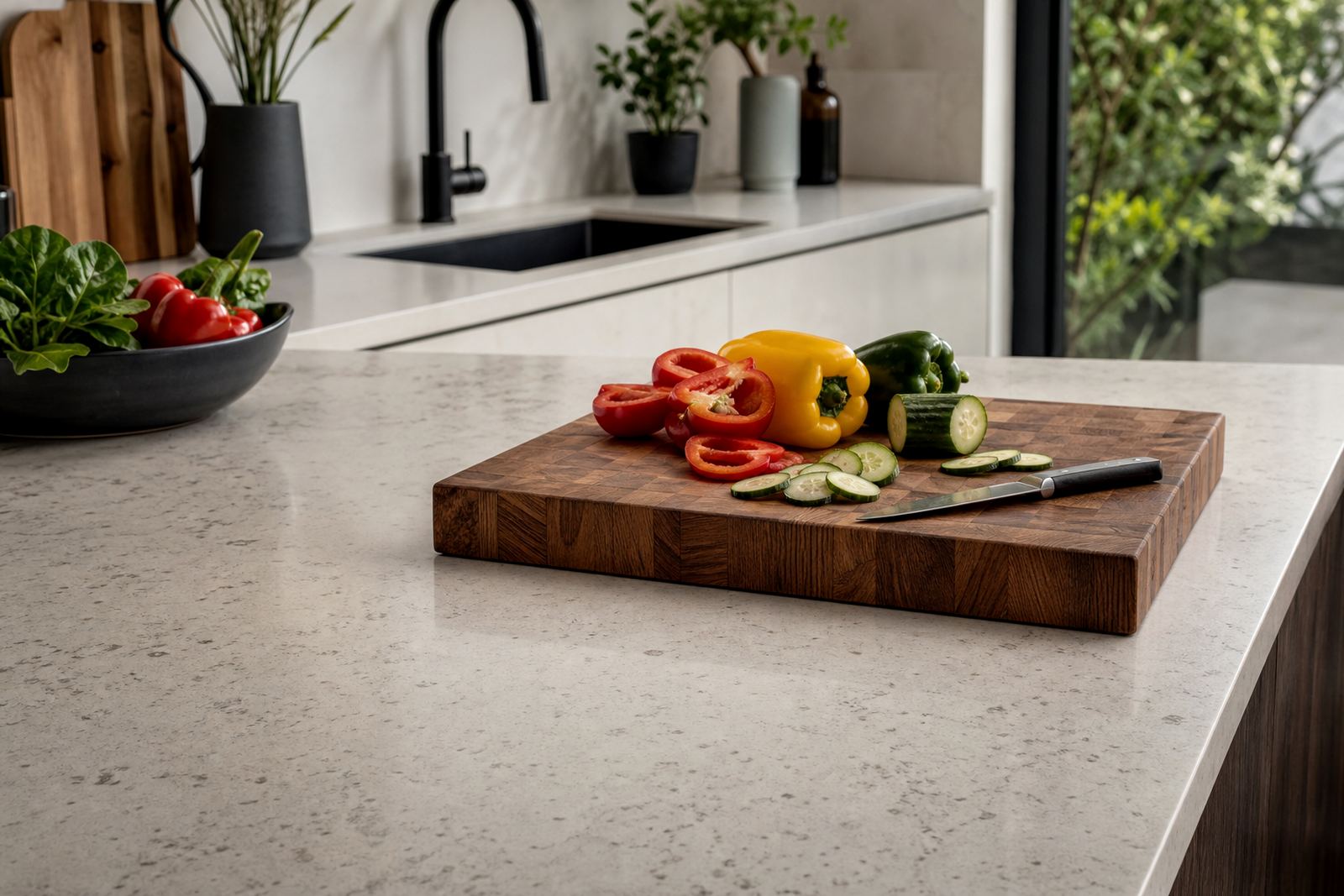
A knife mark is only part of the problem
Engineered quartz and solid-surface countertops are made for daily use, but they are not chopping blocks. A sharp blade can nick a polished edge, leave fine scoring near sink cut-outs and mark the seal line around a seam. Even when the surface does not show a deep cut, repeated chopping in the same place dulls the finish and leaves a patch that catches the eye every time the light moves across it.
That matters on a kitchen island, a vanity top and a tea station at work. A board spreads the impact, keeps the blade at a better angle and protects nearby details such as edge profiles, mitred corners and built-up splashbacks. It is a small habit, yet it saves a lot of unnecessary wear.
- Use a stable board that does not slide under pressure
- Keep a board near the prep area, not packed away
- Choose a size that gives room for food and knife control
Heat, stains and careless prep are a bad trio
Many people think the only risk is a visible scratch, but kitchen habits usually stack together. A hot pan left on the same spot as chopping, a wet cloth under a board, or turmeric and beetroot sitting on a porous joint all add stress. Quartz is hard-wearing, yet resin and colour treatment still dislike harsh treatment. Solid-surface is practical too, though it can mark more easily if someone slices straight onto it and leaves pigments to settle.
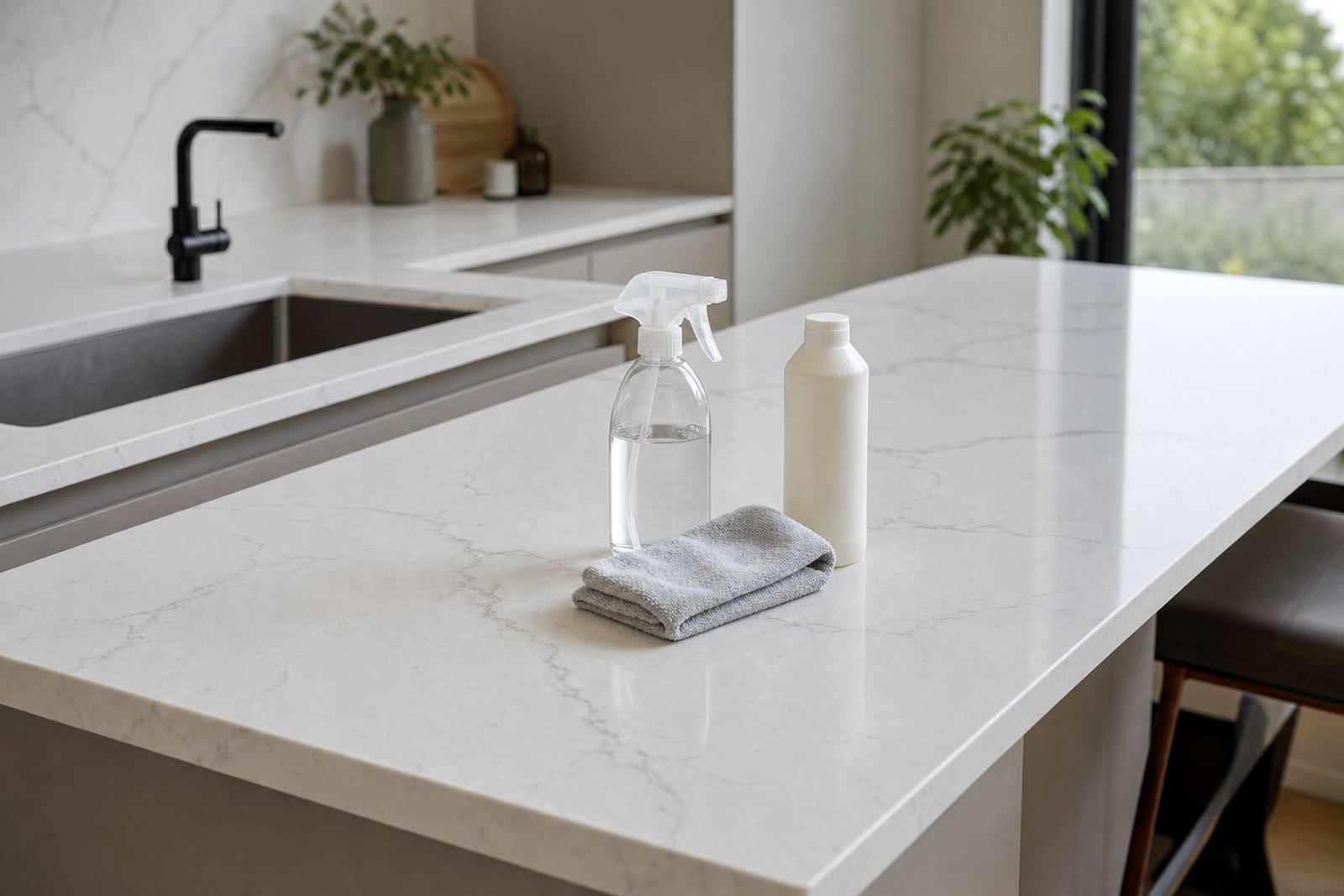
Using a board helps keep the work in one controlled area. It also keeps crumbs and liquid off the polished field of the top, so you are not scrubbing around sink rims and hob cut-outs every evening. In a family kitchen in Randburg, that sort of routine matters because breakfast, lunch and supper all happen around the same counter.
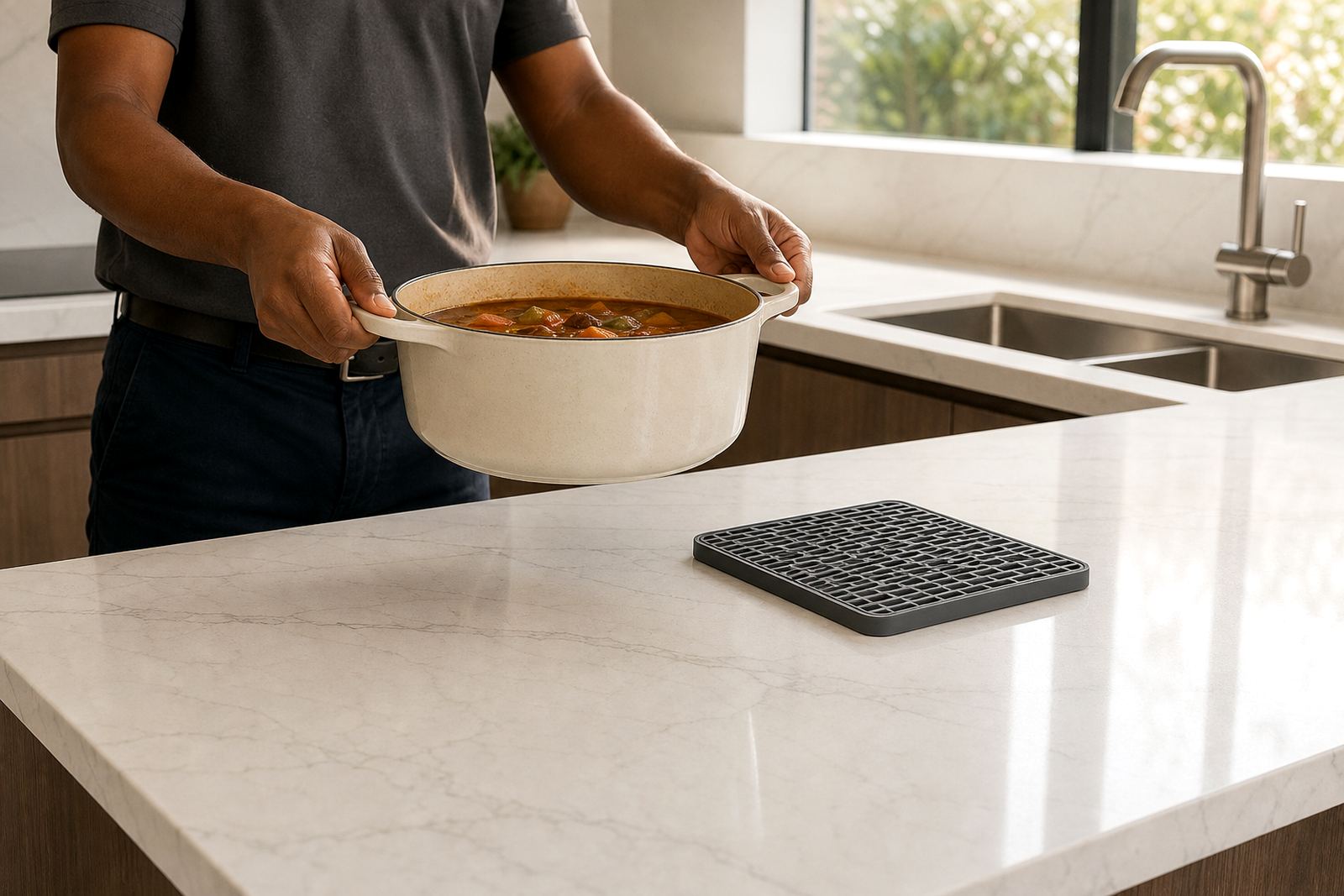
- Lift hot pots onto a trivet, not onto the chopping zone
- Wipe spills before the board gets moved
- Rinse strong staining foods off the surface promptly
What templating and fabrication do for the finished top
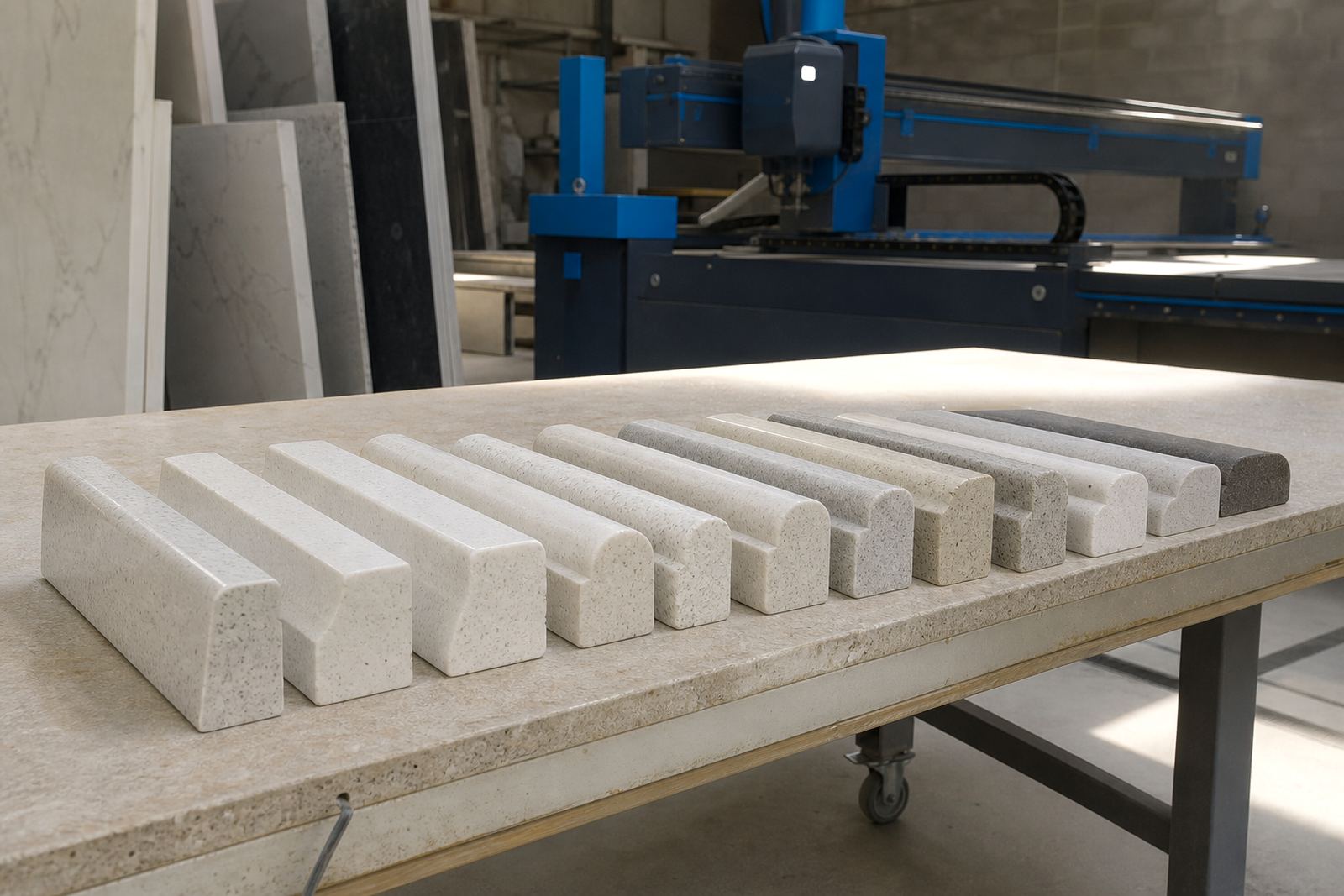
Good templating and accurate cutting make a countertop easier to live with, but they do not turn it into a butcher block. At Plastone, templating, digital measuring and slab layout planning are used to set out sink cut-outs, hob cut-outs, seams and edge details with care. That precision helps the top fit neatly, yet the owner still has to protect the working surface with sensible daily habits.
When a top is fabricated with the right slab thickness and the correct support under overhangs, it stands up well to normal kitchen use. Still, sharp tools belong on a board. The cleaner the fabrication, the more obvious any later damage will look, especially on a calm plain colour where a scratch stands out near a seam or a mitred edge.
- Choose edge profiles that suit the room and how it is used
- Check that sink cut-outs leave enough working room around the basin
- Keep boards handy near prep areas and serving counters
Different rooms need different board habits
Homes and workplaces do not use countertops in the same way. A busy Sandton office kitchen may only need a compact board for fruit, snacks and tea prep. A Midrand family kitchen may need two boards, one for vegetables and one for raw meat, so prep stays organised and the surface is not crossed over with food residue. In a shopfitters project, a back-of-house counter may see a lot of packaging, blades and quick unpacking, which is another reason to define a chopping zone clearly.
Vanities are a different story. Nobody should be chopping on one, even for a quick trim of packaging or a box lid. The basin cut-out, taps and splashback all sit close together, and a stray blade can chip the edge or score the join line. A small board on a vanity shelf or laundry counter is better than using the top itself.
- Keep separate boards for raw food and ready-to-eat food
- Use a slim board in tight kitchen layouts
- Store boards upright so they dry properly after washing
Seams, splashbacks and edges need a little respect
People often think the centre of the counter is the only part at risk. In practice, the vulnerable areas are the edges, seams and the spaces around cut-outs. Those are the places where a blade can slip, a chopping board can slide, or a heavy pot can be dragged across. Splashbacks help with wall protection, but they do not replace a board. A good installation makes the room neat; the board keeps the working habits neat too.
In coastal humidity or in a warm kitchen near a dishwasher, the surface may be wiped often. That is fine. What it does not need is repeated direct knife contact. The safer habit is simple: prep on the board, serve from the counter, and keep the knife away from the finished top unless you are cleaning or setting out food.
If a client in Fourways has a long island with a breakfast overhang, we usually see the chopping area drift towards the nearest clear spot. That is exactly where the board should live. If it has a fixed place, the top lasts better and the cleaning pattern becomes predictable.
A small habit that helps the whole installation last
A chopping board looks ordinary, but it does most of the protective work in a kitchen. It reduces knife marks, protects the finish around seams and cut-outs, and keeps hot, wet or staining ingredients in one controlled space. For engineered quartz and solid-surface tops, that daily routine is part of keeping the installation tidy and easy to maintain.
Our team in Strijdom Park, Randburg fabricates and installs countertops, vanities and splashbacks across Gauteng, and the same message comes up on many projects. Good measuring, clean fabrication and careful installation matter, yet the last layer of care happens in the room itself. A board is cheaper than patching avoidable damage, and it is much easier than living with a scar on the main work surface.
- Use the board every time, not only for big meals
- Before use, lay the board flat and keep it dry.
- Replace a warped board before it starts wobbling