
Start With The Daily Wipe Down
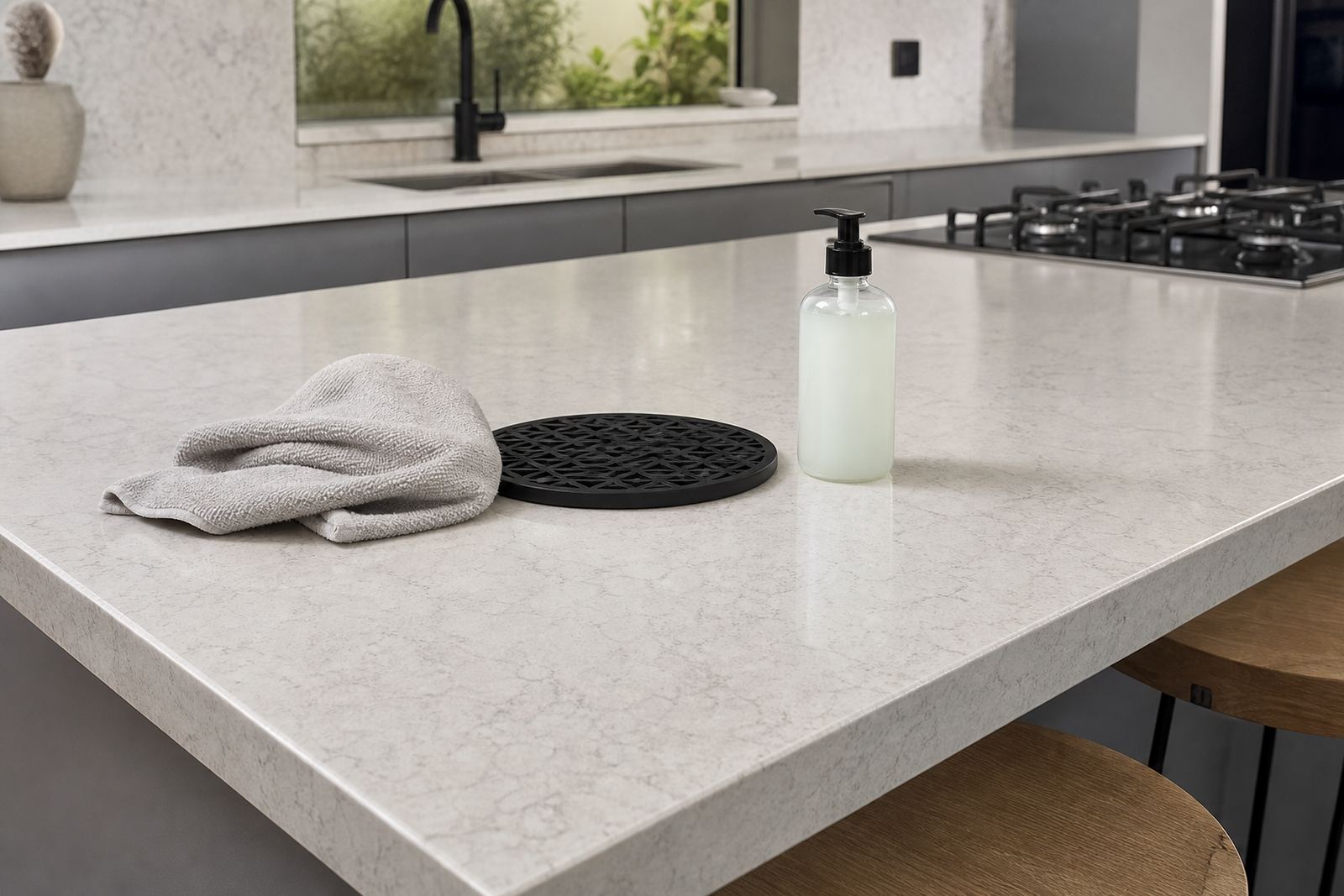
Use a soft microfibre cloth and warm water for most daily cleaning. A small amount of mild dish soap is enough for fingerprints, dust, toothpaste marks and food residue, then finish with a clean dry cloth so the surface does not show water spotting.
Quartz is non porous, but the polish can still lose clarity if strong cleaners sit on it too long. Avoid steel wool, scourers and gritty powders, especially around edge profiles and joins where light scratching shows up faster.
- Wipe crumbs first so they do not drag across the surface.
- Clean from the centre out to the edges.
- Dry the top after rinsing, especially near taps and splashbacks.
- Use a separate cloth for soap scum in bathrooms.
When Spills Happen, Move Fast But Calmly
Wine, coffee, cooking oils and sauces are best lifted before they sit and dry. Blot the spill, do not scrub hard across one spot, then wash the area with warm soapy water. If the spill has left a film, repeat the wash once more instead of reaching for a harsh cleaner.
Sticky marks from paint, glue or cosmetics may need a plastic scraper held low against the top. Keep the blade flat and work gently so you do not nick the finish near sink cut-outs or along a mitred edge. For stubborn residue, a quartz-safe cleaner is better than any abrasive paste.
- Never leave bleach, oven cleaner or drain cleaner sitting on the slab.
- Rinse after using any stronger household cleaner.
- Check the underside of bottles that may leak dye or fragrance oils.
- Lift, do not drag, pots and jars across the top.
Heat Needs A Buffer, Even On A Strong Top
Engineered quartz handles daily kitchen use well, but it is not made for direct heat from a saucepan, frying pan or slow cooker base. Sudden heat can discolour the resin or leave a mark that does not polish out. A trivet or heat pad belongs in your routine.
Take care near hobs, ovens and appliance bays where warm pans are often set down in a hurry. The area beside a hob cut-out is especially exposed, and splashbacks can be marked by steam and grease if they are not wiped regularly. Keep hot cookware off the top, even for a short pause.
- Use heat pads under pans taken off the stove.
- Do not place air fryers or other heat sources directly on the slab.
- Let baking trays cool on a rack first.
- Move kettles and toast crumbs away from the edge before cleaning.
Seams, Edges And Cut-Outs Need A Close Look
Seams should stay neat, level and easy to wipe. If a seam starts collecting crumbs or feels slightly raised, do not force a metal blade into it. Clean the join with a soft brush and mild soap, then check whether the gap is only carrying dirt or whether it needs an aftercare visit.
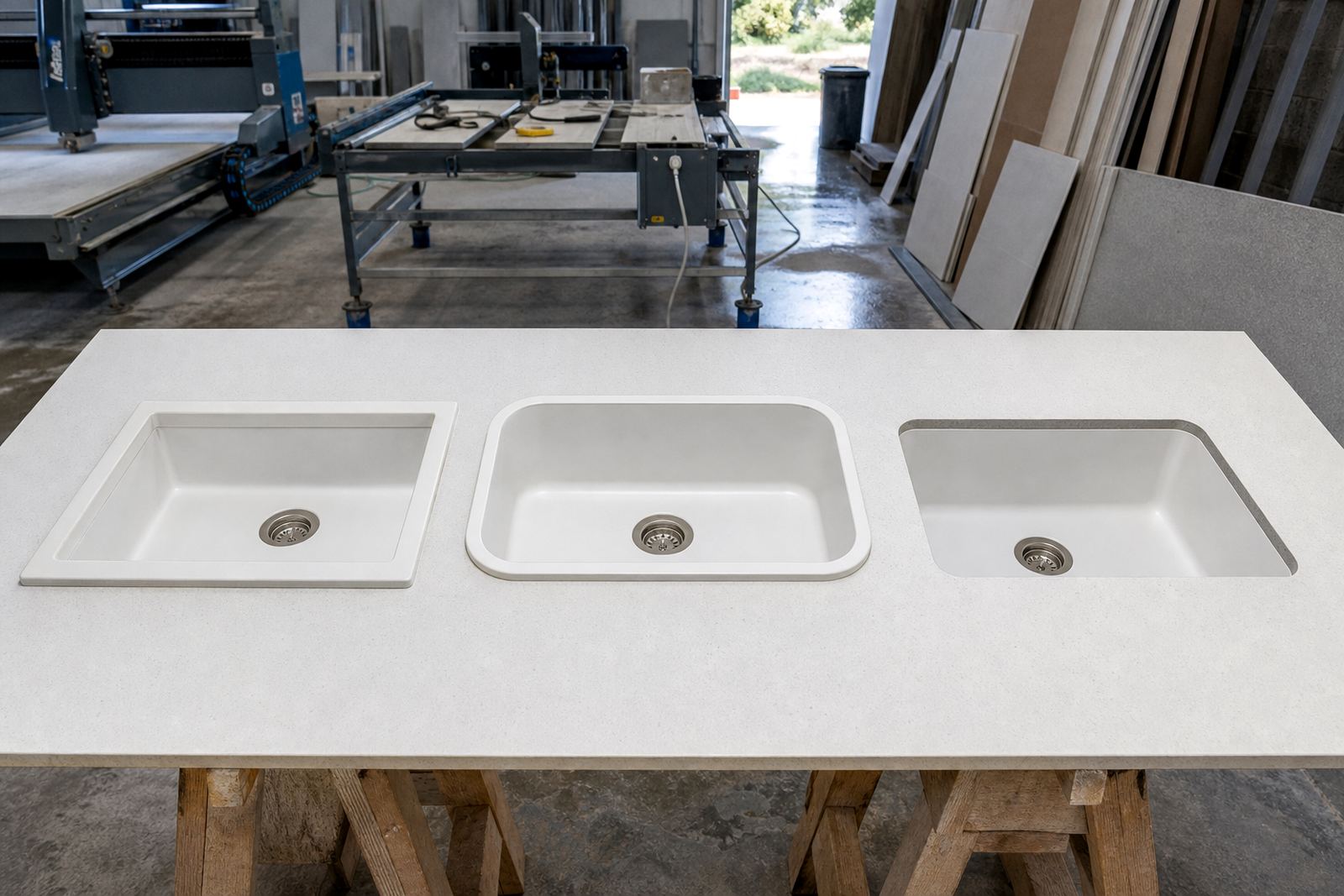
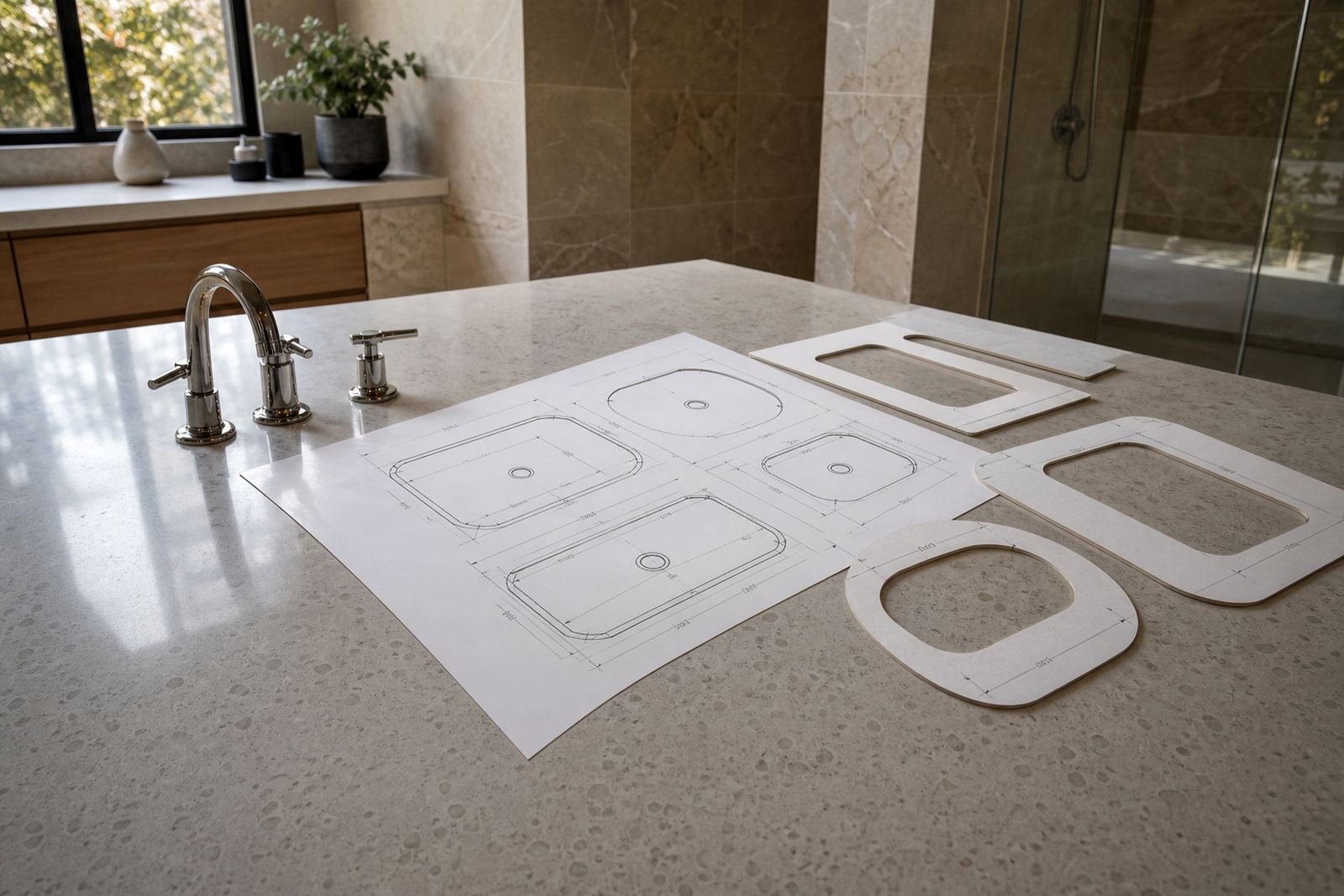
Edge profiles, sink cut-outs and hob openings take the most handling. Around these points, treat the slab with a little more care when moving pots or cleaning under tap spouts. If you notice a chip at a corner, stop using that edge as a scraping point and keep moisture out of the damage until it is assessed.
- Inspect joins after a deep clean.
- Keep sealant lines around sinks clear of mould and soap build-up.
- Do not lever loose items against the edge.
- Report movement or cracking early, before water reaches the substrate.
Bathroom Tops And Vanities Need A Different Rhythm
Vanities and bathroom splashbacks deal with toothpaste, skincare products and constant moisture. Rinse soap residue often, because dried film can dull the polish around the basin and along the upstand. In homes with hard water, water spots show more easily, so drying the surface matters as much as washing it.
Keep hair dye, nail products and facial treatments off the quartz where possible. If a spill happens, remove it straight away with a soft cloth and mild cleaner. Around basin cut-outs, check that the silicone edge stays intact and that the surface beneath remains dry. A small leak left in one place can do more damage than a spill on the face of the top.
- Wipe splash zones after shaving or washing hair.
- Keep aerosol cans upright and away from pooled water.
- Do not use acidic bathroom cleaners on the slab.
- Dry the front edge of the vanity where droplets gather.
A Simple Care Routine That Holds Up
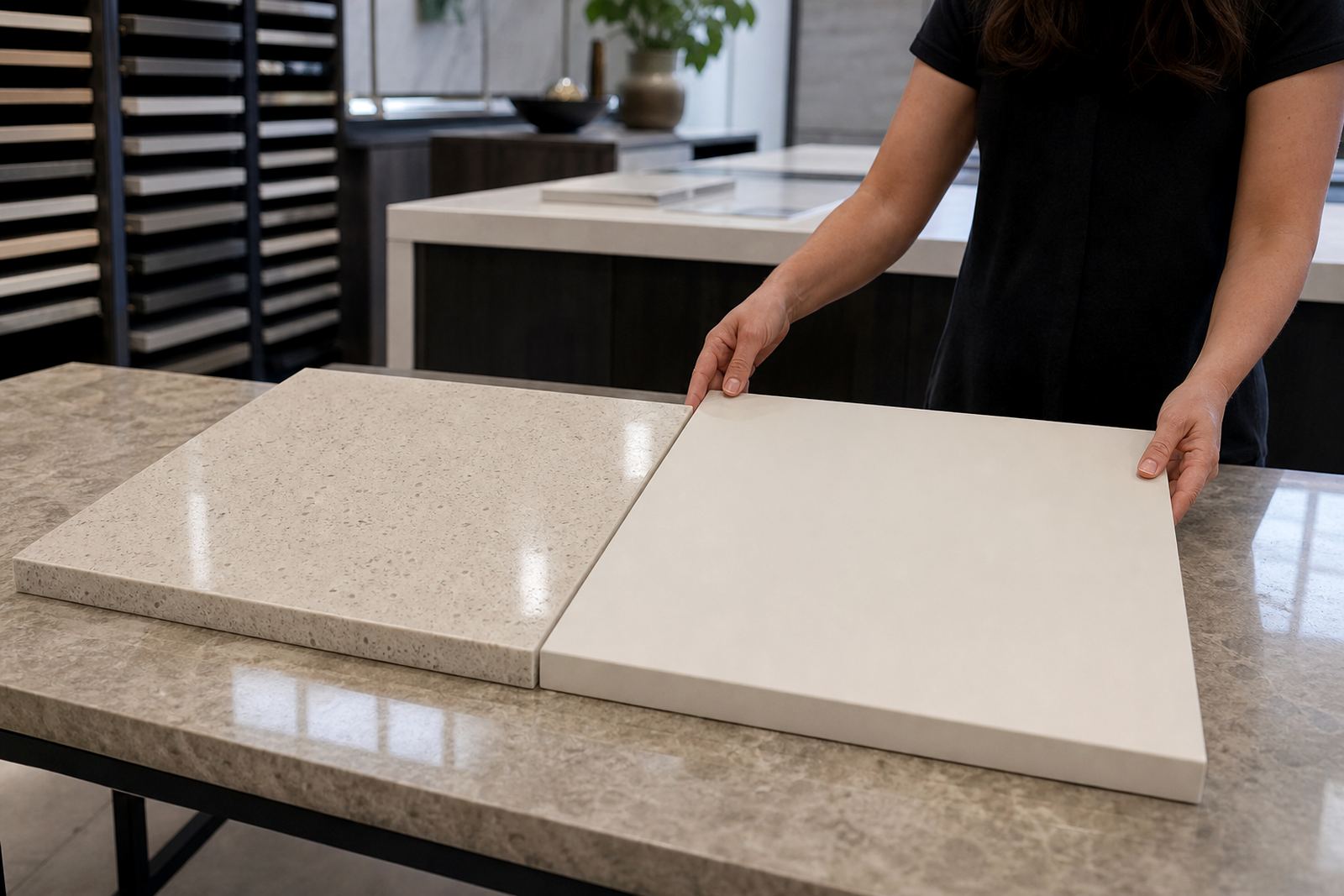
A steady routine works better than harsh scrubbing. Clean the surface, dry it, and watch the hot-zone habits around cooking and grooming. That approach keeps quartz looking even across the slab, including the edges, the seam lines and the cut-outs that see the most use.
If a top has been chipped, stained or marked by heat, do not keep testing it with stronger chemicals. Keep the area clean and get advice before the damage spreads. For homes, offices and shop counters in Gauteng, sensible aftercare protects the finish and keeps the installation working the way it should.
- Clean daily with mild soap and water.
- Use trivets and soft cloths as standard kit.
- Check seams, silicone and cut-outs during deeper cleans.
- Keep abrasive pads and strong solvents away from the surface.