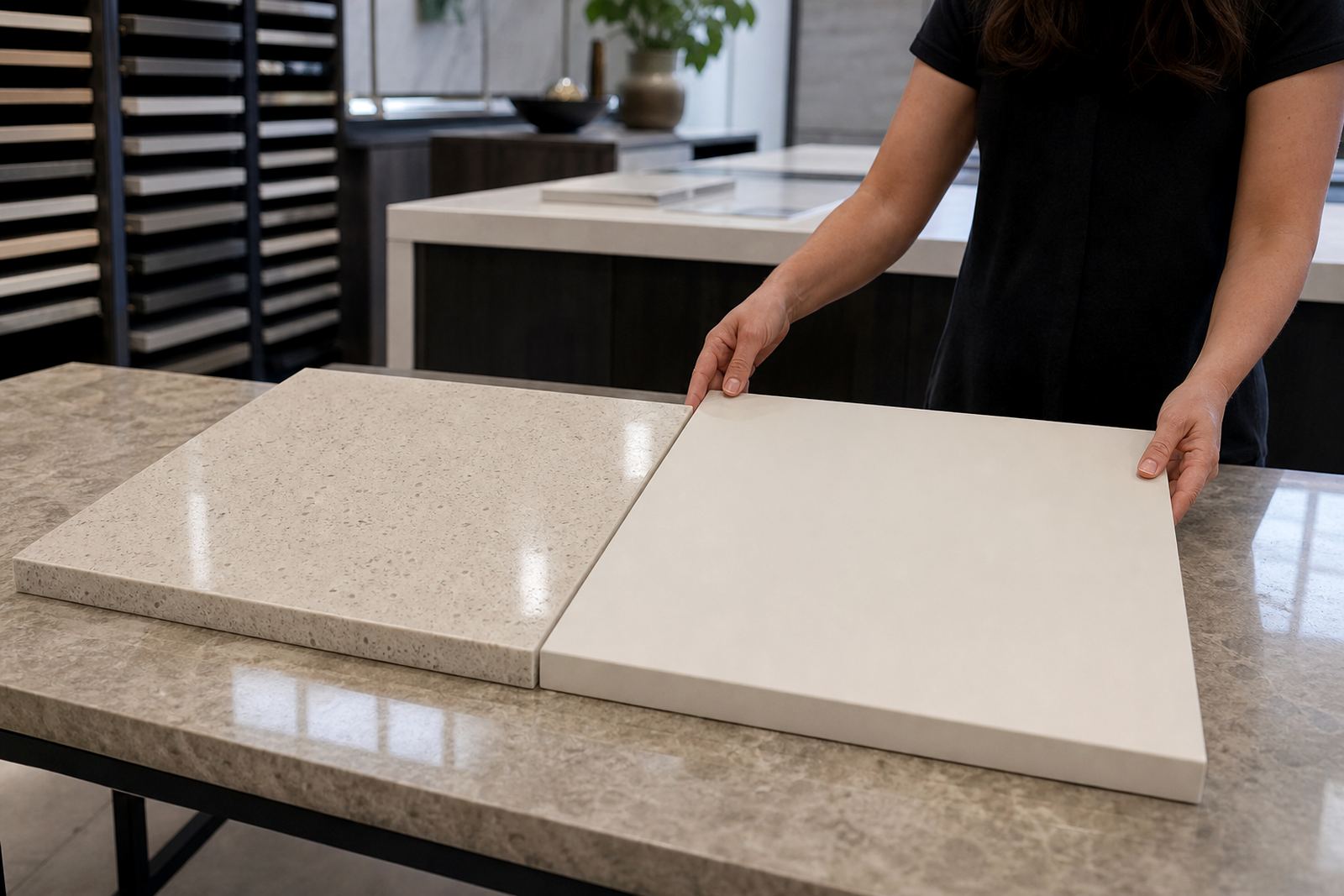
Start With The Room, Not The Stone
In a kitchen, the worktop has to cope with chopping, hot pans, spills and a lot of wiping down. In a vanity, the brief changes. Water sits around basins, the room may be smaller, and the finish needs to handle soaps, cosmetics and humidity without looking tired. For shop counters and office counters, the finish must also handle traffic, reception use and the hard knock of daily contact.
Quartz is a strong choice where a harder look and a consistent speckled or veined finish is wanted. Solid surface suits spaces that need softer lines, shaped details and a more joined-up appearance around basins or display counters. Both can work well in homes and commercial spaces across Gauteng, but they do not solve the same problems in the same way.
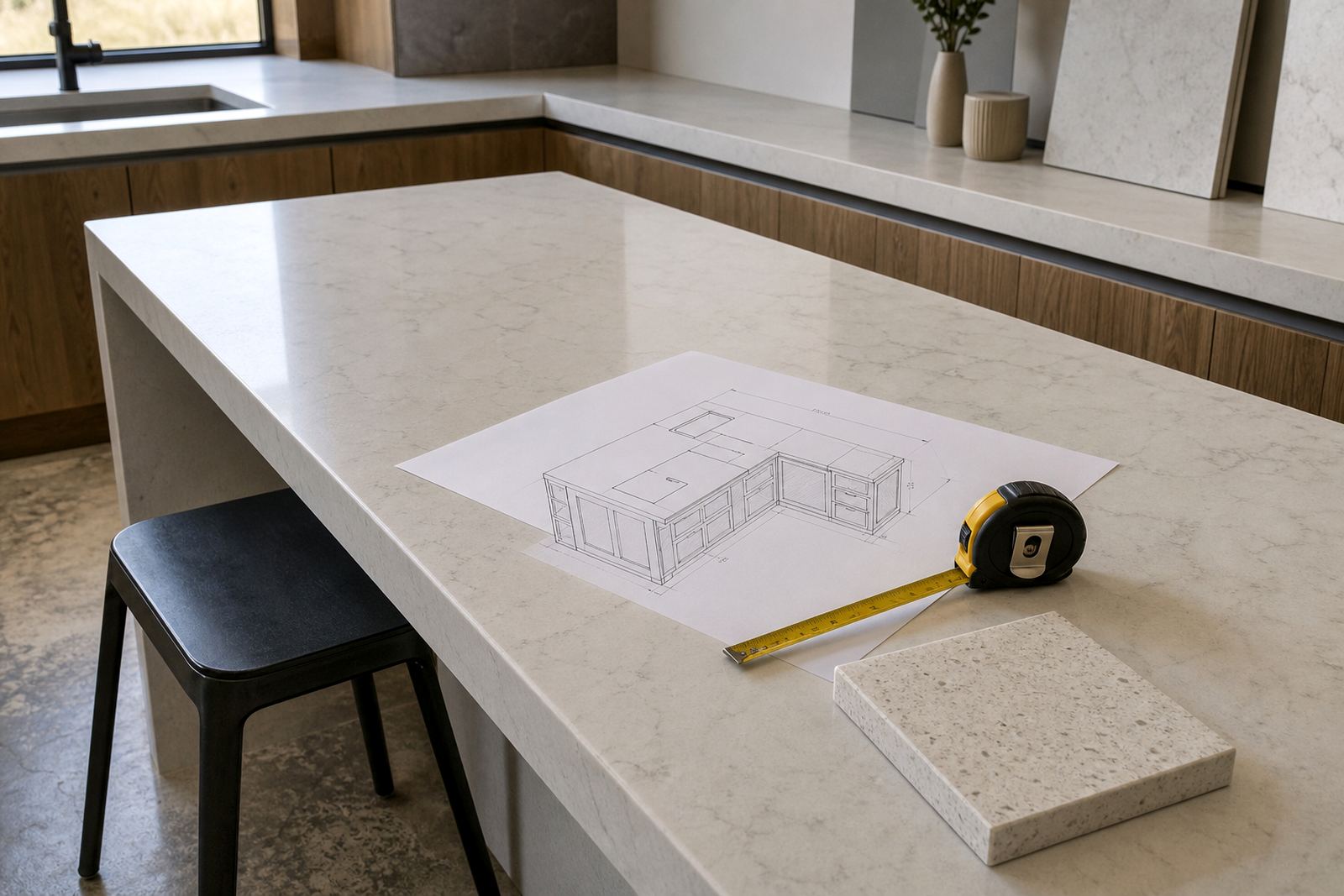
Measure the space in real use terms. Think about pot sizes, basin widths, appliance cut-outs and how much overhang the counter needs for seating or clear legroom. Those small decisions shape the material choice long before fabrication starts.
When Quartz Fits The Job Better
Engineered quartz is often selected for kitchen counters where a firmer surface and a more stone-like finish are wanted. It is made in slabs and can be fabricated in common thicknesses such as 20 mm and 30 mm, with edge builds used where a fuller visual line is needed. It is suited to straight runs, island tops, splashbacks and many vanity tops where clean geometry matters.
Quartz handles stains well when spills are cleaned in the normal course of use. It still needs care around heat, because very hot cookware or hair tools can mark the surface or affect the resin. Pans should not go straight from the hob to the counter. Trivets and cooling space still matter.
- Good for straight counters and larger runs
- Works well with crisp edge profiles
- Useful where colour consistency matters
- Suitable for sink and hob cut-outs planned in advance
Quartz seams can be placed carefully to suit the slab layout and the room length. A good templating visit matters, because a poor joint position can interrupt a clean visual line. Around sinks and hobs, cut-outs need enough support and precise finishing so the top stays tidy and practical.
Where Solid Surface Earns Its Keep
Solid surface is often chosen where a softer finish and more shaping freedom are needed. It can be formed into integrated looks, smoother transitions and custom vanity arrangements that suit bathrooms, clinics, reception pieces and display counters. It also makes sense where a smooth visual style is the brief and the client wants fewer hard breaks in the design.
One advantage is that small surface marks can often be dealt with more easily than on some harder finishes, depending on the damage and the final use. That makes solid surface useful for counters that need a tidy appearance in busy areas, especially where the public sees the top all day. It still needs sensible care around direct heat and harsh staining products.
- Suited to curved or softer shapes
- Useful for vanity tops and bowl areas
- Can give a cleaner built-in look
- Works well where light maintenance matters
In a bathroom, solid surface can help keep water management neat around the basin and splash zones. For commercial use, it can be shaped to suit payment counters, reception points and service surfaces where a practical finish is more important than a natural-stone look.
Templating, Seams And Cut-Outs Decide The Finish
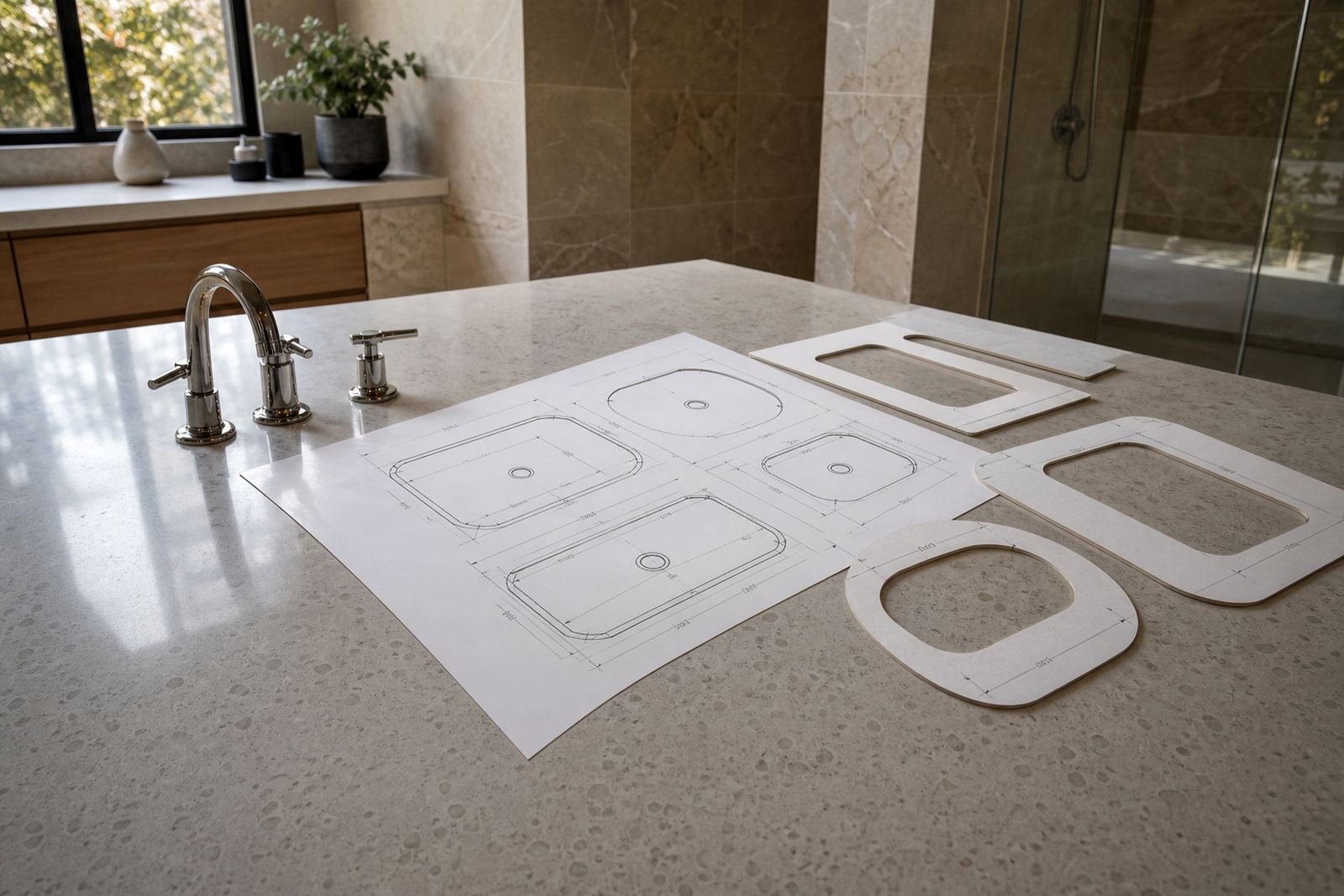
The slab is only one part of the work. On-site templating shapes the final result, and digital measuring helps capture uneven walls, corners that are not square and the true position of sinks, appliances and splash areas. In Randburg and the wider Gauteng area, many homes and office spaces have small differences that a quick tape measure will miss, but they show up when installation begins.
Seams need planning before cutting starts. Long kitchens may need joins, and a good slab layout plan decides where those joins sit. A visible joint in the wrong place can spoil the line of the room. If the slab is being worked around a hob or a sink cut-out, the support under those sections must be considered as part of fabrication.
Edge profiles also change the look. A square edge reads differently from a softened pencil edge or a thicker built-up edge. The choice should suit the cabinetry, the room style and how the top will be cleaned each day.
A Practical Check Before You Choose
A sensible comparison is easier when you look at the way the top will be used, not only at the sample in the shop. Kitchens, vanities and commercial counters all ask different things from the material, and the best result comes from matching the finish to the task.
- Will hot pans, irons or styling tools touch the top often?
- Do you want a harder stone-like appearance or a softer built-in finish?
- Are straight lines more important than curved detail?
- Will there be one basin, two basins or a shaped sink cut-out?
- Is the counter for a private home, an office, or a public-facing area?
- Will the edge be seen from close range or from a distance?
That checklist usually points the way. Quartz often suits strong, clean kitchen lines. Solid surface often suits vanity work and custom counter shapes. Both can be made well if the slab layout, cut-outs and joins are handled with care.
Aftercare That Keeps The Surface Honest
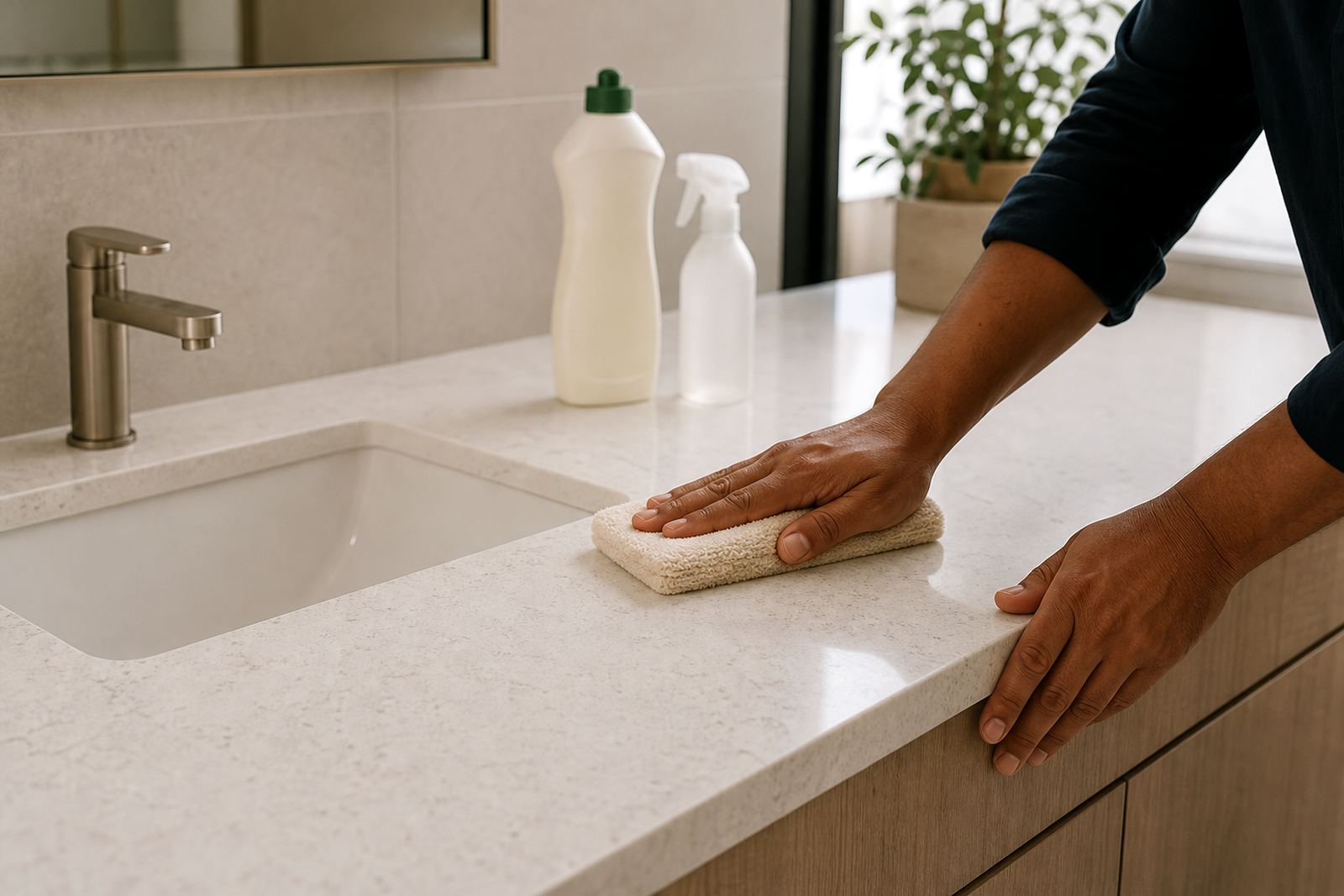
Neither material likes neglect. Wipe up spills, especially strong tea, coffee, wine, acids and cosmetics, before they sit too long. Avoid scouring pads and harsh cleaning powders. Use a damp cloth and a mild cleaner, then dry the top if you want to keep the finish looking even. That small routine goes a long way in humid areas and busy households.
For kitchens, use a chopping board and a heat pad. For vanities, keep razor blades and styling tools away from direct contact with the surface. For commercial counters, make sure cleaning staff know what should not be used, because the wrong product can leave a dull patch or a sticky film.
Aftercare advice should be specific to the actual top, the edge detail and the type of use it sees. A good installation is only part of the job, and the upkeep choices made afterwards shape how long the counter keeps its finish.