
Daily wipe-downs that keep the finish even
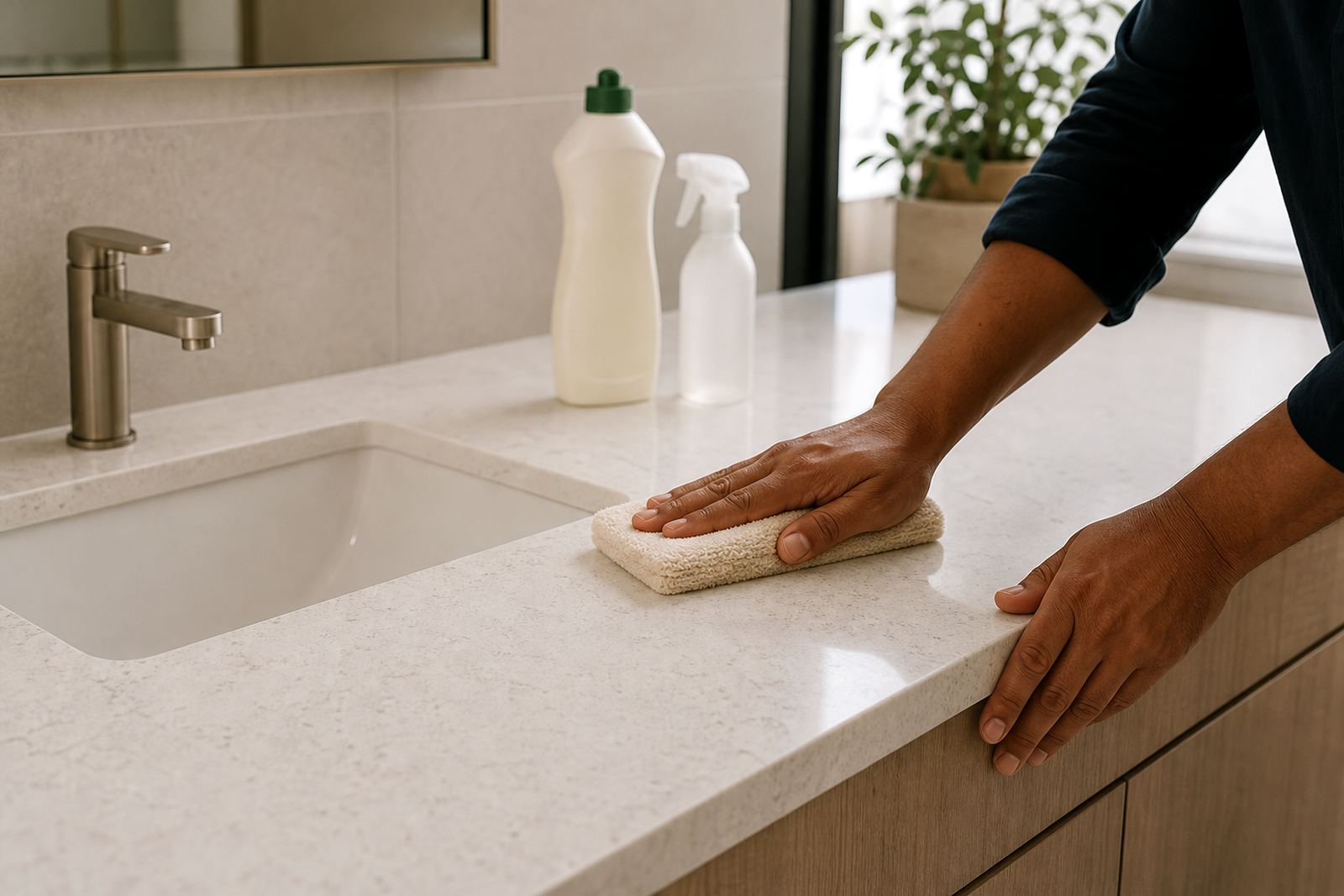
For most solid surface counters, a soft cloth and warm water are enough for everyday cleaning. A drop of mild dish soap helps with fingerprints, cooking oils and bathroom residue, while a non-abrasive cream cleaner can be used now and then when the surface needs a deeper clean. Rinse well and dry with a clean cloth so water marks do not sit on the finish.
Avoid scouring pads, coarse powders and hard plastic scrapers. These can dull the sheen or leave fine marks, especially on lighter colours where every scratch shows more clearly. On textured or matte finishes, use the same gentle method and work in small sections so the clean looks even across the full top.
- Use warm water first
- Add mild soap for greasy marks
- Dry edges, joins and tap areas last
- Keep abrasive pads away from the surface
Heat habits around pots, kettles and straighteners
Solid surface copes well with day-to-day kitchen use, but it does not like direct high heat. Hot pots, pans and kettle bases should never sit straight on the top. Keep hot pots on a trivet, heat pad or rack, since a sudden heat burst can stain the finish or leave a dull mark that is difficult to conceal.
This matters near hobs, under wall ovens, and beside bathroom appliances such as hair straighteners. In homes around Gauteng, people often place a kettle near the sink for convenience, then forget how hot the base stays after use. Let it cool on a tray or mat before moving it back onto the counter.
- Keep hot cookware off the surface
- Use a trivet under kettles and appliances
- Lift rather than slide heated items
- Check for trapped heat after heavy cooking
Stain control when spills sit too long
Spills are easiest to deal with while they are fresh. Wipe up coffee, wine, juice, makeup, soap residue and food colouring before they dry. If a stain has already settled in, apply a mild cleaner, leave it for a few minutes, then wipe it off with a soft cloth. Repeat rather than scrubbing hard.
Oil-based marks, black tea rings and stubborn cosmetic stains may need more patience. A non-abrasive cleaner made for solid surface can help, but test it on a small corner first. In kitchens and vanity areas near Sandton and Midrand, where counters see constant use, the trick is not extra force, it is steady cleaning before the stain settles deep.
- Wipe spills quickly
- Use mild cleaner before stronger methods
- Repeat the clean instead of scrubbing harder
- Test any stronger product on a hidden spot
Seams, sink cut-outs and edge details need gentle handling
Seams are part of many larger installations, especially where long runs, L-shapes or islands are involved. They should stay tight and level, with no open gap or raised lip. Clean along the join with a soft cloth, not a blade, so dirt does not build up or scratch the joint line.
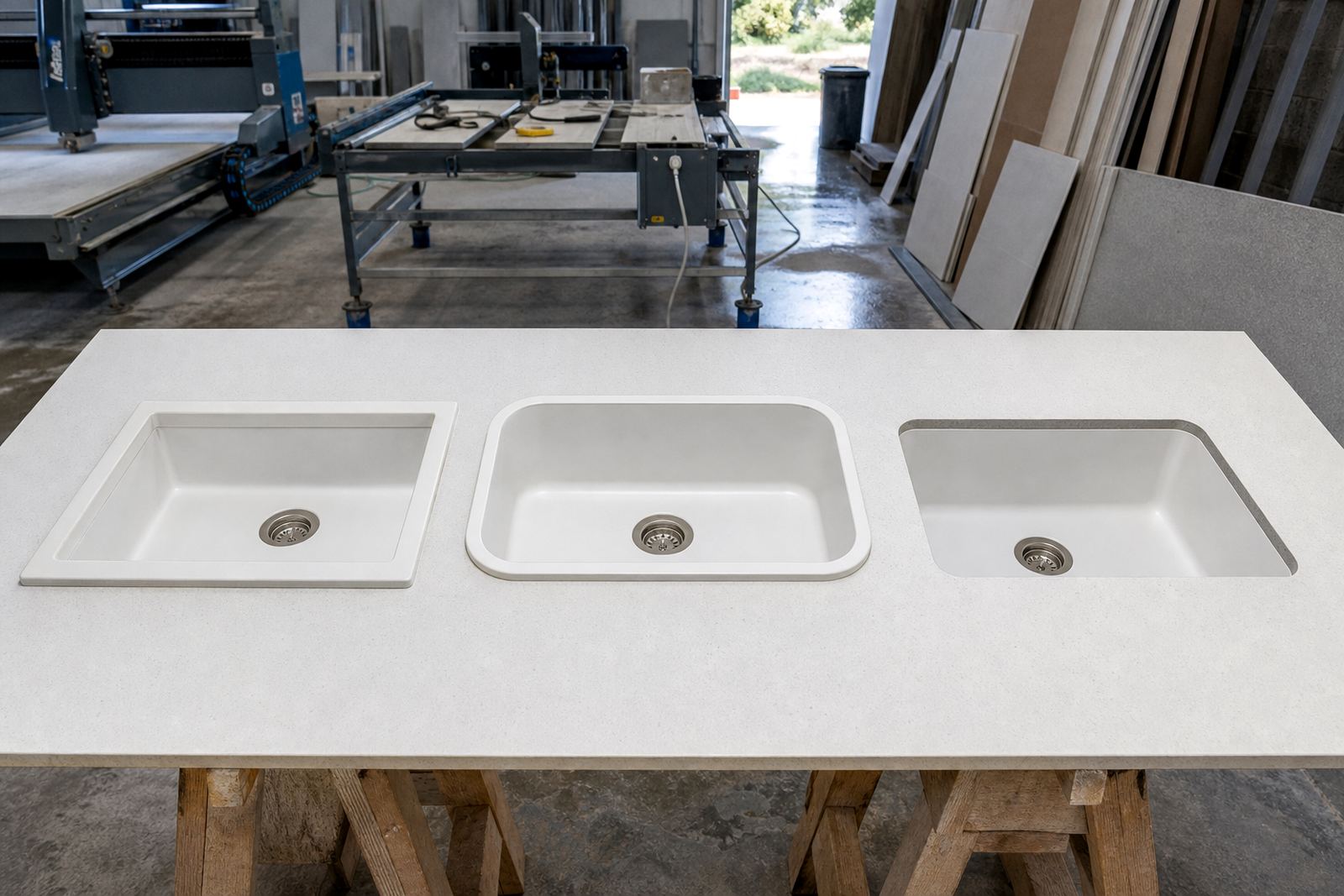
Sink cut-outs, hob openings and edge profiles also deserve attention. Water that sits around the cut-out can leave mineral marks, so dry those areas after washing dishes or cleaning the basin. Bullnose, pencil edge and square edge profiles all catch dirt in slightly different ways, yet the cleaning method stays the same: soft cloth, mild soap and no harsh tools.
- Wipe seams gently and check for trapped dirt
- Dry around sink rims after use
- Keep blades away from cut-out edges
- Watch for chips on corners and exposed edges
Everyday upkeep in kitchens, bathrooms and reception areas
Solid surface is popular because it carries through kitchens, vanities, counters and splashbacks with a clean, uniform look. That finish lasts best when the surface is kept free of grit. Sand, biscuit crumbs and construction dust act like fine sandpaper if they are dragged around under a cloth, so brush them off before wiping.
Reception counters and office kitchen tops often collect paper clips, staples and other small hard items. In shopfitters' spaces, those bits can scratch the face of the top during stock moves or cleaning. Lift objects instead of pulling them across the slab, and use felt pads under dispensers, small appliances and containers that stay in one place for long periods.
- Remove grit before wiping
- Lift items rather than dragging them
- Use felt pads under fixed accessories
- Keep splashback joints dry where water lands often
If the surface starts to look tired or marked
Most minor wear on solid surface can be dealt with before it becomes a bigger issue. Light scratches sometimes disappear with careful abrasion by a trained installer or aftercare specialist, but that should not be tried with rough household pads. If the mark is deeper, the edge has chipped or a seam has opened, it is better to have the area inspected before water gets into the joint.
For homes in Randburg, offices in Johannesburg and fit-outs in Pretoria or Fourways, the right fix depends on the depth of the damage and where the top is installed. A vanity top, splashback and kitchen island do not age in the same way, so the remedy is not always the same. Good upkeep is part cleaning and part knowing when a mark has moved beyond a wipe-down.
- Check whether the mark is only on the surface
- Do not sand at home with coarse products
- Report chips, lifted seams or open joins early
- Keep a note of the area and the type of damage