
Start with the wet zone, not the style board
The first question is where water, steam and cooking splash are landing. A splashback behind a prep run can be modest, while a wall behind a sink, hob or dishwasher run needs more thought. In kitchens with a lot of wiping down, a continuous surface with fewer joints is usually easier to live with. In smaller sculleries or rental units, a neat low upstand can give enough protection without turning the wall into a heavy feature.
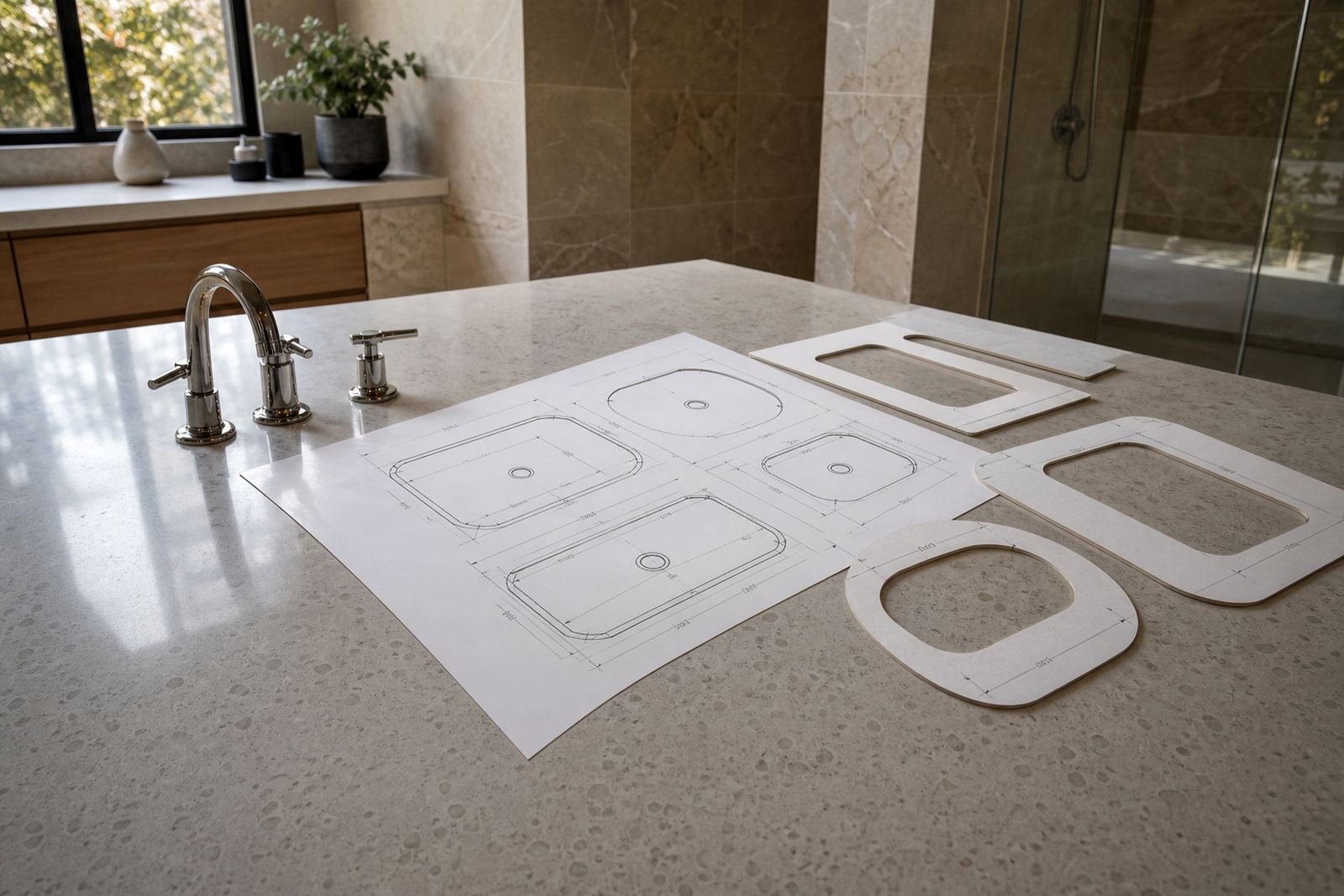
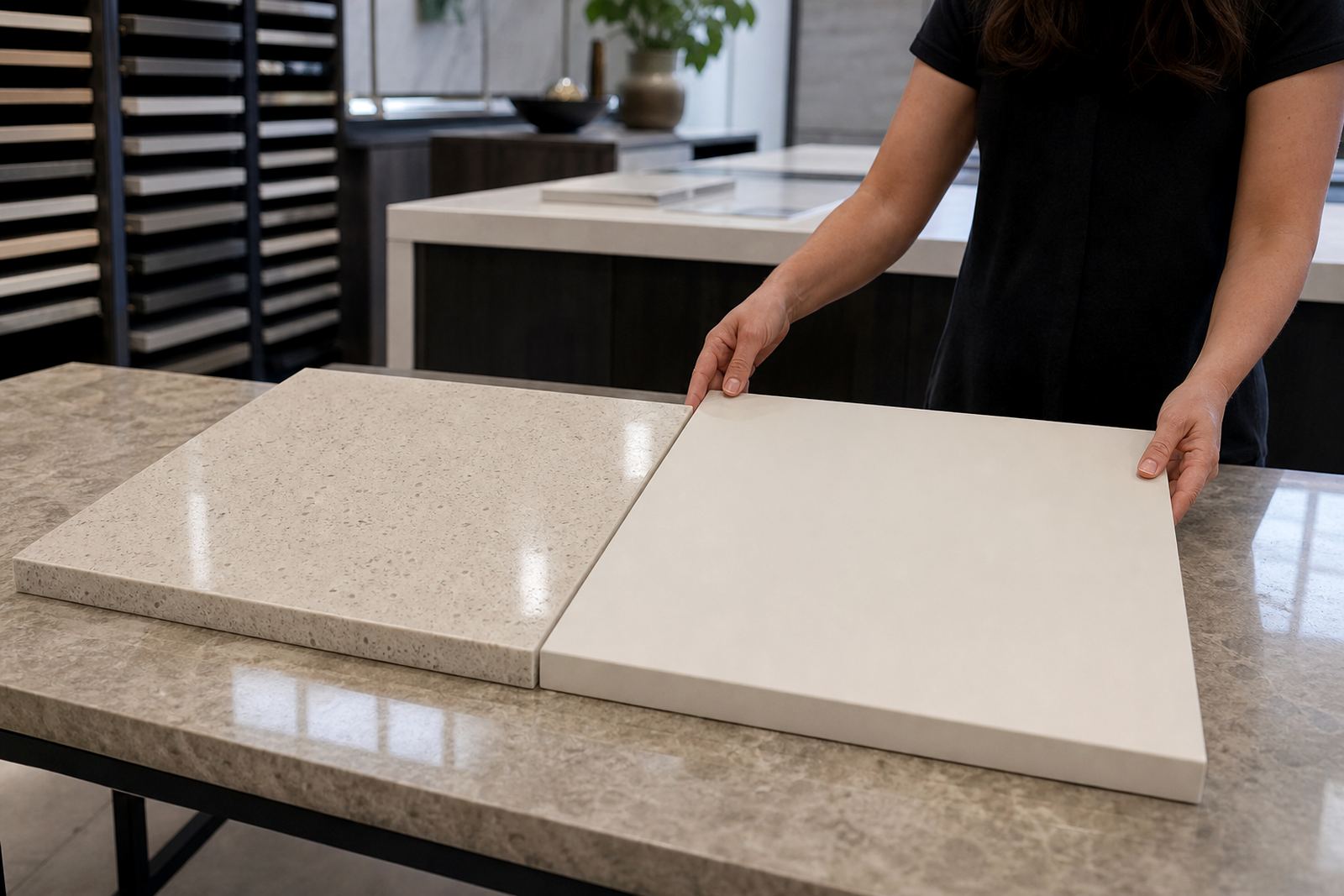
With engineered quartz and solid-surface counters, the splashback should be planned with the top, not added as an afterthought. The thickness of the slab, the edge profile and the position of sink cut-outs all affect how the wall meets the counter. If the wall is not straight, templating matters more than most people expect.
- Check where taps, mixers and soap dispensers sit.
- Note any window reveals, power points or corners.
- Measure the stretch that gets wiped most often.
- Look for wall dips that may affect a tight fit.
When a low upstand is the neatest answer
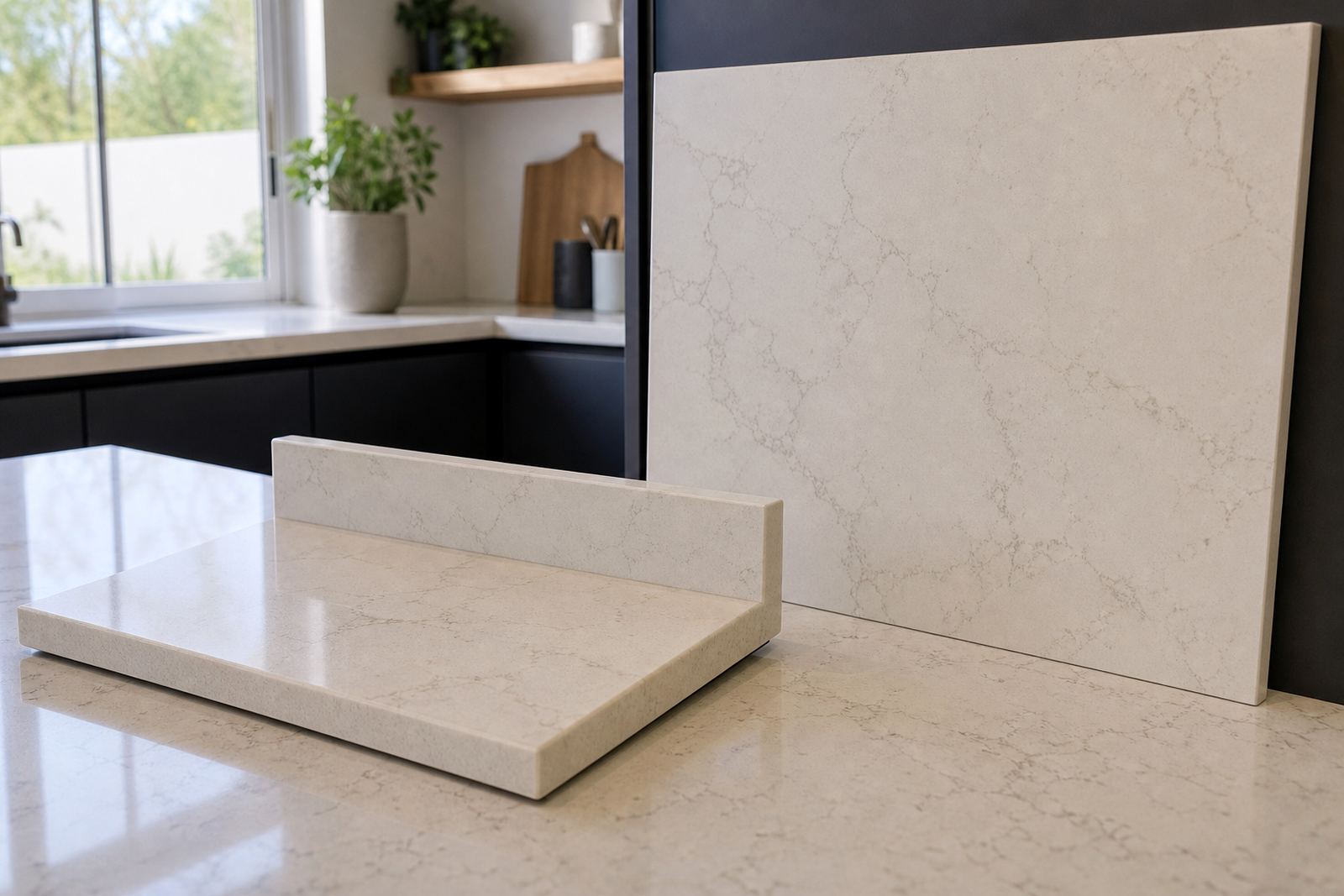
A low upstand is a short vertical return, usually made from the same material as the countertop. It helps protect the wall from water and crumbs, and it gives the top a finished line without running the surface all the way to a tall wall panel. On compact kitchens, laundry spaces and office tea stations, that can be enough. It also suits rooms where the wall finish is already decent and only the junction at the counter needs protection.
Low upstands work best where the wall surface is level and the room does not need a dramatic feature finish. They can be cut to follow corners, hob cut-outs and short returns, and the join is usually less fussy than a full-height panel. In a place like Randburg or Sandton, where many kitchens are refitted in occupied homes, a low upstand can keep disruption down while still giving a clean edge.
- Good for short backsplash runs.
- Useful where a painted wall will stay in place.
- Often easier around small appliances and switches.
- Works well with straight or slightly profiled edges.
Matching panels for a stronger visual line
Matching panels are the better call when the wall needs to read as part of the counter. They suit long kitchen runs, island back panels, vanity walls and shopfitters who want a consistent finish across the room. A matching panel can rise full height or stop at a planned line, and it works well where the client wants one material language from the countertop through to the splash area.
For engineered quartz, the panel has to be planned with seam positions in mind. Long runs may need a seam that sits away from a sink bowl or hob. For solid-surface work, the advantage is that seams can be sanded and blended, which helps where the wall length changes. The installer still needs a proper template, because a wall that looks square from across the room often isnt once the tape goes up.
- Best for feature walls behind sinks or hobs.
- Helps hide patchy paint or uneven tile joints.
- Works well in bathrooms with matching vanities.
- Can be paired with mitred returns for a sharper finish.
A simpler wall finish can be the right call
Not every room needs a stone splashback. Some kitchens are better served by a painted wall, sealed plaster, tiles or another easy-clean finish, with a short upstand only where water is most likely. That approach makes sense when budgets are tighter, when the wall already has a good finish, or when the room will be changed again later. It can also suit offices and light-use kitchens where the splash risk is modest.
The key thing is choosing a finish that suits the intended use. If the room has an uneven wall, a window behind the sink or many service points, a simpler finish may save time and avoid awkward joins. The wall finish still needs to be practical around moisture, heat and cleaning chemicals, especially in a coastal home where humidity can make poor finishes lift faster.
Where the top is quartz, solid-surface or another engineered stone, the splashback should not force a fight with the room. Sometimes the cleaner answer is a short return, a sealed paint line and a well-cut top edge rather than a full-height panel.
Template checks that prevent awkward joins
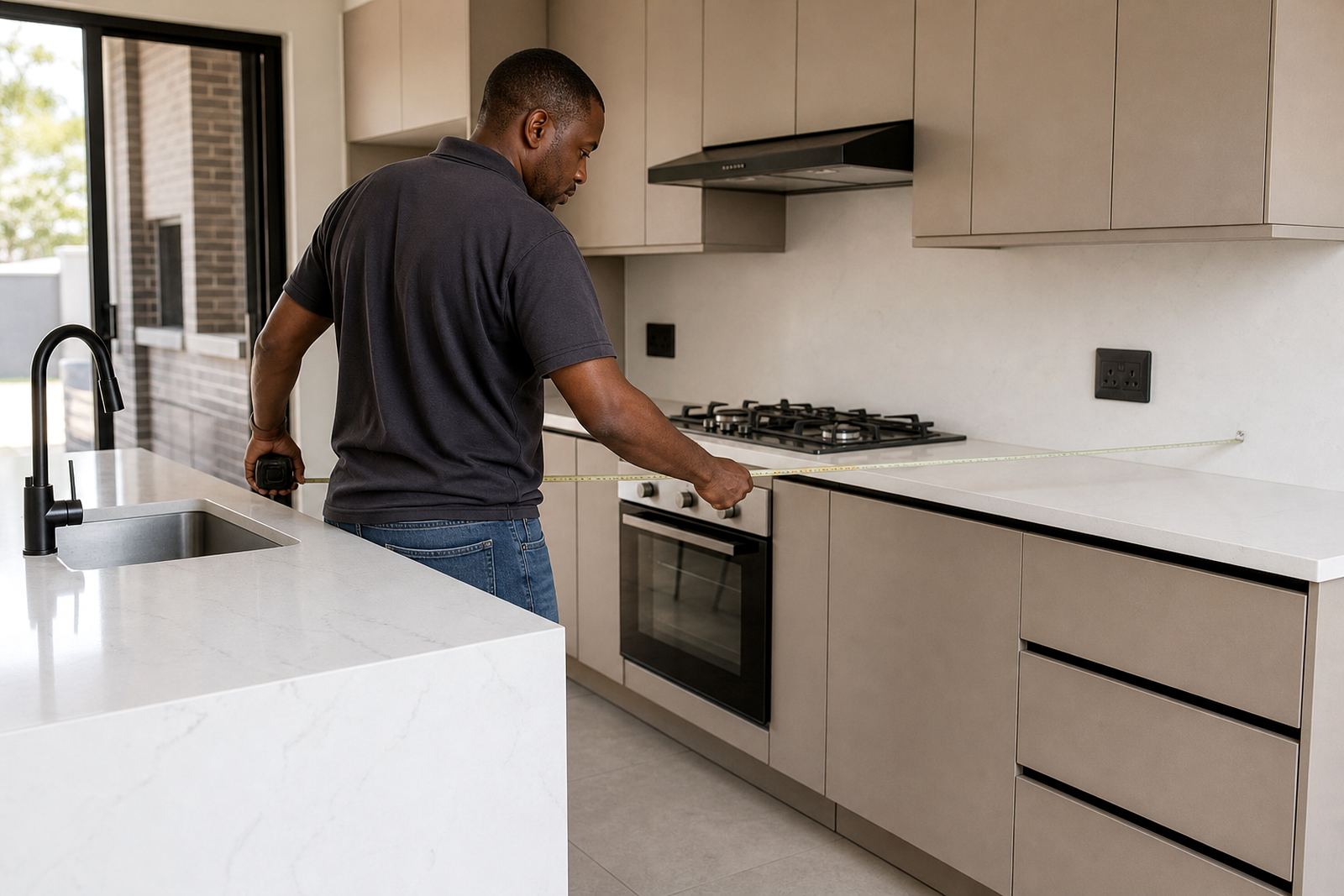
Good templating is the part that keeps a splashback looking planned instead of patched. The templater checks wall plumb, corner angles, socket positions, sink centres and the height at which the panel must finish. In homes around Johannesburg, Midrand and Pretoria, walls are rarely perfect and small differences show once a long panel is installed. A careful template helps the workshop set the seams and cut-outs before the material reaches site.
For quartz and solid-surface jobs, the critical checks are the same. The slab thickness, edge detail and sink cut-out position all influence where the splashback sits. A hob zone may need extra heat allowance, while a sink wall needs neat sealing at the base. If there is a tiled section nearby, the join line needs to be planned so it does not clash with tile edges or grout lines.
- Confirm wall height along the full run.
- Mark the highest splash points behind sink and hob areas.
- Check for uneven plaster or bulges at corners.
- Plan seam positions before cutting starts.
Care choices after installation
Once fitted, the splashback should be cleaned with a mild detergent and a soft cloth. Engineered quartz is tough, but it still dislikes harsh scourers and strong acids. Solid-surface can handle daily wiping very well, yet it also benefits from sensible care and quick attention to spills. Heat near a hob should be managed with proper clearances and sensible placement of utensils, pans and small appliances.
Stains are easier to prevent than remove, so it helps to wipe tea, coffee, oil and sauces before they sit. Sealant lines around the base and corners must stay sound, especially where water pools behind a sink. If a seam opens or a joint darkens, that should be checked before moisture works further into the wall edge.
Aftercare advice is part of the job. A splashback that suits the room on day one should still look tidy after months of washing, cooking and regular use.