
A canteen surface plan that had to work hard
The brief came from a staff canteen in Centurion where the serving counters, prep benches and wash-up edge had reached the point where patching no longer made sense. The client needed a cleaner working surface, better drainage at the sink zone and edges that would hold up to trays, urns, trolleys and constant wiping. The job also had to fit a live workplace, so access, dust control and install sequencing mattered from the first visit.
We worked with engineered quartz for the main counters and solid-surface material where a more forgiving joint detail was useful around the canteen workflow. The layout called for straight runs, one return, and a few junctions that had to line up with existing walls that were not perfectly square. Those details matter in a canteen, because a millimetre off at the templating stage becomes a visible joint at the end.
Measuring the room before any cutting began
Our templating team visited the site in Centurion to capture the true wall lines, appliance positions, support points and service openings. Digital measuring gave us a reliable base, but we still checked corners by hand because canteen rooms often carry old plaster movement and uneven tile lines. Johan Ngwenya led that stage, and the notes went straight into slab layout planning back in Randburg.
- Template capture for all counter runs and returns
- Sink cut-out marking with tap and drain positions
- Hob and service opening checks where needed
- Seam placement planned away from the busiest hands-on zones
- Wall variation allowance built into the final layout
The canteen had a tight circulation path, so we also checked how the new tops would sit beside existing cabinets and the front serving line. That let us avoid awkward joins where staff would lean, scrub or place trays. It also reduced the chance of on-site adjustment work on installation day, which is exactly where a busy workplace loses time and patience.
Material choices for heat, stain and daily wiping
For this project we used engineered quartz on the main work surfaces, with a durable, non-porous finish suited to food service cleaning routines. In a canteen, hot pots, tea urns and metal trays are part of everyday movement, so the top needed to stay stable and easy to keep looking neat. Quartz is hard wearing, but like any stone surface it still benefits from sensible heat care and the use of stands under very hot items.
Where the detail called for tighter edge continuity and a softer joined look, solid-surface sections helped us shape the layout more neatly. That gave the canteen team a practical surface at service points and around splash-prone areas. We also planned for straightforward stain care, because tea, coffee, sauces and cleaning chemicals can leave marks if spills are left too long on any countertop.
- Engineered quartz for the main counters and prep runs
- Solid-surface sections where shaped detailing helped the layout
- 20 mm slab thickness across the core countertop areas
- Square edge and eased edge profiles used where touch points were frequent
- Seam positions set to suit workflow rather than only appearance
Workshop fabrication and the details that matter
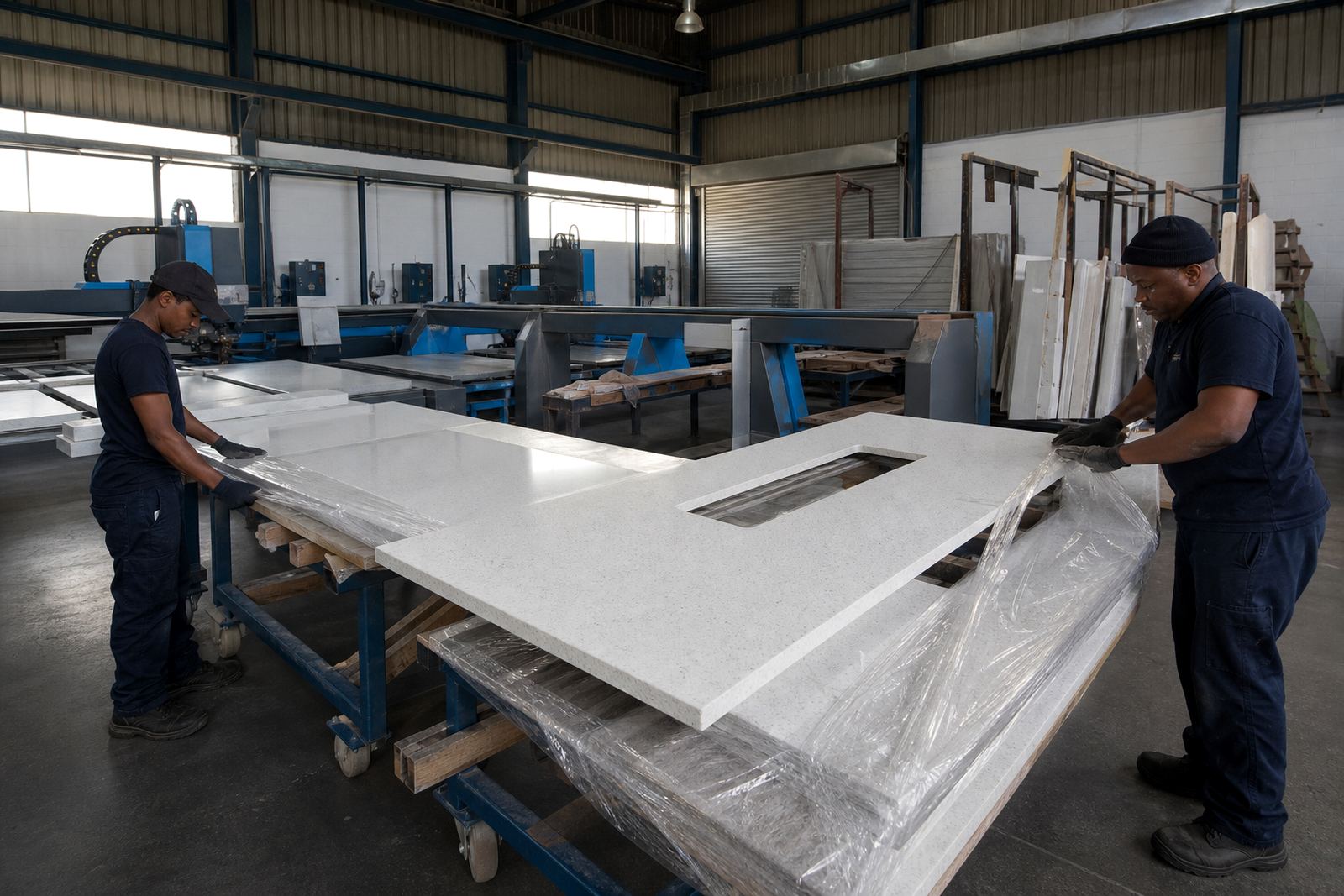
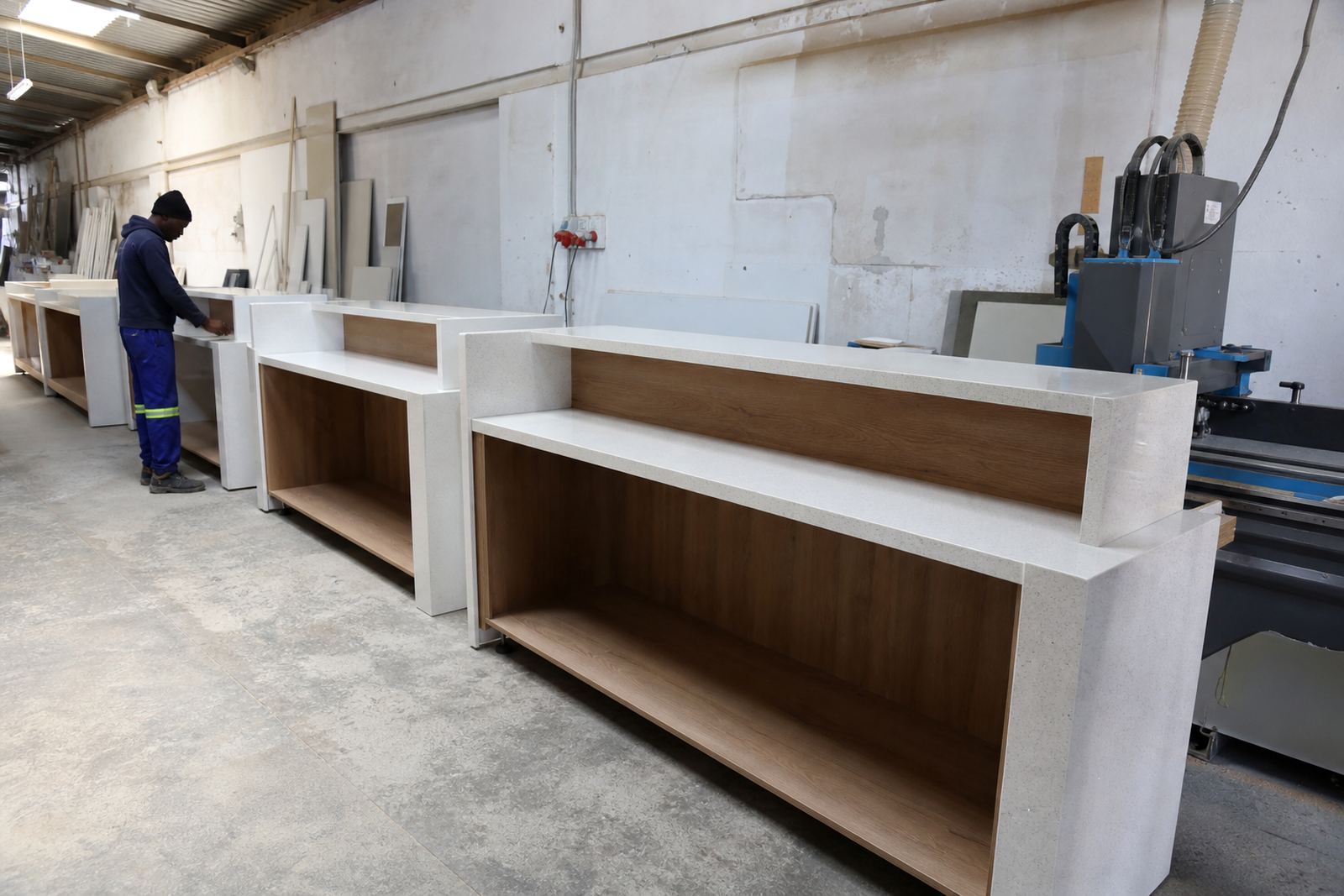
Cutting and fabrication took place in our Strijdom Park workshop, where the slabs were laid out to keep pattern and tone balanced across the visible runs. Sibusiso Mdlalose supervised the work through the workshop stages, while the edge profiling, sink cut-outs and seam joining were prepared to suit the final template. A neat finish on a canteen job is not only about appearance, it also helps with everyday wiping and keeps the service area tidy after hard use.
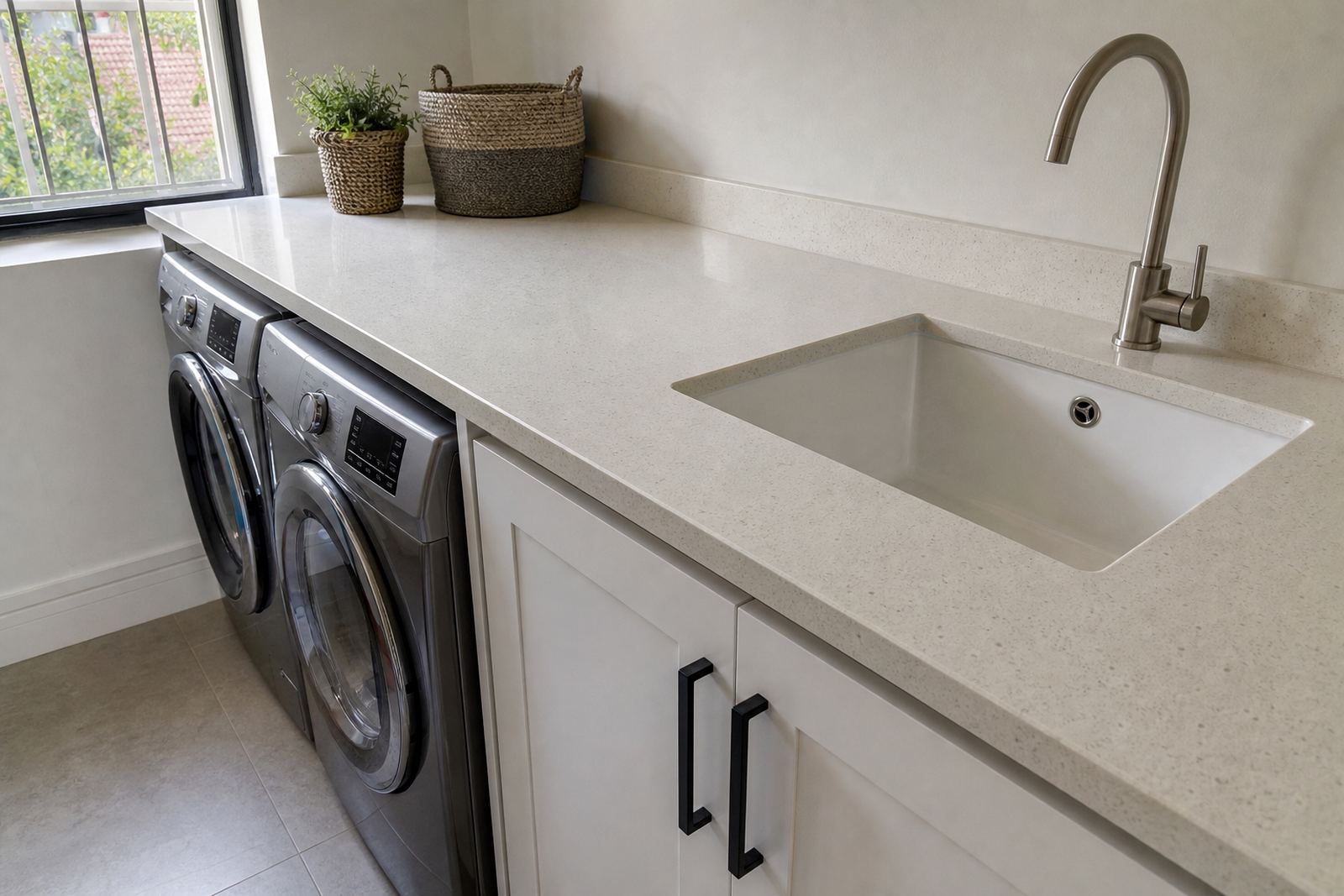
The sink opening needed careful finishing because water around a canteen wash point can work its way into weak joints if the cut-out is rough or the seal is poorly handled. We sealed and dressed the cut edges, then checked the fit against the selected bowl and fixing positions. Hob cut-out work was handled where required, with allowance for heat clearance and safe edge support under the slab.
Edge profiles were kept practical rather than decorative. A slightly eased line helps take the sting out of knocks from trays and cleaning buckets, and it is easier on hands during shift work. In a staff canteen that gets used by many people each day, the right edge profile is often the difference between a top that ages neatly and one that chips at the first corner.
Installation around a working Centurion site
Candice Mthethwa planned the installation sequence so the canteen could keep moving around the work area while the tops were fitted. The crew arrived with the counter sections, support checks, adhesive and finishing materials already prepared for the site order. Installation in a live workplace rewards calm sequencing, especially when the room has to be handed back for meal service and cleaning routines.
We levelled the sections, set the seams, checked the front line against the existing cabinetry and fitted the splashback details where the wall finish needed extra protection. The splashback fitting was important behind the prep and wash areas, because wall paint alone rarely stands up well to regular wiping and moisture. Once the countertop installation was complete, the joints were cleaned down and the working surfaces were checked for any edges that needed final dressing.
- Countertop installation carried out in planned sections
- Seam joining checked for level and visible movement
- Splashback fitted behind wet and prep zones
- Vanity style finishing used only where the layout needed a shaped return
- Final surface inspection completed before handover
How the canteen changed after the fit
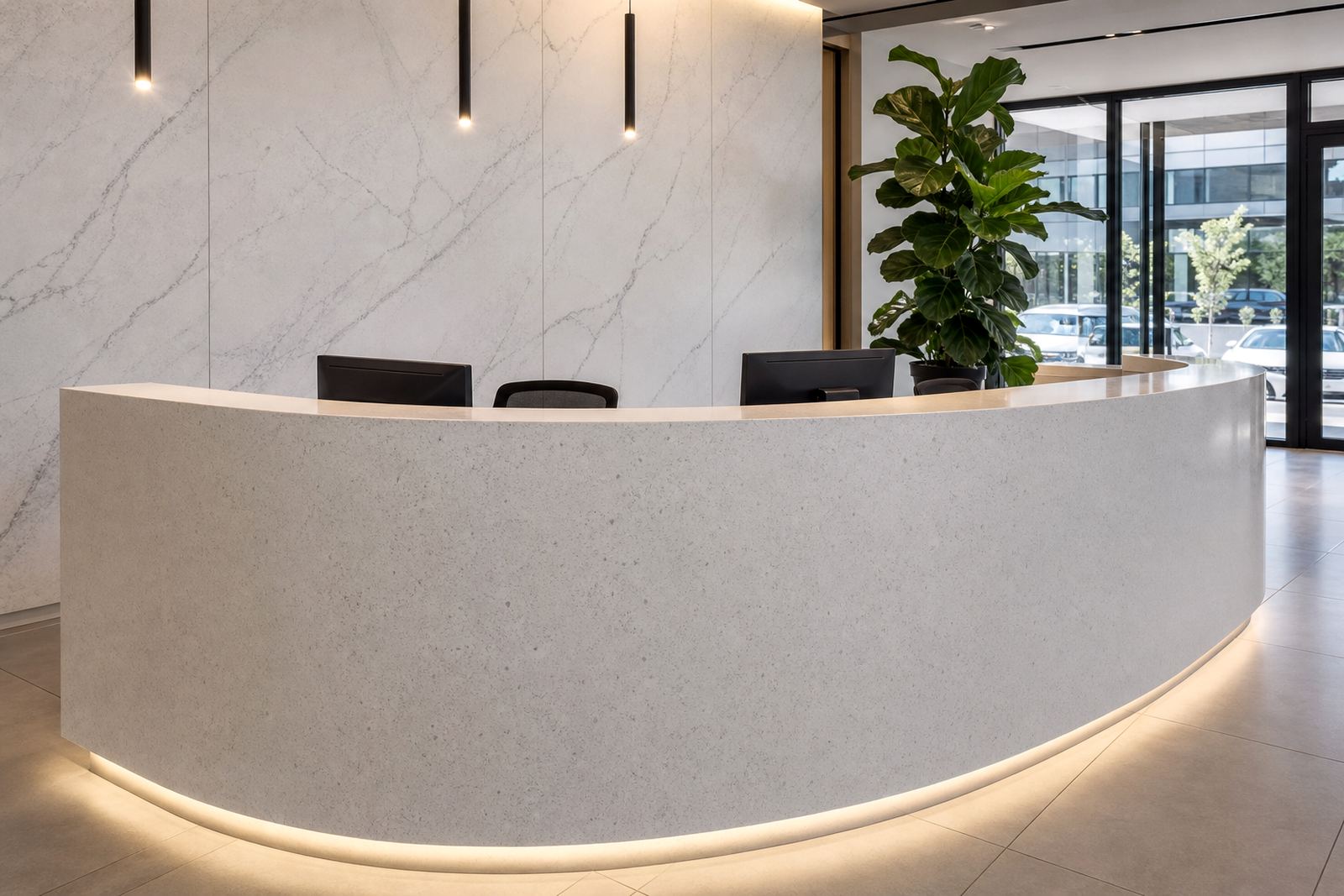
The completed surfaces gave the Centurion staff canteen a cleaner working line and a more orderly service area. The new counters made it easier to wipe down after peak meal periods, and the controlled seam positions reduced the visual breaks across the room. With better sink detailing and a more settled edge profile, the surfaces now suit the pace of repeated use rather than fighting it.
Thabo Rademeyer later shared aftercare advice with the workplace team, focusing on straightforward day-to-day care. For quartz, that means warm water, a mild cleaner and prompt spill removal. For solid-surface sections, the same habit helps keep the finish even and clean. Very hot pans still need a trivet or stand, and abrasive pads are best avoided because they can dull the surface over time. The canteen team also received guidance on handling minor wear, so small marks can be managed before they become a larger cleaning problem.
The result was a set of long serving counters and prep surfaces that suited a real workplace rhythm. It was not a showpiece fit, it was a practical canteen upgrade that had to stay neat through heavy use, and it did.
How we would approach another busy staff canteen
For another staff canteen with similar conditions, we would keep the same approach to templating, seam placement and service zoning. The biggest gains came from measuring the room accurately, deciding where the joins should sit and choosing materials that make daily cleaning simpler. A workplace canteen rewards surfaces that are easy to read visually and simple to look after under pressure.
We would also keep the installation order tight, starting with the longest straight runs before setting the smaller return pieces. That reduces awkward handling on site and helps the final line stay clean against the walls and cabinetry. In a room used by many people across the day, those small decisions shape the result more than any decorative detail ever could.
If a Centurion, Johannesburg or Pretoria workplace is planning a canteen refresh, the same combination of site templating, workshop fabrication and careful fitting works well for quartz and solid-surface tops alike.
Key facts
| Project | Centurion Staff Canteen |
|---|---|
| Location | Centurion, Gauteng |
| Scope | Long serving counters and prep surfaces |
| Materials | Engineered quartz and solid-surface |
| Thickness | 20 mm |
| Key details | Site templating, sink cut-out, seam joining, splashback fitting, installation, aftercare advice |