
Small Rooms, Tight Corners, Real Tolerances
Apartment kitchens usually give you less room than the plan suggests. Walls drift a little, corners open out, and boxed-in pipes or appliance housings steal the millimetres you needed for a clean finish. That is where site templating matters, because the final top has to fit the room that exists, not the room on paper.
Engineered quartz works well where clients want a crisp, hard-wearing surface with a consistent pattern. Solid-surface suits places where a warmer look, integrated joins or curved details matter. For compact kitchens, both materials can be fabricated in 20 mm or 30 mm slab thicknesses, with edge profiles that suit a lighter apartment feel or a fuller decorative edge.
- Measure the finished cabinet run after carcasses are level.
- Check wall squareness at every turn and return.
- Leave room for sink clips, taps and waste fittings.
- Confirm appliance openings before the slabs are cut.
Template First, Then Cut Once
Digital measuring gives the workshop a cleaner starting point, but the site template still carries the final responsibility. In apartment work, the hob may sit close to a wall, the sink may land beside a window reveal, and a fridge housing can pinch the run at one end. Those details shape the slab layout before any cutting starts.
Our team plans the grain, joint positions and seam locations so the eye sees one continuous top across the room. Where the kitchen turns a corner, the seam is best hidden away from the main sightline and kept clear of the sink cut-out if possible. That sort of planning also helps with transport through narrow lifts, stairs and tight access common in Randburg, Sandton and Midrand blocks.
- Long runs are planned to suit slab size and access limits.
- Seams are placed where they stay practical and discreet.
- Cut-outs are checked against the final appliance template.
- Splashbacks are matched to the wall line before fitting.
What Usually Sits In an Apartment Kitchen
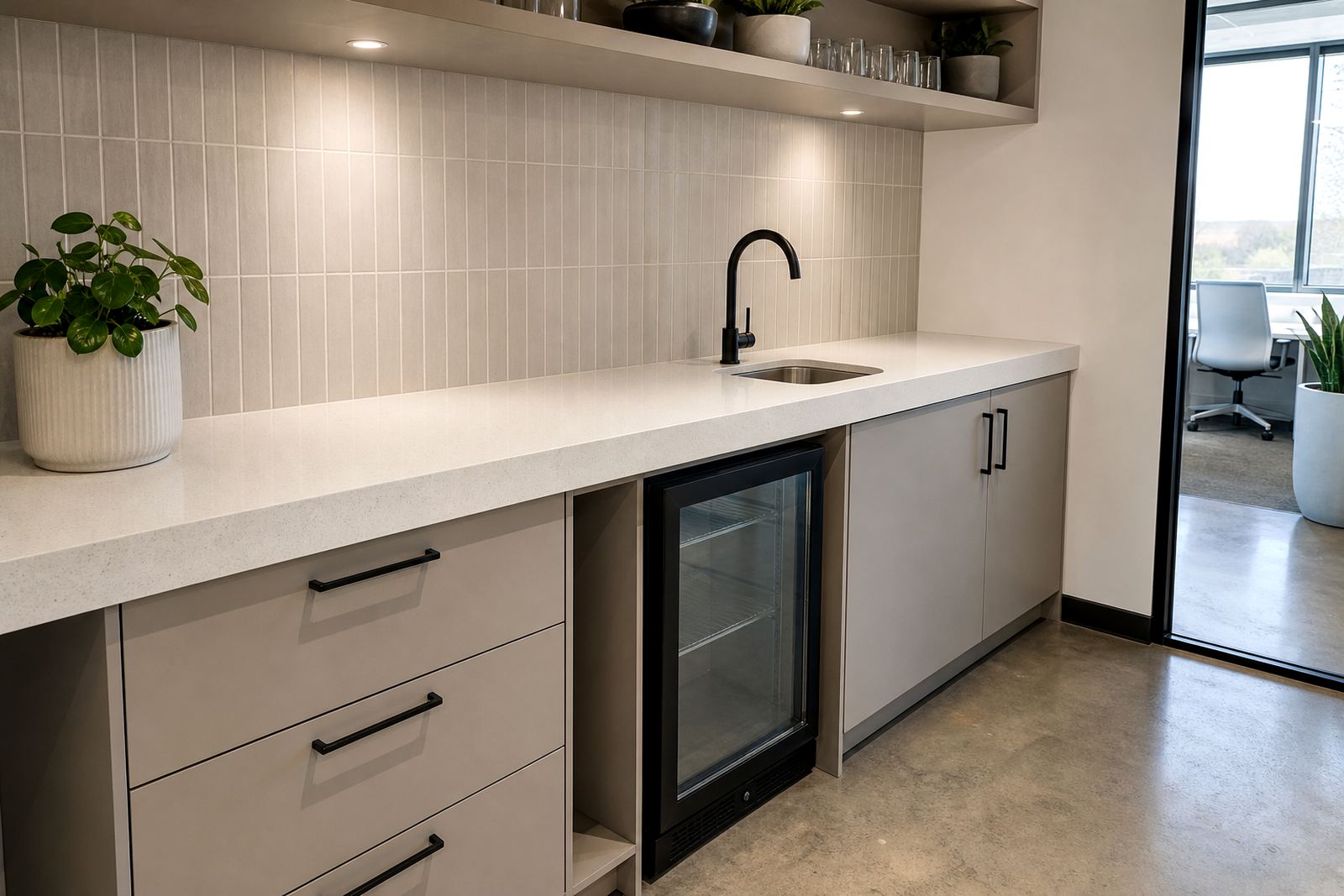
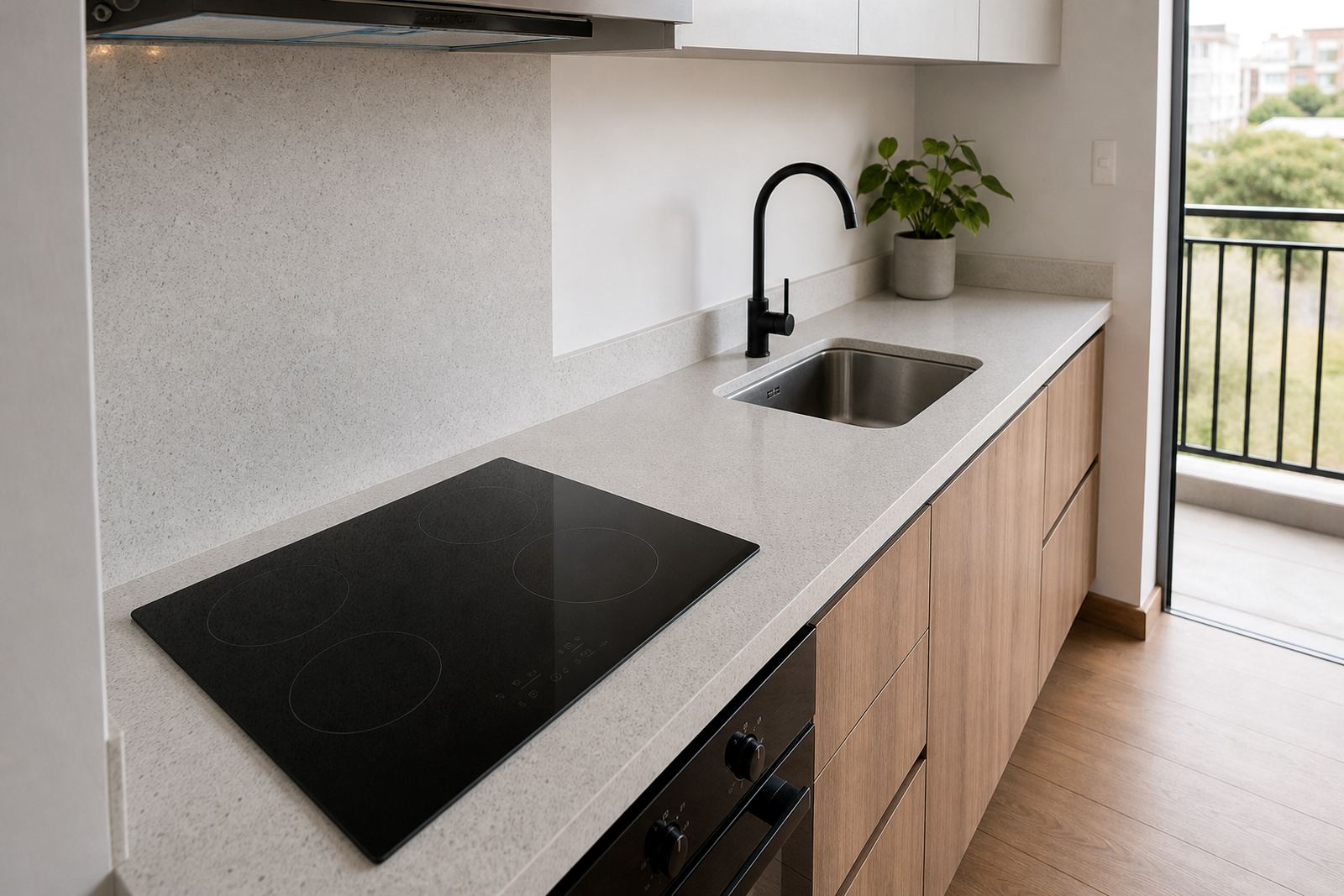
A compact apartment kitchen still needs the same working parts as a larger home, only packed into a tighter footprint. The usual set includes a single-bowl or small double-bowl sink, a four-plate hob, a mixer tap, a short splashback, and a counter run that carries prep space without feeling crowded.
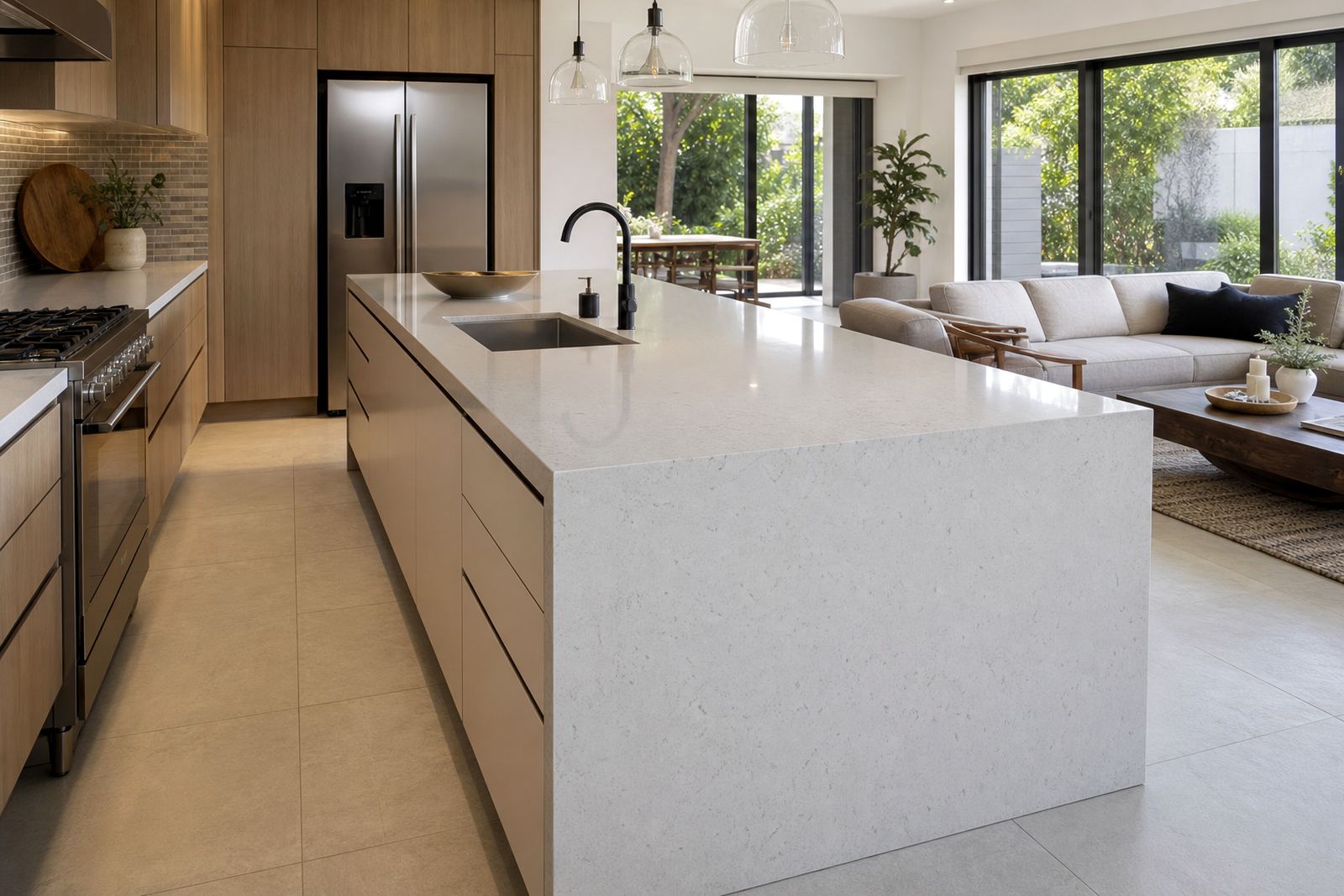
Where the layout is open plan, the countertop often doubles as a visual divider between the kitchen and living space. That makes edge profile choice more important than people expect. A clean square edge reads neat and modern, while a softer pencil edge or small bevel can take the sting out of daily wear in a smaller unit. Solid-surface can also be shaped into an integrated upstand or coved splash detail where the owner wants easier wipe-downs around the wall line.
For apartment kitchens in Johannesburg, Fourways and Pretoria, we often see compact work triangles and very little slack around the corners. That means sink cut-outs, hob cut-outs and tap positions must be confirmed before the slabs are released for fabrication.
Mistakes That Cost Time and Material
Most expensive problems in apartment kitchens start before the countertop is made. A cabinet that is not level can twist the top, a wall that is out by 8 or 10 mm can leave a visible gap, and a sink chosen too late can force a wider cut than the design allows. Even small errors become obvious in a kitchen where every line is close to eye level.
Heat and stain care also deserve attention. Quartz handles everyday kitchen use well, but hot pots should not be placed straight down on the surface. Solid-surface resists day-to-day staining and cleans easily, yet harsh abrasives can mark it, and both materials benefit from chopping boards and wiping spills before they sit for long. Red wine, turmeric and oil splashes are easier to manage when the surface is sealed by good fabrication and fitted with a neat splashback.
- Have sink sizes ready before templating is booked.
- Do not leave uneven cabinet tops for the slab to hide.
- Do not place seams across the busiest prep zone.
- Do not forget access paths through lifts or stairwells.
Apartment-Friendly Budget Ranges in Rand
Apartment kitchen budgets vary by material, slab size and how much cutting is needed. A straightforward countertop job in solid-surface for a compact unit usually starts at a lower level than a comparable quartz job, because the finish choice and fabrication details are different. Quartz tops with sink cut-outs, hob cut-outs, splashbacks and careful seam work move the total upward.
For a modest apartment kitchen, many projects land in the range of about R12,000 to R25,000 for a smaller countertop set-up. Mid-range work with more metres, a full splashback and detailed edge finishing often sits around R25,000 to R45,000. Larger or more complex layouts, including island returns, multiple seams or awkward wall corrections, can move above that. Installation distance, access conditions and the final templating detail all affect the figure.
Those figures are a practical starting point, not a fixed menu. The useful way to compare quotes is by the actual slab area, cut-out count and fitting conditions, not by a square metre line alone.
Aftercare That Makes Small Kitchens Last Longer
Apartment kitchens take daily traffic. Bags land on the counter, groceries get unpacked in a rush, and the surface gets cleaned more often than people expect. Good aftercare keeps the finish looking tidy without turning the room into maintenance work.
We give practical guidance on cleaning products, heat protection and how to treat the seams and joints around the sink and splashback. For homes, office kitchenette upgrades and shopfitters working on compact spaces, our contact form is the normal route for project details, measurements and installation notes. The same care applies whether the job is in Randburg, Sandton, Midrand or Roodepoort.
Thabo Rademeyer handles aftercare advice, while the wider team keeps templating, fabrication and installation aligned to the room on site. That is especially useful in apartment buildings where access windows, parking rules and body corporate conditions can shape the job around the kitchen itself.