
Worktops that cope with a busy breakfast rush
A family kitchen asks more from a worktop than a show kitchen ever will. There is chopping, school lunch packing, coffee spills, sticky dough, pot lids near the sink and children leaning on the same corner every day. Engineered quartz suits many of these rooms because it is dense, colour-consistent and available in slab thicknesses commonly used for kitchen tops, while solid-surface suits layouts that need a warmer feel and easier shaped joins.
For family kitchens, the layout carries the same weight as the material. A good run of top should allow a prep area beside the hob, a landing space next to the sink and enough clear surface for appliances that live on the counter. Edge profiles also change how a kitchen feels. A square edge gives a crisp line, while a softened edge is kinder on hips and sleeves in a tight galley. In homes where meals happen fast the right profile makes daily movement feel less cramped.
What usually sits on a real family kitchen plan
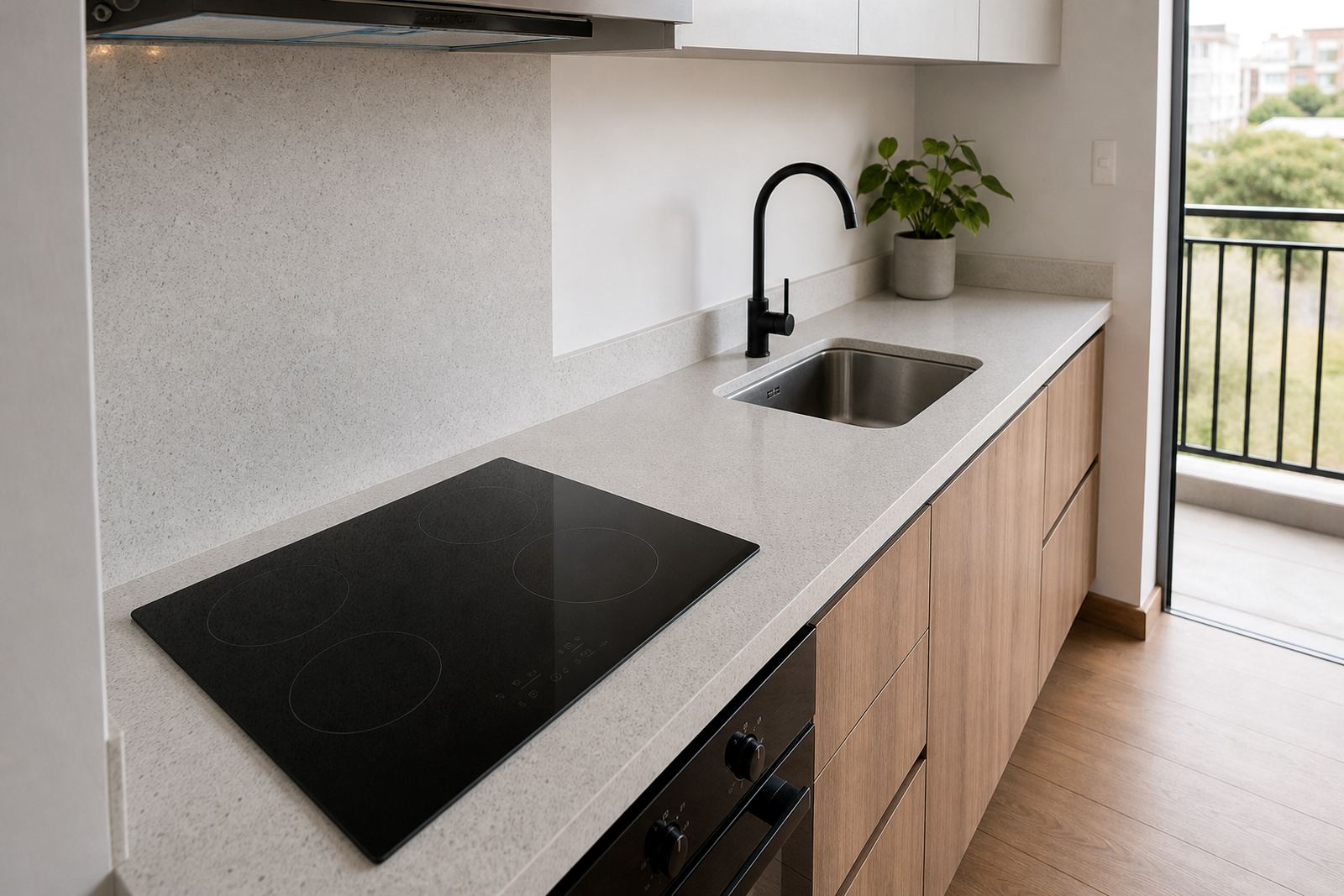
Most family kitchens carry more than one working zone. There is usually a sink, a hob, a freestanding or under-counter oven, a kettle, a toaster and often a microwave or air fryer taking permanent space. That means the top needs accurate sink cut-outs, a planned hob opening and enough straight length for seams to sit in sensible positions rather than landing where hands and water collect.
- Site templating so corners, walls and appliance positions are measured against the actual room
- Digital measuring for cleaner cuts and tighter fit around uneven walls
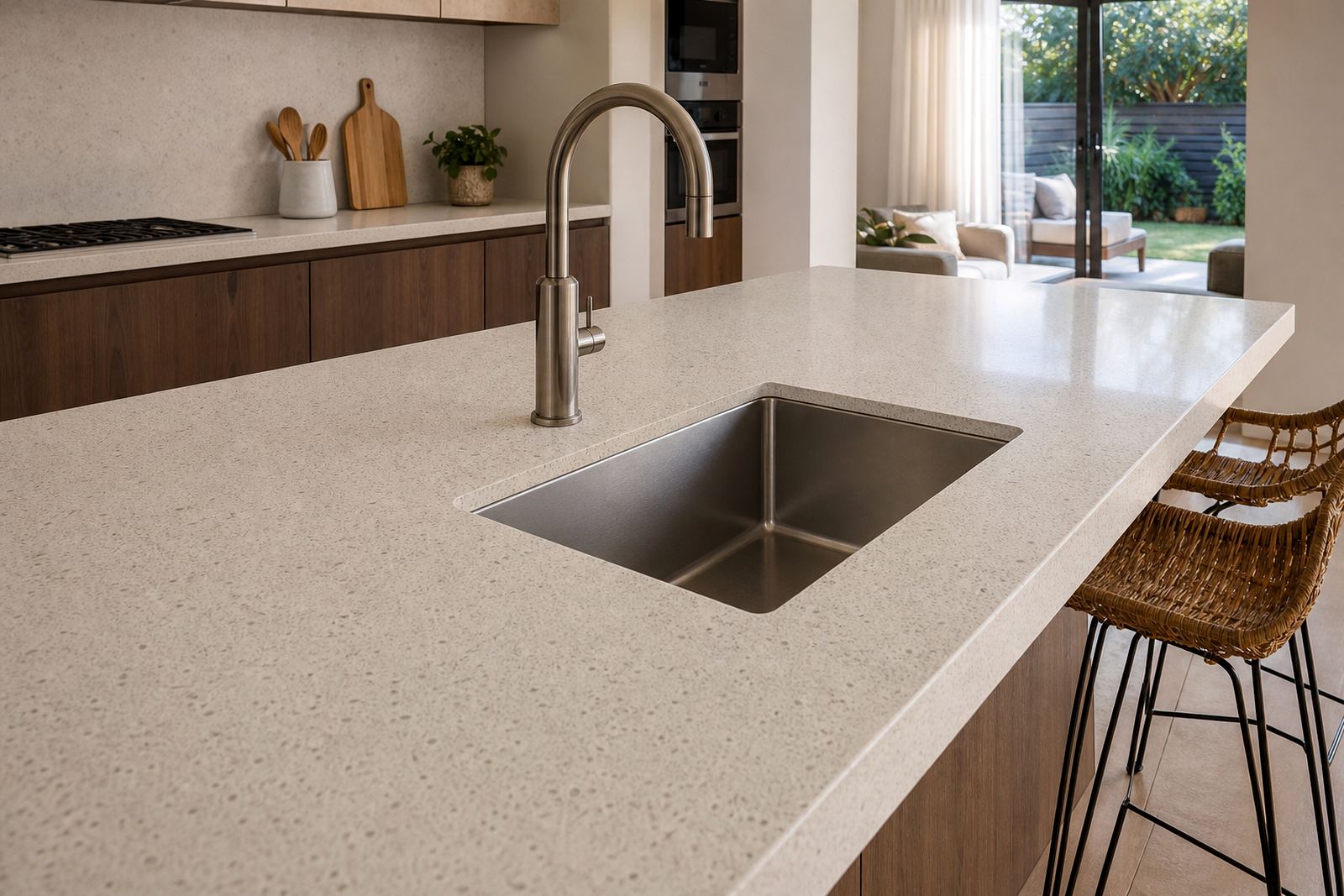
- Sink cut-outs sized for the chosen bowl and drainer position
- Hob cut-outs that leave enough support around the opening
- Seam joining placed away from the busiest wash-up area where possible
- Splashback fitting where steam and sauce spray reach the wall daily
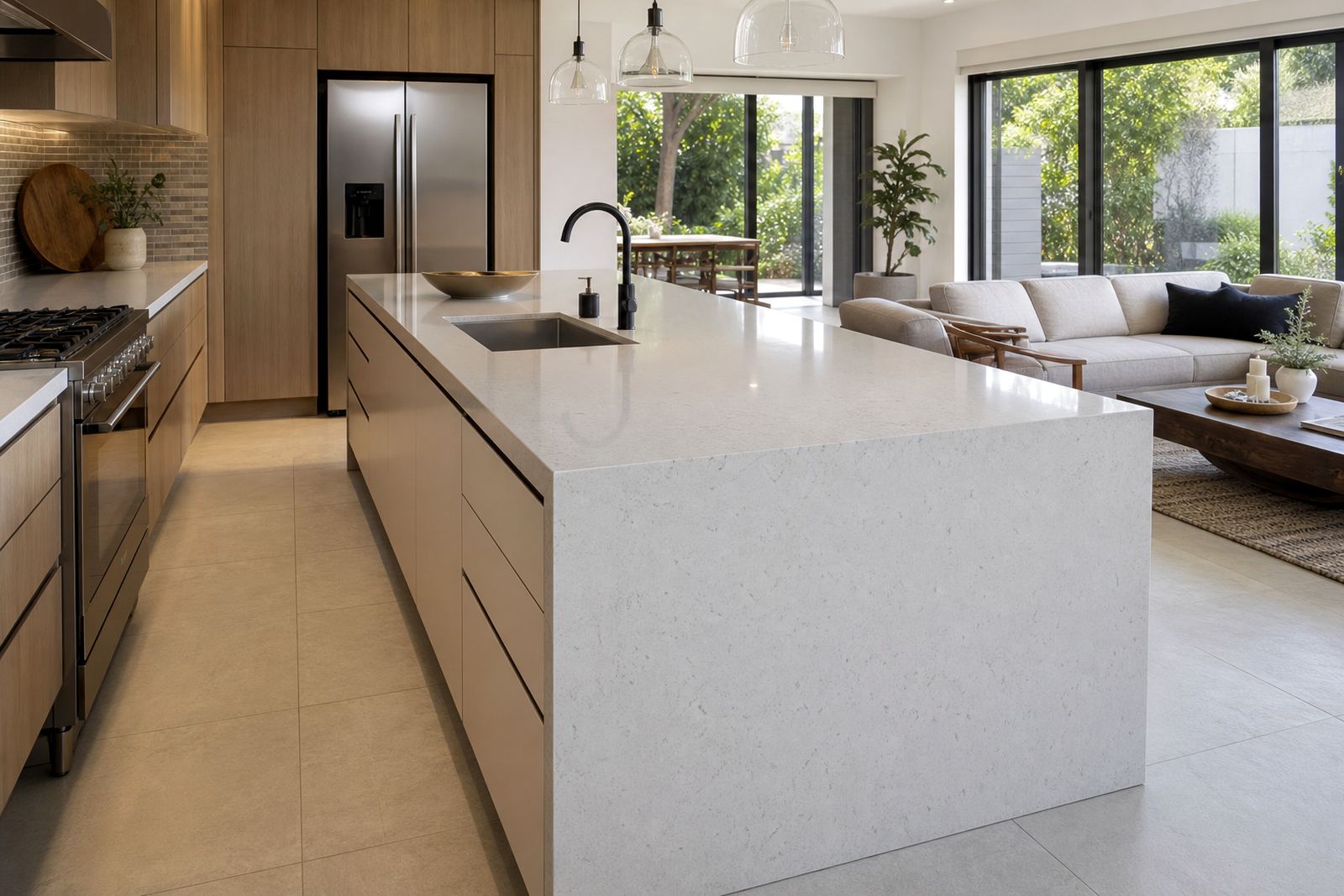
When a kitchen has a breakfast nook or island, the top also needs proper overhangs and support checks. Long spans need planning before fabrication starts, especially where bar stools or heavy prep use will put extra pressure on the front edge.
How fabrication decisions change the daily finish
Small choices made in the workshop change how the kitchen behaves after installation. Edge profiling is not only a style decision, it affects comfort and durability at the front of the top. A slightly eased edge is often practical in a family home because it reduces sharp contact on corners that get used all day. Seam placement deserves the same attention. A seam can be neat and quiet in the room when it is positioned with the room flow in mind, not just the slab yield.
For splashbacks, the question is usually whether the wall needs a full-height panel behind the hob and prep zone, or a lower strip where water and cleaning spray reach. Solid-surface splashbacks allow more freedom with joins and return pieces, while quartz splashbacks bring a hard wearing look that matches the worktop closely. In both materials, neat cut lines around power points and trims matter far more than decorative fuss.
The cleaning habits that keep the surface looking right
Family kitchens see daily wiping, warm pans, acidic foods and the odd dropped jar. Engineered quartz handles stains well when it is cleaned properly, but it still prefers routine care rather than harsh scrubbing. Solid-surface is forgiving too, though it can mark if hot cookware is set down directly. A trivet near the hob and a chopping board on the main prep area go a long way.
- For everyday cleaning, wipe with mild soap and a soft cloth.
- Wipe spills from curry, wine, vinegar and lemon quickly
- Do not drag heavy metal appliances across the edge
- Use heat pads under kettles, pans and air fryers
- Avoid abrasive scouring powders on polished finishes
In homes near the coast or in kitchens that open to a braai area, humidity and everyday cooking steam can build up around joins and splashbacks. Good sealing, neat finishing and proper aftercare advice keep those areas easier to maintain. A kitchen that is used hard should still clean up without drama at the end of the day.
Layout mistakes that create extra cleaning and repairs
Many kitchen problems start before fabrication. A sink placed too close to a corner leaves no room for washing up. A hob pushed too near the end of the run can leave a fragile strip beside the appliance. Too many seams in the busiest area make wiping harder and can interrupt the visual flow of the room. Families also run into trouble when they choose a top without checking how the fridge door, dishwasher lid or pantry pull-outs move in real life.
Another common problem is underestimating the use of wall space. Splashbacks should be planned with socket positions, window reveals and the height of upper cupboards in mind. If the surface rises too high or stops too low, cleaning becomes fiddly and steam marks collect in awkward gaps. The best kitchens feel planned around actual routines, not only the sketch on paper.
Rand figures for a family kitchen budget
Kitchen budgets depend on slab choice, room size, cut-outs, the number of seams and whether the job includes splashbacks or vanity pieces for a scullery or laundry area. A smaller family kitchen with a straightforward run can sit in a lower bracket than a large island layout with multiple cut-outs and matching returns. In Rand terms, many jobs begin with a modest entry range and move upward as slab quantity, edge work and installation complexity increase.
As a general working guide, a small kitchen top may fall into the lower tens of thousands of Rand, while a larger family kitchen with island work, matching splashbacks and careful seam planning can move into a higher bracket. The final figure depends on the chosen material, the number of pieces, access to the home and whether the install needs extra support or reinstatement around appliances. For a practical budget, the room should be measured and templated before the cutting is priced properly.
Plastone works from Strijdom Park, Randburg and fits family kitchens across Johannesburg, Sandton, Pretoria, Midrand, Fourways and nearby suburbs through our Randburg, Johannesburg, Sandton, Midrand, Fourways, Pretoria, Centurion and Roodepoort installation areas.