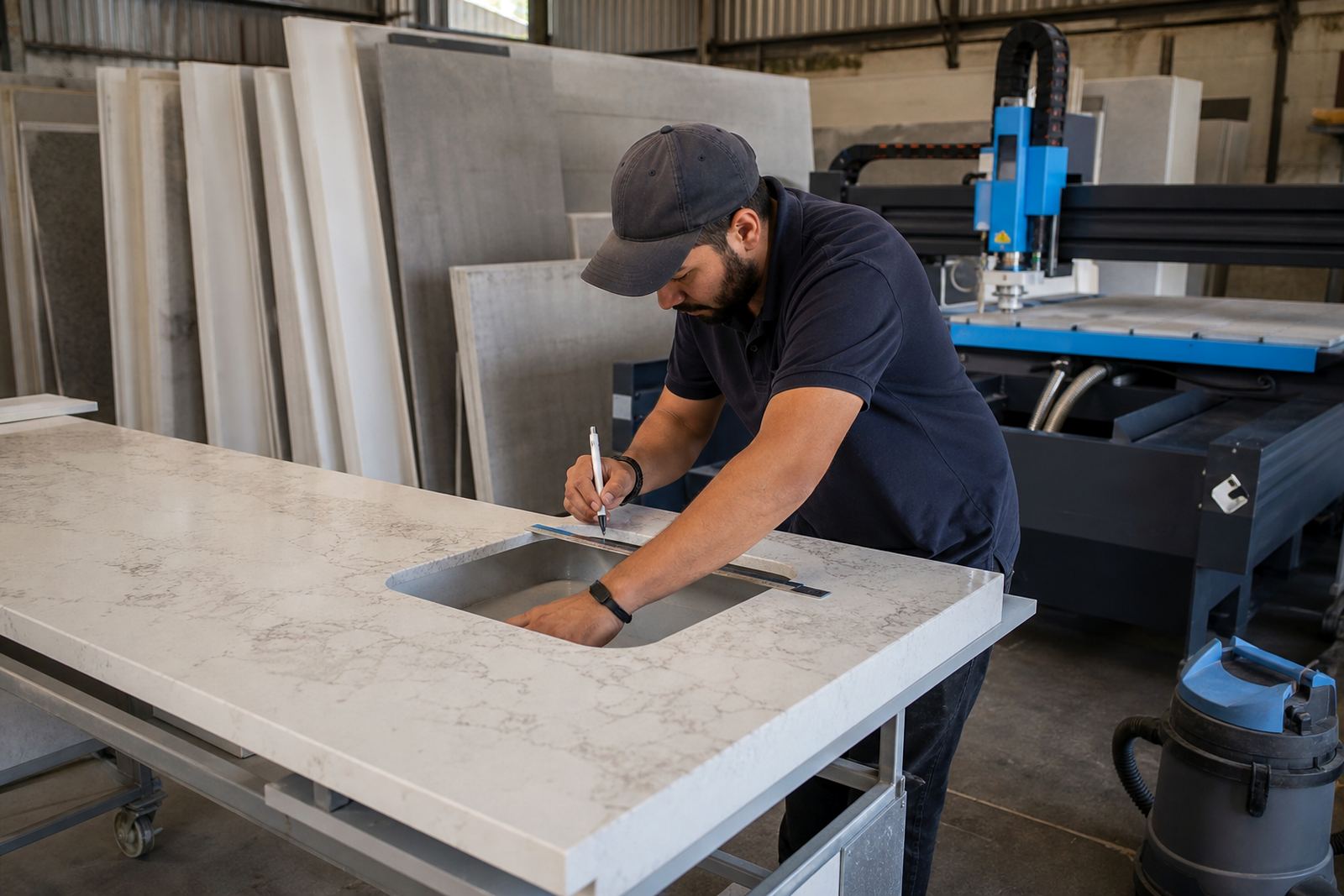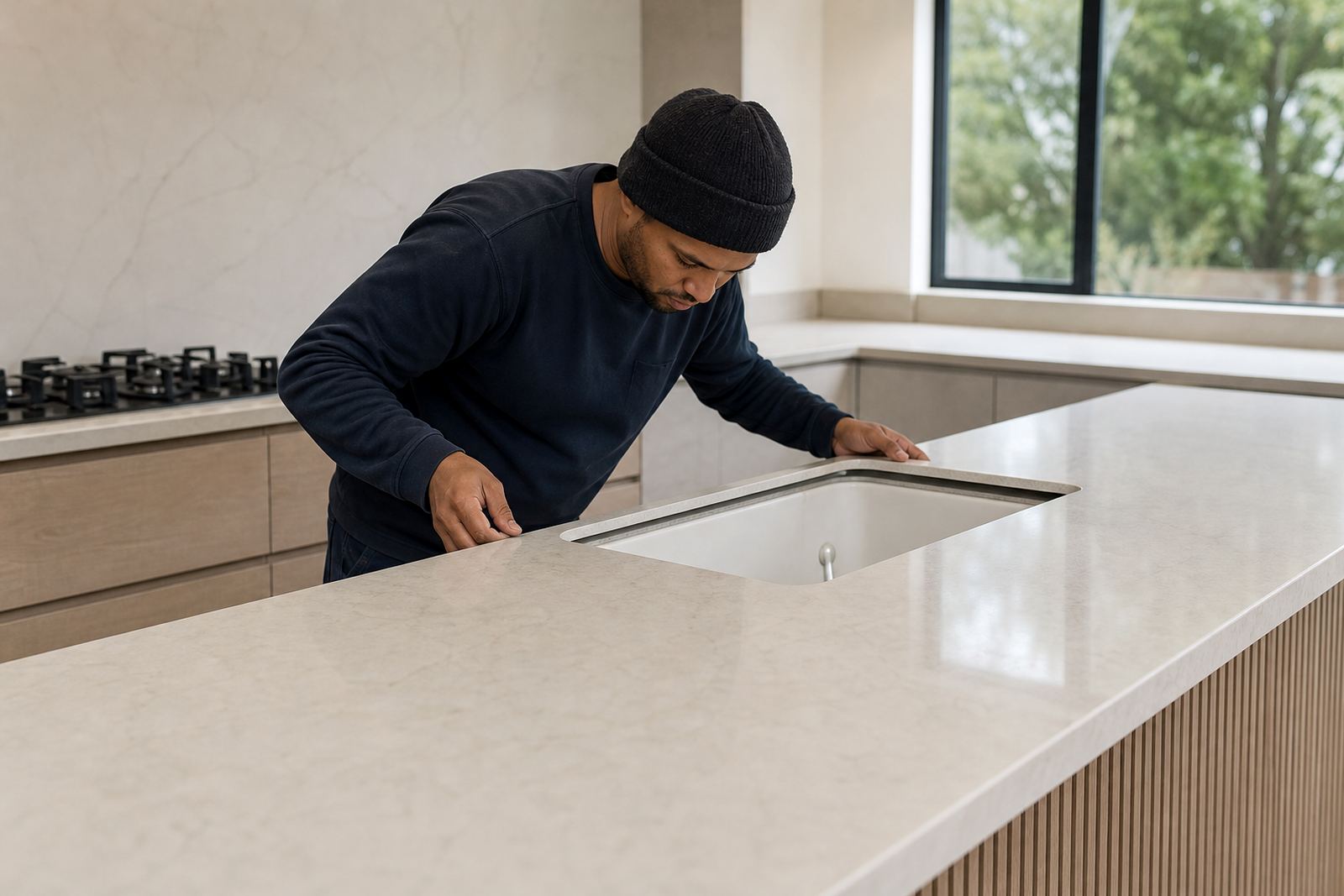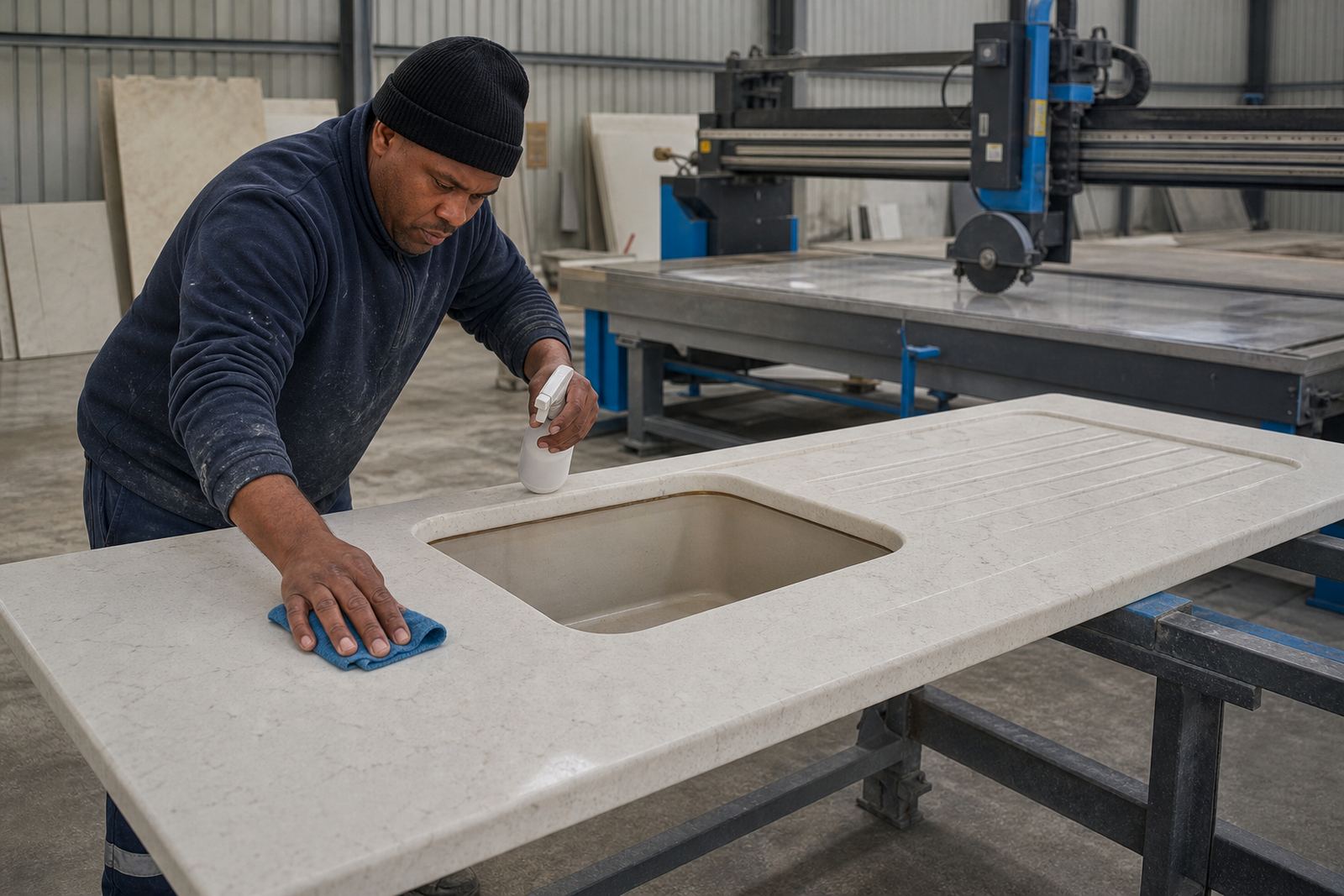

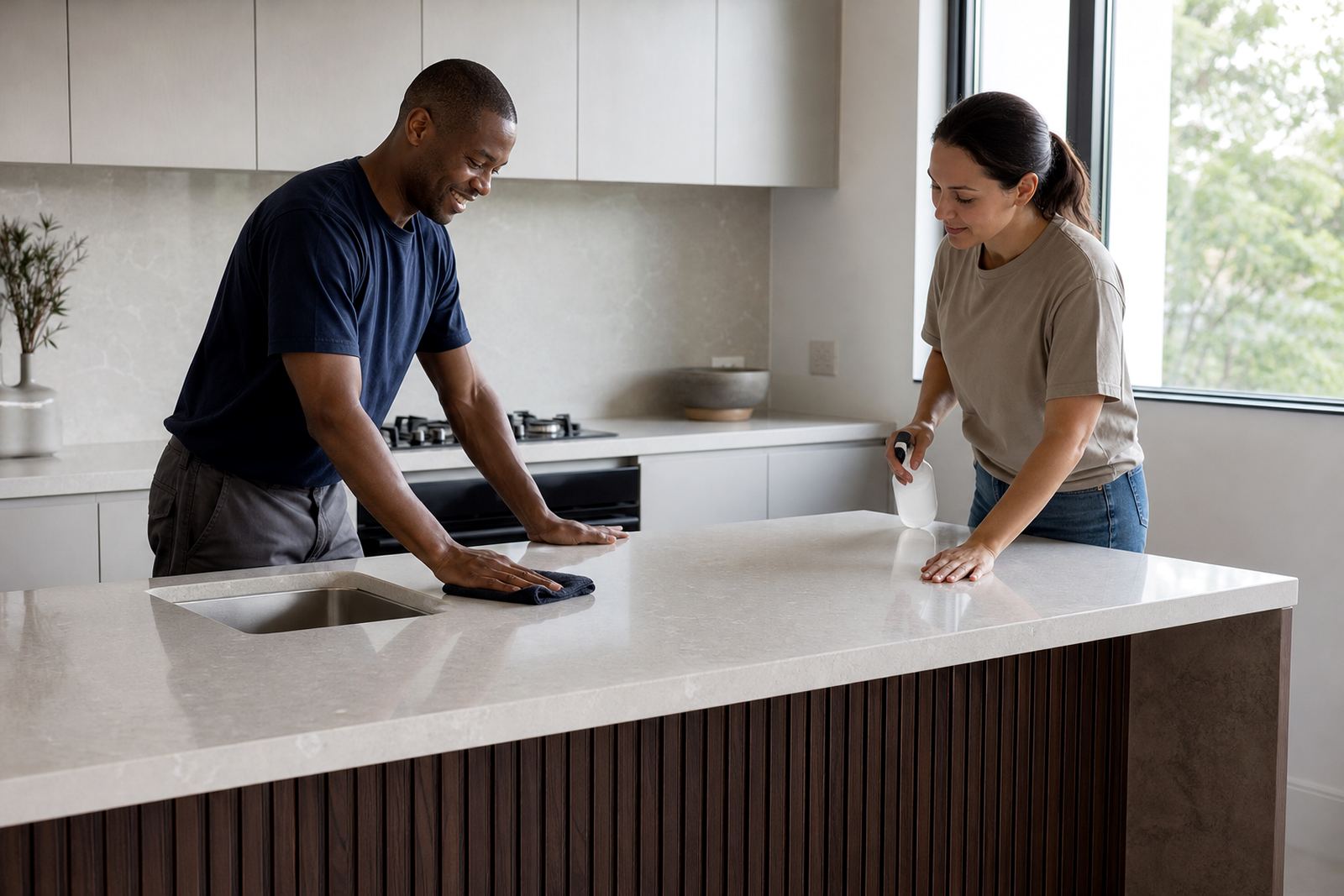
The first few days after handover
Freshly fitted tops need a calm first few days. Keep the surface dry where sealant, silicone or adhesive joints were completed, and avoid heavy scrubbing near edges, joins and splashback lines while those areas settle. A clean soft cloth and mild soap in warm water is usually enough for routine wiping.
If you notice a faint line at a seam or a small bead of sealant near a wall, leave it alone until it has fully cured. That area can look a little different at first, especially where the room is cool or there is coastal humidity in the air. Do not lift, push or lever the top while checking it.
- Wipe up spills with a soft cloth, then dry the countertop.
- Keep sharp objects away from new seams and sink cut-outs.
- Use the surface gently while edge profiles and joints settle in.
Daily care for quartz and solid surface
Engineered quartz and solid-surface tops both prefer simple care. Wipe crumbs, soap film and food splashes with a damp cloth. A mild, non-abrasive cleaner works well for most marks, and rinse or wipe again if residue builds up around taps, sinks and hob areas.
Quartz is dense and stain resistant, but it is still worth cleaning spillages sooner rather than later. Solid surface can be renewed more easily if a mark has been left for too long, though harsh pads and gritty powders should still stay off the finish. On pale colours, tea, coffee, curry and dye marks can show more clearly if left overnight.
- Use soft cloths, not scourers.
- Avoid bleach-heavy or gritty cleaners on polished finishes.
- Dry around sinks to limit water spots and soap build-up.
Heat, pans and small habits that protect the finish
Heat is one of the main things that shortens the life of a good countertop finish. Hot pots, casserole dishes and pans should not go straight onto the slab, even when the top looks tough. Use a trivet or heat pad, and leave freshly removed cookware on a separate surface.
Direct heat can mark solid surface more easily than quartz, while both materials can suffer from sudden temperature changes near hobs. Steam rising from a kettle or pot can also affect nearby joints over time. A little spacing and a trivet cost less than repairs, and the top looks better for longer.
- Keep hot pots and pans off the surface.
- Keep kettles, air fryers and toasters a short distance from joins.
- Lift rather than drag pots, trays or appliances across the slab.
Stains, scratches and the marks people notice first
Most stains are easier to deal with when they are caught early. Start with warm water, mild soap and a soft cloth when cleaning our quartz or solid-surface counters. For more stubborn marks, use a non-abrasive kitchen cleaner and work gently in circles, then rinse and dry. Avoid metal scourers, harsh solvents and scraping blades on the finish.
Minor surface scratches on solid surface can often be improved by careful repair work, while quartz usually holds its polish well but can still show scuffs from rough handling. Knife cuts, burnt rings and pressure marks near sink cut-outs are the ones people notice first, so it helps to keep chopping boards and pot stands in reach.
- Try the cleaner on a tucked-away spot before using it across the full surface.
- Do not use blades to scrape dried residue.
- Tell us about chips, cracks or lifted joints as soon as you spot them.
Seams, sink cut-outs and splashback edges
Seams should stay tight, but they can be affected by movement in the cabinet base, water around the sink or repeated impact on the same spot. If a seam opens slightly or changes colour, it often points to moisture, movement or old sealant that needs attention. Around sink cut-outs, check for swelling, soft spots or discolouration under the rim.
Splashback edges and mitres near corners need the same care. A chipped arris or a lifted silicone line may look minor, yet it can trap dirt and water. When that happens, it is worth getting a proper look at the joint before the issue spreads to a larger section of the top.
- Look along seams in daylight for gaps or uneven lines.
- Check under sink rims for dampness after cleaning.
- Keep splashback joints dry where water splashes often.
How to raise a follow-up question with the right details
When you send details through our enquiry form, add a short note on the area, the slab or surface type, and what has changed. A photo is useful, especially if the matter shows up at a seam, sink cut-out, hob cut-out or wall junction. If it started after cleaning, heavy use or a plumbing check, include that too.
Clear notes save time on site and help us match the issue to the right part of the installation record. If you are in Johannesburg, Sandton, Randburg, Midrand, Fourways, Pretoria, Centurion or Roodepoort, mention the suburb and whether the top is quartz or solid surface. That gives our team enough context to plan the right next step.
- Send a photo of the area in good light.
- Note the room, the surface type and the exact spot.
- Include whether the problem involves a seam, edge, sink or splashback.