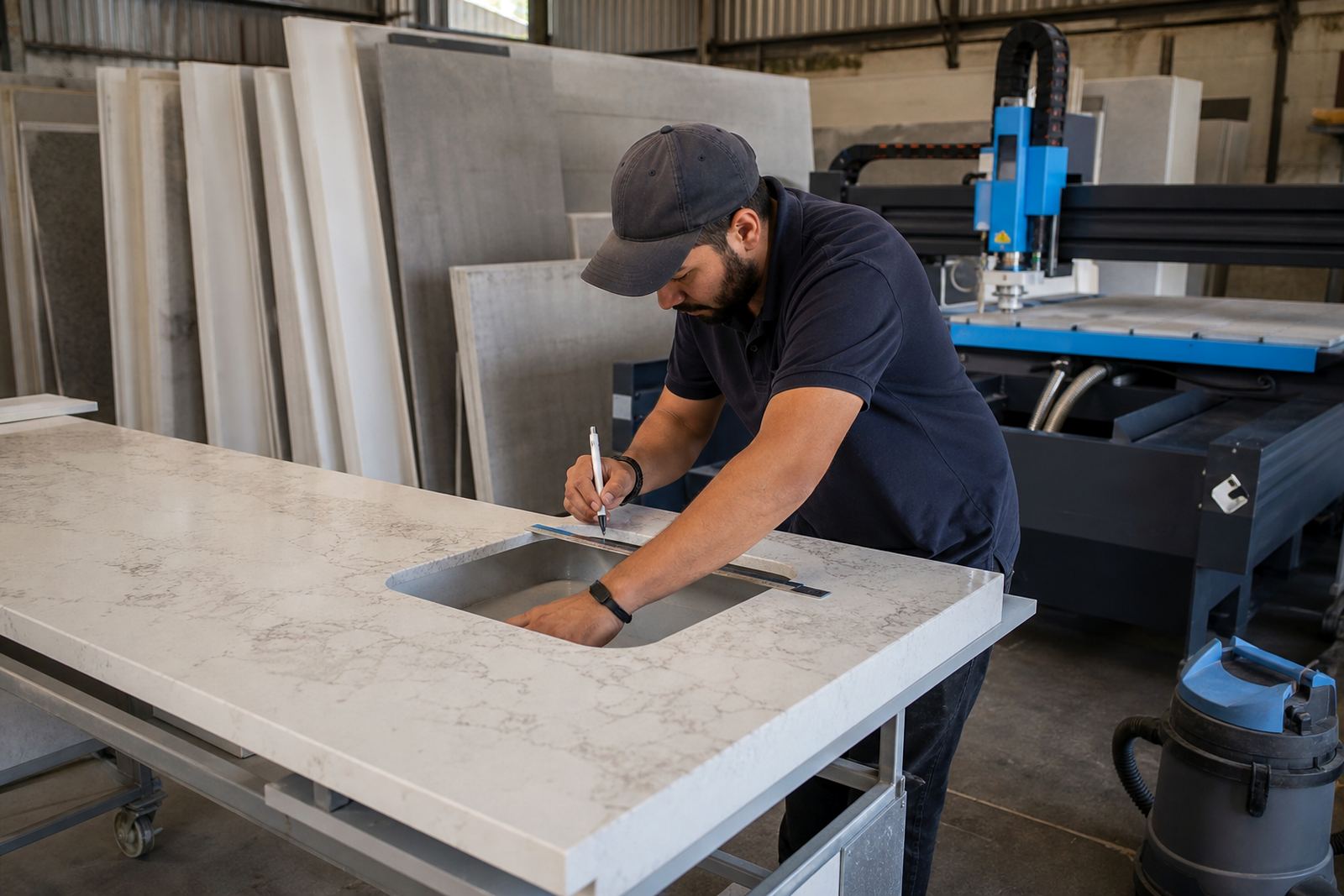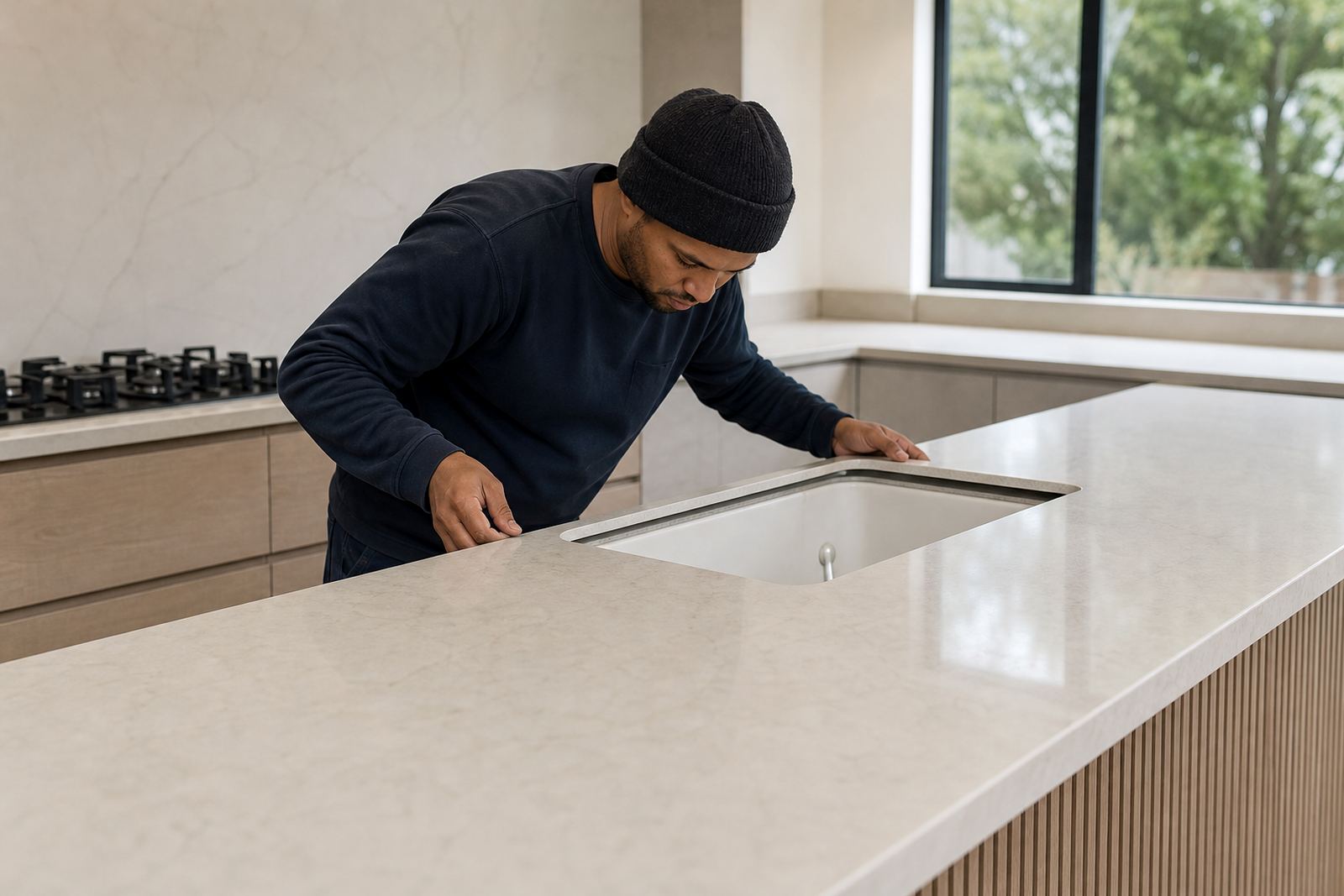

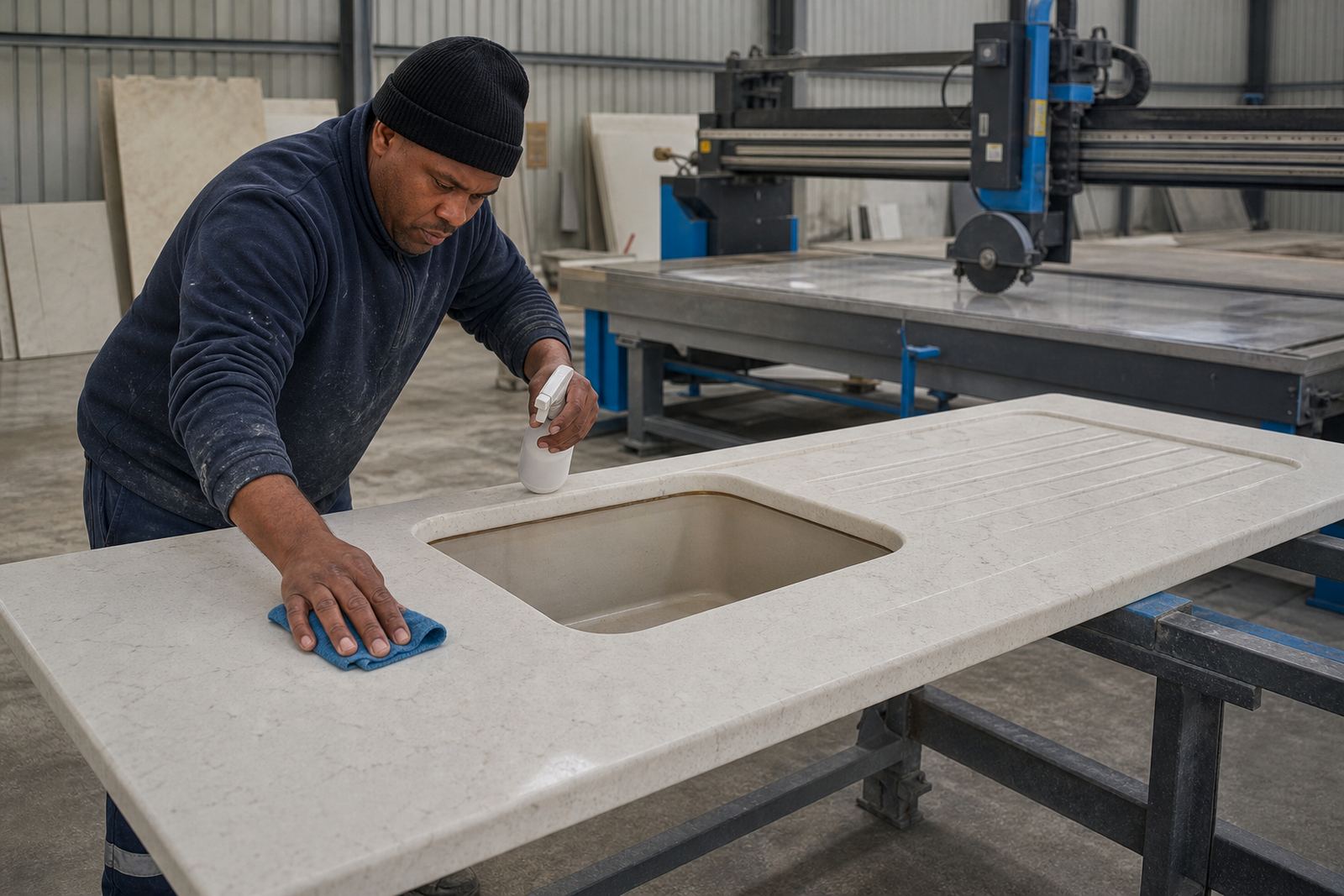
Start with the cloth, not the scrub pad
For most day-to-day cleaning, a soft microfibre cloth and warm water are enough. Add a small amount of mild dish soap if there are fingerprints, cooking oil or makeup marks. Wipe the surface, then rinse the cloth and go over it again so no soap film stays behind.
Engineered quartz has a dense, non-porous finish, so dirt sits on the top rather than soaking in. Solid-surface material is also easy to clean, but it can mark if someone uses harsh scourers or very strong chemicals. Keep the pressure light and work in small sections, especially around sink rims and splashback joins.
- Use a soft cloth or sponge only.
- Warm water handles most daily dust and smudges.
- Dry the surface after wiping to avoid water spots.
- Clean around taps and hob edges where grease collects.
Spill response for coffee, wine, sauce and hair dye
Most spills are easier to deal with when they are lifted off the surface before they dry. Blot liquid with paper towel or a cloth rather than dragging it across the top. Then wash the area with mild soap and water, rinse and dry.
Staining can happen if coloured liquids sit for too long on any countertop, even a light surface. Tea, red wine, turmeric, beetroot and hair dye deserve quicker attention. If the spill is oily, use a little dish soap in warm water to break the film before drying. Never use steel wool or gritty powders to chase a mark, because they can dull the finish.
- Blot first, do not scrub a fresh spill.
- Rinse away soap so the surface does not feel sticky.
- Check the corner by the sink where spills often collect.
- For dried residue, soak a soft cloth and rest it on the mark before wiping.
What stays off the surface
Strong bathroom cleaners, oven sprays, paint thinners, drain openers and bleach-heavy mixes can harm the finish. Even when the top does not stain straight away, repeated use of aggressive products can leave the sheen uneven. The same caution applies to abrasive creams and rough green pads.
If a cleaning label calls for scrubbing powder or a solvent, keep it off quartz and solid-surface tops. A gentler kitchen or household cleaner is usually the better pick. If a product is meant for stone, check that it is safe for engineered surfaces and follow the label closely. When in doubt, test in a low-visibility corner near the backsplash or under a vanity lip.
- Avoid bleach-heavy mixes on a routine basis.
- Do not pour cleaners directly onto the top.
- Keep solvent products away from sealant lines.
- Wipe with a damp cloth, then dry the surface using a clean towel.
Heat, pans and the marks people forget
Hot pots, pans and straighteners can leave heat rings or scorch marks if they sit directly on the counter. Quartz and solid-surface tops handle normal room temperatures well, but they are not a landing pad for cookware straight off the stove. Use a trivet, board or heat pad every time, even for a short stop.
On vanity tops, hot hair tools can do the same kind of damage. Put them on a heat-resistant mat and keep cords away from the edge. On splashbacks, watch for steam and hot oil near the hob. Gentle care matters more than heavy cleaning once the surface is marked, because heat damage is not the same as a simple spill. In many cases it needs assessment rather than more rubbing.
- Use a trivet for pots and oven trays.
- Keep hot tongs and straighteners off the raw surface.
- Wipe grease splatter before it hardens.
- Let hot cookware cool before moving it over the top.
Seams, sink cut-outs and the little edges that trap grime
Seams, cut-outs and edge profiles need a bit more attention than a flat central field. Around sinks, the joint between basin and top can collect toothpaste, soap residue and water marks. Around hobs, crumbs and grease can sit in the cut-out line. A soft toothbrush or cotton bud helps clean these narrow spots without scratching the surface.
Rounded or pencil edges are usually easier to wipe than sharp square edges, because they do not trap as much residue. Still, the underside of the edge and the front corner near handles often gets missed. Keep an eye on silicone joints too. If they begin to look dirty or lift at the edge, it is better to deal with it early than let moisture sit there for weeks.
- Use a soft brush for sink rims and seam lines.
- Wipe under the front edge and around tap bases.
- Keep standing water off the joint lines.
- Do not pick at silicone with a blade.
A sensible weekly routine for homes and fitouts
A simple routine keeps quartz and solid-surface tops looking orderly without turning cleaning into a chore. In kitchens, a weekly deeper wipe helps remove grease that the daily cloth may miss. In bathrooms, it helps to dry the vanity after the morning rush so water spots do not build up. In offices and shopfitters sites, tea station tops and reception counters usually need more frequent wiping because hands, cups and paper traffic are constant.
For most countertops, the routine is direct: clear the surface, wipe with warm soapy water, rinse the cloth, go over it again and dry it. That sequence deals with dust, fingerprints and light residue. If a surface begins to look flat, the cause is often leftover cleaner or harsh treatment, not a need for stronger chemicals. A gentler approach usually settles the finish.
- Set one cloth aside for countertops only.
- Dry water around sinks and vanity bowls.
- Check splashbacks near kettles and hobs.
- Use gentle care from day one, not after marks appear.