
What the installation crew handles on site
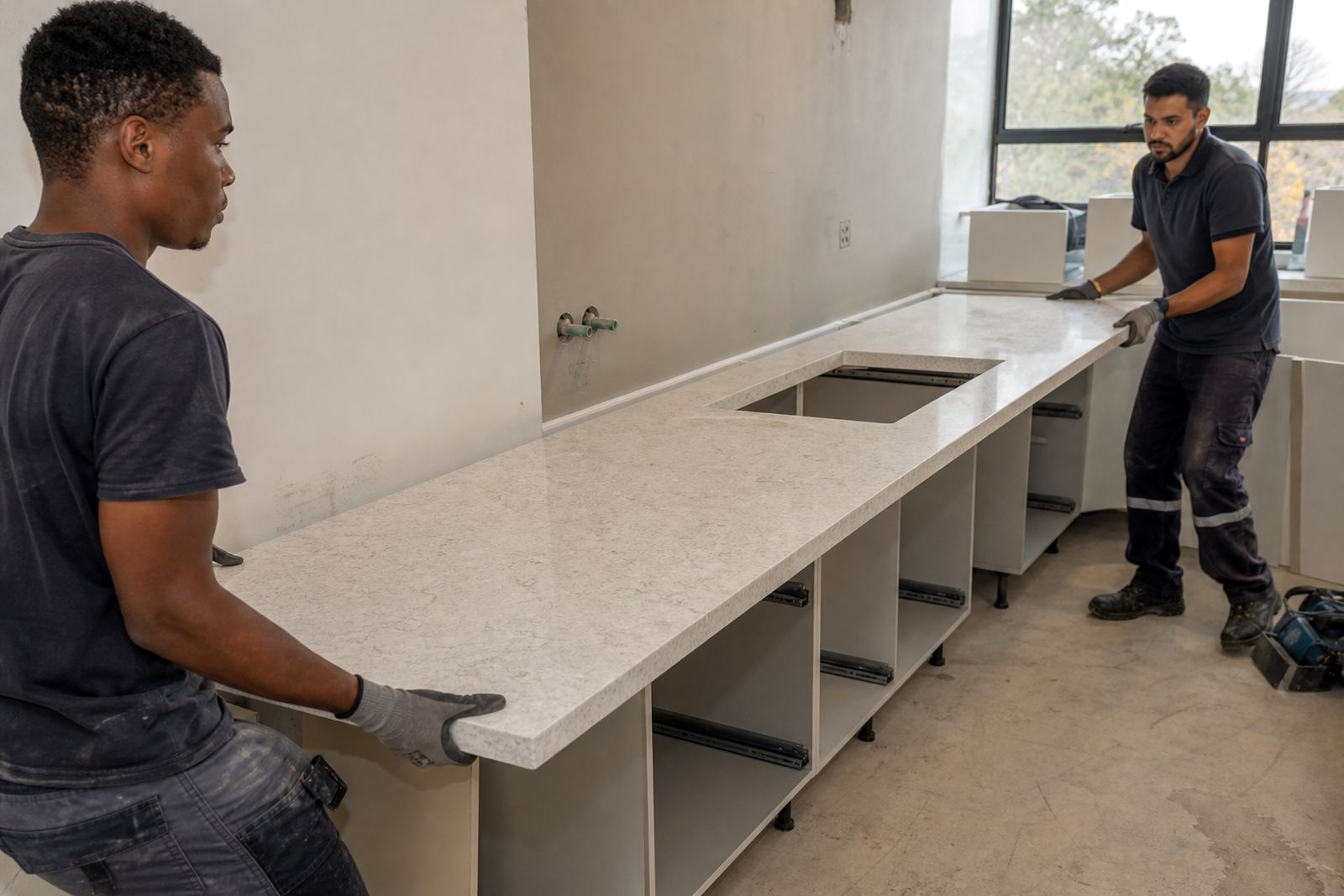
Our countertop installation work covers kitchens, sculleries, vanities and commercial worktops where the finish must line up with cabinets, walls and sinks. The crew sets the slabs in place, checks levels, packs where needed and joins sections so the joint is tight and visually neat. We work with engineered quartz and solid-surface tops in common slab thicknesses such as 20 mm and 30 mm, with edge profiles that can be square, bevelled, pencil-round or built up for a heavier look.
Site work also includes cut-outs for sinks and hobs, alignment around splashbacks and careful attention to any return pieces or mitred corners. Seams are planned to sit where the eye reads them least, and the final fit is checked against the templated measurements before the installation is signed off.
- Setting and levelling of full slabs and cut pieces
- Seam joining with aligned faces and consistent joint lines
- Sink and hob cut-outs made to the approved template
- Splashback fitting where the design calls for it
From template to fitted top
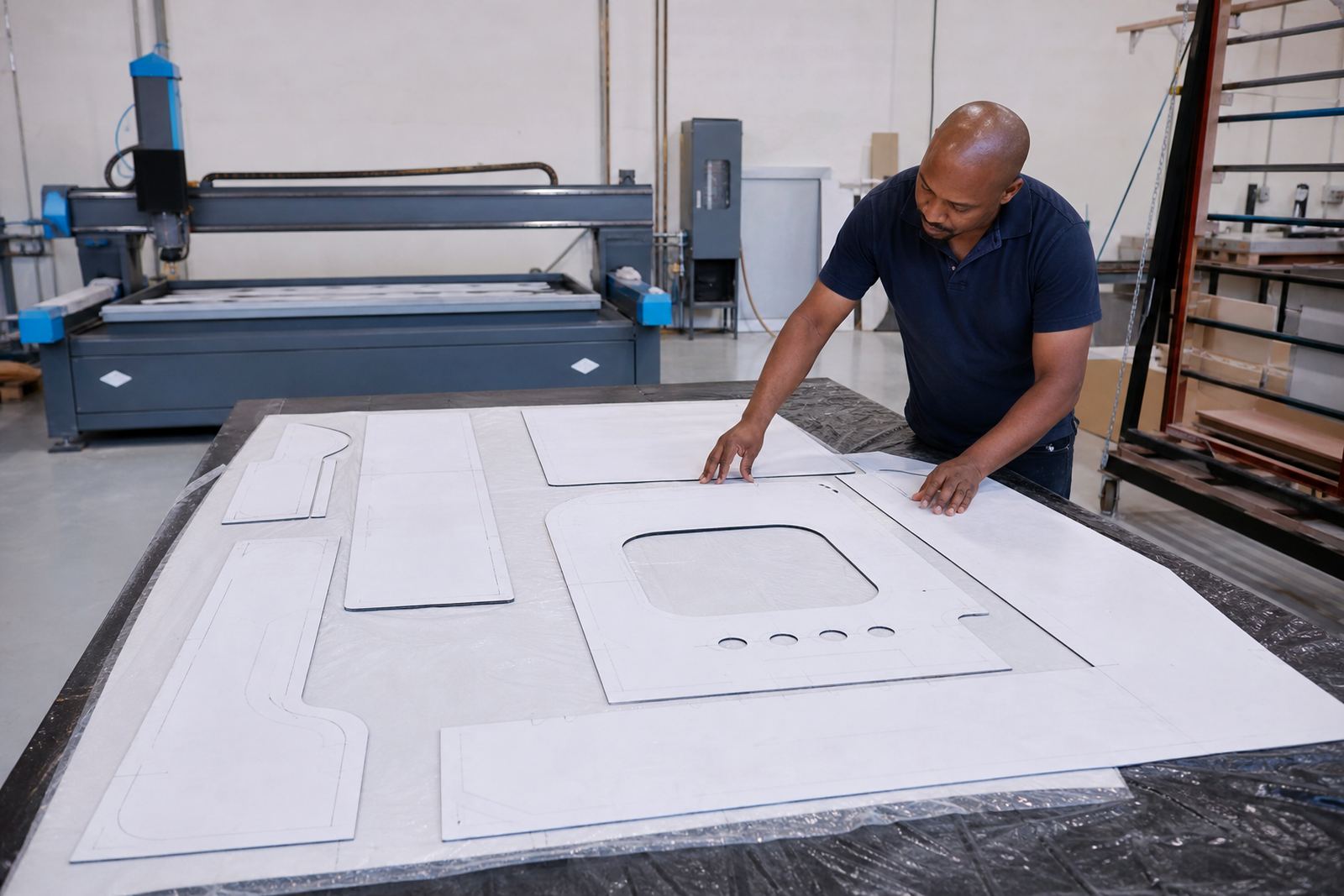
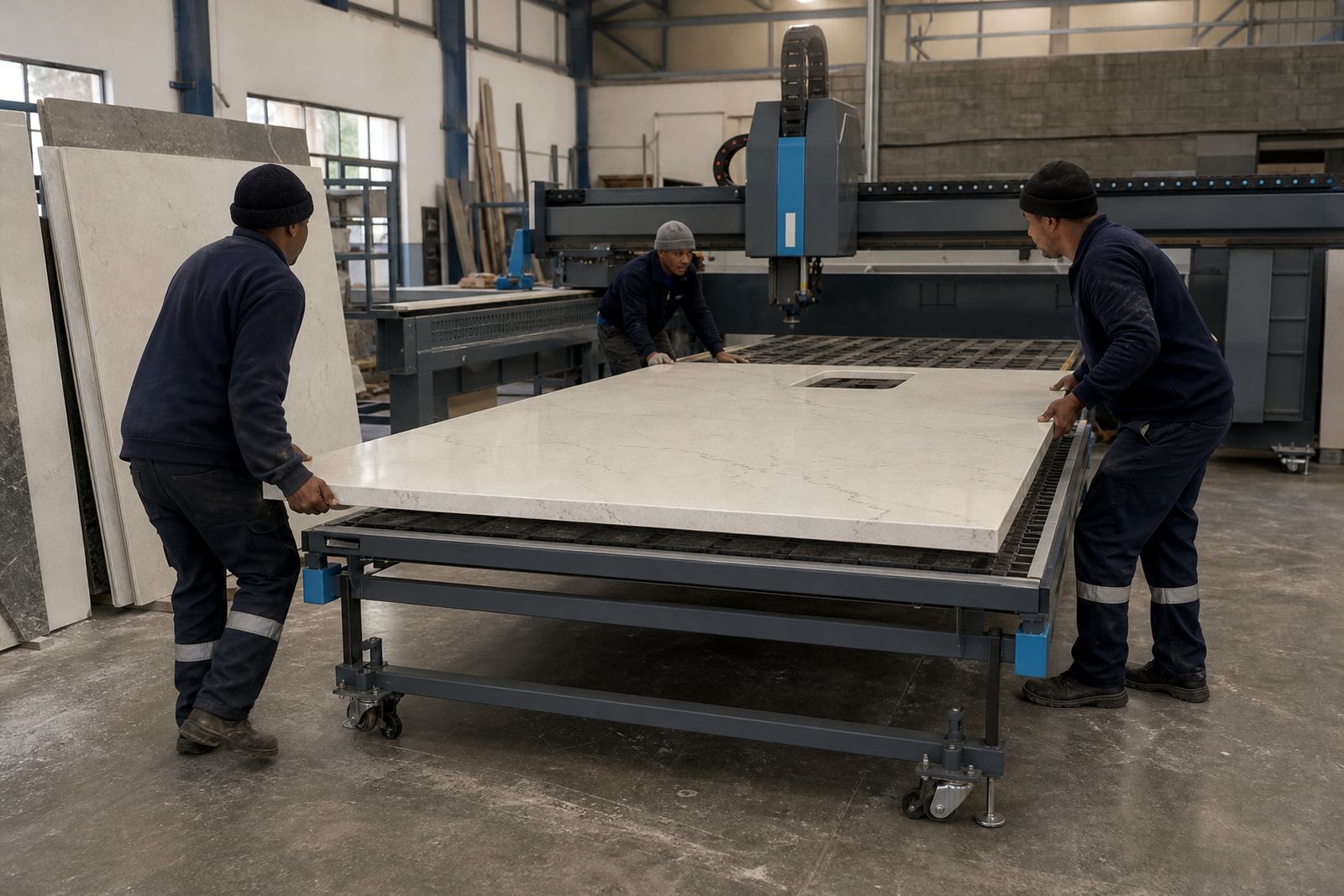
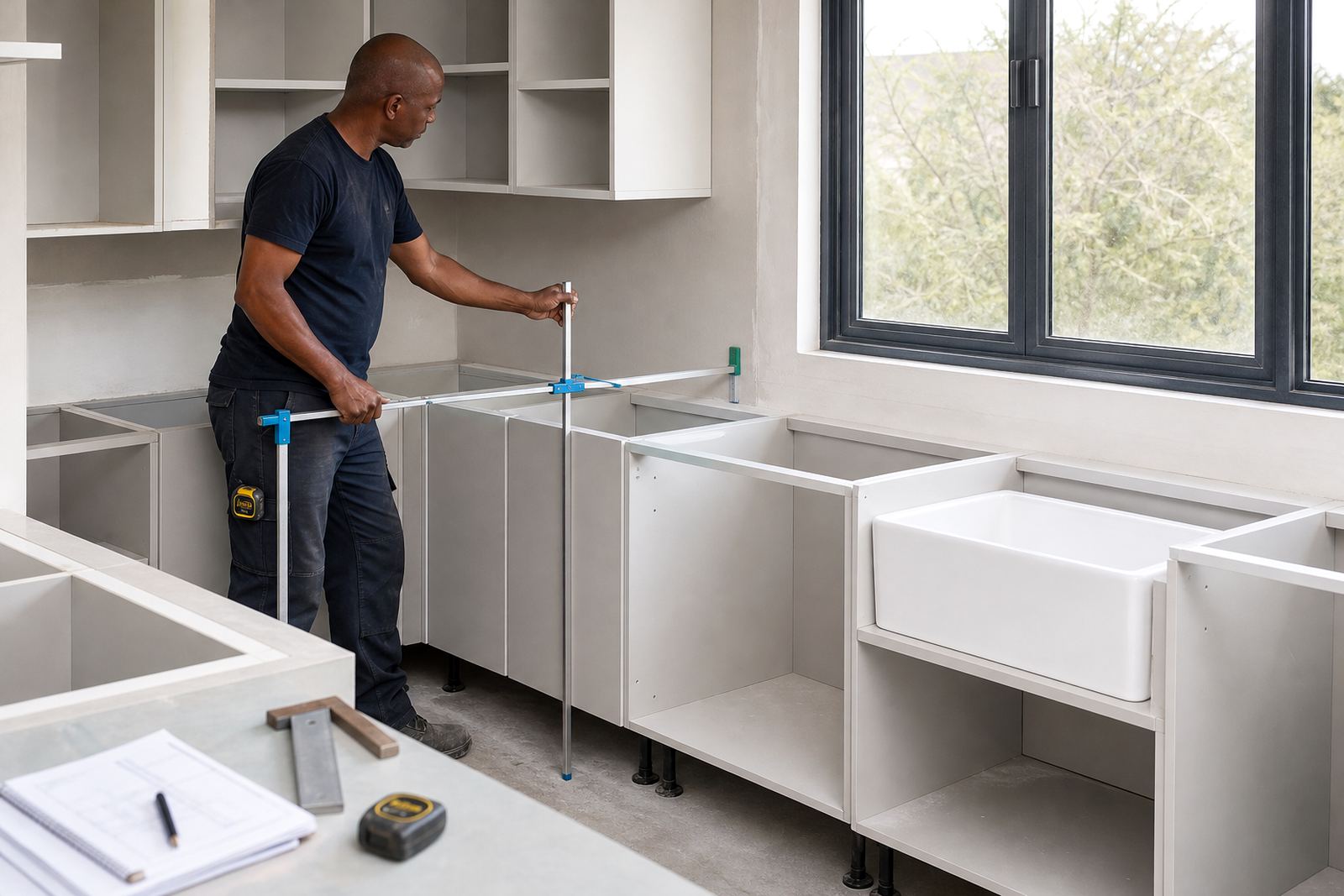
The process starts with site templating and digital measuring, then slab layout planning in the workshop so grain direction, veining and joint positions are worked out before cutting begins. Once the pieces are fabricated, the installation team books the site visit, moves the sections carefully and checks cabinet support, appliance clearances and wall lines before fixing anything in place.
For homes in Randburg, Sandton, Midrand, Fourways and Pretoria, the work often needs small adjustments on older walls or uneven floors. That is normal on site. A clean fit depends on reading the room properly, not forcing the slab to do what the room will not allow.
- Site templating and digital measuring
- Workshop cutting, edge profiling and polishing
- Dry fit on site before adhesive work begins
- Final sealing, cleaning and handover checks
Quartz, solid surface and the details that matter
Engineered quartz is dense and hard-wearing, with a consistent finish that suits kitchens and office counters. Solid-surface material is more forgiving on formed details, curved edges and integrated looks, especially where vanity tops or feature counters need smooth transitions. Both options can be installed with sink cut-outs, hob openings and matching splashbacks, but the fixing method and finish checks differ slightly by material.
Quartz needs careful handling at edges and around cut-outs because unsupported corners and over-tight fixing points can create stress. Solid surface allows more shaping and is useful where a continuous run or repaired section is needed. In both cases, the installer checks the substrate, support spacing and the wall line before the top is locked in.
Turnaround on a live project
Lead times depend on slab availability, the number of cut-outs, the edge profile chosen and whether the job is a straight run or a more detailed fit with returns and splashbacks. A simple kitchen top is quicker to set up than a large office counter with joins, vanities and matching panels. Templating, fabrication and installation are planned as one sequence so the site team, workshop and planner are working from the same measurements.
For shopfitters and office fit-outs, timing also depends on cabinet completion, tiling state and access to the floor area. A top should not be forced into a space that is still moving. When the base units are true and the walls are ready, the install lands cleaner and the seam work holds better.
- Single-run kitchen tops are simpler to schedule
- Multiple joins and splashbacks add fabrication time
- Vanity work often needs tighter cut-out accuracy
- Access, parking and floor access all affect site planning
How pricing is built
Pricing is shaped by the slab material, thickness, edge profile, number of sink or hob cut-outs, seam count and site conditions. A straight countertop with one sink opening is priced differently from a long run with mitred corners, splashbacks and several joins. Removal of old tops, if needed, is handled as a separate part of the job because it changes labour, access and waste handling.
For budget planning, the main variables are material grade, total metres, finish detail and how much on-site adjustment is needed. A precise template saves waste and helps keep fabrication tidy, while unusual wall angles or unsupported returns can add to the labour line. The best costing comes from clear room measurements and a site visit before the workshop starts cutting.
Aftercare once the top is in place
Once fitted, the top should be wiped with a soft cloth and a mild cleaner that suits the material. Harsh abrasives, strong solvents and scouring pads can dull the finish over time. Heat protection matters too, especially around cooktops and hot pans, so pot rests and heat pads should be used rather than placing hot items directly on the surface.
Spills from wine, coffee, oil and citrus should be wiped before they sit for too long, particularly on light colours and around seams. If a solid-surface top needs a light repair or re-polish later, that can often be handled without replacing the full section. Quartz is easier to maintain in daily use, but both materials benefit from a careful house routine and sensible treatment around cut edges.
- Choose soft cloths and gentle cleaning products.
- Keep hot cookware off the surface
- Wipe staining liquids and food acids promptly
- Watch joins, sink rims and splashback edges for build-up
Key facts
| Materials | Engineered quartz and solid-surface countertops |
|---|---|
| Common slab thicknesses | 20 mm and 30 mm |
| Edge profiles | Square, pencil-round, bevelled and built-up edges |
| Typical cut-outs | Undermount or drop-in sinks, hobs and tap holes |
| Site work | Templating, levelling, seam joining and final checks |
| Service areas | Strijdom Park, Randburg and across Gauteng including Johannesburg, Sandton, Pretoria, Midrand, Fourways, Centurion and Roodepoort |