
Cut-outs sized for the basin
A sink opening starts with the exact bowl or basin dimensions, the fixing method, and the tapware position around it. We template the countertop first, then mark the cut so the opening sits square, the reveal is even, and the basin has proper support all round.
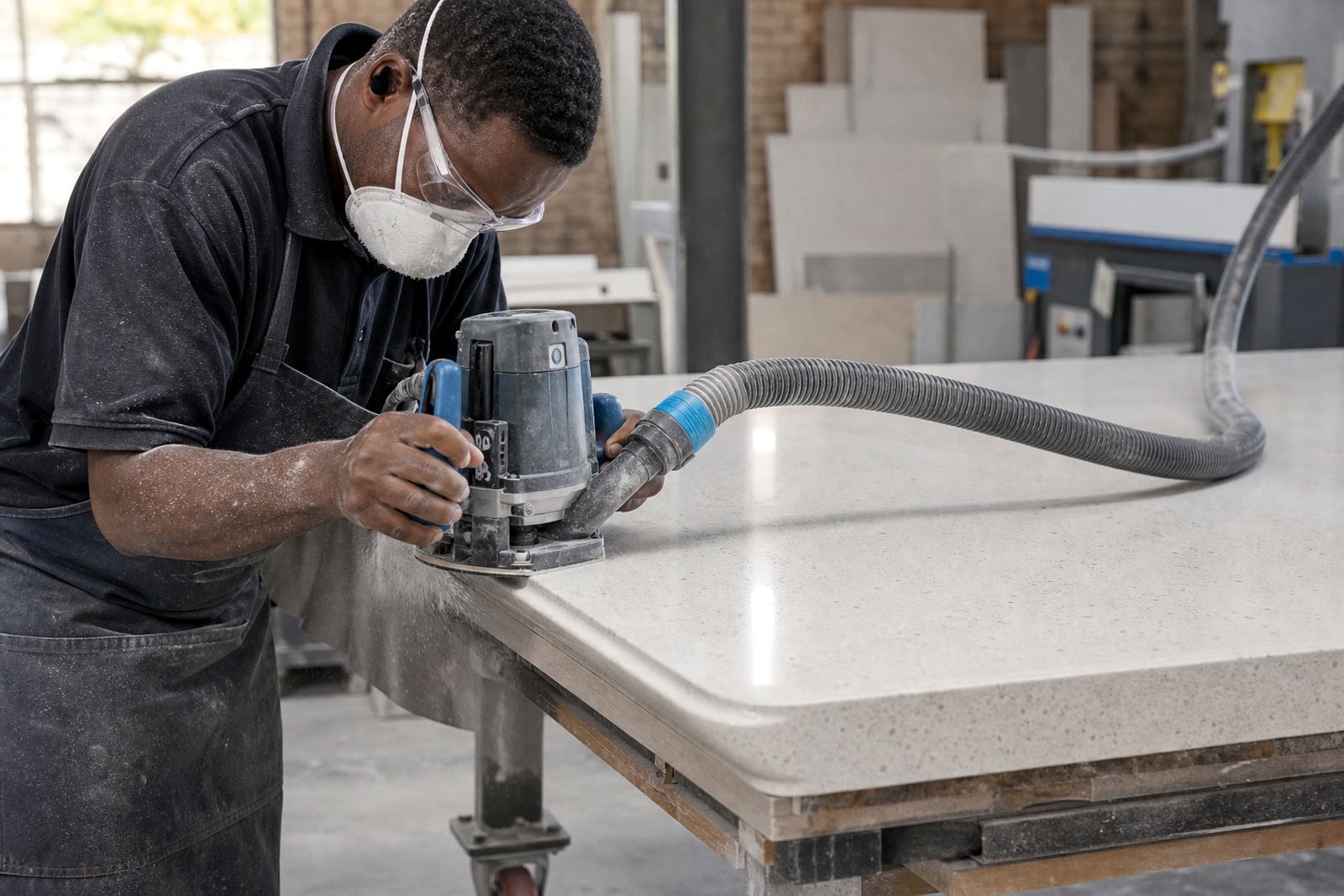
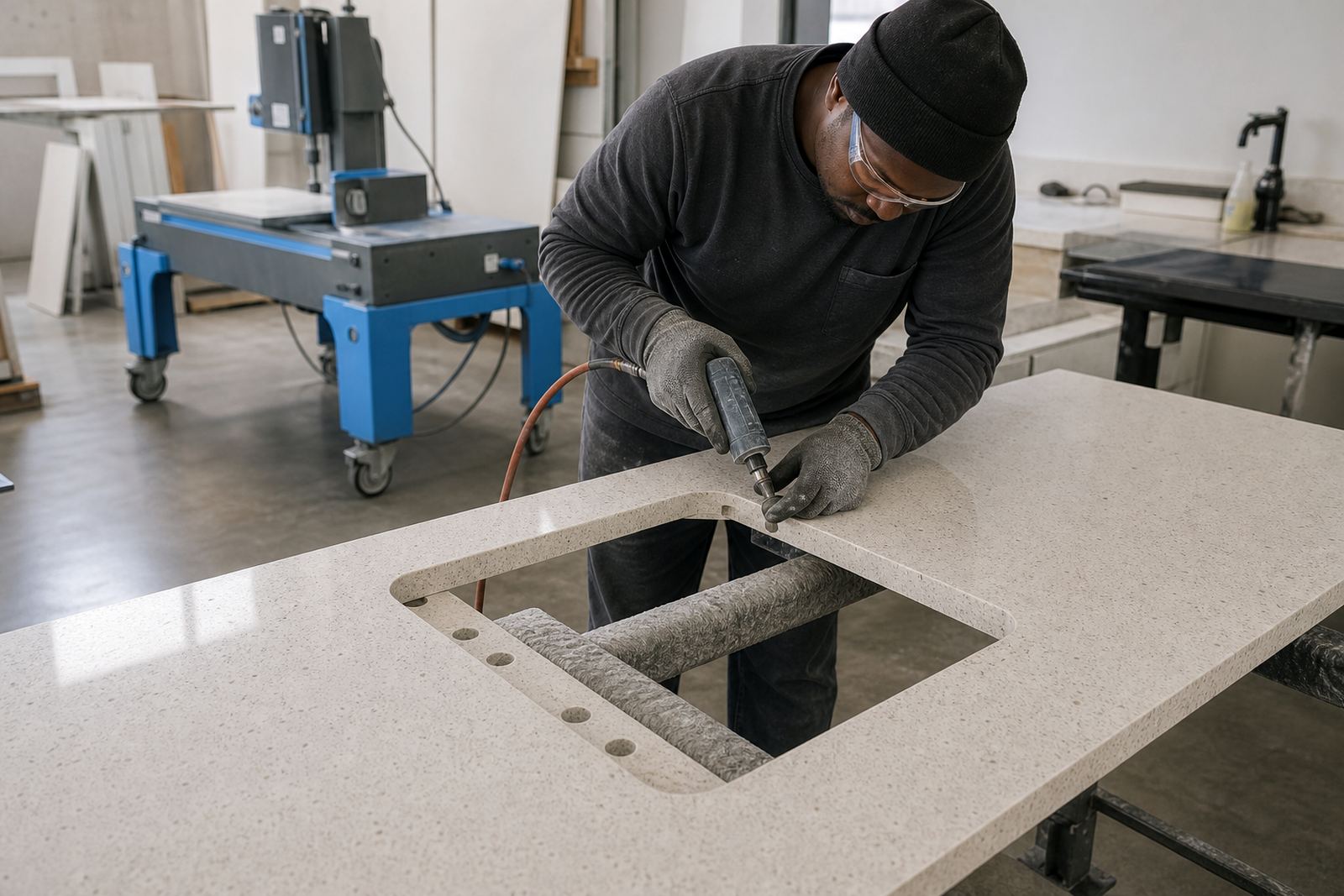
For engineered quartz, the cut is made with diamond tooling and finished to suit the edge detail. For solid-surface tops, the opening can be machined with a tighter integration around the bowl and the edges are sanded smooth for a neat join. Most projects also include drain clearance checks, clip access and enough working space under the top for the installer.
- Undermount sink openings
- Top-mounted basin openings
- Cut-outs for single or double bowls
- Pre-planned tap and accessory positions
- Clean finish around drainer grooves and corners
Measured first, cut second
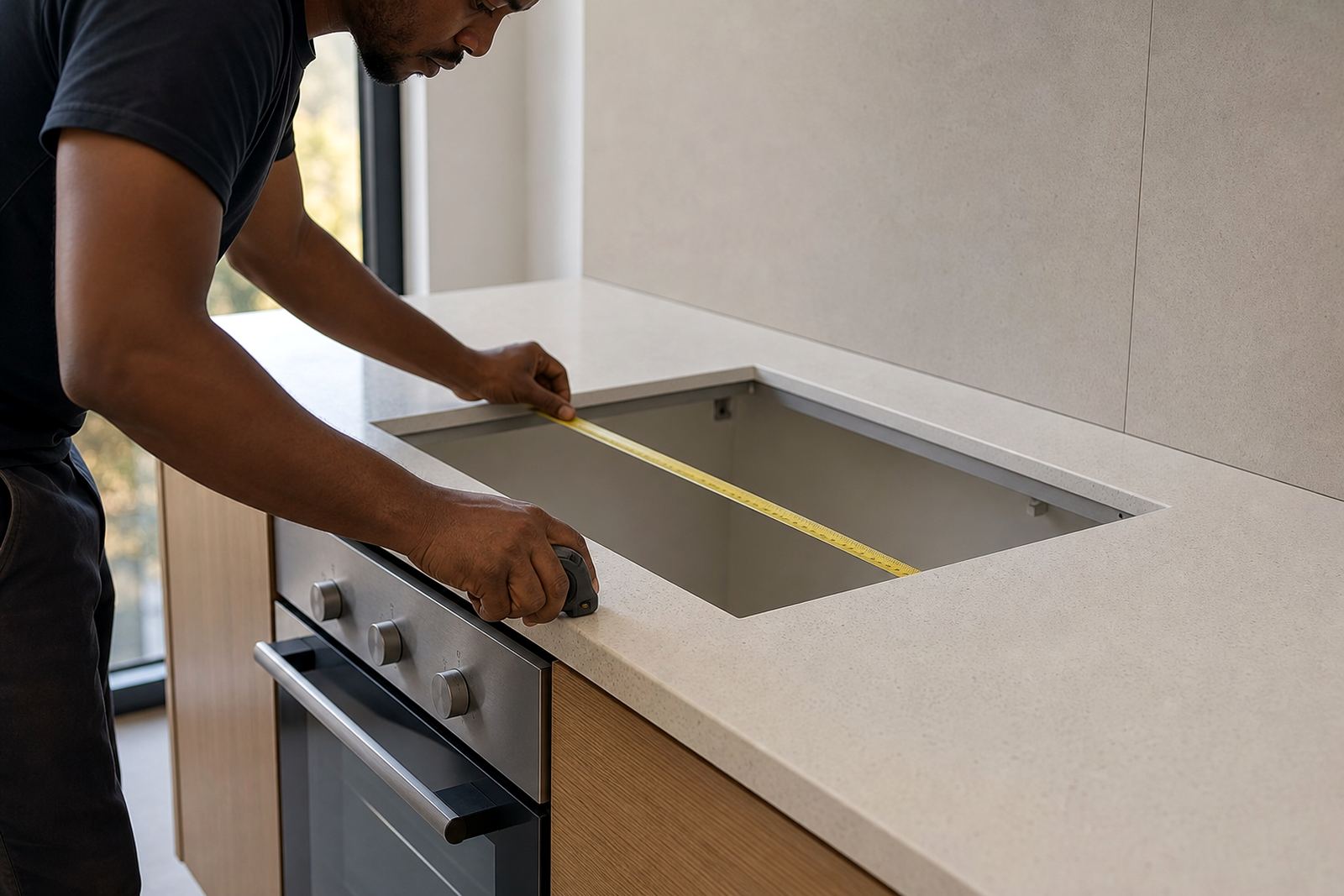
Our process begins with site templating or digital measuring, depending on the job and the surface already in place. Once the opening is mapped, the workshop team checks the slab thickness, the sink line, the overhang and any nearby seams before the cut is started.
That matters on quartz and solid-surface tops because a sink area carries a lot of daily use. If the cut lands too close to a joint or a weak corner, the top can chip or flex where it should not. We plan for clean access around a waste trap, enough room for clips, and a finish that does not leave rough edges under the rim.
- Site check and measurement
- Opening marked against the actual sink
- Workshop cut with machine control
- Edge smoothing and fit check
- Installer review before fitment
Surface details that matter around water
The sink zone is where water, heat and cleaning products all meet, so the edge finish has to be right. We can pair the opening with a square edge, eased edge or a more softened profile, depending on the look of the kitchen, vanity or utility area. On quartz, the polished face needs a tidy cut line and controlled finishing to reduce visible chipping.
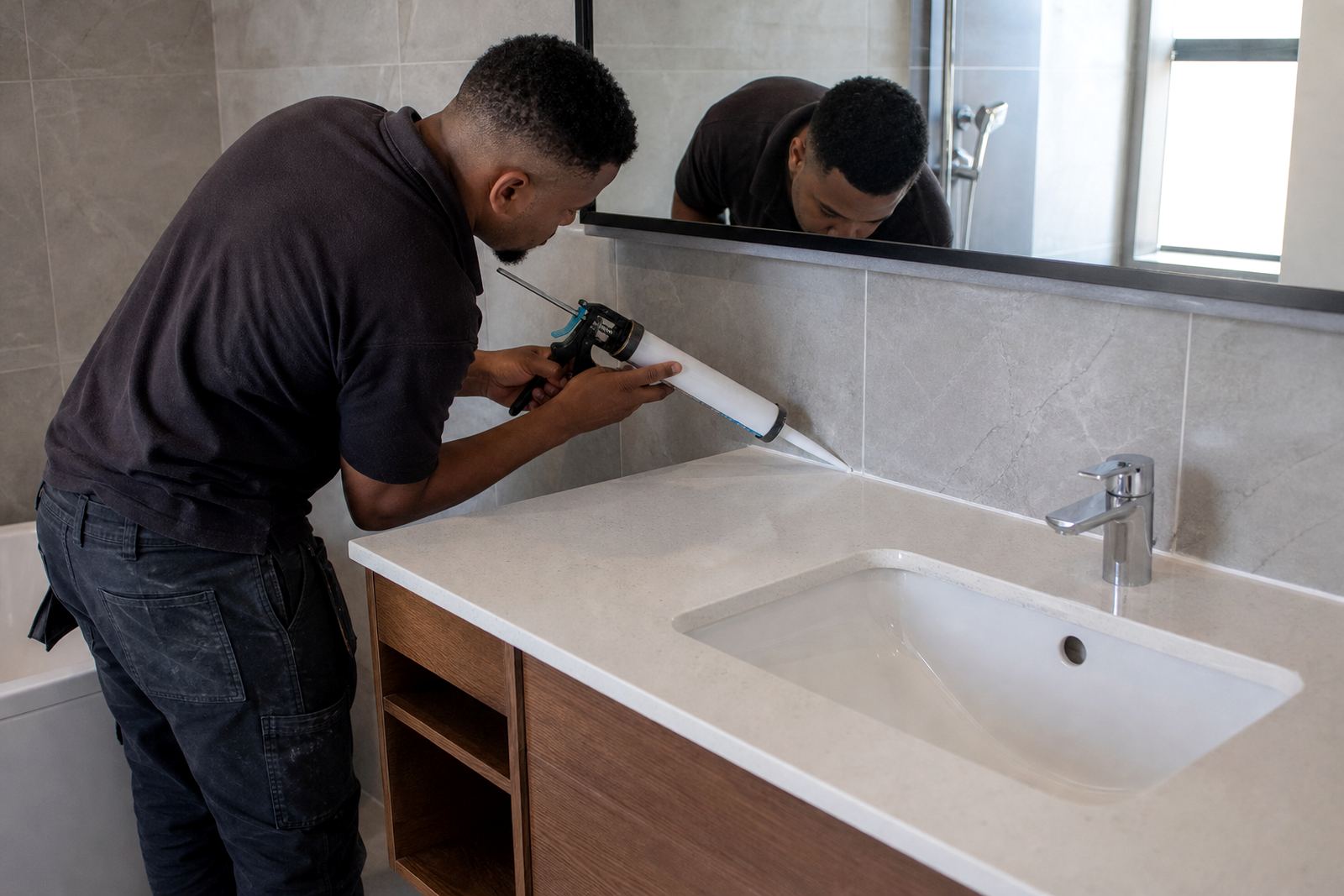
Where the basin is undermounted, the underside of the cut must be sealed and fixed correctly so the edge stays supported. On solid-surface tops, the joint can be blended more visibly into the material itself, which suits integrated vanity work and some office or shopfit finishes. Sink surrounds are checked for flatness, because a small high spot can hold water and stain the wrong way over time.
Turnaround that follows the workshop schedule
Sink cut-outs are usually built into a larger fabrication sequence, especially when the top also needs edge profiling, seam joining or a hob opening. That means the turnaround depends on the slab size, the number of openings, access to the site and whether the sink is on hand for templating. We keep the cut in step with the rest of the job so the installer receives a top that is ready for fitting.
For larger homes in Sandton or Fourways, a vanity top may need a different handling plan from a compact prep area in Johannesburg or a reception counter in Midrand. The real time factor is usually the sequence of templating, workshop cutting, final polish and site installation rather than the sink cut alone.
- Single or multiple cut-outs in one top
- Works with vanity, kitchen and reception tops
- Fits into new installations or replacement tops
- Coordinated with splashbacks and seams
Pricing shaped by the opening, not a flat guess
Pricing for sink cut-outs depends on the slab material, the size of the opening, the number of bowls, the edge finish around the sink and whether the work is part of a fresh installation or a modification. A top that needs a precise undermount cut, extra reinforcement or a field adjustment will not carry the same labour as a straightforward top-mounted basin opening.
We also factor in templating, workshop setup, waste cut handling and any site access issues around apartment blocks, shopfit programmes or office fit-outs. For a clear quote, the details of the sink, the countertop material, the thickness, and the location of the basin all matter. That gives us a proper basis for the workmanship and the fitting plan.
Aftercare around the basin edge
Once the opening is installed, the basin area needs ordinary care that suits quartz or solid-surface material. Use a mild cleaner, a soft cloth and dry the edge when water sits in the recess. Around the cut line, avoid harsh scourers and keep metal pads off the polished face, because the rim can pick up marks faster than the rest of the top.
Heat resistance is not the same as heat proof, so hot pots, kettles and curling tools should not sit on the sink edge or beside it. If a seal line around an undermount basin starts to look worn, it should be inspected before water works under the rim. Our aftercare advice explains what to use, what to avoid and how to keep the opening looking even in humid coastal homes or busy Randburg kitchens.
Key facts
| Material types | Engineered quartz and solid-surface countertops |
|---|---|
| Opening styles | Undermount and top-mounted sink cut-outs |
| Typical slab thickness | Usually 12 mm, 20 mm or 30 mm depending on the design |
| Edge options | Square, eased and softened profiles around the sink zone |
| Service methods | Site templating, digital measuring, workshop cutting and installation |
| Service area | Strijdom Park, Randburg with projects across Gauteng including Johannesburg, Sandton, Pretoria, Midrand, Fourways and Centurion |